Artificial Intelligence in Civil Engineering
Seminar:- 2018-2019
(Submitted to – Tara Chand)
Presented By:-ABDUL HANNAN
Roll Number:-1512700001
IIMT Engineering College
(Civil Engineering Department)
7th Sem.
CONTENT
 What is Artificial Intelligence?
 ARTIFICIAL INTELLIGENCE METHODS
 Artificial Intelligence in Civil Engineering
Use in Construction Management
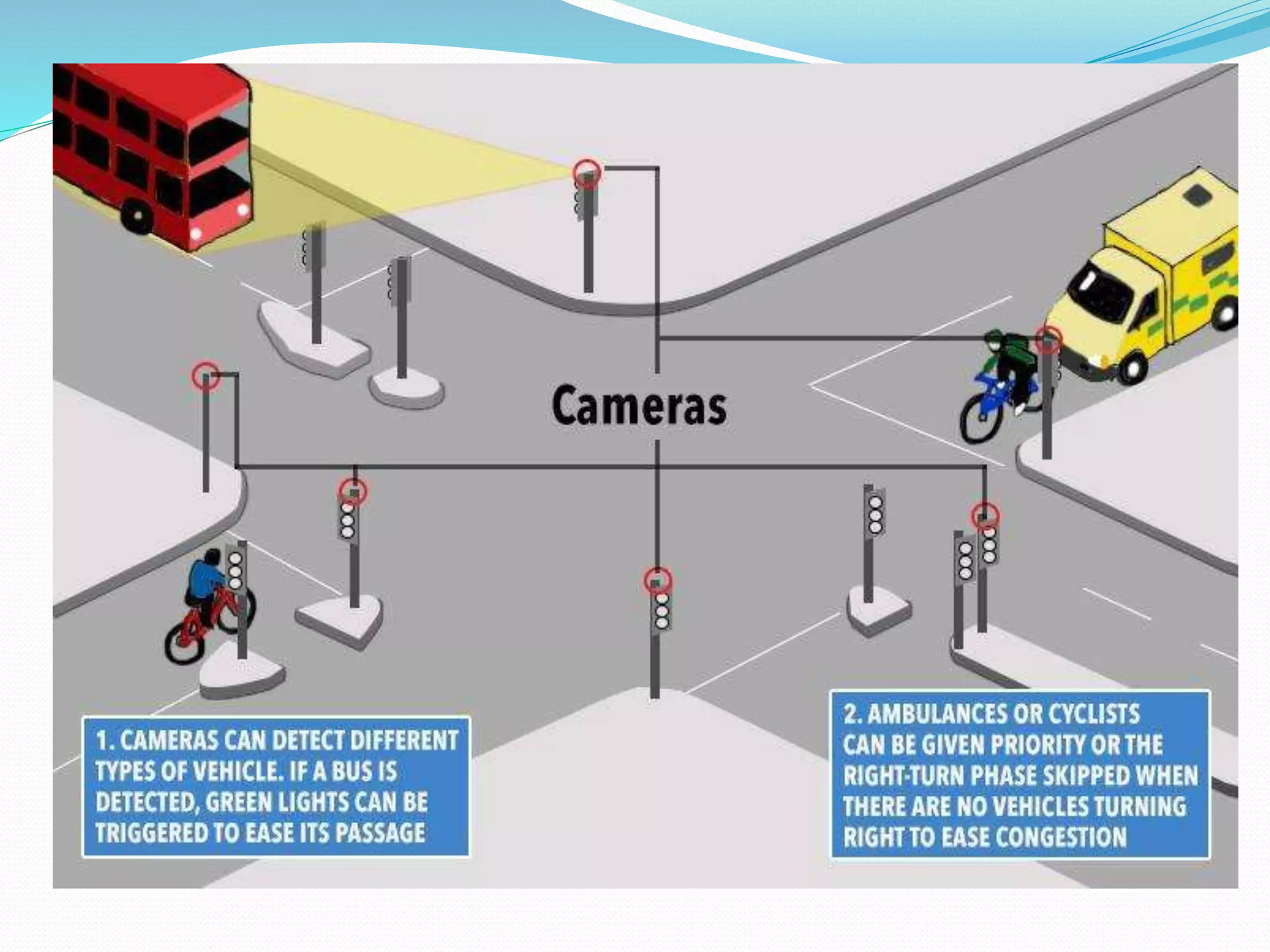
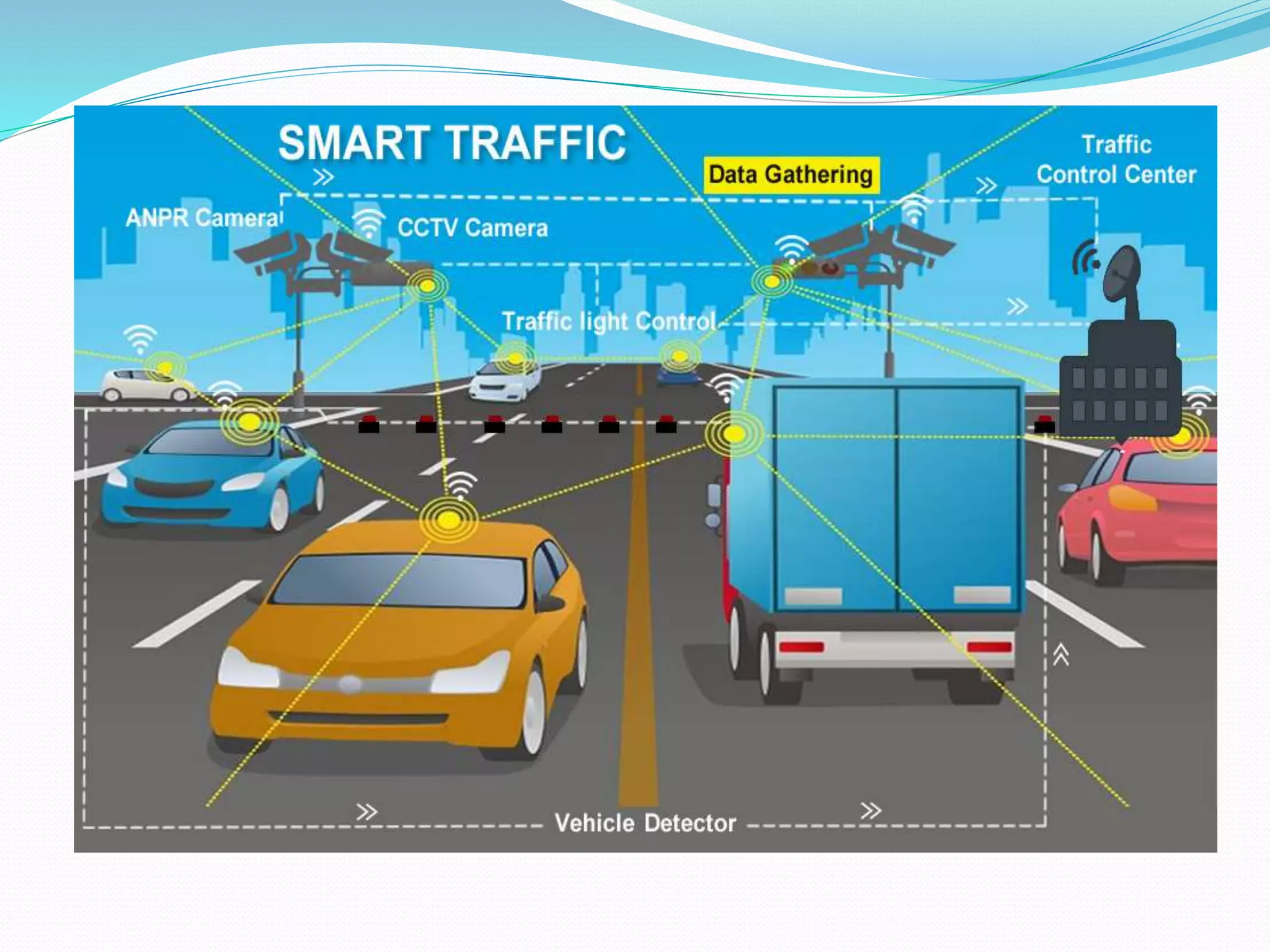
Use in Transportation Management
Use in Geotechnical Engineering
Building Information Modeling (BIM)
3D Printers
 Conclusion
What is Artificial Intelligence?
AI= Artificial Intelligence
(human (ability to understand, think and learn)
made)
“The science and engineering of making intelligent
machines, especially intelligent computer programs”.
“Artificial Intelligence is a way of making a computer, a
computer-controlled robot, or a software think
intelligently, in the similar manner the intelligent humans
think.”
ARTIFICIAL INTELLIGENCE METHODS
Knowledge-Based Systems(KBS)
 Neural Networks(NN)
Fuzzy Systems(FS)
Genetic Algorithms (GA)
Artificial Intelligence in Civil Engineering
 Use in Construction Management
 Use in Transportation Management
 Use in Geotechnical Engineering
 Building Information Modeling (BIM)
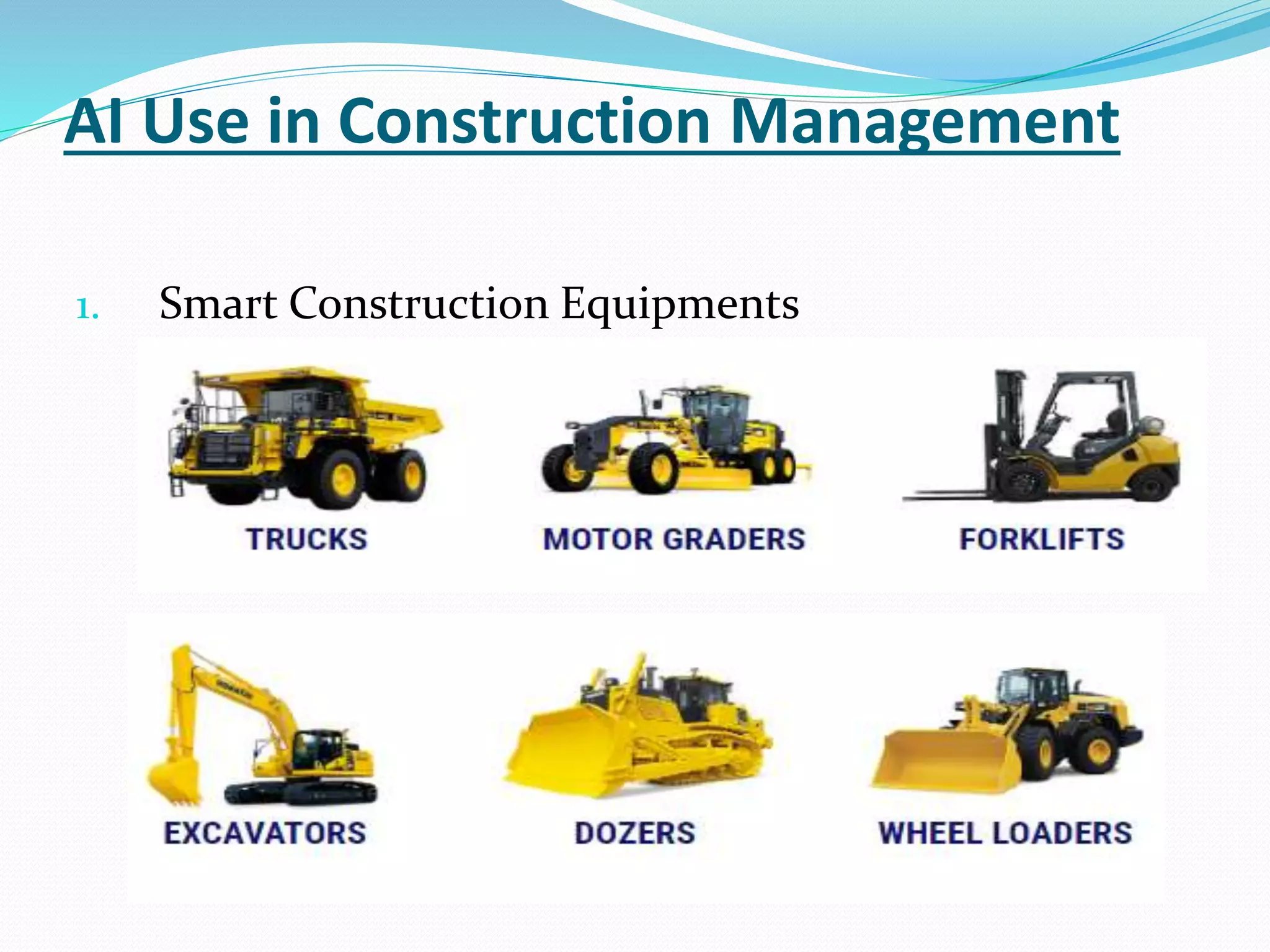
AI Use in Construction Management
1. Smart Construction Equipments
2. AI-based applications for designers
3. AI-based applications for estimators-(BIM)
4. AI based applications for safety managers
(Smartvid.io)
5. AI-based applications for project managers
( AI-based applications such as Doxel utilize data to measure
the quantity of materials installed by analyzing the job site in
3D. The learning algorithms track the progress in real-time
against original plans, budget, and schedule. Project managers
use progressive information to track labor productivity and
make adjustments to keep the project on schedule.)
AI Use in Transportation
Management
I. Traffic Signal Timing and Optimization (based on
evolutionary algorithms, fuzzy logic control, artificial neural networks, and
reinforcement learning algorithms.)
II. Short-Term Traffic and Travel Time Prediction
Models
III. Signal control of traffic at road intersections
IV. Ramp metering on freeways
V. Dynamic route guidance
VI. Positive train control on railroads
VII.Air traffic control
AI Use in Geotechnical
Engineering
I. Soil properties and behaviour (Neural network methods is
used )
II. Pile capacity (neural network was applied
to predict the friction capacity of piles in clays. )
III. Settlement of foundations
IV. Liquefaction
V. Slope stability
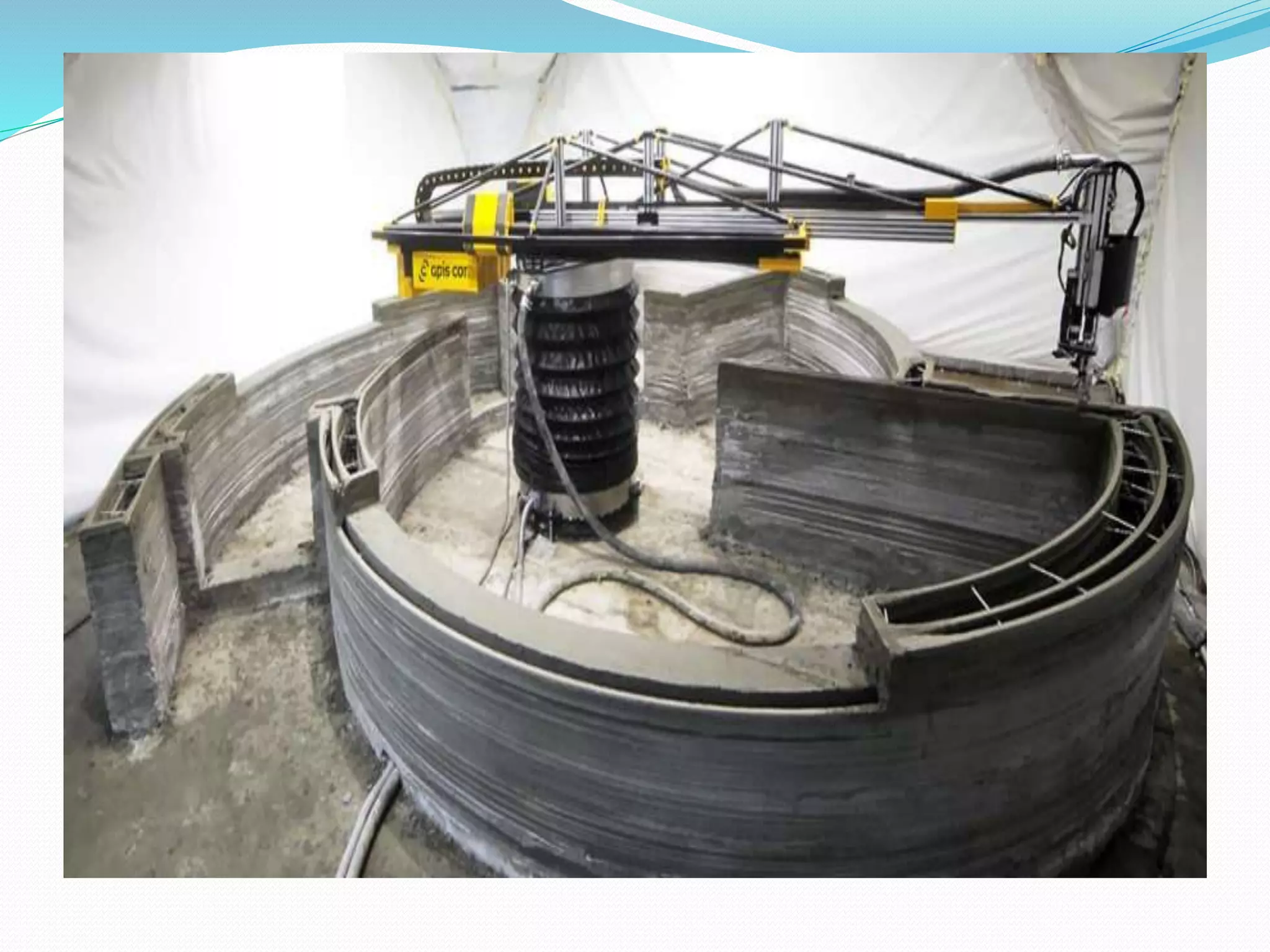
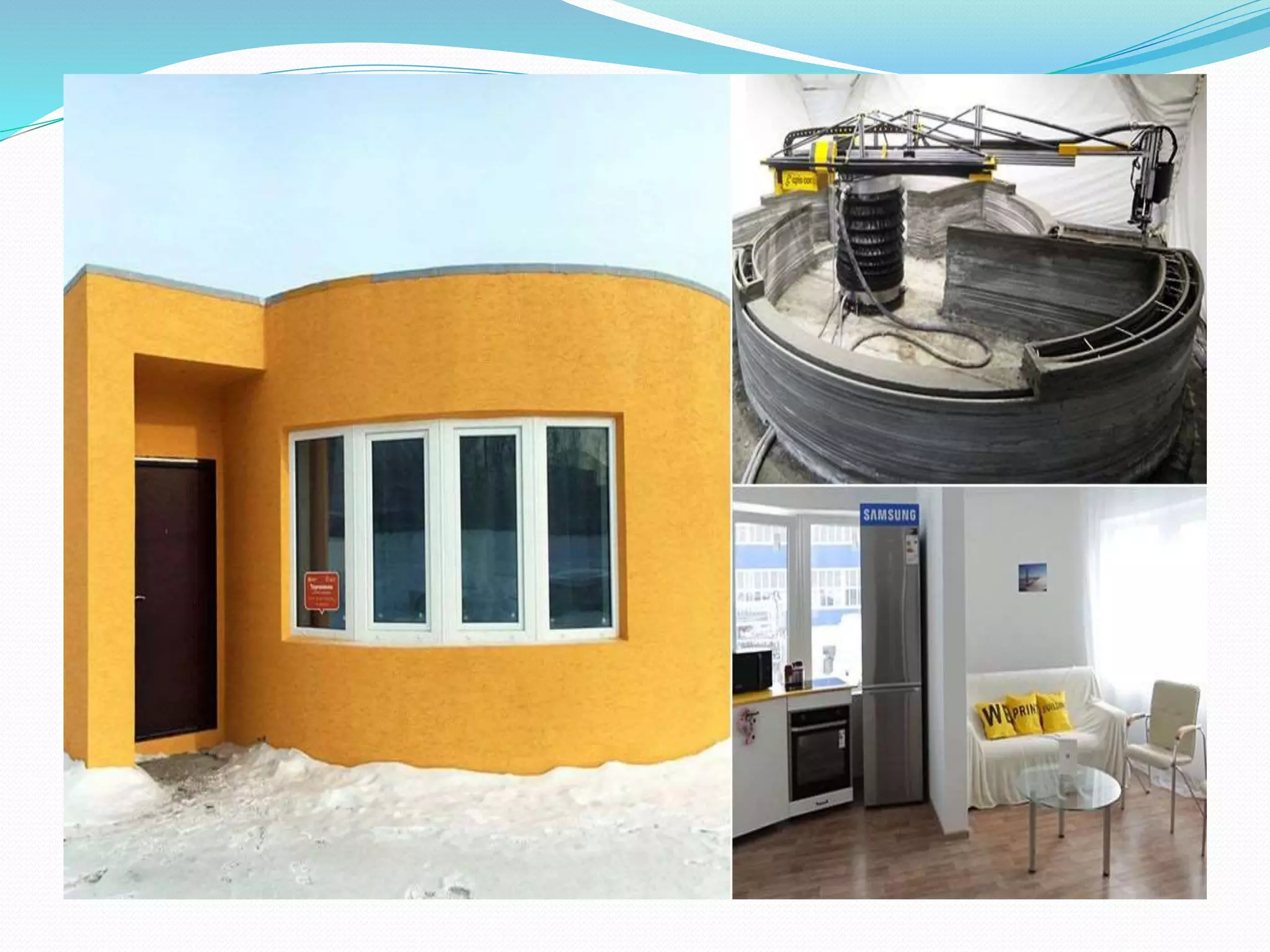
AI Use in 3D Printing
Building Information Modeling
(BIM)
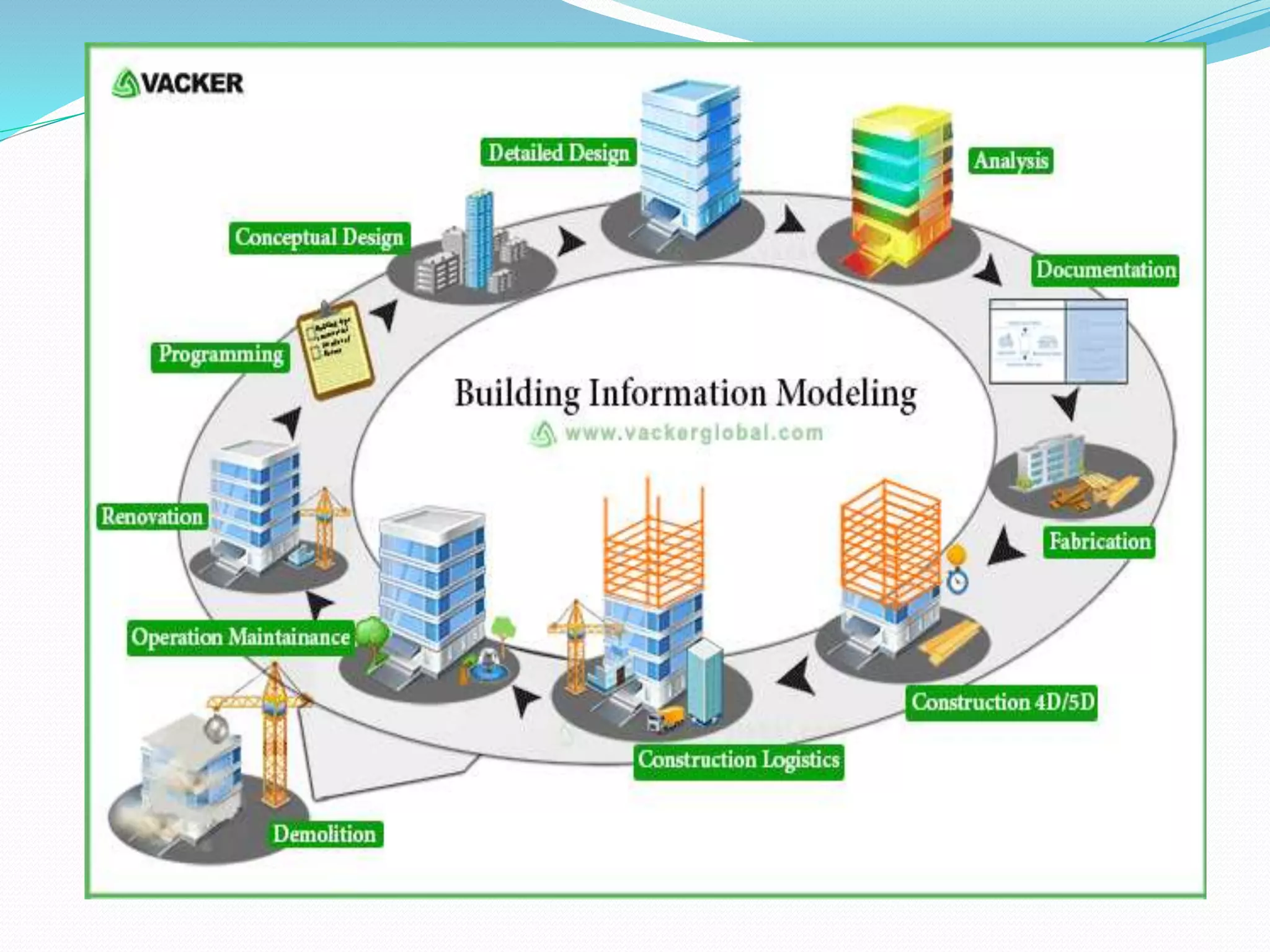
BIM (Building Information Modeling) is an intelligent
3D model-based process that gives architecture,
engineering, and construction (AEC) professionals the
insight and tools to more efficiently plan, design,
construct, and manage buildings and infrastructure.
Conclusion
AI has a tremendous opportunity to disrupt the AEC
space. Komatsu’s SmartConstruction drives the usage
of autonomous equipment up with the benefit of
having a safer environment
Autodesk’s product line on generative design opens a
new world of design possibilities for architects and
engineers.
THANK YOU

Artificial Intelligence in Civil Engineering.

  • 1.
    Artificial Intelligence inCivil Engineering Seminar:- 2018-2019 (Submitted to – Tara Chand) Presented By:-ABDUL HANNAN Roll Number:-1512700001 IIMT Engineering College (Civil Engineering Department) 7th Sem.
  • 2.
    CONTENT  What isArtificial Intelligence?  ARTIFICIAL INTELLIGENCE METHODS  Artificial Intelligence in Civil Engineering Use in Construction Management Use in Transportation Management Use in Geotechnical Engineering Building Information Modeling (BIM) 3D Printers  Conclusion
  • 3.
    What is ArtificialIntelligence? AI= Artificial Intelligence (human (ability to understand, think and learn) made) “The science and engineering of making intelligent machines, especially intelligent computer programs”. “Artificial Intelligence is a way of making a computer, a computer-controlled robot, or a software think intelligently, in the similar manner the intelligent humans think.”
  • 4.
    ARTIFICIAL INTELLIGENCE METHODS Knowledge-BasedSystems(KBS)  Neural Networks(NN) Fuzzy Systems(FS) Genetic Algorithms (GA)
  • 5.
    Artificial Intelligence inCivil Engineering  Use in Construction Management  Use in Transportation Management  Use in Geotechnical Engineering  Building Information Modeling (BIM)
  • 6.
    AI Use inConstruction Management 1. Smart Construction Equipments
  • 7.
    2. AI-based applicationsfor designers 3. AI-based applications for estimators-(BIM) 4. AI based applications for safety managers (Smartvid.io) 5. AI-based applications for project managers ( AI-based applications such as Doxel utilize data to measure the quantity of materials installed by analyzing the job site in 3D. The learning algorithms track the progress in real-time against original plans, budget, and schedule. Project managers use progressive information to track labor productivity and make adjustments to keep the project on schedule.)
  • 8.
    AI Use inTransportation Management I. Traffic Signal Timing and Optimization (based on evolutionary algorithms, fuzzy logic control, artificial neural networks, and reinforcement learning algorithms.) II. Short-Term Traffic and Travel Time Prediction Models III. Signal control of traffic at road intersections IV. Ramp metering on freeways V. Dynamic route guidance VI. Positive train control on railroads VII.Air traffic control
  • 11.
    AI Use inGeotechnical Engineering I. Soil properties and behaviour (Neural network methods is used ) II. Pile capacity (neural network was applied to predict the friction capacity of piles in clays. ) III. Settlement of foundations IV. Liquefaction V. Slope stability
  • 12.
    AI Use in3D Printing
  • 15.
    Building Information Modeling (BIM) BIM(Building Information Modeling) is an intelligent 3D model-based process that gives architecture, engineering, and construction (AEC) professionals the insight and tools to more efficiently plan, design, construct, and manage buildings and infrastructure.
  • 17.
    Conclusion AI has atremendous opportunity to disrupt the AEC space. Komatsu’s SmartConstruction drives the usage of autonomous equipment up with the benefit of having a safer environment Autodesk’s product line on generative design opens a new world of design possibilities for architects and engineers.
  • 18.