STROM WATER
DEPARTMENT OF RURAL TECHNOLOGY
AND
SOCIAL DEVELOPMENT,
GURU GHASIDAS VISHWAVIDYALAYA BILASPUR (C.G.)
SESSION – 2018-19
PRESENTING BY:
ASHOK MEHAR
M.Sc. (RT) 2nd Semester
CONTENTS
• INTRODUCTION
• DEFINITION
• STROMWATER AS A SOURCE OF POLLUTION
• STROMWATER MANAGEMENT
• CONCLUSION
• REFERENCE
INTRODUCTION
• In 1972, the National Pollutant Discharge
Elimination System (NPDES) program was
established under the Clean Water Act. This
program requires communities to develop,
implement, and enforce pollution reduction
programs for new development and
redevelopment projects. Practicing the
appropriate methods of storm water runoff
management can protect human and
environmental health.
STROM WATER - DEFINITION
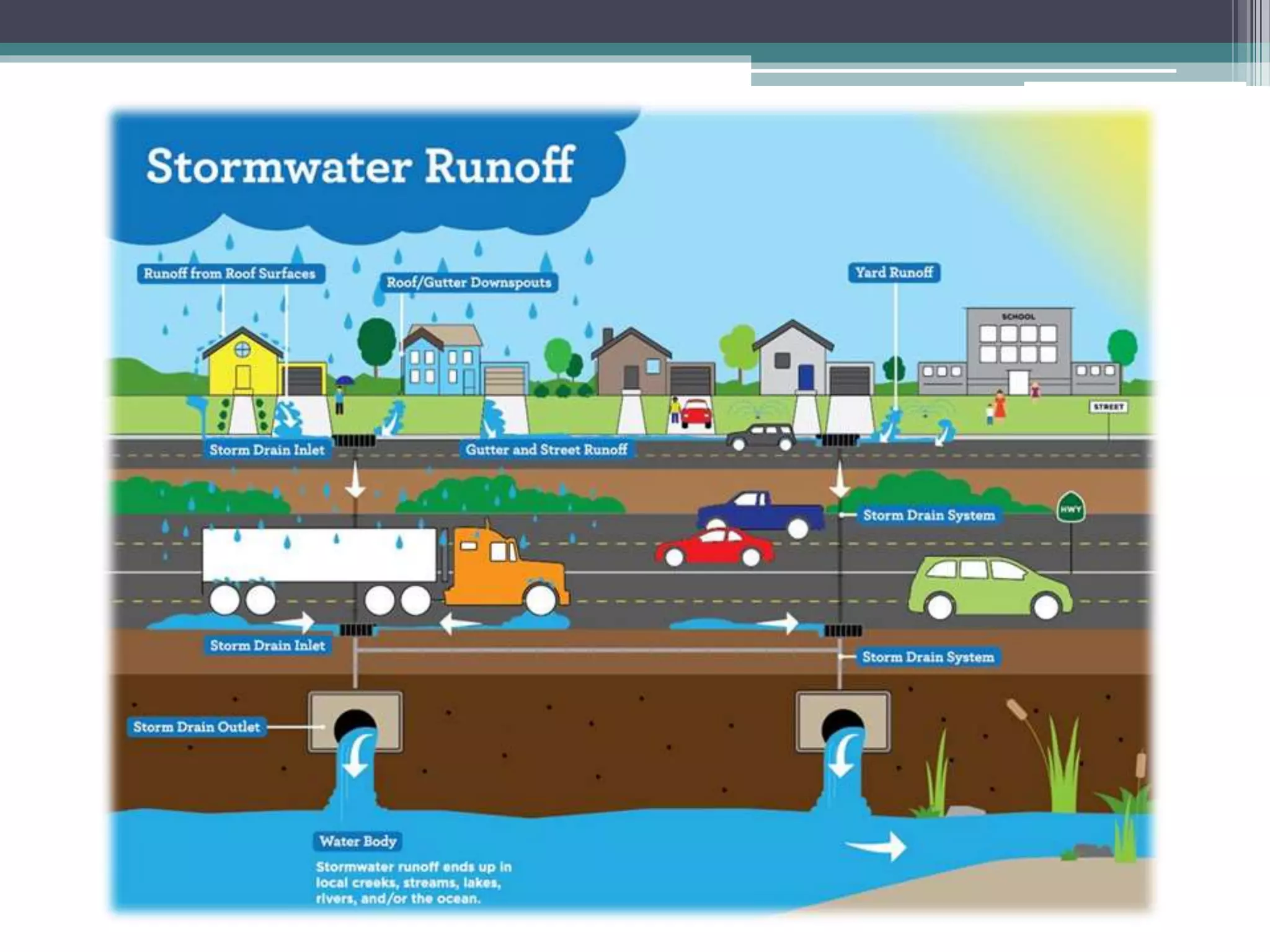
• Storm water runoff is defined as the water that
washes over a developed area (rooftops,
roadways, parking lots, etc.) after a precipitation
event. This water picks up pollutants such as
oils, fertilizers, pesticides, sediment, trash,
bacteria, and animal waste among many others
harmful substances. As Madison County grows
so does the amount of storm water runoff. Some
of the water flows into streams and creeks before
travelling into the Pearl River and Ross Barnett
Reservoir.
STORMWATER RUNOFF AS A SOURCE
OF POLLUTION
• In addition to the pollutants carried
in stormwater runoff, urban runoff is
being recognized as a cause of pollution
in its own right. In natural catchments
(watersheds) surface runoff entering
waterways is a relatively rare event,
occurring only a few times each year and
generally after larger storm events.
Before development occurred most
rainfall soaked into the ground and
contributed to groundwater recharge or
was recycled into the atmosphere by
vegetation through evapotranspiration .
STORMWATER MANAGEMENT
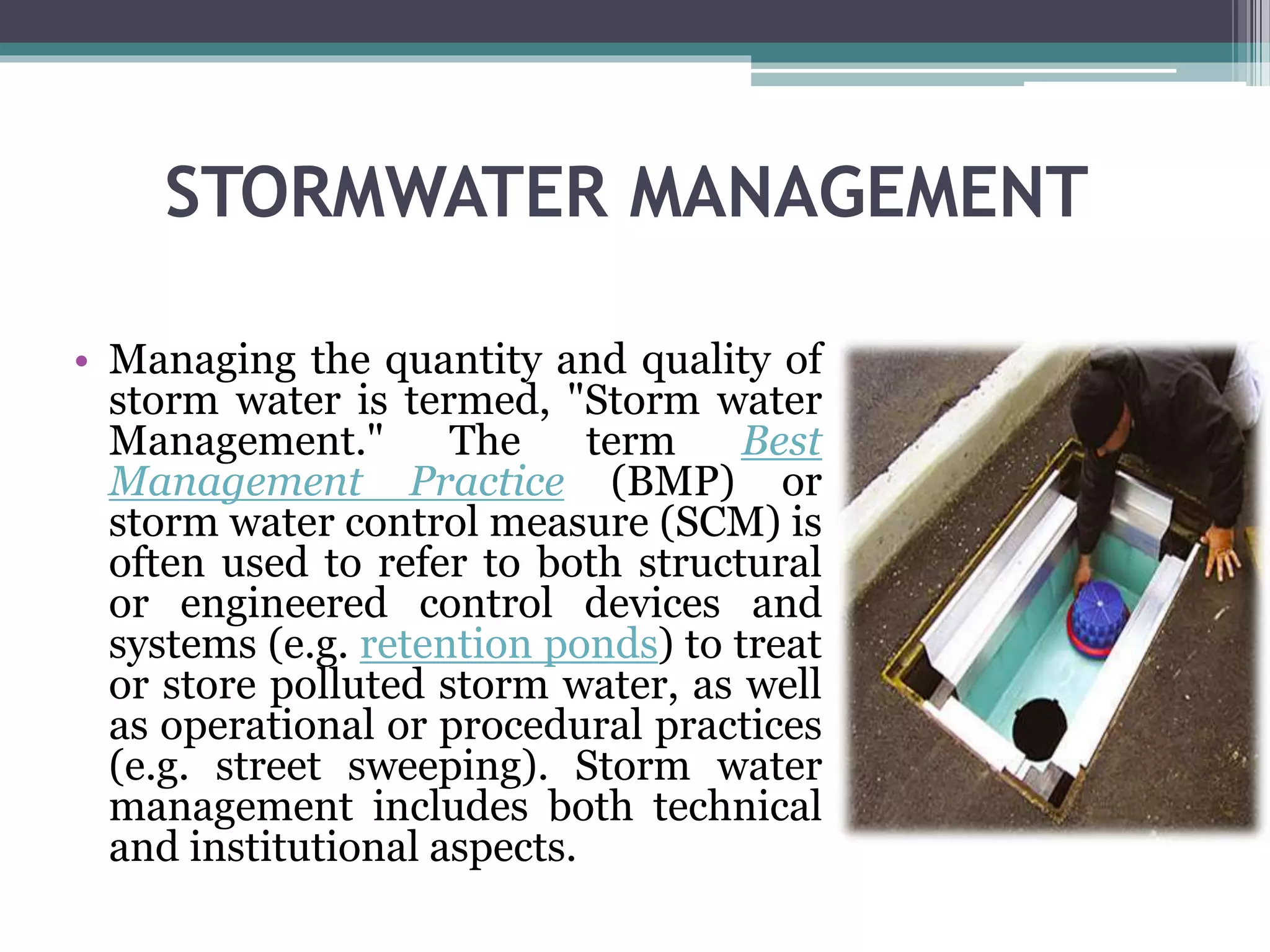
• Managing the quantity and quality of
storm water is termed, "Storm water
Management." The term Best
Management Practice (BMP) or
storm water control measure (SCM) is
often used to refer to both structural
or engineered control devices and
systems (e.g. retention ponds) to treat
or store polluted storm water, as well
as operational or procedural practices
(e.g. street sweeping). Storm water
management includes both technical
and institutional aspects.
CONCLUSION
• Storm water is the rainfall that is not absorbed
by the ground. Storm water that does not soak
into the ground becomes surface runoff, which
either flows directly into surface waterways or is
channelled into storm drains, which
eventually discharge to surface waters.
It does not flow to a wastewater treatment
plant.
REFERENCE
• www.google.com
• Wikipedia
THANK YOU
SUGGESTION PLEASE ...

Strom water

  • 1.
    STROM WATER DEPARTMENT OFRURAL TECHNOLOGY AND SOCIAL DEVELOPMENT, GURU GHASIDAS VISHWAVIDYALAYA BILASPUR (C.G.) SESSION – 2018-19 PRESENTING BY: ASHOK MEHAR M.Sc. (RT) 2nd Semester
  • 2.
    CONTENTS • INTRODUCTION • DEFINITION •STROMWATER AS A SOURCE OF POLLUTION • STROMWATER MANAGEMENT • CONCLUSION • REFERENCE
  • 3.
    INTRODUCTION • In 1972,the National Pollutant Discharge Elimination System (NPDES) program was established under the Clean Water Act. This program requires communities to develop, implement, and enforce pollution reduction programs for new development and redevelopment projects. Practicing the appropriate methods of storm water runoff management can protect human and environmental health.
  • 4.
    STROM WATER -DEFINITION • Storm water runoff is defined as the water that washes over a developed area (rooftops, roadways, parking lots, etc.) after a precipitation event. This water picks up pollutants such as oils, fertilizers, pesticides, sediment, trash, bacteria, and animal waste among many others harmful substances. As Madison County grows so does the amount of storm water runoff. Some of the water flows into streams and creeks before travelling into the Pearl River and Ross Barnett Reservoir.
  • 6.
    STORMWATER RUNOFF ASA SOURCE OF POLLUTION • In addition to the pollutants carried in stormwater runoff, urban runoff is being recognized as a cause of pollution in its own right. In natural catchments (watersheds) surface runoff entering waterways is a relatively rare event, occurring only a few times each year and generally after larger storm events. Before development occurred most rainfall soaked into the ground and contributed to groundwater recharge or was recycled into the atmosphere by vegetation through evapotranspiration .
  • 7.
    STORMWATER MANAGEMENT • Managingthe quantity and quality of storm water is termed, "Storm water Management." The term Best Management Practice (BMP) or storm water control measure (SCM) is often used to refer to both structural or engineered control devices and systems (e.g. retention ponds) to treat or store polluted storm water, as well as operational or procedural practices (e.g. street sweeping). Storm water management includes both technical and institutional aspects.
  • 9.
    CONCLUSION • Storm wateris the rainfall that is not absorbed by the ground. Storm water that does not soak into the ground becomes surface runoff, which either flows directly into surface waterways or is channelled into storm drains, which eventually discharge to surface waters. It does not flow to a wastewater treatment plant.
  • 10.
  • 11.