STRETCHING THE BOUNDARIES OF
PUBLISHING ALTERNATIVES
/Constantinescu Nicolaie @kosson
2015
the global scientific publication output is
growing at a rate of approximately 3%
annually.
The volume of publications doubles
approximately every 24 years
Bornmann, Lutz, and Ruediger Mutz. “Growth Rates of Modern Science: A Bibliometric Analysis Based
on the Number of Publications and Cited References.”
nine out of 10 academic papers—which
both often take years to research, compile,
submit, and get published, and are a major
component by which a scholar’s output is
measured contribute little to the academic
conversation
Gordon, Aaron. “Killing Pigs and Weed Maps: The Mostly Unread World of Academic Papers.” Pacific
Standard
Research publication in peer-reviewed
journals has become a wasteful process
that is more focused on metrics for
researcher and journal performance and
on profits for commercial publishers than
on disseminating information useful for
researchers and society.
Shashok, Karen. “Authors’ Editors in the 21st Century: Promoters of Publication Quality and
Efficiency.” European Science Editing
"CIRCLES OF INFLUENCE"
http://wendymacnaughton.com/#portfolio#visualphilosophy09
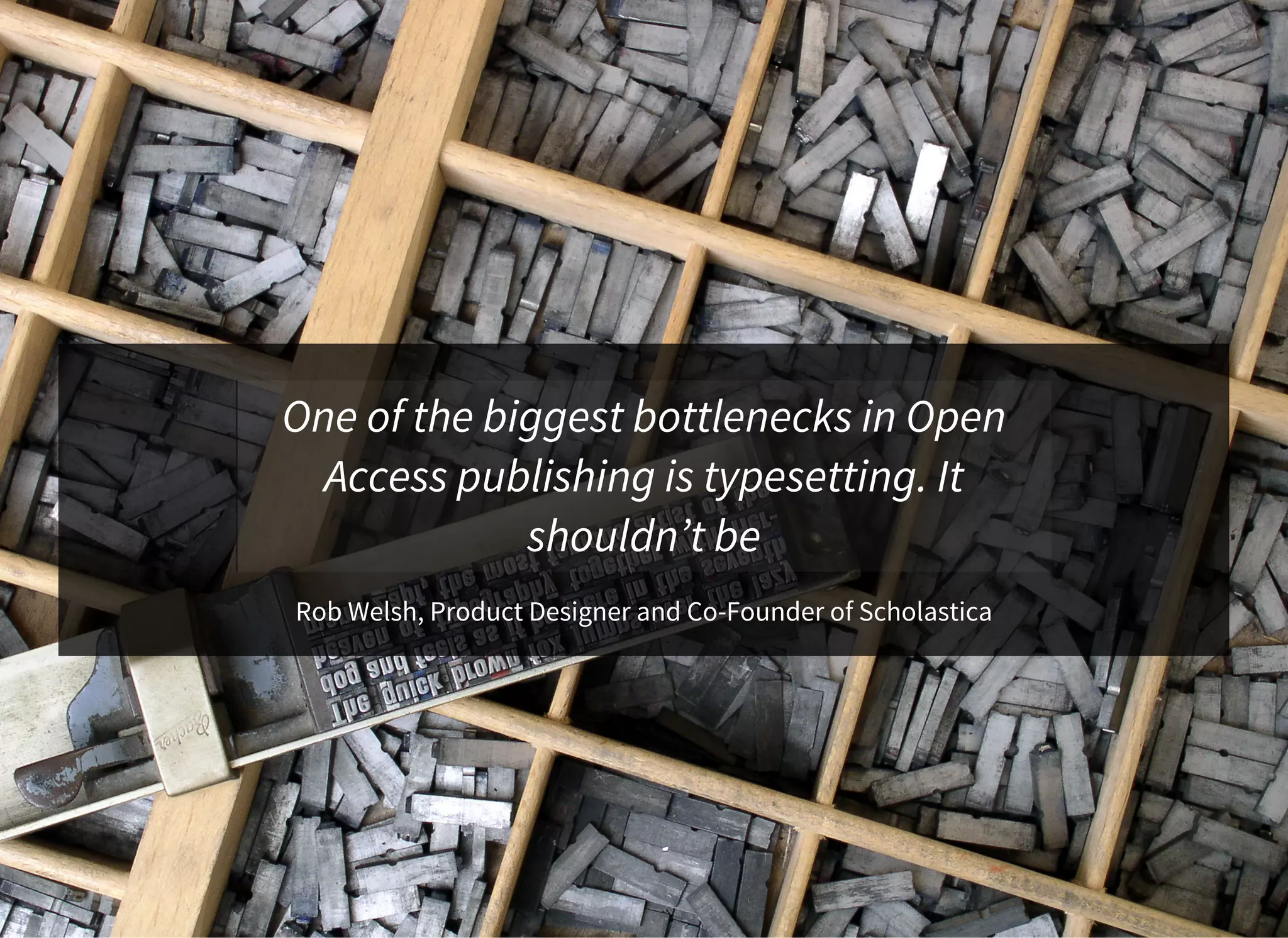
Rob Welsh, Product Designer and Co-Founder of Scholastica
One of the biggest bottlenecks in Open
Access publishing is typesetting. It
shouldn’t be
SAVE AS...
HABIT
We call it markup and is tradition for us!
WELCOME TO YOUR DOM
EPUB+WEB
Is a “vision” fostered by the W3C to advance the
establishment of a document representation to be used in
the context of Open Web Platform. This public working draft
has a section dedicated to scholarly publishers and STM
publishers.
A TASTE OF THE NEW AND THE
CHANGE
Gareth James
WHAT IS MARKDOWN?
a plain text formatting syntax
says John Grubber, a the prime references
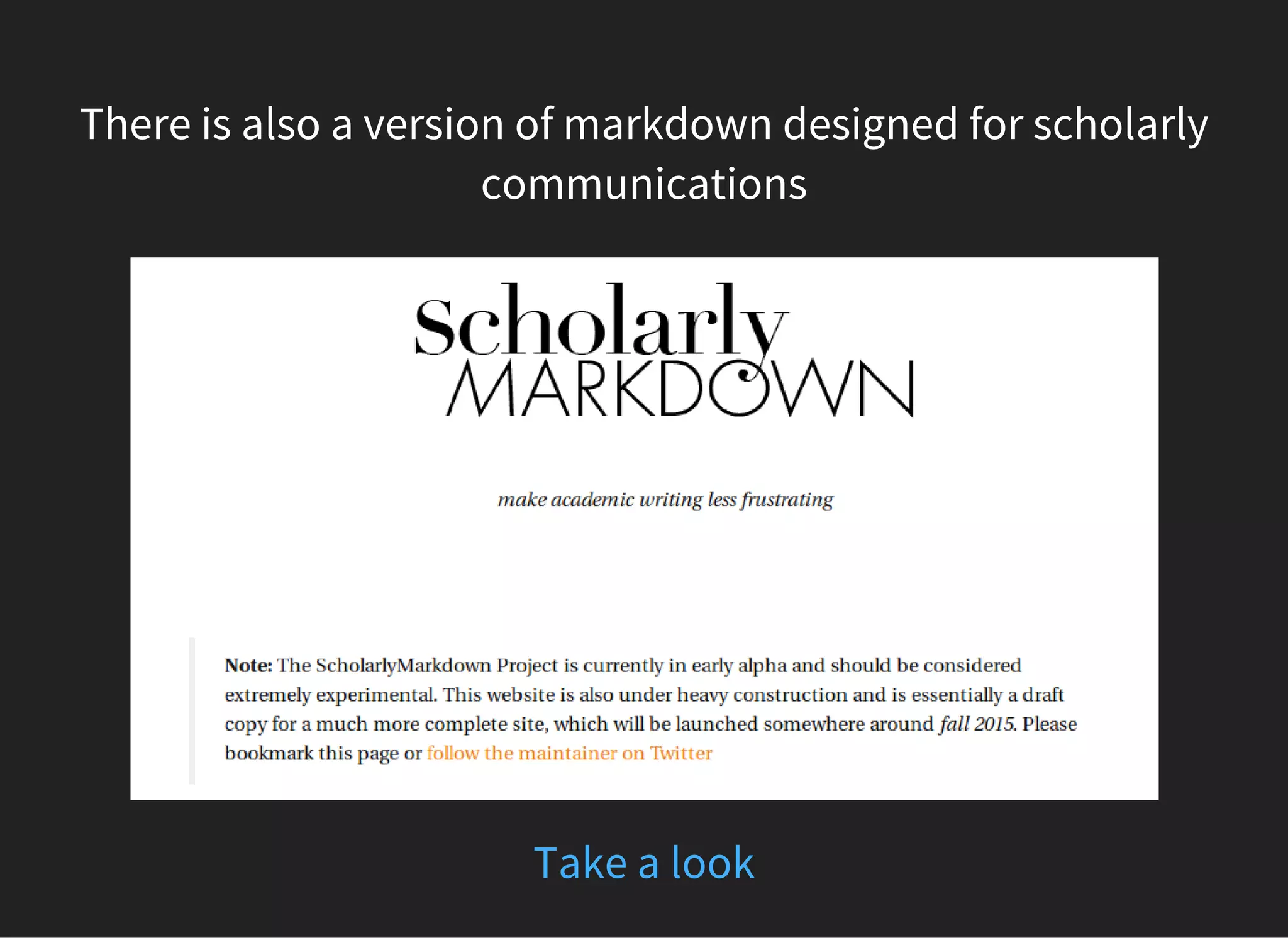
There is also a version of markdown designed for scholarly
communications
Take a look
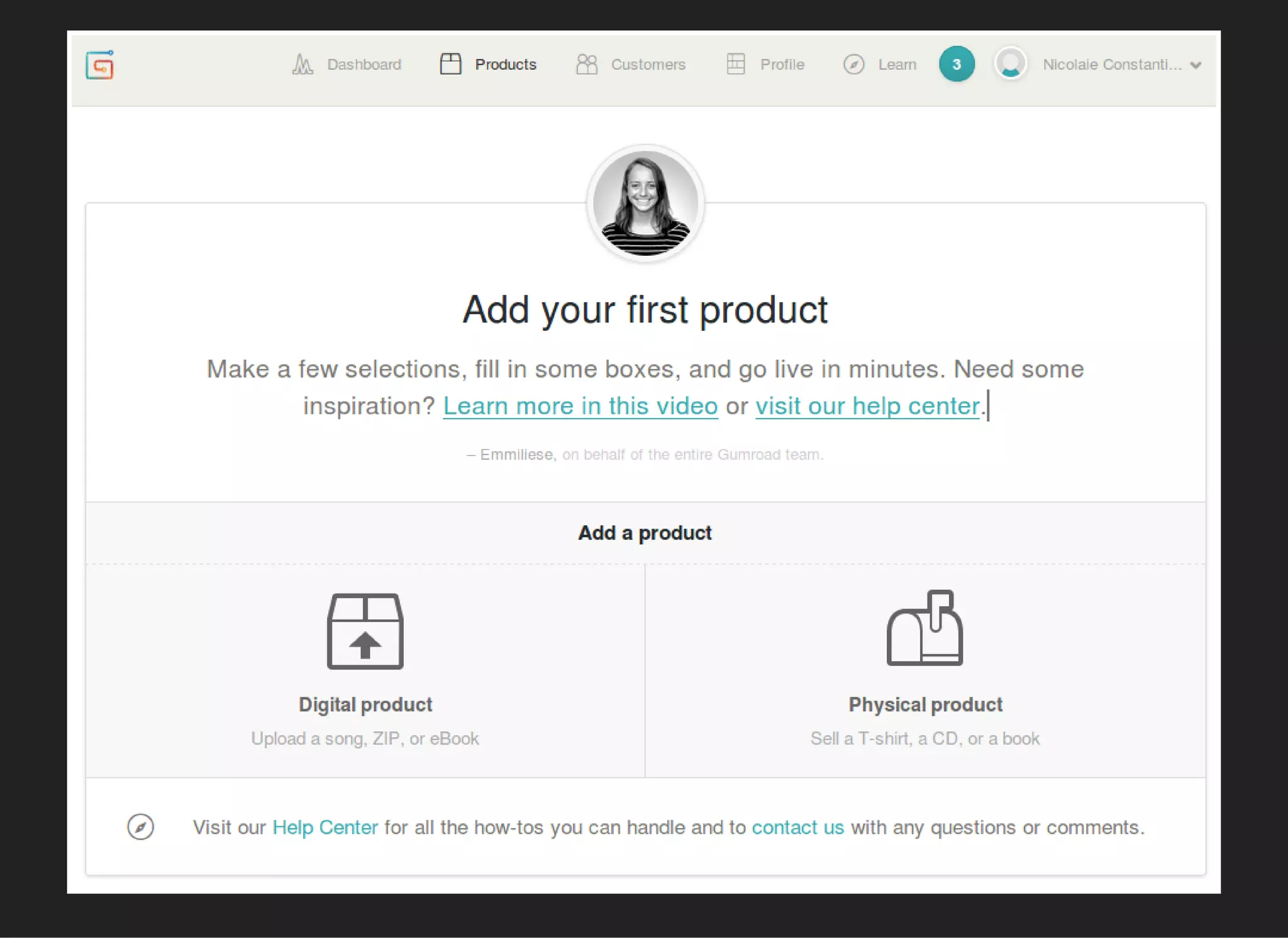
and a bussiness model...
.
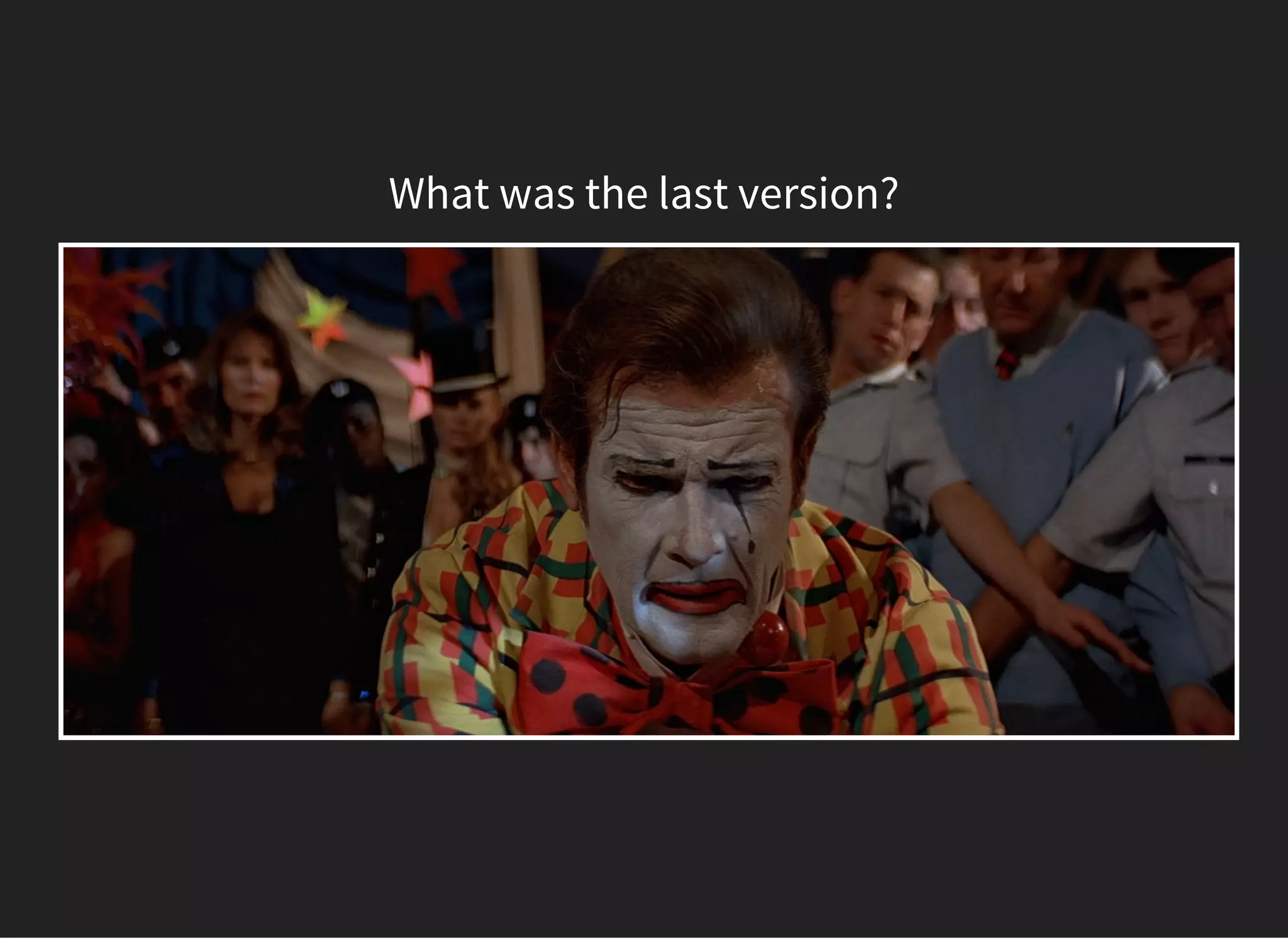
What was the last version?
Seafood and...
And, yes, it's markdown again: a publishing toolchain
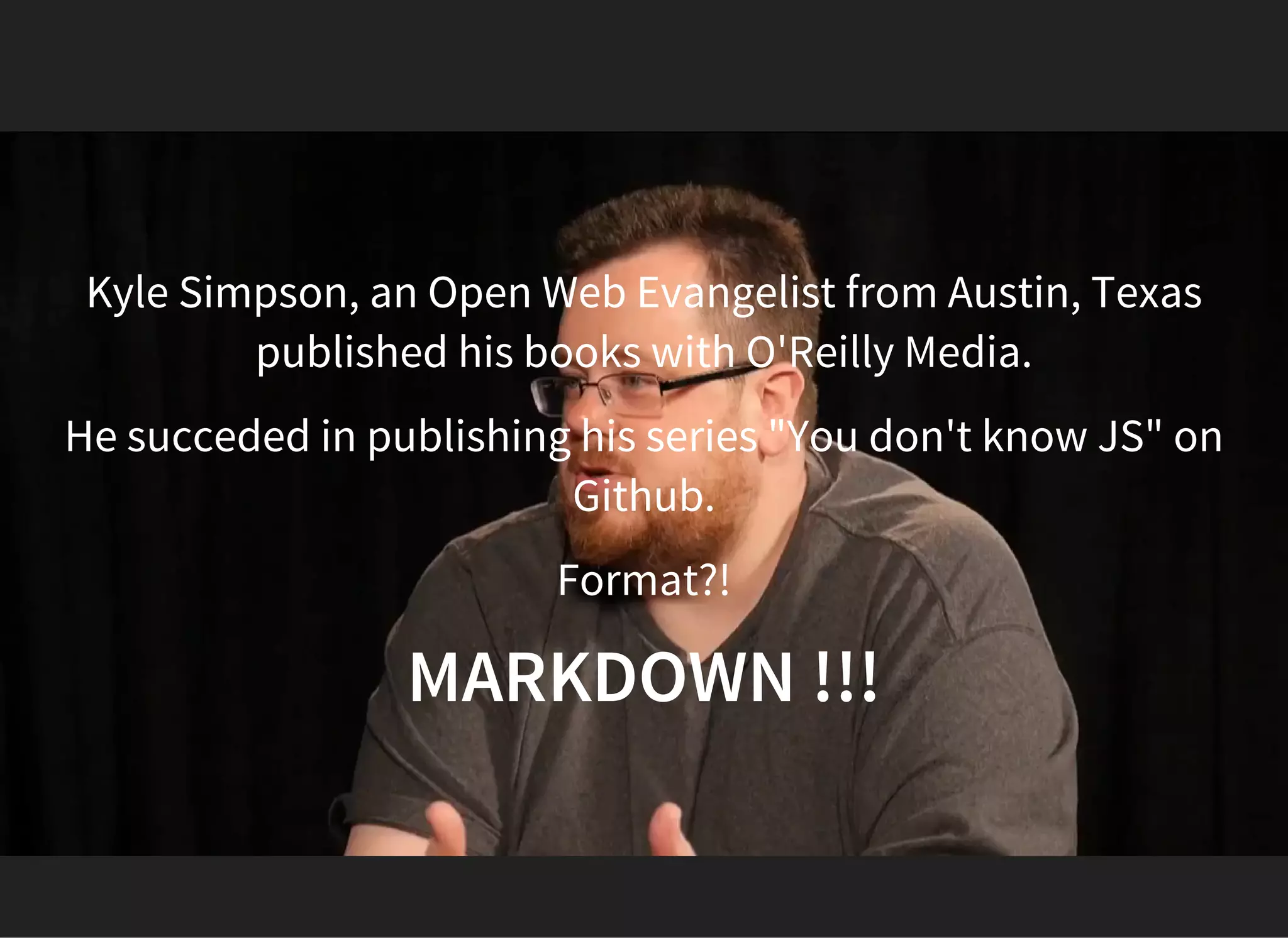
Kyle Simpson, an Open Web Evangelist from Austin, Texas
published his books with O'Reilly Media.
He succeded in publishing his series "You don't know JS" on
Github.
Format?!
MARKDOWN !!!
YOU SEARCH FOR PATTERNS ACCORDING
TO A MODEL, AND THIS IS DATA.
YOUR PAPER IS DATA BUILDING
ABSTRACTIONS ON PRIMARY ONE.
THIS DATA IS DESCRIBED BY DATA
(METADATA).
MANY OF THESE BECOME SOMEONE'S
DATA.
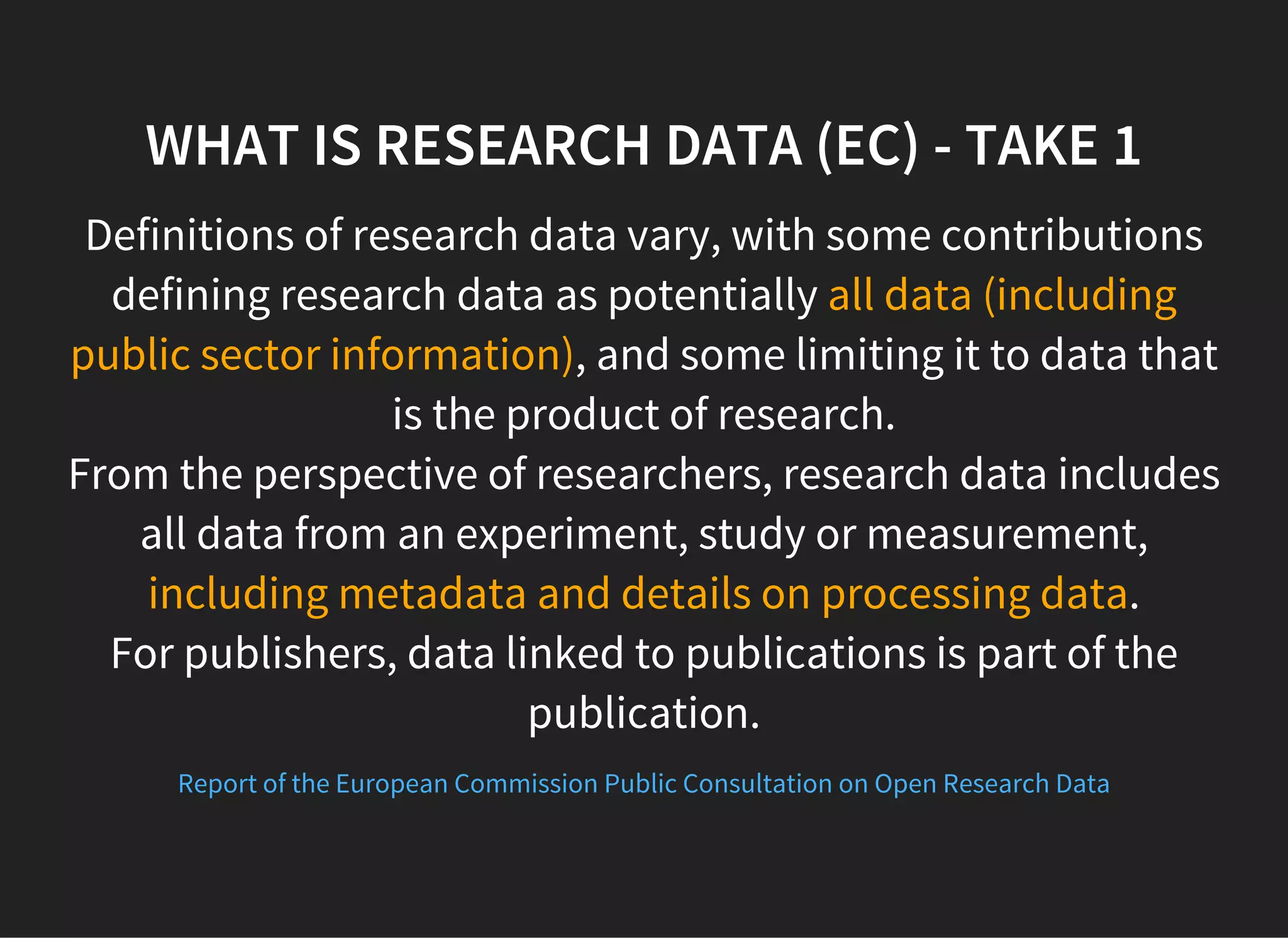
WHAT IS RESEARCH DATA (EC) - TAKE 1
Definitions of research data vary, with some contributions
defining research data as potentially all data (including
public sector information), and some limiting it to data that
is the product of research.
From the perspective of researchers, research data includes
all data from an experiment, study or measurement,
including metadata and details on processing data.
For publishers, data linked to publications is part of the
publication.
Report of the European Commission Public Consultation on Open Research Data
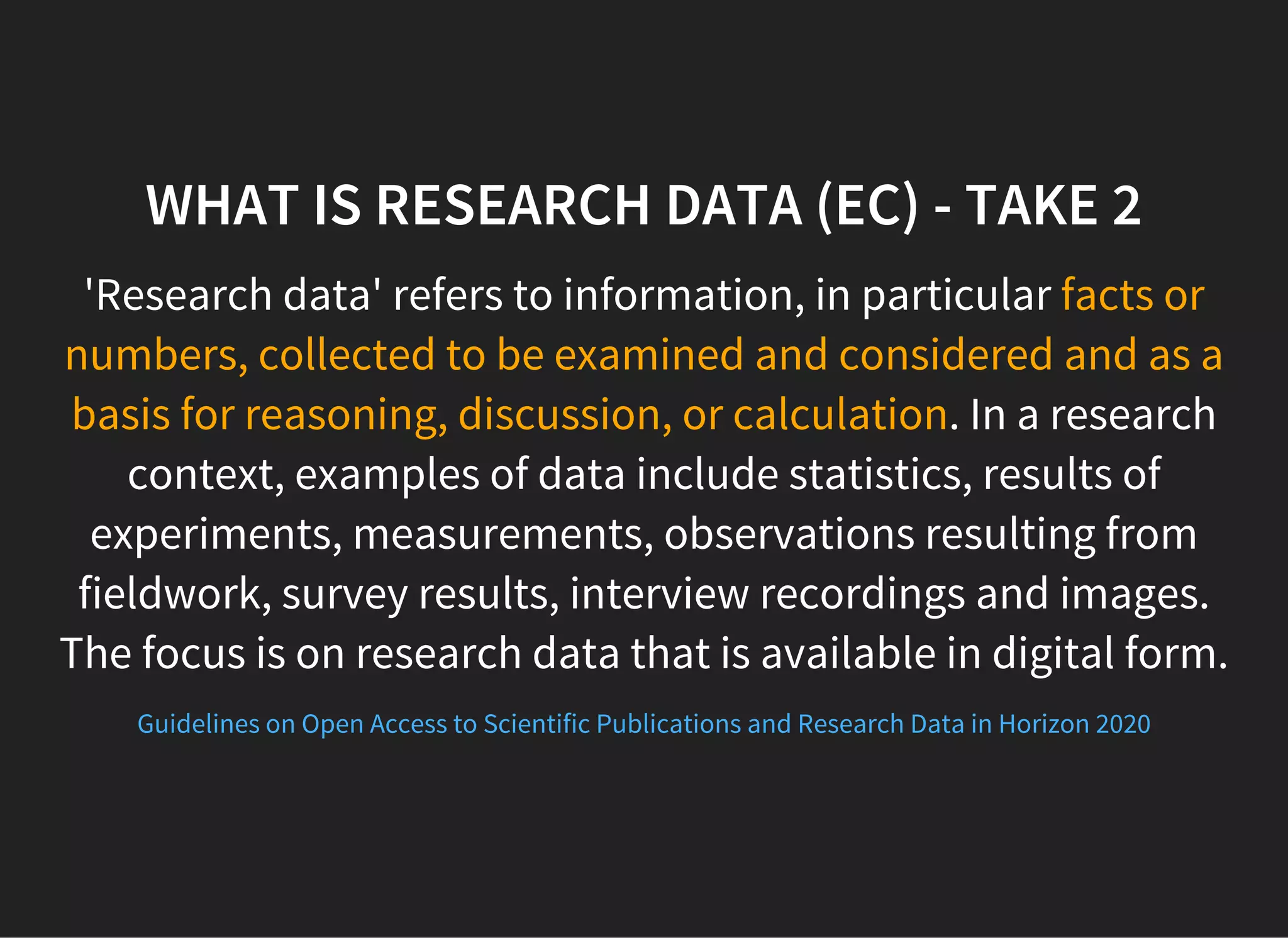
WHAT IS RESEARCH DATA (EC) - TAKE 2
'Research data' refers to information, in particular facts or
numbers, collected to be examined and considered and as a
basis for reasoning, discussion, or calculation. In a research
context, examples of data include statistics, results of
experiments, measurements, observations resulting from
fieldwork, survey results, interview recordings and images.
The focus is on research data that is available in digital form.
Guidelines on Open Access to Scientific Publications and Research Data in Horizon 2020
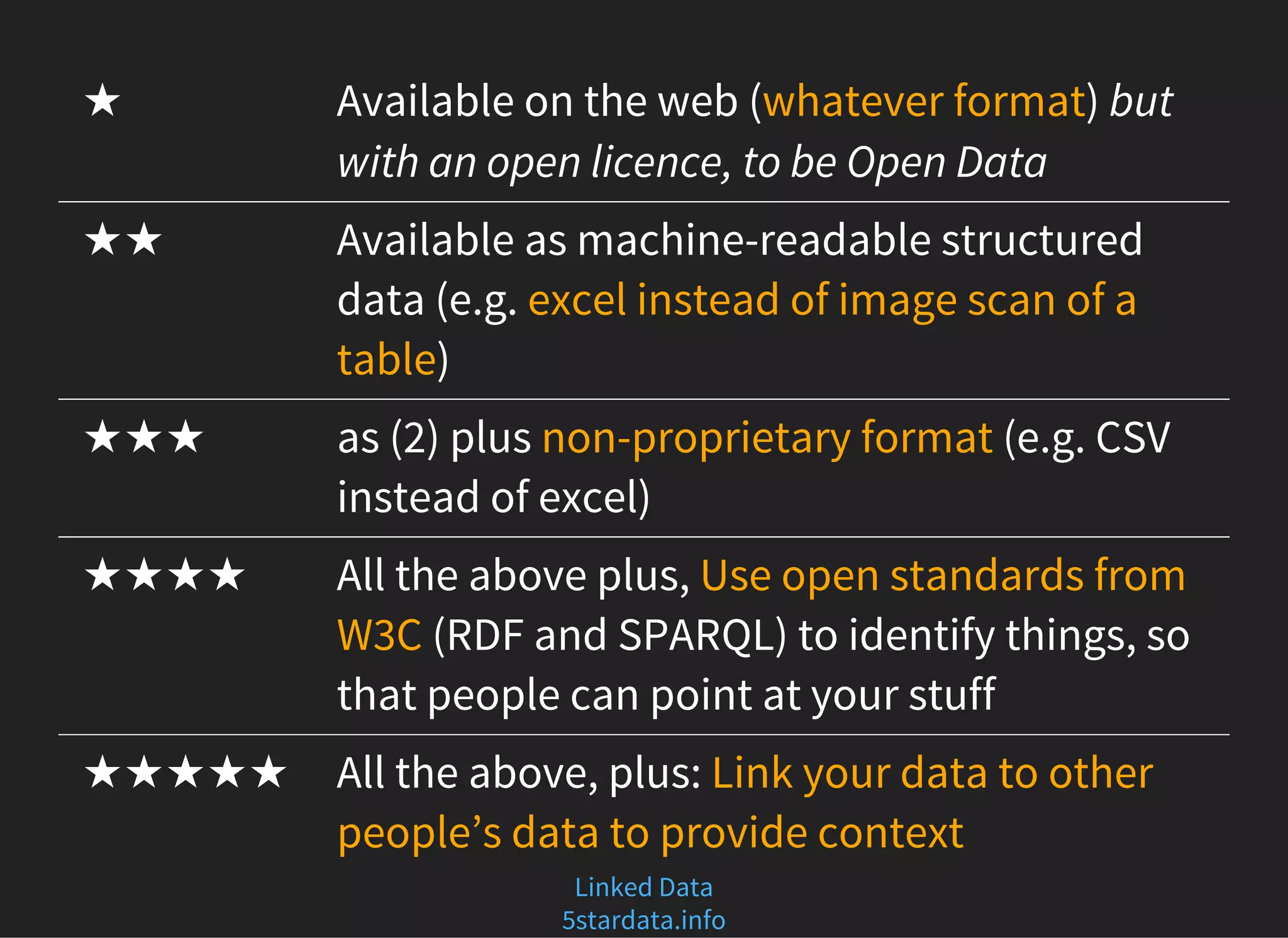
★ Available on the web (whatever format) but
with an open licence, to be Open Data
★★ Available as machine-readable structured
data (e.g. excel instead of image scan of a
table)
★★★ as (2) plus non-proprietary format (e.g. CSV
instead of excel)
★★★★ All the above plus, Use open standards from
W3C (RDF and SPARQL) to identify things, so
that people can point at your stuff
★★★★★ All the above, plus: Link your data to other
people’s data to provide context
Linked Data
5stardata.info
What generally happens is once you're all
finished with the data it just sits on a hard
disk somewhere and dies. (Nathan Jenkins,
Authorea)
Can The "GitHub For Science" Convince Researchers To Open-Source Their Data?
Peter Murray-Rust (born 1941) is a chemist currently
working at the University of Cambridge.
Now he is "liberating science daily".
NANOPUBLICATIONS
“A nanopublication is the smallest unit of publishable
information: an assertion about anything that can be
uniquely identified and attributed to its author1”.
Nanopublications are the works of Concept Web Alliance, a
collaborative community that is actively addressing the
challenges associated with the production of
unprecedented volumes of academic and professional
data.In short as the community behind it states,
nanopublications are to be regarded as “core scientific
statements with associated context”.
APIs allow you to say about data that:
OpenAIRE2020 a new hope... at least for EC research data
http://api.openaire.eu/
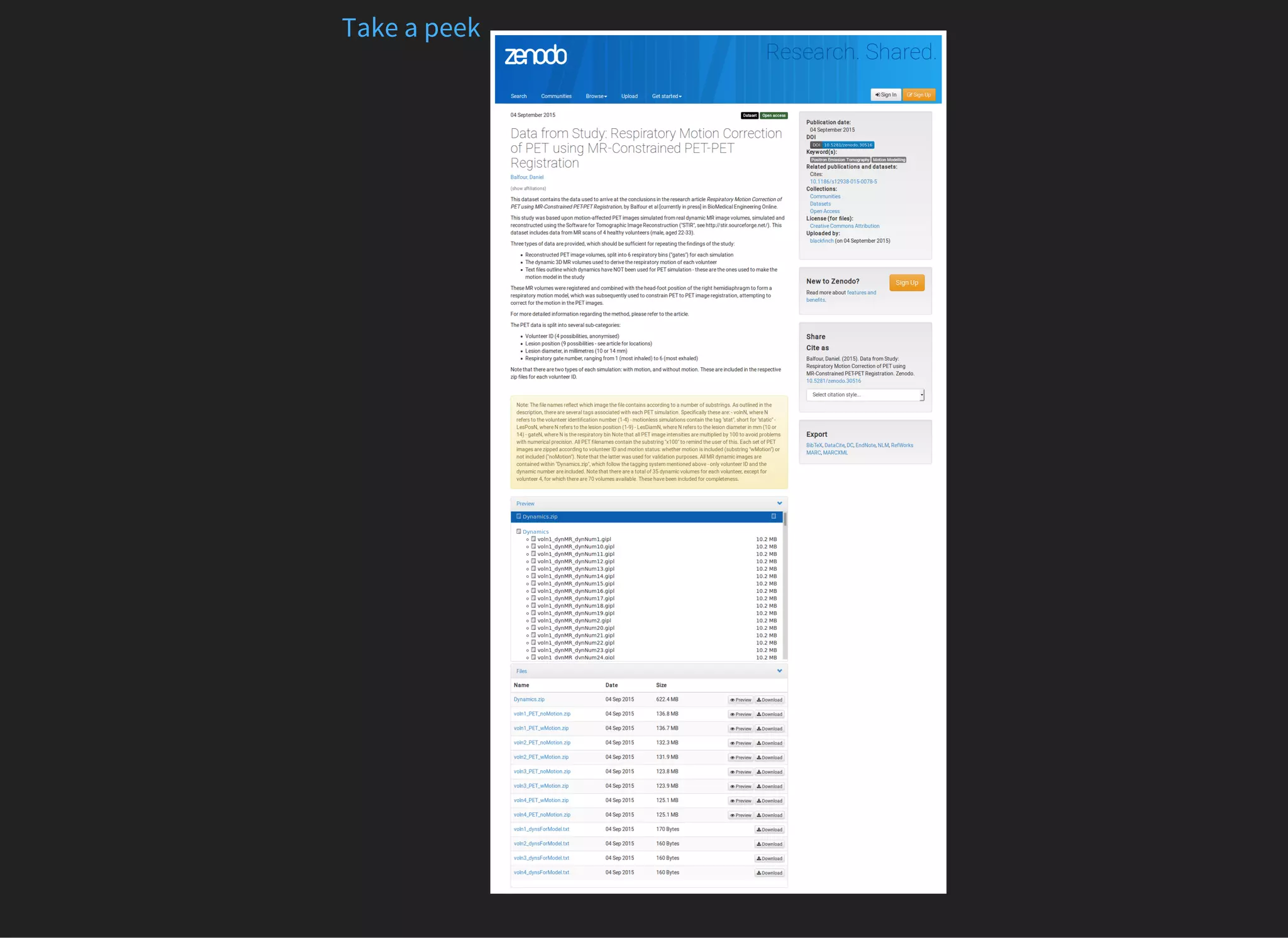
Take a peek
CONTROVERCIES
NEED FOR FIXITY
WWWW generates dynamic pages. How can you argue
with the need for fixity?! is there a need for fixity
PUBLISH UNDER LABEL OR ENTER INDIE
ROW
What is safer? getting under the university’s umbrella or a
well-known label and publish under the terms dictated?
Go indie and struggle in the advent of a new way of self-
promoting
Future of publishing is interwoven with the capacity of
transforming a “publication” - research output – into a hub,
a proxy or a “small world” that is highly connected with
others on the semantic levels.
A possible trend for publishing is reserved to the mutable
document and data if the data is the document. In fact,
mutable to a form that will enable others to “see further”
through possible re-use, forking and versioning. The is a
nuance in the sense that a difference has to be made
between the peer-reviewed publication of one author as
part of the scientific record which is immutable and the
research database or data set that is mutable
It is wise as a creator, as a researcher to retain all
documents produced alone or in collaboration. The reasons
are multiple, but the biggest threat is web services evolution
sometimes leading to site-deaths taking off and breaking all
the permalinks (links retrieving a single post) in the process
Another reason for self-publishing is linked to ownership of
the resources created, which in turn leads to a direct chain
of citations. And one of the most valuable gain is having the
URLs of the resources in your domain. In time, this resolves
to better searchability and better metrics through local
analytics.
BEYOND THE HILL?!
You will be asked to link your linked data to your colleague
linked data.
Today scholarly communication is no more an effort of
aggregation and quantification indices. It is how to expose
content, if possible linked content in better ways both for
humans and for machines
MACHINES ARE FIRST CLASS CITIZENS TODAY
HVALA LIJEPA!

STRETCHING THE BOUNDARIES OF PUBLISHING: ALTERNATIVES

  • 1.
    STRETCHING THE BOUNDARIESOF PUBLISHING ALTERNATIVES /Constantinescu Nicolaie @kosson 2015
  • 2.
    the global scientificpublication output is growing at a rate of approximately 3% annually. The volume of publications doubles approximately every 24 years Bornmann, Lutz, and Ruediger Mutz. “Growth Rates of Modern Science: A Bibliometric Analysis Based on the Number of Publications and Cited References.”
  • 3.
    nine out of10 academic papers—which both often take years to research, compile, submit, and get published, and are a major component by which a scholar’s output is measured contribute little to the academic conversation Gordon, Aaron. “Killing Pigs and Weed Maps: The Mostly Unread World of Academic Papers.” Pacific Standard
  • 4.
    Research publication inpeer-reviewed journals has become a wasteful process that is more focused on metrics for researcher and journal performance and on profits for commercial publishers than on disseminating information useful for researchers and society. Shashok, Karen. “Authors’ Editors in the 21st Century: Promoters of Publication Quality and Efficiency.” European Science Editing
  • 5.
  • 6.
    Rob Welsh, ProductDesigner and Co-Founder of Scholastica One of the biggest bottlenecks in Open Access publishing is typesetting. It shouldn’t be
  • 7.
  • 8.
    We call itmarkup and is tradition for us! WELCOME TO YOUR DOM
  • 11.
    EPUB+WEB Is a “vision”fostered by the W3C to advance the establishment of a document representation to be used in the context of Open Web Platform. This public working draft has a section dedicated to scholarly publishers and STM publishers.
  • 12.
    A TASTE OFTHE NEW AND THE CHANGE Gareth James
  • 13.
  • 14.
    a plain textformatting syntax says John Grubber, a the prime references
  • 15.
    There is alsoa version of markdown designed for scholarly communications Take a look
  • 16.
  • 17.
  • 19.
    What was thelast version?
  • 20.
  • 22.
    And, yes, it'smarkdown again: a publishing toolchain
  • 25.
    Kyle Simpson, anOpen Web Evangelist from Austin, Texas published his books with O'Reilly Media. He succeded in publishing his series "You don't know JS" on Github. Format?! MARKDOWN !!!
  • 26.
    YOU SEARCH FORPATTERNS ACCORDING TO A MODEL, AND THIS IS DATA. YOUR PAPER IS DATA BUILDING ABSTRACTIONS ON PRIMARY ONE. THIS DATA IS DESCRIBED BY DATA (METADATA). MANY OF THESE BECOME SOMEONE'S DATA.
  • 27.
    WHAT IS RESEARCHDATA (EC) - TAKE 1 Definitions of research data vary, with some contributions defining research data as potentially all data (including public sector information), and some limiting it to data that is the product of research. From the perspective of researchers, research data includes all data from an experiment, study or measurement, including metadata and details on processing data. For publishers, data linked to publications is part of the publication. Report of the European Commission Public Consultation on Open Research Data
  • 28.
    WHAT IS RESEARCHDATA (EC) - TAKE 2 'Research data' refers to information, in particular facts or numbers, collected to be examined and considered and as a basis for reasoning, discussion, or calculation. In a research context, examples of data include statistics, results of experiments, measurements, observations resulting from fieldwork, survey results, interview recordings and images. The focus is on research data that is available in digital form. Guidelines on Open Access to Scientific Publications and Research Data in Horizon 2020
  • 29.
    ★ Available onthe web (whatever format) but with an open licence, to be Open Data ★★ Available as machine-readable structured data (e.g. excel instead of image scan of a table) ★★★ as (2) plus non-proprietary format (e.g. CSV instead of excel) ★★★★ All the above plus, Use open standards from W3C (RDF and SPARQL) to identify things, so that people can point at your stuff ★★★★★ All the above, plus: Link your data to other people’s data to provide context Linked Data 5stardata.info
  • 30.
    What generally happensis once you're all finished with the data it just sits on a hard disk somewhere and dies. (Nathan Jenkins, Authorea) Can The "GitHub For Science" Convince Researchers To Open-Source Their Data?
  • 31.
    Peter Murray-Rust (born1941) is a chemist currently working at the University of Cambridge. Now he is "liberating science daily".
  • 33.
    NANOPUBLICATIONS “A nanopublication isthe smallest unit of publishable information: an assertion about anything that can be uniquely identified and attributed to its author1”. Nanopublications are the works of Concept Web Alliance, a collaborative community that is actively addressing the challenges associated with the production of unprecedented volumes of academic and professional data.In short as the community behind it states, nanopublications are to be regarded as “core scientific statements with associated context”.
  • 34.
    APIs allow youto say about data that:
  • 35.
    OpenAIRE2020 a newhope... at least for EC research data http://api.openaire.eu/
  • 37.
  • 38.
    CONTROVERCIES NEED FOR FIXITY WWWWgenerates dynamic pages. How can you argue with the need for fixity?! is there a need for fixity PUBLISH UNDER LABEL OR ENTER INDIE ROW What is safer? getting under the university’s umbrella or a well-known label and publish under the terms dictated? Go indie and struggle in the advent of a new way of self- promoting
  • 39.
    Future of publishingis interwoven with the capacity of transforming a “publication” - research output – into a hub, a proxy or a “small world” that is highly connected with others on the semantic levels.
  • 41.
    A possible trendfor publishing is reserved to the mutable document and data if the data is the document. In fact, mutable to a form that will enable others to “see further” through possible re-use, forking and versioning. The is a nuance in the sense that a difference has to be made between the peer-reviewed publication of one author as part of the scientific record which is immutable and the research database or data set that is mutable
  • 42.
    It is wiseas a creator, as a researcher to retain all documents produced alone or in collaboration. The reasons are multiple, but the biggest threat is web services evolution sometimes leading to site-deaths taking off and breaking all the permalinks (links retrieving a single post) in the process
  • 43.
    Another reason forself-publishing is linked to ownership of the resources created, which in turn leads to a direct chain of citations. And one of the most valuable gain is having the URLs of the resources in your domain. In time, this resolves to better searchability and better metrics through local analytics.
  • 44.
    BEYOND THE HILL?! Youwill be asked to link your linked data to your colleague linked data.
  • 45.
    Today scholarly communicationis no more an effort of aggregation and quantification indices. It is how to expose content, if possible linked content in better ways both for humans and for machines MACHINES ARE FIRST CLASS CITIZENS TODAY
  • 46.