STRESS
       MANAGEMENT

     Ag Program Human Resources

             Bob Hensz


            Overview


• What is Stress
• Effects
• Dealing with Stress
• Your Stress Management Plan


      What is Stress??


Our response to any situation
 we find challenging,
 frightening, or difficult


                                  1
Stress

• Everyday fact of life
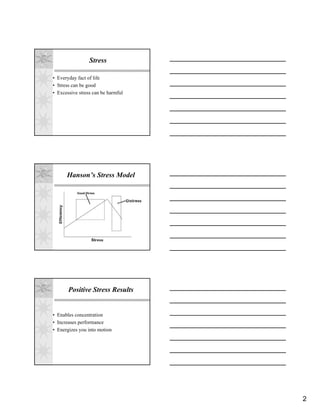
• Stress can be good
• Excessive stress can be harmful


      Hanson’s Stress Model


       Positive Stress Results


• Enables concentration
• Increases performance
• Energizes you into motion


                                    2
Negative Stress Results

• Loss of motivation
• Reduces effectiveness
• Physical, mental, and behavioral problems


         Physical Stress Signs

•   Increased breathing
•   Heart rate increase
•   Muscles tighten
•   Cold clammy hands
•   Hands shake


     Long Term Physical Signs

•   Immune system less efficient
•   GI tract disorders
•   Fatigue
•   Sleeplessness
•   Longer recovery from injury
•   Endocrine system problems


                                              3
Mental Stress Signs

•   Anxiety
•   Forgetfulness
•   Depression
•   Apathy
•   Confusion


      Behavioral Signs of Stress

•   Hostility
•   Listlessness
•   Irritability
•   Under/over eating


           Signs of Job Stress

•   Resist going to work
•   Tired all day
•   Watch the clock
•   Loss of concentration
•   Not open to change
•   Excessive absenteeism


                                   4
React or Deal with It?

• Watch more TV              • Exercise
• Over/under eat             • Eat properly
• Blame others               • Talk to a
• Smoke, drink, drug           friend/counselor
  use                        • Join a support group
• Drive too fast/reckless    • Be active with family
• Withdraw


            How To Manage Stress

•       Identify your stressors
•       Know how you react
•       Learn techniques to deal with stress
•       Integrate stress management into your daily
        life


               Mental Techniques


    •   Time management
    •   Organize
    •   Re-label
    •   Problem solve


                                                       5
Identify Important Things

• Identify your values
• Set goals
• Establish priorities


                  Diversions

•   Music
•   Hobbies
•   Play
•   Learning
•   Vacation


           Physical Techniques

•   Body Scan – “relax-let go”
•   Deep breathing
•   Exercise
•   Meditation
•   Imagery
•   Nutrition
•   Rest
•   Laughter


                                  6
Workplace Skills

•   Delegate
•   Anticipate problems
•   Be assertive
•   Be decisive
•   Organize
•   Balance work and personal time


       Stress Management Plan

•   Identify Stressors
•   Determine your reactions
•   Techniques currently used
•   Techniques to add or change


                 Summary

•   Definition of Stress
•   Results of Stress
•   Stress Signs
•   How to Manage Stress
•   Stress Management Plan


                                     7
Supplemental materials

•   Stress busters
•   Stress triggers
•   Effects of stress
•   Techniques for stress reduction


                 Resources

• Peter G. Hanson, Joy of Stress, 1985
• Charles B. Inlander, Stress: 63 Ways to
  Relieve Tension and Stay Healthy, 1996
  People’s Medical Society


                                            8

Stress management

  • 1.
    STRESS MANAGEMENT Ag Program Human Resources Bob Hensz Overview • What is Stress • Effects • Dealing with Stress • Your Stress Management Plan What is Stress?? Our response to any situation we find challenging, frightening, or difficult 1
  • 2.
    Stress • Everyday factof life • Stress can be good • Excessive stress can be harmful Hanson’s Stress Model Positive Stress Results • Enables concentration • Increases performance • Energizes you into motion 2
  • 3.
    Negative Stress Results •Loss of motivation • Reduces effectiveness • Physical, mental, and behavioral problems Physical Stress Signs • Increased breathing • Heart rate increase • Muscles tighten • Cold clammy hands • Hands shake Long Term Physical Signs • Immune system less efficient • GI tract disorders • Fatigue • Sleeplessness • Longer recovery from injury • Endocrine system problems 3
  • 4.
    Mental Stress Signs • Anxiety • Forgetfulness • Depression • Apathy • Confusion Behavioral Signs of Stress • Hostility • Listlessness • Irritability • Under/over eating Signs of Job Stress • Resist going to work • Tired all day • Watch the clock • Loss of concentration • Not open to change • Excessive absenteeism 4
  • 5.
    React or Dealwith It? • Watch more TV • Exercise • Over/under eat • Eat properly • Blame others • Talk to a • Smoke, drink, drug friend/counselor use • Join a support group • Drive too fast/reckless • Be active with family • Withdraw How To Manage Stress • Identify your stressors • Know how you react • Learn techniques to deal with stress • Integrate stress management into your daily life Mental Techniques • Time management • Organize • Re-label • Problem solve 5
  • 6.
    Identify Important Things •Identify your values • Set goals • Establish priorities Diversions • Music • Hobbies • Play • Learning • Vacation Physical Techniques • Body Scan – “relax-let go” • Deep breathing • Exercise • Meditation • Imagery • Nutrition • Rest • Laughter 6
  • 7.
    Workplace Skills • Delegate • Anticipate problems • Be assertive • Be decisive • Organize • Balance work and personal time Stress Management Plan • Identify Stressors • Determine your reactions • Techniques currently used • Techniques to add or change Summary • Definition of Stress • Results of Stress • Stress Signs • How to Manage Stress • Stress Management Plan 7
  • 8.
    Supplemental materials • Stress busters • Stress triggers • Effects of stress • Techniques for stress reduction Resources • Peter G. Hanson, Joy of Stress, 1985 • Charles B. Inlander, Stress: 63 Ways to Relieve Tension and Stay Healthy, 1996 People’s Medical Society 8