By
Eman A. Abd
Alrahman 1
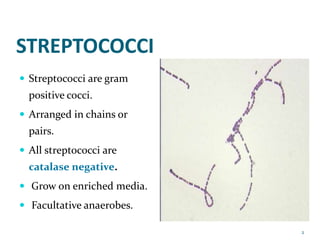
STREPTOCOCCI
 Streptococci are gram
positive cocci.
 Arranged in chains or
pairs.
 All streptococci are
catalase negative.
 Grow on enriched media.
 Facultative anaerobes.
2
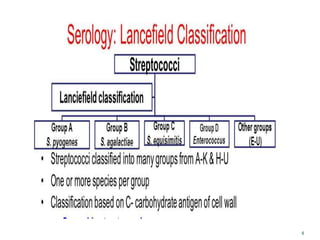
Streptococcal classification
3
4
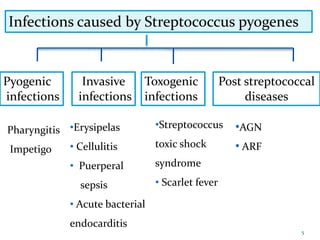
Infections caused by Streptococcus pyogenes
Pyogenic
infections
Invasive
infections
Toxogenic
infections
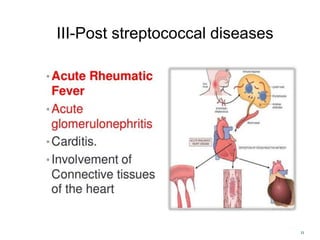
Post streptococcal
diseases
Pharyngitis
Impetigo
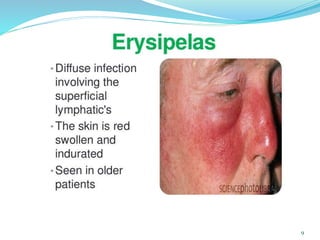
•Erysipelas
• Cellulitis
• Puerperal
sepsis
• Acute bacterial
endocarditis
•Streptococcus
toxic shock
syndrome
• Scarlet fever
•AGN
• ARF
5
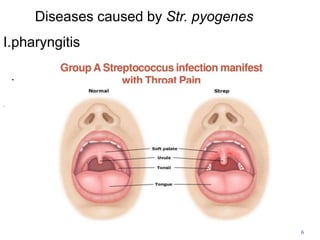
Diseases caused by Str. pyogenes
I.pharyngitis
.
.
6
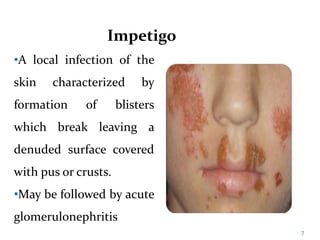
•A local infection of the
skin characterized by
formation of blisters
which break leaving a
denuded surface covered
with pus or crusts.
•May be followed by acute
glomerulonephritis
Impetigo
7
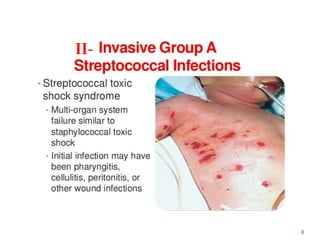
II-
8
9
10
III-Post streptococcal diseases
11
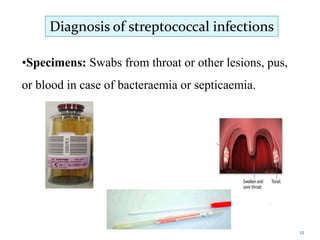
•Specimens: Swabs from throat or other lesions, pus,
or blood in case of bacteraemia or septicaemia.
Diagnosis of streptococcal infections
12
Diagnosis of Streptococcal Diseases:
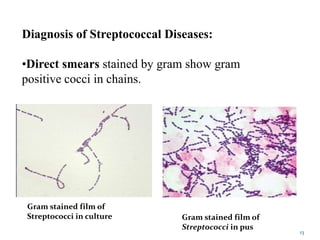
•Direct smears stained by gram show gram
positive cocci in chains.
Gram stained film of
Streptococci in culture Gram stained film of
Streptococci in pus
13
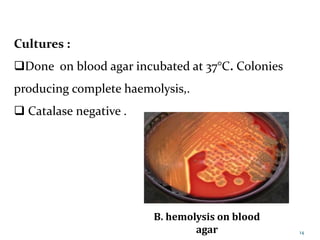
Cultures :
Done on blood agar incubated at 37°C. Colonies
producing complete haemolysis,.
 Catalase negative .
B. hemolysis on blood
agar 14
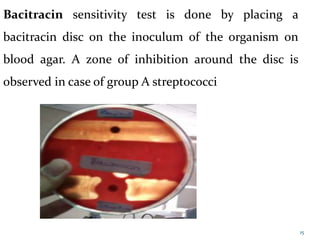
Bacitracin sensitivity test is done by placing a
bacitracin disc on the inoculum of the organism on
blood agar. A zone of inhibition around the disc is
observed in case of group A streptococci
15
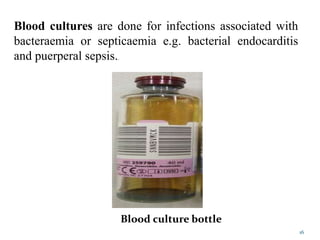
Blood cultures are done for infections associated with
bacteraemia or septicaemia e.g. bacterial endocarditis
and puerperal sepsis..
Blood culture bottle
16
Lab diagnosis of post-streptococcal diseases:
Recent history of Str. pyogenes infection.
 Serologic tests.
1)Antistreptolysin O: more than 200 units
2)Anti-DNase B antibodies are high (80 units or more) in
group A streptococcal skin infections
3) Other less specific laboratory tests include;
• High erythrocyte sedimentation rate (ESR).
• Positive C-reactive protein (CRP).
17
18
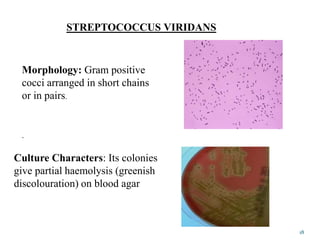
STREPTOCOCCUS VIRIDANS
Morphology: Gram positive
cocci arranged in short chains
or in pairs.
.
Culture Characters: Its colonies
give partial haemolysis (greenish
discolouration) on blood agar
19
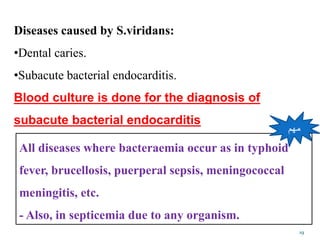
Diseases caused by S.viridans:
•Dental caries.
•Subacute bacterial endocarditis.
Blood culture is done for the diagnosis of
subacute bacterial endocarditis
All diseases where bacteraemia occur as in typhoid
fever, brucellosis, puerperal sepsis, meningococcal
meningitis, etc.
- Also, in septicemia due to any organism.
‫مهم‬
20
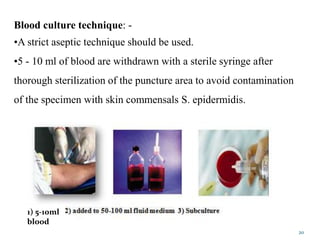
Blood culture technique: -
•A strict aseptic technique should be used.
•5 - 10 ml of blood are withdrawn with a sterile syringe after
thorough sterilization of the puncture area to avoid contamination
of the specimen with skin commensals S. epidermidis.
1) 5-10ml
blood
21
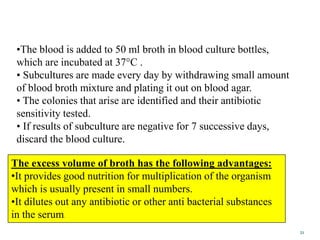
•The blood is added to 50 ml broth in blood culture bottles,
which are incubated at 37°C .
• Subcultures are made every day by withdrawing small amount
of blood broth mixture and plating it out on blood agar.
• The colonies that arise are identified and their antibiotic
sensitivity tested.
• If results of subculture are negative for 7 successive days,
discard the blood culture.
The excess volume of broth has the following advantages:
•It provides good nutrition for multiplication of the organism
which is usually present in small numbers.
•It dilutes out any antibiotic or other anti bacterial substances
in the serum.

STREPT.pptx

  • 1.
  • 2.
    STREPTOCOCCI  Streptococci aregram positive cocci.  Arranged in chains or pairs.  All streptococci are catalase negative.  Grow on enriched media.  Facultative anaerobes. 2
  • 3.
  • 4.
  • 5.
    Infections caused byStreptococcus pyogenes Pyogenic infections Invasive infections Toxogenic infections Post streptococcal diseases Pharyngitis Impetigo •Erysipelas • Cellulitis • Puerperal sepsis • Acute bacterial endocarditis •Streptococcus toxic shock syndrome • Scarlet fever •AGN • ARF 5
  • 6.
    Diseases caused byStr. pyogenes I.pharyngitis . . 6
  • 7.
    •A local infectionof the skin characterized by formation of blisters which break leaving a denuded surface covered with pus or crusts. •May be followed by acute glomerulonephritis Impetigo 7
  • 8.
  • 9.
  • 10.
  • 11.
  • 12.
    •Specimens: Swabs fromthroat or other lesions, pus, or blood in case of bacteraemia or septicaemia. Diagnosis of streptococcal infections 12
  • 13.
    Diagnosis of StreptococcalDiseases: •Direct smears stained by gram show gram positive cocci in chains. Gram stained film of Streptococci in culture Gram stained film of Streptococci in pus 13
  • 14.
    Cultures : Done onblood agar incubated at 37°C. Colonies producing complete haemolysis,.  Catalase negative . B. hemolysis on blood agar 14
  • 15.
    Bacitracin sensitivity testis done by placing a bacitracin disc on the inoculum of the organism on blood agar. A zone of inhibition around the disc is observed in case of group A streptococci 15
  • 16.
    Blood cultures aredone for infections associated with bacteraemia or septicaemia e.g. bacterial endocarditis and puerperal sepsis.. Blood culture bottle 16
  • 17.
    Lab diagnosis ofpost-streptococcal diseases: Recent history of Str. pyogenes infection.  Serologic tests. 1)Antistreptolysin O: more than 200 units 2)Anti-DNase B antibodies are high (80 units or more) in group A streptococcal skin infections 3) Other less specific laboratory tests include; • High erythrocyte sedimentation rate (ESR). • Positive C-reactive protein (CRP). 17
  • 18.
    18 STREPTOCOCCUS VIRIDANS Morphology: Grampositive cocci arranged in short chains or in pairs. . Culture Characters: Its colonies give partial haemolysis (greenish discolouration) on blood agar
  • 19.
    19 Diseases caused byS.viridans: •Dental caries. •Subacute bacterial endocarditis. Blood culture is done for the diagnosis of subacute bacterial endocarditis All diseases where bacteraemia occur as in typhoid fever, brucellosis, puerperal sepsis, meningococcal meningitis, etc. - Also, in septicemia due to any organism. ‫مهم‬
  • 20.
    20 Blood culture technique:- •A strict aseptic technique should be used. •5 - 10 ml of blood are withdrawn with a sterile syringe after thorough sterilization of the puncture area to avoid contamination of the specimen with skin commensals S. epidermidis. 1) 5-10ml blood
  • 21.
    21 •The blood isadded to 50 ml broth in blood culture bottles, which are incubated at 37°C . • Subcultures are made every day by withdrawing small amount of blood broth mixture and plating it out on blood agar. • The colonies that arise are identified and their antibiotic sensitivity tested. • If results of subculture are negative for 7 successive days, discard the blood culture. The excess volume of broth has the following advantages: •It provides good nutrition for multiplication of the organism which is usually present in small numbers. •It dilutes out any antibiotic or other anti bacterial substances in the serum.