STREPTOCOCCUS
                    By:
        Razon, Eunice L.
STREPTOCOCCUS


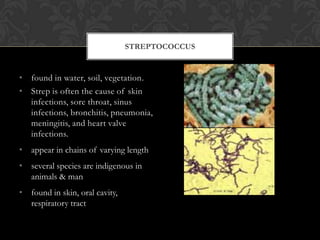
• found in water, soil, vegetation.
• Strep is often the cause of skin
  infections, sore throat, sinus
  infections, bronchitis, pneumonia,
  meningitis, and heart valve
  infections.
• appear in chains of varying length
• several species are indigenous in
  animals & man
• found in skin, oral cavity,
  respiratory tract
CELLULITIS


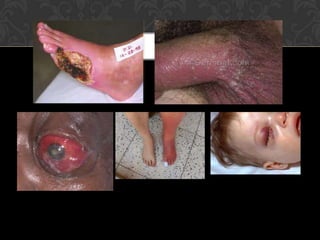
• is a localized or diffuse inflammation of connective
  tissue with severe inflammation of dermal and
  subcutaneous layers of the skin.
• result when streptococcus bacteria invade the skin
  through a cut or scrape.
• This is an infection of the deepest layers of the skin
  and usually occurs on the face or legs.
PREVENTION


• Wash your wound daily with soap and water.

• Apply an antibiotic cream or ointment.

• Watch for signs of infection.
SIGNS AND SYMPTOMS


• Cellulitis causes the area of affected skin to become red, hot,
  swollen, and tender or painful.

• Symptoms that develop before, or in combination with:
 nausea
 shivering
 chills
 a general sense of feeling unwell
DENTAL CORRELATION


The infection can spread via blood, lymph and tissue spaces. In dentistry, the
most relevant tissue spaces are the
• Pterygomandibular Space
• Lateralpharyngeal Space
• Retropharyngeal Space
• Infratemporal Fossa
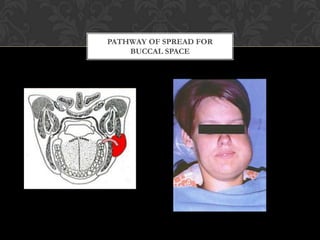
• Buccal Space
• Vestibular Space
• Sublingual Space
• Submandibular Space
• Submental Space
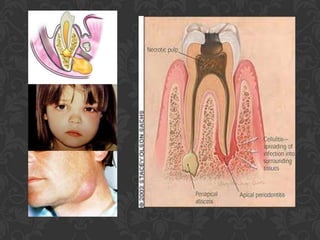
PATHWAY OF SPREAD FOR
    BUCCAL SPACE
TREATMENT


         Antibiotic regimens are effective in more than
    90% of patients. However, all but the smallest of
 abscesses require drainage for resolution, regardless of
the microbiology of the infection. In many instances, if
 the abscess is relatively isolated, with little surrounding
  tissue involvement, drainage may suffice without the
                    need for antibiotics.

streptococcus razon

  • 1.
    STREPTOCOCCUS By: Razon, Eunice L.
  • 2.
    STREPTOCOCCUS • found inwater, soil, vegetation. • Strep is often the cause of skin infections, sore throat, sinus infections, bronchitis, pneumonia, meningitis, and heart valve infections. • appear in chains of varying length • several species are indigenous in animals & man • found in skin, oral cavity, respiratory tract
  • 3.
    CELLULITIS • is alocalized or diffuse inflammation of connective tissue with severe inflammation of dermal and subcutaneous layers of the skin. • result when streptococcus bacteria invade the skin through a cut or scrape. • This is an infection of the deepest layers of the skin and usually occurs on the face or legs.
  • 5.
    PREVENTION • Wash yourwound daily with soap and water. • Apply an antibiotic cream or ointment. • Watch for signs of infection.
  • 6.
    SIGNS AND SYMPTOMS •Cellulitis causes the area of affected skin to become red, hot, swollen, and tender or painful. • Symptoms that develop before, or in combination with:  nausea  shivering  chills  a general sense of feeling unwell
  • 7.
    DENTAL CORRELATION The infectioncan spread via blood, lymph and tissue spaces. In dentistry, the most relevant tissue spaces are the • Pterygomandibular Space • Lateralpharyngeal Space • Retropharyngeal Space • Infratemporal Fossa • Buccal Space • Vestibular Space • Sublingual Space • Submandibular Space • Submental Space
  • 8.
    PATHWAY OF SPREADFOR BUCCAL SPACE
  • 10.
    TREATMENT Antibiotic regimens are effective in more than 90% of patients. However, all but the smallest of abscesses require drainage for resolution, regardless of the microbiology of the infection. In many instances, if the abscess is relatively isolated, with little surrounding tissue involvement, drainage may suffice without the need for antibiotics.