STRENGTHENING MATHEMATICS INSTRUCTION
Cognitive Complexity and Instructional Practices
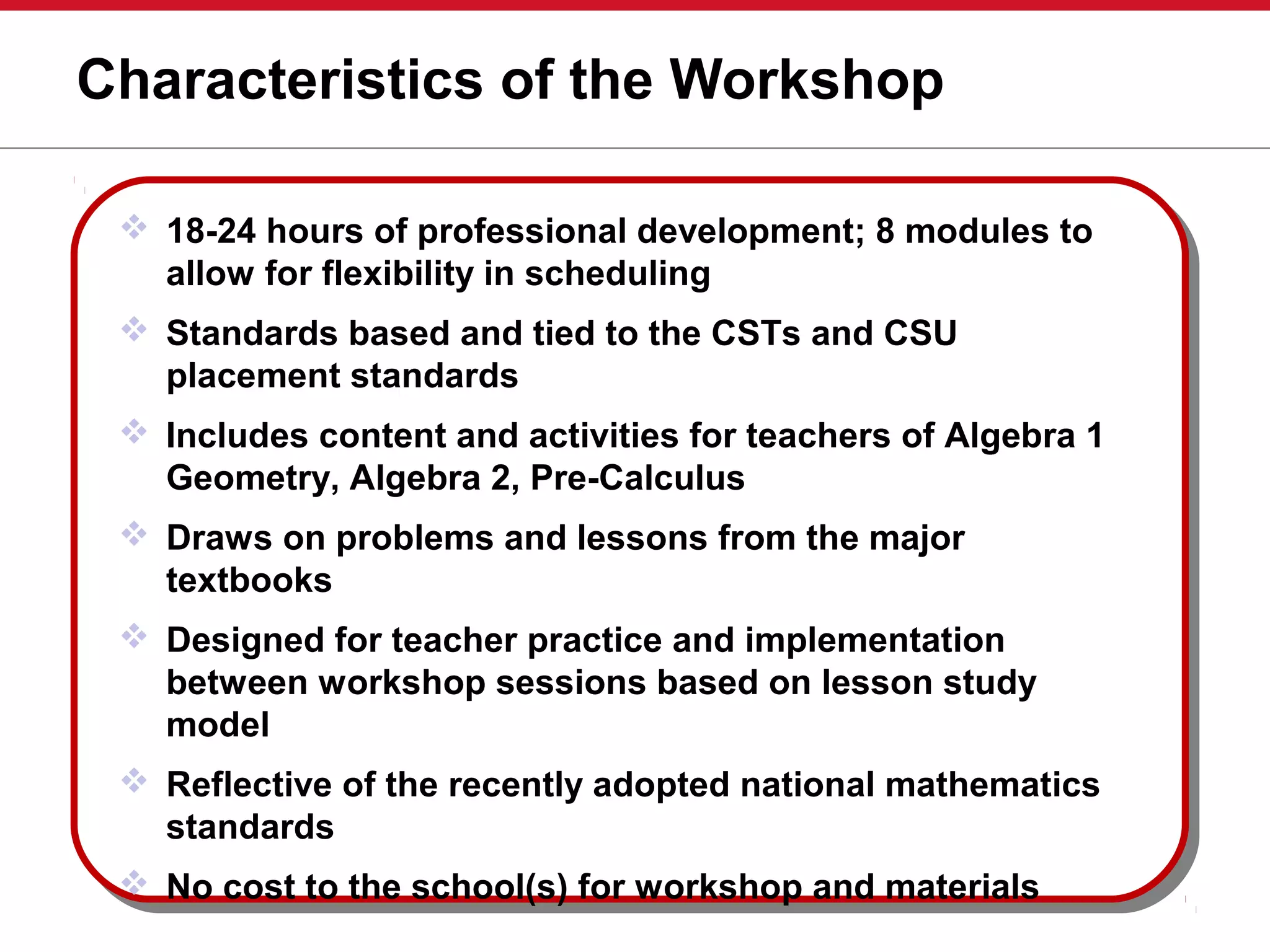
Characteristics of the Workshop
 18-24 hours of professional development; 8 modules to
allow for flexibility in scheduling
 Standards based and tied to the CSTs and CSU
placement standards
 Includes content and activities for teachers of Algebra 1
Geometry, Algebra 2, Pre-Calculus
 Draws on problems and lessons from the major
textbooks
 Designed for teacher practice and implementation
between workshop sessions based on lesson study
model
 Reflective of the recently adopted national mathematics
standards
 No cost to the school(s) for workshop and materials
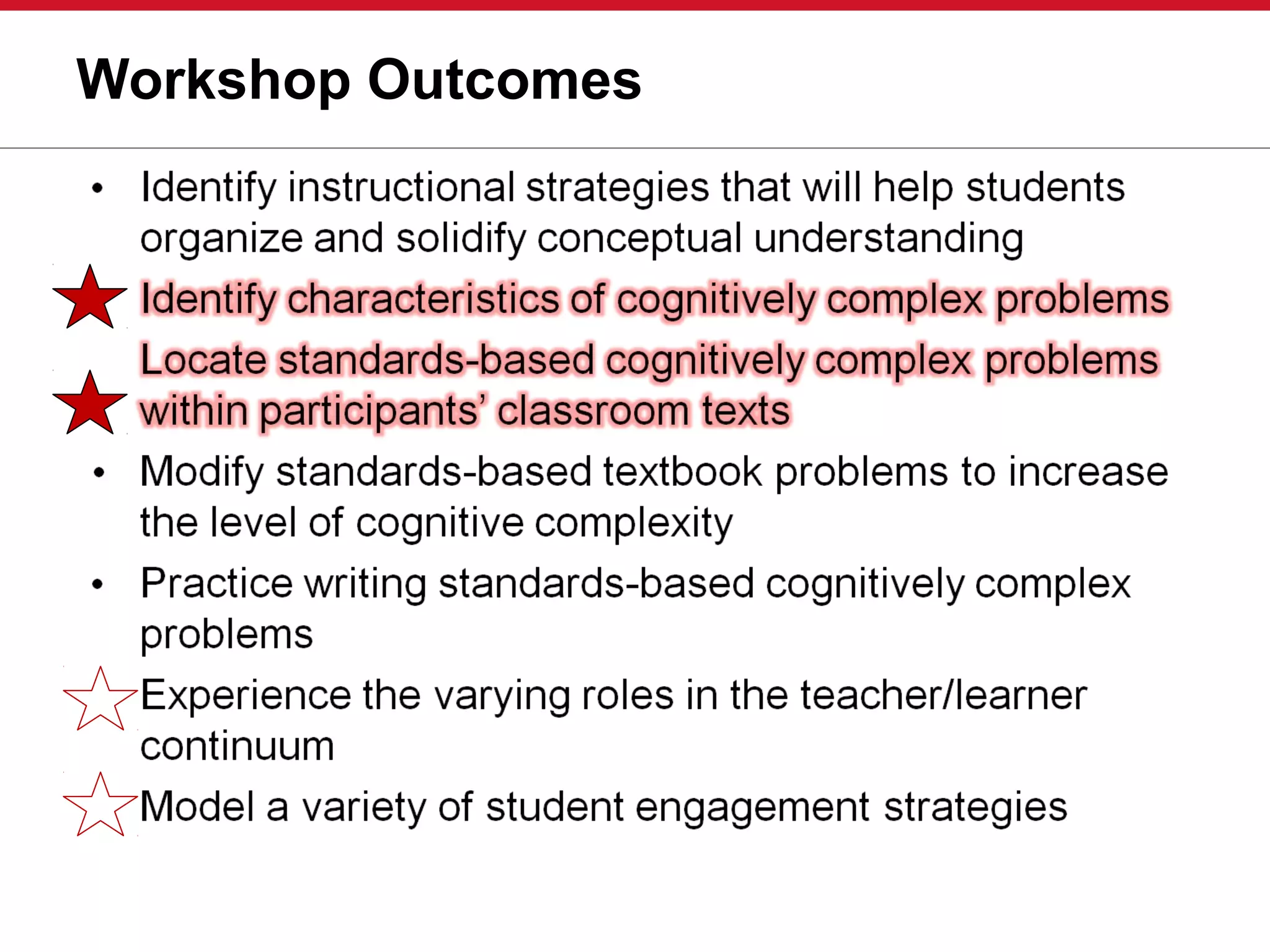
Workshop Outcomes
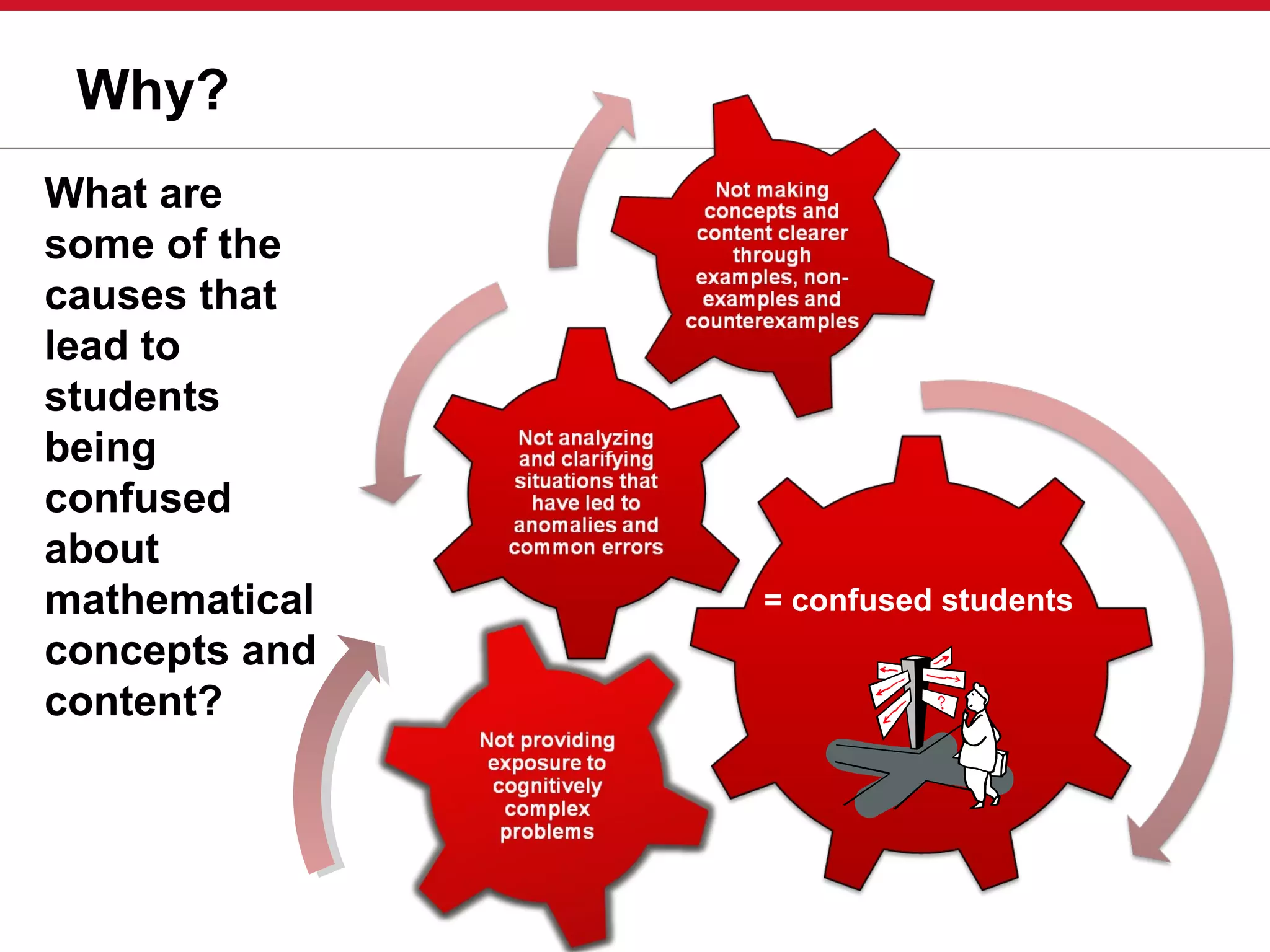
Why?
= confused students
What are
some of the
causes that
lead to
students
being
confused
about
mathematical
concepts and
content?
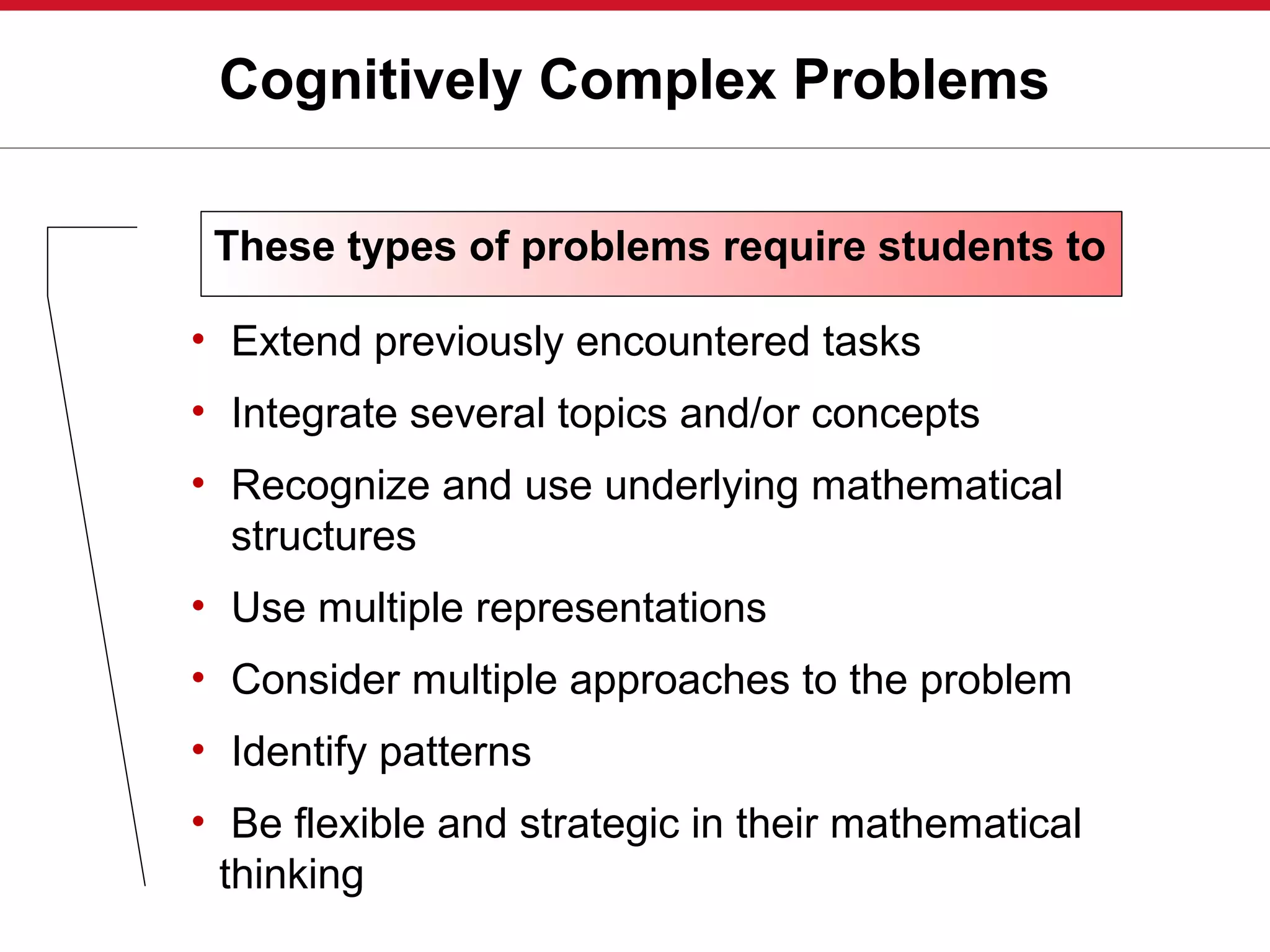
Cognitively Complex Problems
• Extend previously encountered tasks
• Integrate several topics and/or concepts
• Recognize and use underlying mathematical
structures
• Use multiple representations
• Consider multiple approaches to the problem
• Identify patterns
• Be flexible and strategic in their mathematical
thinking
These types of problems require students to
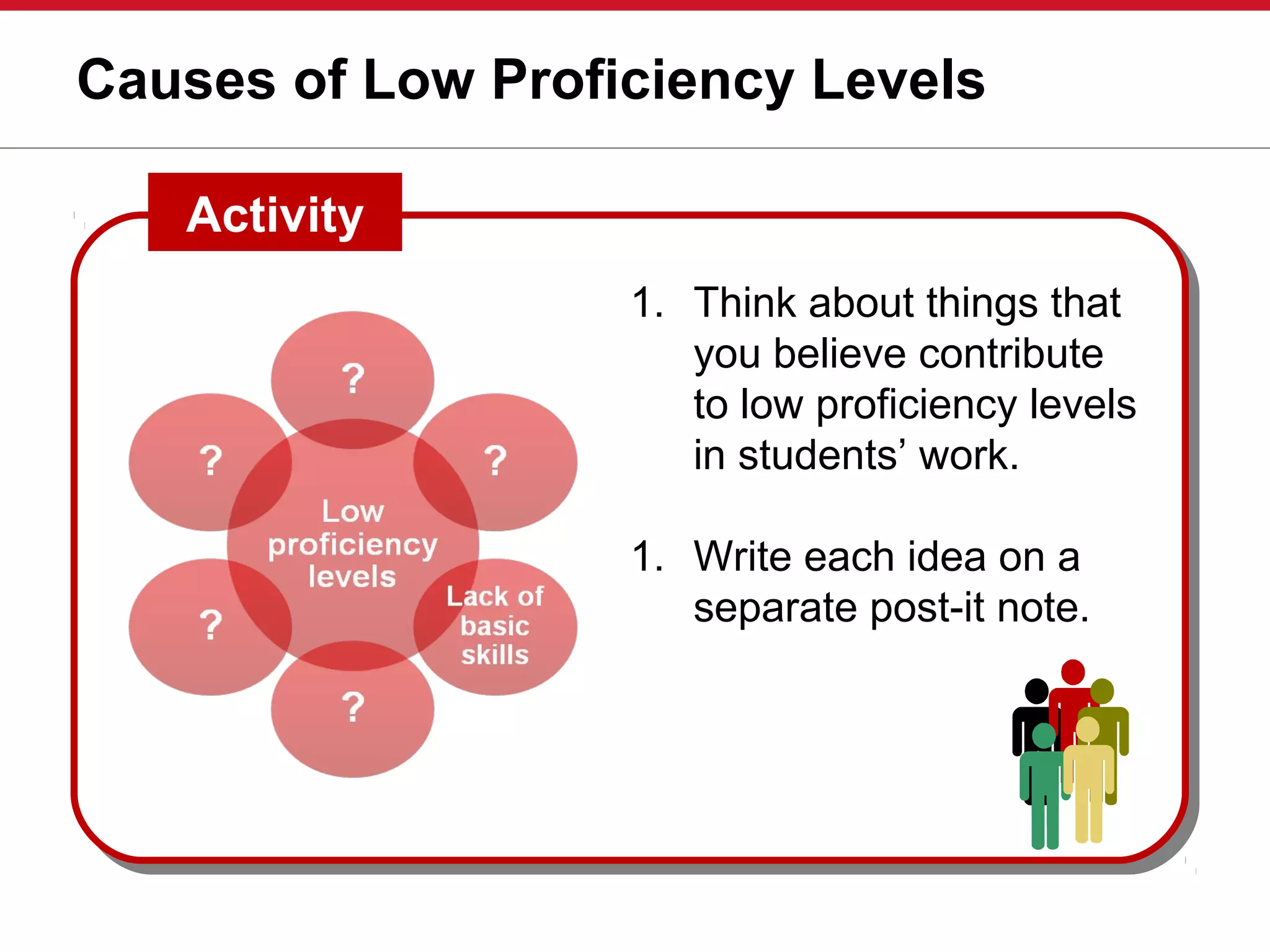
Causes of Low Proficiency Levels
Activity
1. Think about things that
you believe contribute
to low proficiency levels
in students’ work.
1. Write each idea on a
separate post-it note.
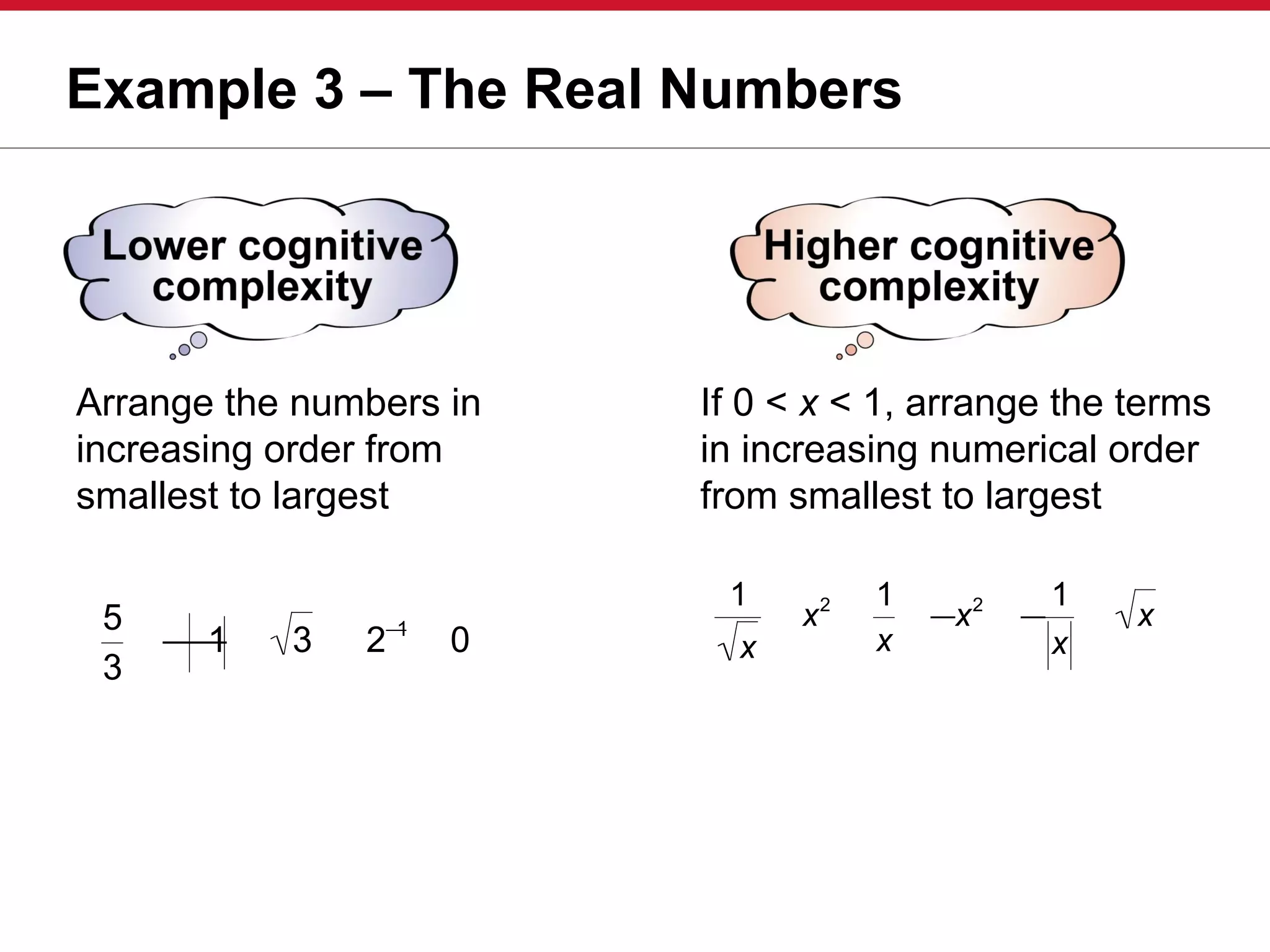
Example 3 – The Real Numbers
Arrange the numbers in
increasing order from
smallest to largest
If 0 < x < 1, arrange the terms
in increasing numerical order
from smallest to largest
1
x
x2 1
x
−x2
−
1
x
x5
3
−−1 3 2−1
0
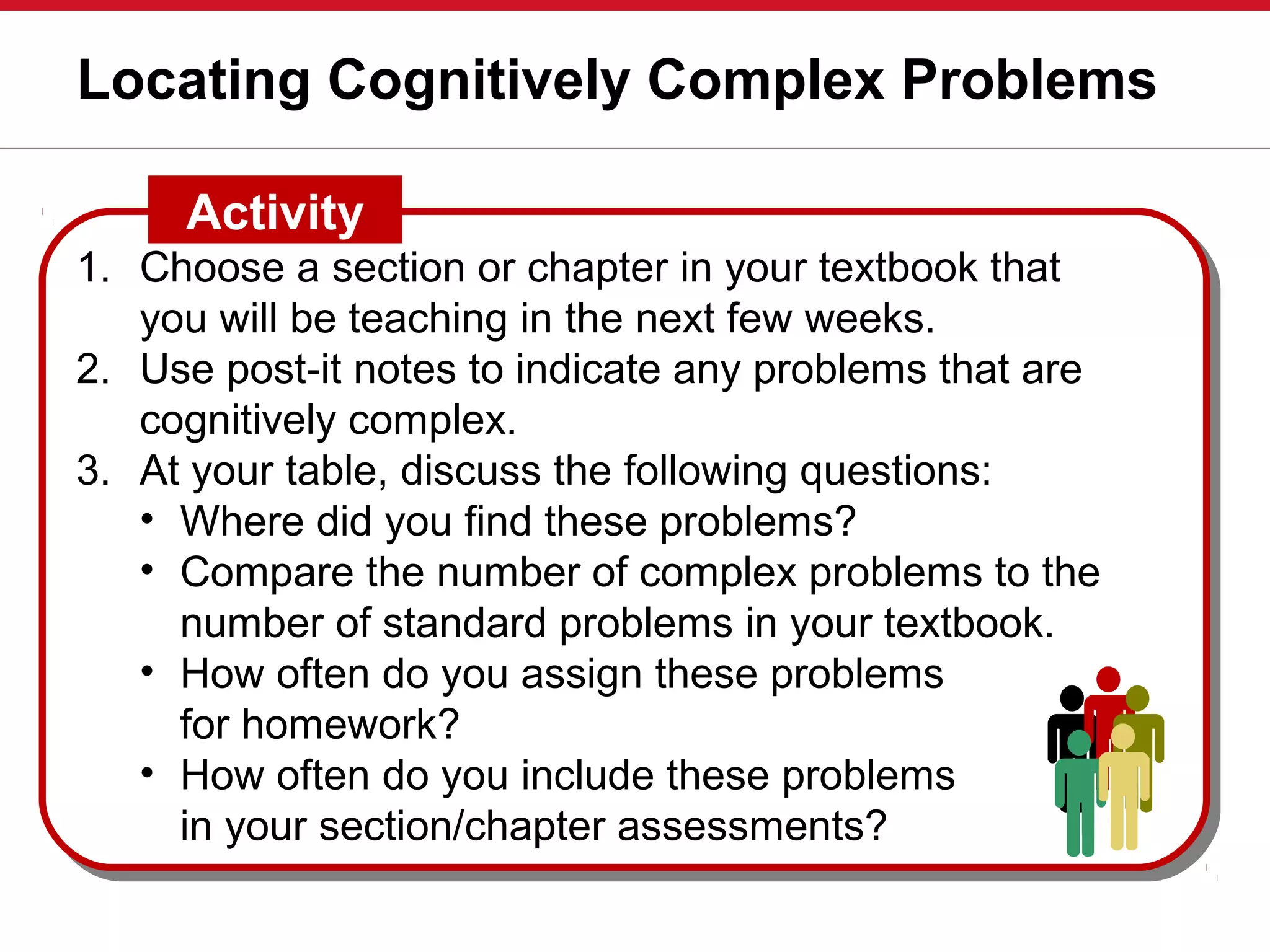
Locating Cognitively Complex Problems
1. Choose a section or chapter in your textbook that
you will be teaching in the next few weeks.
2. Use post-it notes to indicate any problems that are
cognitively complex.
3. At your table, discuss the following questions:
• Where did you find these problems?
• Compare the number of complex problems to the
number of standard problems in your textbook.
• How often do you assign these problems
for homework?
• How often do you include these problems
in your section/chapter assessments?
Activity
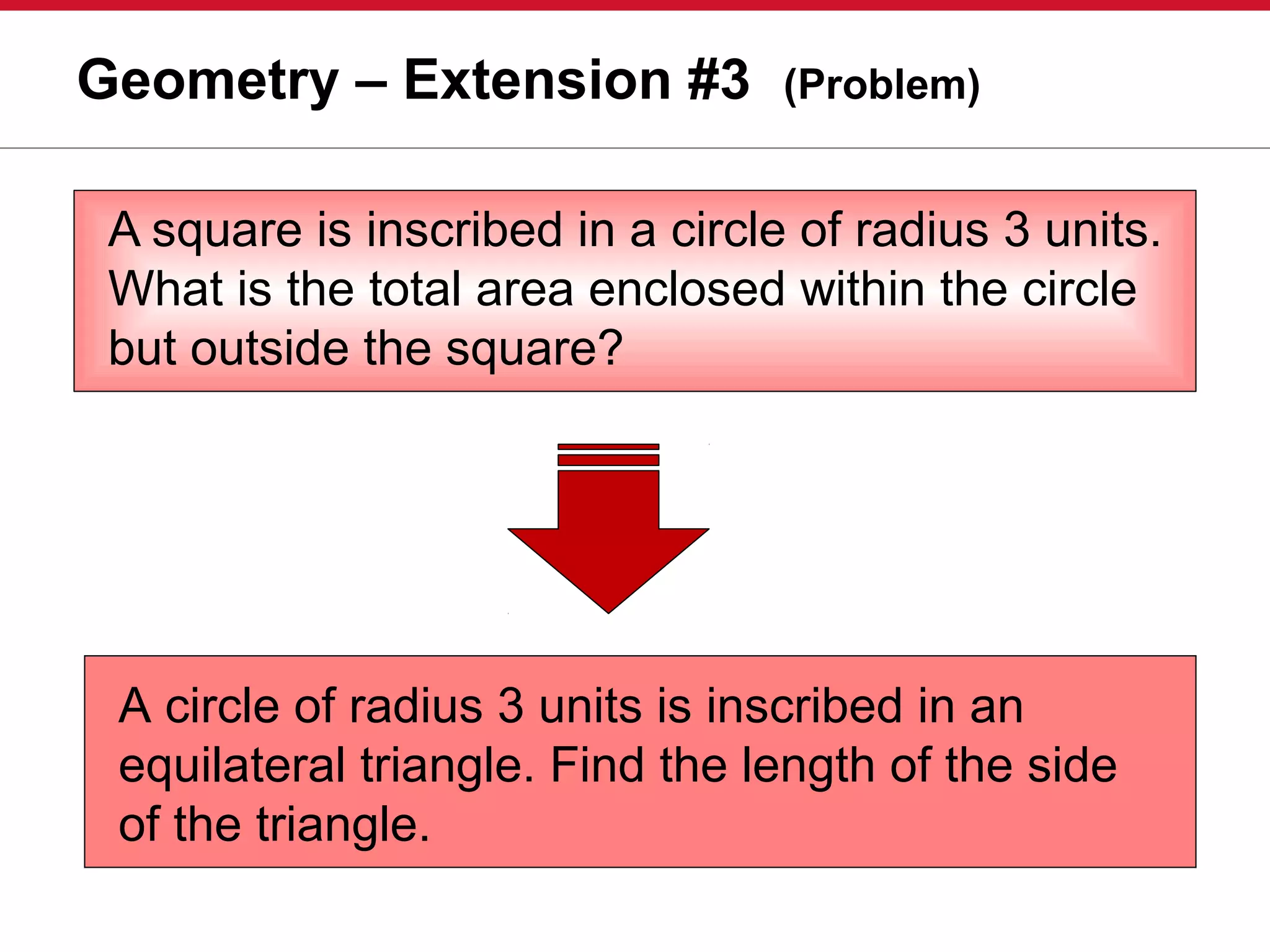
Geometry – Extension #3 (Problem)
A square is inscribed in a circle of radius 3 units.
What is the total area enclosed within the circle
but outside the square?
A circle of radius 3 units is inscribed in an
equilateral triangle. Find the length of the side
of the triangle.
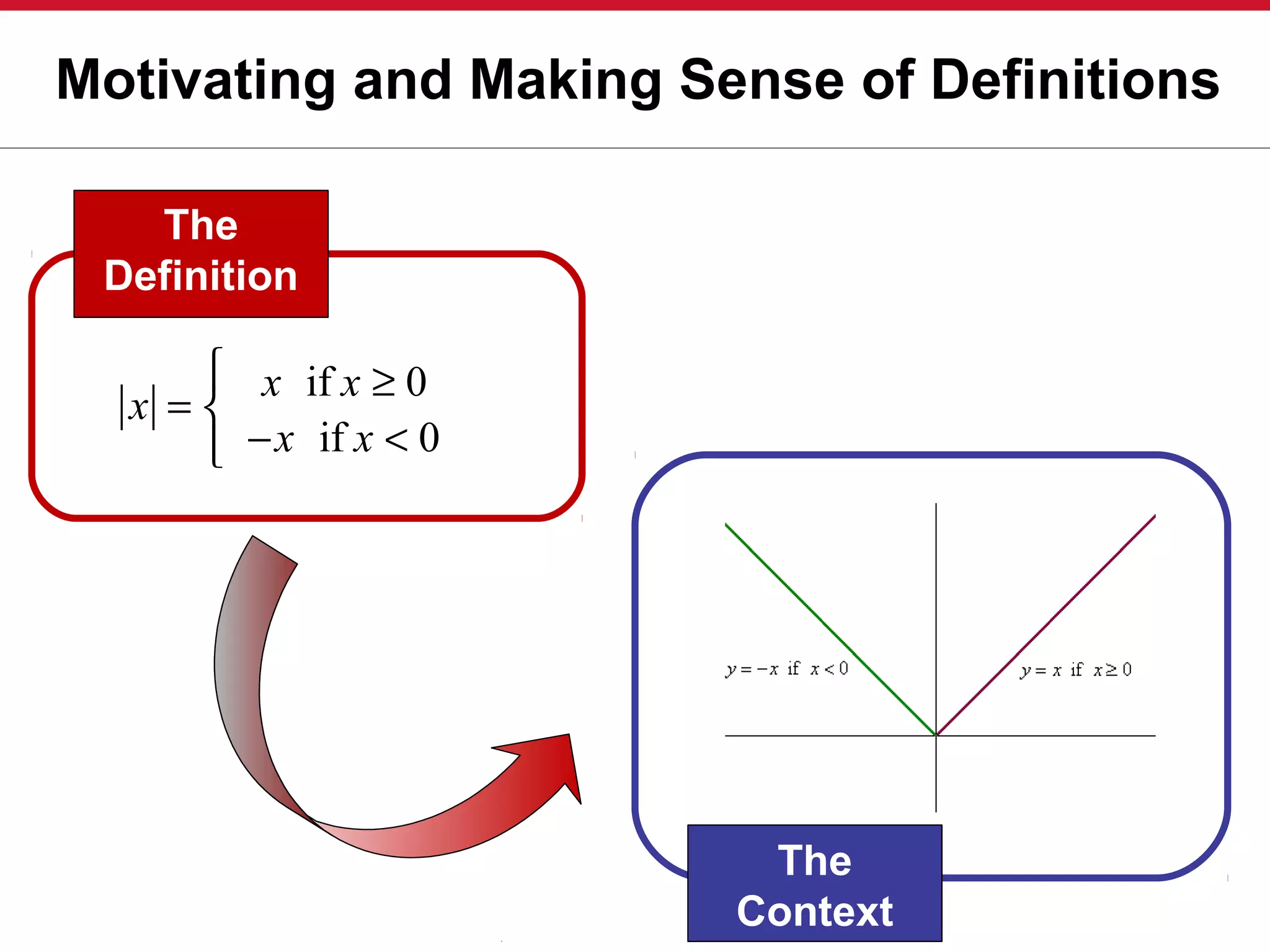
Motivating and Making Sense of Definitions
The
Definition
x =
x if x ≥ 0
−x if x < 0



The
Context
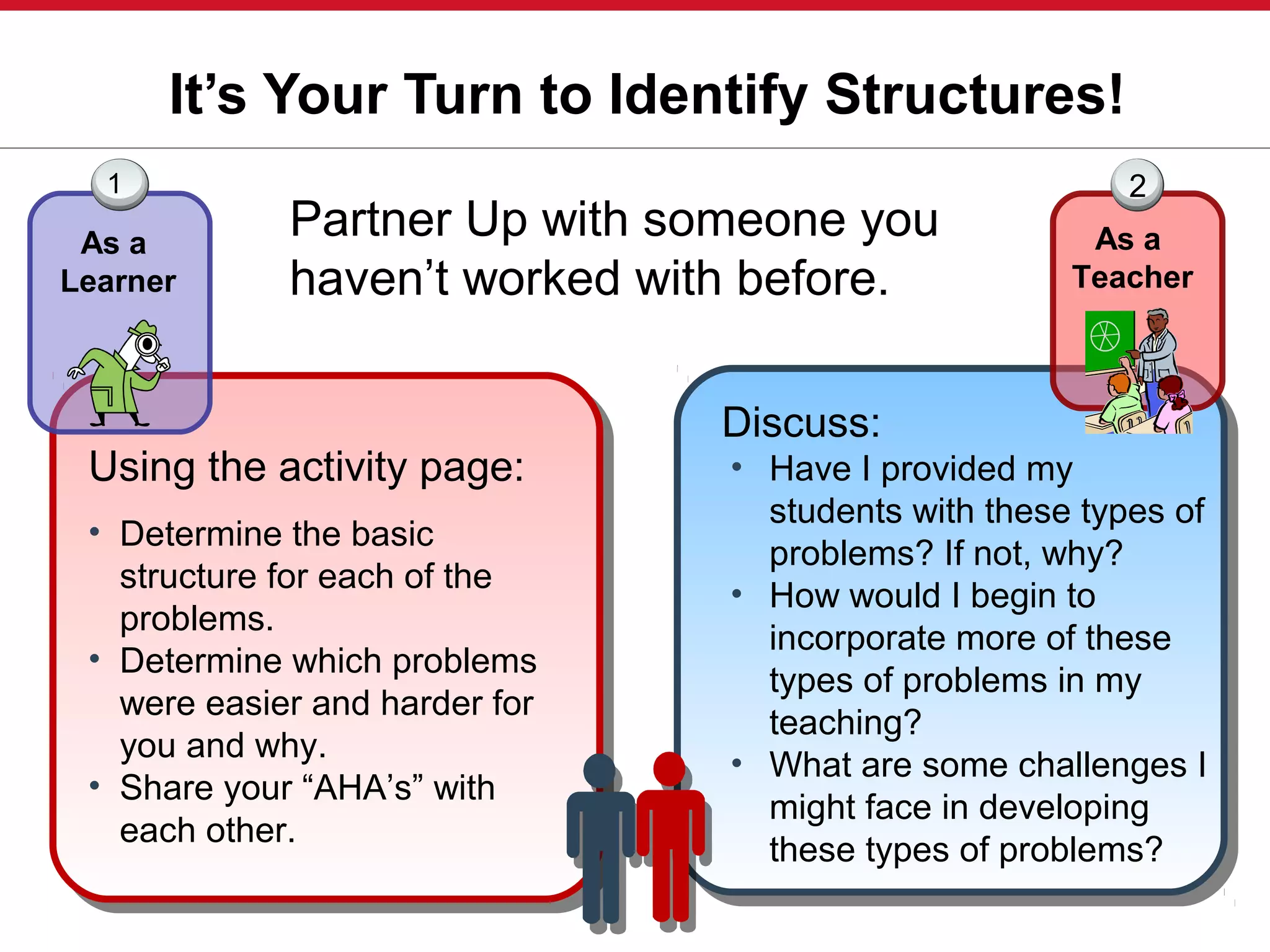
It’s Your Turn to Identify Structures!
Discuss:
• Have I provided my
students with these types of
problems? If not, why?
• How would I begin to
incorporate more of these
types of problems in my
teaching?
• What are some challenges I
might face in developing
these types of problems?
As a
Learner
1 2
As a
Teacher
Partner Up with someone you
haven’t worked with before.
Using the activity page:
• Determine the basic
structure for each of the
problems.
• Determine which problems
were easier and harder for
you and why.
• Share your “AHA’s” with
each other.
It gave me a starting point to improve instruction…
Working with my fellow teachers and having time
to explore complexity was most valuable…
Learning about cognitive layering in problems is
very important…
I learned to ask more open-ended questions and
use “what if” to explore mathematical ideas
without fear
This workshop showed me strategies to help
students think mathematically…
What teachers said about a pilot workshop

Strengthening mathematics-instruction

  • 1.
    STRENGTHENING MATHEMATICS INSTRUCTION CognitiveComplexity and Instructional Practices
  • 2.
    Characteristics of theWorkshop  18-24 hours of professional development; 8 modules to allow for flexibility in scheduling  Standards based and tied to the CSTs and CSU placement standards  Includes content and activities for teachers of Algebra 1 Geometry, Algebra 2, Pre-Calculus  Draws on problems and lessons from the major textbooks  Designed for teacher practice and implementation between workshop sessions based on lesson study model  Reflective of the recently adopted national mathematics standards  No cost to the school(s) for workshop and materials
  • 3.
  • 4.
    Why? = confused students Whatare some of the causes that lead to students being confused about mathematical concepts and content?
  • 5.
    Cognitively Complex Problems •Extend previously encountered tasks • Integrate several topics and/or concepts • Recognize and use underlying mathematical structures • Use multiple representations • Consider multiple approaches to the problem • Identify patterns • Be flexible and strategic in their mathematical thinking These types of problems require students to
  • 6.
    Causes of LowProficiency Levels Activity 1. Think about things that you believe contribute to low proficiency levels in students’ work. 1. Write each idea on a separate post-it note.
  • 7.
    Example 3 –The Real Numbers Arrange the numbers in increasing order from smallest to largest If 0 < x < 1, arrange the terms in increasing numerical order from smallest to largest 1 x x2 1 x −x2 − 1 x x5 3 −−1 3 2−1 0
  • 8.
    Locating Cognitively ComplexProblems 1. Choose a section or chapter in your textbook that you will be teaching in the next few weeks. 2. Use post-it notes to indicate any problems that are cognitively complex. 3. At your table, discuss the following questions: • Where did you find these problems? • Compare the number of complex problems to the number of standard problems in your textbook. • How often do you assign these problems for homework? • How often do you include these problems in your section/chapter assessments? Activity
  • 9.
    Geometry – Extension#3 (Problem) A square is inscribed in a circle of radius 3 units. What is the total area enclosed within the circle but outside the square? A circle of radius 3 units is inscribed in an equilateral triangle. Find the length of the side of the triangle.
  • 10.
    Motivating and MakingSense of Definitions The Definition x = x if x ≥ 0 −x if x < 0    The Context
  • 11.
    It’s Your Turnto Identify Structures! Discuss: • Have I provided my students with these types of problems? If not, why? • How would I begin to incorporate more of these types of problems in my teaching? • What are some challenges I might face in developing these types of problems? As a Learner 1 2 As a Teacher Partner Up with someone you haven’t worked with before. Using the activity page: • Determine the basic structure for each of the problems. • Determine which problems were easier and harder for you and why. • Share your “AHA’s” with each other.
  • 12.
    It gave mea starting point to improve instruction… Working with my fellow teachers and having time to explore complexity was most valuable… Learning about cognitive layering in problems is very important… I learned to ask more open-ended questions and use “what if” to explore mathematical ideas without fear This workshop showed me strategies to help students think mathematically… What teachers said about a pilot workshop

Editor's Notes

  • #2 Instructor’s Notes: Depending on when this module is presented, you may want to revisit the group meeting norms, expectations, etc.
  • #3 Instructor’s Notes: 20 minutes total Slide 1 of 3 This is a two part activity. The first is done individually, the second as a group. Each person is to think about the things that they feel contribute to low proficiency in student work (such as lack of basic skills as indicated on the slide) and write each idea on a post-it note. (Slide 1) Each table groups the individual ideas into broad categories, i.e., clusters and makes a poster with categories on color post-its. (Slide 2) You will facilitate a discussion on commonalities and differences and compare the final product to Slide 3. Materials needed: Small post-it notes for each participant Large poster of diagram for each group Engagement/Process Strategies Closing the Window Finger Minutes Process as Given, Process as Understood
  • #4 Instructor’s Notes:1 minutes Explain to participants that the highlighted outcomes are the ones that we will be working on in this module. We will always be reviewing instructional and engagement strategies.
  • #5 Instructor Notes: 1 minute This slide sets the stage for the module and some of the topics that we will be looking at in future modules. Tie these ideas back to the brainstorm that the participants did during “Setting the Stage.” This is an animated slide. The slide appears without the bottom cog on the left, then the cog blinks four times, and then it stays on the slide. This was done for emphasis.
  • #6 Instructor’s Notes:10 minutes This is the first introduction to the module topic. This is not a definitive list. There are other characteristics that teachers might refer to. You may elicit additional responses and place them on chart paper for future reference. Emphasize that “cognitively complex” does not equate with “a word problem,” a problem with very large numbers or a tedious repetition of the same algorithm (such as long division with ten terms). You will need to go in depth for each of these bullets. Ask questions of your participants for clarification, understanding, etc. You will be referring to these characteristics often in all of the modules. Engagement/Process Strategies Brainstorm
  • #7 Instructor’s Notes: 20 minutes total Slide 1 of 3 This is a two part activity. The first is done individually, the second as a group. Each person is to think about the things that they feel contribute to low proficiency in student work (such as lack of basic skills as indicated on the slide) and write each idea on a post-it note. (Slide 1) Each table groups the individual ideas into broad categories, i.e., clusters and makes a poster with categories on color post-its. (Slide 2) You will facilitate a discussion on commonalities and differences and compare the final product to Slide 3. Materials needed: Small post-it notes for each participant Large poster of diagram for each group Engagement/Process Strategies Closing the Window Finger Minutes Process as Given, Process as Understood
  • #8 Instructor’s Notes:Slide 3 of 3 In the following slides, try to elicit suggestions from participants as to what has caused the level of complexity to increase. Refer back to the TIMMS study and why these problems are different. Lower complexity: All procedures are standard algorithms Higher complexity: Involves abstractions, alternative forms of representation Requires student to make connections between different representations Ask participants to suggest additional terms that would make this question applicable to Algebra 2/Precal concepts. Suggestions might include ln x, ex e 3lnx
  • #9 Instructor’s Notes: 10- 15 minutesSlide 1 of 2 After the groups have completed their textbook search, you should show the slide to facilitate a discussion using the next slide to draw out key issues and their implications for instruction. Engagement/Process Strategies Process Given, Process as Understood Yellow Light Closing the Window Finger Minutes Process as Given, Process as Understood Paired Squares
  • #10 Instructor notes:Slide 6 of 13 The top box is the previous extension problem. The second box is the next extension. Give participants time to read and work each problem and think about the changes.
  • #11 Instructor’s Notes:Slide 2 of 4 The definition for absolute value is also provided in its geometric representation. Make connections between the two representations.
  • #12 Instructor’s Notes:15 minutes Have participants partner with someone they haven’t worked with before to discuss the questions with their partner. You might want to ask for comments from the whole group as closure to this activity. You should try to keep the conversations positive and focused on how to make this work, rather than “My kids won’t be able to do this” or “It’s too hard” or “I don’t have the time to do this” Engagement/Process Strategies Adapt the A/B Each Teach strategy Adapt the Assumptions Inquiry strategy Most Important Point ” strategy Finger Minutes ” strategy Processes Given, Process as Understood ” strategy Adapt the “Say Something” strategy Closing the Window strategy Materials Indentifying structures page