Summer Institute 2022
Starting the Math
Year off Right:
Building a
Community in
Which All Learners
Belong
SEPTEMBER
Chris Hunter

K-12 Numeracy Helping Teacher


email: hunter_c@surreyschools.ca


Twitter: @ChrisHunter36


blog: chrishunter.ca
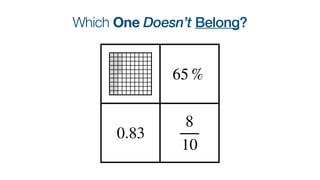
Which One Doesn’t Belong?
65 %
0.83
8
10
What are


your goals?
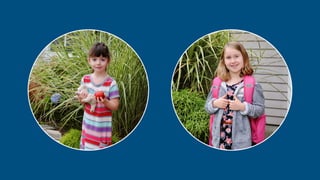
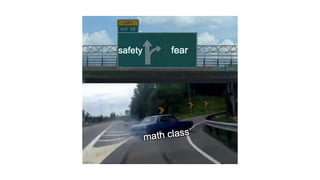
Starting off right
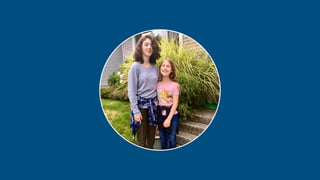
Starting off wrong
ADVERTISEMENT
LOCAL
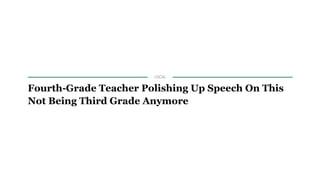
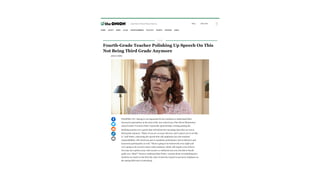
Fourth-Grade Teacher Polishing Up Speech On This
Not Being Third Grade Anymore
8/18/14 1:55PM
finishing touches on a speech that will inform her incoming class they are not in
third grade anymore. “Many of you are 10 years old now, and I expect you to act like
it,” said Potter, rehearsing the speech that will emphasize how the students’
responsibilities will extend not just to academic performance, but to behavior and
classroom participation as well. “There’s going to be homework every night and
we’re going to do several science units outdoors, which will require a lot of focus.
You may have gotten away with excuses or outbursts last year, but this is fourth
grade now. Okay?” Sources confirmed that Potter, worried about overwhelming her
students too much on the first day, later revised her speech to put more emphasis on
the spring field trip to Gettysburg.
Watch
Ads by
Send feedback Why this ad?
PALMYRA, PA—Saying it was important for her students to understand their
increased expectations at the start of the new school year, Pine Street Elementary
school teacher Veronica Potter reportedly spent Sunday evening putting the
America's Finest News Source. Shop Subscribe
HOME LATEST NEWS LOCAL ENTERTAINMENT POLITICS SPORTS OPINION VIDEO
ADVERTISEMENT
LOCAL
Fourth-Grade Teacher Polishing Up Speech On This
Not Being Third Grade Anymore
8/18/14 1:55PM
PALMYRA, PA—Saying it was important for her students to understand their
increased expectations at the start of the new school year, Pine Street Elementary
school teacher Veronica Potter reportedly spent Sunday evening putting the
ADVERTISEMENT
LOCAL
Fourth-Grade Teacher Polishing Up Speech On This
Not Being Third Grade Anymore
8/18/14 1:55PM
PALMYRA, PA—Saying it was important for her students to understand their
increased expectations at the start of the new school year, Pine Street Elementary
school teacher Veronica Potter reportedly spent Sunday evening putting the
ADVERTISEMENT
LOCAL
Fourth-Grade Teacher Polishing Up Speech On This
Not Being Third Grade Anymore
8/18/14 1:55PM
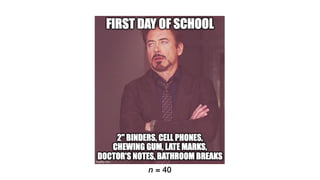
n = 40
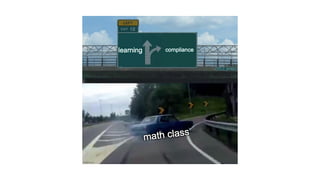
but that
Not this
but that
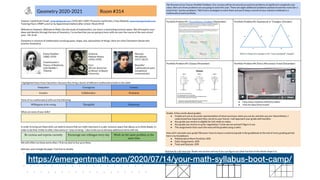
Geometry 2020-2021 Room #314
 
Teacher: Geoff Krall | Email: ​gmkrall@gmail.com​ | (555)-867-5309 | Pronouns: he/him/his | Class Website: ​www.emergentmath.com   
Tutoring Hours: MWF Lunch or by Appointment before/after school | Room #314 
 
Welcome to Geometry. Welcome to Math​. Like the study of mathematics, my class is a welcoming inclusive space. We will explore your 
ideas and identity through the lens of Geometry. I’m excited that you are going to learn with me over the course of the next school 
year. - Mr. Krall 
 
Geometry is a branch of mathematics involving space, shape, size, and position of things. Here are a few Geometers (those who 
practice Geometry). 
 
 
Emmy Noether 
(1882-1935) 
 
Fixed Einstein’s 
Theory of Relativity 
with ​Noether’s 
Theorem 
 
Vivienne 
Malone-Mayes 
(1932-1995) 
 
First 
African-American 
professor at Baylor 
University 
 
Maryam 
Mirzakhani 
(1977-2017) 
 
Beautiful 
mathematical work; 
exceptional 
communicator 
 
I highlighted these three Geometers because they bring a bunch of different mathematical skills to the table: 
Outspoken Courageous Curious
Creative Collaborative Persistent
 
Some of my mathematical skills are the following: 
Willingness to be wrong Thoughtful Humorous
 
What are some of ​your​ skills? 


In order to bring out these skills, we need to ensure that our math classroom is a safe, inclusive space that allows us to think deeply. In 
order to do that, I’d like to offer a few ​norms​ or “ways of being.” I also invite you to develop additional ​norms​ with me.  
Be curious and express curiosity Encourage one colleague every day Work on the same problem at the
same time
We will reflect on these ​norms​ often. I’ll do my best to live up to them.  
 
And now, some triangle dot paper​. Feel free to doodle. 
 
The Structure of our Course: Portfolio Problems​. Our courses will be structured around ten problems of significant complexity and 
value. Here are three problems we are going to solve this year. There are eight additional problems posted around the room (for a 
total of ten “anchor problems.” We’ll learn strategies to solve them and you’ll keep a record of your solution methods in a 
mathematical work portfolio. 
 
Portfolio Problem #1: ​Pizza Delivery Problem​ (September) 
 
Portfolio Problem #2: Equilateral-er Triangles (October) 
 
Portfolio Problem #3: Glasses (November) 
 
 
Portfolio Problem #4: Elmo’s Microwave Travel (December) 
 
 
● How many rotations will Elmo make? 
● How far does Elmo travel? 
 
Grades​. A few words about grades: 
● Grades are not an accurate representation of what you know, what you can do, and who you are. Nevertheless, I 
understand how important they can be to your future. I will approach your grade with humility.  
● Any grade you receive is eligible for full credit on redos. 
● Any grade you receive is up for negotiation. Come see me and we’ll figure it out. 
● The assignments that count the most will be graded using a ​rubric​.  
 
How will I calculate your grade? Because I have to input a numerical grade in the gradebook at the end of every grading period, 
here’s my breakdown: 
● Mathematical Work Portfolio: 40% 
● Daily Assignments: 40% 
● Tests and Quizzes: 20% 
 
And now for a bit more fun​. Shade one section and see if you can figure out what fraction of the whole shape it is. 
 
https://emergentmath.com/2020/07/14/your-math-syllabus-boot-camp/
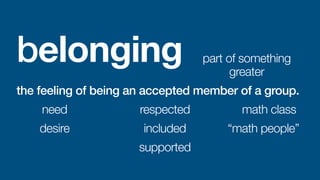
need
desire
respected
included
supported
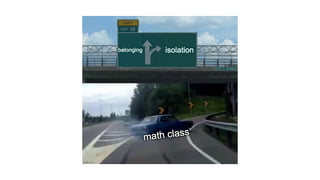
math class
“math people”
part of something
greater
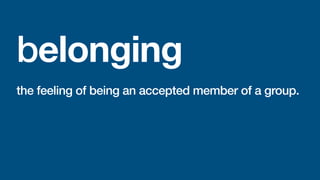
the feeling of being an accepted member of a group.
belonging
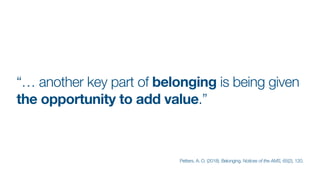
“… another key part of belonging is being given
the opportunity to add value.”
Petters, A. O. (2018). Belonging. Notices of the AMS, 65(2), 120.
• Community


• Curriculum
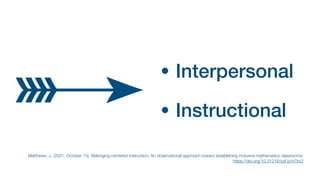
• Interpersonal


• Instructional
Matthews, J. (2021, October 15). Belonging-centered instruction: An observational approach toward establishing inclusive mathematics classrooms.


https://doi.org/10.31219/osf.io/n7bv2
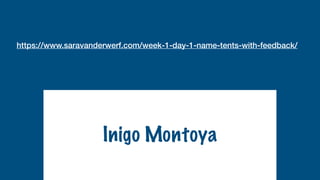
https://www.saravanderwerf.com/week-1-day-1-name-tents-with-feedback/
Inigo Montoya
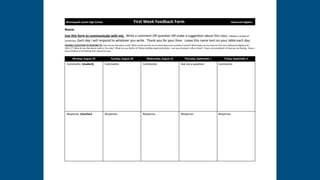
Name:
Use this form to communicate with me. Write a comment OR ques1on OR make a sugges1on about this class. (Ideally a couple of
sentences). Each day I will respond to whatever you write. Thank you for your 1me. Leave this name tent on your table each day.
POSSIBLE QUESTIONS TO RESPOND TO: How do you feel about math? What would you like me to know about you outside of school? What hopes do you have for this class (Advanced Algebra) for
2016-17? What do you like about math or this class? What are you fearful of? What ac1vi1es (sports/arts/jobs…) are you involved in aPer school? Draw a picture/sketch of how you are feeling. Draw a
picture/sketch of something that represents you.
Minneapolis South High School First Week Feedback Form Advanced Algebra
Monday, August 29 Tuesday, August 30 Wednesday, August 31 Thursday, September 1 Friday, September 2
Comments: (student) Comments: Comments: Ask me a ques1on: Comments:
Response: (teacher) Response: Response: Response: Response:
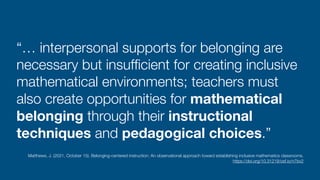
“… interpersonal supports for belonging are
necessary but insuf
fi
cient for creating inclusive
mathematical environments; teachers must
also create opportunities for mathematical
belonging through their instructional
techniques and pedagogical choices.”
Matthews, J. (2021, October 15). Belonging-centered instruction: An observational approach toward establishing inclusive mathematics classrooms.


https://doi.org/10.31219/osf.io/n7bv2
Matthews, J. (2021, October 15). Belonging-centered instruction: An observational approach toward establishing inclusive mathematics classrooms.


https://doi.org/10.31219/osf.io/n7bv2
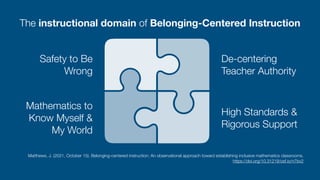
The instructional domain of Belonging-Centered Instruction
Safety to Be
Wrong
De-centering
Teacher Authority
Mathematics to
Know Myself &
My World
High Standards &
Rigorous Support
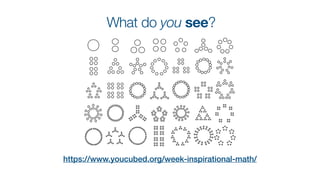
https://www.youcubed.org/week-inspirational-math/
What do you see?
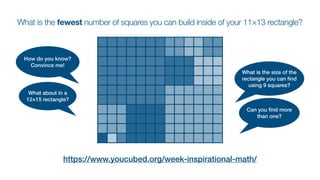
What is the fewest number of squares you can build inside of your 11×13 rectangle?
https://www.youcubed.org/week-inspirational-math/
How do you know?
Convince me!
What about in a
12×15 rectangle?
What is the size of the
rectangle you can
fi
nd
using 9 squares?
Can you
fi
nd more
than one?
“Imagine this problem is a room, and all
students need to enter it through a doorway. If
we want all our students to be able to
succeed, we can lower the threshold in the
doorway and the
fl
oor in the room so students
have fewer barriers to get inside and get
started.
Zager, T. (2017). Becoming the math teacher you wish you’d had: Ideas and strategies from vibrant classrooms. Stenhouse.
We also want to make sure the students in the
room are not constrained, banging their heads,
unable to stretch. We want to raise the
ceiling so there are fewer limits on students’
thinking. We want to create problems that will
fl
ow right into deeper investigations for
students who are ready.”
Zager, T. (2017). Becoming the math teacher you wish you’d had: Ideas and strategies from vibrant classrooms. Stenhouse.
Everyone can get started.
Piggott, J. (2018). Rich tasks and contexts. NRICH. https://nrich.maths.org/5662
Everyone can get stuck.
Piggott, J. (2018). Rich tasks and contexts. NRICH. https://nrich.maths.org/5662
beginning end
closed
Meyer, D. (2014). Video games and making math more like things students like. [Video]
beginning end
open
Meyer, D. (2014). Video games and making math more like things students like. [Video]
beginning end
middle
open closed
Meyer, D. (2014). Video games and making math more like things students like. [Video]
“… another key part of belonging is being given
the opportunity to add value.”
Petters, A. O. (2018). Belonging. Notices of the AMS, 65(2), 120.
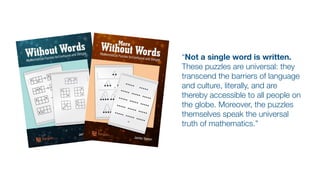
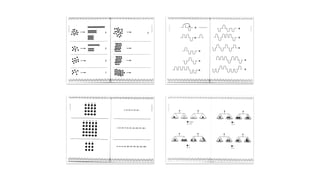
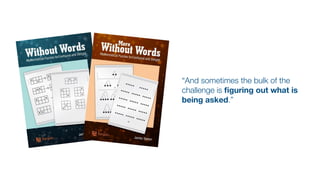
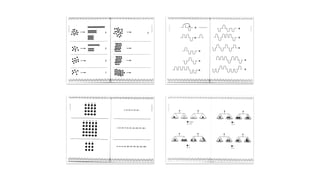
“Not a single word is written.
These puzzles are universal: they
transcend the barriers of language
and culture, literally, and are
thereby accessible to all people on
the globe. Moreover, the puzzles
themselves speak the universal
truth of mathematics.”
“Rich tasks (or good problems) encourage
collaboration and discussion”
Piggott, J. (2018). Rich tasks and contexts. NRICH. https://nrich.maths.org/5662
“And sometimes the bulk of the
challenge is
fi
guring out what is
being asked.”
non-curricular
highly engaging thinking tasks used
without concern for curriculum.
Liljedahl, P. (2021). Building thinking classrooms in mathematics, grades K-12: 14 teaching practices for enhancing learning. Corwin.
“… these results show that to get students
thinking about curriculum tasks, they need to
fi
rst be primed to do so using non-curricular
tasks. Nothing in my research has shown a
way to avoid this. You have to go slow to go
fast.”
Liljedahl, P. (2021). Building thinking classrooms in mathematics, grades K-12: 14 teaching practices for enhancing learning. Corwin.
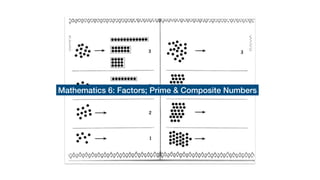
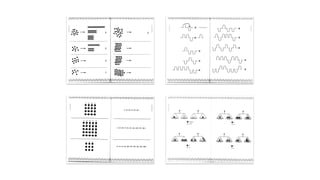
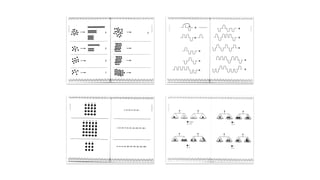
Mathematics 6: Factors; Prime & Composite Numbers
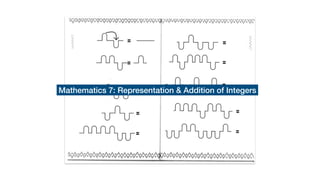
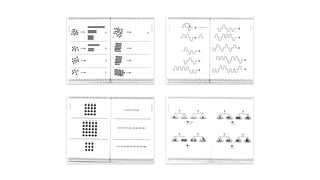
Mathematics 7: Representation & Addition of Integers
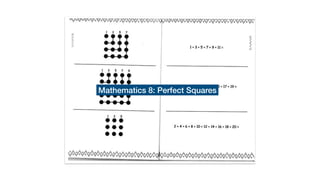
Mathematics 8: Perfect Squares
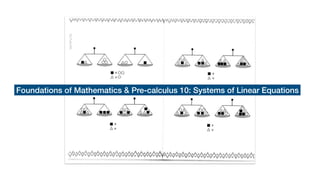
Foundations of Mathematics & Pre-calculus 10: Systems of Linear Equations
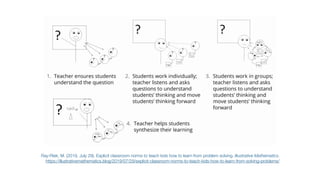
Ray-Riek, M. (2019, July 29). Explicit classroom norms to teach kids how to learn from problem solving. Illustrative Mathematics.

https://illustrativemathematics.blog/2019/07/29/explicit-classroom-norms-to-teach-kids-how-to-learn-from-solving-problems/
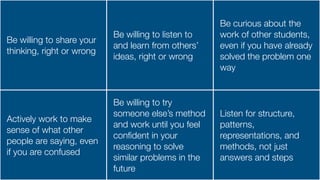
Be willing to share your
thinking, right or wrong
Be willing to listen to
and learn from others’
ideas, right or wrong
Be curious about the
work of other students,
even if you have already
solved the problem one
way
Actively work to make
sense of what other
people are saying, even
if you are confused
Be willing to try
someone else’s method
and work until you feel
con
fi
dent in your
reasoning to solve
similar problems in the
future
Listen for structure,
patterns,
representations, and
methods, not just
answers and steps
“… interpersonal supports for belonging are
necessary but insuf
fi
cient for creating inclusive
mathematical environments; teachers must
also create opportunities for mathematical
belonging through their instructional
techniques and pedagogical choices.”
Matthews, J. (2021, October 15). Belonging-centered instruction: An observational approach toward establishing inclusive mathematics classrooms.


https://doi.org/10.31219/osf.io/n7bv2
visibly
random
groupings
“Although many students rail against the
groups they
fi
nd themselves in on Day 1, at the
three-week point this resistance is usually
completely gone, and they are open to
working with anyone they are placed with.”
Liljedahl, P. (2021). Building thinking classrooms in mathematics, grades K-12: 14 teaching practices for enhancing learning. Corwin.
“When teachers allow students to self-select,
what we see is a often a re
fl
ection of the social
structures easily observable in the hallways.
Students choose their friends, their af
fi
nity
groups, or their social groups. These social
structures can create barriers to collaboration
in the classroom.
Liljedahl, P. (2021). Building thinking classrooms in mathematics, grades K-12: 14 teaching practices for enhancing learning. Corwin.
With visibly random grouping, these barriers
begin to fall away. When students worked
with new random partners every hour, they
began to cross social boundaries and form
an awareness about each other in ways
that were not happening before.”
Liljedahl, P. (2021). Building thinking classrooms in mathematics, grades K-12: 14 teaching practices for enhancing learning. Corwin.
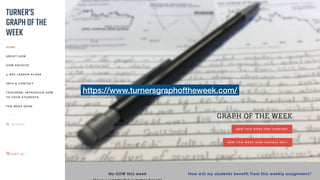
https://www.turnersgraphoftheweek.com/
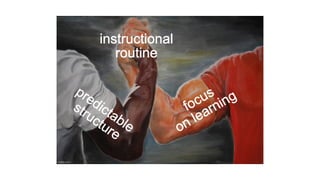
“The predictable structure lets students pay
less attention to [‘What is it that I’m supposed
to be doing?,’ ‘What question will I be asked
next?,’ or ‘How will things work today in the
lesson?’] and more attention to the way in
which they and their classmates are
thinking about a particular math task.
Kelemanik, G., Lucenta, A., & Creighton, S.J. (2016). Routines for reasoning: Fostering the mathematical practices in all students. Heinemann.
For you as the teacher, the routines keep the
fl
ow of the mathematics instruction deliberately
predictable so that, as you gain familiarity
with them, you can better attend to the most
unpredictable elements of your mathematics
instruction: how your students are making
sense of the mathematics.”
Kelemanik, G., Lucenta, A., & Creighton, S.J. (2016). Routines for reasoning: Fostering the mathematical practices in all students. Heinemann.
the feeling of being an accepted member of a group.
belonging
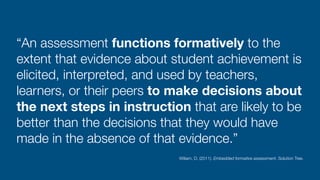
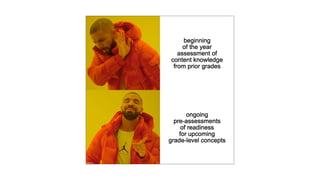
“An assessment functions formatively to the
extent that evidence about student achievement is
elicited, interpreted, and used by teachers,
learners, or their peers to make decisions about
the next steps in instruction that are likely to be
better than the decisions that they would have
made in the absence of that evidence.”
Wiliam, D. (2011). Embedded formative assessment. Solution Tree.
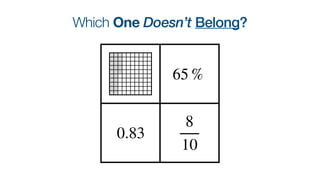
Which One Doesn’t Belong?
8
10
0.83
65 %
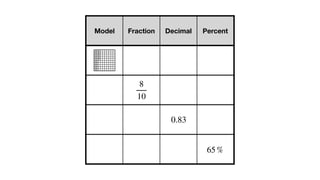
Model Fraction Decimal Percent
8
10
0.83
65 %
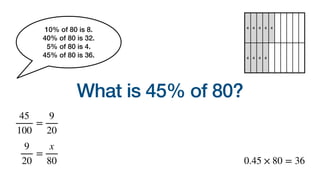
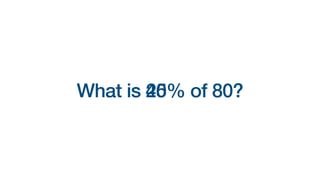
What is 45% of 80?
4 4 4 4 4
4 4 4 4
10% of 80 is 8.


40% of 80 is 32.


5% of 80 is 4.


45% of 80 is 36.
45
100
=
9
20
9
20
=
x
80 0.45 × 80 = 36
What is 45% of 80?
20
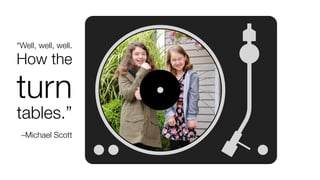
“Well, well, well.


How the


turn


tables.”


–Michael Scott
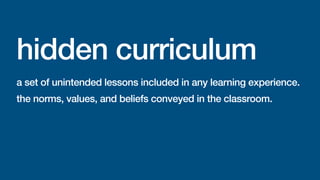
hidden curriculum
the norms, values, and beliefs conveyed in the classroom.
a set of unintended lessons included in any learning experience.
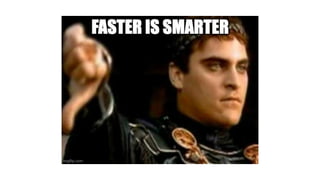
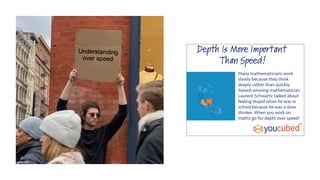
Depth Is More Important
Than Speed!
Many mathematicians work
slowly because they think
deeply rather than quickly.
Award-winning mathematician
Laurent Schwartz talked about
feeling stupid when he was in
school because he was a slow
thinker. When you work on
maths go for depth over speed!
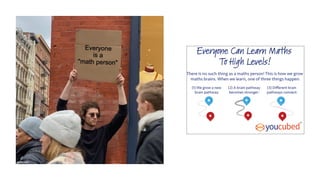
Everyone Can Learn Maths
To High Levels!
There is no such thing as a maths person! This is how we grow
maths brains. When we learn, one of three things happen:
(1) We grow a new
brain pathway:
(3) Different brain
pathways connect:
(2) A brain pathway
becomes stronger:
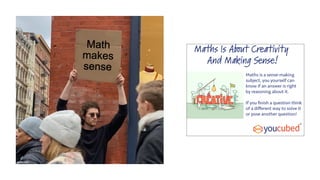
Maths Is About Creativity
And Making Sense!
Maths is a sense-making
subject, you yourself can
know if an answer is right
by reasoning about it.
If you finish a question think
of a different way to solve it
or pose another question!
Questions and Discussion
Deepen Your Mathematical
Understanding!
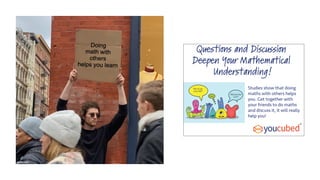
Studies show that doing
maths with others helps
you. Get together with
your friends to do maths
and discuss it, it will really
help you!
How do you
know that?
Wow!
Why does that
work?
?
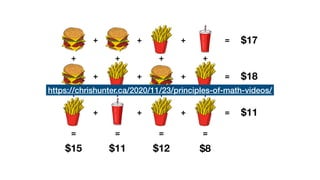
$15 $11 $12 $8
$18
$11
$17
+
=
+
=
+
+
=
+
+
=
+
+
=
=
=
+
+
+
+
+
+
+
+
+
https://chrishunter.ca/2020/11/23/principles-of-math-videos/
Chris Hunter

K-12 Numeracy Helping Teacher


email: hunter_c@surreyschools.ca


Twitter: @ChrisHunter36


blog: chrishunter.ca

SI 2022.pdf

  • 1.
    Summer Institute 2022 Startingthe Math Year off Right: Building a Community in Which All Learners Belong SEPTEMBER
  • 2.
    Chris Hunter
 K-12 NumeracyHelping Teacher email: hunter_c@surreyschools.ca 
 Twitter: @ChrisHunter36 blog: chrishunter.ca
  • 3.
    Which One Doesn’tBelong? 65 % 0.83 8 10
  • 4.
  • 7.
  • 8.
  • 9.
    ADVERTISEMENT LOCAL Fourth-Grade Teacher PolishingUp Speech On This Not Being Third Grade Anymore 8/18/14 1:55PM
  • 10.
    finishing touches ona speech that will inform her incoming class they are not in third grade anymore. “Many of you are 10 years old now, and I expect you to act like it,” said Potter, rehearsing the speech that will emphasize how the students’ responsibilities will extend not just to academic performance, but to behavior and classroom participation as well. “There’s going to be homework every night and we’re going to do several science units outdoors, which will require a lot of focus. You may have gotten away with excuses or outbursts last year, but this is fourth grade now. Okay?” Sources confirmed that Potter, worried about overwhelming her students too much on the first day, later revised her speech to put more emphasis on the spring field trip to Gettysburg. Watch Ads by Send feedback Why this ad? PALMYRA, PA—Saying it was important for her students to understand their increased expectations at the start of the new school year, Pine Street Elementary school teacher Veronica Potter reportedly spent Sunday evening putting the America's Finest News Source. Shop Subscribe HOME LATEST NEWS LOCAL ENTERTAINMENT POLITICS SPORTS OPINION VIDEO ADVERTISEMENT LOCAL Fourth-Grade Teacher Polishing Up Speech On This Not Being Third Grade Anymore 8/18/14 1:55PM PALMYRA, PA—Saying it was important for her students to understand their increased expectations at the start of the new school year, Pine Street Elementary school teacher Veronica Potter reportedly spent Sunday evening putting the ADVERTISEMENT LOCAL Fourth-Grade Teacher Polishing Up Speech On This Not Being Third Grade Anymore 8/18/14 1:55PM PALMYRA, PA—Saying it was important for her students to understand their increased expectations at the start of the new school year, Pine Street Elementary school teacher Veronica Potter reportedly spent Sunday evening putting the ADVERTISEMENT LOCAL Fourth-Grade Teacher Polishing Up Speech On This Not Being Third Grade Anymore 8/18/14 1:55PM
  • 12.
  • 14.
  • 16.
    Geometry 2020-2021 Room#314   Teacher: Geoff Krall | Email: ​gmkrall@gmail.com​ | (555)-867-5309 | Pronouns: he/him/his | Class Website: ​www.emergentmath.com    Tutoring Hours: MWF Lunch or by Appointment before/after school | Room #314    Welcome to Geometry. Welcome to Math​. Like the study of mathematics, my class is a welcoming inclusive space. We will explore your  ideas and identity through the lens of Geometry. I’m excited that you are going to learn with me over the course of the next school  year. - Mr. Krall    Geometry is a branch of mathematics involving space, shape, size, and position of things. Here are a few Geometers (those who  practice Geometry).      Emmy Noether  (1882-1935)    Fixed Einstein’s  Theory of Relativity  with ​Noether’s  Theorem    Vivienne  Malone-Mayes  (1932-1995)    First  African-American  professor at Baylor  University    Maryam  Mirzakhani  (1977-2017)    Beautiful  mathematical work;  exceptional  communicator    I highlighted these three Geometers because they bring a bunch of different mathematical skills to the table:  Outspoken Courageous Curious Creative Collaborative Persistent   Some of my mathematical skills are the following:  Willingness to be wrong Thoughtful Humorous   What are some of ​your​ skills?            In order to bring out these skills, we need to ensure that our math classroom is a safe, inclusive space that allows us to think deeply. In  order to do that, I’d like to offer a few ​norms​ or “ways of being.” I also invite you to develop additional ​norms​ with me.   Be curious and express curiosity Encourage one colleague every day Work on the same problem at the same time We will reflect on these ​norms​ often. I’ll do my best to live up to them.     And now, some triangle dot paper​. Feel free to doodle.    The Structure of our Course: Portfolio Problems​. Our courses will be structured around ten problems of significant complexity and  value. Here are three problems we are going to solve this year. There are eight additional problems posted around the room (for a  total of ten “anchor problems.” We’ll learn strategies to solve them and you’ll keep a record of your solution methods in a  mathematical work portfolio.    Portfolio Problem #1: ​Pizza Delivery Problem​ (September)    Portfolio Problem #2: Equilateral-er Triangles (October)    Portfolio Problem #3: Glasses (November)      Portfolio Problem #4: Elmo’s Microwave Travel (December)      ● How many rotations will Elmo make?  ● How far does Elmo travel?    Grades​. A few words about grades:  ● Grades are not an accurate representation of what you know, what you can do, and who you are. Nevertheless, I  understand how important they can be to your future. I will approach your grade with humility.   ● Any grade you receive is eligible for full credit on redos.  ● Any grade you receive is up for negotiation. Come see me and we’ll figure it out.  ● The assignments that count the most will be graded using a ​rubric​.     How will I calculate your grade? Because I have to input a numerical grade in the gradebook at the end of every grading period,  here’s my breakdown:  ● Mathematical Work Portfolio: 40%  ● Daily Assignments: 40%  ● Tests and Quizzes: 20%    And now for a bit more fun​. Shade one section and see if you can figure out what fraction of the whole shape it is.    https://emergentmath.com/2020/07/14/your-math-syllabus-boot-camp/
  • 17.
    need desire respected included supported math class “math people” partof something greater the feeling of being an accepted member of a group. belonging
  • 18.
    “… another keypart of belonging is being given the opportunity to add value.” Petters, A. O. (2018). Belonging. Notices of the AMS, 65(2), 120.
  • 19.
  • 20.
    • Interpersonal • Instructional Matthews,J. (2021, October 15). Belonging-centered instruction: An observational approach toward establishing inclusive mathematics classrooms. 
 https://doi.org/10.31219/osf.io/n7bv2
  • 21.
  • 22.
    Name: Use this formto communicate with me. Write a comment OR ques1on OR make a sugges1on about this class. (Ideally a couple of sentences). Each day I will respond to whatever you write. Thank you for your 1me. Leave this name tent on your table each day. POSSIBLE QUESTIONS TO RESPOND TO: How do you feel about math? What would you like me to know about you outside of school? What hopes do you have for this class (Advanced Algebra) for 2016-17? What do you like about math or this class? What are you fearful of? What ac1vi1es (sports/arts/jobs…) are you involved in aPer school? Draw a picture/sketch of how you are feeling. Draw a picture/sketch of something that represents you. Minneapolis South High School First Week Feedback Form Advanced Algebra Monday, August 29 Tuesday, August 30 Wednesday, August 31 Thursday, September 1 Friday, September 2 Comments: (student) Comments: Comments: Ask me a ques1on: Comments: Response: (teacher) Response: Response: Response: Response:
  • 23.
    “… interpersonal supportsfor belonging are necessary but insuf fi cient for creating inclusive mathematical environments; teachers must also create opportunities for mathematical belonging through their instructional techniques and pedagogical choices.” Matthews, J. (2021, October 15). Belonging-centered instruction: An observational approach toward establishing inclusive mathematics classrooms. 
 https://doi.org/10.31219/osf.io/n7bv2
  • 24.
    Matthews, J. (2021,October 15). Belonging-centered instruction: An observational approach toward establishing inclusive mathematics classrooms. 
 https://doi.org/10.31219/osf.io/n7bv2 The instructional domain of Belonging-Centered Instruction Safety to Be Wrong De-centering Teacher Authority Mathematics to Know Myself & My World High Standards & Rigorous Support
  • 28.
  • 29.
    What is thefewest number of squares you can build inside of your 11×13 rectangle? https://www.youcubed.org/week-inspirational-math/ How do you know? Convince me! What about in a 12×15 rectangle? What is the size of the rectangle you can fi nd using 9 squares? Can you fi nd more than one?
  • 31.
    “Imagine this problemis a room, and all students need to enter it through a doorway. If we want all our students to be able to succeed, we can lower the threshold in the doorway and the fl oor in the room so students have fewer barriers to get inside and get started. Zager, T. (2017). Becoming the math teacher you wish you’d had: Ideas and strategies from vibrant classrooms. Stenhouse.
  • 32.
    We also wantto make sure the students in the room are not constrained, banging their heads, unable to stretch. We want to raise the ceiling so there are fewer limits on students’ thinking. We want to create problems that will fl ow right into deeper investigations for students who are ready.” Zager, T. (2017). Becoming the math teacher you wish you’d had: Ideas and strategies from vibrant classrooms. Stenhouse.
  • 33.
    Everyone can getstarted. Piggott, J. (2018). Rich tasks and contexts. NRICH. https://nrich.maths.org/5662
  • 34.
    Everyone can getstuck. Piggott, J. (2018). Rich tasks and contexts. NRICH. https://nrich.maths.org/5662
  • 35.
    beginning end closed Meyer, D.(2014). Video games and making math more like things students like. [Video]
  • 36.
    beginning end open Meyer, D.(2014). Video games and making math more like things students like. [Video]
  • 37.
    beginning end middle open closed Meyer,D. (2014). Video games and making math more like things students like. [Video]
  • 38.
    “… another keypart of belonging is being given the opportunity to add value.” Petters, A. O. (2018). Belonging. Notices of the AMS, 65(2), 120.
  • 39.
    “Not a singleword is written. These puzzles are universal: they transcend the barriers of language and culture, literally, and are thereby accessible to all people on the globe. Moreover, the puzzles themselves speak the universal truth of mathematics.”
  • 41.
    “Rich tasks (orgood problems) encourage collaboration and discussion” Piggott, J. (2018). Rich tasks and contexts. NRICH. https://nrich.maths.org/5662
  • 42.
    “And sometimes thebulk of the challenge is fi guring out what is being asked.”
  • 43.
    non-curricular highly engaging thinkingtasks used without concern for curriculum. Liljedahl, P. (2021). Building thinking classrooms in mathematics, grades K-12: 14 teaching practices for enhancing learning. Corwin.
  • 44.
    “… these resultsshow that to get students thinking about curriculum tasks, they need to fi rst be primed to do so using non-curricular tasks. Nothing in my research has shown a way to avoid this. You have to go slow to go fast.” Liljedahl, P. (2021). Building thinking classrooms in mathematics, grades K-12: 14 teaching practices for enhancing learning. Corwin.
  • 46.
    Mathematics 6: Factors;Prime & Composite Numbers
  • 48.
    Mathematics 7: Representation& Addition of Integers
  • 50.
  • 52.
    Foundations of Mathematics& Pre-calculus 10: Systems of Linear Equations
  • 54.
    Ray-Riek, M. (2019,July 29). Explicit classroom norms to teach kids how to learn from problem solving. Illustrative Mathematics. https://illustrativemathematics.blog/2019/07/29/explicit-classroom-norms-to-teach-kids-how-to-learn-from-solving-problems/
  • 55.
    Be willing toshare your thinking, right or wrong Be willing to listen to and learn from others’ ideas, right or wrong Be curious about the work of other students, even if you have already solved the problem one way Actively work to make sense of what other people are saying, even if you are confused Be willing to try someone else’s method and work until you feel con fi dent in your reasoning to solve similar problems in the future Listen for structure, patterns, representations, and methods, not just answers and steps
  • 56.
    “… interpersonal supportsfor belonging are necessary but insuf fi cient for creating inclusive mathematical environments; teachers must also create opportunities for mathematical belonging through their instructional techniques and pedagogical choices.” Matthews, J. (2021, October 15). Belonging-centered instruction: An observational approach toward establishing inclusive mathematics classrooms. 
 https://doi.org/10.31219/osf.io/n7bv2
  • 57.
  • 58.
    “Although many studentsrail against the groups they fi nd themselves in on Day 1, at the three-week point this resistance is usually completely gone, and they are open to working with anyone they are placed with.” Liljedahl, P. (2021). Building thinking classrooms in mathematics, grades K-12: 14 teaching practices for enhancing learning. Corwin.
  • 59.
    “When teachers allowstudents to self-select, what we see is a often a re fl ection of the social structures easily observable in the hallways. Students choose their friends, their af fi nity groups, or their social groups. These social structures can create barriers to collaboration in the classroom. Liljedahl, P. (2021). Building thinking classrooms in mathematics, grades K-12: 14 teaching practices for enhancing learning. Corwin.
  • 60.
    With visibly randomgrouping, these barriers begin to fall away. When students worked with new random partners every hour, they began to cross social boundaries and form an awareness about each other in ways that were not happening before.” Liljedahl, P. (2021). Building thinking classrooms in mathematics, grades K-12: 14 teaching practices for enhancing learning. Corwin.
  • 61.
  • 63.
    “The predictable structurelets students pay less attention to [‘What is it that I’m supposed to be doing?,’ ‘What question will I be asked next?,’ or ‘How will things work today in the lesson?’] and more attention to the way in which they and their classmates are thinking about a particular math task. Kelemanik, G., Lucenta, A., & Creighton, S.J. (2016). Routines for reasoning: Fostering the mathematical practices in all students. Heinemann.
  • 64.
    For you asthe teacher, the routines keep the fl ow of the mathematics instruction deliberately predictable so that, as you gain familiarity with them, you can better attend to the most unpredictable elements of your mathematics instruction: how your students are making sense of the mathematics.” Kelemanik, G., Lucenta, A., & Creighton, S.J. (2016). Routines for reasoning: Fostering the mathematical practices in all students. Heinemann.
  • 68.
    the feeling ofbeing an accepted member of a group. belonging
  • 71.
    “An assessment functionsformatively to the extent that evidence about student achievement is elicited, interpreted, and used by teachers, learners, or their peers to make decisions about the next steps in instruction that are likely to be better than the decisions that they would have made in the absence of that evidence.” Wiliam, D. (2011). Embedded formative assessment. Solution Tree.
  • 74.
    Which One Doesn’tBelong? 8 10 0.83 65 %
  • 75.
    Model Fraction DecimalPercent 8 10 0.83 65 %
  • 76.
    What is 45%of 80? 4 4 4 4 4 4 4 4 4 10% of 80 is 8. 40% of 80 is 32. 5% of 80 is 4. 45% of 80 is 36. 45 100 = 9 20 9 20 = x 80 0.45 × 80 = 36
  • 77.
    What is 45%of 80? 20
  • 78.
    “Well, well, well. 
 Howthe turn tables.” 
 –Michael Scott
  • 79.
    hidden curriculum the norms,values, and beliefs conveyed in the classroom. a set of unintended lessons included in any learning experience.
  • 82.
    Depth Is MoreImportant Than Speed! Many mathematicians work slowly because they think deeply rather than quickly. Award-winning mathematician Laurent Schwartz talked about feeling stupid when he was in school because he was a slow thinker. When you work on maths go for depth over speed!
  • 83.
    Everyone Can LearnMaths To High Levels! There is no such thing as a maths person! This is how we grow maths brains. When we learn, one of three things happen: (1) We grow a new brain pathway: (3) Different brain pathways connect: (2) A brain pathway becomes stronger:
  • 84.
    Maths Is AboutCreativity And Making Sense! Maths is a sense-making subject, you yourself can know if an answer is right by reasoning about it. If you finish a question think of a different way to solve it or pose another question!
  • 85.
    Questions and Discussion DeepenYour Mathematical Understanding! Studies show that doing maths with others helps you. Get together with your friends to do maths and discuss it, it will really help you! How do you know that? Wow! Why does that work?
  • 86.
  • 87.
    $15 $11 $12$8 $18 $11 $17 + = + = + + = + + = + + = = = + + + + + + + + + https://chrishunter.ca/2020/11/23/principles-of-math-videos/
  • 90.
    Chris Hunter
 K-12 NumeracyHelping Teacher email: hunter_c@surreyschools.ca 
 Twitter: @ChrisHunter36 blog: chrishunter.ca