STRAY CURRENT
INTERFERENCE CORROSION
FROM DC TRANSIT SYSTEMS
NACE TWIN CITIES SECTION PIPELINE CORROSION CONTROL SEMINAR
THE GRADUATE HOTEL & CONVENTION CENTER, ROOM B
WEDNESDAY, FEBRUARY 5, 2020, 1:30 PM – 2:20 PM
PRESENTED BY: TOM MOLLICA, III
PIPING AND CORROSION SPECIALTIES, INC.
METRO TRANSIT LIGHT RAIL – MINNEAPOLIS-SAINT
PAUL, MN.
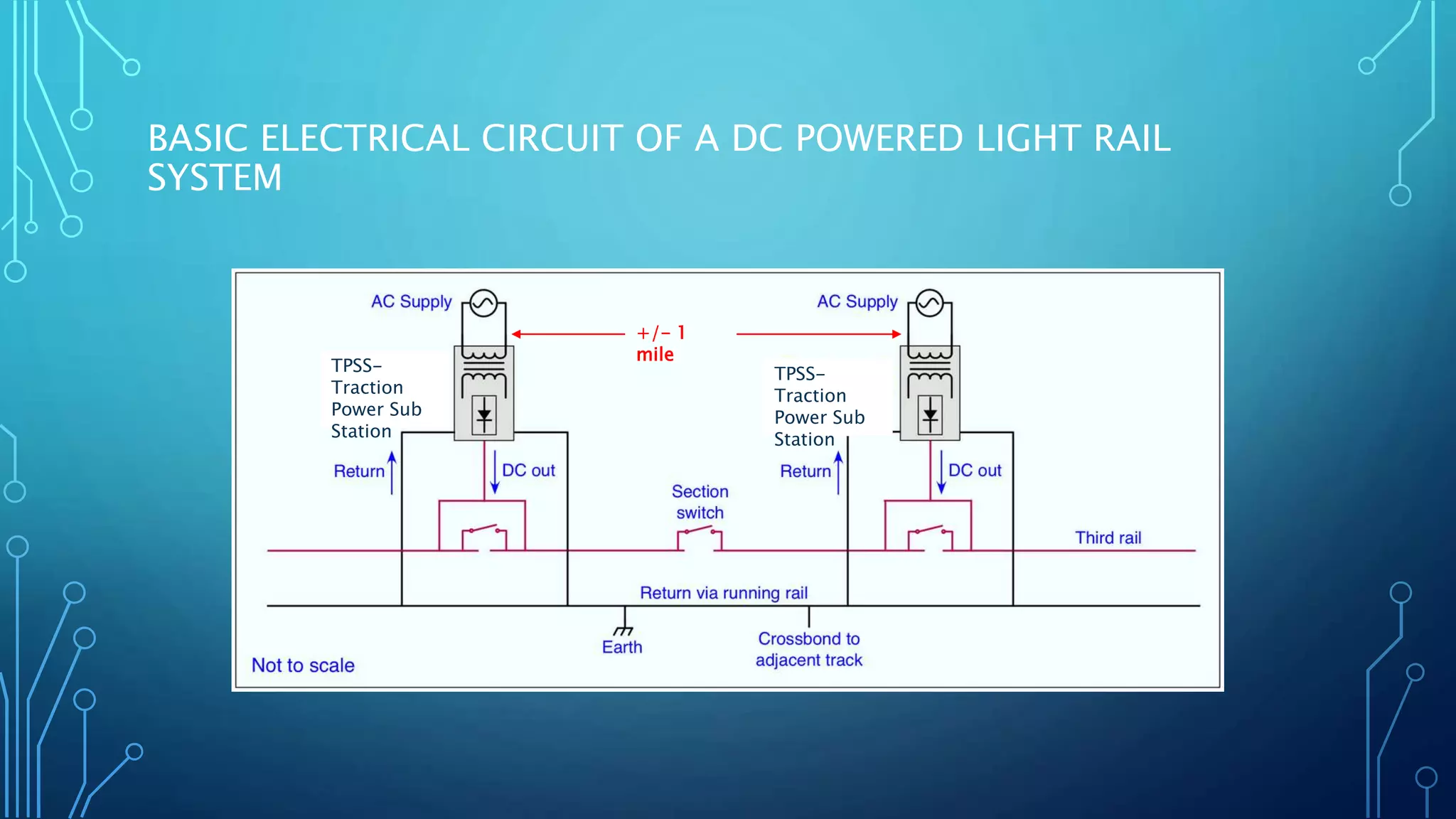
BASIC ELECTRICAL CIRCUIT OF A DC POWERED LIGHT RAIL
SYSTEM
+/- 1
mile
TPSS-
Traction
Power Sub
Station
TPSS-
Traction
Power Sub
Station
SAFEGUARDS FOR ELECTRICAL ISOLATION
• Rail boots on embedded track
• Direct fixation track where possible
• Concrete ties for ballasted track instead of wood
• Dielectric components for rail fasteners
• Ballast dressing and minimum clearances
• Minimum track-to-earth resistances upon commissioning
(250-1,000 ohms/track-ft.)
• Longitudinal bonding of reinforcement to act as a “safety net”
NEW RAIL CONSTRUCTION
TESTING AND COMMISIONING
RAIL ELECTRICAL ISOLATION COMPONENTS
EMBEDDED TRACK RAIL
BOOT
TIE & BALLAST RAIL INSULATOR
ASSEMBLY
TYPICAL REBAR BONDING DETAILS
REALITY
CONTINUED POOR MAINTENANCE
CONTINUED
DEFINITION OF STRAY CURRENT
Interference:
The NACE International recommended practice on
cathodic protection underground structures provides
several insights to the definition and evaluation of
interference.
Stray current is defined as “current through paths
other than the intended circuit” or “the deterioration
of a material, usually a metal that results from a
reaction with its environment”.
DC TRANSIT STRAY CURRENT CORROSION
• In 1995 electrified rail stray current was estimated to cost $500
million in damage annually
• One of the most common causes of stray current.
• System operates on 750 volts DC
• Can require up to 12,000 amperes of current
Corrosion Hot Spots
Dynamic Stray Current Interference
Areas of corrosion
loss
DAMAGE TO RAIL COMPONENTS FROM
STRAY CURRENT DISCHARGE
CORROSION RATES OF VARIOUS METALS:
• Steel: 20 lbs./Amp-Year
• Copper 45 lbs./Amp-Year
• Aluminum 6.4 lbs./Amp-Year
• Lead 74 lbs./Amp-Year
HOW TO PROTECT FROM DYNAMIC STRAY
CURRENT DAMAGE
• Properly design electrical isolation for the track
• Maintain a high level of track-to-earth resistance
• Bond rebar in embedded areas to collect any stray current and evenly
distribute across the steel surface
• Install adjacent utilities with a dielectric coating and electrical
isolation to ensure a high resistance to earth of the structure making
it difficult for the stray current to “see the structure
• Install cathodic protection on adjacent or crossing metallic structures
• Have a representative at the Corrosion Coordinating Meetings (be a
good neighbor)
KEYS TO EFFECTIVE TESTING OF ADJACENT
UTILITIES
• Need to test a regular intervals
• Utilize a data recorder to test in 24 hour increments to
compare revenue vs. non-revenue data
• Realize the effects of this dynamic stray current are short lived
but the exposure to large amounts of current are likely
• Make sure to maintain effective cathodic protection
THANK YOU FOR YOUR ATTENTION
QUESTIONS?
• Tom Mollica,III
• (800) 660-5907
• tom3@pipingandcorrosion.com

Stray Current From DC Powered Transit Systems - Tom Mollica

  • 1.
    STRAY CURRENT INTERFERENCE CORROSION FROMDC TRANSIT SYSTEMS NACE TWIN CITIES SECTION PIPELINE CORROSION CONTROL SEMINAR THE GRADUATE HOTEL & CONVENTION CENTER, ROOM B WEDNESDAY, FEBRUARY 5, 2020, 1:30 PM – 2:20 PM PRESENTED BY: TOM MOLLICA, III PIPING AND CORROSION SPECIALTIES, INC.
  • 2.
    METRO TRANSIT LIGHTRAIL – MINNEAPOLIS-SAINT PAUL, MN.
  • 3.
    BASIC ELECTRICAL CIRCUITOF A DC POWERED LIGHT RAIL SYSTEM +/- 1 mile TPSS- Traction Power Sub Station TPSS- Traction Power Sub Station
  • 4.
    SAFEGUARDS FOR ELECTRICALISOLATION • Rail boots on embedded track • Direct fixation track where possible • Concrete ties for ballasted track instead of wood • Dielectric components for rail fasteners • Ballast dressing and minimum clearances • Minimum track-to-earth resistances upon commissioning (250-1,000 ohms/track-ft.) • Longitudinal bonding of reinforcement to act as a “safety net”
  • 5.
  • 6.
  • 7.
    RAIL ELECTRICAL ISOLATIONCOMPONENTS EMBEDDED TRACK RAIL BOOT TIE & BALLAST RAIL INSULATOR ASSEMBLY
  • 8.
  • 9.
  • 10.
  • 11.
  • 12.
    DEFINITION OF STRAYCURRENT Interference: The NACE International recommended practice on cathodic protection underground structures provides several insights to the definition and evaluation of interference. Stray current is defined as “current through paths other than the intended circuit” or “the deterioration of a material, usually a metal that results from a reaction with its environment”.
  • 13.
    DC TRANSIT STRAYCURRENT CORROSION • In 1995 electrified rail stray current was estimated to cost $500 million in damage annually • One of the most common causes of stray current. • System operates on 750 volts DC • Can require up to 12,000 amperes of current
  • 14.
    Corrosion Hot Spots DynamicStray Current Interference Areas of corrosion loss
  • 15.
    DAMAGE TO RAILCOMPONENTS FROM STRAY CURRENT DISCHARGE
  • 16.
    CORROSION RATES OFVARIOUS METALS: • Steel: 20 lbs./Amp-Year • Copper 45 lbs./Amp-Year • Aluminum 6.4 lbs./Amp-Year • Lead 74 lbs./Amp-Year
  • 17.
    HOW TO PROTECTFROM DYNAMIC STRAY CURRENT DAMAGE • Properly design electrical isolation for the track • Maintain a high level of track-to-earth resistance • Bond rebar in embedded areas to collect any stray current and evenly distribute across the steel surface • Install adjacent utilities with a dielectric coating and electrical isolation to ensure a high resistance to earth of the structure making it difficult for the stray current to “see the structure • Install cathodic protection on adjacent or crossing metallic structures • Have a representative at the Corrosion Coordinating Meetings (be a good neighbor)
  • 18.
    KEYS TO EFFECTIVETESTING OF ADJACENT UTILITIES • Need to test a regular intervals • Utilize a data recorder to test in 24 hour increments to compare revenue vs. non-revenue data • Realize the effects of this dynamic stray current are short lived but the exposure to large amounts of current are likely • Make sure to maintain effective cathodic protection
  • 19.
    THANK YOU FORYOUR ATTENTION QUESTIONS? • Tom Mollica,III • (800) 660-5907 • tom3@pipingandcorrosion.com