The Mind of a Strategist
Kenichi Ohmae
By Gaurav Sharma
Objective
To consider the importance of strategy and
strategic thinking and some points on
which we can focus to enhance our
strategic skills and develop our mind to
think stratigically.
3
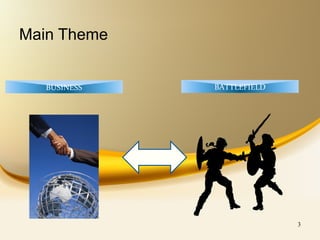
Main Theme
BUSINESS BATTLEFIELD
4
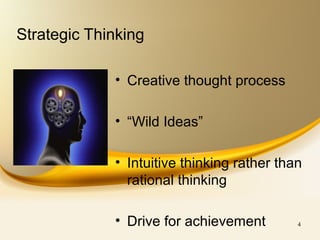
Strategic Thinking
• Creative thought process
• “Wild Ideas”
• Intuitive thinking rather than
rational thinking
• Drive for achievement
Analysis
• Critical starting point of strategic thinking.
• Clear understanding of each element of a
situation.
• True strategic thinking contrasts sharply
with the conventional systems approach
based on linear thinking but it also
contrasts with the approach based on
intuition.
Three kinds of thinking process :
• Mechanical systems thinking
• Intuition
• Strategic thinking
Determining the critical issue
Example - Overtime work has become a
chronic problem in a company.
A clear understanding of the nature of the
problem led to the creative solutions. By
failing to grasp the critical issues, ends in
failure and frustration.
The art of Strategic Thinking
It is a creative process, the spark of insight is
essential. Insight is far easier to recoganize than
to define. Creative insight is the ability to
combine, synthesize or reshuffle unrelated
phenomena in such a way that you can make
more out of it.
Three essential R's :
• Reality : strategist must be aware of the
customers,the competition and comåany's field
of competence.
• Ripeness: strategist must consider the
importance of timing.
• Resources : strategist should be sensitive to
their own resource limitation.
Conditions of Creativity
• An initial charge
Example - Yamaha
• Directinal antennae
Example - kazuma tateishi
• Capacity to tolerate static.
Example: Soichiro honda
Conclusion
Stratigic Thinking can be
developed by focusing on other
skills like creativity, mental
productivity and the power of
insight. There are habits of
mind and mode of thinking that
can be acquired through
practice to come up with
winning strategic concepts.

Mind of the strategist.

  • 1.
    The Mind ofa Strategist Kenichi Ohmae By Gaurav Sharma
  • 2.
    Objective To consider theimportance of strategy and strategic thinking and some points on which we can focus to enhance our strategic skills and develop our mind to think stratigically.
  • 3.
  • 4.
    4 Strategic Thinking • Creativethought process • “Wild Ideas” • Intuitive thinking rather than rational thinking • Drive for achievement
  • 5.
    Analysis • Critical startingpoint of strategic thinking. • Clear understanding of each element of a situation. • True strategic thinking contrasts sharply with the conventional systems approach based on linear thinking but it also contrasts with the approach based on intuition.
  • 6.
    Three kinds ofthinking process : • Mechanical systems thinking • Intuition • Strategic thinking
  • 7.
    Determining the criticalissue Example - Overtime work has become a chronic problem in a company. A clear understanding of the nature of the problem led to the creative solutions. By failing to grasp the critical issues, ends in failure and frustration.
  • 8.
    The art ofStrategic Thinking It is a creative process, the spark of insight is essential. Insight is far easier to recoganize than to define. Creative insight is the ability to combine, synthesize or reshuffle unrelated phenomena in such a way that you can make more out of it.
  • 9.
    Three essential R's: • Reality : strategist must be aware of the customers,the competition and comåany's field of competence. • Ripeness: strategist must consider the importance of timing. • Resources : strategist should be sensitive to their own resource limitation.
  • 10.
    Conditions of Creativity •An initial charge Example - Yamaha • Directinal antennae Example - kazuma tateishi • Capacity to tolerate static. Example: Soichiro honda
  • 11.
    Conclusion Stratigic Thinking canbe developed by focusing on other skills like creativity, mental productivity and the power of insight. There are habits of mind and mode of thinking that can be acquired through practice to come up with winning strategic concepts.