Strategy Implementation
Presenter : Haim Srur
11 July 2015
SlideShare
Today’s Agenda
• Strategy formulation
• Strategy implementation
• Why strategy implementation fails?
• Strategy implementation models
• Best practices
2
WHAT IS STRATEGY
FORMULATION ?
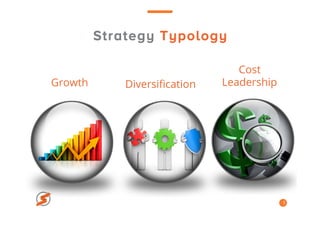
Strategy Typology
5
Growth
Cost
LeadershipDiversification
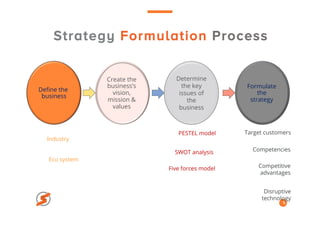
Strategy Formulation Process
6
Define the
business
Create the
business’s
vision,
mission &
values
Determine
the key
issues of
the
business
Formulate
the
strategy
Industry
Eco system
PESTEL model
SWOT analysis
Five forces model
Target customers
Competencies
Competitive
advantages
Disruptive
technology
WHAT IS STRATEGY
IMPLEMENTATION ?
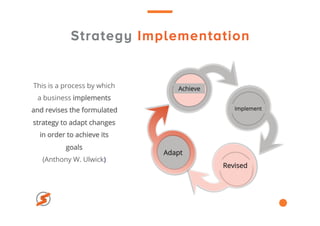
Achieve
Implement
Revised
Adapt
Strategy Implementation
This is a process by which
a business implements
and revises the formulated
strategy to adapt changes
in order to achieve its
goals
(Anthony W. Ulwick)
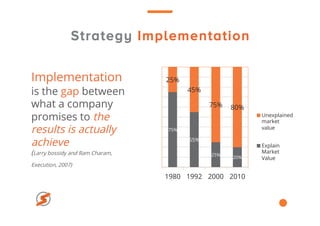
Strategy Implementation
Implementation
is the gap between
what a company
promises to the
results is actually
achieve
(Larry bossidy and Ram Charam,
Execution, 2007)
75%
55%
25%
20%
25%
45%
75% 80%
1980 1992 2000 2010
Unexplained
market
value
Explain
Market
Value
10
If it is not a rocket
science,
it doesn’t mean
that it is easy
(xxx xxxx, 2001)
Reasons for strategy
Implementation Failure
10
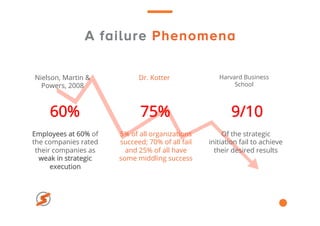
A failure Phenomena
Employees at 60% of
the companies rated
their companies as
weak in strategic
execution
5% of all organizations
succeed; 70% of all fail
and 25% of all have
some middling success
Of the strategic
initiation fail to achieve
their desired results
Nielson, Martin &
Powers, 2008
Harvard Business
School
Dr. Kotter
60% 75% 9/10
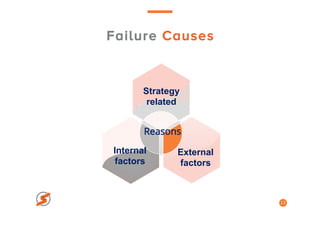
Failure Causes
13
Strategy
related
External
factors
Internal
factors
Reasons
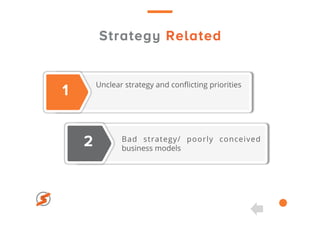
1
2
Unclear strategy and conflicting priorities
Bad strategy/ poorly conceived
business models
Strategy Related
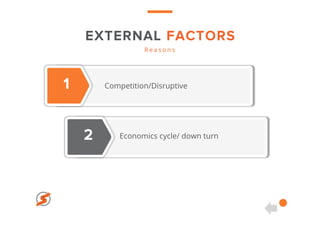
EXTERNAL FACTORS
R e a s o n s
1
2
Competition/Disruptive
Economics cycle/ down turn
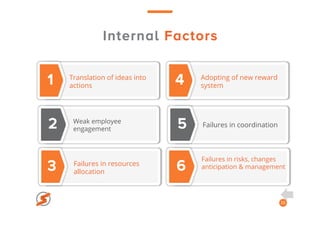
Internal Factors
16
1
2
4
5
3
 6
Translation of ideas into
actions
Failures in coordination
Failures in resources
allocation
Adopting of new reward
system
Weak employee
engagement
Failures in risks, changes
anticipation & management
Components of successful strategy
Implementation
7
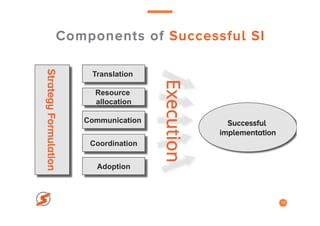
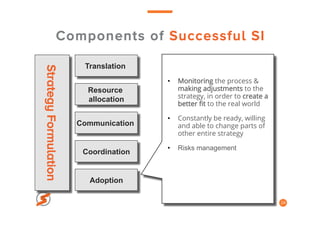
Components of Successful SI
18
Translation
Resource
allocation
Communication
Coordination
Successful
implementation
Adoption
StrategyFormulation
Execution
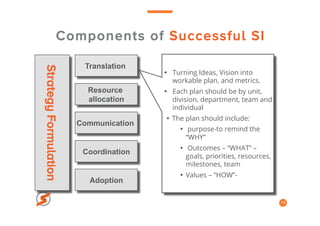
Components of Successful SI
19
•  Turning Ideas, Vision into
workable plan, and metrics.
•  Each plan should be by unit,
division, department, team and
individual
•  The plan should include:
•  purpose-to remind the
“WHY”
•  Outcomes – “WHAT” –
goals, priorities, resources,
milestones, team
•  Values – “HOW”-
Translation
Resource
allocation
Communication
Coordination
Adoption
StrategyFormulation
Components of Successful SI
20
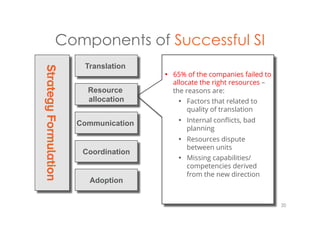
•  65% of the companies failed to
allocate the right resources –
the reasons are:
•  Factors that related to
quality of translation
•  Internal conflicts, bad
planning
•  Resources dispute
between units
•  Missing capabilities/
competencies derived
from the new direction
StrategyFormulation
Translation
Resource
allocation
Communication
Coordination
Adoption
Components of Successful SI
21
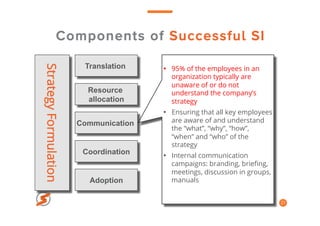
•  95% of the employees in an
organization typically are
unaware of or do not
understand the company’s
strategy
•  Ensuring that all key employees
are aware of and understand
the “what”, “why”, “how”,
“when” and “who” of the
strategy
•  Internal communication
campaigns: branding, briefing,
meetings, discussion in groups,
manuals
Translation
Resource
allocation
Communication
Coordination
Adoption
StrategyFormulation
Components of Successful SI
23
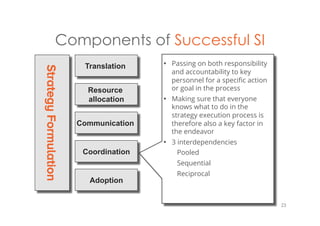
•  Passing on both responsibility
and accountability to key
personnel for a specific action
or goal in the process
•  Making sure that everyone
knows what to do in the
strategy execution process is
therefore also a key factor in
the endeavor
•  3 interdependencies
Pooled
Sequential
Reciprocal
Translation
Resource
allocation
Communication
Coordination
Adoption
StrategyFormulation
Components of Successful SI
24
•  Monitoring the process &
making adjustments to the
strategy, in order to create a
better fit to the real world
•  Constantly be ready, willing
and able to change parts of
other entire strategy
•  Risks management
Translation
Resource
allocation
Communication
Coordination
Adoption
StrategyFormulation
7 Best practices
for strategy implementation
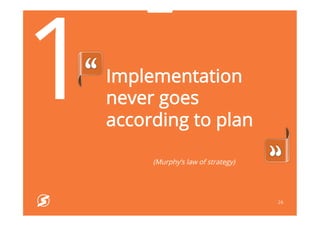
1
26
Implementation
never goes
according to plan
(Murphy’s law of strategy)
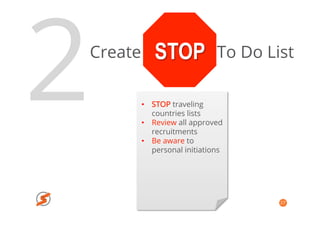
27
2Create STOP To Do List
•  STOP traveling
countries lists
•  Review all approved
recruitments
•  Be aware to
personal initiations
28
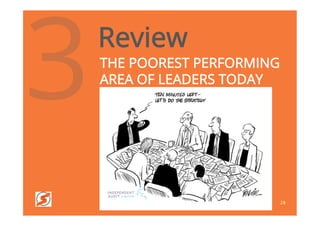
3Review
THE POOREST PERFORMING
AREA OF LEADERS TODAY
29
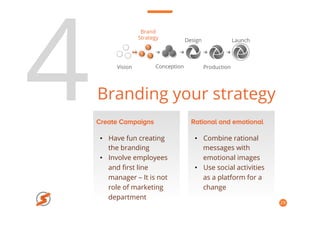
4Branding your strategy
Vision Conception
Design
Production
Launch
Brand
Strategy
Create Campaigns
•  Have fun creating
the branding
•  Involve employees
and first line
manager – It is not
role of marketing
department
Rational and emotional
•  Combine rational
messages with
emotional images
•  Use social activities
as a platform for a
change
30
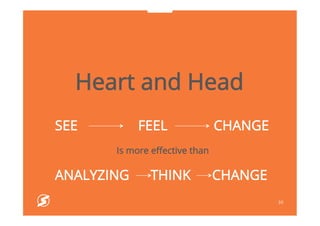
Heart and Head
SEE FEEL CHANGE
ANALYZING THINK CHANGE
Is more effective than
31
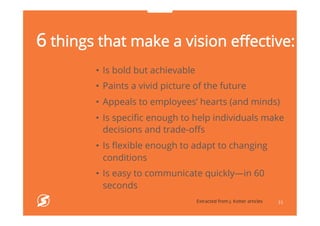
•  Is bold but achievable
•  Paints a vivid picture of the future
•  Appeals to employees’ hearts (and minds)
•  Is specific enough to help individuals make
decisions and trade-offs
•  Is flexible enough to adapt to changing
conditions
•  Is easy to communicate quickly—in 60
seconds
Extracted from J. Kotter articles
6 things that make a vision effective:
32
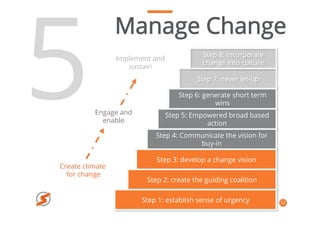
5
Manage Change
Step 8: incorporate
change into culture
Step 7: never let-up
Step 6: generate short term
wins
Step 5: Empowered broad based
action
Step 4: Communicate the vision for
buy-in
Step 3: develop a change vision
Step 2: create the guiding coalition
Step 1: establish sense of urgency
Create climate
for change
Engage and
enable
Implement and
sustain
33
6Measurement
CHANGE YOUR
STRATEGY,
CHANGE YOUR
MEASURES
New StrategyOld Strategy
34
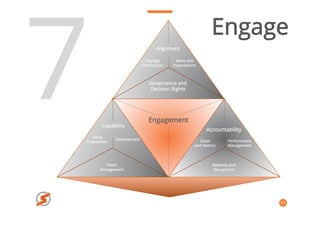
7
Engage
Alignment
Strategy
Clarification
Roles and
Expectations
Governance and
Decision Rights
Engagement
Capability
Value
Proposition
Development
Talent
Management
Accountability
Goals
and Metrics
Rewards and
Recognition
Performance
Management
35
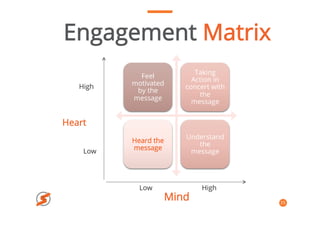
Engagement Matrix
Feel
motivated
by the
message
Taking
Action in
concert with
the
message
Heard the
message
Understand
the
message
Heart
Low
High
Mind
HighLow
Thank You ! We’d Love to Hear From You, Get In Touch With Us!
16 Shoham St., ,
Tel Aviv, Israel 69359
info@srur.net
www. srur.net
+972-54- 5225777
0773180189

Strategy implementation

  • 1.
    Strategy Implementation Presenter :Haim Srur 11 July 2015 SlideShare
  • 2.
    Today’s Agenda • Strategy formulation • Strategyimplementation • Why strategy implementation fails? • Strategy implementation models • Best practices 2
  • 4.
  • 5.
  • 6.
    Strategy Formulation Process 6 Definethe business Create the business’s vision, mission & values Determine the key issues of the business Formulate the strategy Industry Eco system PESTEL model SWOT analysis Five forces model Target customers Competencies Competitive advantages Disruptive technology
  • 7.
  • 8.
    Achieve Implement Revised Adapt Strategy Implementation This isa process by which a business implements and revises the formulated strategy to adapt changes in order to achieve its goals (Anthony W. Ulwick)
  • 9.
    Strategy Implementation Implementation is thegap between what a company promises to the results is actually achieve (Larry bossidy and Ram Charam, Execution, 2007) 75% 55% 25% 20% 25% 45% 75% 80% 1980 1992 2000 2010 Unexplained market value Explain Market Value
  • 10.
    10 If it isnot a rocket science, it doesn’t mean that it is easy (xxx xxxx, 2001)
  • 11.
  • 12.
    A failure Phenomena Employeesat 60% of the companies rated their companies as weak in strategic execution 5% of all organizations succeed; 70% of all fail and 25% of all have some middling success Of the strategic initiation fail to achieve their desired results Nielson, Martin & Powers, 2008 Harvard Business School Dr. Kotter 60% 75% 9/10
  • 13.
  • 14.
    1 2 Unclear strategy andconflicting priorities Bad strategy/ poorly conceived business models Strategy Related
  • 15.
    EXTERNAL FACTORS R ea s o n s 1 2 Competition/Disruptive Economics cycle/ down turn
  • 16.
    Internal Factors 16 1 2 4 5 3 6 Translationof ideas into actions Failures in coordination Failures in resources allocation Adopting of new reward system Weak employee engagement Failures in risks, changes anticipation & management
  • 17.
    Components of successfulstrategy Implementation 7
  • 18.
    Components of SuccessfulSI 18 Translation Resource allocation Communication Coordination Successful implementation Adoption StrategyFormulation Execution
  • 19.
    Components of SuccessfulSI 19 •  Turning Ideas, Vision into workable plan, and metrics. •  Each plan should be by unit, division, department, team and individual •  The plan should include: •  purpose-to remind the “WHY” •  Outcomes – “WHAT” – goals, priorities, resources, milestones, team •  Values – “HOW”- Translation Resource allocation Communication Coordination Adoption StrategyFormulation
  • 20.
    Components of SuccessfulSI 20 •  65% of the companies failed to allocate the right resources – the reasons are: •  Factors that related to quality of translation •  Internal conflicts, bad planning •  Resources dispute between units •  Missing capabilities/ competencies derived from the new direction StrategyFormulation Translation Resource allocation Communication Coordination Adoption
  • 21.
    Components of SuccessfulSI 21 •  95% of the employees in an organization typically are unaware of or do not understand the company’s strategy •  Ensuring that all key employees are aware of and understand the “what”, “why”, “how”, “when” and “who” of the strategy •  Internal communication campaigns: branding, briefing, meetings, discussion in groups, manuals Translation Resource allocation Communication Coordination Adoption StrategyFormulation
  • 22.
  • 23.
    Components of SuccessfulSI 23 •  Passing on both responsibility and accountability to key personnel for a specific action or goal in the process •  Making sure that everyone knows what to do in the strategy execution process is therefore also a key factor in the endeavor •  3 interdependencies Pooled Sequential Reciprocal Translation Resource allocation Communication Coordination Adoption StrategyFormulation
  • 24.
    Components of SuccessfulSI 24 •  Monitoring the process & making adjustments to the strategy, in order to create a better fit to the real world •  Constantly be ready, willing and able to change parts of other entire strategy •  Risks management Translation Resource allocation Communication Coordination Adoption StrategyFormulation
  • 25.
    7 Best practices forstrategy implementation
  • 26.
    1 26 Implementation never goes according toplan (Murphy’s law of strategy)
  • 27.
    27 2Create STOP ToDo List •  STOP traveling countries lists •  Review all approved recruitments •  Be aware to personal initiations
  • 28.
  • 29.
    29 4Branding your strategy VisionConception Design Production Launch Brand Strategy Create Campaigns •  Have fun creating the branding •  Involve employees and first line manager – It is not role of marketing department Rational and emotional •  Combine rational messages with emotional images •  Use social activities as a platform for a change
  • 30.
    30 Heart and Head SEEFEEL CHANGE ANALYZING THINK CHANGE Is more effective than
  • 31.
    31 •  Is boldbut achievable •  Paints a vivid picture of the future •  Appeals to employees’ hearts (and minds) •  Is specific enough to help individuals make decisions and trade-offs •  Is flexible enough to adapt to changing conditions •  Is easy to communicate quickly—in 60 seconds Extracted from J. Kotter articles 6 things that make a vision effective:
  • 32.
    32 5 Manage Change Step 8:incorporate change into culture Step 7: never let-up Step 6: generate short term wins Step 5: Empowered broad based action Step 4: Communicate the vision for buy-in Step 3: develop a change vision Step 2: create the guiding coalition Step 1: establish sense of urgency Create climate for change Engage and enable Implement and sustain
  • 33.
  • 34.
    34 7 Engage Alignment Strategy Clarification Roles and Expectations Governance and DecisionRights Engagement Capability Value Proposition Development Talent Management Accountability Goals and Metrics Rewards and Recognition Performance Management
  • 35.
    35 Engagement Matrix Feel motivated by the message Taking Actionin concert with the message Heard the message Understand the message Heart Low High Mind HighLow
  • 36.
    Thank You !We’d Love to Hear From You, Get In Touch With Us! 16 Shoham St., , Tel Aviv, Israel 69359 info@srur.net www. srur.net +972-54- 5225777 0773180189