Strategic Planning for ITIain Pritchard6 April 2011
About Sayer VincentSayer Vincent is a specialist firm of consultants and auditors working exclusively with organisations in the not-for-profit sector.Our information systems consultants and associates have all held senior positions in the sector.We guide and support charities through the process of strategic planning, systems design, procurement, implementation and change management. 2
What we will coverWhy strategic planning for IT is so hardWhy strategic planning for IT is so importantSome useful tools and techniquesDiscussion3
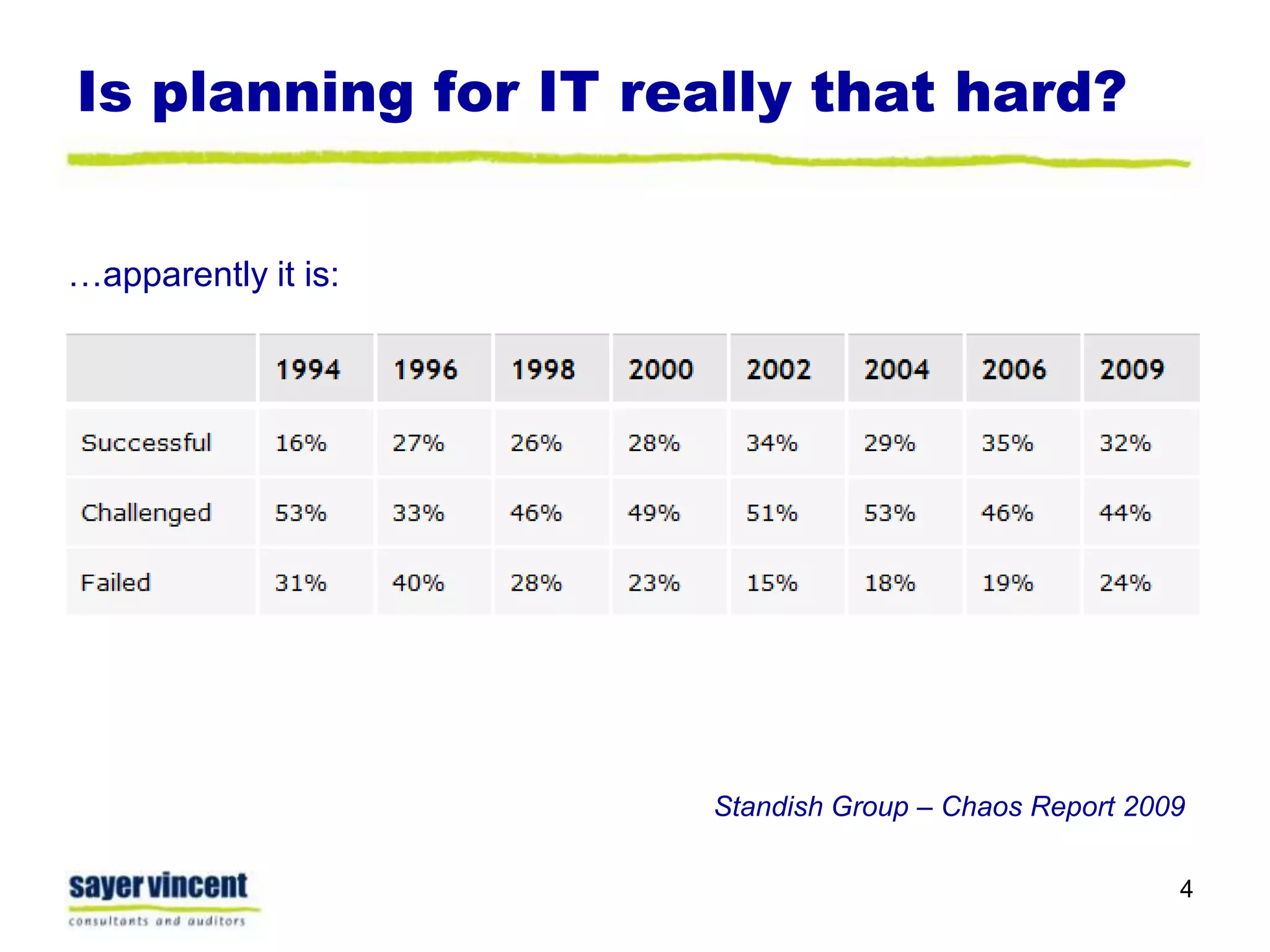
Is planning for IT really that hard?…apparently it is:Standish Group – Chaos Report 20094
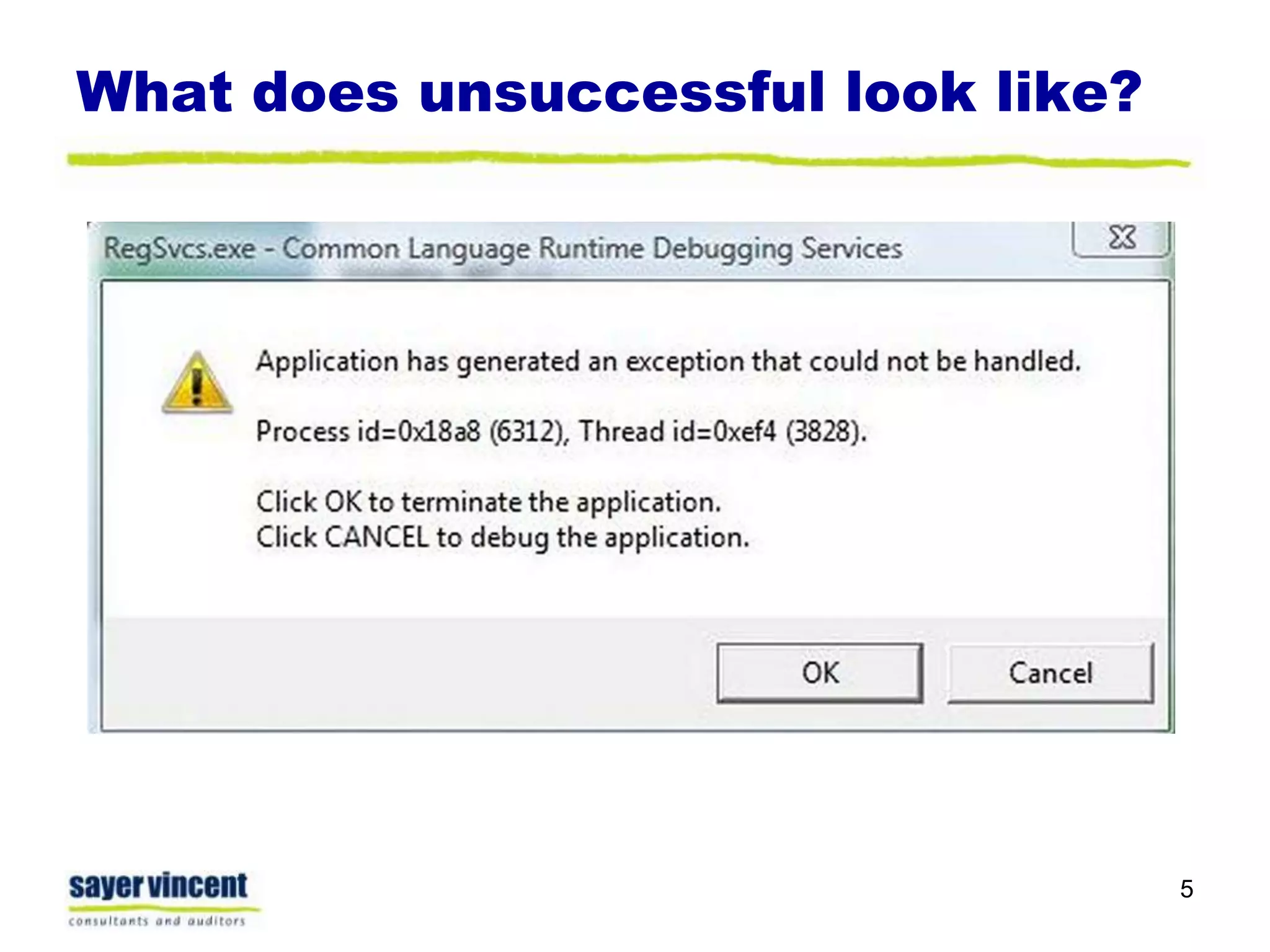
What does unsuccessful look like?5
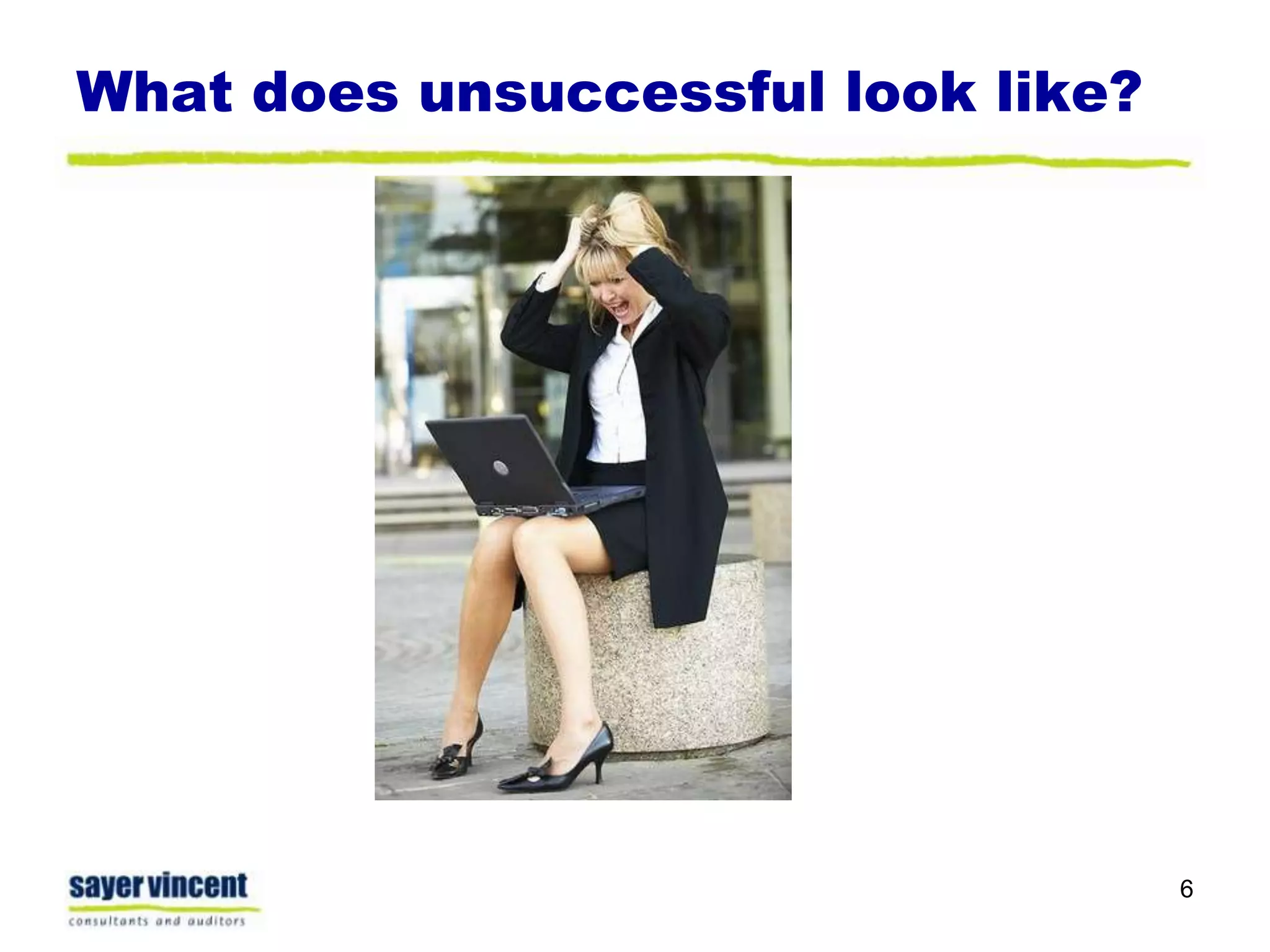
What does unsuccessful look like?6
Why do IT projects go wrong?Not enough timeInsufficient budgetPoor communicationInadequate testingNo project managementLack of senior sponsorship/engagementOrganisational over-confidencePersonal inexperiencePoor decision-makingNo clear strategy7
Why do IT projects go wrong?8Another four reasons….
Reason #1Moore’s law:The number of transistors that can be placed inexpensively on an integrated circuit doubles approximately every two years.9
Reason #2Hofstadter’s law:It always takes longer than you think….even when you apply Hofstadter’s law10
Reason #3Murphy’s (computer) laws:If anything can go wrong, it willProgram complexity grows until it exceeds the capability of the programmer who must maintain itAdding manpower to a late software project makes it later11
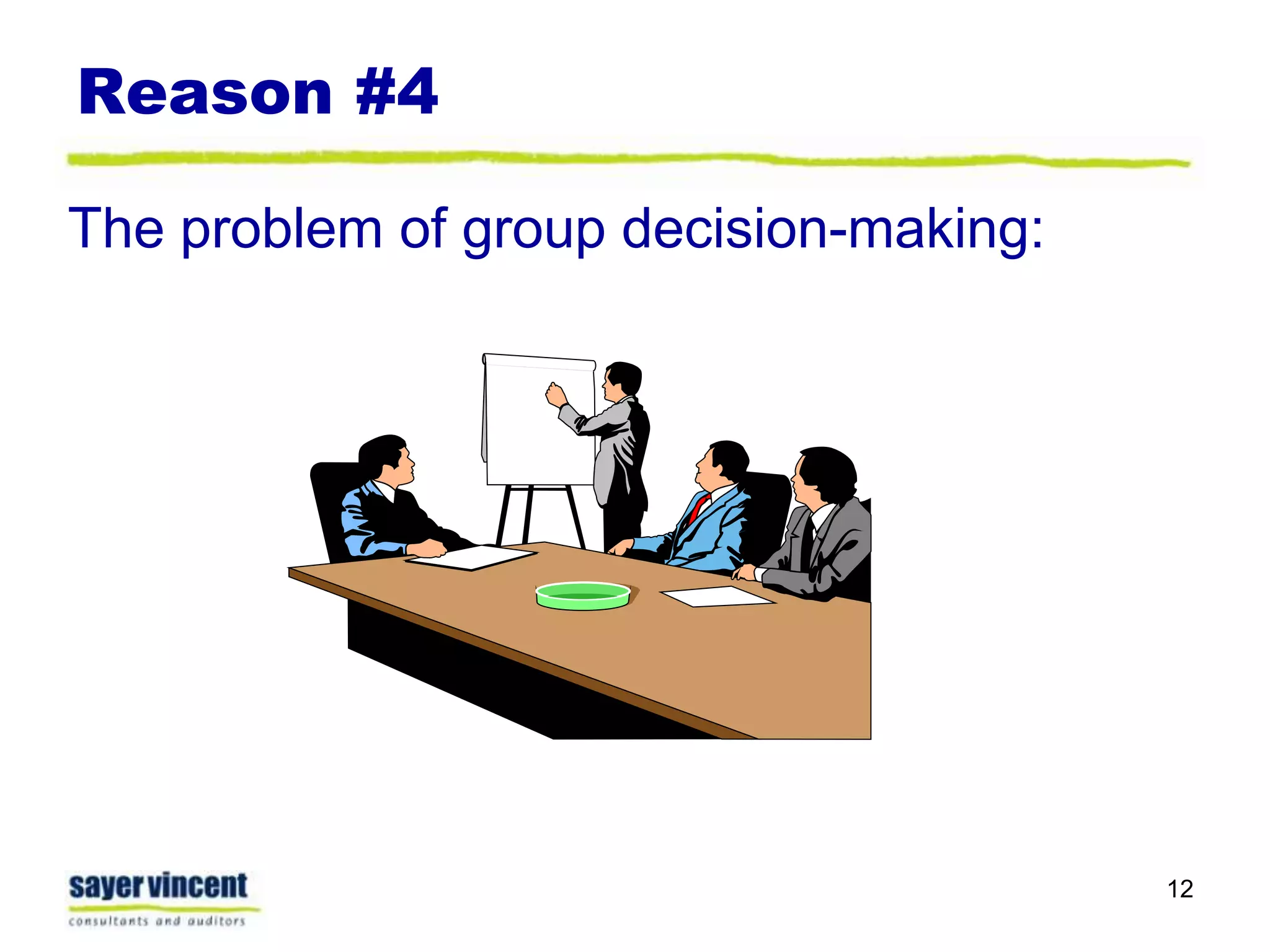
Reason #4The problem of group decision-making:12
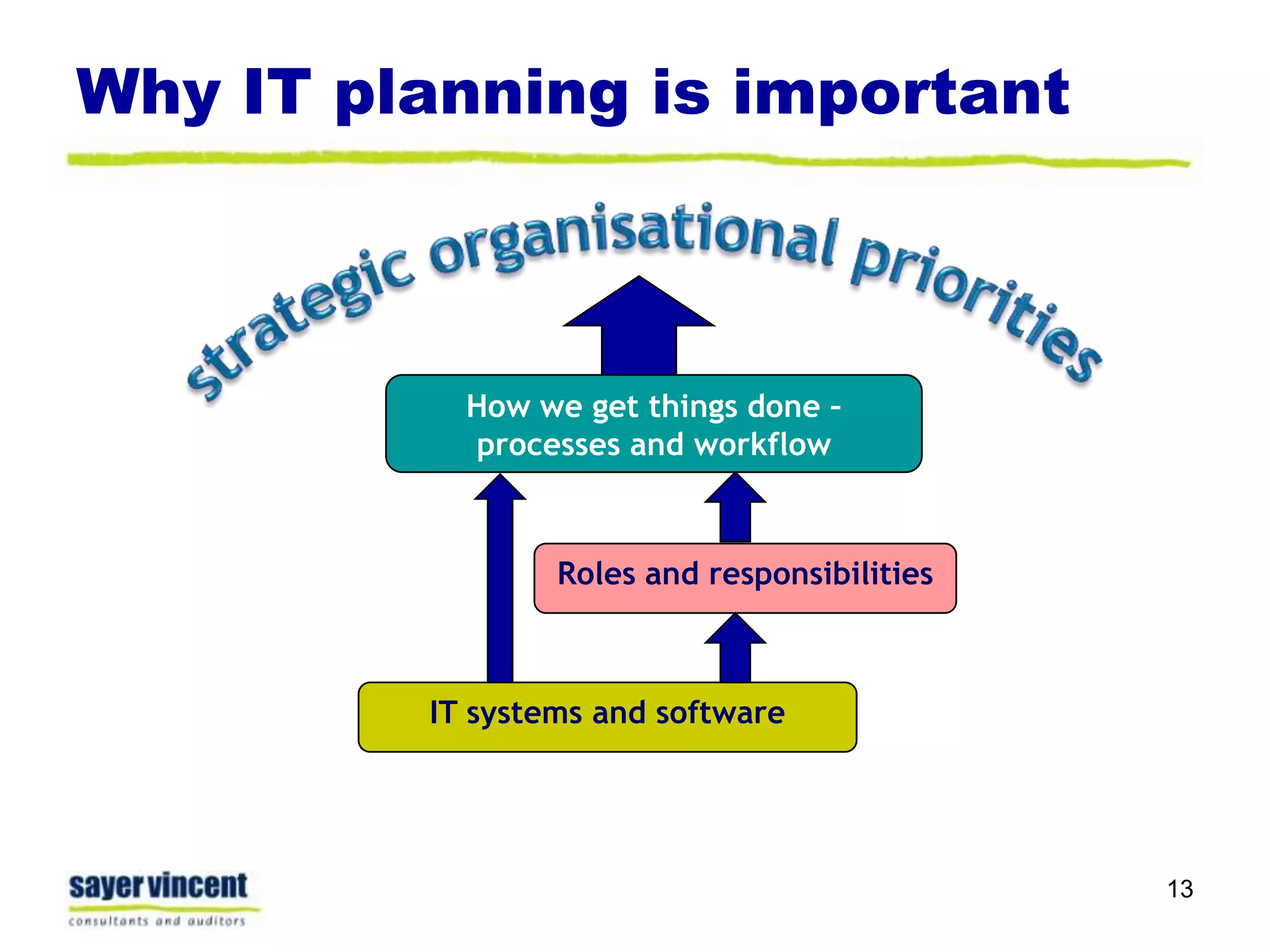
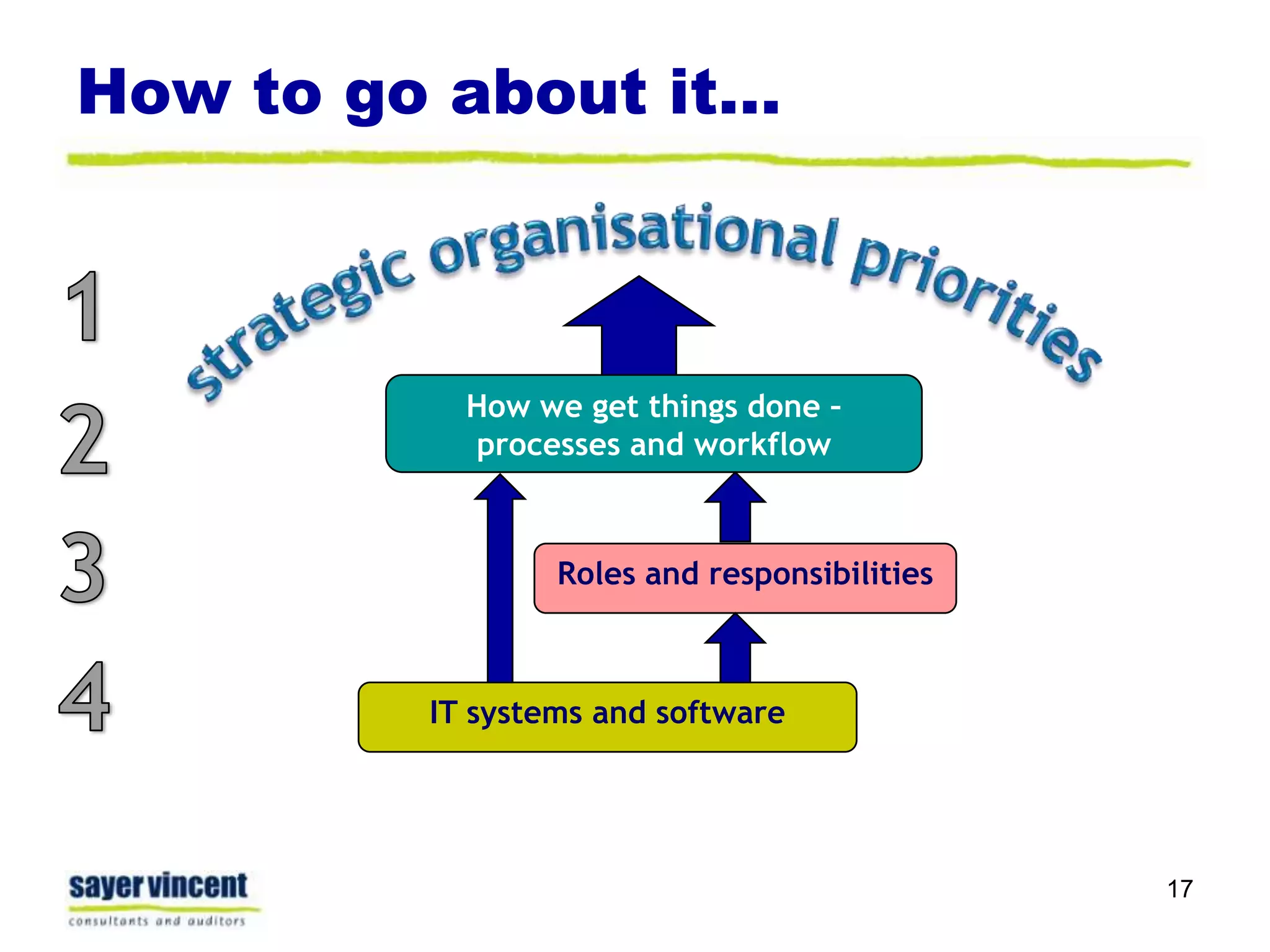
Why IT planning is important13strategic organisational prioritiesHow we get things done – processes and workflowRoles and responsibilitiesIT systems and software
The questions an ICT strategy should answerWill you buy standard packaged software or build your own systems?What levels of IT service do you need? Do any applications need to be supported 24 hours a day, seven days a week?Which IT services and support will you outsource to third parties?What resources and skills do you need in your in-house IT team?What are your standards for equipment and software? What are your policies for replacement and upgrade?Are there areas where you are happy to take risks with new technology in order to gain advantage? Are there areas where it is important that IT is kept ‘safe’?How will you manage IT projects, and who will manage them?14
When to carry out an ICT strategy Generally, producing an IT strategy is more straightforward if:your corporate strategy and priorities are already clear and understood by the managers, staff and other stakeholders who will need to take partthe stakeholders who need to be involved will have time to focus on the IT strategy and will not be significantly distracted by other projects or programmes of work going on at the same timethe senior managers in your charity are supportive and will actively encourage staff and colleagues to take part as necessary.15
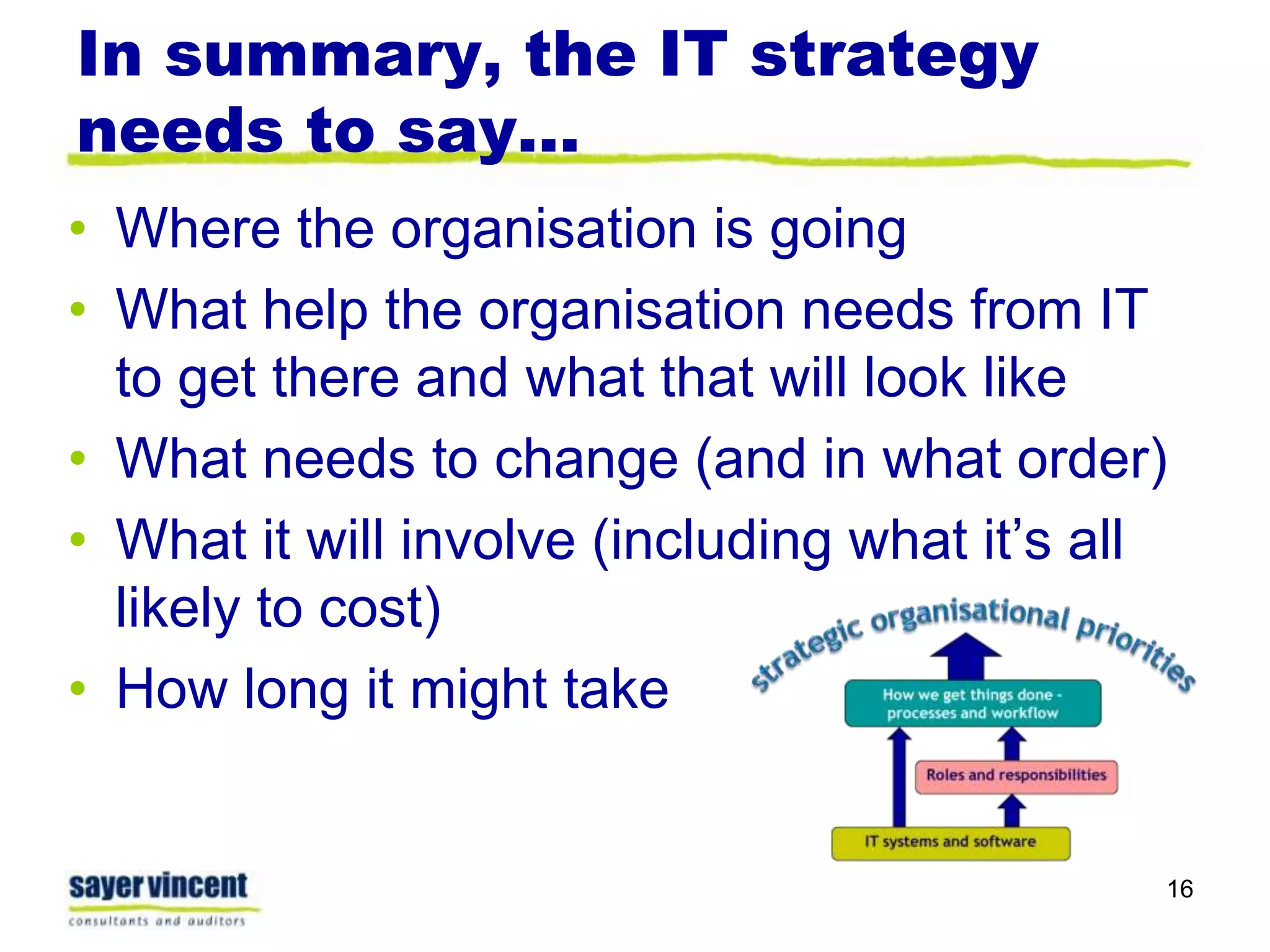
In summary, the IT strategy needs to say…Where the organisation is goingWhat help the organisation needs from IT to get there and what that will look likeWhat needs to change (and in what order)What it will involve (including what it’s all likely to cost)How long it might take16
How to go about it…171strategic organisational priorities2How we get things done – processes and workflow3Roles and responsibilities4IT systems and software
Start with the organisation’s aims and priorities18
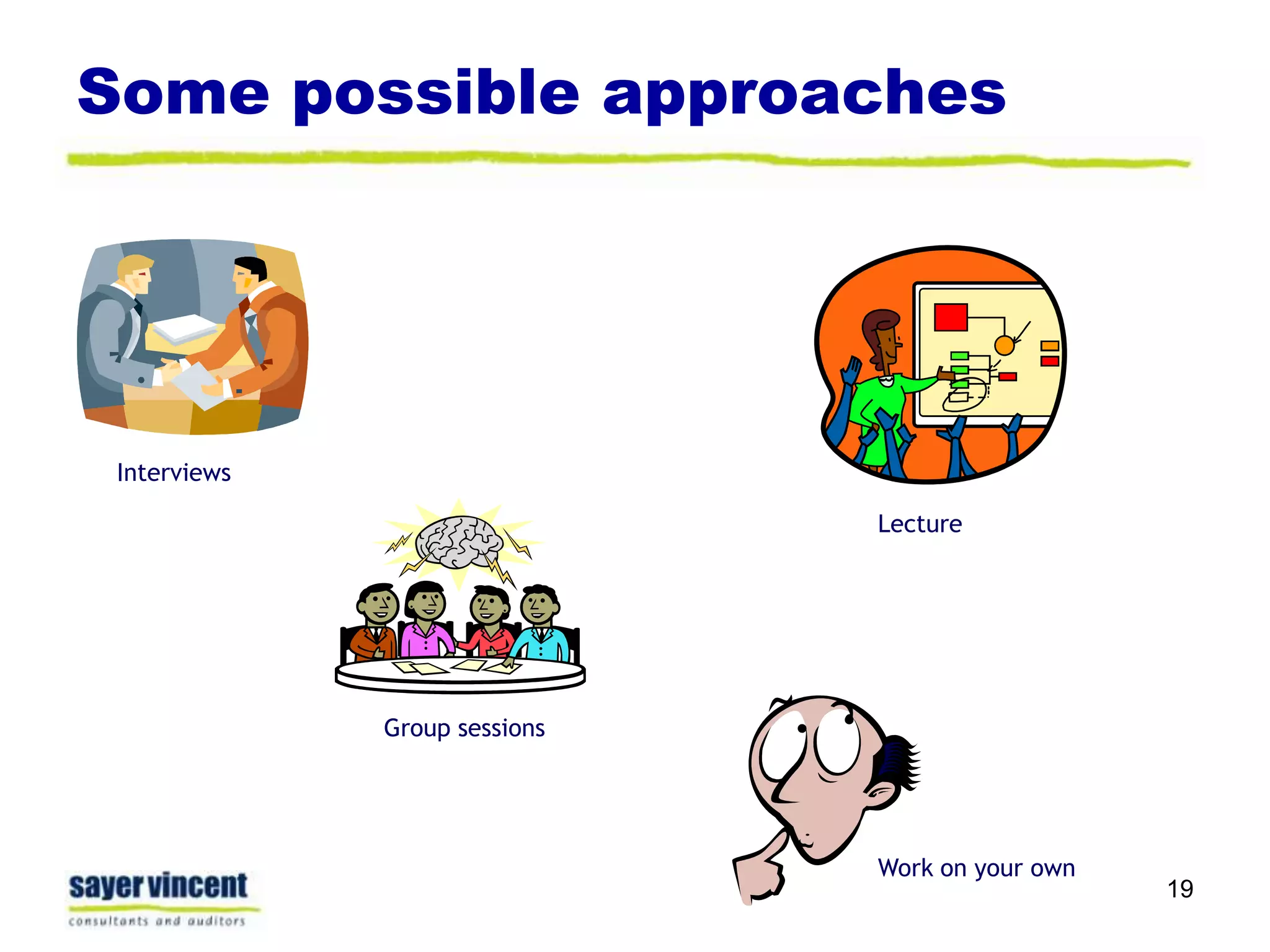
Some possible approaches19InterviewsLectureGroup sessionsWork on your own
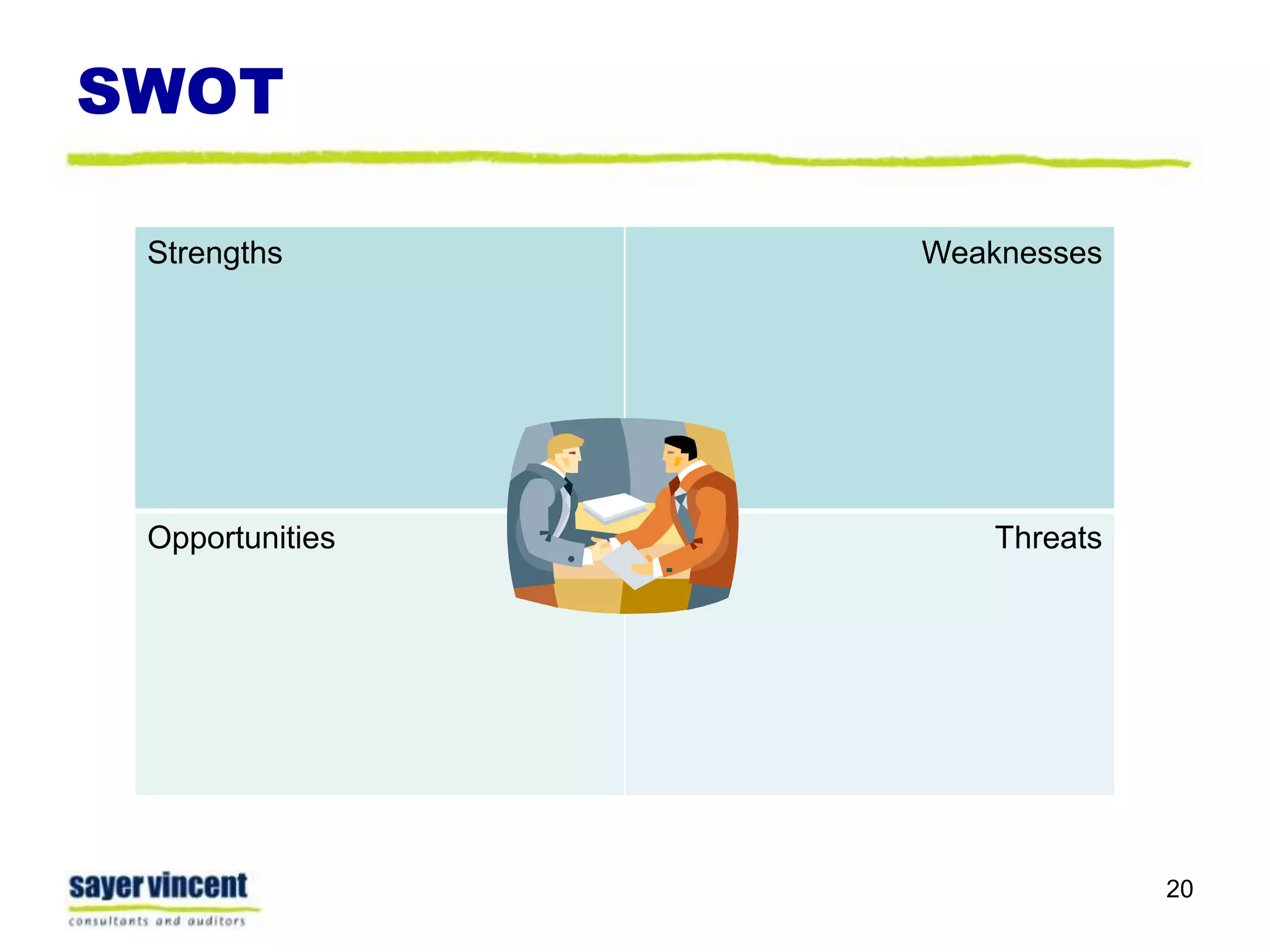
SWOT20
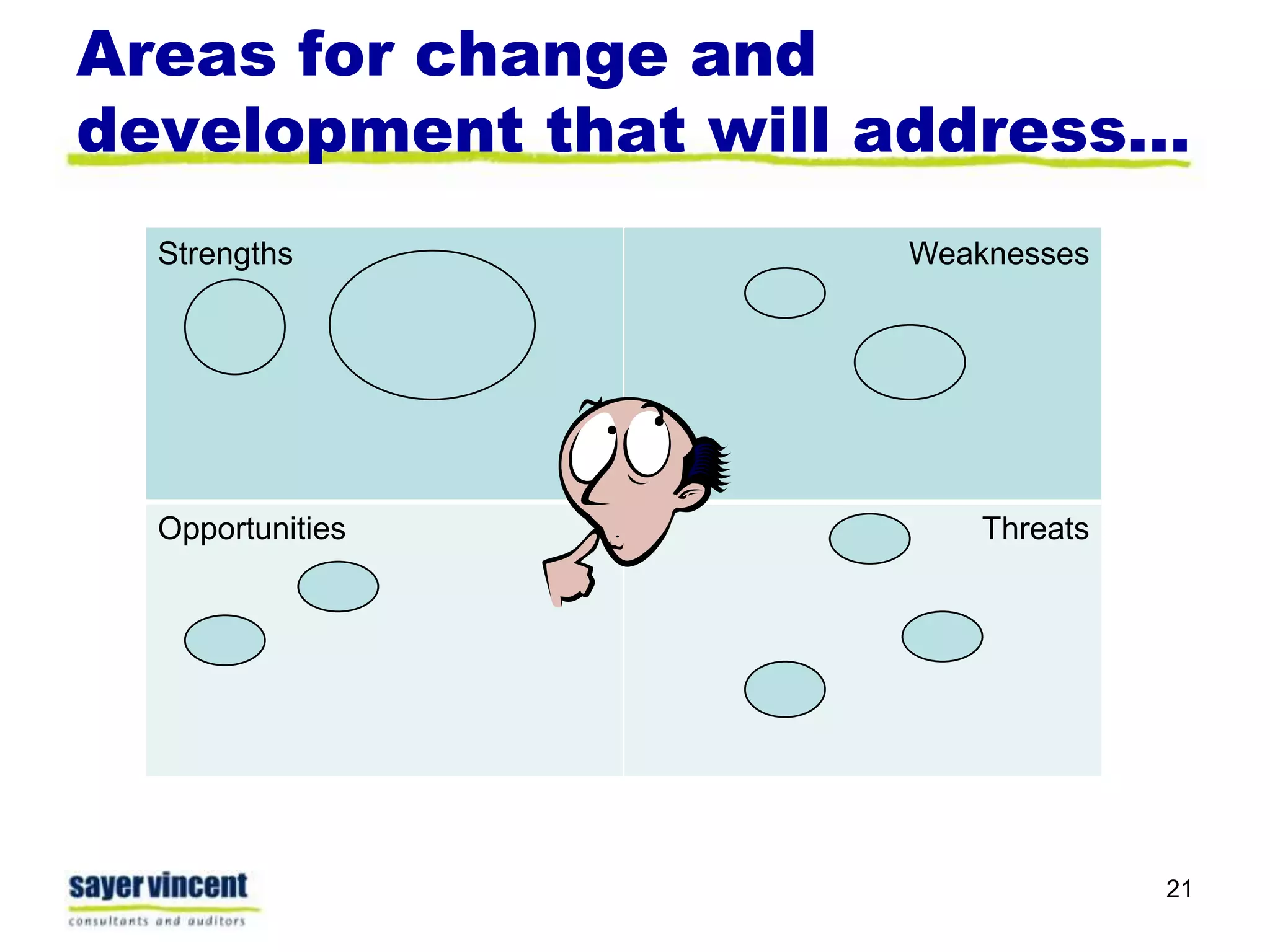
Areas for change and development that will address…21
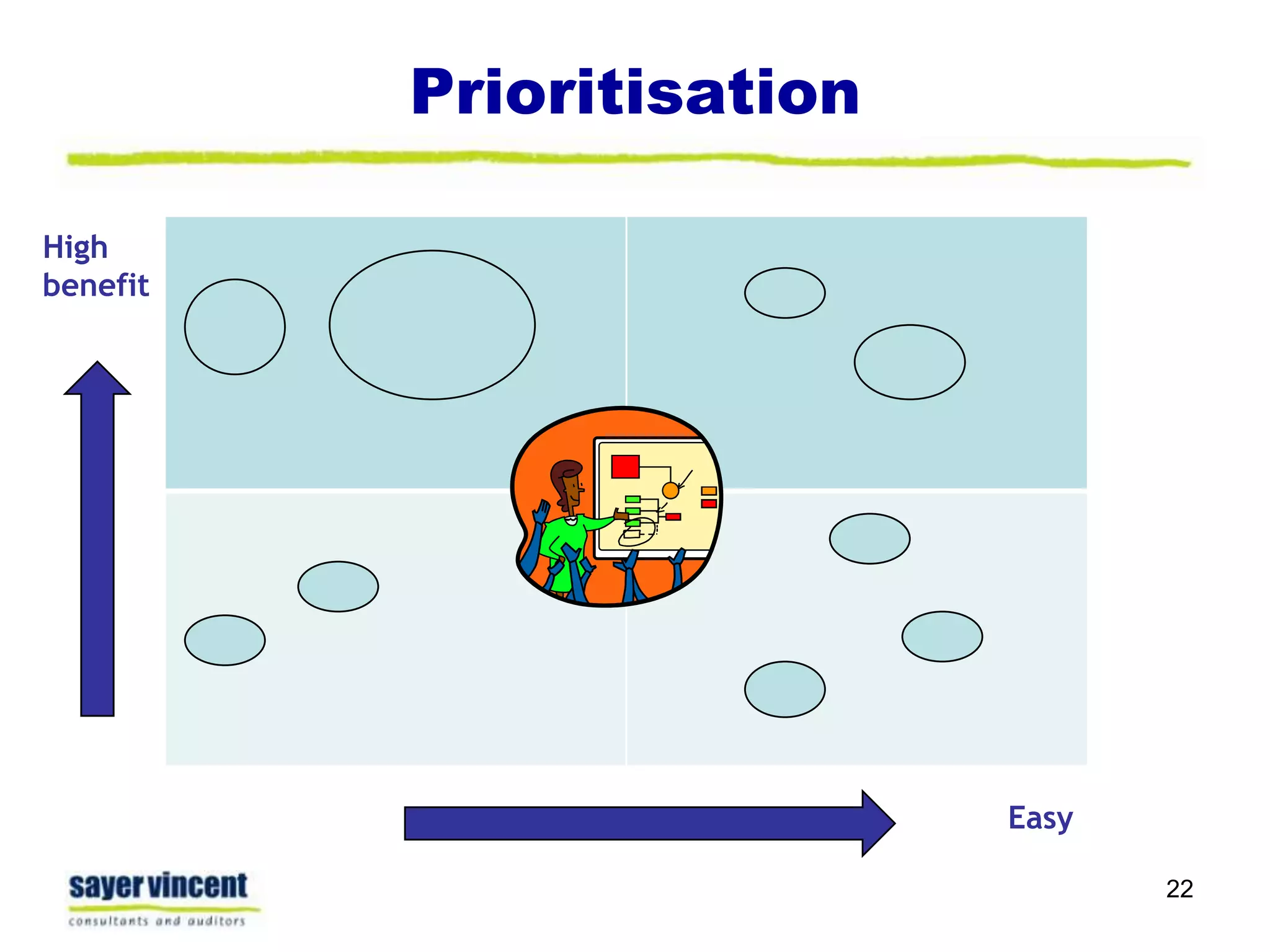
Prioritisation22High benefitEasy
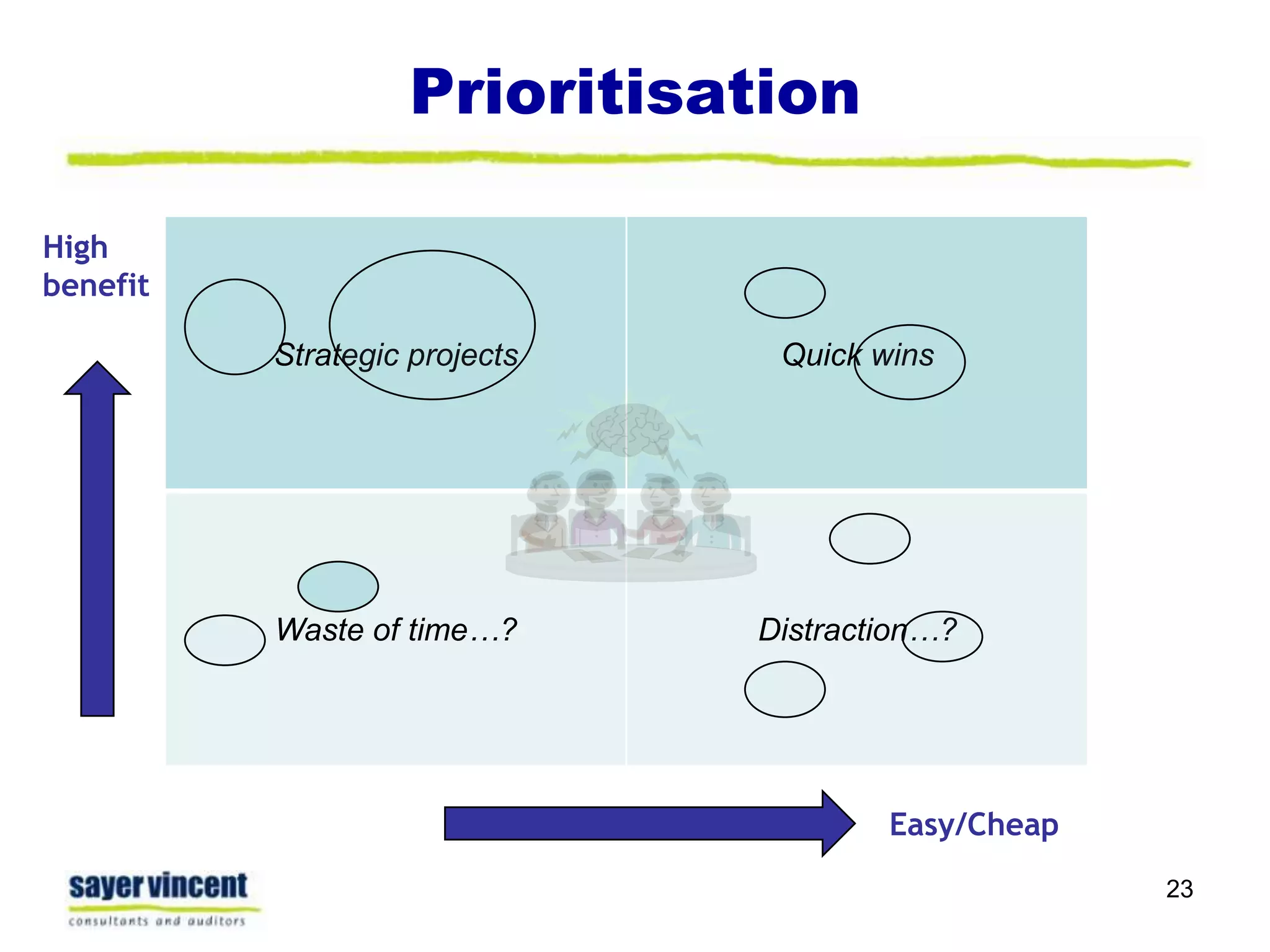
Prioritisation23High benefitEasy/Cheap
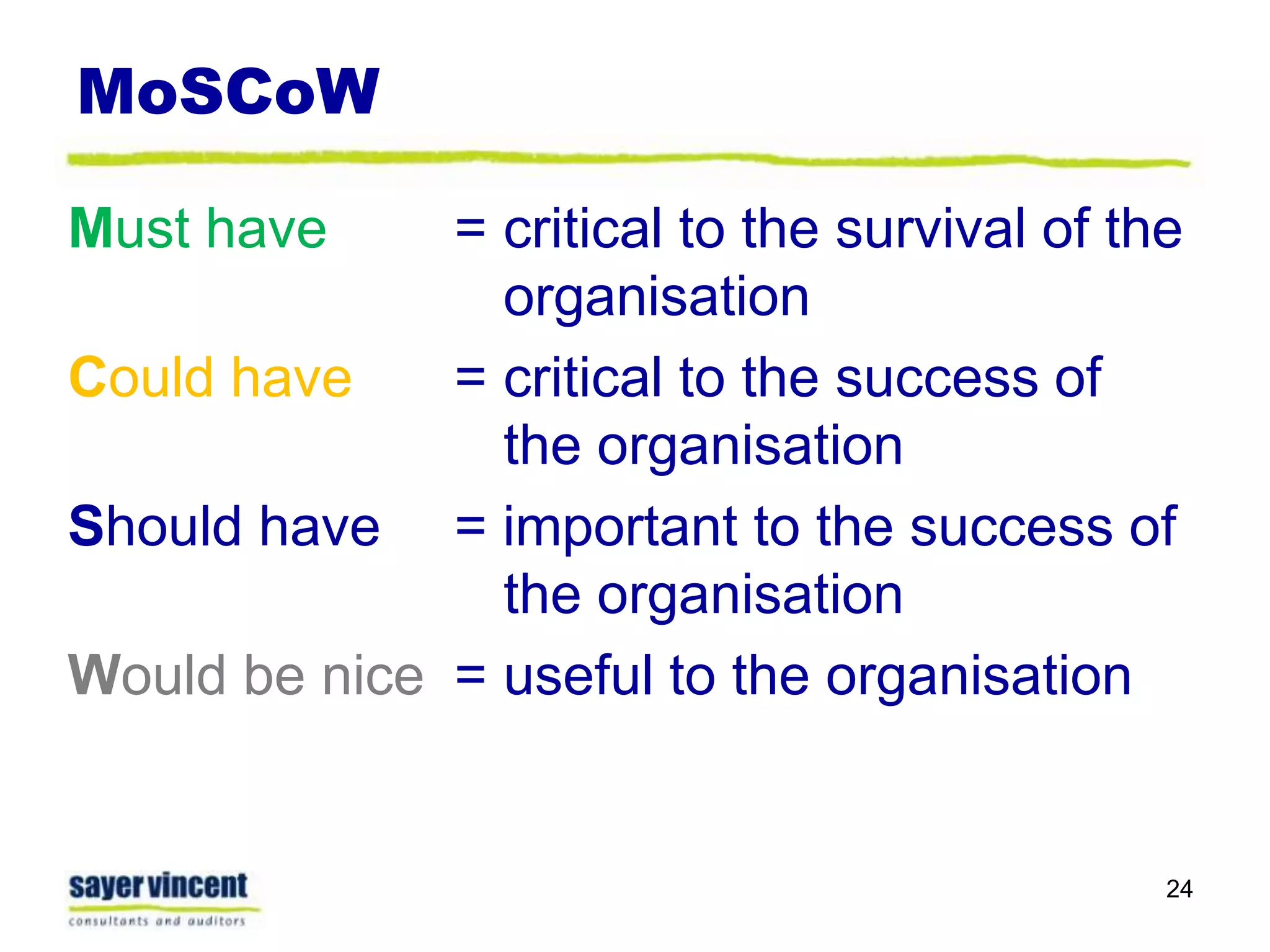
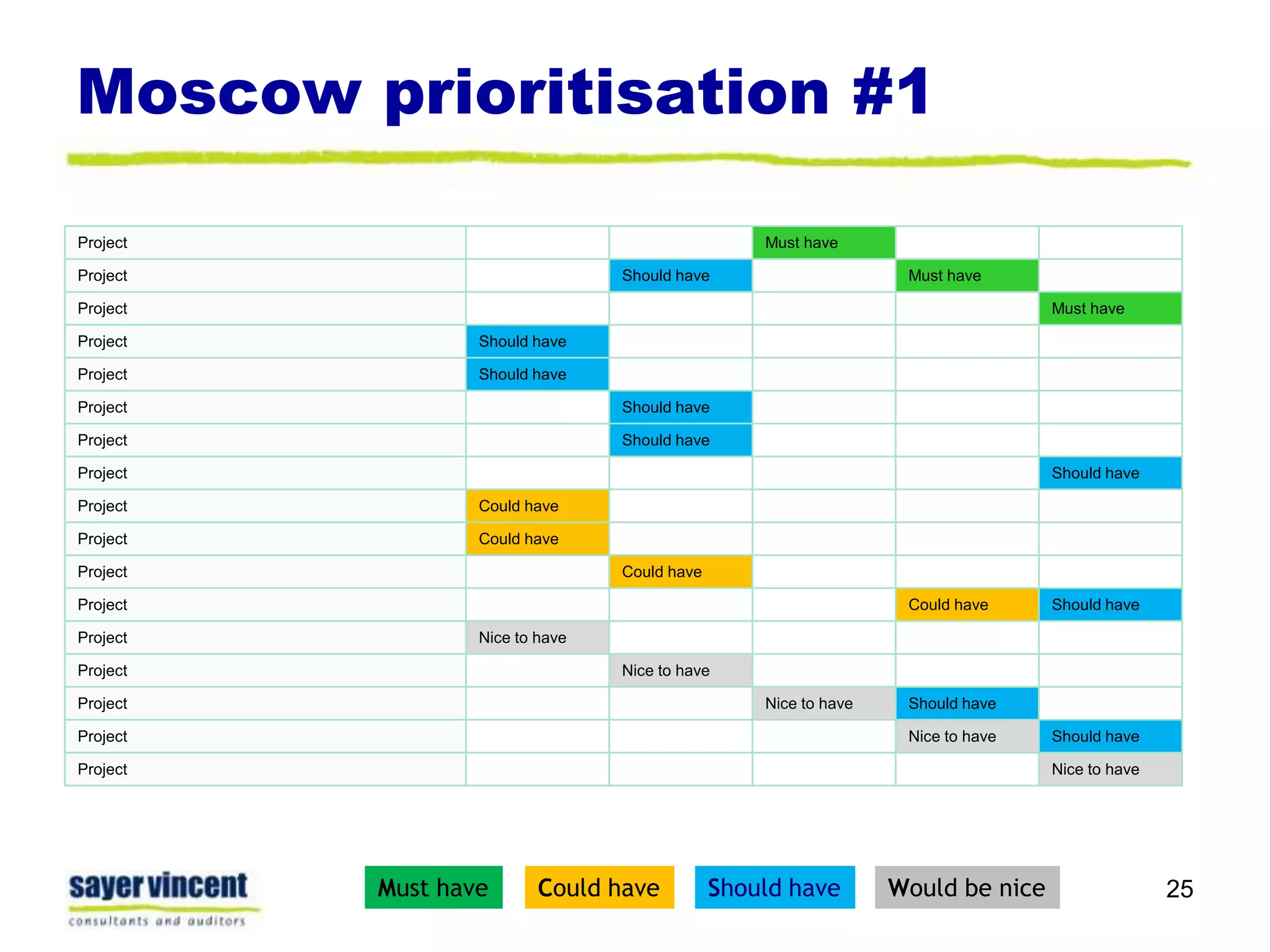
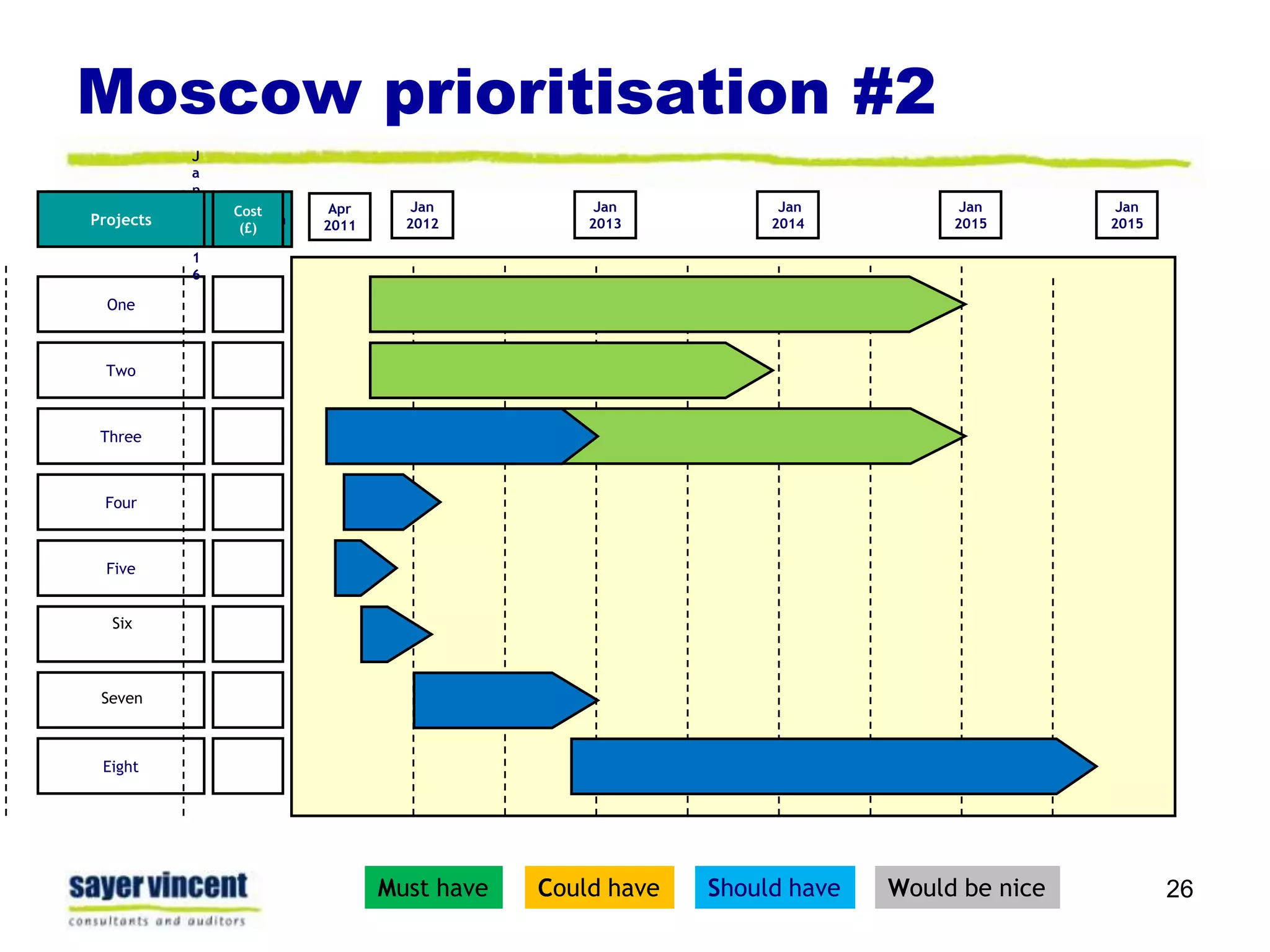
MoSCoWMust have	=	critical to the survival of the organisationCould have	=	critical to the success of the organisationShould have	= important to the success of the organisationWould be nice	=	useful to the organisation24
Moscow prioritisation #125Should haveWould be niceCould haveMust have
Moscow prioritisation #226Jan 2012Jan 2013 Jan  2014Jan 2015Jan 2015Jan 2016Apr 2011ProjectsCost (excl. on goings)ProjectsCost (£)OneTwoThreeFourFiveSixSevenEightShould haveWould be niceCould haveMust have
Discussion27
Thank youIain PritchardSayer Vincent020 7841 6360iain@sayervincent.co.ukwww.sayervincent.co.uk

Strategy - Ian Pritchard, Sayer-Vincent

  • 1.
    Strategic Planning forITIain Pritchard6 April 2011
  • 2.
    About Sayer VincentSayerVincent is a specialist firm of consultants and auditors working exclusively with organisations in the not-for-profit sector.Our information systems consultants and associates have all held senior positions in the sector.We guide and support charities through the process of strategic planning, systems design, procurement, implementation and change management. 2
  • 3.
    What we willcoverWhy strategic planning for IT is so hardWhy strategic planning for IT is so importantSome useful tools and techniquesDiscussion3
  • 4.
    Is planning forIT really that hard?…apparently it is:Standish Group – Chaos Report 20094
  • 5.
  • 6.
  • 7.
    Why do ITprojects go wrong?Not enough timeInsufficient budgetPoor communicationInadequate testingNo project managementLack of senior sponsorship/engagementOrganisational over-confidencePersonal inexperiencePoor decision-makingNo clear strategy7
  • 8.
    Why do ITprojects go wrong?8Another four reasons….
  • 9.
    Reason #1Moore’s law:Thenumber of transistors that can be placed inexpensively on an integrated circuit doubles approximately every two years.9
  • 10.
    Reason #2Hofstadter’s law:Italways takes longer than you think….even when you apply Hofstadter’s law10
  • 11.
    Reason #3Murphy’s (computer)laws:If anything can go wrong, it willProgram complexity grows until it exceeds the capability of the programmer who must maintain itAdding manpower to a late software project makes it later11
  • 12.
    Reason #4The problemof group decision-making:12
  • 13.
    Why IT planningis important13strategic organisational prioritiesHow we get things done – processes and workflowRoles and responsibilitiesIT systems and software
  • 14.
    The questions anICT strategy should answerWill you buy standard packaged software or build your own systems?What levels of IT service do you need? Do any applications need to be supported 24 hours a day, seven days a week?Which IT services and support will you outsource to third parties?What resources and skills do you need in your in-house IT team?What are your standards for equipment and software? What are your policies for replacement and upgrade?Are there areas where you are happy to take risks with new technology in order to gain advantage? Are there areas where it is important that IT is kept ‘safe’?How will you manage IT projects, and who will manage them?14
  • 15.
    When to carryout an ICT strategy Generally, producing an IT strategy is more straightforward if:your corporate strategy and priorities are already clear and understood by the managers, staff and other stakeholders who will need to take partthe stakeholders who need to be involved will have time to focus on the IT strategy and will not be significantly distracted by other projects or programmes of work going on at the same timethe senior managers in your charity are supportive and will actively encourage staff and colleagues to take part as necessary.15
  • 16.
    In summary, theIT strategy needs to say…Where the organisation is goingWhat help the organisation needs from IT to get there and what that will look likeWhat needs to change (and in what order)What it will involve (including what it’s all likely to cost)How long it might take16
  • 17.
    How to goabout it…171strategic organisational priorities2How we get things done – processes and workflow3Roles and responsibilities4IT systems and software
  • 18.
    Start with theorganisation’s aims and priorities18
  • 19.
  • 20.
  • 21.
    Areas for changeand development that will address…21
  • 22.
  • 23.
  • 24.
    MoSCoWMust have = critical tothe survival of the organisationCould have = critical to the success of the organisationShould have = important to the success of the organisationWould be nice = useful to the organisation24
  • 25.
    Moscow prioritisation #125ShouldhaveWould be niceCould haveMust have
  • 26.
    Moscow prioritisation #226Jan2012Jan 2013 Jan 2014Jan 2015Jan 2015Jan 2016Apr 2011ProjectsCost (excl. on goings)ProjectsCost (£)OneTwoThreeFourFiveSixSevenEightShould haveWould be niceCould haveMust have
  • 27.
  • 28.
    Thank youIain PritchardSayerVincent020 7841 6360iain@sayervincent.co.ukwww.sayervincent.co.uk