INTRODUCTION:
Strategic Management is the formulation and
implementation of the major goals and initiatives taken by a
company's top management on behalf of owners, based on
consideration of resources and an assessment of the internal
and external environments in which the organization
competes.
IMPORTANCE:
Strategic management provides overall direction to the
enterprise and involves specifying the organization's objectives,
developing policies and plans designed to achieve these objectives, and
then allocating resources to implement the plans. Academics and
practicing managers have developed numerous models and frameworks
to assist in strategic decision making in the context of complex
environments and competitive dynamics.
STRATEGIC PLANNING DEFINE -
Strategic planning is an organization's process of defining
its strategy, or direction, and making decisions on allocating its resources
to pursue this strategy. It may also extend to control mechanisms for
guiding the implementation of the strategy. Strategic planning became
prominent in corporations during the 1960s and remains an important
aspect of strategic management.
WHOs RESPONSIBLE OF IT?
It is executed by strategic planners or strategists, who involve
many parties and research sources in their analysis of the organization
and its relationship to the environment in which it competes.
The senior leadership of an organization is generally tasked
with determining strategy.
WHOs RESPONSIBLE OF IT?
It is executed by strategic planners or strategists, who involve
many parties and research sources in their analysis of the organization
and its relationship to the environment in which it competes.
The senior leadership of an organization is generally tasked
with determining strategy.
STRATEGY includes process of
formulation and implementation: STRATEGIC
PLANNING helps coordinate both.
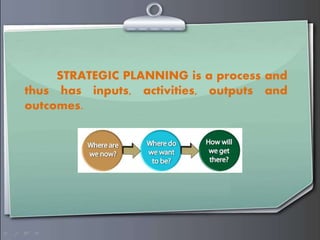
STRATEGIC PLANNING is a process and
thus has inputs, activities, outputs and
outcomes.
INPUTS
- Data is gathered from a variety of sources, such
as interviews with key executives, review of
publicly available documents on the competition
or market, primary research (e.g., visiting or
observing competitor places of business or
comparing prices), industry studies, etc.
- are gathered to help support an understanding
of the competitive environment and its
opportunities and risks.
ACTIVITIES
- Strategic planning activities include meetings
and other communication among the
organization's leaders and personnel to develop
a common understanding regarding the
competitive environment and what the
organization's response to that environment (its
strategy) should be.
OUTPUTS
-The output of strategic planning includes
documentation and communication describing the
organization's strategy and how it should be
implemented, sometimes referred to as the
strategic plan.
OUTCOMES
-Whilst the planning process produces outputs, as
described above, strategy implementation or execution
of the strategic plan produces Outcomes. These
outcomes will invariably differ from the strategic goals.
How close they are to the strategic goals and vision will
determine the success or failure of the strategic plan.
There will also arise unintended Outcomes, which
need to be attended to and understood for strategy
development and execution to be a true learning
process.
TOOLS AND APPROACHES
IN
STRATEGIC PLANNING
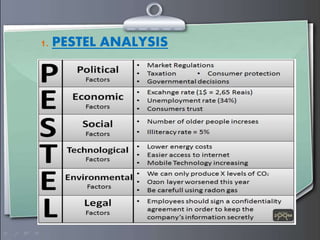
1. PESTEL ANALYSIS
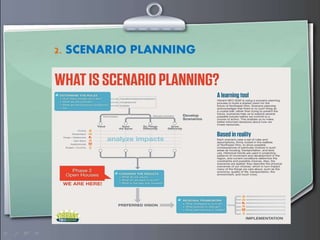
2. SCENARIO PLANNING
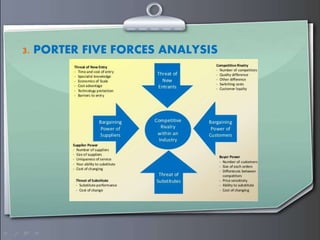
3. PORTER FIVE FORCES ANALYSIS
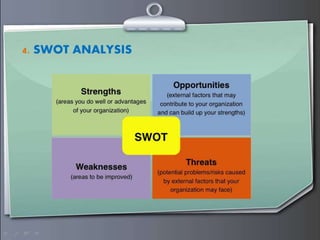
4. SWOT ANALYSIS
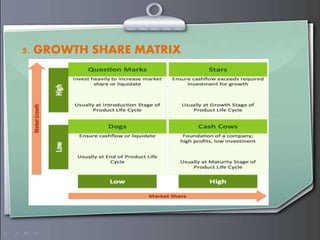
5. GROWTH SHARE MATRIX
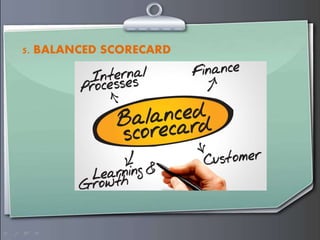
5. BALANCED SCORECARD
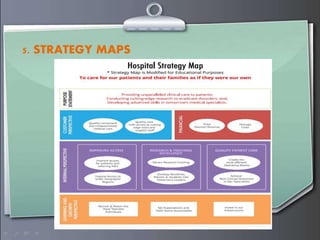
5. STRATEGY MAPS
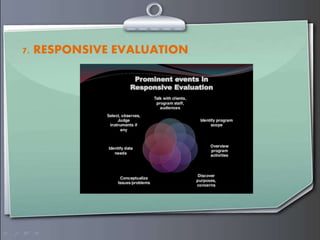
7. RESPONSIVE EVALUATION
Strategic planning
Strategic planning
Strategic planning

Strategic planning

  • 2.
    INTRODUCTION: Strategic Management isthe formulation and implementation of the major goals and initiatives taken by a company's top management on behalf of owners, based on consideration of resources and an assessment of the internal and external environments in which the organization competes.
  • 3.
    IMPORTANCE: Strategic management providesoverall direction to the enterprise and involves specifying the organization's objectives, developing policies and plans designed to achieve these objectives, and then allocating resources to implement the plans. Academics and practicing managers have developed numerous models and frameworks to assist in strategic decision making in the context of complex environments and competitive dynamics.
  • 4.
    STRATEGIC PLANNING DEFINE- Strategic planning is an organization's process of defining its strategy, or direction, and making decisions on allocating its resources to pursue this strategy. It may also extend to control mechanisms for guiding the implementation of the strategy. Strategic planning became prominent in corporations during the 1960s and remains an important aspect of strategic management.
  • 6.
    WHOs RESPONSIBLE OFIT? It is executed by strategic planners or strategists, who involve many parties and research sources in their analysis of the organization and its relationship to the environment in which it competes. The senior leadership of an organization is generally tasked with determining strategy.
  • 7.
    WHOs RESPONSIBLE OFIT? It is executed by strategic planners or strategists, who involve many parties and research sources in their analysis of the organization and its relationship to the environment in which it competes. The senior leadership of an organization is generally tasked with determining strategy.
  • 8.
    STRATEGY includes processof formulation and implementation: STRATEGIC PLANNING helps coordinate both.
  • 9.
    STRATEGIC PLANNING isa process and thus has inputs, activities, outputs and outcomes.
  • 10.
    INPUTS - Data isgathered from a variety of sources, such as interviews with key executives, review of publicly available documents on the competition or market, primary research (e.g., visiting or observing competitor places of business or comparing prices), industry studies, etc. - are gathered to help support an understanding of the competitive environment and its opportunities and risks.
  • 11.
    ACTIVITIES - Strategic planningactivities include meetings and other communication among the organization's leaders and personnel to develop a common understanding regarding the competitive environment and what the organization's response to that environment (its strategy) should be.
  • 12.
    OUTPUTS -The output ofstrategic planning includes documentation and communication describing the organization's strategy and how it should be implemented, sometimes referred to as the strategic plan.
  • 13.
    OUTCOMES -Whilst the planningprocess produces outputs, as described above, strategy implementation or execution of the strategic plan produces Outcomes. These outcomes will invariably differ from the strategic goals. How close they are to the strategic goals and vision will determine the success or failure of the strategic plan. There will also arise unintended Outcomes, which need to be attended to and understood for strategy development and execution to be a true learning process.
  • 14.
  • 15.
  • 16.
  • 17.
    3. PORTER FIVEFORCES ANALYSIS
  • 18.
  • 19.
  • 20.
  • 21.
  • 22.