WELCOME! 
STORYTELLING BASICS FOR 
NON-PROFITS 
Presented 
by 
Vanessa 
Chase 
& 
Guidestar
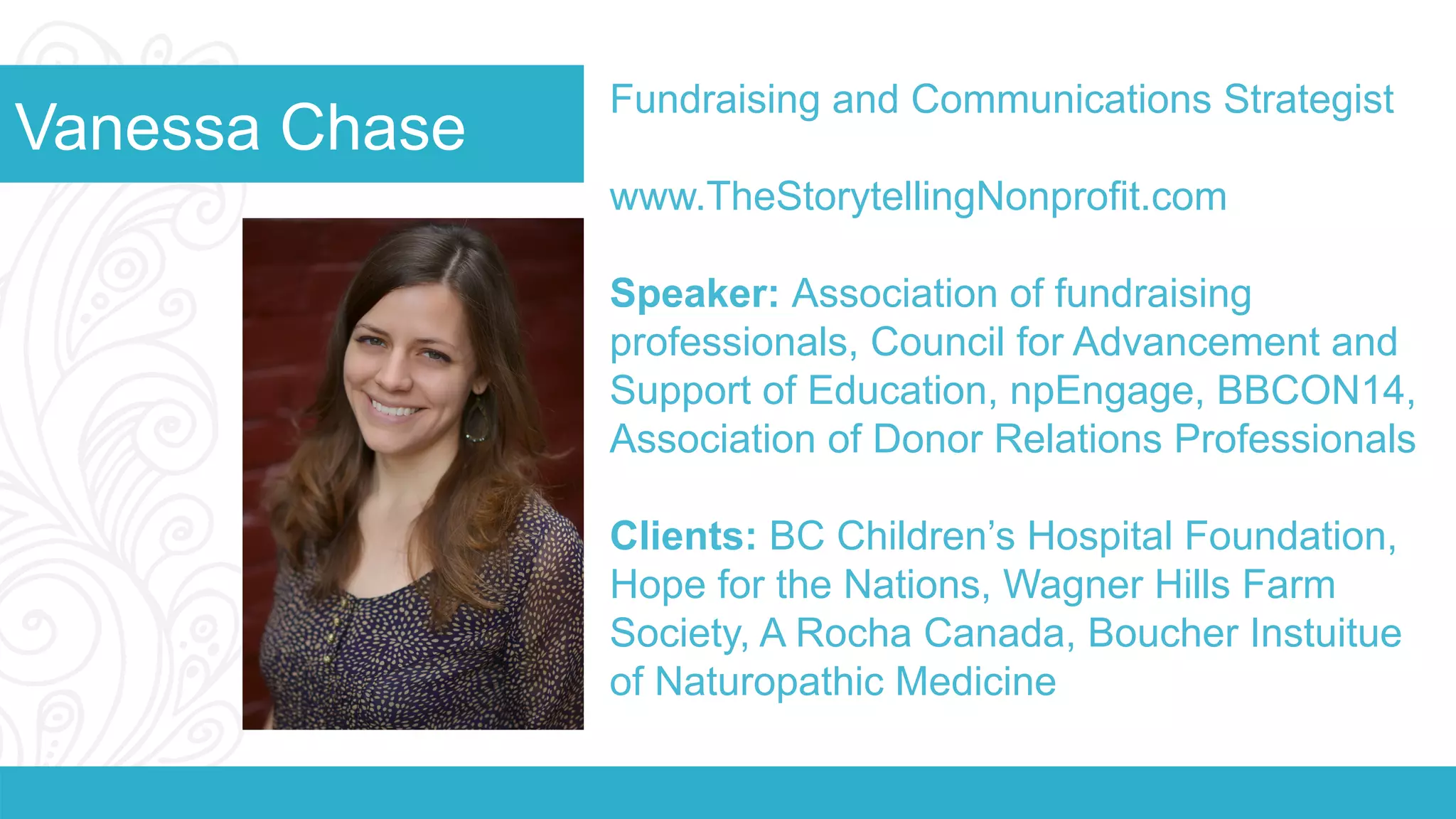
Vanessa Chase 
Fundraising and Communications Strategist 
www.TheStorytellingNonprofit.com 
Speaker: Association of fundraising 
professionals, Council for Advancement and 
Support of Education, npEngage, BBCON14, 
Association of Donor Relations Professionals 
Clients: BC Children’s Hospital Foundation, 
Hope for the Nations, Wagner Hills Farm 
Society, A Rocha Canada, Boucher Instuitue 
of Naturopathic Medicine
Share Your Thoughts 
What’s your role at your non-profit? 
What are you hoping to learn during today’s 
webinar?
WHY 
STORYTELLING
RESULTS 
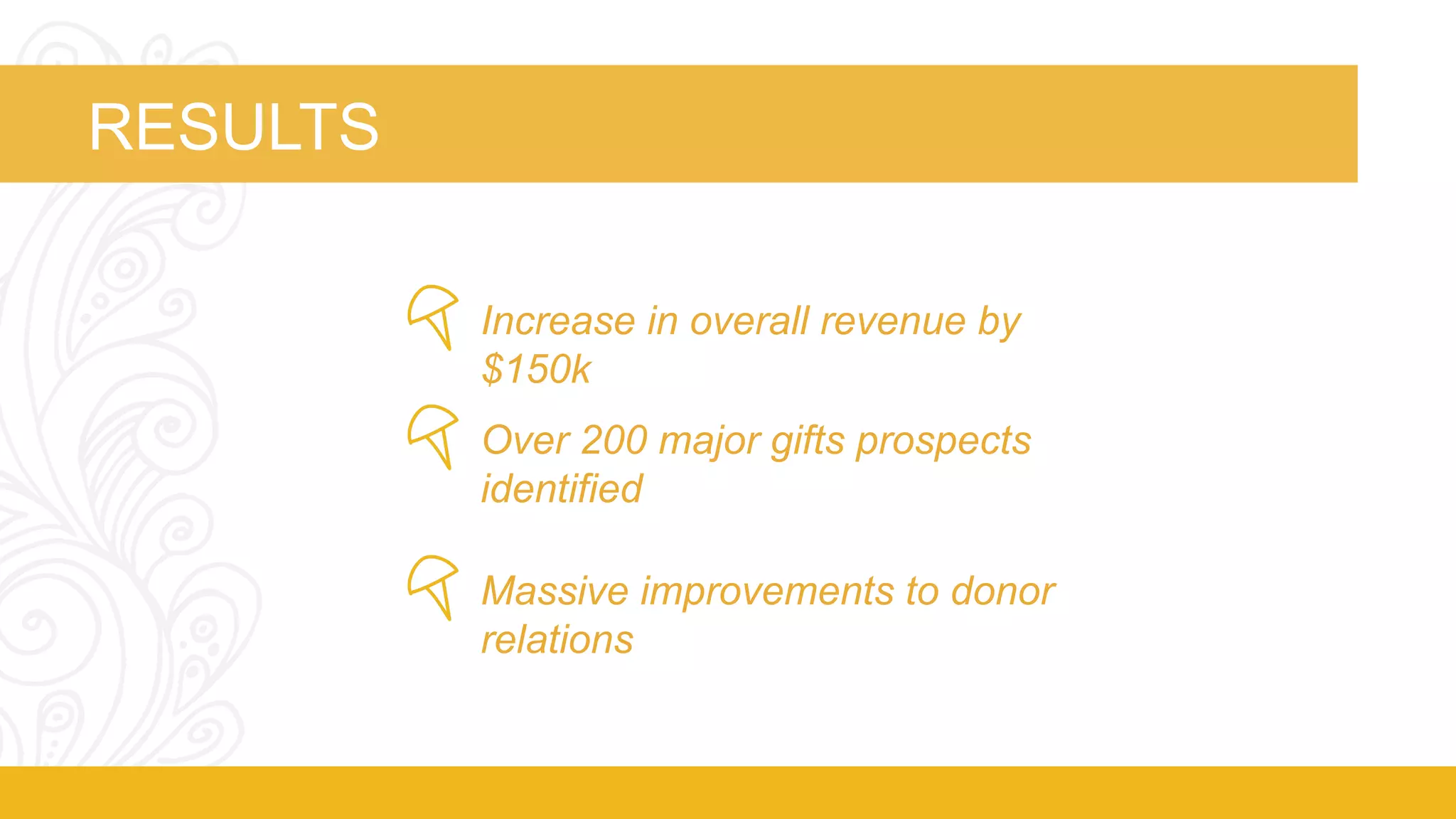
Increase in overall revenue by 
$150k 
Over 200 major gifts prospects 
identified 
Massive improvements to donor 
relations
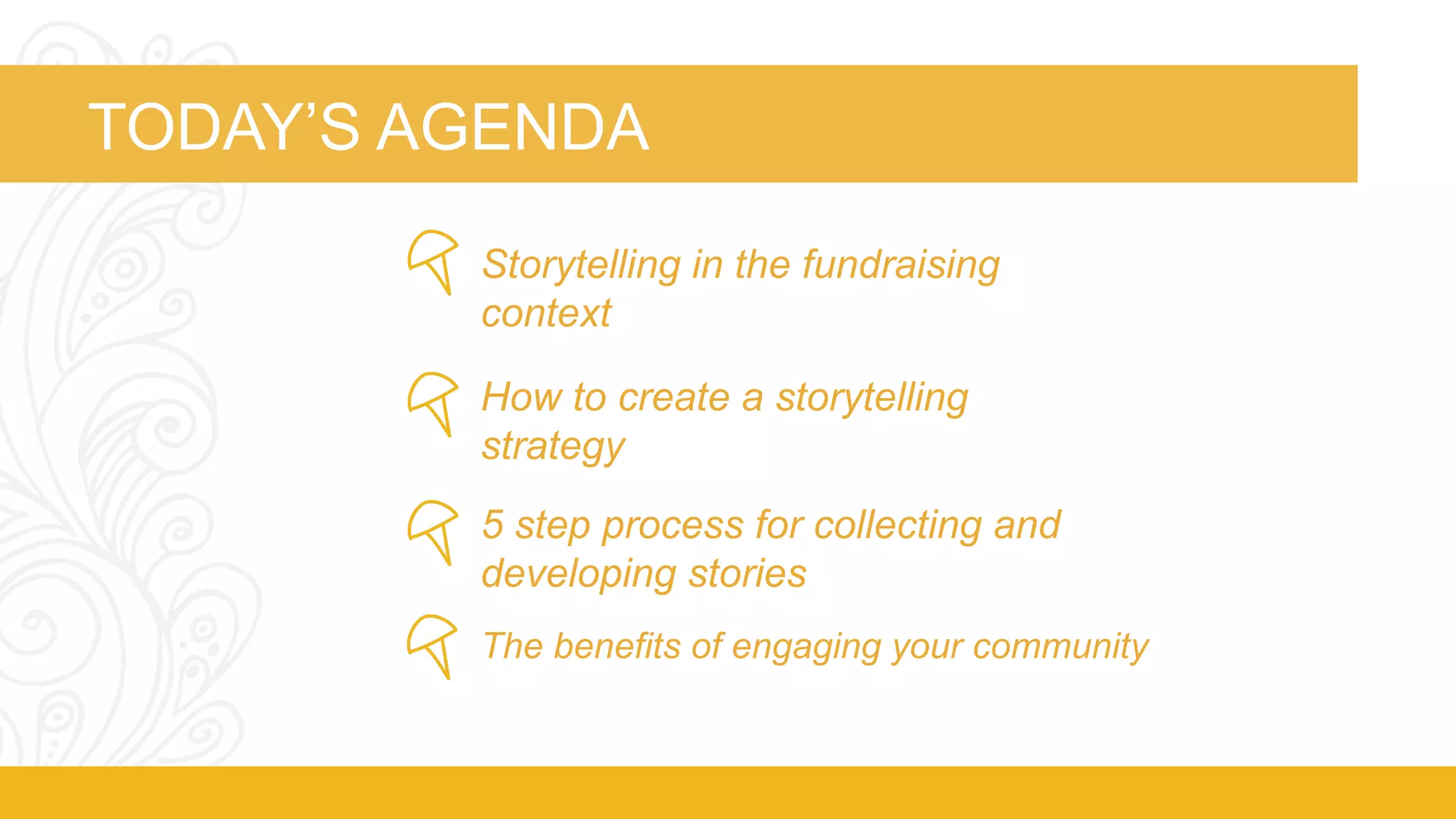
TODAY’S AGENDA 
Storytelling in the fundraising 
context 
How to create a storytelling 
strategy 
5 step process for collecting and 
developing stories 
The benefits of engaging your community
WHAT IS STORYTELLING 
Storytelling is the process of combining facts and 
narrative in order to communicate a message and an 
emotion to a target audience.
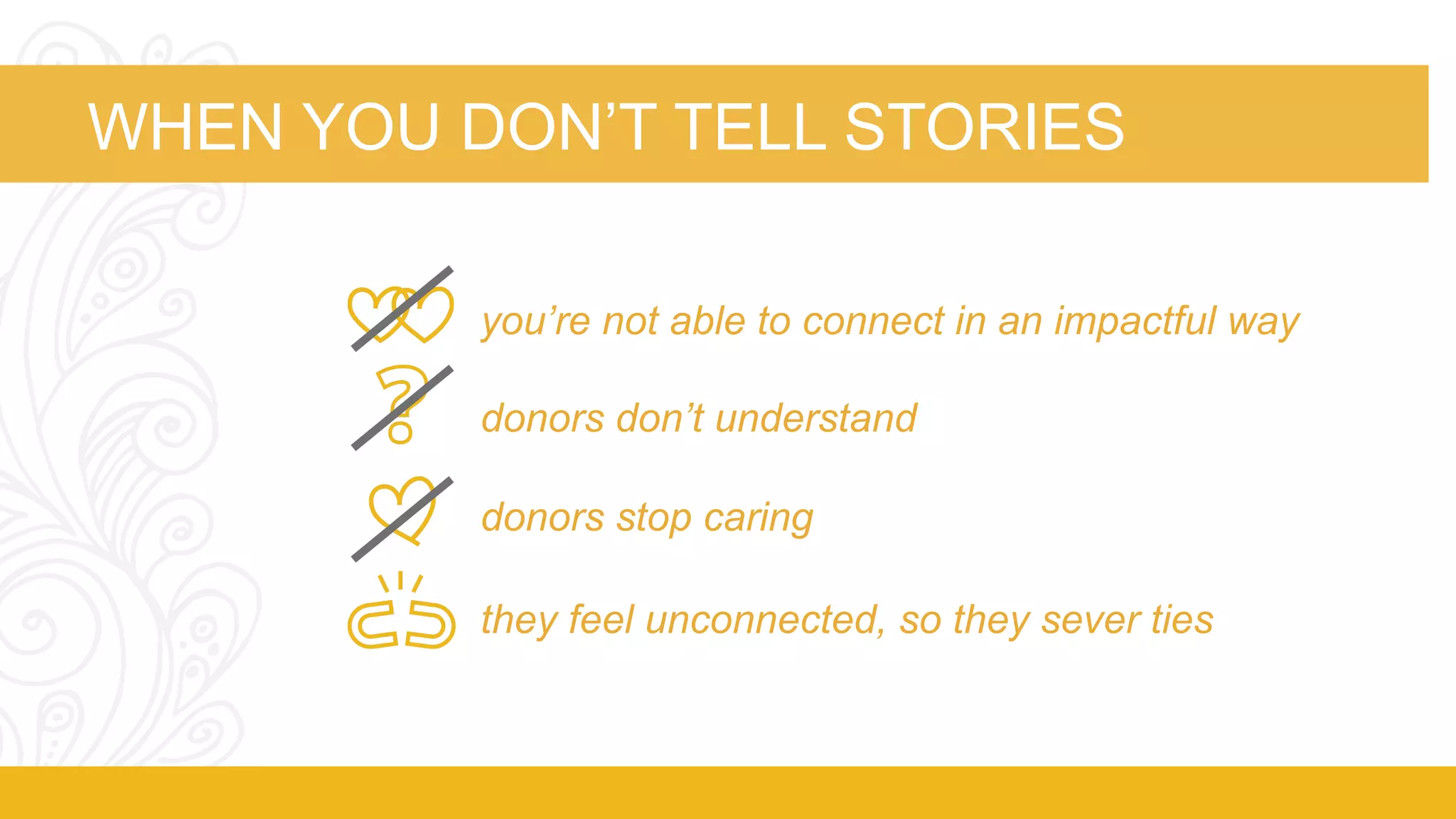
WHEN YOU DON’T TELL STORIES 
you’re not able to connect in an impactful way 
donors don’t understand 
donors stop caring 
they feel unconnected, so they sever ties
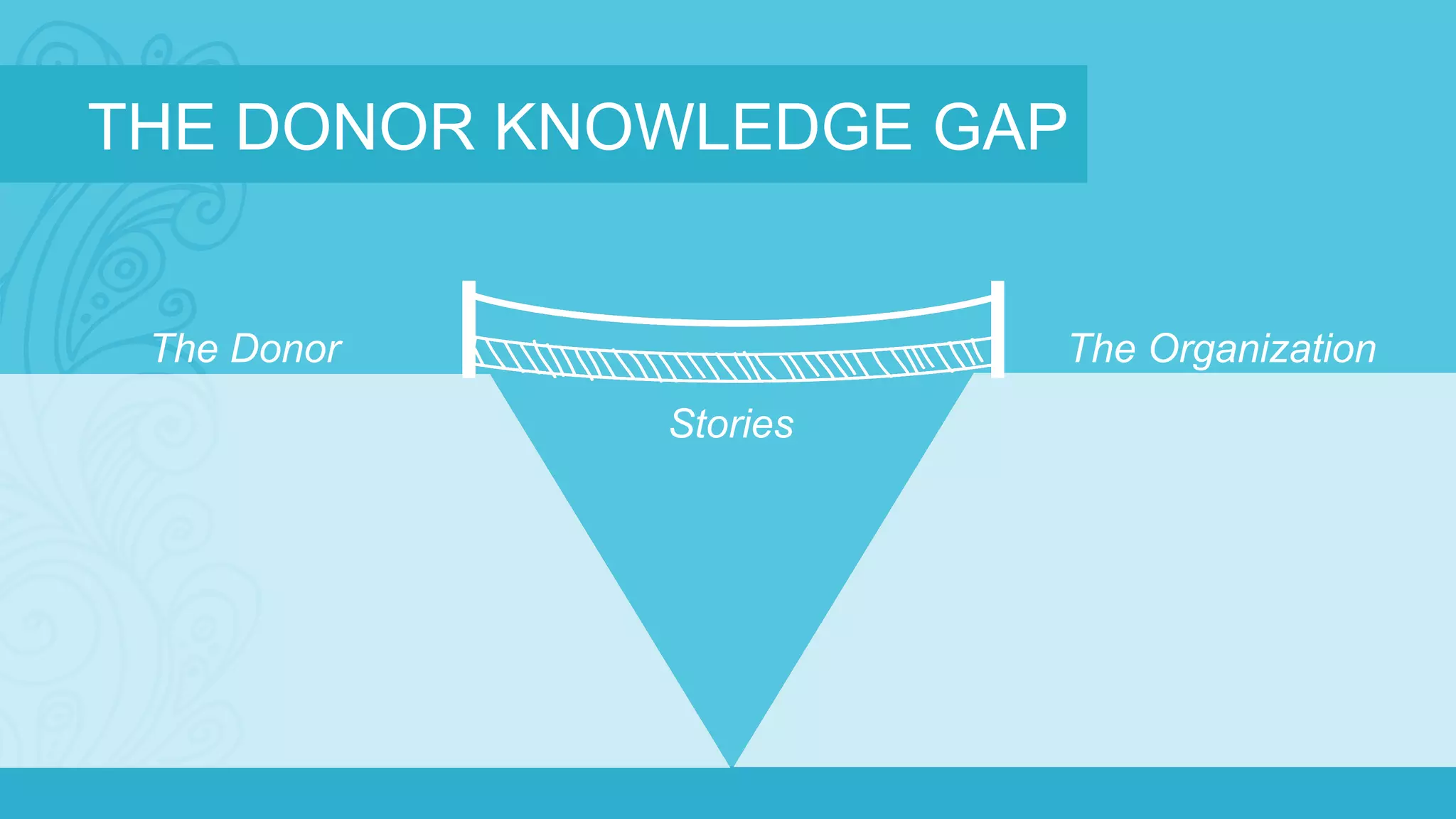
THE DONOR KNOWLEDGE GAP 
The Donor 
The Organization 
Stories
STORIES AS SOLUTIONS 
Stories help bridge the Donor Knowledge Gap in two key ways: 
The Organization 
they provide context 
they emotionally connect your donors to 
the cause.
5 KEYS TO STORYTELLING 
DEFINE YOUR GOAL & CORE MESSAGE 
KNOW YOUR AUDIENCE 
CHARACTER & CONFLICT 
COLLECTING STORIES 
SHARING STORIES
DEFINE YOUR GOAL & CORE 
MESSAGE 
let strategy drive your efforts 
identify a goal and a core message 
what is the end goal of telling this 
story?
DEFINE YOUR GOAL & CORE 
MESSAGE 
YOUR CORE MESSAGE 
what is the overarching message 
that you want to convey? 
(the reason why someone would 
answer the call to action)
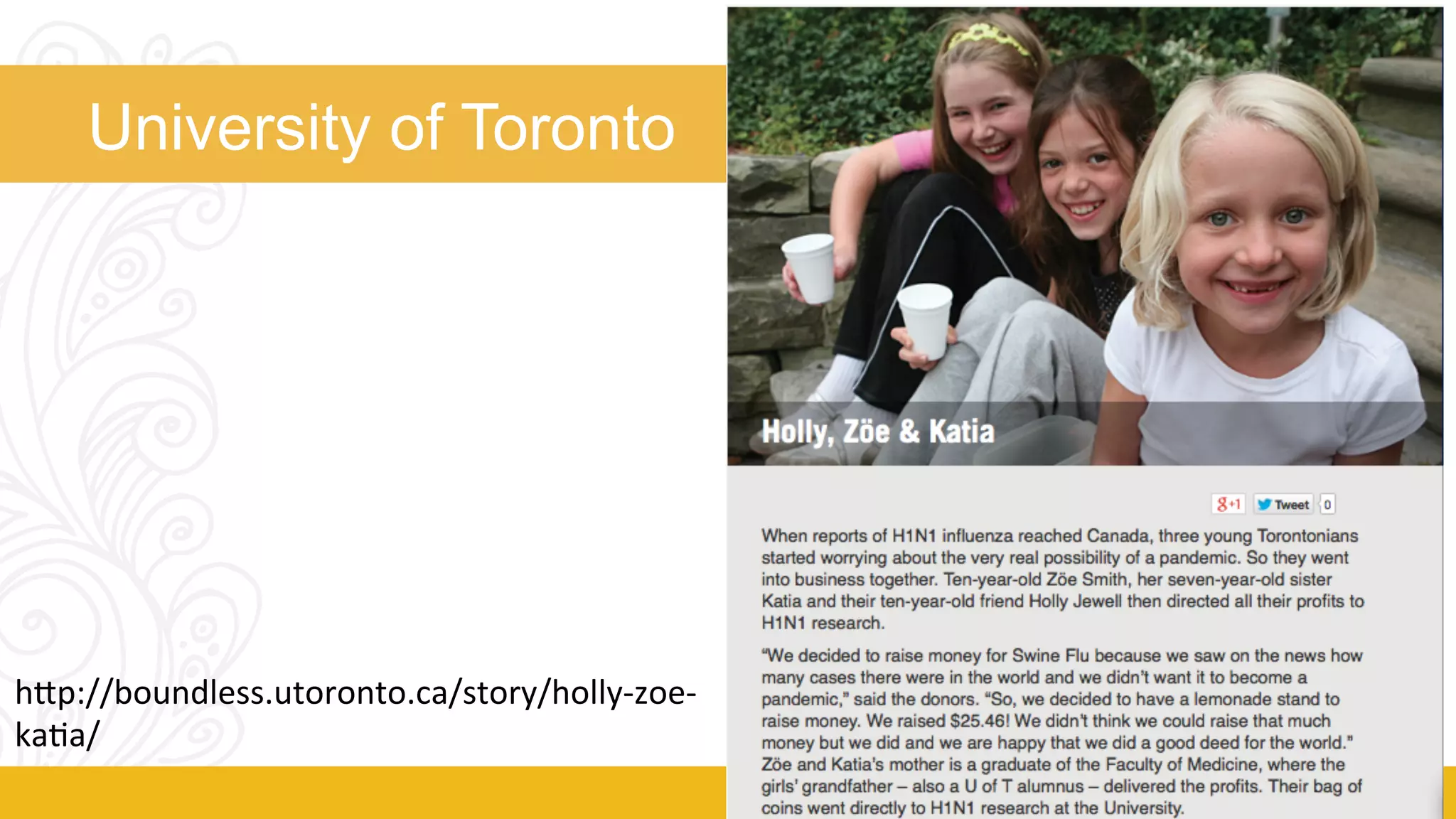
University of Toronto 
h#p://boundless.utoronto.ca/story/holly-­‐zoe-­‐ 
ka8a/
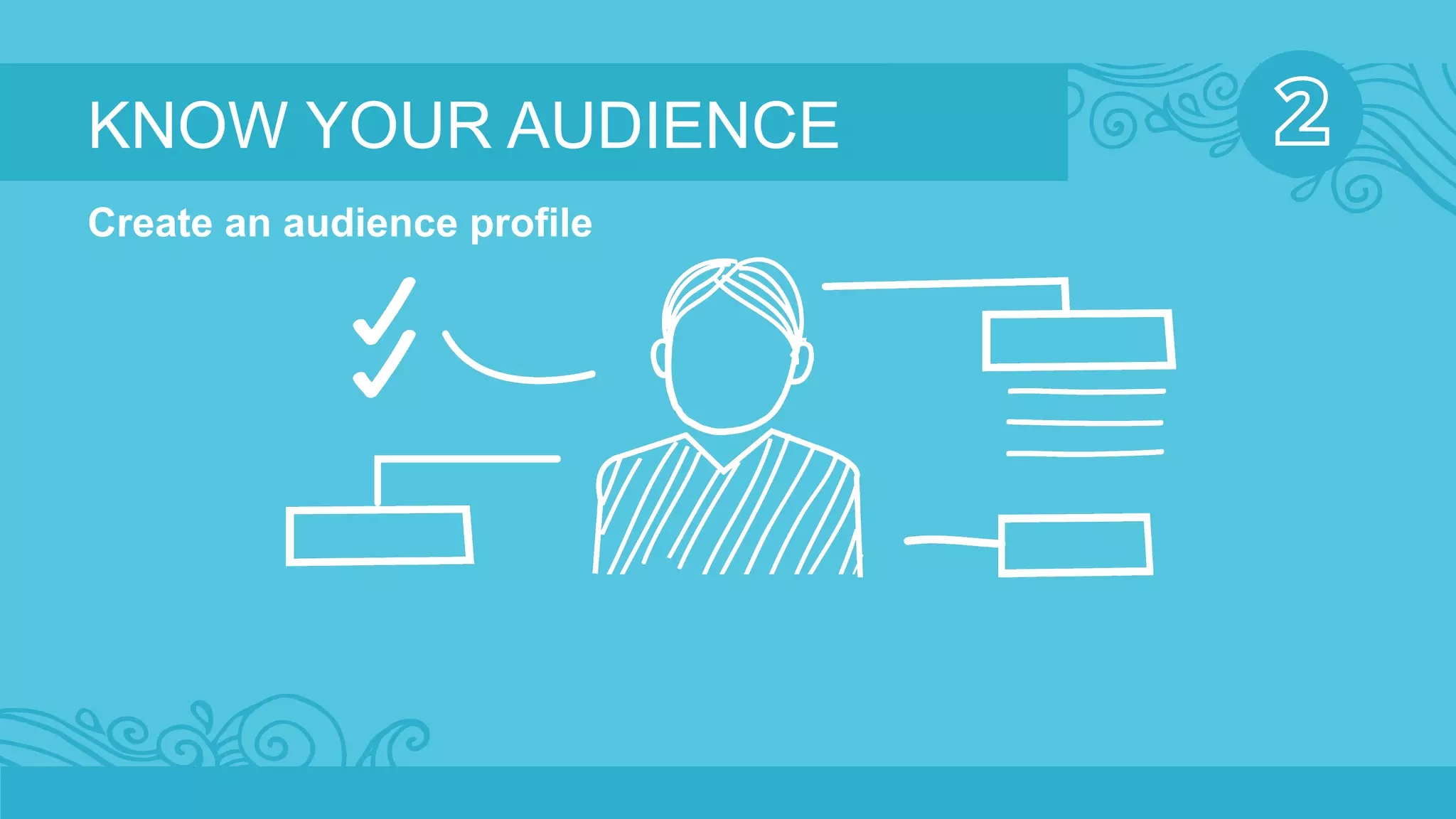
KNOW YOUR AUDIENCE 
Create an audience profile
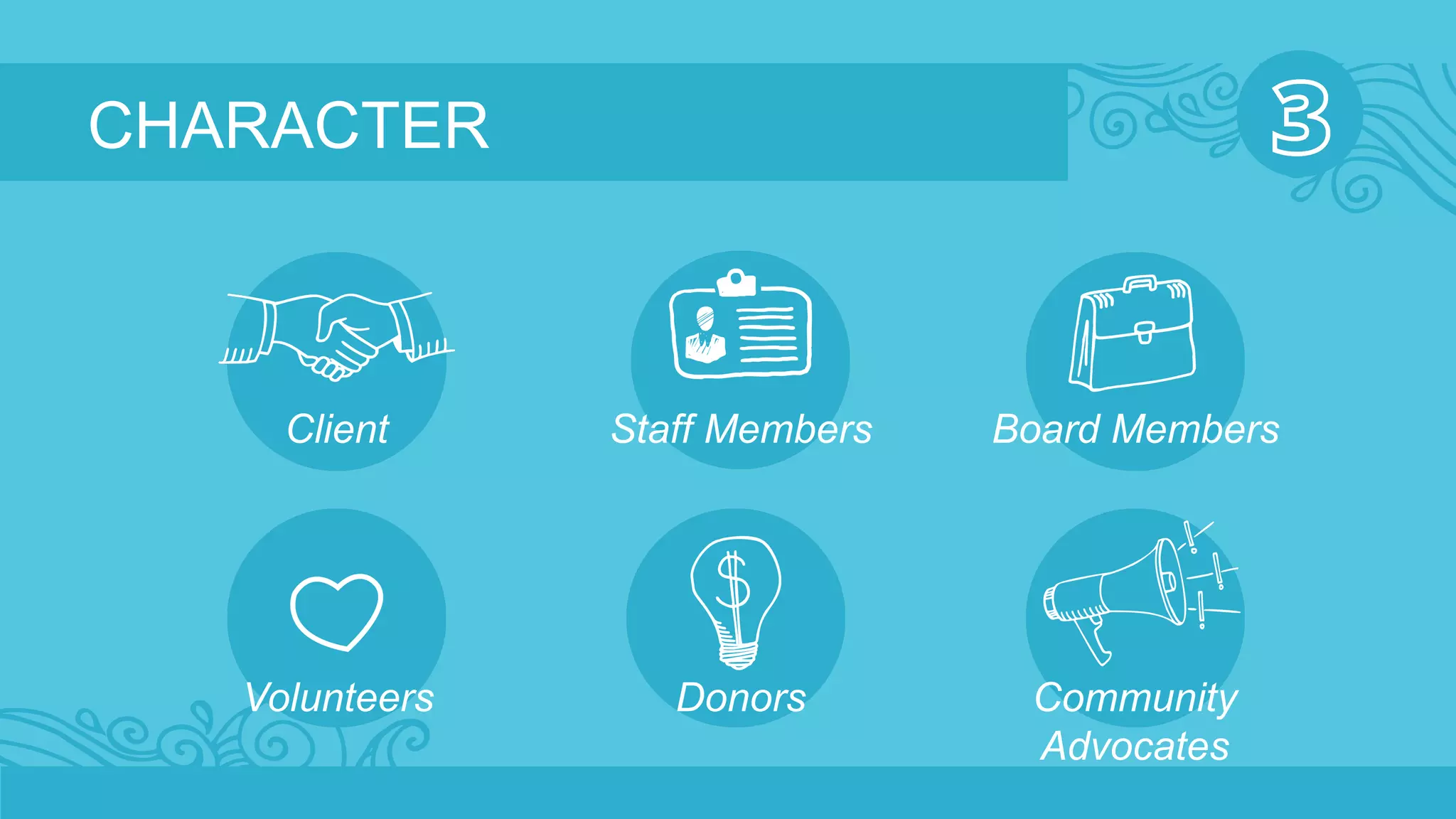
CHARACTER 
Client Staff Members Board Members 
Volunteers Donors Community 
Advocates
CONFLICT 
conflict is the problem that your character needs to solve 
conflict’s solution makes your donors feel like a hero
Cancer Care Connection
COLLECTING STORIES 
KNOW WHAT THEY NEED 
“Tell me a story.” is far too broad, be specific: 
“I’m writing our donor stewardship report and I want to be able to 
share a story about someone from (program name). Ideally, 
someone who has had a positive experience in the program and 
you think has really benefited from it. Do you have any thoughts 
about people who might be good to speak to?”
COLLECTING STORIES 
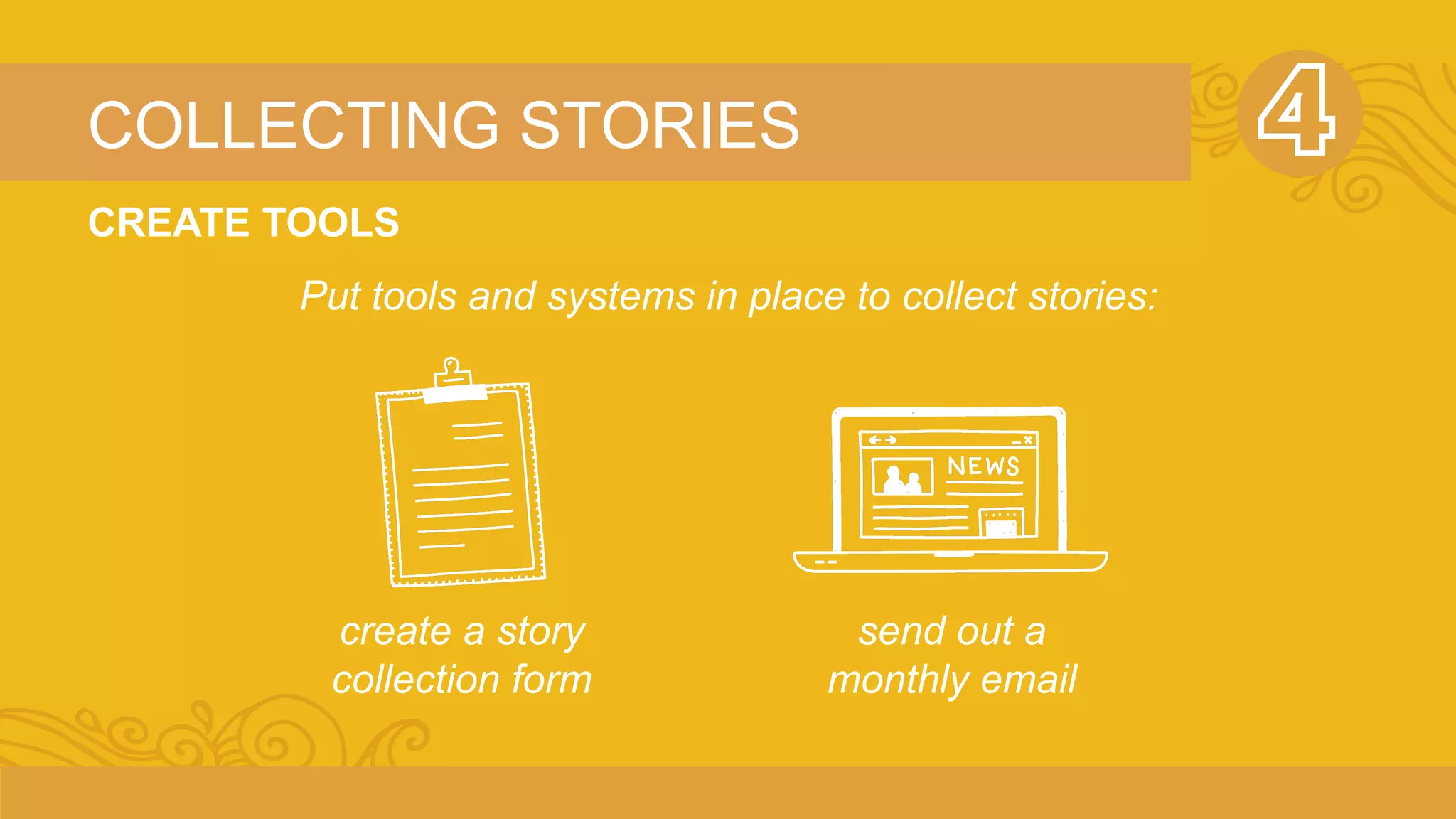
CREATE TOOLS 
Put tools and systems in place to collect stories: 
create a story 
collection form 
send out a 
monthly email
SHARING STORIES 
USE YOUR STORY STRATEGY 
What are you funding priorities? 
When will you be communicating/soliciting 
donors? 
What opportunities do you have for 
storytelling?
SHARING STORIES 
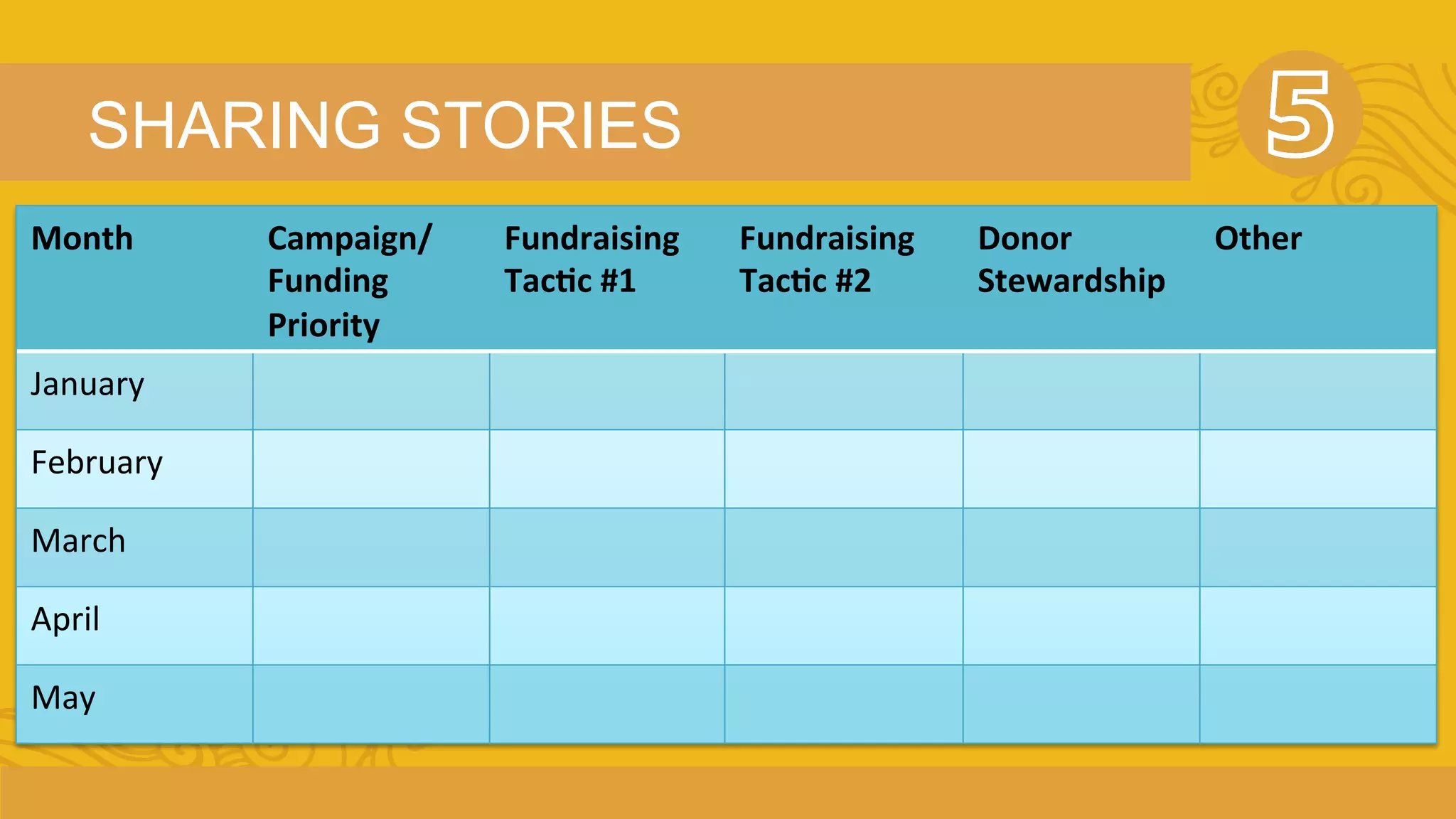
Month 
Campaign/ 
Funding 
Priority 
Fundraising 
Tac7c 
#1 
Fundraising 
Tac7c 
#2 
Donor 
Stewardship 
Other 
January 
February 
March 
April 
May
STORYTELLING 
CAN 
TRANSFORM 
YOUR 
NON-­‐PROFIT
STORYTELLING 
CAN 
TRANSFORM 
YOUR 
NON-­‐PROFIT 
The most important stories are the ones you tell yourself and 
the ones you tell each other.
QUESTIONS?
THANK YOU! 
www.thestorytellingnonprofit.com 
vanessa@thestorytellingnonprofit.com 
@vanessaechase 
storytellingnp/

Storytelling Basics for Non-Profits

  • 1.
    WELCOME! STORYTELLING BASICSFOR NON-PROFITS Presented by Vanessa Chase & Guidestar
  • 2.
    Vanessa Chase Fundraisingand Communications Strategist www.TheStorytellingNonprofit.com Speaker: Association of fundraising professionals, Council for Advancement and Support of Education, npEngage, BBCON14, Association of Donor Relations Professionals Clients: BC Children’s Hospital Foundation, Hope for the Nations, Wagner Hills Farm Society, A Rocha Canada, Boucher Instuitue of Naturopathic Medicine
  • 3.
    Share Your Thoughts What’s your role at your non-profit? What are you hoping to learn during today’s webinar?
  • 4.
  • 5.
    RESULTS Increase inoverall revenue by $150k Over 200 major gifts prospects identified Massive improvements to donor relations
  • 6.
    TODAY’S AGENDA Storytellingin the fundraising context How to create a storytelling strategy 5 step process for collecting and developing stories The benefits of engaging your community
  • 7.
    WHAT IS STORYTELLING Storytelling is the process of combining facts and narrative in order to communicate a message and an emotion to a target audience.
  • 8.
    WHEN YOU DON’TTELL STORIES you’re not able to connect in an impactful way donors don’t understand donors stop caring they feel unconnected, so they sever ties
  • 9.
    THE DONOR KNOWLEDGEGAP The Donor The Organization Stories
  • 10.
    STORIES AS SOLUTIONS Stories help bridge the Donor Knowledge Gap in two key ways: The Organization they provide context they emotionally connect your donors to the cause.
  • 11.
    5 KEYS TOSTORYTELLING DEFINE YOUR GOAL & CORE MESSAGE KNOW YOUR AUDIENCE CHARACTER & CONFLICT COLLECTING STORIES SHARING STORIES
  • 12.
    DEFINE YOUR GOAL& CORE MESSAGE let strategy drive your efforts identify a goal and a core message what is the end goal of telling this story?
  • 13.
    DEFINE YOUR GOAL& CORE MESSAGE YOUR CORE MESSAGE what is the overarching message that you want to convey? (the reason why someone would answer the call to action)
  • 14.
    University of Toronto h#p://boundless.utoronto.ca/story/holly-­‐zoe-­‐ ka8a/
  • 15.
    KNOW YOUR AUDIENCE Create an audience profile
  • 16.
    CHARACTER Client StaffMembers Board Members Volunteers Donors Community Advocates
  • 17.
    CONFLICT conflict isthe problem that your character needs to solve conflict’s solution makes your donors feel like a hero
  • 18.
  • 19.
    COLLECTING STORIES KNOWWHAT THEY NEED “Tell me a story.” is far too broad, be specific: “I’m writing our donor stewardship report and I want to be able to share a story about someone from (program name). Ideally, someone who has had a positive experience in the program and you think has really benefited from it. Do you have any thoughts about people who might be good to speak to?”
  • 20.
    COLLECTING STORIES CREATETOOLS Put tools and systems in place to collect stories: create a story collection form send out a monthly email
  • 21.
    SHARING STORIES USEYOUR STORY STRATEGY What are you funding priorities? When will you be communicating/soliciting donors? What opportunities do you have for storytelling?
  • 22.
    SHARING STORIES Month Campaign/ Funding Priority Fundraising Tac7c #1 Fundraising Tac7c #2 Donor Stewardship Other January February March April May
  • 23.
    STORYTELLING CAN TRANSFORM YOUR NON-­‐PROFIT
  • 24.
    STORYTELLING CAN TRANSFORM YOUR NON-­‐PROFIT The most important stories are the ones you tell yourself and the ones you tell each other.
  • 25.
  • 26.
    THANK YOU! www.thestorytellingnonprofit.com vanessa@thestorytellingnonprofit.com @vanessaechase storytellingnp/