Storytelling for
Nonprofit Organizations
An introduction
Laura Packer
thinkstory.com
(c) 2013 Laura S. Packer
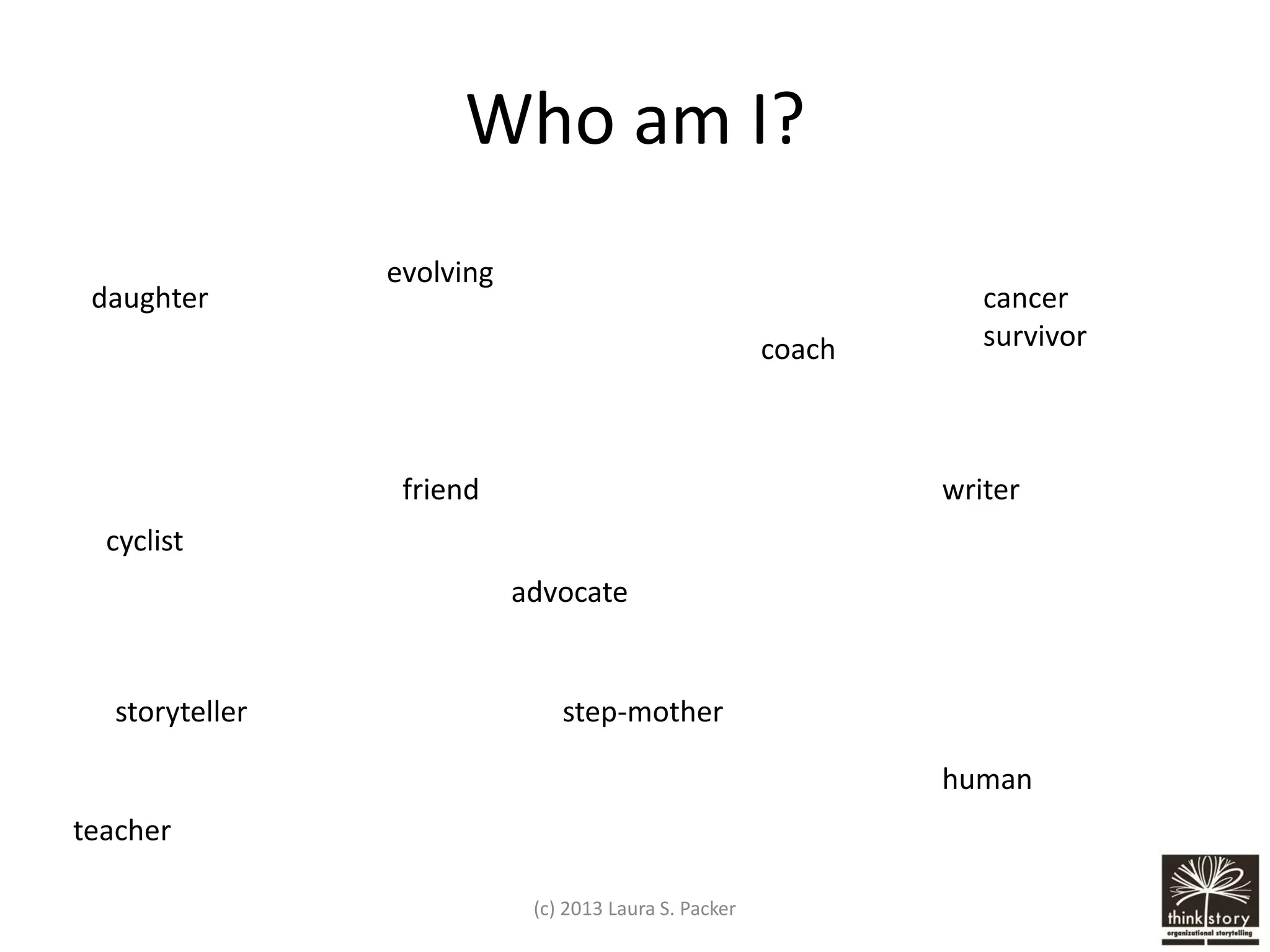
Who am I?
daughter

evolving
coach

friend

cancer
survivor

writer

cyclist
advocate

storyteller

step-mother
human

teacher
(c) 2013 Laura S. Packer
Who are you?
• Your name
• Your organization and your role
• Something that brings you joy other than work

• When you’re done, raise your hand

(c) 2013 Laura S. Packer
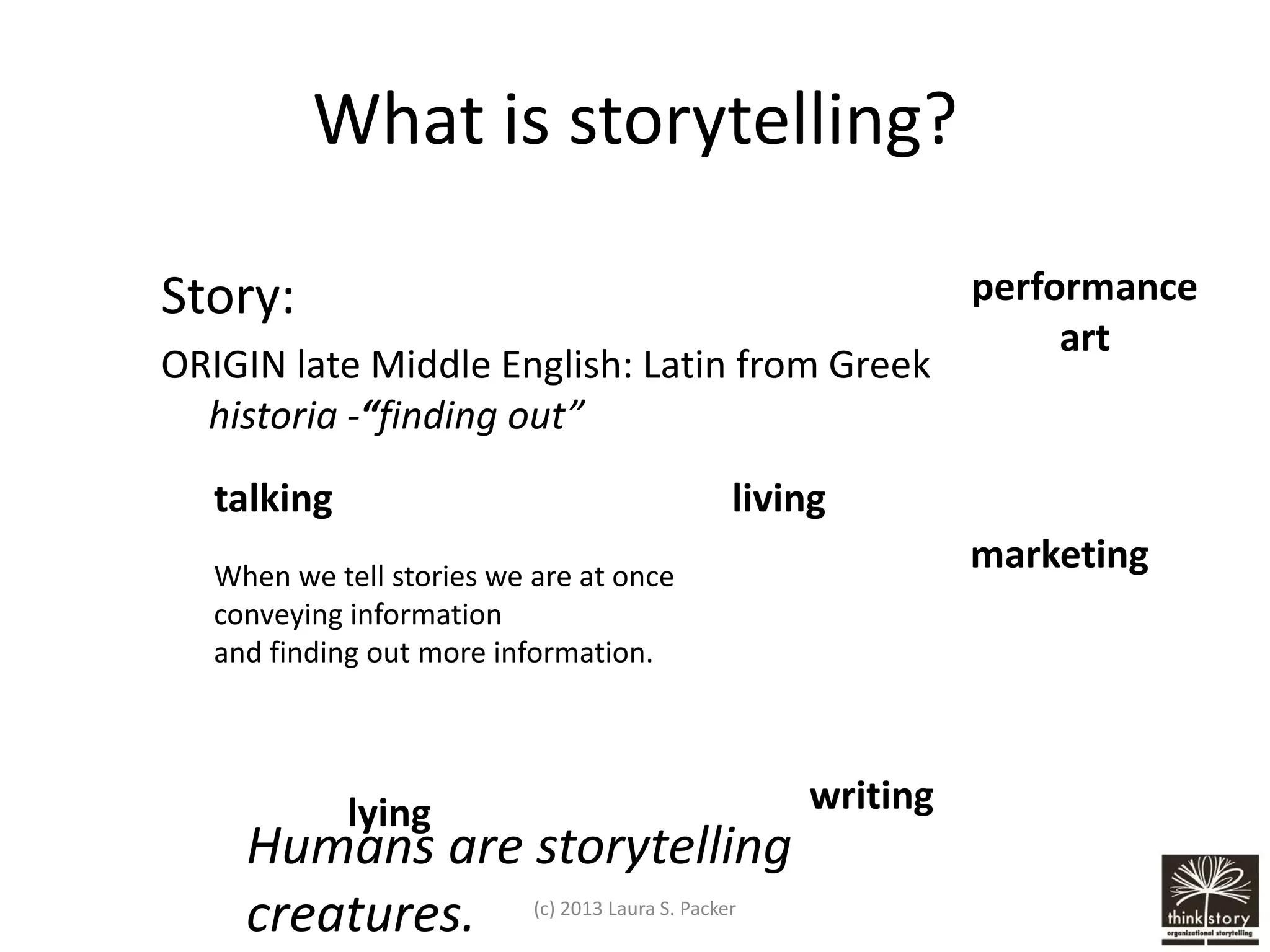
What is storytelling?
Story:
ORIGIN late Middle English: Latin from Greek
historia -“finding out”
talking

performance
art

living

marketing

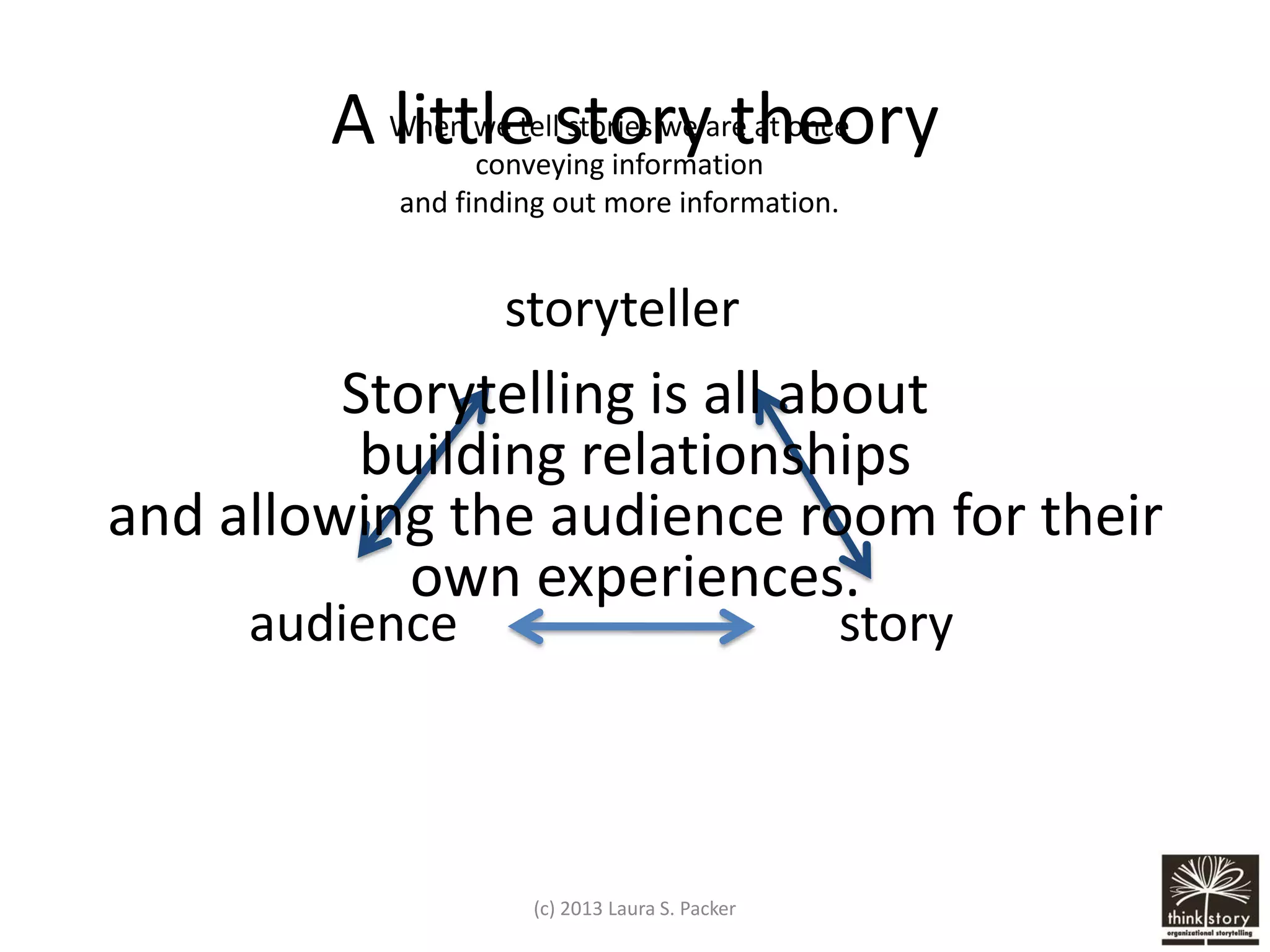
When we tell stories we are at once
conveying information
and finding out more information.

writing

lying

Humans are storytelling
creatures.
(c) 2013 Laura S. Packer
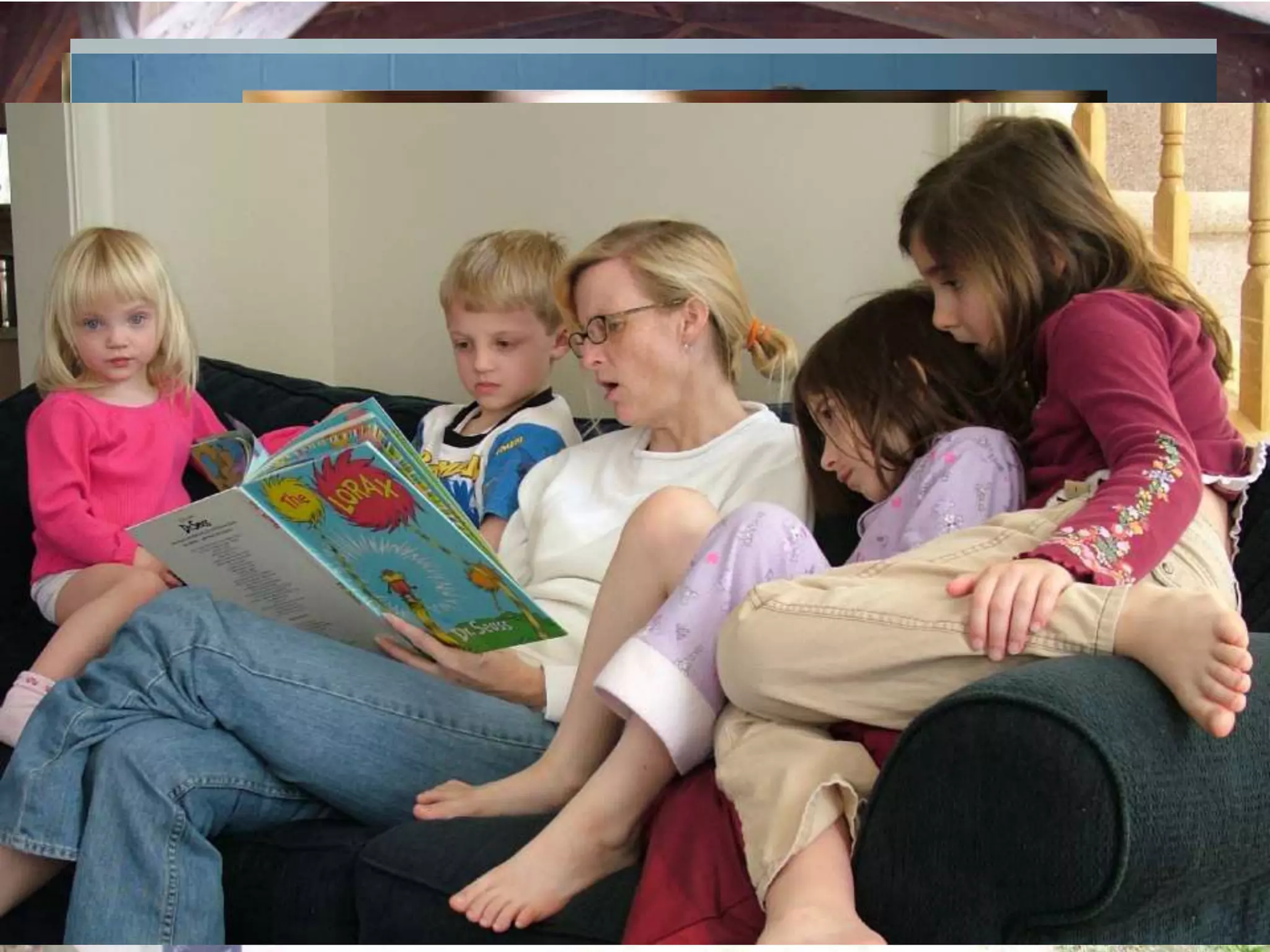
We all tell stories

(c) 2013 Laura S. Packer
The role of storytelling
(everywhere and in organizations)

• Inherent, built in

•
•
•
•
•
•
•
•
•

Conveys culture and history
Tough stuff
Persuasive
Transfers knowledge
Builds community
Fosters new ways of thinking
Humanizes numbers
Collaboration
Fun, entertaining, powerful, poignant, etc.
(c) 2013 Laura S. Packer
The role of storytelling for non-profits
•
•
•
•
•

Funding
Attracting the right people
Media attention
Staff support
What else?

(c) 2013 Laura S. Packer
So how does storytelling work?

(c) 2013 Laura S. Packer
Personal
Information vs. Story
• Of 1.6 million new U.S. cancer diagnoses in
2012, 500K+ will die
• 2nd most common cause of death in the U.S.
• $226.8 billion/year
• I am a cancer survivor
• You or people you love may be, too.
(c) 2013 Laura S. Packer
A When we tellstoryare at once
little stories we theory
conveying information
and finding out more information.

storyteller

Storytelling is all about
building relationships
and allowing the audience room for their
own experiences.
audience

story

(c) 2013 Laura S. Packer
Storyteller’s toolkit
1. Listening

(c) 2013 Laura S. Packer
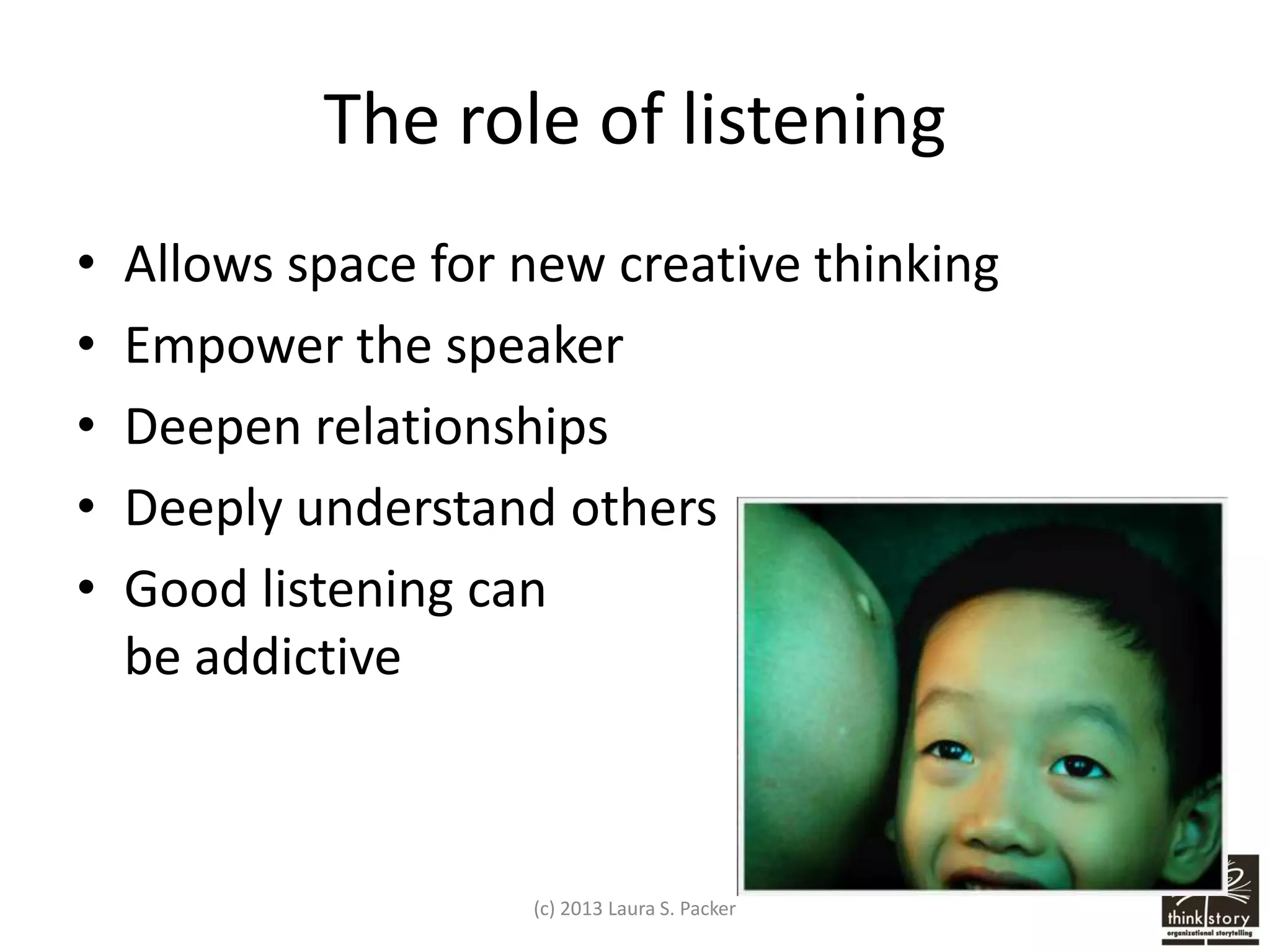
The role of listening
•
•
•
•
•

Allows space for new creative thinking
Empower the speaker
Deepen relationships
Deeply understand others
Good listening can
be addictive

(c) 2013 Laura S. Packer
Competitive listening
•
•
•
•

Listen for opening
Listen to trump
Listen to serve inequality meter
etc

(c) 2013 Laura S. Packer
1:1 listening
– Listener listens
• Don’t interrupt
• Be present
• Confidentiality

– Speaker speaks
• Not telling a story, just being listened to
• Silence is okay
• Emotion is okay

– Switch
Something you did at work that you are proud of
(c) 2013 Laura S. Packer
Storyteller’s toolkit
1. Listening
2. Crafting the story

(c) 2013 Laura S. Packer
A specific example of your
organization’s story
• A time when your organization had an impact
– Listener listens
• Don’t interrupt
• Be present
• Confidentiality

– Speaker speaks
• Take your time, try to have a beginning, middle and end
• Silence and emotions are okay

– Switch
(c) 2013 Laura S. Packer
Storyteller’s toolkit
1. Listening
2. Crafting the story
3. Telling your story for a specific audience

(c) 2013 Laura S. Packer
Who is your audience?
Who are your stakeholders?

(c) 2013 Laura S. Packer
What kinds of stories do
they need to hear?
What will move them to action?

(c) 2013 Laura S. Packer
Select a specific stakeholder…
And retell your impact story with them in mind.
– Listener listens
• Don’t interrupt
• Be present
• Confidentiality

– Speaker speaks
• Not telling a story, just being listened to
• Silence and emotions are okay

– Switch
(c) 2013 Laura S. Packer
Select a different stakeholder…
And retell your impact story with them in mind.
Include several specific sensory images.
– Listener listens
• Don’t interrupt
• Be present
• Confidentiality

– Speaker speaks
• Not telling a story, just being listened to
• Silence and emotions okay

– Switch
(c) 2013 Laura S. Packer
How do you foster better
organizational storytelling?
• Listen
• Ask
• Practice

(c) 2013 Laura S. Packer
What are the stories of your
organization?
•
•
•
•
•

History
Mission
Values
Impact
Success AND failure

(c) 2013 Laura S. Packer
So where do you find stories?
•
•
•
•
•

Personal experience
Stakeholders
Media
Traditional avenues
Look for:
– Repeating images and emotions
– Themes

(c) 2013 Laura S. Packer
Questions

(c) 2013 Laura S. Packer
If you’d like to learn more, please contact me.

•
•
•
•
•
•
•
•

Thinkstory.com
Laurapacker.com
Skype: lspacker
Truestorieshonestlies.blogspot.com
Think-story.blogspot.com
@storylaura
laura@thinkstory.com
781-526-7255
(c) 2013 Laura S. Packer

Introduction to storytelling for non-profits_Dec2013

  • 1.
    Storytelling for Nonprofit Organizations Anintroduction Laura Packer thinkstory.com (c) 2013 Laura S. Packer
  • 2.
  • 3.
    Who are you? •Your name • Your organization and your role • Something that brings you joy other than work • When you’re done, raise your hand (c) 2013 Laura S. Packer
  • 4.
    What is storytelling? Story: ORIGINlate Middle English: Latin from Greek historia -“finding out” talking performance art living marketing When we tell stories we are at once conveying information and finding out more information. writing lying Humans are storytelling creatures. (c) 2013 Laura S. Packer
  • 5.
    We all tellstories (c) 2013 Laura S. Packer
  • 6.
    The role ofstorytelling (everywhere and in organizations) • Inherent, built in • • • • • • • • • Conveys culture and history Tough stuff Persuasive Transfers knowledge Builds community Fosters new ways of thinking Humanizes numbers Collaboration Fun, entertaining, powerful, poignant, etc. (c) 2013 Laura S. Packer
  • 7.
    The role ofstorytelling for non-profits • • • • • Funding Attracting the right people Media attention Staff support What else? (c) 2013 Laura S. Packer
  • 8.
    So how doesstorytelling work? (c) 2013 Laura S. Packer
  • 9.
    Personal Information vs. Story •Of 1.6 million new U.S. cancer diagnoses in 2012, 500K+ will die • 2nd most common cause of death in the U.S. • $226.8 billion/year • I am a cancer survivor • You or people you love may be, too. (c) 2013 Laura S. Packer
  • 10.
    A When wetellstoryare at once little stories we theory conveying information and finding out more information. storyteller Storytelling is all about building relationships and allowing the audience room for their own experiences. audience story (c) 2013 Laura S. Packer
  • 11.
  • 12.
    The role oflistening • • • • • Allows space for new creative thinking Empower the speaker Deepen relationships Deeply understand others Good listening can be addictive (c) 2013 Laura S. Packer
  • 13.
    Competitive listening • • • • Listen foropening Listen to trump Listen to serve inequality meter etc (c) 2013 Laura S. Packer
  • 14.
    1:1 listening – Listenerlistens • Don’t interrupt • Be present • Confidentiality – Speaker speaks • Not telling a story, just being listened to • Silence is okay • Emotion is okay – Switch Something you did at work that you are proud of (c) 2013 Laura S. Packer
  • 15.
    Storyteller’s toolkit 1. Listening 2.Crafting the story (c) 2013 Laura S. Packer
  • 16.
    A specific exampleof your organization’s story • A time when your organization had an impact – Listener listens • Don’t interrupt • Be present • Confidentiality – Speaker speaks • Take your time, try to have a beginning, middle and end • Silence and emotions are okay – Switch (c) 2013 Laura S. Packer
  • 17.
    Storyteller’s toolkit 1. Listening 2.Crafting the story 3. Telling your story for a specific audience (c) 2013 Laura S. Packer
  • 18.
    Who is youraudience? Who are your stakeholders? (c) 2013 Laura S. Packer
  • 19.
    What kinds ofstories do they need to hear? What will move them to action? (c) 2013 Laura S. Packer
  • 20.
    Select a specificstakeholder… And retell your impact story with them in mind. – Listener listens • Don’t interrupt • Be present • Confidentiality – Speaker speaks • Not telling a story, just being listened to • Silence and emotions are okay – Switch (c) 2013 Laura S. Packer
  • 21.
    Select a differentstakeholder… And retell your impact story with them in mind. Include several specific sensory images. – Listener listens • Don’t interrupt • Be present • Confidentiality – Speaker speaks • Not telling a story, just being listened to • Silence and emotions okay – Switch (c) 2013 Laura S. Packer
  • 22.
    How do youfoster better organizational storytelling? • Listen • Ask • Practice (c) 2013 Laura S. Packer
  • 23.
    What are thestories of your organization? • • • • • History Mission Values Impact Success AND failure (c) 2013 Laura S. Packer
  • 24.
    So where doyou find stories? • • • • • Personal experience Stakeholders Media Traditional avenues Look for: – Repeating images and emotions – Themes (c) 2013 Laura S. Packer
  • 25.
    (c) 2013 LauraS. Packer
  • 26.
  • 27.
    If you’d liketo learn more, please contact me. • • • • • • • • Thinkstory.com Laurapacker.com Skype: lspacker Truestorieshonestlies.blogspot.com Think-story.blogspot.com @storylaura laura@thinkstory.com 781-526-7255 (c) 2013 Laura S. Packer

Editor's Notes

  • #3 No dead ends, no wrong avenues. Supportive listening and confidentiality. Don’t poach ideas without permission.Listening rules1 min to share why here
  • #18 2x
  • #22 2x