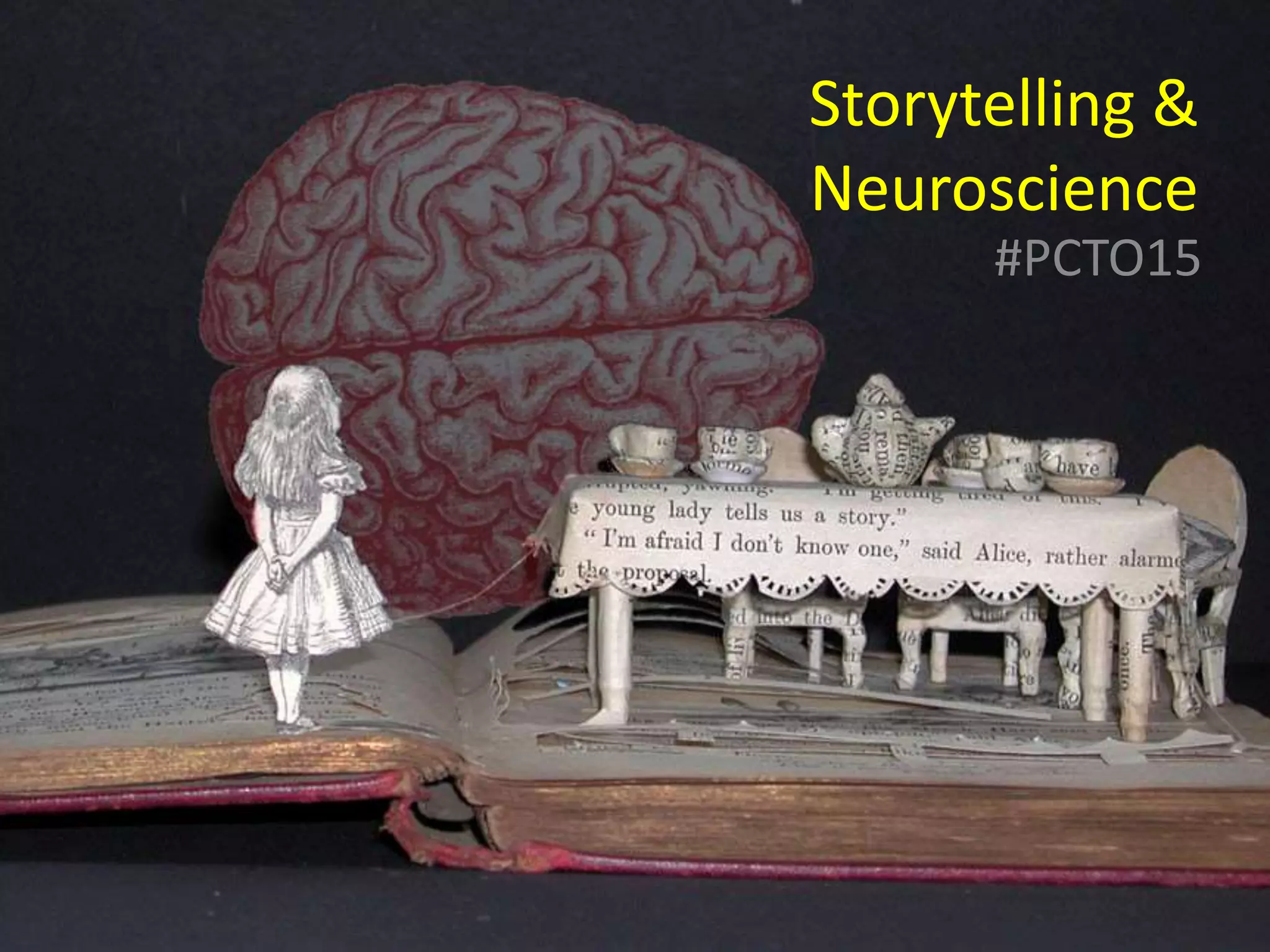
Storytelling &
Neuroscience
#PCTO15
Rob Clark
Storyteller & Problem Solver
@theelusivefish
linkedin.com/in/theelusivefish
CAVEAT:IANAN
i am not a neurologist
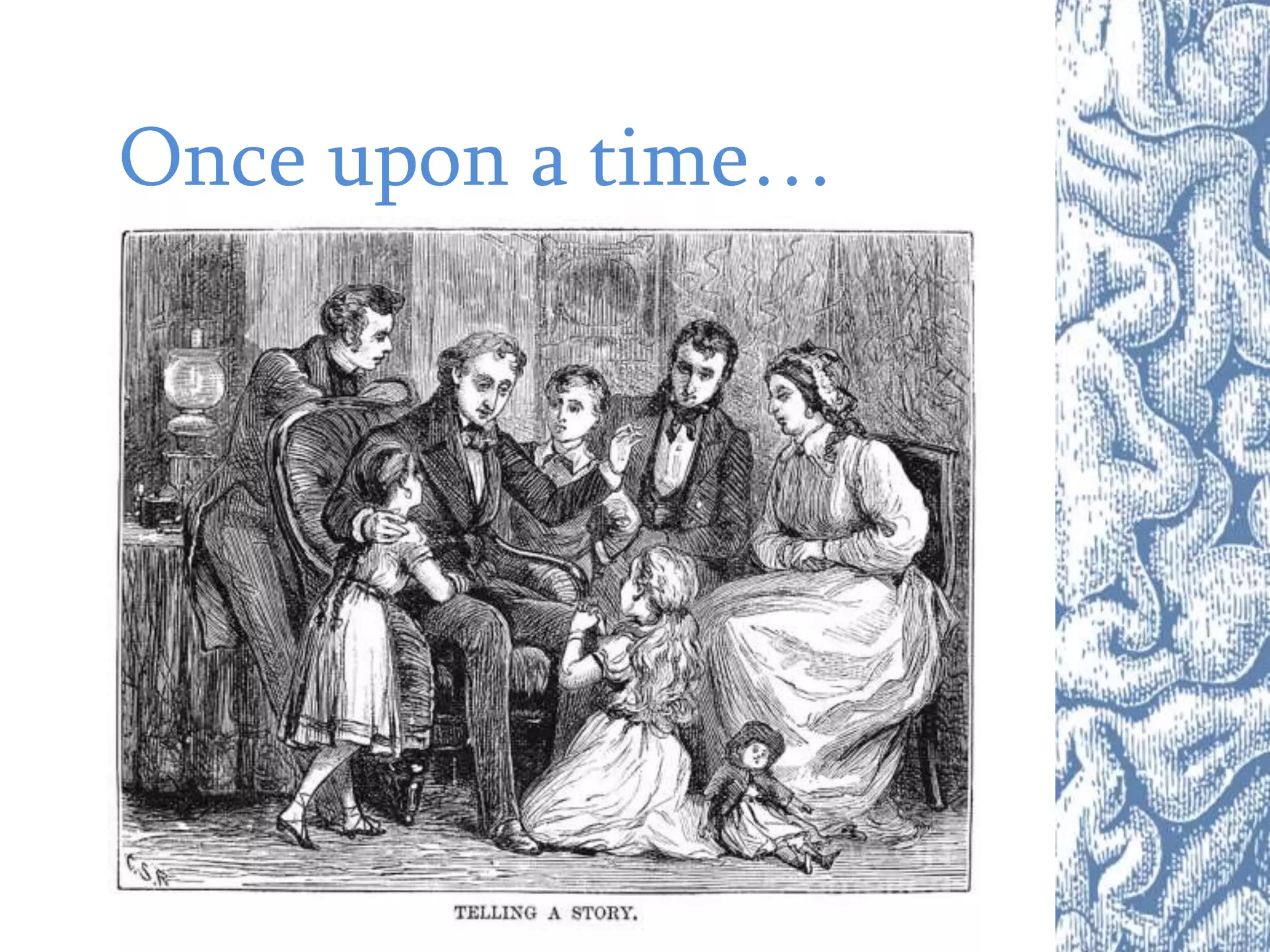
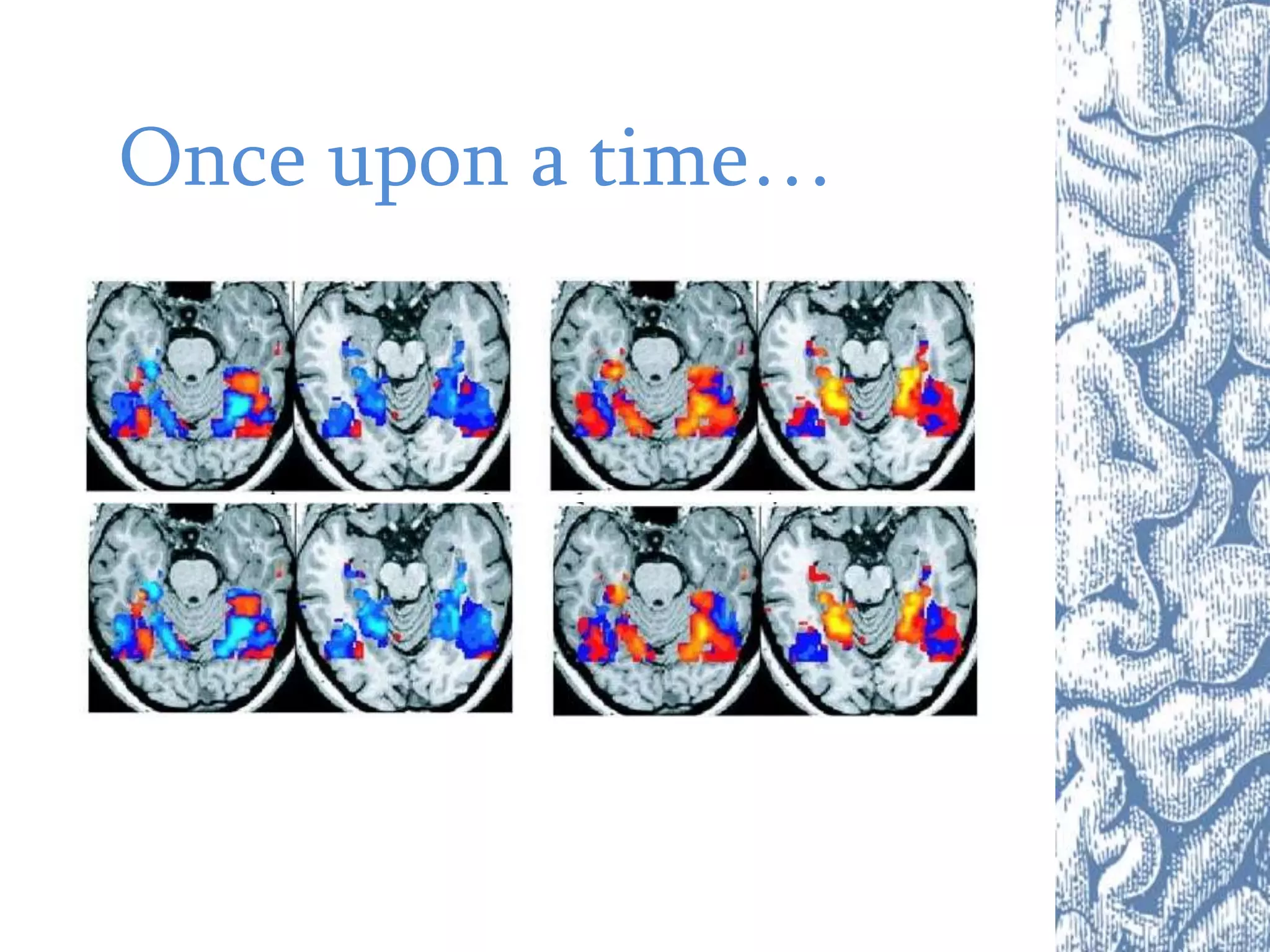
Once upon a time…
Once upon a time…
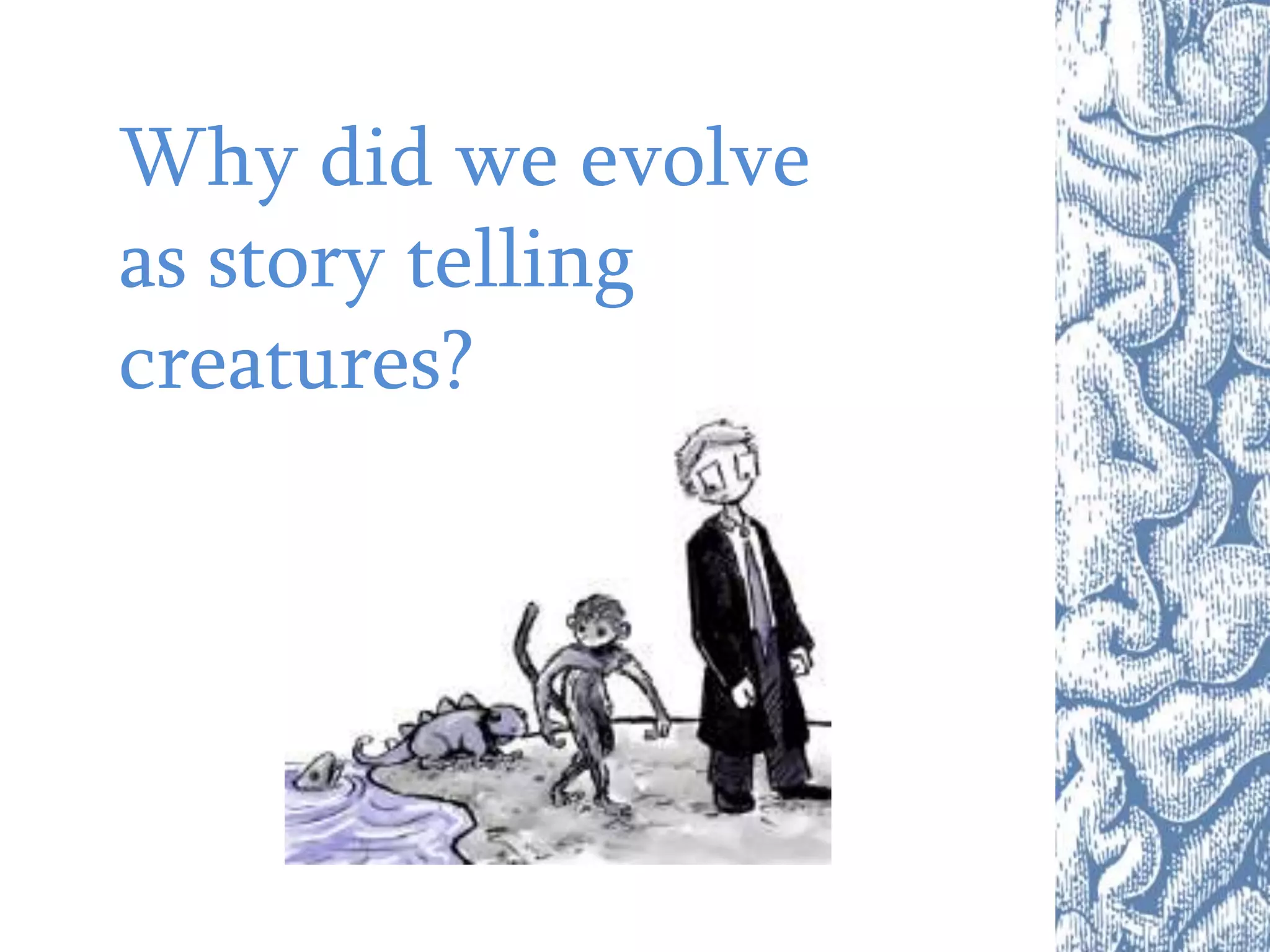
Why did we evolve
as story telling
creatures?
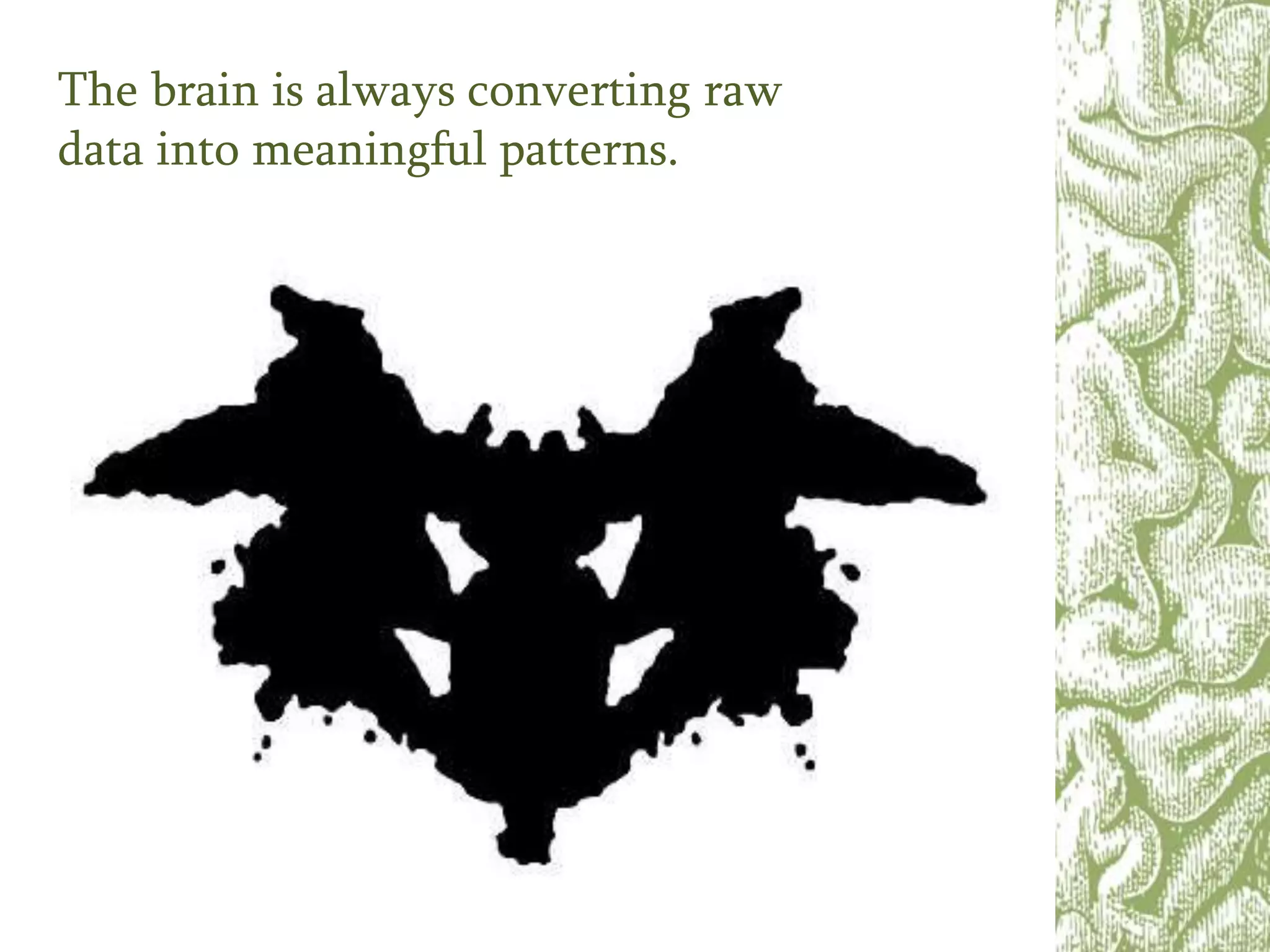
The brain is always converting raw
data into meaningful patterns.
Safe or not safe?
Fgrav = 0.2 * 9.8 m/s2
Experiences translate into an
understanding of the world
Memories expand our available data
from which we model the world
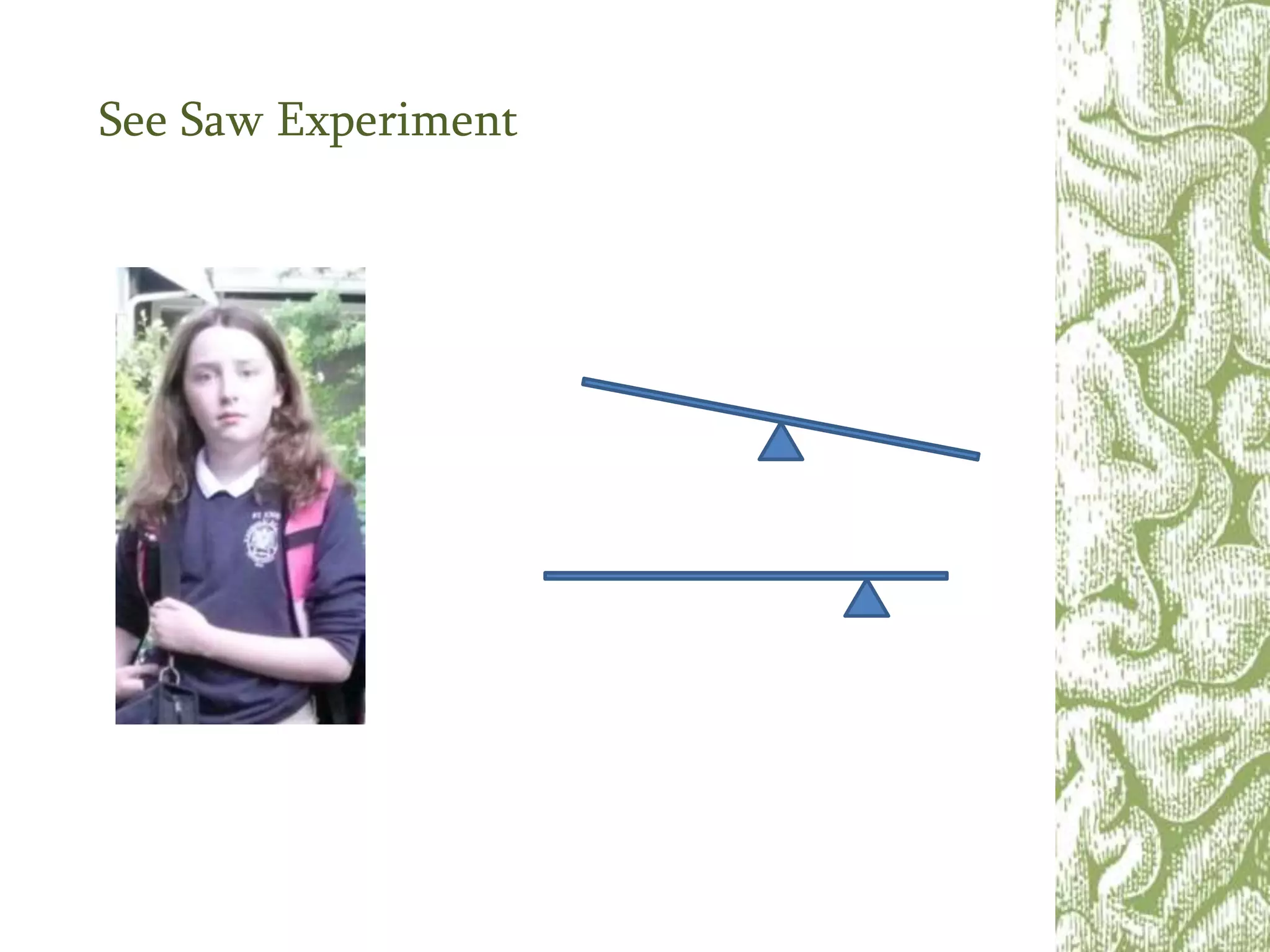
See Saw Experiment
See Saw Experiment
See Saw Experiment
See Saw Experiment
Stories let us codify
our collective past,
in order to better
understand the now.
Ouch…
Frank and Joe looked in
horror at the oncoming
car. It was careening from
side to side on the narrow
road.
“He’ll hit us! We’d better
climb this hillside, and
fast!” Frank exclaimed, as
the boys brought their
bikes to a screeching halt
and leaped off.
“On the double!” Joe cried
out as they started up the
steep embankment.
Stories can act as a simulation for the mind
Stories allow us to have
experiences without
facing the physical risk
Cause & Effect
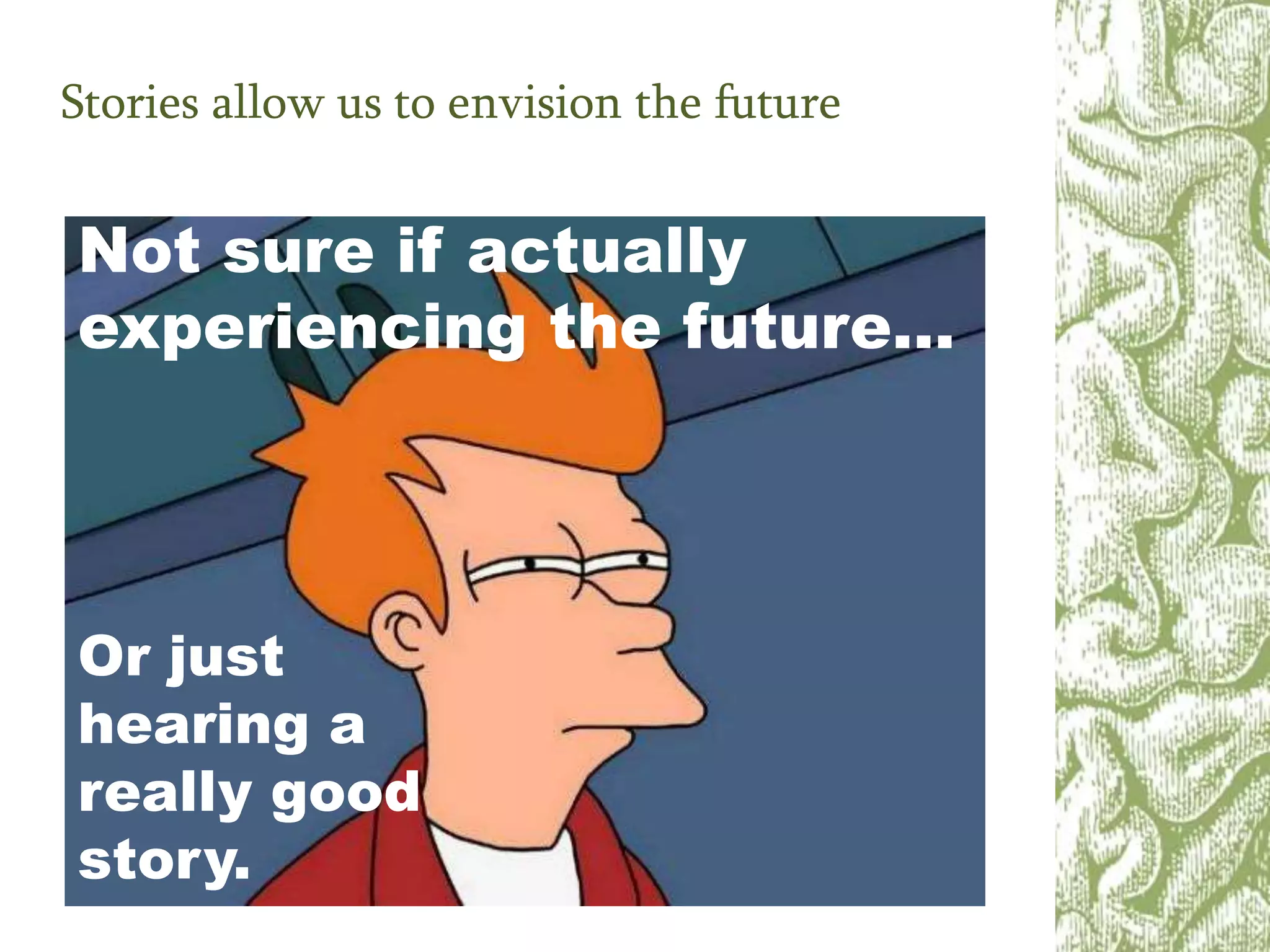
Stories allow us to envision the future
Not sure if actually
experiencing the future…
Or just
hearing a
really good
story.
We fear and resist change
But we are risk takers
Stories allow us to accept
change by experiencing it
in a safe setting and fully
examine the rewards of
taking risk.
Evolutionary advantage to the
storytellers:
• Learn and understand without
the need for first hand
experience
• Predict the outcomes of
actions
• Risk/reward analysis
The hardwiring and
working of our brains
make some stories more
acceptable to us than
others.
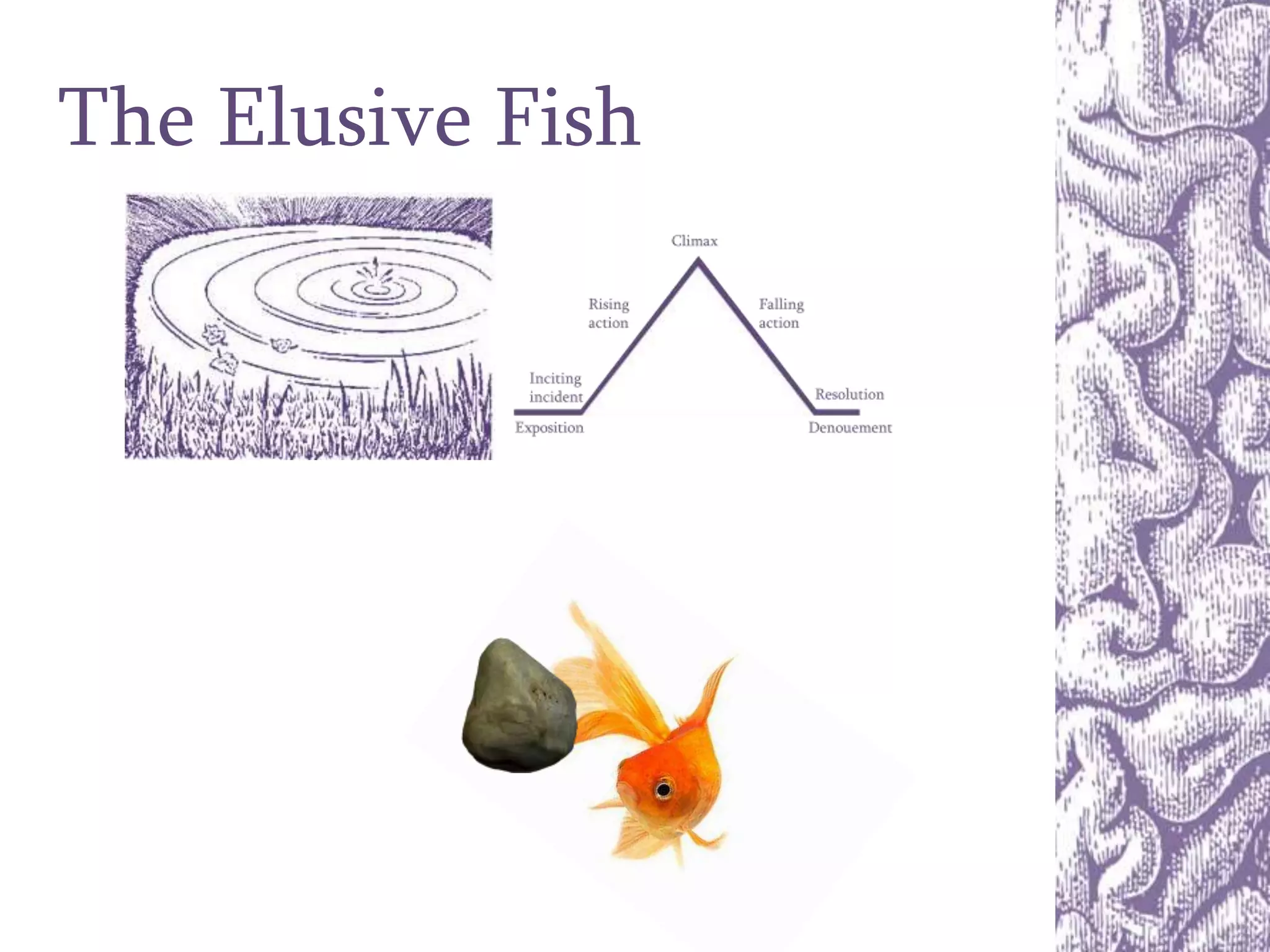
Freytag’s Pyramid
Inciting
incident
Rising
action
Falling
action
Denouement
Climax
Resolution
Exposition
Joseph Campbell’s
Monomyth
Call to adventure
Reward
KNOWN
UNKNOWN
Meeting Mentor
Crossing the
Threshold
Tests
Helpers
Climax / Ordeal
Refusal of the call
Enemies
Return with
Treasure
The
Road
Back
The stories we’re most likely to latch on to
are structured around change which comes
through conflict
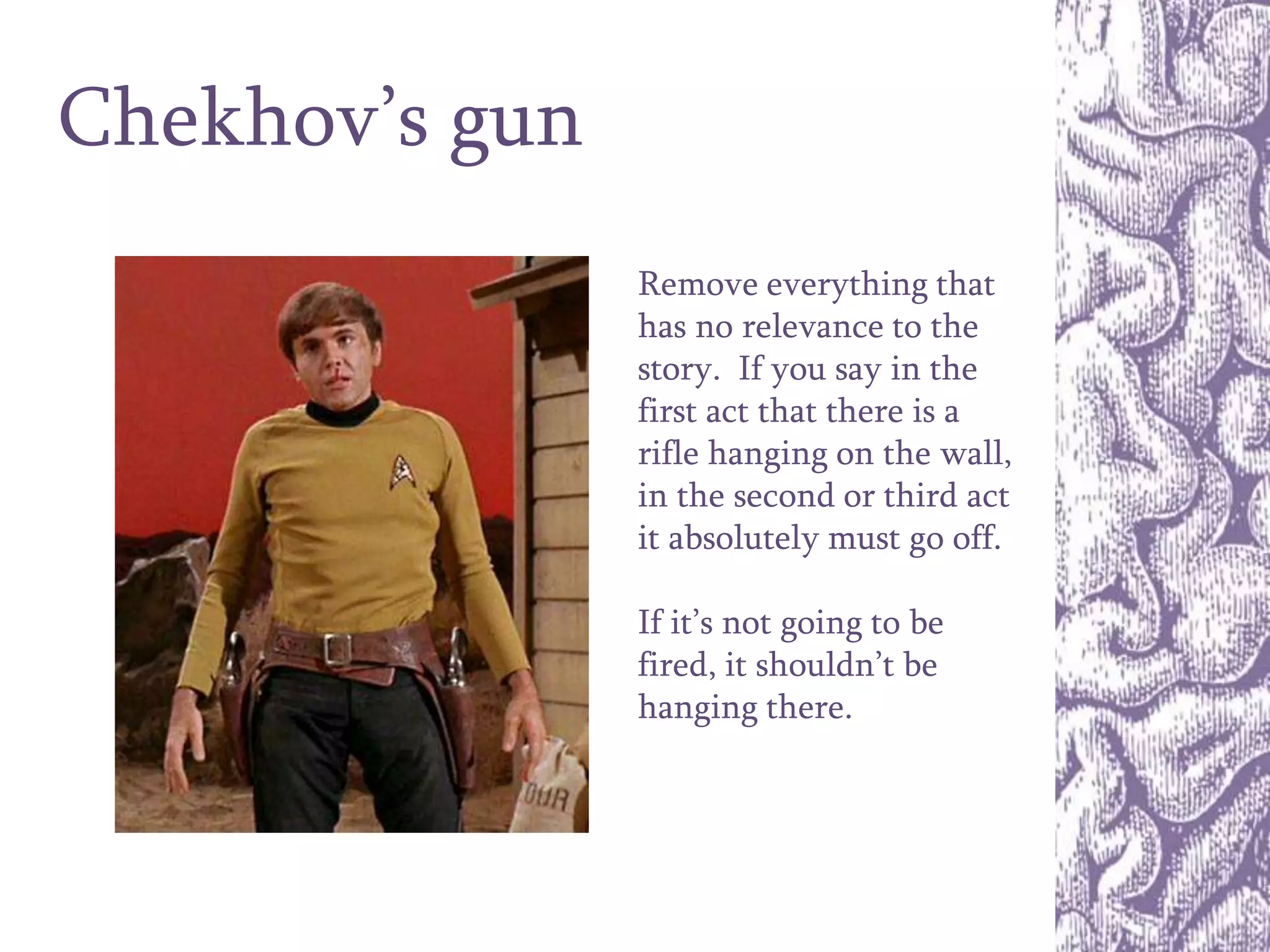
Chekhov’s gun
Remove everything that
has no relevance to the
story. If you say in the
first act that there is a
rifle hanging on the wall,
in the second or third act
it absolutely must go off.
If it’s not going to be
fired, it shouldn’t be
hanging there.
PAYOFFSETUP
Our brains are seeking to put meaning to
patterns: if this, then that.
And then what?
To hook your audience, you need to establish quickly that there is
a puzzle or an emergent pattern.
My name was Salmon, like the
fish; first name, Susie. I was
fourteen years old when I was
murdered on December 6th
1973.
And then what?
Is everything in place?
You aren’t supposed to relieve me.
I know but I felt like taking a shift.
You like him, don’t you. You like watching
him. We’re going to kill him, you
understand that?
Morpheus believes he’s the one.
Do you?
And then what?
WTF?!? And then what?
Remember the see
saw experiment
The brain wants reality to fit the
model it has built for itself.
The brain doesn`t like
randomness or abstraction and
will seek to impose order or
establish a pattern.
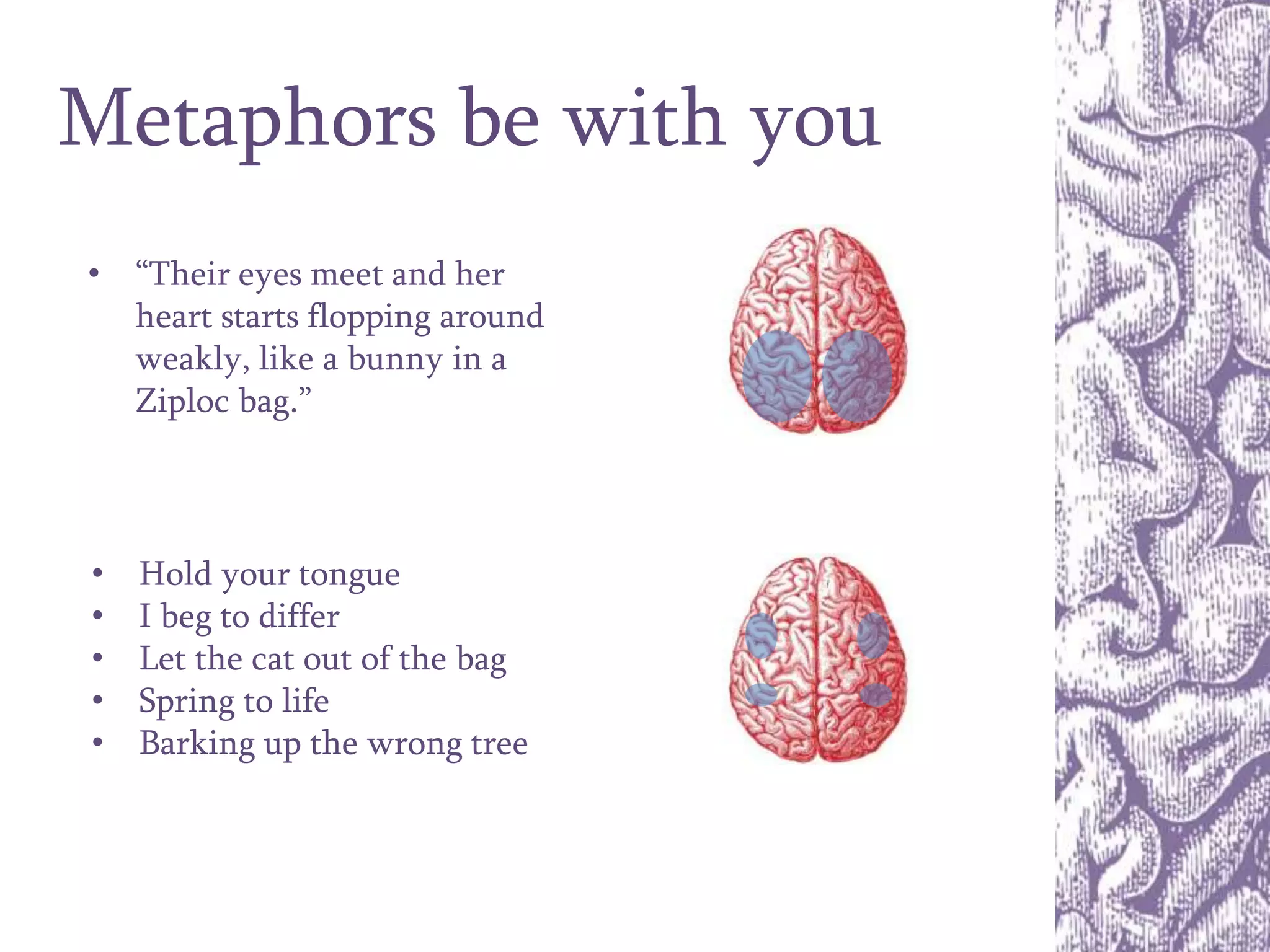
Metaphors be with you
• Hold your tongue
• I beg to differ
• Let the cat out of the bag
• Spring to life
• Barking up the wrong tree
• “Their eyes meet and her
heart starts flopping around
weakly, like a bunny in a
Ziploc bag.”
There is a payoff when we connect the
dots and give meaning to a pattern.
Likewise our brains do not like random
occurrences or puzzle pieces that do
not fit
Once more,
with feeling
• Empathic response
• Release of cortisol
and oxytocin
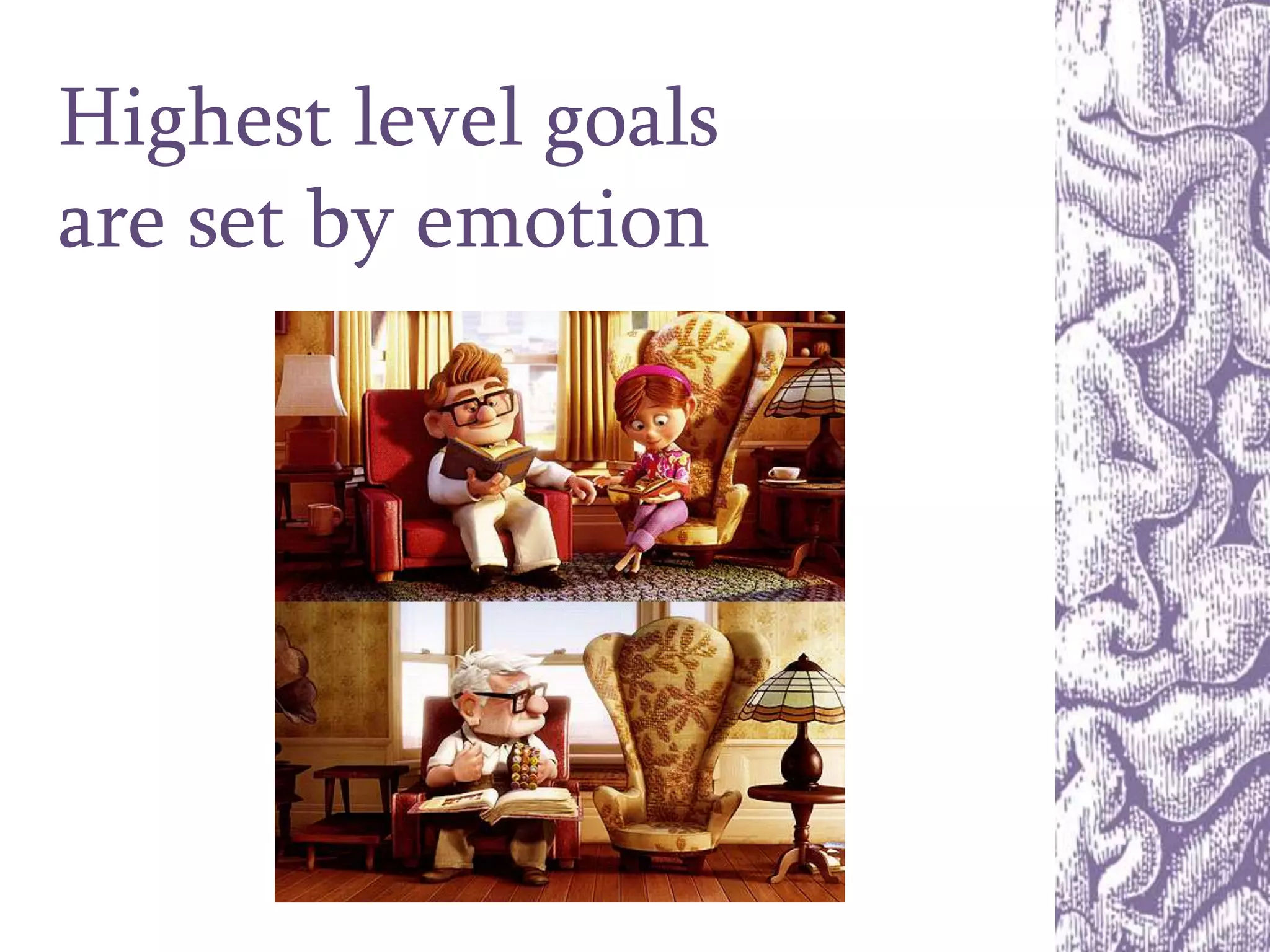
Highest level goals
are set by emotion
The Elusive Fish
Emotion gives weight to events.
Creating an empathic response captures
the attention and ensures greater
connection to the story.
!!!
Grab and hold your audience:
• Cue a puzzle for solving
• Feels > Plot
• If this, then that.
• Set it up and then pay it off.
Image Credits
Brain
• Allan Ajilfo https://flic.kr/p/of4Z3W
Hans Christian Anderson
• Granger
Tiger in the Grass
• National Geographic
Thinking
• Freddie Alequin https://flic.kr/p/dS7kwj
Baby with Fork
• Bridget Coila https://flic.kr/p/9ho963
First Day of School
• Michael Newton https://flic.kr/p/51N4Xt
Empathy
• Rosenfeld Media https://flic.kr/p/7qnHDb
Cyclist on Hill
• Jeremy Brooks https://flic.kr/p/7qnHDb
Chicken
• Marji Beach https://flic.kr/p/ag4XcH
Eggs
• Moyan Brenn https://flic.kr/p/8YS4gk
Fried Eggs
• Irish Jaunt https://flic.kr/p/b4KSCc
Kite
• Don DeBold https://flic.kr/p/dL2ePB
Remembering
• James Lee https://flic.kr/p/7qnHDb

Storytelling & Neuroscience

  • 1.
  • 2.
    Rob Clark Storyteller &Problem Solver @theelusivefish linkedin.com/in/theelusivefish
  • 3.
    CAVEAT:IANAN i am nota neurologist
  • 4.
    Once upon atime…
  • 5.
    Once upon atime…
  • 6.
    Why did weevolve as story telling creatures?
  • 7.
    The brain isalways converting raw data into meaningful patterns.
  • 8.
  • 9.
    Fgrav = 0.2* 9.8 m/s2 Experiences translate into an understanding of the world
  • 10.
    Memories expand ouravailable data from which we model the world
  • 11.
  • 12.
  • 13.
  • 14.
  • 15.
    Stories let uscodify our collective past, in order to better understand the now.
  • 16.
  • 17.
    Frank and Joelooked in horror at the oncoming car. It was careening from side to side on the narrow road. “He’ll hit us! We’d better climb this hillside, and fast!” Frank exclaimed, as the boys brought their bikes to a screeching halt and leaped off. “On the double!” Joe cried out as they started up the steep embankment.
  • 18.
    Stories can actas a simulation for the mind
  • 19.
    Stories allow usto have experiences without facing the physical risk
  • 20.
  • 21.
    Stories allow usto envision the future Not sure if actually experiencing the future… Or just hearing a really good story.
  • 22.
    We fear andresist change But we are risk takers
  • 23.
    Stories allow usto accept change by experiencing it in a safe setting and fully examine the rewards of taking risk.
  • 24.
    Evolutionary advantage tothe storytellers: • Learn and understand without the need for first hand experience • Predict the outcomes of actions • Risk/reward analysis
  • 25.
    The hardwiring and workingof our brains make some stories more acceptable to us than others.
  • 26.
  • 27.
    Joseph Campbell’s Monomyth Call toadventure Reward KNOWN UNKNOWN Meeting Mentor Crossing the Threshold Tests Helpers Climax / Ordeal Refusal of the call Enemies Return with Treasure The Road Back
  • 28.
    The stories we’remost likely to latch on to are structured around change which comes through conflict
  • 29.
    Chekhov’s gun Remove everythingthat has no relevance to the story. If you say in the first act that there is a rifle hanging on the wall, in the second or third act it absolutely must go off. If it’s not going to be fired, it shouldn’t be hanging there.
  • 30.
    PAYOFFSETUP Our brains areseeking to put meaning to patterns: if this, then that.
  • 31.
    And then what? Tohook your audience, you need to establish quickly that there is a puzzle or an emergent pattern. My name was Salmon, like the fish; first name, Susie. I was fourteen years old when I was murdered on December 6th 1973.
  • 32.
    And then what? Iseverything in place? You aren’t supposed to relieve me. I know but I felt like taking a shift. You like him, don’t you. You like watching him. We’re going to kill him, you understand that? Morpheus believes he’s the one. Do you?
  • 33.
  • 34.
  • 35.
    Remember the see sawexperiment The brain wants reality to fit the model it has built for itself. The brain doesn`t like randomness or abstraction and will seek to impose order or establish a pattern.
  • 36.
    Metaphors be withyou • Hold your tongue • I beg to differ • Let the cat out of the bag • Spring to life • Barking up the wrong tree • “Their eyes meet and her heart starts flopping around weakly, like a bunny in a Ziploc bag.”
  • 37.
    There is apayoff when we connect the dots and give meaning to a pattern. Likewise our brains do not like random occurrences or puzzle pieces that do not fit
  • 38.
  • 39.
    • Empathic response •Release of cortisol and oxytocin
  • 40.
  • 41.
  • 42.
    Emotion gives weightto events. Creating an empathic response captures the attention and ensures greater connection to the story. !!!
  • 43.
    Grab and holdyour audience: • Cue a puzzle for solving • Feels > Plot • If this, then that. • Set it up and then pay it off.
  • 44.
    Image Credits Brain • AllanAjilfo https://flic.kr/p/of4Z3W Hans Christian Anderson • Granger Tiger in the Grass • National Geographic Thinking • Freddie Alequin https://flic.kr/p/dS7kwj Baby with Fork • Bridget Coila https://flic.kr/p/9ho963 First Day of School • Michael Newton https://flic.kr/p/51N4Xt Empathy • Rosenfeld Media https://flic.kr/p/7qnHDb Cyclist on Hill • Jeremy Brooks https://flic.kr/p/7qnHDb Chicken • Marji Beach https://flic.kr/p/ag4XcH Eggs • Moyan Brenn https://flic.kr/p/8YS4gk Fried Eggs • Irish Jaunt https://flic.kr/p/b4KSCc Kite • Don DeBold https://flic.kr/p/dL2ePB Remembering • James Lee https://flic.kr/p/7qnHDb