to save your organization!

  Heather Hughes, CMC
heatherconsults@shaw.ca
   Why the brain drain is here - now
   Demographic elements that need attention
   The RISKS
   Mission Critical Skills
   Subject Matter Experts
   Why ‘go to’ people are crucial
   How to capture knowledge and skills
   Tacit knowledge – needs special techniques
   Storage and retrieval issues
   Policies that hinder/help
   Rewards and recognition
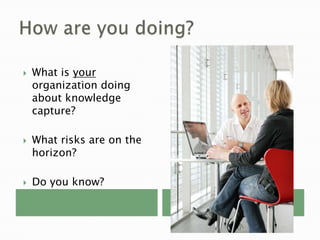
   What is your
    organization doing
    about knowledge
    capture?

   What risks are on the
    horizon?

   Do you know?
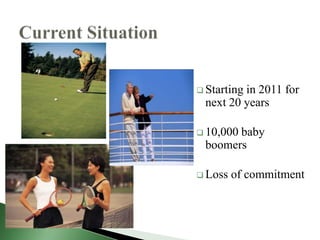
 Starting
         in 2011 for
 next 20 years

 10,000
       baby
 boomers

 Loss   of commitment
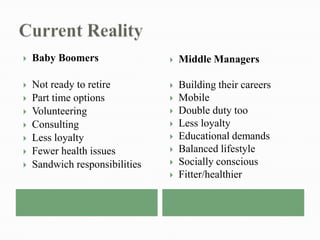
   Baby Boomers                   Middle Managers

   Not ready to retire            Building their careers
   Part time options              Mobile
   Volunteering                   Double duty too
   Consulting                     Less loyalty
   Less loyalty                   Educational demands
   Fewer health issues            Balanced lifestyle
   Sandwich responsibilities      Socially conscious
                                   Fitter/healthier
   What are boomers
    doing that middle
    managers need to
    emulate?

   What do middle
    managers do that baby
    boomers envy?

   What do organizations
    need from both of these
    groups?
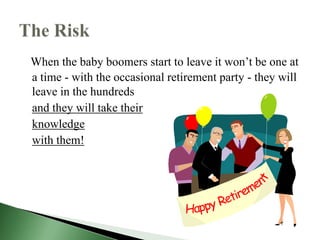
When the baby boomers start to leave it won’t be one at
a time - with the occasional retirement party - they will
leave in the hundreds
and they will take their
knowledge
with them!
 Clients have a single point of contact
 Clients have no relationship with an alternative
 Individuals don’t teach their colleagues
 Employees feel they are not entitled to know some
  details
 Learning is not applied or shared
 Departing employees clean out desks and toss out files
  or papers
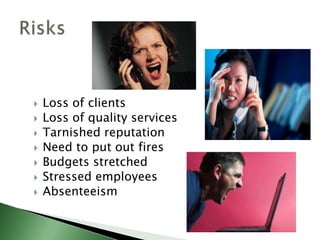
   Loss of clients
   Loss of quality services
   Tarnished reputation
   Need to put out fires
   Budgets stretched
   Stressed employees
   Absenteeism
   Conduct a detailed risk assessment
   Interview managers
   Meet Subject Matter Experts (SME’s)
   Find and talk with the ‘go to’ people
   Examine HR Policies
   Imbed KT into Performance Management
   Put sharing knowledge on the agenda
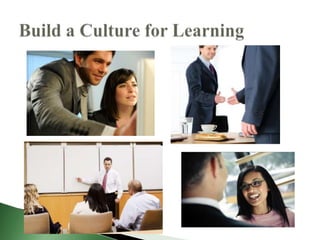
   Build a learning culture
   Reward and recognize learning and sharing expertise
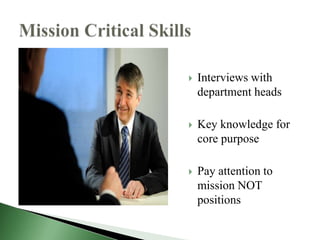
   Interviews with
    department heads

   Key knowledge for
    core purpose

   Pay attention to
    mission NOT
    positions
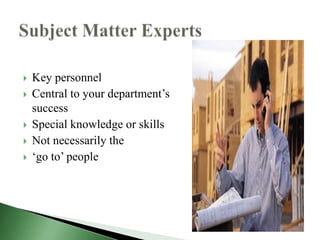
   Key personnel
   Central to your department’s
    success
   Special knowledge or skills
   Not necessarily the
   ‘go to’ people
   Why do clients seek out special personnel?

   What value do they add?

   What happens when they are not available?

   How does that influence trust?

   What can you learn from their style/approach
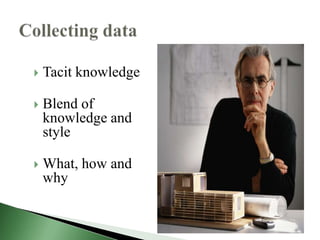
   Tacit knowledge

   Blend of
    knowledge and
    style

   What, how and
    why
   What types of polices help advance knowledge
    transfer?

   Which polices or practices hinder?

   How HR can assist managers

   Build pools of expertise through Performance
    Management
Google has spoiled us…

   We expect to ‘click’ to
    find everything we want
   There must be a naming/filing convention
   Key word searches
   Find the people who can provide answers
   People must drive the action – see value
A Lot!
Remember…

   What gets measured gets
    done!
   What you talk about people
    notice!
   Lead by example –
    teach/share/seek info.
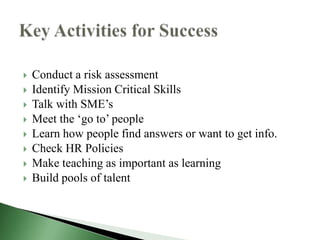
   Conduct a risk assessment
   Identify Mission Critical Skills
   Talk with SME’s
   Meet the ‘go to’ people
   Learn how people find answers or want to get info.
   Check HR Policies
   Make teaching as important as learning
   Build pools of talent
Contact:
 Heather Hughes
 Certified Management Consultant
 Heatherconsults@shaw.ca
 Tel 250-857-5833

Stop the brain drain

  • 1.
    to save yourorganization! Heather Hughes, CMC heatherconsults@shaw.ca
  • 2.
    Why the brain drain is here - now  Demographic elements that need attention  The RISKS  Mission Critical Skills  Subject Matter Experts  Why ‘go to’ people are crucial  How to capture knowledge and skills  Tacit knowledge – needs special techniques  Storage and retrieval issues  Policies that hinder/help  Rewards and recognition
  • 3.
    What is your organization doing about knowledge capture?  What risks are on the horizon?  Do you know?
  • 4.
     Starting in 2011 for next 20 years  10,000 baby boomers  Loss of commitment
  • 5.
    Baby Boomers  Middle Managers  Not ready to retire  Building their careers  Part time options  Mobile  Volunteering  Double duty too  Consulting  Less loyalty  Less loyalty  Educational demands  Fewer health issues  Balanced lifestyle  Sandwich responsibilities  Socially conscious  Fitter/healthier
  • 6.
    What are boomers doing that middle managers need to emulate?  What do middle managers do that baby boomers envy?  What do organizations need from both of these groups?
  • 7.
    When the babyboomers start to leave it won’t be one at a time - with the occasional retirement party - they will leave in the hundreds and they will take their knowledge with them!
  • 8.
     Clients havea single point of contact  Clients have no relationship with an alternative  Individuals don’t teach their colleagues  Employees feel they are not entitled to know some details  Learning is not applied or shared  Departing employees clean out desks and toss out files or papers
  • 11.
    Loss of clients  Loss of quality services  Tarnished reputation  Need to put out fires  Budgets stretched  Stressed employees  Absenteeism
  • 12.
    Conduct a detailed risk assessment  Interview managers  Meet Subject Matter Experts (SME’s)  Find and talk with the ‘go to’ people  Examine HR Policies  Imbed KT into Performance Management  Put sharing knowledge on the agenda  Build a learning culture  Reward and recognize learning and sharing expertise
  • 14.
    Interviews with department heads  Key knowledge for core purpose  Pay attention to mission NOT positions
  • 15.
    Key personnel  Central to your department’s success  Special knowledge or skills  Not necessarily the  ‘go to’ people
  • 16.
    Why do clients seek out special personnel?  What value do they add?  What happens when they are not available?  How does that influence trust?  What can you learn from their style/approach
  • 17.
    Tacit knowledge  Blend of knowledge and style  What, how and why
  • 18.
    What types of polices help advance knowledge transfer?  Which polices or practices hinder?  How HR can assist managers  Build pools of expertise through Performance Management
  • 19.
    Google has spoiledus…  We expect to ‘click’ to find everything we want  There must be a naming/filing convention  Key word searches  Find the people who can provide answers  People must drive the action – see value
  • 20.
  • 21.
    Remember…  What gets measured gets done!  What you talk about people notice!  Lead by example – teach/share/seek info.
  • 23.
    Conduct a risk assessment  Identify Mission Critical Skills  Talk with SME’s  Meet the ‘go to’ people  Learn how people find answers or want to get info.  Check HR Policies  Make teaching as important as learning  Build pools of talent
  • 24.
    Contact:  Heather Hughes Certified Management Consultant  Heatherconsults@shaw.ca  Tel 250-857-5833