Tami J. Rogers PhD, DVM, MSN, CNE, CHSE
The Perceived Value of
Certification Among Certified Nurse
Educators
Introduction
 History
 Certification in Nursing Specialty
 Certified Nurse Educator (CNE)
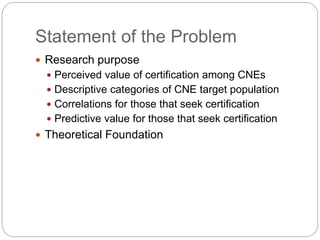
Statement of the Problem
 Research purpose
 Perceived value of certification among CNEs
 Descriptive categories of CNE target population
 Correlations for those that seek certification
 Predictive value for those that seek certification
 Theoretical Foundation
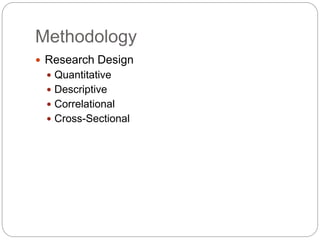
Methodology
 Research Design
 Quantitative
 Descriptive
 Correlational
 Cross-Sectional
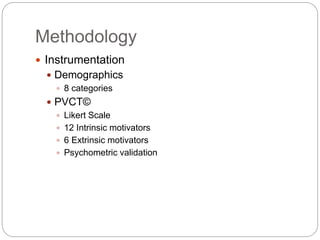
Methodology
 Instrumentation
 Demographics
 8 categories
 PVCT©
 Likert Scale
 12 Intrinsic motivators
 6 Extrinsic motivators
 Psychometric validation
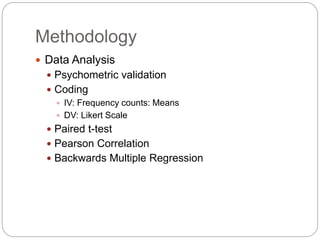
Methodology
 Data Analysis
 Psychometric validation
 Coding
 IV: Frequency counts: Means
 DV: Likert Scale
 Paired t-test
 Pearson Correlation
 Backwards Multiple Regression
Results
 Primary Research Question: What is the
perceived value of the CNE specialty among
certified nurse educators?
 Sub-Research Question 1:
 “What do responders report as being the most
important motivators for earning the CNE
designation?”
 Findings
 Means for intrinsic and extrinsic motivators
Results
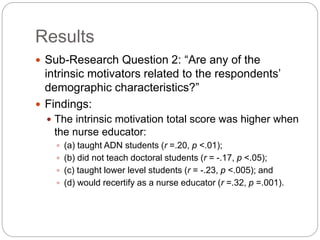
 Sub-Research Question 2: “Are any of the
intrinsic motivators related to the respondents’
demographic characteristics?”
 Findings:
 The intrinsic motivation total score was higher when
the nurse educator:
 (a) taught ADN students (r =.20, p <.01);
 (b) did not teach doctoral students (r = -.17, p <.05);
 (c) taught lower level students (r = -.23, p <.005); and
 (d) would recertify as a nurse educator (r =.32, p =.001).
Results
 Sub-Research Question 3: “Are any of the
extrinsic motivators related to the respondents’
demographic characteristics?”
 Findings
 None of the correlations were significant at the p
<.05 level.
Results
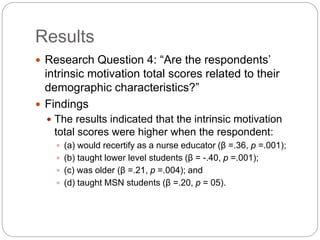
 Research Question 4: “Are the respondents’
intrinsic motivation total scores related to their
demographic characteristics?”
 Findings
 The results indicated that the intrinsic motivation
total scores were higher when the respondent:
 (a) would recertify as a nurse educator (β =.36, p =.001);
 (b) taught lower level students (β = -.40, p =.001);
 (c) was older (β =.21, p =.004); and
 (d) taught MSN students (β =.20, p = 05).
Results
 Sub-Research Question 5: “Are the respondents’
extrinsic motivation total scores related to their
demographic characteristics?”
 Findings
 None of the demographic variables met the
inclusion criteria of p <.05.
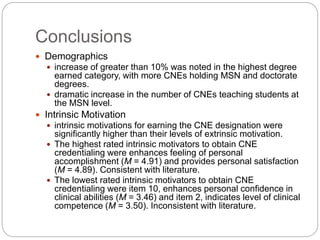
Conclusions
 Demographics
 increase of greater than 10% was noted in the highest degree
earned category, with more CNEs holding MSN and doctorate
degrees.
 dramatic increase in the number of CNEs teaching students at
the MSN level.
 Intrinsic Motivation
 intrinsic motivations for earning the CNE designation were
significantly higher than their levels of extrinsic motivation.
 The highest rated intrinsic motivators to obtain CNE
credentialing were enhances feeling of personal
accomplishment (M = 4.91) and provides personal satisfaction
(M = 4.89). Consistent with literature.
 The lowest rated intrinsic motivators to obtain CNE
credentialing were item 10, enhances personal confidence in
clinical abilities (M = 3.46) and item 2, indicates level of clinical
competence (M = 3.50). Inconsistent with literature.
Conclusions
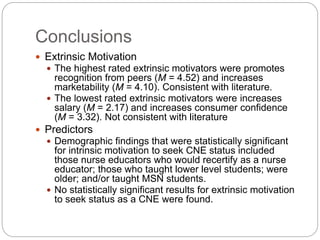
 Extrinsic Motivation
 The highest rated extrinsic motivators were promotes
recognition from peers (M = 4.52) and increases
marketability (M = 4.10). Consistent with literature.
 The lowest rated extrinsic motivators were increases
salary (M = 2.17) and increases consumer confidence
(M = 3.32). Not consistent with literature
 Predictors
 Demographic findings that were statistically significant
for intrinsic motivation to seek CNE status included
those nurse educators who would recertify as a nurse
educator; those who taught lower level students; were
older; and/or taught MSN students.
 No statistically significant results for extrinsic motivation
to seek status as a CNE were found.
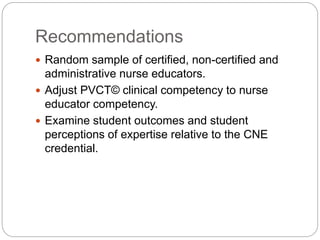
Recommendations
 Random sample of certified, non-certified and
administrative nurse educators.
 Adjust PVCT© clinical competency to nurse
educator competency.
 Examine student outcomes and student
perceptions of expertise relative to the CNE
credential.

Stii research daypresentation_tamij_rogers

  • 1.
    Tami J. RogersPhD, DVM, MSN, CNE, CHSE The Perceived Value of Certification Among Certified Nurse Educators
  • 2.
    Introduction  History  Certificationin Nursing Specialty  Certified Nurse Educator (CNE)
  • 3.
    Statement of theProblem  Research purpose  Perceived value of certification among CNEs  Descriptive categories of CNE target population  Correlations for those that seek certification  Predictive value for those that seek certification  Theoretical Foundation
  • 4.
    Methodology  Research Design Quantitative  Descriptive  Correlational  Cross-Sectional
  • 5.
    Methodology  Instrumentation  Demographics 8 categories  PVCT©  Likert Scale  12 Intrinsic motivators  6 Extrinsic motivators  Psychometric validation
  • 6.
    Methodology  Data Analysis Psychometric validation  Coding  IV: Frequency counts: Means  DV: Likert Scale  Paired t-test  Pearson Correlation  Backwards Multiple Regression
  • 7.
    Results  Primary ResearchQuestion: What is the perceived value of the CNE specialty among certified nurse educators?  Sub-Research Question 1:  “What do responders report as being the most important motivators for earning the CNE designation?”  Findings  Means for intrinsic and extrinsic motivators
  • 8.
    Results  Sub-Research Question2: “Are any of the intrinsic motivators related to the respondents’ demographic characteristics?”  Findings:  The intrinsic motivation total score was higher when the nurse educator:  (a) taught ADN students (r =.20, p <.01);  (b) did not teach doctoral students (r = -.17, p <.05);  (c) taught lower level students (r = -.23, p <.005); and  (d) would recertify as a nurse educator (r =.32, p =.001).
  • 9.
    Results  Sub-Research Question3: “Are any of the extrinsic motivators related to the respondents’ demographic characteristics?”  Findings  None of the correlations were significant at the p <.05 level.
  • 10.
    Results  Research Question4: “Are the respondents’ intrinsic motivation total scores related to their demographic characteristics?”  Findings  The results indicated that the intrinsic motivation total scores were higher when the respondent:  (a) would recertify as a nurse educator (β =.36, p =.001);  (b) taught lower level students (β = -.40, p =.001);  (c) was older (β =.21, p =.004); and  (d) taught MSN students (β =.20, p = 05).
  • 11.
    Results  Sub-Research Question5: “Are the respondents’ extrinsic motivation total scores related to their demographic characteristics?”  Findings  None of the demographic variables met the inclusion criteria of p <.05.
  • 12.
    Conclusions  Demographics  increaseof greater than 10% was noted in the highest degree earned category, with more CNEs holding MSN and doctorate degrees.  dramatic increase in the number of CNEs teaching students at the MSN level.  Intrinsic Motivation  intrinsic motivations for earning the CNE designation were significantly higher than their levels of extrinsic motivation.  The highest rated intrinsic motivators to obtain CNE credentialing were enhances feeling of personal accomplishment (M = 4.91) and provides personal satisfaction (M = 4.89). Consistent with literature.  The lowest rated intrinsic motivators to obtain CNE credentialing were item 10, enhances personal confidence in clinical abilities (M = 3.46) and item 2, indicates level of clinical competence (M = 3.50). Inconsistent with literature.
  • 13.
    Conclusions  Extrinsic Motivation The highest rated extrinsic motivators were promotes recognition from peers (M = 4.52) and increases marketability (M = 4.10). Consistent with literature.  The lowest rated extrinsic motivators were increases salary (M = 2.17) and increases consumer confidence (M = 3.32). Not consistent with literature  Predictors  Demographic findings that were statistically significant for intrinsic motivation to seek CNE status included those nurse educators who would recertify as a nurse educator; those who taught lower level students; were older; and/or taught MSN students.  No statistically significant results for extrinsic motivation to seek status as a CNE were found.
  • 14.
    Recommendations  Random sampleof certified, non-certified and administrative nurse educators.  Adjust PVCT© clinical competency to nurse educator competency.  Examine student outcomes and student perceptions of expertise relative to the CNE credential.