







Workshop Topics Improving Healthcare  Worldwide . Assessing Needs in CME and CPD Optimizing Live CME and CPD Technology in CME and CPD Using a Curricular Approach in CME and CPD
Who Am I? SVP (~16 yrs in CME overall) Prova: >500,000 hours of CME total ~70,000 hours of CME annually -  Surveyor, Workshop Leader Fellow, Past MECCA Leader, ACWG  Clinical Instructor – Center for Learning and Innovation/Emergency Medicine Instructor, Healthcare Communications Schools of Medicine, Public Health and Journalism Contributing Author Host – Lifelong Learning
Workshop Rules Participation is  encouraged  and  required ! We will blend small group discussions and full group interaction You are a part of the faculty! I have some slides for each section A positive outcome may be not having to use them
First Question How do YOU define CME?
Second Question Do you think that CME differs around the world?
Third Question What do you hope to get out of this workshop?
First – An Overview
The Current CME Environment - Global The need exists Lifelong learning commitment of MDs The learners are there No consistency intra-country regarding Regulations Guidelines Physician requirements Funding varies
The Current CME Environment - Global Lack of accreditation standardization Barriers Overcoming time zone challenges Language disparities Varying treatment availability Varying skill and sophistication levels Ability for changes to be implemented
The Current CME Environment in the US CME too focused on individual conditions and not realistic patient presentation Co-morbidities covered broadly Most data-intensive with little appropriate interactivity Lack of appropriate use of Adult Learning Principles Little if any time course management Learning objectives without changes from year to year – WHY?
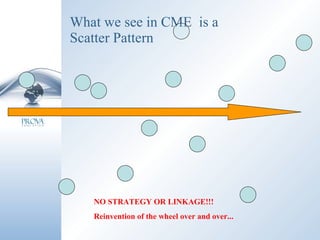
What we see in CME  is a  Scatter Pattern NO STRATEGY OR LINKAGE!!! Reinvention of the wheel over and over...
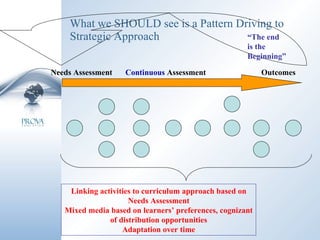
What we SHOULD see is a Pattern Driving to Strategic Approach Needs Assessment Continuous   Assessment Outcomes Linking activities to curriculum approach based on Needs Assessment Mixed media based on learners’ preferences, cognizant of distribution opportunities Adaptation over time “ The end is the Beginning”
The 4 C’s Have Been Missing! Collaboration Collegiality Coordination Consistency
Section 1 – Needs Assessments
Section 1 – Needs Assessments Question: How Do You Currently Assess The CME/CPD Needs of Learners?
Section 1 – Needs Assessments Question: What More Could Be Done To Assess CME/CPD Needs?
Needs Assessment “Best Practices”* Elements and qualities Multi-faceted Uses frameworks or theory Exploring various perspectives Use of objective and subjective data Primary and secondary sources of information Identified educable gaps “ Needs Assessment” means different things to different people – so “Best Practices” vary And that’s OK! *Note: this is not exhaustive list!
The Needs Assessment Must go far beyond literature review  Validation of educational methodology Rationale for recommendation of tactic(s) Don’t just ask academics/KOLs Look for geographic needs and variations Assess learning preferences Channel preferences are key Real-time vs. archived
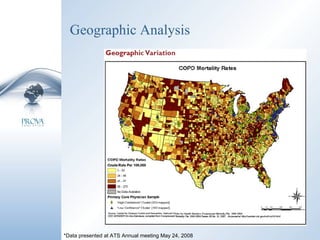
What Should a Needs Assessment Contain? Educational gaps Disparities  Learning style preferences Where the learners are or where they go for education Geographic variations Clinical and non-clinical information Competitive CME landscape
What Should a Needs Assessment Contain? - II Are other activities working? Why or why not? More than just KOL opinions Who should teach Who should not teach Who needs to learn and how When should the activity take place
The Components Evidence Literature Interviews Evaluations Medical records Preferences Media Modalities  Channels Environment Competitive activities Non-competitive activities
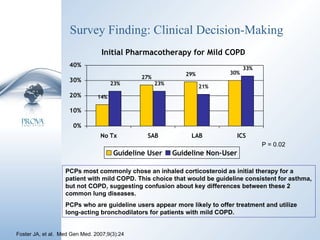
Survey Finding: Clinical Decision-Making P = 0.02 Foster JA, et al.  Med Gen Med. 2007;9(3):24 PCPs most commonly chose an inhaled corticosteroid as initial therapy for a patient with mild COPD. This choice that would be guideline consistent for asthma, but not COPD, suggesting confusion about key differences between these 2 common lung diseases.  PCPs who are guideline users appear more likely to offer treatment and utilize long-acting bronchodilators for patients with mild COPD. Initial Pharmacotherapy for Mild COPD
Geographic Analysis *Data presented at ATS Annual meeting May 24, 2008
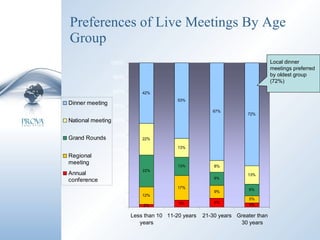
Preferences of Live Meetings By Age Group Local dinner meetings preferred by oldest group (72%)
In a Setting Where Needs Have Changed OR in a Serial Learning Environment Broader objectives can still apply May need to be adjusted accordingly Primarily in the case of multiple activities Ongoing assessments    re-evaluation of needs    updating of objectives
Section 2 – Optimizing Live CME/CPD
Section 2 – Optimizing Live CME/CPD Question: Is All Live CME/CPD The Same?
Live CME – The Location Global International National Regional  Local Approach to education in each environment is different
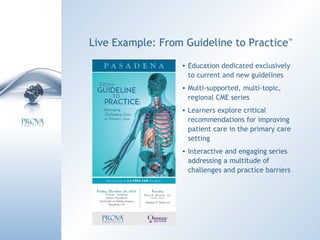
Live Example: From Guideline to Practice ™ Education dedicated exclusively to current and new guidelines Multi-supported, multi-topic, regional CME series  Learners explore critical recommendations for improving patient care in the primary care setting Interactive and engaging series addressing a multitude of challenges and practice barriers
Interact With The Audience Validate needs assessments Pre-activity questions Competence Confidence Use audience response technology appropriately Post-activity questions Repeat questions and show change
Mix Audiences Collaborative Forum Care team approach Oncology example – Tumor Board model Multiple specialists ACS example – ED, Interventional Cardiology, Clinical Cardiology NSCLC example – Oncology, Pathology Use audience response to measure Concordance and discordance
Section 2 – Optimizing Live CME/CPD Question: How Are You Enhancing The Learning Environment in Live CME/CPD?
Section 2 – Optimizing Live CME/CPD Question: How Are You Measuring Outcomes in Live CME/CPD?
Outcomes Measurement Techniques Evaluation/Surveys Standardization Live meeting example(s)  Pre- and post-activity questioning Post-activity surveys Case-control matching Live activities Enduring materials eCME mCME Patient-level data evaluation
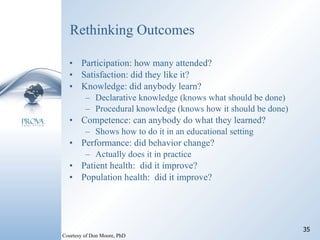
Rethinking Outcomes Participation: how many attended? Satisfaction: did they like it? Knowledge: did anybody learn? Declarative knowledge (knows what should be done) Procedural knowledge (knows how it should be done) Competence: can anybody do what they learned? Shows how to do it in an educational setting Performance: did behavior change? Actually does it in practice Patient health:  did it improve? Population health:  did it improve? Courtesy of Don Moore, PhD
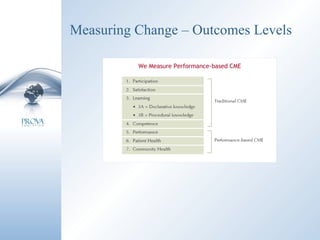
Measuring Change – Outcomes Levels We Measure Performance-based CME
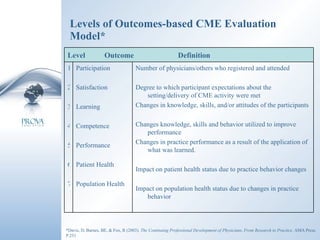
Levels of Outcomes-based CME Evaluation Model* *Davis, D, Barnes, BE, & Fox, R (2003).  The Continuing Professional Development of Physicians, From Research to Practice.  AMA Press. P.251 Number of physicians/others who registered and attended Degree to which participant expectations about the setting/delivery of CME activity were met Changes in knowledge, skills, and/or attitudes of the participants Changes knowledge, skills and behavior utilized to improve performance Changes in practice performance as a result of the application of what was learned. Impact on patient health status due to practice behavior changes Impact on population health status due to changes in practice behavior Participation Satisfaction Learning Competence Performance Patient Health Population Health 1 2 3 4 5 6 7 Level  Outcome  Definition
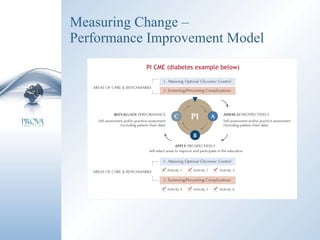
Measuring Change –  Performance Improvement Model PI CME (diabetes example below)
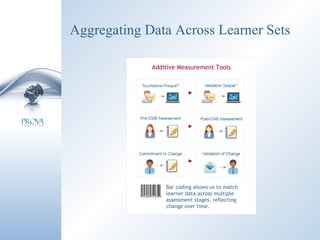
Aggregating Data Across Learner Sets Additive Measurement Tools Bar coding allows us to match learner data across multiple assessment stages, reflecting change over time.
Linking Needs Assessments to Outcomes Can outcomes be measured for all activities? Yes! All CME activities have learning objectives Outcomes measurements assess how well learning  objectives were met – or not! Standardization of evaluation forms between providers would allow for interactivity comparisons and aggregate data evaluation Developing an outcomes plan
Outcomes Measurement Methods - Examples Single activity – live Pre- and post-activity questions demonstrates change from baseline Post-activity follow-up shows retention; can be done at varying intervals BUT not ideal Case studies – allows for comparison between participants and non-participants Multiple activities All can be done, but comparisons can be made
Level of Measurement Varies Based on Approach Patient and population level change not always attainable directly Indirect measures using case studies have been shown to be accurate reflections of practice level changes All levels of measurement serve a purpose
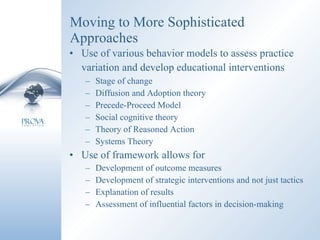
Moving to More Sophisticated Approaches Use of various behavior models to assess practice variation and develop educational interventions   Stage of change Diffusion and Adoption theory Precede-Proceed Model Social cognitive theory Theory of Reasoned Action Systems Theory Use of framework allows for Development of outcome measures Development of strategic interventions and not just tactics Explanation of results Assessment of influential factors in decision-making
Section 3 – Technology in CME/CPD
Section 3 – Technology in CME/CPD Question: What technology are you currently using in CME/CPD?
Section 3 – Technology in CME/CPD Question: What new or innovative technology has a place in CME/CPD?
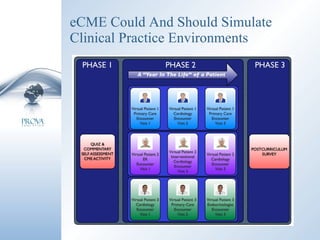
eCME Could And Should Simulate Clinical Practice Environments
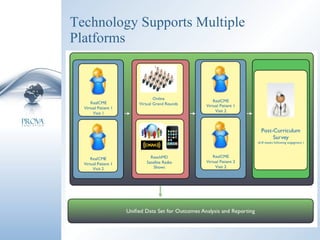
Technology Supports Multiple Platforms
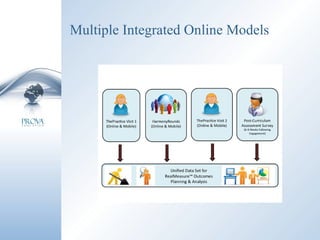
Multiple Integrated Online Models
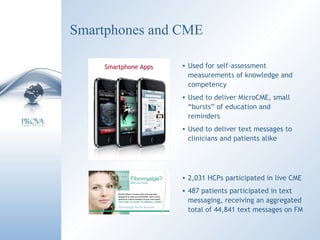
Smartphones and CME Used for self-assessment measurements of knowledge and competency Used to deliver MicroCME, small “bursts” of education and reminders Used to deliver text messages to clinicians and patients alike Smartphone Apps 2,031 HCPs participated in live CME 487 patients participated in text messaging, receiving an aggregated total of 44,841 text messages on FM
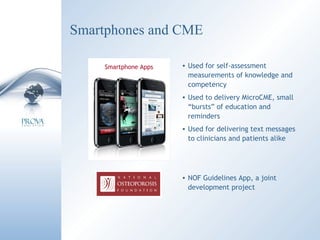
Smartphones and CME Used for self-assessment measurements of knowledge and competency Used to delivery MicroCME, small “bursts” of education and reminders Used for delivering text messages to clinicians and patients alike Smartphone Apps NOF Guidelines App, a joint development project
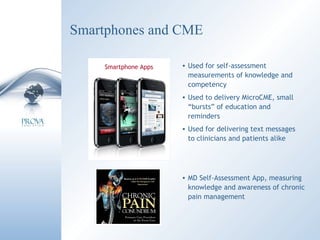
Smartphones and CME Used for self-assessment measurements of knowledge and competency Used to delivery MicroCME, small “bursts” of education and reminders Used for delivering text messages to clinicians and patients alike Smartphone Apps MD Self-Assessment App, measuring knowledge and awareness of chronic pain management
Is There A Place For Social Networking in Medicine and CME? Physicians and healthcare providers need to communicate With each other With their patients With the public With other professionals Physicians and healthcare providers represent a “community” Needs assessments and professional practice gap analyses consistently identify communications as an area of need Most importantly: know your audience! Not all physicians will want to use social networking Of course not all wanted the Internet of email either Know barriers, obstacles, and value definitions It may or may not be generational Think Prochaska readiness to change 1 1 http://www.uri.edu/research/cprc/TTM/detailedoverview.htm
Big Questions For Many Who is going to use it? Who is going to pay for it? Is it sustainable? Who can do it? Who should do it? Who will do it? Who will monitor it?
The Power Of The Platform CME can be deployed in any form (video, slideshow, podcast, etc) The community drives learning and awareness Peer-to-Peer interaction influences learning and behavior change –  Reinforcement of learning through community acceptance Immediate feedback - quality of CME product, etc
The Power Of The Platform Behavior change tracking Track over time Capture how each physician behaves, reports, and discusses the topic as time goes on Do they evangelize the technique/process/treatment/etc Do they ask about it again? vs. traditional post CME surveys (one and done)
What About Social Media and CME/CPD?
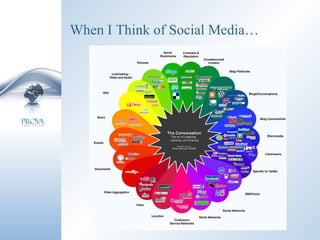
When I Think of Social Media…
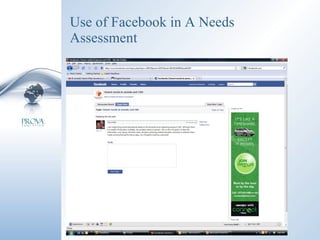
Use of Facebook in A Needs Assessment
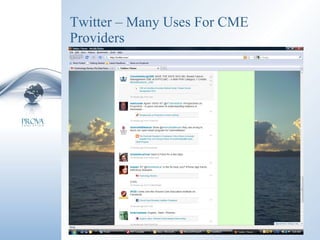
Twitter – Many Uses For CME Providers
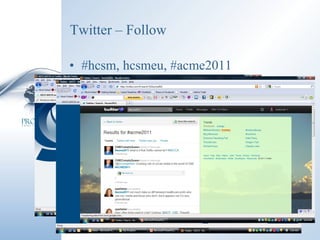
Twitter – Follow #hcsm, hcsmeu, #acme2011 @cmeadvocate, @europeancme, @meducate @asco, #asco10
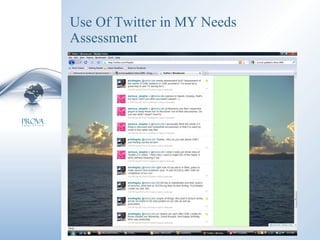
Use Of Twitter in MY Needs Assessment
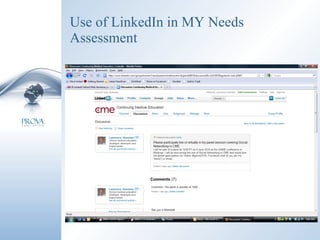
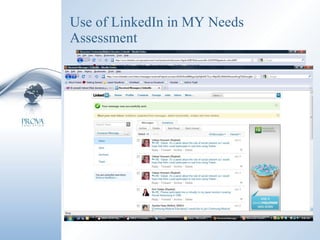
Use of LinkedIn in MY Needs Assessment
Know Your Audience – I  60% of Physicians are Interested in Physician Social Networks Manhattan Research – Taking the Pulse v8 hello
Know Your Audience - II Q1 2008 telephone and online survey of 1,832 practicing U.S. physicians Sermo and Medscape Physician Connect are the two largest physician-only online communities Each has about 100,000 users Physicians participating in such online communities are more likely to: Be primary care physicians Be female Own a PDA or smartphone Go online during or between patient consultations Be slightly younger than the average physician Manhattan Research – Taking the Pulse v8
Know Your Audience - III Examples of who is using Twitter? Government CDC FDA Specialty societies AHA NKF Healthcare providers GICareCenter GoSleepSeattle Supporters/Pharma  BI - Novartis AZ - JnJ Roche - Pfizer
Know Your Audience – IV
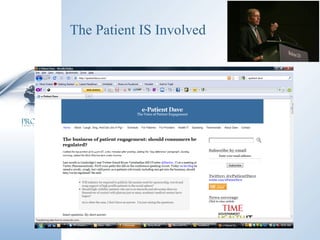
The Patient IS Involved
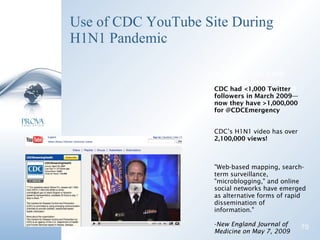
Use of CDC YouTube Site During H1N1 Pandemic CDC had less than  1,000  Twitter followers in March.  They now have over  500,000 CDC had <1,000 Twitter followers in March 2009—now they have >1,000,000 for @CDCEmergency CDC’s H1N1 video has over  2,100,000 views! &quot;Web-based mapping, search-term surveillance, &quot;microblogging,&quot; and online social networks have emerged as alternative forms of rapid dissemination of information.&quot;  New England Journal of Medicine on May 7, 2009
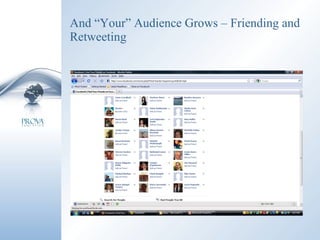
And “Your” Audience Grows – Friending and Retweeting
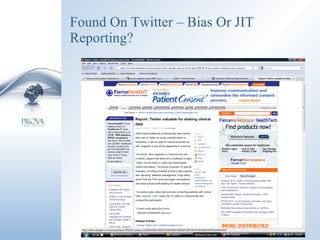
Found On Twitter – Bias Or JIT Reporting?
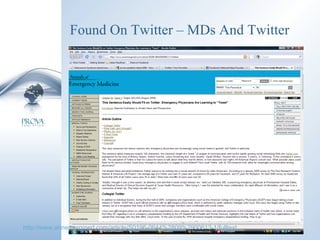
Found On Twitter – MDs And Twitter http://www.annemergmed.com/article/S0196-0644%2809%2900613-1/fulltext
Has Social Networking Existed With Different Names? Perhaps! Physicians Online – 1990s Online community through subscriptions Interactions Short of networking Medscape Huge community – global Limited interactions No networking per se Other similar groups MedPage Today Epocrates Interactions were driven by the “sites” therefore one-way What about specialty society web sites/offerings? Maybe…
Real Social Networking Emerges… SERMO Original mission: Adverse events reporting Moved quickly to: Multi-use, physician only community No advertising Funding model: selling data to pharma, govt, etc. Secondary funding model: access to CME providers for audience generation, participation, measurement Had partnership with AMA; ended in July 2009 Ozmosis Syndicom LinkedIn Others where communities already exist Add in where the community has a need Useful in CME at many levels
CME and Social Networking At the Moment The use of social networking in CME is still young Activities that have used various aspects of social networking have only recently been completed or haven’t taken place yet The initial inclusion of social networking in CME may not have been best practices Those with the data may not be sure of what they have Those with the data may not be ready to share The most empiric use of social networking in CME will be when CME providers incorporate it as an appropriate adjunct at all relevant time points in the lifecycle of CME activities and programs
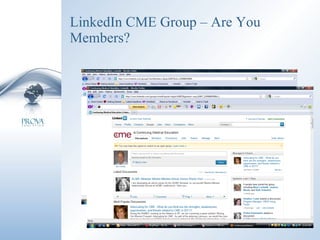
LinkedIn CME Group – Are You Members?
Section 3 – Technology in CME/CPD Question: Will technology-based CME/CPD replace some or all of live CME/CPD?
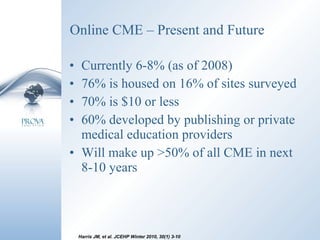
Online CME – Present and Future Currently 6-8% (as of 2008) 76% is housed on 16% of sites surveyed 70% is $10 or less 60% developed by publishing or private medical education providers Will make up >50% of all CME in next 8-10 years Harris JM, et al. JCEHP Winter 2010, 30(1) 3-10
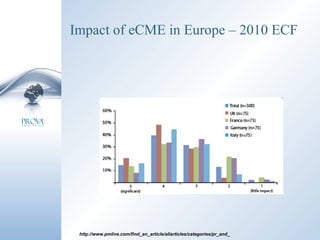
Impact of eCME in Europe – 2010 ECF http://www.pmlive.com/find_an_article/allarticles/categories/pr_and_ med_ed/2010/november/features/navigating_the_minefield
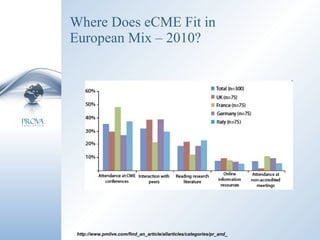
Where Does eCME Fit in  European Mix – 2010? http://www.pmlive.com/find_an_article/allarticles/categories/pr_and_ med_ed/2010/november/features/navigating_the_minefield
Section 4 – Using a Curricular Approach in CME/CPD
Section 4 – Using a Curricular Approach in CME/CPD Question:  Has CME/CPD traditionally followed a true curricular approach?
Section 4 – Using a Curricular Approach in CME/CPD Question:  What is needed to transform CME/CPD to a curricular model?
Section 4 – Using a Curricular Approach in CME/CPD Question:  Will physicians participate in CME/CPD curricula?
Section 4 – Using a Curricular Approach in CME/CPD Question:  Does a curricular approach support performance improvement in CME/CPD?
Multiple Channel Delivery is Key to Effective Reach and Impact Education should be provided to learners where learners seek education Objectives of activities should be consistent with objectives of channel
Rationale Based on linking needs data to outcomes Delivery via multiple channels Based on preferences Through collaboration where there is a known interested audience Time and budgetary benefits What is the optimum balance of channel distribution?
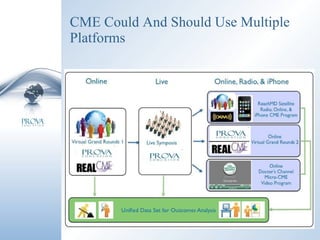
Multiple Formats Serve All Learning Styles Online  |  Smartphone  |  Print  |  Live & Workshops  |  MicroCME  |  Video
CME Could And Should Use Multiple Platforms
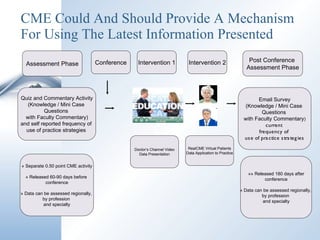
CME Could And Should Provide A Mechanism For Using The Latest Information Presented
Section 4 – Using a Curricular Approach in CME/CPD Question:  What is the best method for evaluating the overall impact of curriculum-based CME/CPD?
For Friday Question:  Is there a role for humour in CME/CPD?
Improving Healthcare  Worldwide . ProvaEducation.com

Updated new techniques

  • 1.
    Workshop Topics ImprovingHealthcare Worldwide . Assessing Needs in CME and CPD Optimizing Live CME and CPD Technology in CME and CPD Using a Curricular Approach in CME and CPD
  • 2.
    Who Am I?SVP (~16 yrs in CME overall) Prova: >500,000 hours of CME total ~70,000 hours of CME annually - Surveyor, Workshop Leader Fellow, Past MECCA Leader, ACWG Clinical Instructor – Center for Learning and Innovation/Emergency Medicine Instructor, Healthcare Communications Schools of Medicine, Public Health and Journalism Contributing Author Host – Lifelong Learning
  • 3.
    Workshop Rules Participationis encouraged and required ! We will blend small group discussions and full group interaction You are a part of the faculty! I have some slides for each section A positive outcome may be not having to use them
  • 4.
    First Question Howdo YOU define CME?
  • 5.
    Second Question Doyou think that CME differs around the world?
  • 6.
    Third Question Whatdo you hope to get out of this workshop?
  • 7.
    First – AnOverview
  • 8.
    The Current CMEEnvironment - Global The need exists Lifelong learning commitment of MDs The learners are there No consistency intra-country regarding Regulations Guidelines Physician requirements Funding varies
  • 9.
    The Current CMEEnvironment - Global Lack of accreditation standardization Barriers Overcoming time zone challenges Language disparities Varying treatment availability Varying skill and sophistication levels Ability for changes to be implemented
  • 10.
    The Current CMEEnvironment in the US CME too focused on individual conditions and not realistic patient presentation Co-morbidities covered broadly Most data-intensive with little appropriate interactivity Lack of appropriate use of Adult Learning Principles Little if any time course management Learning objectives without changes from year to year – WHY?
  • 11.
    What we seein CME is a Scatter Pattern NO STRATEGY OR LINKAGE!!! Reinvention of the wheel over and over...
  • 12.
    What we SHOULDsee is a Pattern Driving to Strategic Approach Needs Assessment Continuous Assessment Outcomes Linking activities to curriculum approach based on Needs Assessment Mixed media based on learners’ preferences, cognizant of distribution opportunities Adaptation over time “ The end is the Beginning”
  • 13.
    The 4 C’sHave Been Missing! Collaboration Collegiality Coordination Consistency
  • 14.
    Section 1 –Needs Assessments
  • 15.
    Section 1 –Needs Assessments Question: How Do You Currently Assess The CME/CPD Needs of Learners?
  • 16.
    Section 1 –Needs Assessments Question: What More Could Be Done To Assess CME/CPD Needs?
  • 17.
    Needs Assessment “BestPractices”* Elements and qualities Multi-faceted Uses frameworks or theory Exploring various perspectives Use of objective and subjective data Primary and secondary sources of information Identified educable gaps “ Needs Assessment” means different things to different people – so “Best Practices” vary And that’s OK! *Note: this is not exhaustive list!
  • 18.
    The Needs AssessmentMust go far beyond literature review Validation of educational methodology Rationale for recommendation of tactic(s) Don’t just ask academics/KOLs Look for geographic needs and variations Assess learning preferences Channel preferences are key Real-time vs. archived
  • 19.
    What Should aNeeds Assessment Contain? Educational gaps Disparities Learning style preferences Where the learners are or where they go for education Geographic variations Clinical and non-clinical information Competitive CME landscape
  • 20.
    What Should aNeeds Assessment Contain? - II Are other activities working? Why or why not? More than just KOL opinions Who should teach Who should not teach Who needs to learn and how When should the activity take place
  • 21.
    The Components EvidenceLiterature Interviews Evaluations Medical records Preferences Media Modalities Channels Environment Competitive activities Non-competitive activities
  • 22.
    Survey Finding: ClinicalDecision-Making P = 0.02 Foster JA, et al. Med Gen Med. 2007;9(3):24 PCPs most commonly chose an inhaled corticosteroid as initial therapy for a patient with mild COPD. This choice that would be guideline consistent for asthma, but not COPD, suggesting confusion about key differences between these 2 common lung diseases. PCPs who are guideline users appear more likely to offer treatment and utilize long-acting bronchodilators for patients with mild COPD. Initial Pharmacotherapy for Mild COPD
  • 23.
    Geographic Analysis *Datapresented at ATS Annual meeting May 24, 2008
  • 24.
    Preferences of LiveMeetings By Age Group Local dinner meetings preferred by oldest group (72%)
  • 25.
    In a SettingWhere Needs Have Changed OR in a Serial Learning Environment Broader objectives can still apply May need to be adjusted accordingly Primarily in the case of multiple activities Ongoing assessments  re-evaluation of needs  updating of objectives
  • 26.
    Section 2 –Optimizing Live CME/CPD
  • 27.
    Section 2 –Optimizing Live CME/CPD Question: Is All Live CME/CPD The Same?
  • 28.
    Live CME –The Location Global International National Regional Local Approach to education in each environment is different
  • 29.
    Live Example: FromGuideline to Practice ™ Education dedicated exclusively to current and new guidelines Multi-supported, multi-topic, regional CME series Learners explore critical recommendations for improving patient care in the primary care setting Interactive and engaging series addressing a multitude of challenges and practice barriers
  • 30.
    Interact With TheAudience Validate needs assessments Pre-activity questions Competence Confidence Use audience response technology appropriately Post-activity questions Repeat questions and show change
  • 31.
    Mix Audiences CollaborativeForum Care team approach Oncology example – Tumor Board model Multiple specialists ACS example – ED, Interventional Cardiology, Clinical Cardiology NSCLC example – Oncology, Pathology Use audience response to measure Concordance and discordance
  • 32.
    Section 2 –Optimizing Live CME/CPD Question: How Are You Enhancing The Learning Environment in Live CME/CPD?
  • 33.
    Section 2 –Optimizing Live CME/CPD Question: How Are You Measuring Outcomes in Live CME/CPD?
  • 34.
    Outcomes Measurement TechniquesEvaluation/Surveys Standardization Live meeting example(s) Pre- and post-activity questioning Post-activity surveys Case-control matching Live activities Enduring materials eCME mCME Patient-level data evaluation
  • 35.
    Rethinking Outcomes Participation:how many attended? Satisfaction: did they like it? Knowledge: did anybody learn? Declarative knowledge (knows what should be done) Procedural knowledge (knows how it should be done) Competence: can anybody do what they learned? Shows how to do it in an educational setting Performance: did behavior change? Actually does it in practice Patient health: did it improve? Population health: did it improve? Courtesy of Don Moore, PhD
  • 36.
    Measuring Change –Outcomes Levels We Measure Performance-based CME
  • 37.
    Levels of Outcomes-basedCME Evaluation Model* *Davis, D, Barnes, BE, & Fox, R (2003). The Continuing Professional Development of Physicians, From Research to Practice. AMA Press. P.251 Number of physicians/others who registered and attended Degree to which participant expectations about the setting/delivery of CME activity were met Changes in knowledge, skills, and/or attitudes of the participants Changes knowledge, skills and behavior utilized to improve performance Changes in practice performance as a result of the application of what was learned. Impact on patient health status due to practice behavior changes Impact on population health status due to changes in practice behavior Participation Satisfaction Learning Competence Performance Patient Health Population Health 1 2 3 4 5 6 7 Level Outcome Definition
  • 38.
    Measuring Change – Performance Improvement Model PI CME (diabetes example below)
  • 39.
    Aggregating Data AcrossLearner Sets Additive Measurement Tools Bar coding allows us to match learner data across multiple assessment stages, reflecting change over time.
  • 40.
    Linking Needs Assessmentsto Outcomes Can outcomes be measured for all activities? Yes! All CME activities have learning objectives Outcomes measurements assess how well learning objectives were met – or not! Standardization of evaluation forms between providers would allow for interactivity comparisons and aggregate data evaluation Developing an outcomes plan
  • 41.
    Outcomes Measurement Methods- Examples Single activity – live Pre- and post-activity questions demonstrates change from baseline Post-activity follow-up shows retention; can be done at varying intervals BUT not ideal Case studies – allows for comparison between participants and non-participants Multiple activities All can be done, but comparisons can be made
  • 42.
    Level of MeasurementVaries Based on Approach Patient and population level change not always attainable directly Indirect measures using case studies have been shown to be accurate reflections of practice level changes All levels of measurement serve a purpose
  • 43.
    Moving to MoreSophisticated Approaches Use of various behavior models to assess practice variation and develop educational interventions Stage of change Diffusion and Adoption theory Precede-Proceed Model Social cognitive theory Theory of Reasoned Action Systems Theory Use of framework allows for Development of outcome measures Development of strategic interventions and not just tactics Explanation of results Assessment of influential factors in decision-making
  • 44.
    Section 3 –Technology in CME/CPD
  • 45.
    Section 3 –Technology in CME/CPD Question: What technology are you currently using in CME/CPD?
  • 46.
    Section 3 –Technology in CME/CPD Question: What new or innovative technology has a place in CME/CPD?
  • 47.
    eCME Could AndShould Simulate Clinical Practice Environments
  • 48.
  • 49.
  • 50.
    Smartphones and CMEUsed for self-assessment measurements of knowledge and competency Used to deliver MicroCME, small “bursts” of education and reminders Used to deliver text messages to clinicians and patients alike Smartphone Apps 2,031 HCPs participated in live CME 487 patients participated in text messaging, receiving an aggregated total of 44,841 text messages on FM
  • 51.
    Smartphones and CMEUsed for self-assessment measurements of knowledge and competency Used to delivery MicroCME, small “bursts” of education and reminders Used for delivering text messages to clinicians and patients alike Smartphone Apps NOF Guidelines App, a joint development project
  • 52.
    Smartphones and CMEUsed for self-assessment measurements of knowledge and competency Used to delivery MicroCME, small “bursts” of education and reminders Used for delivering text messages to clinicians and patients alike Smartphone Apps MD Self-Assessment App, measuring knowledge and awareness of chronic pain management
  • 53.
    Is There APlace For Social Networking in Medicine and CME? Physicians and healthcare providers need to communicate With each other With their patients With the public With other professionals Physicians and healthcare providers represent a “community” Needs assessments and professional practice gap analyses consistently identify communications as an area of need Most importantly: know your audience! Not all physicians will want to use social networking Of course not all wanted the Internet of email either Know barriers, obstacles, and value definitions It may or may not be generational Think Prochaska readiness to change 1 1 http://www.uri.edu/research/cprc/TTM/detailedoverview.htm
  • 54.
    Big Questions ForMany Who is going to use it? Who is going to pay for it? Is it sustainable? Who can do it? Who should do it? Who will do it? Who will monitor it?
  • 55.
    The Power OfThe Platform CME can be deployed in any form (video, slideshow, podcast, etc) The community drives learning and awareness Peer-to-Peer interaction influences learning and behavior change – Reinforcement of learning through community acceptance Immediate feedback - quality of CME product, etc
  • 56.
    The Power OfThe Platform Behavior change tracking Track over time Capture how each physician behaves, reports, and discusses the topic as time goes on Do they evangelize the technique/process/treatment/etc Do they ask about it again? vs. traditional post CME surveys (one and done)
  • 57.
    What About SocialMedia and CME/CPD?
  • 58.
    When I Thinkof Social Media…
  • 59.
    Use of Facebookin A Needs Assessment
  • 60.
    Twitter – ManyUses For CME Providers
  • 61.
    Twitter – Follow#hcsm, hcsmeu, #acme2011 @cmeadvocate, @europeancme, @meducate @asco, #asco10
  • 62.
    Use Of Twitterin MY Needs Assessment
  • 63.
    Use of LinkedInin MY Needs Assessment
  • 64.
    Use of LinkedInin MY Needs Assessment
  • 65.
    Know Your Audience– I 60% of Physicians are Interested in Physician Social Networks Manhattan Research – Taking the Pulse v8 hello
  • 66.
    Know Your Audience- II Q1 2008 telephone and online survey of 1,832 practicing U.S. physicians Sermo and Medscape Physician Connect are the two largest physician-only online communities Each has about 100,000 users Physicians participating in such online communities are more likely to: Be primary care physicians Be female Own a PDA or smartphone Go online during or between patient consultations Be slightly younger than the average physician Manhattan Research – Taking the Pulse v8
  • 67.
    Know Your Audience- III Examples of who is using Twitter? Government CDC FDA Specialty societies AHA NKF Healthcare providers GICareCenter GoSleepSeattle Supporters/Pharma BI - Novartis AZ - JnJ Roche - Pfizer
  • 68.
  • 69.
  • 70.
    Use of CDCYouTube Site During H1N1 Pandemic CDC had less than 1,000 Twitter followers in March. They now have over 500,000 CDC had <1,000 Twitter followers in March 2009—now they have >1,000,000 for @CDCEmergency CDC’s H1N1 video has over 2,100,000 views! &quot;Web-based mapping, search-term surveillance, &quot;microblogging,&quot; and online social networks have emerged as alternative forms of rapid dissemination of information.&quot; New England Journal of Medicine on May 7, 2009
  • 71.
    And “Your” AudienceGrows – Friending and Retweeting
  • 72.
    Found On Twitter– Bias Or JIT Reporting?
  • 73.
    Found On Twitter– MDs And Twitter http://www.annemergmed.com/article/S0196-0644%2809%2900613-1/fulltext
  • 74.
    Has Social NetworkingExisted With Different Names? Perhaps! Physicians Online – 1990s Online community through subscriptions Interactions Short of networking Medscape Huge community – global Limited interactions No networking per se Other similar groups MedPage Today Epocrates Interactions were driven by the “sites” therefore one-way What about specialty society web sites/offerings? Maybe…
  • 75.
    Real Social NetworkingEmerges… SERMO Original mission: Adverse events reporting Moved quickly to: Multi-use, physician only community No advertising Funding model: selling data to pharma, govt, etc. Secondary funding model: access to CME providers for audience generation, participation, measurement Had partnership with AMA; ended in July 2009 Ozmosis Syndicom LinkedIn Others where communities already exist Add in where the community has a need Useful in CME at many levels
  • 76.
    CME and SocialNetworking At the Moment The use of social networking in CME is still young Activities that have used various aspects of social networking have only recently been completed or haven’t taken place yet The initial inclusion of social networking in CME may not have been best practices Those with the data may not be sure of what they have Those with the data may not be ready to share The most empiric use of social networking in CME will be when CME providers incorporate it as an appropriate adjunct at all relevant time points in the lifecycle of CME activities and programs
  • 77.
    LinkedIn CME Group– Are You Members?
  • 78.
    Section 3 –Technology in CME/CPD Question: Will technology-based CME/CPD replace some or all of live CME/CPD?
  • 79.
    Online CME –Present and Future Currently 6-8% (as of 2008) 76% is housed on 16% of sites surveyed 70% is $10 or less 60% developed by publishing or private medical education providers Will make up >50% of all CME in next 8-10 years Harris JM, et al. JCEHP Winter 2010, 30(1) 3-10
  • 80.
    Impact of eCMEin Europe – 2010 ECF http://www.pmlive.com/find_an_article/allarticles/categories/pr_and_ med_ed/2010/november/features/navigating_the_minefield
  • 81.
    Where Does eCMEFit in European Mix – 2010? http://www.pmlive.com/find_an_article/allarticles/categories/pr_and_ med_ed/2010/november/features/navigating_the_minefield
  • 82.
    Section 4 –Using a Curricular Approach in CME/CPD
  • 83.
    Section 4 –Using a Curricular Approach in CME/CPD Question: Has CME/CPD traditionally followed a true curricular approach?
  • 84.
    Section 4 –Using a Curricular Approach in CME/CPD Question: What is needed to transform CME/CPD to a curricular model?
  • 85.
    Section 4 –Using a Curricular Approach in CME/CPD Question: Will physicians participate in CME/CPD curricula?
  • 86.
    Section 4 –Using a Curricular Approach in CME/CPD Question: Does a curricular approach support performance improvement in CME/CPD?
  • 87.
    Multiple Channel Deliveryis Key to Effective Reach and Impact Education should be provided to learners where learners seek education Objectives of activities should be consistent with objectives of channel
  • 88.
    Rationale Based onlinking needs data to outcomes Delivery via multiple channels Based on preferences Through collaboration where there is a known interested audience Time and budgetary benefits What is the optimum balance of channel distribution?
  • 89.
    Multiple Formats ServeAll Learning Styles Online | Smartphone | Print | Live & Workshops | MicroCME | Video
  • 90.
    CME Could AndShould Use Multiple Platforms
  • 91.
    CME Could AndShould Provide A Mechanism For Using The Latest Information Presented
  • 92.
    Section 4 –Using a Curricular Approach in CME/CPD Question: What is the best method for evaluating the overall impact of curriculum-based CME/CPD?
  • 93.
    For Friday Question: Is there a role for humour in CME/CPD?
  • 94.
    Improving Healthcare Worldwide . ProvaEducation.com