
STERILIZATION
1
Sterilization – DefinitionSterilization – Definition
Sterilization is defined as the process by
which an article, surface, or medium is
free of all living organism either vegetative
or spore form.
17/10/2013 2
Commonly used methods of sterilization:
Moist Heat
Dry Heat(i.e use of sterelizing ovens or depyrogenating
tunnels for contineous sterelization)
Gaseous (Ethylene oxide)
Radiation (Gamma or Electron)
Filtration
Others - UV, Steam and formaldehyde, hydrogen
peroxide
Note: All sterilizing equipments should be validated
before use
3
Moist Heat SterilizationMoist Heat Sterilization
(Saturated Steam)(Saturated Steam)
 Common cycles:
 121°C for 15 minutes
 134°C for 3 minutes is required but 121°C for 30
minutes is used in practice
 The special precaution taken – air must be displaced
from the chamber & from the materials within the
chamber before the cycle begins
 Terminal sterilization of aqueous injections,
ophthalmic preparations, irrigation & haemo dialysis
solutions, equipment used in aseptic processing
4
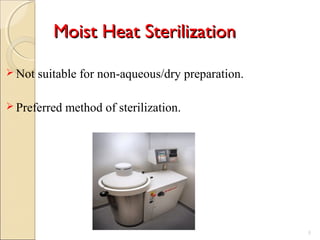
Moist Heat SterilizationMoist Heat Sterilization
 Not suitable for non-aqueous/dry preparation.
 Preferred method of sterilization.
5
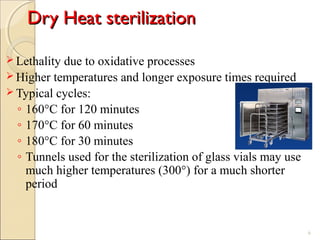
Dry Heat sterilizationDry Heat sterilization
 Lethality due to oxidative processes
 Higher temperatures and longer exposure times required
 Typical cycles:
◦ 160°C for 120 minutes
◦ 170°C for 60 minutes
◦ 180°C for 30 minutes
◦ Tunnels used for the sterilization of glass vials may use
much higher temperatures (300°) for a much shorter
period
6
Dry Heat sterilizationDry Heat sterilization
 Used for
Glassware and product containers used in aseptic
manufacture, non aqueous thermostable powders
and liquids
 Used for depyrogenation of glassware (≥250°C)
7
Gaseous sterilization: Ethylene OxideGaseous sterilization: Ethylene Oxide
 Either pure or in mixtures with other inert gases
 Requires presence of moisture
 Complex process because direct contact between microbial cell &gas
must be eshtablished.
 Each sterilization cycle monitored with suitable biological indicators
which are appropriatly distributed
◦ 1-24 hours
◦ 25-1200 mg/L gas
◦ 25-65°C
◦ 30-85% relative humidity
8
Ethylene OxideEthylene Oxide
Used for
◦ Heat labile product containers
◦ Surface sterilization of powders
Adequate aeration to reduce toxic residues
9
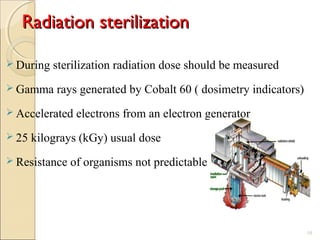
Radiation sterilizationRadiation sterilization
 During sterilization radiation dose should be measured
 Gamma rays generated by Cobalt 60 ( dosimetry indicators)
 Accelerated electrons from an electron generator
 25 kilograys (kGy) usual dose
 Resistance of organisms not predictable
10
 Process must be properly validated
 Used for:
◦ Dry pharmaceutical products
◦ Heat sensitive materials & product containers
 Total radiation dose should be admin. Within pre-
determined time span
11
FiltrationFiltration
 Removes organisms from liquids and gases sterilized by
sterile filter
 0.2 - 0.22 micron for sterilization
 Composed of cellulose esters or other polymeric materials
 Filter material must be compatible with liquid being filtered
 Sterilizing filters considered as starting material &
subjected to quality control test before being used
12
Thank You!Thank You!
03/17/14 13

Sterelization

  • 1.
  • 2.
    Sterilization – DefinitionSterilization– Definition Sterilization is defined as the process by which an article, surface, or medium is free of all living organism either vegetative or spore form. 17/10/2013 2
  • 3.
    Commonly used methodsof sterilization: Moist Heat Dry Heat(i.e use of sterelizing ovens or depyrogenating tunnels for contineous sterelization) Gaseous (Ethylene oxide) Radiation (Gamma or Electron) Filtration Others - UV, Steam and formaldehyde, hydrogen peroxide Note: All sterilizing equipments should be validated before use 3
  • 4.
    Moist Heat SterilizationMoistHeat Sterilization (Saturated Steam)(Saturated Steam)  Common cycles:  121°C for 15 minutes  134°C for 3 minutes is required but 121°C for 30 minutes is used in practice  The special precaution taken – air must be displaced from the chamber & from the materials within the chamber before the cycle begins  Terminal sterilization of aqueous injections, ophthalmic preparations, irrigation & haemo dialysis solutions, equipment used in aseptic processing 4
  • 5.
    Moist Heat SterilizationMoistHeat Sterilization  Not suitable for non-aqueous/dry preparation.  Preferred method of sterilization. 5
  • 6.
    Dry Heat sterilizationDryHeat sterilization  Lethality due to oxidative processes  Higher temperatures and longer exposure times required  Typical cycles: ◦ 160°C for 120 minutes ◦ 170°C for 60 minutes ◦ 180°C for 30 minutes ◦ Tunnels used for the sterilization of glass vials may use much higher temperatures (300°) for a much shorter period 6
  • 7.
    Dry Heat sterilizationDryHeat sterilization  Used for Glassware and product containers used in aseptic manufacture, non aqueous thermostable powders and liquids  Used for depyrogenation of glassware (≥250°C) 7
  • 8.
    Gaseous sterilization: EthyleneOxideGaseous sterilization: Ethylene Oxide  Either pure or in mixtures with other inert gases  Requires presence of moisture  Complex process because direct contact between microbial cell &gas must be eshtablished.  Each sterilization cycle monitored with suitable biological indicators which are appropriatly distributed ◦ 1-24 hours ◦ 25-1200 mg/L gas ◦ 25-65°C ◦ 30-85% relative humidity 8
  • 9.
    Ethylene OxideEthylene Oxide Usedfor ◦ Heat labile product containers ◦ Surface sterilization of powders Adequate aeration to reduce toxic residues 9
  • 10.
    Radiation sterilizationRadiation sterilization During sterilization radiation dose should be measured  Gamma rays generated by Cobalt 60 ( dosimetry indicators)  Accelerated electrons from an electron generator  25 kilograys (kGy) usual dose  Resistance of organisms not predictable 10
  • 11.
     Process mustbe properly validated  Used for: ◦ Dry pharmaceutical products ◦ Heat sensitive materials & product containers  Total radiation dose should be admin. Within pre- determined time span 11
  • 12.
    FiltrationFiltration  Removes organismsfrom liquids and gases sterilized by sterile filter  0.2 - 0.22 micron for sterilization  Composed of cellulose esters or other polymeric materials  Filter material must be compatible with liquid being filtered  Sterilizing filters considered as starting material & subjected to quality control test before being used 12
  • 13.