Chris Haddad
Chief Architect
haddadc@karux.net
@cobiacomm
STEAMPUNK APP SERVERS IN A
MICROSERVICES AGE
• Why evolve?
• What architectural design patterns to adopt?
• What reference architecture to target?
• How to establish on-demand services?
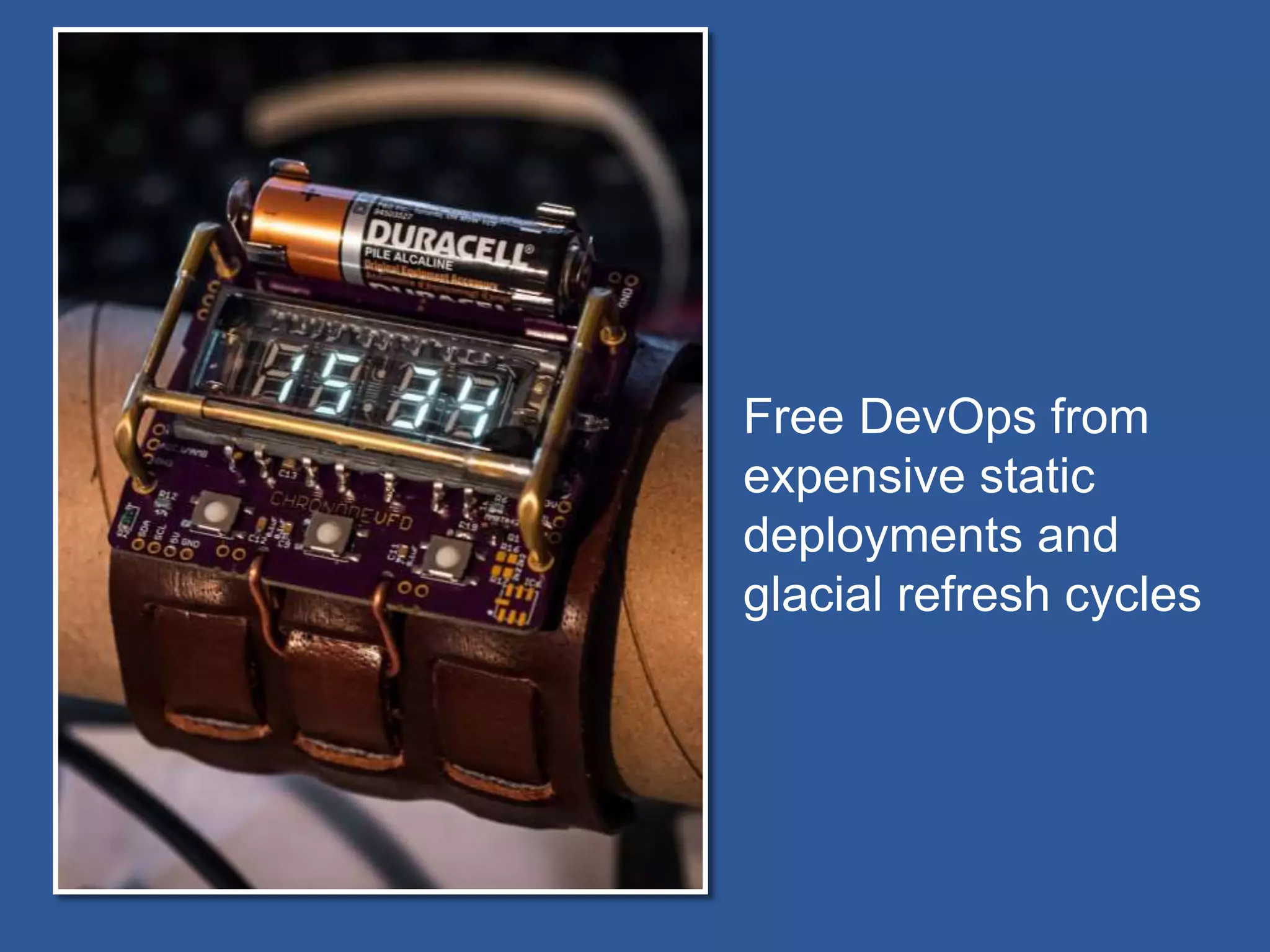
Free DevOps from
expensive static
deployments and
glacial refresh cycles
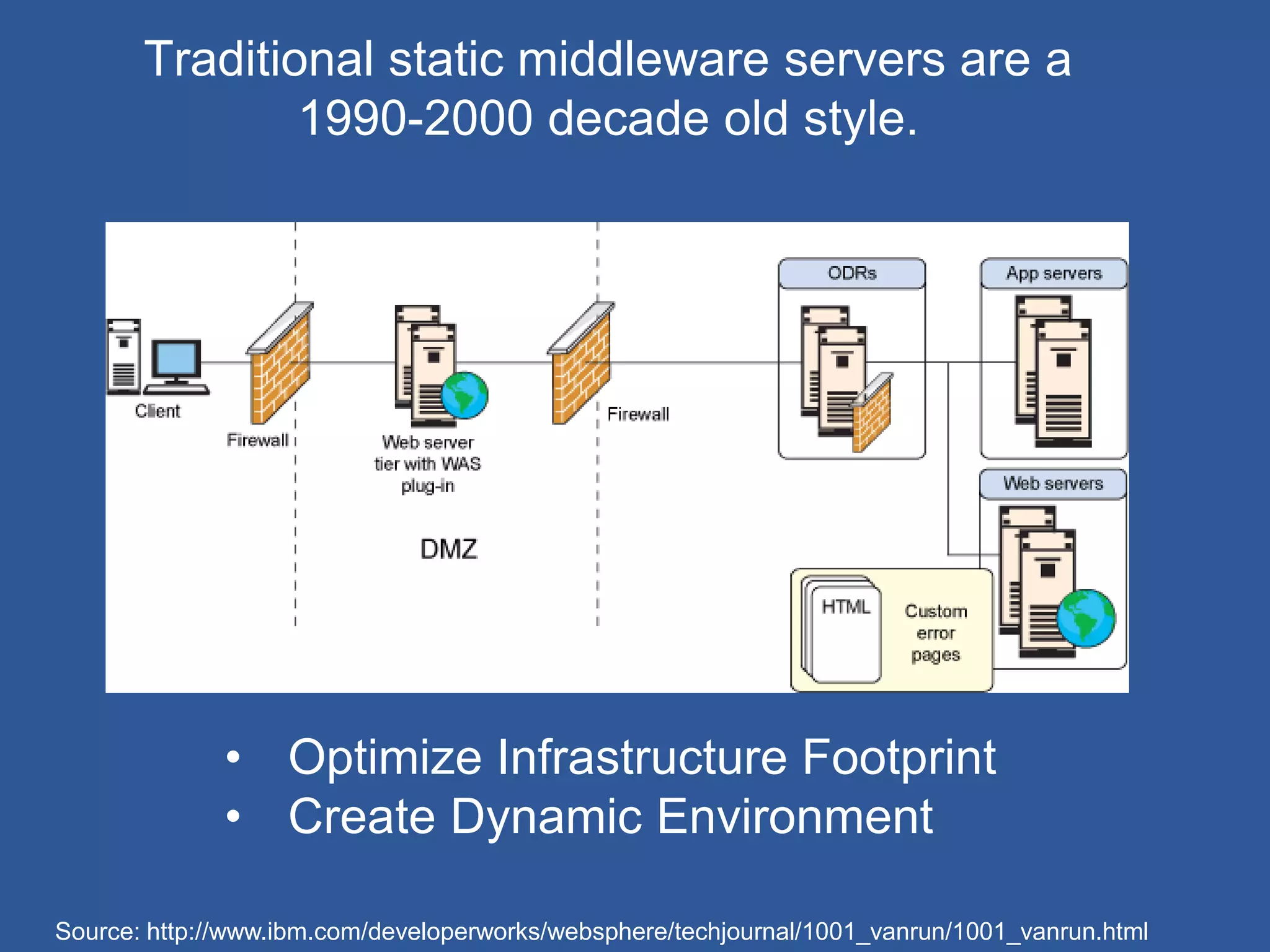
Traditional static middleware servers are a
1990-2000 decade old style.
Source: http://www.ibm.com/developerworks/websphere/techjournal/1001_vanrun/1001_vanrun.html
• Optimize Infrastructure Footprint
• Create Dynamic Environment
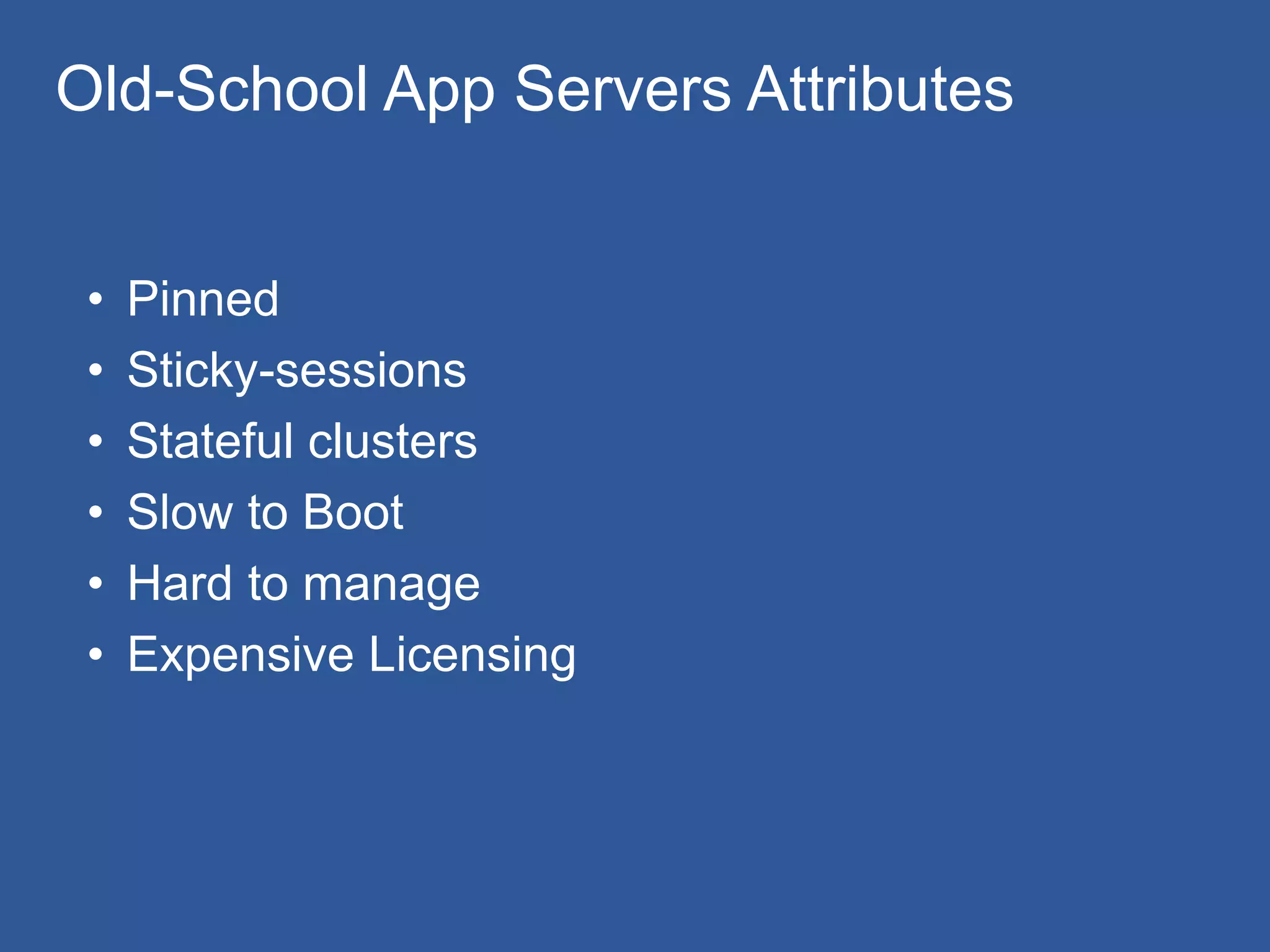
• Pinned
• Sticky-sessions
• Stateful clusters
• Slow to Boot
• Hard to manage
• Expensive Licensing
Old-School App Servers Attributes
• Why Evolve?
• What architectural design patterns?
• What reference architecture?
• How to establish on-demand services?
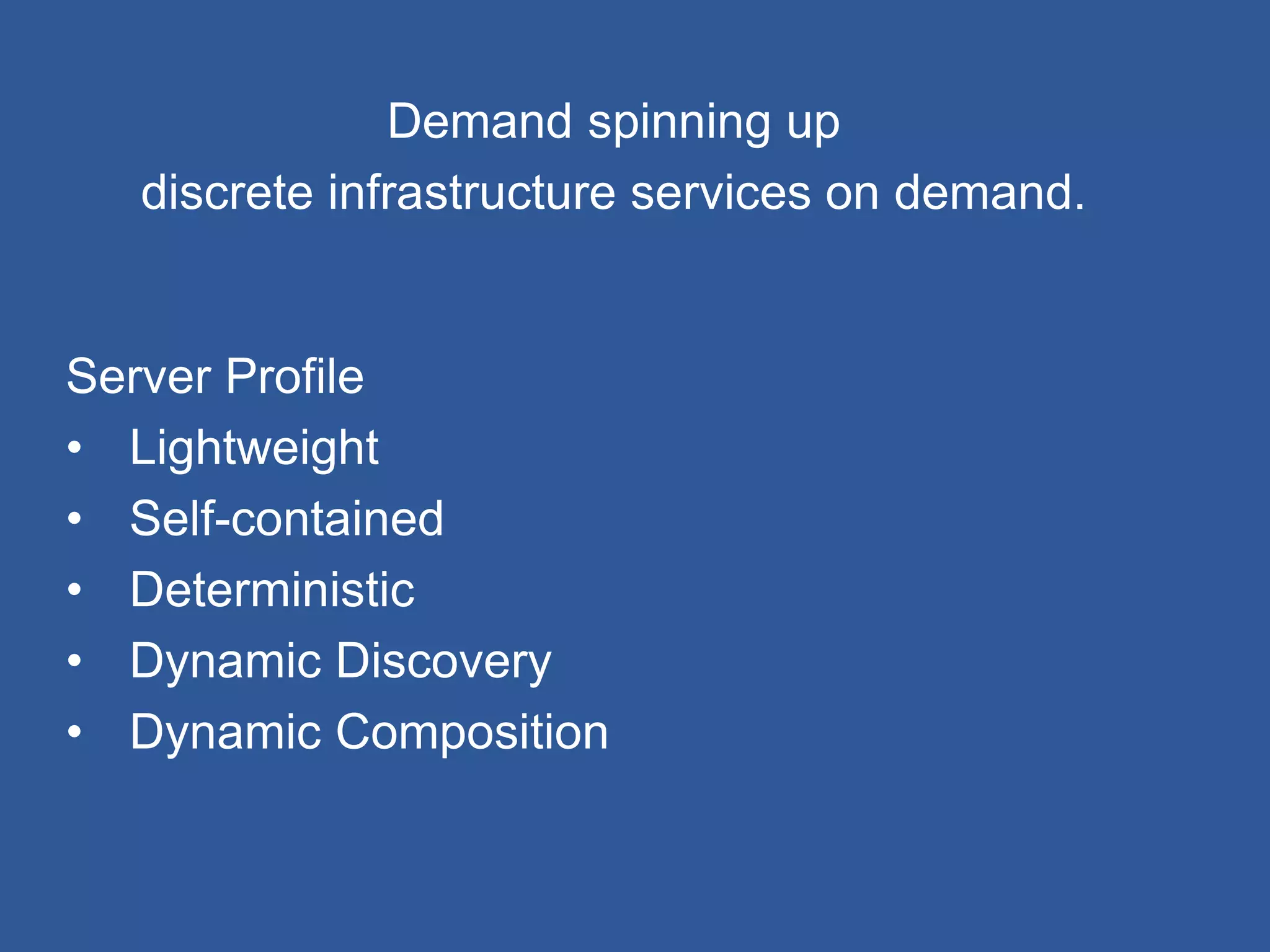
Demand spinning up
discrete infrastructure services on demand.
Server Profile
• Lightweight
• Self-contained
• Deterministic
• Dynamic Discovery
• Dynamic Composition
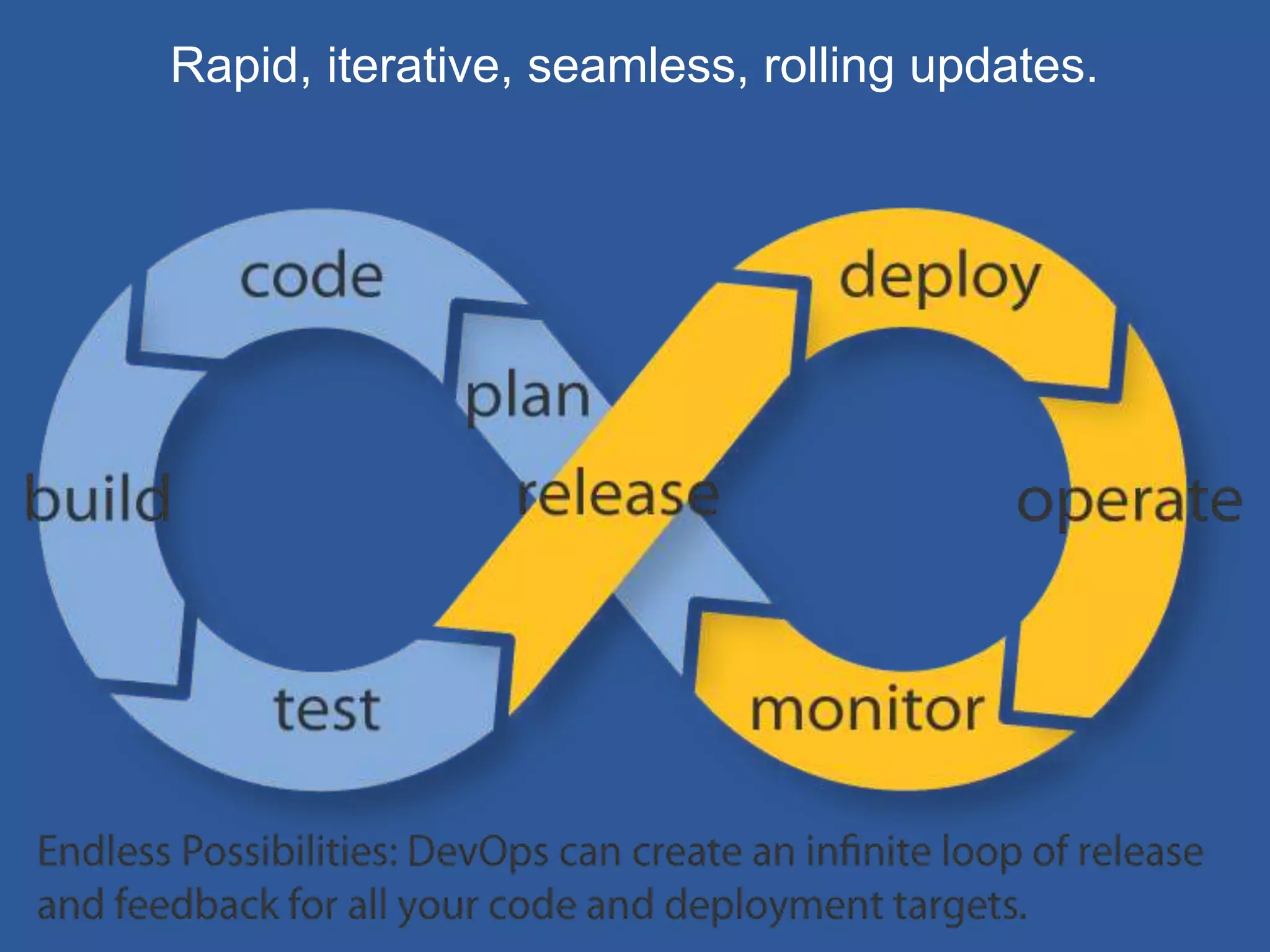
Rapid, iterative, seamless, rolling updates.
Microservices, containerized, DevOps
CLOUD-NATIVE
Learn more at https://cncf.io/
Requires a next generation stack
MICROSERVICES
• Service Discovery
• Service Monitoring
• Circuit Breakers
• Full-Stack Templates
Distributed, containerized
CONTAINERIZED
• Rapid container provisioning
• Software defined networking
• Scaling policies
• Full-stack templates
NEW APPLICATION SERVER
• Self-contained, Lightweight, Minimalistic
• Service-Oriented, API-Friendly
• Powerful transport module
• Configuration Management
• Bootstrapping , dependency and Lifecycle
Management
• Runtime Insights and Diagnostics
• Service discovery
Spring Boot
http://projects.spring.io/spring-boot/
DropWizard
https://dropwizard.github.io/dropwizard/index.html
NetFlix Karyon
https://github.com/Netflix/karyon
• Why Evolve?
• What architectural design patterns?
• What reference architecture?
• How to establish on-demand services?
• Why Evolve?
• What architectural design patterns?
• What reference architecture?
• How to establish on-demand services?
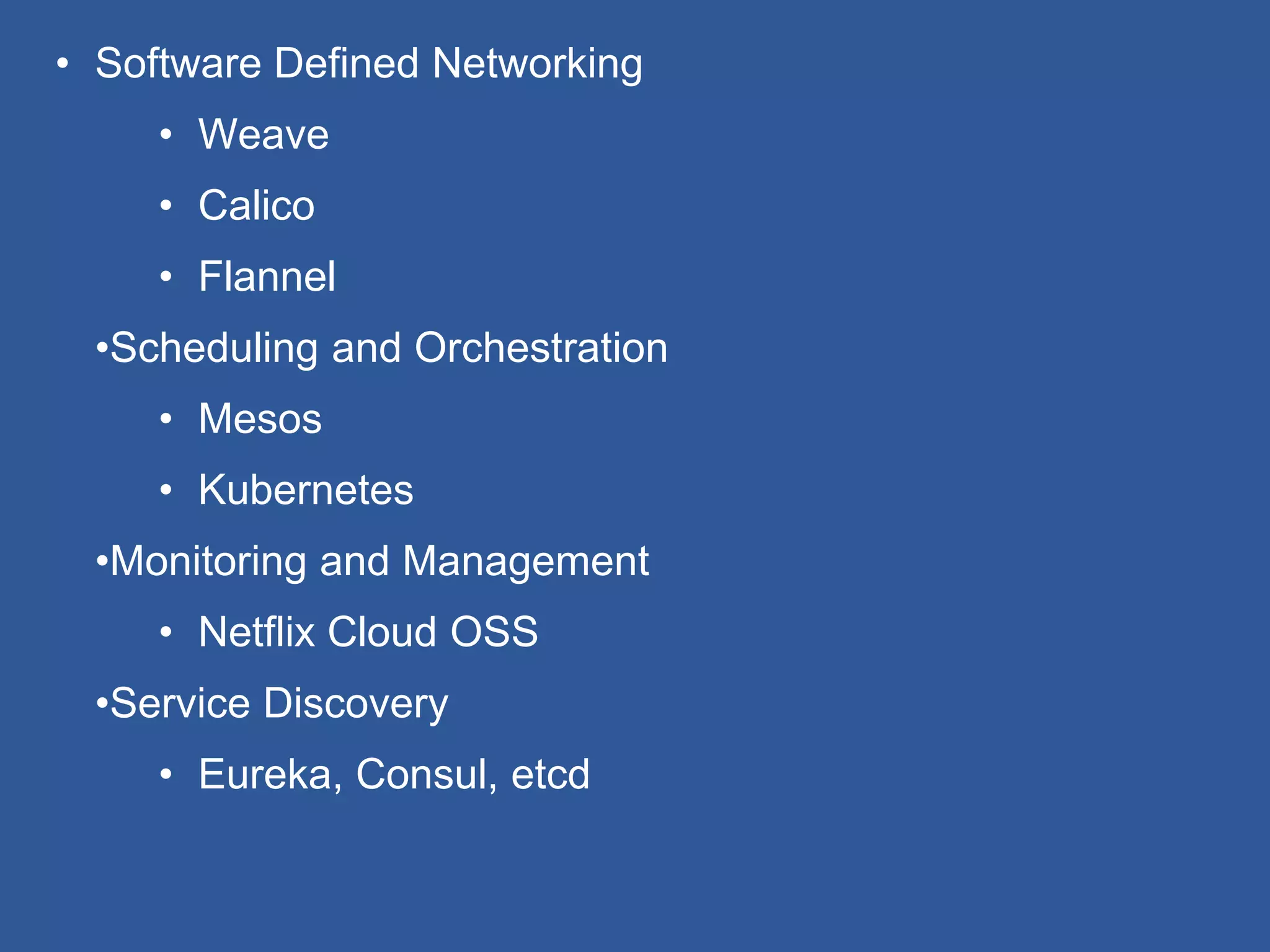
• Software Defined Networking
• Weave
• Calico
• Flannel
•Scheduling and Orchestration
• Mesos
• Kubernetes
•Monitoring and Management
• Netflix Cloud OSS
•Service Discovery
• Eureka, Consul, etcd
WHO IS KARUX?
Re-Shape Architecture
Re-Fresh Platform
Re-invent Team Collaboration
http://karux.net

Steampunk App Servers in

  • 1.
  • 2.
    • Why evolve? •What architectural design patterns to adopt? • What reference architecture to target? • How to establish on-demand services?
  • 3.
    Free DevOps from expensivestatic deployments and glacial refresh cycles
  • 4.
    Traditional static middlewareservers are a 1990-2000 decade old style. Source: http://www.ibm.com/developerworks/websphere/techjournal/1001_vanrun/1001_vanrun.html • Optimize Infrastructure Footprint • Create Dynamic Environment
  • 5.
    • Pinned • Sticky-sessions •Stateful clusters • Slow to Boot • Hard to manage • Expensive Licensing Old-School App Servers Attributes
  • 6.
    • Why Evolve? •What architectural design patterns? • What reference architecture? • How to establish on-demand services?
  • 7.
    Demand spinning up discreteinfrastructure services on demand. Server Profile • Lightweight • Self-contained • Deterministic • Dynamic Discovery • Dynamic Composition
  • 8.
  • 9.
  • 10.
    Requires a nextgeneration stack MICROSERVICES • Service Discovery • Service Monitoring • Circuit Breakers • Full-Stack Templates
  • 11.
    Distributed, containerized CONTAINERIZED • Rapidcontainer provisioning • Software defined networking • Scaling policies • Full-stack templates
  • 12.
    NEW APPLICATION SERVER •Self-contained, Lightweight, Minimalistic • Service-Oriented, API-Friendly • Powerful transport module • Configuration Management • Bootstrapping , dependency and Lifecycle Management • Runtime Insights and Diagnostics • Service discovery Spring Boot http://projects.spring.io/spring-boot/ DropWizard https://dropwizard.github.io/dropwizard/index.html NetFlix Karyon https://github.com/Netflix/karyon
  • 13.
    • Why Evolve? •What architectural design patterns? • What reference architecture? • How to establish on-demand services?
  • 15.
    • Why Evolve? •What architectural design patterns? • What reference architecture? • How to establish on-demand services?
  • 16.
    • Software DefinedNetworking • Weave • Calico • Flannel •Scheduling and Orchestration • Mesos • Kubernetes •Monitoring and Management • Netflix Cloud OSS •Service Discovery • Eureka, Consul, etcd
  • 17.
    WHO IS KARUX? Re-ShapeArchitecture Re-Fresh Platform Re-invent Team Collaboration http://karux.net

Editor's Notes

  • #3 * Why traditional middleware servers must evolve into dynamic infrastructure services * What Cloud-native, microservices friendly architectural design patterns force teams to rethink integration and application hosting platforms * What reference architecture ensures successful microservices projects * How teams can establish DevOps workflows that support on-demand infrastructure services
  • #4  Credits: J. M. De Cristofaro aka Johngineer must be having a great week. He recently shared his custom made wristwatch, the ChronodeVFD, and its simple yet eye-catching design has earned the approval of the Internet, including no less than the cyberpunk lord William Gibson. One look at it and you’ll see why it’s gone viral.
  • #5  http://www.ibm.com/developerworks/websphere/techjournal/1001_vanrun/1001_vanrun.html
  • #7 * Why traditional middleware servers must evolve into dynamic infrastructure services * What Cloud-native, microservices friendly architectural design patterns force teams to rethink integration and application hosting platforms * What reference architecture ensures successful microservices projects * How teams can establish DevOps workflows that support on-demand infrastructure services
  • #11 https://netflix.github.io/
  • #13  DropWizard https://dropwizard.github.io/dropwizard/index.html Dropwizard has out-of-the-box support for sophisticated configuration, application metrics, logging, operational tools, and much more, allowing you and your team to ship a production-quality web service in the shortest time possible. Spring Boot http://projects.spring.io/spring-boot/ Create stand-alone Spring applications Embed Tomcat, Jetty or Undertow directly (no need to deploy WAR files) Provide opinionated 'starter' POMs to simplify your Maven configuration Automatically configure Spring whenever possible Provide production-ready features such as metrics, health checks and externalized configuration Absolutely no code generation and no requirement for XML configuration
  • #14 * Why traditional middleware servers must evolve into dynamic infrastructure services * What Cloud-native, microservices friendly architectural design patterns force teams to rethink integration and application hosting platforms * What reference architecture ensures successful microservices projects * How teams can establish DevOps workflows that support on-demand infrastructure services
  • #16 * Why traditional middleware servers must evolve into dynamic infrastructure services * What Cloud-native, microservices friendly architectural design patterns force teams to rethink integration and application hosting platforms * What reference architecture ensures successful microservices projects * How teams can establish DevOps workflows that support on-demand infrastructure services
  • #17 * Why traditional middleware servers must evolve into dynamic infrastructure services * What Cloud-native, microservices friendly architectural design patterns force teams to rethink integration and application hosting platforms * What reference architecture ensures successful microservices projects * How teams can establish DevOps workflows that support on-demand infrastructure services