Staying Positive
Handling Pandemic
Challenges
Adapting skills and expertise to the post-pandemic ways of
working will be crucial
Presented by
Umasree Raghunath
Powerful Tips To Stay Positive During Coronavirus Lockdown
"Respect science. Respect nature. Respect
each other.“- Thomas Friedman
Time to rethink
how businesses will work
how society works
This is the time for new mandate for
change
- to challenge our beliefs on what matters most to the viability
- competitiveness and health of our workforce
Actions to be taken now need to be
- More smarter
- More Resilient
- Getting Agile
to not just survive today but thrive for years to come
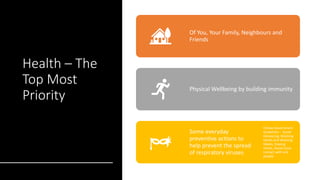
Health – The
Top Most
Priority
Of You, Your Family, Neighbours and
Friends
Physical Wellbeing by building immunity
Some everyday
preventive actions to
help prevent the spread
of respiratory viruses
Follow Government
Guidelines - Social
Distancing, Washing
Hands and Wearing
Masks, Staying
Home, Avoid Close
contact with sick
people
Spreading
Positivity
• Limit your social media and news
• Remember and recall your past resilience and efforts of
survival
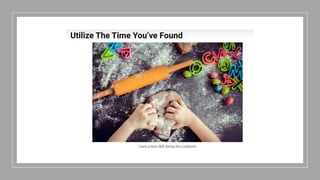
• Channelize ample advantage of the time you have got it
• Plan your finance, create the line of difference between
Need Vs Want.
• Check your personal SWOT
(Strength,Weakness,Opportunity, Threat ) Analysis.
• Focus on fitness and losing weight, building immunity
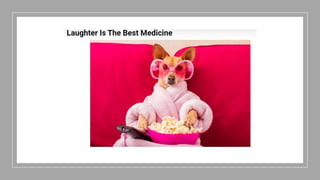
• Watch funny content, it help to heal from inside
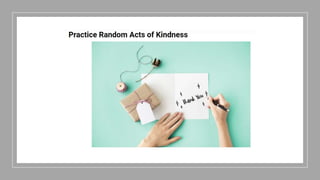
• Meditate to relax your mind Help Others if possible
• Cook special meals for family and frontline workers
around you
• Be mindful of consumption of resources
• Reconcile old relationship, kindle and nurture them
“New normal"
ways of working
• Staying comfortable while working from
home
• Assess your work area setup and
practices.
• Setup your workstation in a manner that
will allow you to work comfortably.
• Learn how to adjust
your chair and desk to an appropriate
level.
• Identify potential causes of pain or
discomfort and know how to address
them here.
• Keep moving and do stretches right
from your workstations.
Mental Well-
being
Matters- Tips
to Manage
Stress and
Anxiety
• It is normal to feel sad, stressed, confused, scared or
angry during a crisis.
• Talking to people you trust can help.
• Stay connected with your friends and family virtually.
• Get the facts straight.
• Gather information that will help you accurately
determine your risk so that you can take reasonable
precautions.
• Limit worry and agitation by lessening the time you talk
about the crisis.
• Draw on skills you have used in the past that have helped
you to manage previous life's adversities
• Rebuild those skills to help you manage your emotions
during this challenging time.
• Seek help when needed. Don’t hide your anxieties
Tips for
coping with
the mental
health effects
of quarantine
• Get physical. Do some form of aerobic exercise for 20-30 minutes.
This causes the body to release endorphins, which boosts your
mood and energy for up to 24 hours. If possible, exercise in your
backyard or outside where you have direct contact with sunlight
away from others. Sunlight helps synthesize Vitamin D, which is
partially responsible for your mood.
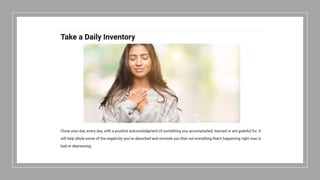
• Think it over. A simple act of reflection can help keep you goal
oriented. At the end of the day, make it a point to ask yourself,
“What’s one thing I enjoyed today? Were there times I didn’t feel so
good? What can I do to make a change for tomorrow?” This is a
great exercise that can help ward off cognitive distortions — when
your mind starts to believe in things that aren’t true.
• Make social contacts — responsibly. Studies show that when
physical interaction isn’t possible, video chatting or texting with
friends and loved ones can alleviate feelings of depression. But,
make sure to stay positive. Don’t focus on all the negatives in the
news.
Meetings &
Entertaining
Visitors
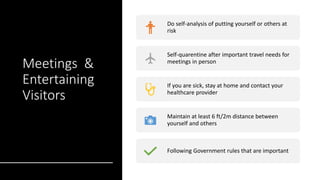
Do self-analysis of putting yourself or others at
risk
Self-quarentine after important travel needs for
meetings in person
If you are sick, stay at home and contact your
healthcare provider
Maintain at least 6 ft/2m distance between
yourself and others
Following Government rules that are important
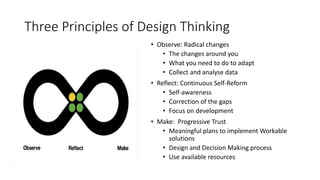
Three Principles of Design Thinking
• Observe: Radical changes
• The changes around you
• What you need to do to adapt
• Collect and analyse data
• Reflect: Continuous Self-Reform
• Self-awareness
• Correction of the gaps
• Focus on development
• Make: Progressive Trust
• Meaningful plans to implement Workable
solutions
• Design and Decision Making process
• Use available resources
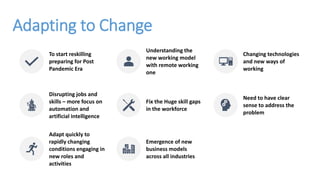
Adapting to Change
To start reskilling
preparing for Post
Pandemic Era
Understanding the
new working model
with remote working
one
Changing technologies
and new ways of
working
Disrupting jobs and
skills – more focus on
automation and
artificial intelligence
Fix the Huge skill gaps
in the workforce
Need to have clear
sense to address the
problem
Adapt quickly to
rapidly changing
conditions engaging in
new roles and
activities
Emergence of new
business models
across all industries
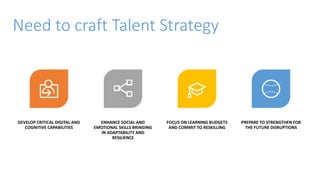
Need to craft Talent Strategy
DEVELOP CRITICAL DIGITAL AND
COGNITIVE CAPABILITIES
ENHANCE SOCIAL AND
EMOTIONAL SKILLS BRINGING
IN ADAPTABILITY AND
RESILIENCE
FOCUS ON LEARNING BUDGETS
AND COMMIT TO RESKILLING
PREPARE TO STRENGTHEN FOR
THE FUTURE DISRUPTIONS
Challenges that Covid-19 caught
us unplanned
• Current trends are accelerating the need to enhance skills
• Crisis Learning – Quick and Dirty Training with continuous remote working
• Upskilling challenges due to lack of resources and time
• Managing relationships remotely - Both Professional as well as Personal
• Lack of clarity on the new skills required
• Lack of flexibility
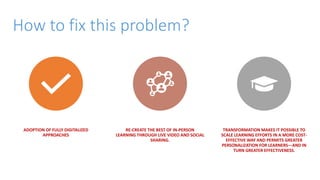
How to fix this problem?
ADOPTION OF FULLY DIGITALIZED
APPROACHES
RE-CREATE THE BEST OF IN-PERSON
LEARNING THROUGH LIVE VIDEO AND SOCIAL
SHARING.
TRANSFORMATION MAKES IT POSSIBLE TO
SCALE LEARNING EFFORTS IN A MORE COST-
EFFECTIVE WAY AND PERMITS GREATER
PERSONALIZATION FOR LEARNERS—AND IN
TURN GREATER EFFECTIVENESS.
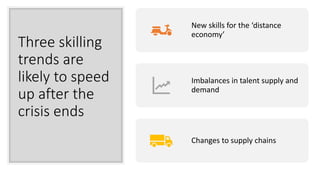
Three skilling
trends are
likely to speed
up after the
crisis ends
New skills for the ‘distance
economy’
Imbalances in talent supply and
demand
Changes to supply chains
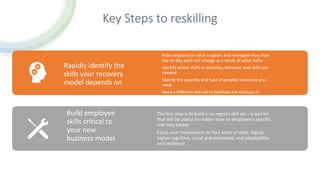
Key Steps to reskilling
Rapidly identify the
skills your recovery
model depends on
Quickly Identify Crucial Value Drivers
Roles required to value creation and reimagine how their
day-to-day work will change as a result of value shifts
Identify which shifts in activities, behavior, and skills are
needed.
Specify the quantity and type of people/ resources you
need.
Need a different skill set to facilitate the increase in
demand and customer expectations.
Build employee
skills critical to
your new
business model
The first step is to build a no-regrets skill set—a tool kit
that will be useful no matter how an employee’s specific
role may evolve.
Focus your investments on four kinds of skills: digital,
higher cognitive, social and emotional, and adaptability
and resilience
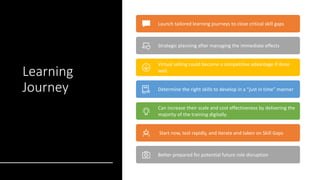
Learning
Journey
Launch tailored learning journeys to close critical skill gaps
Strategic planning after managing the immediate effects
Virtual selling could become a competitive advantage if done
well.
Determine the right skills to develop in a “just in time” manner
Can increase their scale and cost effectiveness by delivering the
majority of the training digitally.
Start now, test rapidly, and iterate and taken on Skill Gaps
Better prepared for potential future role disruption
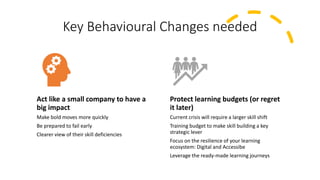
Key Behavioural Changes needed
Act like a small company to have a
big impact
Make bold moves more quickly
Be prepared to fail early
Clearer view of their skill deficiencies
Protect learning budgets (or regret
it later)
Current crisis will require a larger skill shift
Training budget to make skill building a key
strategic lever
Focus on the resilience of your learning
ecosystem: Digital and Accessibe
Leverage the ready-made learning journeys
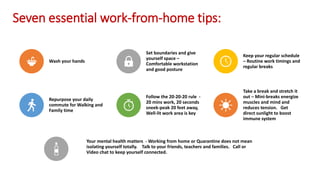
Seven essential work-from-home tips:
Wash your hands
Set boundaries and give
yourself space –
Comfortable workstation
and good posture
Keep your regular schedule
– Routine work timings and
regular breaks
Repurpose your daily
commute for Walking and
Family time
Follow the 20-20-20 rule -
20 mins work, 20 seconds
sneek-peak 20 feet away,
Well-lit work area is key
Take a break and stretch it
out – Mini-breaks energize
muscles and mind and
reduces tension. Get
direct sunlight to boost
immune system
Your mental health matters - Working from home or Quarantine does not mean
isolating yourself totally. Talk to your friends, teachers and families. Call or
Video chat to keep yourself connected.
Questions & Answers Time !

Staying positive during pandemic

  • 1.
    Staying Positive Handling Pandemic Challenges Adaptingskills and expertise to the post-pandemic ways of working will be crucial Presented by Umasree Raghunath
  • 2.
    Powerful Tips ToStay Positive During Coronavirus Lockdown
  • 11.
    "Respect science. Respectnature. Respect each other.“- Thomas Friedman Time to rethink how businesses will work how society works This is the time for new mandate for change - to challenge our beliefs on what matters most to the viability - competitiveness and health of our workforce Actions to be taken now need to be - More smarter - More Resilient - Getting Agile to not just survive today but thrive for years to come
  • 12.
    Health – The TopMost Priority Of You, Your Family, Neighbours and Friends Physical Wellbeing by building immunity Some everyday preventive actions to help prevent the spread of respiratory viruses Follow Government Guidelines - Social Distancing, Washing Hands and Wearing Masks, Staying Home, Avoid Close contact with sick people
  • 13.
    Spreading Positivity • Limit yoursocial media and news • Remember and recall your past resilience and efforts of survival • Channelize ample advantage of the time you have got it • Plan your finance, create the line of difference between Need Vs Want. • Check your personal SWOT (Strength,Weakness,Opportunity, Threat ) Analysis. • Focus on fitness and losing weight, building immunity • Watch funny content, it help to heal from inside • Meditate to relax your mind Help Others if possible • Cook special meals for family and frontline workers around you • Be mindful of consumption of resources • Reconcile old relationship, kindle and nurture them
  • 14.
    “New normal" ways ofworking • Staying comfortable while working from home • Assess your work area setup and practices. • Setup your workstation in a manner that will allow you to work comfortably. • Learn how to adjust your chair and desk to an appropriate level. • Identify potential causes of pain or discomfort and know how to address them here. • Keep moving and do stretches right from your workstations.
  • 15.
    Mental Well- being Matters- Tips toManage Stress and Anxiety • It is normal to feel sad, stressed, confused, scared or angry during a crisis. • Talking to people you trust can help. • Stay connected with your friends and family virtually. • Get the facts straight. • Gather information that will help you accurately determine your risk so that you can take reasonable precautions. • Limit worry and agitation by lessening the time you talk about the crisis. • Draw on skills you have used in the past that have helped you to manage previous life's adversities • Rebuild those skills to help you manage your emotions during this challenging time. • Seek help when needed. Don’t hide your anxieties
  • 16.
    Tips for coping with themental health effects of quarantine • Get physical. Do some form of aerobic exercise for 20-30 minutes. This causes the body to release endorphins, which boosts your mood and energy for up to 24 hours. If possible, exercise in your backyard or outside where you have direct contact with sunlight away from others. Sunlight helps synthesize Vitamin D, which is partially responsible for your mood. • Think it over. A simple act of reflection can help keep you goal oriented. At the end of the day, make it a point to ask yourself, “What’s one thing I enjoyed today? Were there times I didn’t feel so good? What can I do to make a change for tomorrow?” This is a great exercise that can help ward off cognitive distortions — when your mind starts to believe in things that aren’t true. • Make social contacts — responsibly. Studies show that when physical interaction isn’t possible, video chatting or texting with friends and loved ones can alleviate feelings of depression. But, make sure to stay positive. Don’t focus on all the negatives in the news.
  • 17.
    Meetings & Entertaining Visitors Do self-analysisof putting yourself or others at risk Self-quarentine after important travel needs for meetings in person If you are sick, stay at home and contact your healthcare provider Maintain at least 6 ft/2m distance between yourself and others Following Government rules that are important
  • 18.
    Three Principles ofDesign Thinking • Observe: Radical changes • The changes around you • What you need to do to adapt • Collect and analyse data • Reflect: Continuous Self-Reform • Self-awareness • Correction of the gaps • Focus on development • Make: Progressive Trust • Meaningful plans to implement Workable solutions • Design and Decision Making process • Use available resources
  • 19.
    Adapting to Change Tostart reskilling preparing for Post Pandemic Era Understanding the new working model with remote working one Changing technologies and new ways of working Disrupting jobs and skills – more focus on automation and artificial intelligence Fix the Huge skill gaps in the workforce Need to have clear sense to address the problem Adapt quickly to rapidly changing conditions engaging in new roles and activities Emergence of new business models across all industries
  • 20.
    Need to craftTalent Strategy DEVELOP CRITICAL DIGITAL AND COGNITIVE CAPABILITIES ENHANCE SOCIAL AND EMOTIONAL SKILLS BRINGING IN ADAPTABILITY AND RESILIENCE FOCUS ON LEARNING BUDGETS AND COMMIT TO RESKILLING PREPARE TO STRENGTHEN FOR THE FUTURE DISRUPTIONS
  • 21.
    Challenges that Covid-19caught us unplanned • Current trends are accelerating the need to enhance skills • Crisis Learning – Quick and Dirty Training with continuous remote working • Upskilling challenges due to lack of resources and time • Managing relationships remotely - Both Professional as well as Personal • Lack of clarity on the new skills required • Lack of flexibility
  • 22.
    How to fixthis problem? ADOPTION OF FULLY DIGITALIZED APPROACHES RE-CREATE THE BEST OF IN-PERSON LEARNING THROUGH LIVE VIDEO AND SOCIAL SHARING. TRANSFORMATION MAKES IT POSSIBLE TO SCALE LEARNING EFFORTS IN A MORE COST- EFFECTIVE WAY AND PERMITS GREATER PERSONALIZATION FOR LEARNERS—AND IN TURN GREATER EFFECTIVENESS.
  • 23.
    Three skilling trends are likelyto speed up after the crisis ends New skills for the ‘distance economy’ Imbalances in talent supply and demand Changes to supply chains
  • 24.
    Key Steps toreskilling Rapidly identify the skills your recovery model depends on Quickly Identify Crucial Value Drivers Roles required to value creation and reimagine how their day-to-day work will change as a result of value shifts Identify which shifts in activities, behavior, and skills are needed. Specify the quantity and type of people/ resources you need. Need a different skill set to facilitate the increase in demand and customer expectations. Build employee skills critical to your new business model The first step is to build a no-regrets skill set—a tool kit that will be useful no matter how an employee’s specific role may evolve. Focus your investments on four kinds of skills: digital, higher cognitive, social and emotional, and adaptability and resilience
  • 25.
    Learning Journey Launch tailored learningjourneys to close critical skill gaps Strategic planning after managing the immediate effects Virtual selling could become a competitive advantage if done well. Determine the right skills to develop in a “just in time” manner Can increase their scale and cost effectiveness by delivering the majority of the training digitally. Start now, test rapidly, and iterate and taken on Skill Gaps Better prepared for potential future role disruption
  • 26.
    Key Behavioural Changesneeded Act like a small company to have a big impact Make bold moves more quickly Be prepared to fail early Clearer view of their skill deficiencies Protect learning budgets (or regret it later) Current crisis will require a larger skill shift Training budget to make skill building a key strategic lever Focus on the resilience of your learning ecosystem: Digital and Accessibe Leverage the ready-made learning journeys
  • 27.
    Seven essential work-from-hometips: Wash your hands Set boundaries and give yourself space – Comfortable workstation and good posture Keep your regular schedule – Routine work timings and regular breaks Repurpose your daily commute for Walking and Family time Follow the 20-20-20 rule - 20 mins work, 20 seconds sneek-peak 20 feet away, Well-lit work area is key Take a break and stretch it out – Mini-breaks energize muscles and mind and reduces tension. Get direct sunlight to boost immune system Your mental health matters - Working from home or Quarantine does not mean isolating yourself totally. Talk to your friends, teachers and families. Call or Video chat to keep yourself connected.
  • 28.