Resilient
Project Managers
Prof Akram Hassan SME@PMI
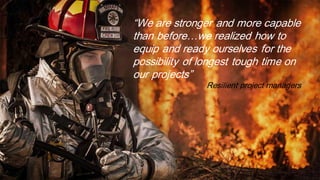
“We are stronger and more capable
than before…we realized how to
equip and ready ourselves for the
possibility of longest tough time on
our projects”
Resilient project managers
Prof Akram Hassan
SME Reviewer
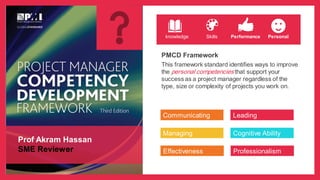
knowledge Skills Performance
PMCD Framework
This framework standard identifies ways to improve
the personal competencies that support your
success as a project manager regardless of the
type, size or complexity of projects you work on.
Communicating Leading
Managing Cognitive Ability
Personal
Effectiveness Professionalism
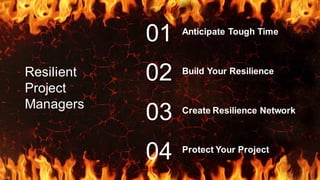
Anticipate Tough Time
01
Build Your Resilience
02
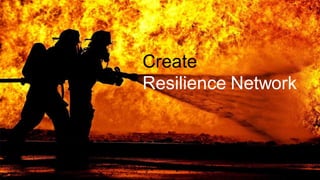
Create Resilience Network
03
Protect Your Project
04
Resilient
Project
Managers
Anticipate
Tough Time
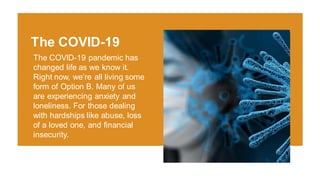
The COVID-19 pandemic has
changed life as we know it.
Right now, we’re all living some
form of Option B. Many of us
are experiencing anxiety and
loneliness. For those dealing
with hardships like abuse, loss
of a loved one, and financial
insecurity.
The COVID-19
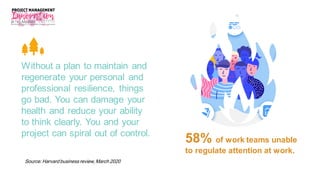
58% of work teams unable
to regulate attention at work.
Without a plan to maintain and
regenerate your personal and
professional resilience, things
go bad. You can damage your
health and reduce your ability
to think clearly. You and your
project can spiral out of control.
Source: Harvard business review, March 2020
Build
Your Resilience
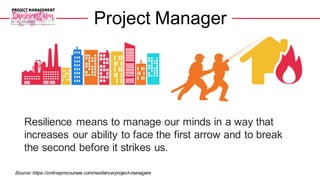
Project Manager
Resilience means to manage our minds in a way that
increases our ability to face the first arrow and to break
the second before it strikes us.
Source: https://onlinepmcourses.com/resilience-project-managers
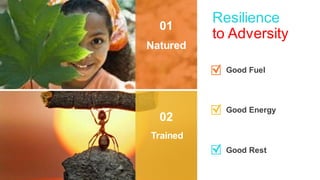
Resilience
to Adversity
01
Natured
02
Trained
Good Fuel
Good Energy
Good Rest
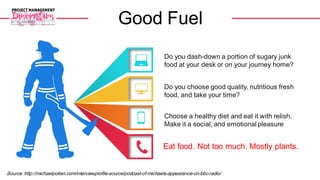
Do you dash-down a portion of sugary junk
food at your desk or on your journey home?
Do you choose good quality, nutritious fresh
food, and take your time?
Choose a healthy diet and eat it with relish.
Make it a social, and emotional pleasure
Eat food. Not too much. Mostly plants.
Good Fuel
Source: http://michaelpollan.com/interviewprofile-source/podcast-of-michaels-appearance-on-bbc-radio/
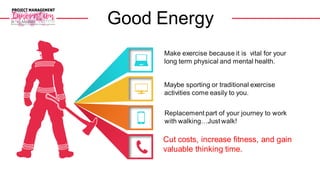
Make exercise because it is vital for your
long term physical and mental health.
Replacement part of your journey to work
with walking…Just walk!
Maybe sporting or traditional exercise
activities come easily to you.
Cut costs, increase fitness, and gain
valuable thinking time.
Good Energy
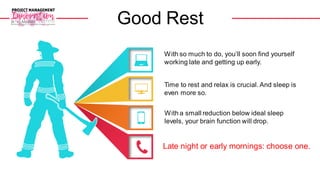
With so much to do, you’ll soon find yourself
working late and getting up early.
With a small reduction below ideal sleep
levels, your brain function will drop.
Time to rest and relax is crucial. And sleep is
even more so.
Late night or early mornings: choose one.
Good Rest
Create
Resilience Network
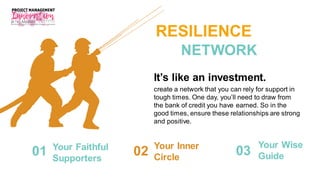
create a network that you can rely for support in
tough times. One day, you’ll need to draw from
the bank of credit you have earned. So in the
good times, ensure these relationships are strong
and positive.
It’s like an investment.
01 02 03
Your Faithful
Supporters
Your Inner
Circle
Your Wise
Guide
RESILIENCE
NETWORK
Your Faithful Supporters
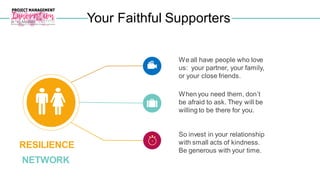
We all have people who love
us: your partner, your family,
or your close friends.
When you need them, don’t
be afraid to ask. They will be
willing to be there for you.
So invest in your relationship
with small acts of kindness.
Be generous with your time.
RESILIENCE
NETWORK
Your Inner Circle
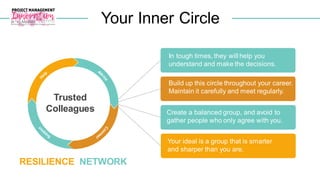
In tough times, they will help you
understand and make the decisions.
Build up this circle throughout your career.
Maintain it carefully and meet regularly.
Create a balanced group, and avoid to
gather people who only agree with you.
Your ideal is a group that is smarter
and sharper than you are.
Trusted
Colleagues
RESILIENCE NETWORK
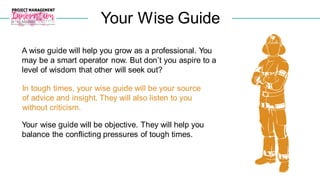
Your Wise Guide
In tough times, your wise guide will be your source
of advice and insight. They will also listen to you
without criticism.
A wise guide will help you grow as a professional. You
may be a smart operator now. But don’t you aspire to a
level of wisdom that other will seek out?
Your wise guide will be objective. They will help you
balance the conflicting pressures of tough times.
Respond to
Tough Times
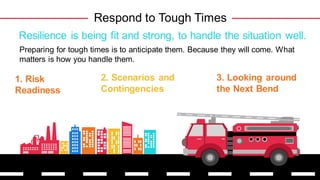
Preparing for tough times is to anticipate them. Because they will come. What
matters is how you handle them.
1. Risk
Readiness
2. Scenarios and
Contingencies
Resilience is being fit and strong, to handle the situation well.
Respond to Tough Times
3. Looking around
the Next Bend
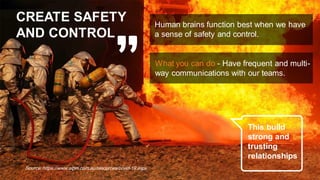
CREATE SAFETY
AND CONTROL
This build
strong and
trusting
relationships
What you can do - Have frequent and multi-
way communications with our teams.
Human brains function best when we have
a sense of safety and control.
Source: https://www.aipm.com.au/resources/covid-19.aspx
DETECT &
DEFLECT
THREATS
Human brains have a built-in threat-detector that
quickly picks up on any change.
Source: https://www.aipm.com.au/resources/covid-19.aspx
What you can do – Project teams gain a
sense of predictability and control when
project managers provide information,
clarity about what to expect, and resources
for dealing with the change.
This reduces the anxiety and discomfort
associated with uncertainty.
ENCOURAGE YOUR TEAM TO STAY ACTIVE
When stressed or feeling unsafe, many people will go into avoidance or
shut-down mode.
Source: https://www.aipm.com.au/resources/covid-19.aspx
What you can do - Encourage people to take an active role in adapting
the changes, to get enough sleep, exercise, have adequate nutrition
and opportunities for social engagement and contributes.
This reduce the stress hormones that can impair thinking, memory and coping.
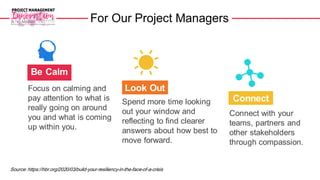
For Our Project Managers
Be Calm
Connect
Look Out
Focus on calming and
pay attention to what is
really going on around
you and what is coming
up within you.
Connect with your
teams, partners and
other stakeholders
through compassion.
Spend more time looking
out your window and
reflecting to find clearer
answers about how best to
move forward.
Source: https://hbr.org/2020/03/build-your-resiliency-in-the-face-of-a-crisis
Prof Akram Hassan SME@PMI
akramkram@yahoo.com +201014356420
Be Safe…
Build Your Resilience …
Protect Your Project…

Resilient Project Managers

  • 1.
  • 2.
    “We are strongerand more capable than before…we realized how to equip and ready ourselves for the possibility of longest tough time on our projects” Resilient project managers
  • 3.
    Prof Akram Hassan SMEReviewer knowledge Skills Performance PMCD Framework This framework standard identifies ways to improve the personal competencies that support your success as a project manager regardless of the type, size or complexity of projects you work on. Communicating Leading Managing Cognitive Ability Personal Effectiveness Professionalism
  • 4.
    Anticipate Tough Time 01 BuildYour Resilience 02 Create Resilience Network 03 Protect Your Project 04 Resilient Project Managers
  • 5.
  • 6.
    The COVID-19 pandemichas changed life as we know it. Right now, we’re all living some form of Option B. Many of us are experiencing anxiety and loneliness. For those dealing with hardships like abuse, loss of a loved one, and financial insecurity. The COVID-19
  • 7.
    58% of workteams unable to regulate attention at work. Without a plan to maintain and regenerate your personal and professional resilience, things go bad. You can damage your health and reduce your ability to think clearly. You and your project can spiral out of control. Source: Harvard business review, March 2020
  • 8.
  • 9.
    Project Manager Resilience meansto manage our minds in a way that increases our ability to face the first arrow and to break the second before it strikes us. Source: https://onlinepmcourses.com/resilience-project-managers
  • 10.
  • 11.
    Do you dash-downa portion of sugary junk food at your desk or on your journey home? Do you choose good quality, nutritious fresh food, and take your time? Choose a healthy diet and eat it with relish. Make it a social, and emotional pleasure Eat food. Not too much. Mostly plants. Good Fuel Source: http://michaelpollan.com/interviewprofile-source/podcast-of-michaels-appearance-on-bbc-radio/
  • 12.
    Make exercise becauseit is vital for your long term physical and mental health. Replacement part of your journey to work with walking…Just walk! Maybe sporting or traditional exercise activities come easily to you. Cut costs, increase fitness, and gain valuable thinking time. Good Energy
  • 13.
    With so muchto do, you’ll soon find yourself working late and getting up early. With a small reduction below ideal sleep levels, your brain function will drop. Time to rest and relax is crucial. And sleep is even more so. Late night or early mornings: choose one. Good Rest
  • 14.
  • 15.
    create a networkthat you can rely for support in tough times. One day, you’ll need to draw from the bank of credit you have earned. So in the good times, ensure these relationships are strong and positive. It’s like an investment. 01 02 03 Your Faithful Supporters Your Inner Circle Your Wise Guide RESILIENCE NETWORK
  • 16.
    Your Faithful Supporters Weall have people who love us: your partner, your family, or your close friends. When you need them, don’t be afraid to ask. They will be willing to be there for you. So invest in your relationship with small acts of kindness. Be generous with your time. RESILIENCE NETWORK
  • 17.
    Your Inner Circle Intough times, they will help you understand and make the decisions. Build up this circle throughout your career. Maintain it carefully and meet regularly. Create a balanced group, and avoid to gather people who only agree with you. Your ideal is a group that is smarter and sharper than you are. Trusted Colleagues RESILIENCE NETWORK
  • 18.
    Your Wise Guide Intough times, your wise guide will be your source of advice and insight. They will also listen to you without criticism. A wise guide will help you grow as a professional. You may be a smart operator now. But don’t you aspire to a level of wisdom that other will seek out? Your wise guide will be objective. They will help you balance the conflicting pressures of tough times.
  • 19.
  • 20.
    Preparing for toughtimes is to anticipate them. Because they will come. What matters is how you handle them. 1. Risk Readiness 2. Scenarios and Contingencies Resilience is being fit and strong, to handle the situation well. Respond to Tough Times 3. Looking around the Next Bend
  • 21.
    CREATE SAFETY AND CONTROL Thisbuild strong and trusting relationships What you can do - Have frequent and multi- way communications with our teams. Human brains function best when we have a sense of safety and control. Source: https://www.aipm.com.au/resources/covid-19.aspx
  • 22.
    DETECT & DEFLECT THREATS Human brainshave a built-in threat-detector that quickly picks up on any change. Source: https://www.aipm.com.au/resources/covid-19.aspx What you can do – Project teams gain a sense of predictability and control when project managers provide information, clarity about what to expect, and resources for dealing with the change. This reduces the anxiety and discomfort associated with uncertainty.
  • 23.
    ENCOURAGE YOUR TEAMTO STAY ACTIVE When stressed or feeling unsafe, many people will go into avoidance or shut-down mode. Source: https://www.aipm.com.au/resources/covid-19.aspx What you can do - Encourage people to take an active role in adapting the changes, to get enough sleep, exercise, have adequate nutrition and opportunities for social engagement and contributes. This reduce the stress hormones that can impair thinking, memory and coping.
  • 24.
    For Our ProjectManagers Be Calm Connect Look Out Focus on calming and pay attention to what is really going on around you and what is coming up within you. Connect with your teams, partners and other stakeholders through compassion. Spend more time looking out your window and reflecting to find clearer answers about how best to move forward. Source: https://hbr.org/2020/03/build-your-resiliency-in-the-face-of-a-crisis
  • 25.
    Prof Akram HassanSME@PMI akramkram@yahoo.com +201014356420 Be Safe… Build Your Resilience … Protect Your Project…