Downloaded 57 times

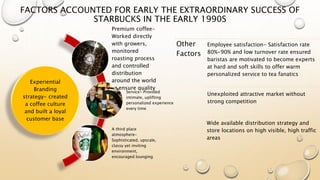



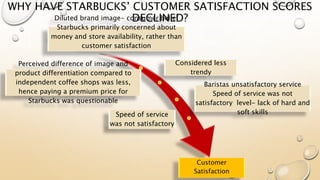

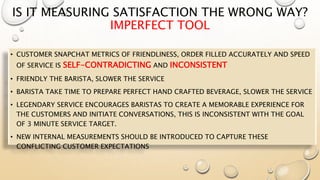





Starbucks achieved early extraordinary success in the 1990s through experiential branding that created a coffee culture, premium coffee quality, personalized service, and a sophisticated third place atmosphere. Key factors included employee satisfaction, an unexploited market with little competition, and strategic store locations. Starbucks developed a highly differentiated value proposition perfectly matching its target customer segment of affluent, educated coffee lovers seeking a premium experience. However, as Starbucks expanded with over 5,000 stores by 2002, it faced new challenges in balancing the expectations of its original customers versus new customer segments, while also addressing perceptions of a declining brand image and customer satisfaction.


