https://app.lecturio.com/#/article/3814?return=%23%2Fwelcome%3Ffv%3D1
1/19
Staphylococcus
DR IGUNMA A.J
Clinical Microbiologist
Introduction
Staphylococci are gram positive cocci that occur in groups in
cluster. They are ubiquitous and most common cause of
localized lesions in human beings. They develop resistance
to penicillin and other antibiotics.
Staphylococcus is a medically important genera of Gram-
positive, aerobic cocci predominantly in clusters .These
bacteria form clusters resembling bunch of grapes on Gram
stains. Staphylococci are ubiquitous for humans, and many
strains compose the normal skin flora.
Staphylococcus aureus is the most virulent
species; S. epidermidis and S. saprophyticus are
less virulent but are also clinically significant.
Infection can cause a wide array of disease,
including cellulitis, abscesses, endocarditis,
osteomyelitis, and medical device infections.
Toxins formed by S.aureus can cause
gastroenteritis, SSSS, and toxic shock syndrome
(TSS).
Antibiotic management varies based on the type
of infection, severity, and sensitivity data.
Sir Alexander Oysten established the causative
role of Staphylococcus in abscesses and other
lesions. He named in staphylococcus which
means, staphylo – bunches of grapes, kokkos
means a berry because of the grape like clusters.
Staphylococcae strains from pyogenic lesions
produce yellow colonies and white colonies from
normal skin.
General characteristics
Staphylococci species are gram-positive cocci that grow in a unique
characteristic pattern resembling a cluster of grapes.
Although organisms in clinical specimens commonly appear as single
cells, pairs, short chains or few clusters.
Most Staphylococci are large, 0.5 to 1.5 μm in diameter, and they are
able to grow in a variety of conditions: aerobic and anaerobic
atmosphere, in the presence of a high salt( 10% sodium chloride) and
at wide range of temperatures(18° C to 40° C). The genus currently
consists of more than 80 species and subspecies, many of which are
found on the skin and mucous membranes of humans.
General characteristics
A good number of Staphylococcus species have very unique and defined
area of the body colonized
S. aureus colonizes the anterior nares
S. capitis is found where sebaceous glands are present (e.g., forehead),
S. haemolyticus and S. hominis are found in areas in which apocrine
glands are present (e.g., axilla).
Staphylococci are important pathogens in humans, causing
opportunistic infections and a wide spectrum of life-threatening
systemic diseases, including infections of the skin, soft tissues, bones,
and urinary tract.
Cell characteristics
The cell wall of Staphylococcus like other gram-positive bacterial cell
wall is the target of many important antibiotics. So, understating of the
key components is very important.
One of the most relevant part of the cell wall is the peptidoglycan, this
is composed of more than cell half of the cell wall by weight. Its made
of layers of glycan chains built with 10 to 12 alternating subunits of N-
acetylmuramic acid and N-acetylglucosamine.
Oligopeptide side chains are attached to the N-acetylmuramic acid
subunits and are then cross-linked with peptide bridges.
Unlike gram-negative bacteria, the peptidoglycan layer in gram-positive
organisms consists of many cross-linked layers, which makes the cell
wall more rigid. The enzymes that catalyze construction of the
peptidoglycan layer are called penicillin-binding proteins because
these are the targets of penicillins and other β-lactam antibiotics
Cell wall structure and functions
The peptidoglycan has endotoxin-like activity, stimulating the
production of endogenous pyrogens, activation of complement,
production of interleukin (IL)-1 from monocytes, and aggregation of
polymorphnuclear leucocytes (PMN) a process responsible for abscess
formation.
Teichoic acid is another relevant component of Gram positive cell wall,
they are anionic polymers found in Gram-positive bacteria cell wall and
are made of polyglycerol phosphate units (approximately 20–30
repeats). They are involved, among others, in the regulation of cell
morphology as well as in cell division.
The species most commonly associated with human
diseases include S. aureus (the most virulent and best
known member of the genus), S. epidermidis, S.
saprophyticus
General Characteristics and Epidemiology
• Gram-positive cocci
• Grow in clusters
• Resemble a cluster of grapes
• Non-motile
• Non-spore-forming
• Aerobic and facultative anaerobic
• Catalase-positive:An enzyme that cleaves hydrogen peroxide → water
and oxygen, a distinguishing feature from streptococci (which are
catalase-negative)
Clinically relevant species
The clinically relevant species can be classified based on the presence (or
absence) of coagulase:
• Coagulase-positive staphylococci: S. aureus
• Coagulase-negative staphylococci (CONS) species (often grouped together):
S. epidermidis & S. saprophyticus
Infrequent pathogens
• S. lugdunensis
• S. hominis
• S. capitis & S haemolyticus
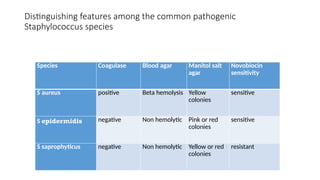
Distinguishing features among the common pathogenic
Staphylococcus species
Species Coagulase Blood agar Manitol salt
agar
Novobiocin
sensitivity
S aureus positive Beta hemolysis Yellow
colonies
sensitive
S epidermidis negative Non hemolytic Pink or red
colonies
sensitive
S saprophyticus negative Non hemolytic Yellow or red
colonies
resistant
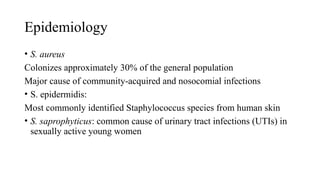
Epidemiology
• S. aureus
Colonizes approximately 30% of the general population
Major cause of community-acquired and nosocomial infections
• S. epidermidis:
Most commonly identified Staphylococcus species from human skin
• S. saprophyticus: common cause of urinary tract infections (UTIs) in
sexually active young women
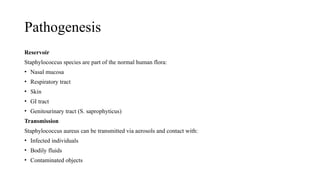
Pathogenesis
Reservoir
Staphylococcus species are part of the normal human flora:
• Nasal mucosa
• Respiratory tract
• Skin
• GI tract
• Genitourinary tract (S. saprophyticus)
Transmission
Staphylococcus aureus can be transmitted via aerosols and contact with:
• Infected individuals
• Bodily fluids
• Contaminated objects
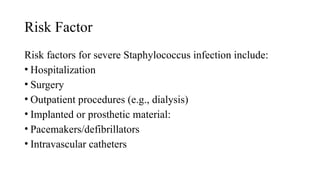
Risk Factor
Risk factors for severe Staphylococcus infection include:
• Hospitalization
• Surgery
• Outpatient procedures (e.g., dialysis)
• Implanted or prosthetic material:
• Pacemakers/defibrillators
• Intravascular catheters
•Urethral catheters
•Surgical implants
•Prosthetic valves
•Immunocompromised individuals
•Nursing home stays
•Injection drug use
Virulence factors
Virulence factors Common to most staphylococci include
• Deoxyribonuclease (DNase): depolymerizes DNA, a component of
neutrophil
• Fibrinolysin: lyses fibrin walls used to keep an infection contained →
aids in spread
 Proteases: degrade proteins of target cells, such as components of the
extracellular matrix (ECM)
• Biofilm: An extracellular polysaccharide matrix that encases the
bacteria after attaching to foreign material. It also acts as protective
barrier against antibiotics and the host immune system
Virulence factors specific to Staphylococcus
aureus
1 Hyaluronidase; break down connective tissues, which
makes it easier for pathogen invasion into the tissues
2 Lipase: degrade lipids, helps S. aureus infect the skin and
subcutaneous tissues
3 Hemolysins and leukocidins: causes target cell death,
including
red blood cells and immune cells
4 Clumping factor A:
• Binds fibrinogen and other proteins
• Causes bacteria clumping in plasma
• Particularly important in the pathogenesis of endocarditis and
endovascular infections
5 Coagulase
• Converts fibrinogen to fibrin to form a wall around the local area of
infection (pseudocapsule)
• Promotes abscess formation
6 Super-antigens:
• Toxic shock syndrome toxin type-1 (TSST-1)
• Enterotoxin B
Cause toxic shock syndrome (TSS):
• Bind to MHC class II on antigen-presenting cells → cross-links with
the β region of the T cell receptor (TCR)
• Stimulates T cell activation and an exaggerated cytokine release
• Results in an excessive inflammatory response
Virulence factors specific to CONS
1 Adhesins: aid CoNS adhesion to host cells
2 Urease: Produced by S. saprophyticus
• Hydrolyzes urea to produce C02 and ammonia resulting in increased
urine pH
• Makes it particularly virulent within the urinary tract
Staphylococcus aureus
S. aureus is a facultatively anaerobic, non- motile, non- spore forming,
catalase- positive, coagulase- positive, Gram- positive coccus. It is a
major human pathogen, and can cause a wide variety of infections,
ranging from superficial skin infections to severe life- threatening
conditions
S. aureus is a skin colonizer and is found in the anterior nares of 10–
40% of people. Chronic carriage is associated with an increased risk of
infection,
e.g. in haemodialysis patients. Nasal carriage has contributed to the
persistence and spread of MRSA
S. aureus colonies can have a yellow or gold color as
the result of the carotenoid pigments that form during
their growth, hence the species name. It is also the most
common species in humans that produces the enzyme
coagulase
Catalase test
Catalase is a haem containing enzyme whose role is to
degrade hydrogen peroxide. Hydrogen peroxide is one of the
products of aerobic metabolism. However, this product is
highly reactive and a toxic to the pathogens. Organism that
are able to produce the enzyme catalase which is decomposes
H2O2 -----→ H2O + O2 thrives very well.
However, anaerobic bacteria lack catalase, but they decompose
H2O2 with the help of enzyme peroxidase.
Catalase
This test demonstrate the presence of catalase, an enzyme that catalyses
the release of oxygen from hydrogen peroxide (H2O2). It is used to
differentiate those bacteria that produces an enzyme catalase, such
as staphylococci, from non-catalase producing bacteria such
as streptococci.
Principle: Catalase production help protect bacteria from the lethal
effect of Hydrogen peroxide which is accumulated as an end product of
aerobic carbohydrate metabolism.
The enzyme catalase mediates the breakdown of hydrogen peroxide into
oxygen and water.
Procedure of Catalase Test
Purpose of the test; To differentiate morphologically
similar Enterococcus or Streptococcus (catalase negative)
and Staphylococcus (catalase positive) can be differentiated using the
catalase test
Catalase test
Principle: When cells of bacteria known to produce catalase are
exposed to a solution of 3% hydrogen peroxide, the oxygen released
following decomposition of H2O2 appears as effervescence or bubbles.
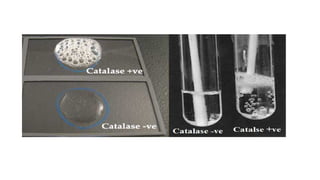
Procedure: Catalase test can be done on slide, tube or agar plate.
Slide catalase test: a small portion of young bacterial colony is
transferred from culture plate to the surface of clean and dry glass slide
using a straight wire. A drop of 3% H2O2 is placed on the colony.
Production of effervescence (bubbles) in 5-10 seconds is a positive test.
No appearance of bubbles or appearance after 30 seconds (due to
degradation of H2O2 by other enzymes) is considered negative.
Tube catalase test: Approximately 2-3 ml of freshly prepared 3%
H2O2 is taken in a test tube. A portion of the young bacterial colony is
picked up using a sterile glass capillary, plastic or wooden stick and
immersed into the tube containing H2O2. Production of effervescence
(bubbles) in 5-10 seconds is a positive test.
Precautions:
• Picking colonies from blood agar must be avoided. If RBCs from the
medium gets scraped along with the bacteria, they may give false
positive reactions.
• 3% H2O2 must be freshly prepared and must be held in dark or amber
coloured bottles (protected from light).
Control
• Positive control: Staphylococcus aureus ATCC 33592
• Negative control: Enterococcus fecalis ATCC 29212
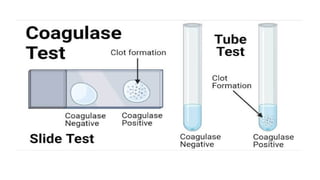
Coagulase test
Staphylococcus aureus is known to produce coagulase, which
can clot plasma into gel in tube or agglutinate cocci in slide.
This test is useful in differentiating S.aureus from other
coagulase-negative staphylococci.
Most strains of S.aureus produce two types of coagulase, free
coagulase and bound coagulase.
While free coagulase is an enzyme that is secreted extracellularly, bound
coagulase is a cell wall associated protein. Free coagulase is detected in
tube coagulase test and bound coagulase is detected in slide coagulase
test.
Slide coagulase test may be used to screen isolates of S.aureus and tube
coagulase may be used for confirmation.
While there are seven antigenic types of free coagulase, only one
antigenic type of bound coagulase exists. Free coagulase is heat labile
while bound coagulase is heat stable.
SLIDE COAGULASE TEST
Principle: The bound coagulase is also known as clumping factor. It
cross-links the α and β chain of fibrinogen in plasma to form fibrin clot
that deposits on the cell wall. As a result, individual coccus stick to each
other and clumping is observed.
SLIDE COAGULASE TEST
Procedure: A dense suspensions of Staphylococci from culture are
made on two ends of clean glass slide.
One should be labeled as “test” and the other as “control”. The control
suspension serves to rule out false positivity due to auto-agglutination.
The test suspension is treated with a drop of citrated plasma and mixed
well. Agglutination or clumping of cocci within 5-10 seconds is taken as
positive.
Some strains of S.aureus may not produce bound coagulase, and such
strains must be identified by tube coagulase test
TUBE COAGULASE TEST
Principle: The free coagulase secreted by S.aureus reacts with
coagulase reacting factor (CRF) in plasma to form a complex, which is
thrombin. This converts fibrinogen to fibrin resulting in clotting of
plasma.
Procedure: Three test tubes are taken and labeled “test”, “negative
control” and “positive control”. Each tube is filled with 0.5 ml of 1 in 10
diluted rabbit plasma.
To the tube labeled test, 0.1 ml of overnight broth culture of test bacteria
is added. To the tube labeled positive control, 0.1 ml of overnight broth
culture of known S.aureus is added and to the tube labeled negative
control, 0.1 ml of sterile broth is added.
All the tubes are incubated at 37oC and observed up to four hours..
Positive result is indicated by gelling of the plasma, which remains in
place even after inverting the tube.
If the test remains negative until four hours at 37oC, the tube is kept at
room temperature for overnight incubation.
Application: Coagulase test is used to identify and differentiate
S.aureus from coagulase negative staphylococci.
While slide coagulase test is useful in screening, tube coagulase test is
useful in confirmation of coagulase test.
Not all S.aureus strains produce coagulase; such rare strains are
identified by thermonuclease test. Some coagulase negative
staphylococci such as S.lugdensis and S.schleiferi are known to give
positive slide coagulase test while S.hyicus and S.intermedius are
known to give positive tube coagulase test
The ability Staphylococcus aureus to cause infection is dependent on
its ability to
1 evade immune clearance
2 Produce adherence protein. enhances attachment to host tissue
3 Produce of toxins; for tissue destruction
4 elaborate of hydrolytic enzymes; for tissue destruction
Diseases Caused by S. aureus
Skin and soft tissue infections
• Folliculitis
• Impetigo
• Cellulitis
• Necrotizing fasciitis
• Surgical wound infection
• Abscess
Bloodstream infection; It can both primary infection or infection
seeded from other tissues such skin and soft tissue infection.
Infective endocarditis (IE)
• Leads to cardiac valve vegetations
• Can release septic emboli resulting in an embolic complications and/or
metastatic infection
• IE due to S. aureus is associated with acute, rapidly progressive
infection.
• Pneumonia S. aureus notably causes secondary bacterial pneumonia
in individuals with influenza or other upper respiratory tract
infections.
• Osteomyelitis; Infection of the bone. This can be due to
hematogenous spread from distance tissue infection such as Blood
stream infection or non-hematogenous spread such as traumatic
inoculation
• Septic arthritis
• Common Complications includes Necrotizing infection resulting in
tissue destruction, lung cavitation, Lung abscess, Empyema
• Medical device associated infections, such as:
IV catheters such as catheter associated UTI, central line associated
blood stream infection
Prosthetic valves; eg infective endocarditis
Prosthetic joints
Pacemakers
Toxins
S. aureus produces many toxins some of which include
• Cytolytic or membrane-damaging toxins (alpha, beta, delta, gamma,
and P-V leukocidin)
• Exfoliative toxins (A and B)
• The staphylococcal Super antigens; include the staphylococcal
enterotoxins (SEs), the staphylococcal enterotoxin-like (SEls) proteins,
and toxic shock syndrome toxin-1 (TSST-1)
• While TSST- 1 is associated with TSS, Enterotoxins are associated
with food poisoning;
• Cytolytic toxin; cytotoxic to many cells, including erythrocytes,
fibroblasts, leukocytes, macrophages, and platelets examples include;
apha, beta, deta,gamma and PV leukocidin
• Exfoliative toxins (ETA, ETB) Serine proteases that split the
intercellular bridges in the stratum granulosum epidermis
• Enterotoxins ; Superantigens (stimulate proliferation of T cells and
release of cytokines); stimulate release of inflammatory mediators in
mast cells, increasing intestinal peristalsis and fluid loss, as well as
nausea and vomiting
• Toxic shock syndrome toxin-1
Enterotoxins
Staphylococcal enterotoxins of various types have been identified.
Enterotoxin A is most commonly associated with food poisoning.
Enterotoxins C and D are found in contaminated milk products while
enterotoxin B causes staphylococcal pseudomembranous enterocolitis.
The enterotoxins are designed perfectly for causing foodborne disease
(stable to heating at 100° C for 30 minutes and resistant to hydrolysis by
gastric and jejunal enzymes). Thus once a food product has been
contaminated with enterotoxin-producing staphylococci and the toxins
have been produced, neither mild reheating of the food nor exposure to
gastric acids will be protective..
These toxins are produced by 30% to
50% of all S. aureus strains.
The precise mechanism of toxin activity
is not understood. These toxins are
superantigens capable of inducing
nonspecific activation of T cells and
massive cytokine release
Staphylococcal Food Poisoning
Staphylococcal food poisoning is one of the most common foodborne
illnesses, is an intoxication rather than an infection
This condition is caused by toxin present in food rather than from a direct
effect of the organisms on the patient. Foods commonly contaminated include
Foods that are not cooked after handling, such as
• Sandwiches
• Processed meats such as ham and salted pork,
• Custard-filled pastries.
• Potato salad
• Ice cream
Sources and route
• Carriers with asymptomatic nasopharyngeal colonization.
• Individuals with an obvious staphylococcal skin infection
Route of entry into the food is via sneezing and contaminated hands
Appropriate environment for toxin released from the organism include
food at room temperature or warmer. Subsequent heating of the food
will only kill the bacteria but can not Inactivate the heat-stable toxin.
NB;The contaminated food will not appear or taste abnormal.
Clinical features
• The onset of disease is abrupt and rapid following ingestion of
contaminated food. Incubation period is usually about 4 hours,
consistent with a disease mediated by preformed toxin.
• Further toxin is not produced by ingested staphylococci. Reason the
disease has a rapid course, with symptoms generally lasting less than
24 hours.
• Symptoms include; Severe vomiting, watery diarrhea, and abdominal
pain or nausea, but fever is not seen. Complication might include
dehydration
Diagnosis and treatment
• Diagnosis is largely based on clinical information-History
• Toxin producing organism might be isolated from the contaminated
food if the organism is not killed during cooking or reheating.
• Treatment is usually symptomatic . Treat the presenting symptoms if
necessary
• Antibiotics administration is not indicated in the management.
Staphylococcal scalded skin syndrome
(SSSS)
An exfoliating dermatosis encompasses a spectrum of superficial
blistering skin disorders caused by the exfoliative toxins of some strains
of Staphylococcus aureus in which must of the body surfaces becomes
tender and erythematous and the superficial epidermis is stripped off.
Children < 6 years and neonates are commonly affected by the
generalized form while adult often time with the localized form.
•Children are more at risk because of lack
of immunity and immature renal
clearance capability (exfoliative toxins
are renally excreted
•Implicating organism including
Staphylococcus aureus strain producing
exfoliative toxins A and B). This account
for about 5% of all Staphylococcus
aureus
Predisposing factors
• In addition to infection with appropriate toxin Staphylococcus
aureus,
• renal failure
• Malignancy
• immunosuppression
Pathogenesis
• ETA & ETB target the cell adhesion proteins desmoglein -1 resulting
in the separation of keratinocytes(a cell-to-cell attachment protein
found only in the superficial epidermis) just beneath the granular
layer in the epidermis(intra-epidermal)
• ET spread hematogenously resulting in wide skin involvement in
remote areas
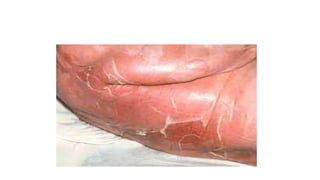
Presentations
The initial source of infection maybe impetigo of the face, oral or nasal
cavities, throat, or umbilicus. A few days later, patient develops fever,
irritability and skin tenderness . And then a widespread erythematous
eruption follows, which is usually accentuated in the flexures . This
will result in rapid progression to superficial skin blister formation.
Subsequently, the tender skin becomes gather into folds, and shrinks
leaving raw areas which are extremely painful
In most cases symptoms resolve within 7-14days
Diagnosis
Gram stain and/or culture from the remote infection site may confirm
staphylococcal infection
Cultures of bullae are negative in the absence of contamination.
Blood culture is usually negative in children (but positive in bullous
impetigo) and is usually positive in adults
SSSS and Bullous impetigo
Although both are blistering skin diseases caused by
staphylococcal exfoliative toxin. However, in bullous
impetigo, the exfoliative toxins are restricted to the area of
infection, and bacteria can be cultured from the blister
contents. In staphylococcal scalded skin syndrome, the
exfoliative toxins are spread hematogenously from a localized
source potentially causing epidermal damage at distant sites.
Therefore, cultures of the bullous material are sterile.
SSSS and severe toxic epidermal necrolysis
(TEN)
SSSS differs from the more severe toxic epidermal necrolysis
(TEN), in that the cleavage site in staphylococcal scalded skin
syndrome is intra-epidermal, as opposed to TEN, which
involves necrosis of the full epidermal layer.
TSS was described in 1927 by Franklin
Stevens as staphylococcal scarlet fever and
was named “toxic shock syndrome” by Todd
and colleagues in 1978 to describe a systemic
illness in seven children caused by non-
invasive S. aureus
TSS: Pathogenesis
TSS is due to a Super antigen(SAg)-induced cytokine storm owing to
the massive activation of T cells in individuals lacking neutralizing
antibodies to the particular SAg.
The disease leads to a capillary leak syndrome where patients develop
fever, rash, hypotension, multiorgan involvement and convalescent
desquamation. S. aureus can cause the menstrual form of TSS, which
historically occurred in young women in association with high
absorbency tampons, and non-menstrual TSS, which can occur from
virtually any S. aureus infection.
Toxic shock syndrome (TSS)
This is a toxin-mediated acute life-threatening condition, usually
mediated by infection associated with either Staphylococcus
aureus or Streptococcus pyogenes. Clinical features include; high
grade fever, rash, hypotension, multi-organ failure (involving at least
3 or more organ systems), and skin desquamation of the skin in area
such as the palms and soles, 1-2 weeks after the onset of acute illness.
The most commonly implicated toxins include
• TSS toxin type-1 (TSST-1)
• Staphylococcal enterotoxin B
•TSS has been association with tampon use by
menstruating women. Menstrual TSS is more likely
in women
•using highly absorbent tampons
•using tampons for more days of their cycle
•keeping a single tampon in place for a longer period
of time.
Over the past two decades, the number of cases of
menstrual TSS has steadily declined; this is thought
to be due to the withdrawal of highly absorbent
tampons from the market.
Up to 50% of cases of TSS are not associated with
menstruation. These non-menstrual cases of TSS
have been linked to complication of barrier
contraceptives, surgical site and postpartum wound
infections, burns, osteomyelitis, and arthritis.
Although most cases of TSS occur in women, about
25% of non-menstrual cases occur in men.
Toxin-mediated diseases; Features of toxin-mediated
diseases caused by S. aureus
Disease Exotoxin Clinical presentation
Staphylococci scalded skin
syndrome(SSSS)
Exfoliative toxins A and B
Prodromal symptoms
Erythematous rash → blisters →
desquamation, Skin pain
Spares mucosa
Toxic
shock syndrome (
TSS)
Toxic shock syndrome toxin type-1
(TSST-1)
Enterotoxin B
Fever ,Rash
Hypotension, Multiorgan
dysfunction
Gastroenteritis Enterotoxins
Nausea and vomiting
Abdominal cramps
Diarrhea
Antibiotics and Resistance
Staphylococcus species can develop antibiotic resistance to different
class of antibiotics, and identification of susceptibility is necessary for
adequate treatment. Species are often designated as:
• Penicillin resistant staphylococcus aureus
• Methicillin-sensitive Staphylococcus aureus (MSSA)
• Methicillin-resistant Staphylococcus aureus(MRSA)
• Vancomycin intermediate Staphylococcus aureus(VISA)
• Vancomycin-resistant Staphylococcus aureus(VRSA)
Mechanism of resistance
Methicillin Resistant Staphylococcus aureus(MRSA) MRSA strains are
of S aureus resistant to all β- lactams due to alteration in penicillin-
binding protein (PBP2) and consequently the structure of the cell wall.
MRSA is due to the mecA gene that codes for the low- affinity PBP2.
• Despite the mutations, these PBPs are still able to produce a cell wall
• Isolates are resistant to all beta lactams including; penicillin ,1st
, 2nd
,3rd
,4th
generation cephalosporin except the 5th
generation.
Types of MRSA
• Healthcare Acquired- MRSA defined as that occurring >48h after
exposure to health care admission.
• Community- onset HA- MRSA (that occurring within 12 months of
exposure to health care, e.g. dialysis, residence in a care home
• These strains are also resistant to other class of antibiotics besides the
Beta lactams such as erythromycin and ciprofloxacin.
• This results in higher mortality, longer hospital stays, and high cost
on the health system more than those with Methicillin Resistant
Staphylococcus aureus (MSSA) infection
Community acquired MRSA
• Community acquired often sensitive to non- β- lactam antibiotics (e.g.
ciprofloxacin) and is Panton– Valentine leucocidin (PVL)—positive,
• PVL is a haemolysin (induces a pore in the membrane of host
leucocytes)
• PVL- producing strains are associated with furunculosis, severe
haemorrhagic pneumonia, and clusters of MRSA skin infections;
• CA- MRSA are associated with community outbreaks in settings
such day- care centres, sports teams prison inmates and guards, and
men who have sex with men (MSM)
Laboratory diagnosis
specimen collections
The specimens to be collected depend on the type of lesion, like pus
from suppurative lesions, sputum from respiratory infection. In case of
food poisoning, feces and the remains of suspected food should be
collected. For detection of carriers, nasal swab is the usual specimen.
Swabs from perineum, pieces of hair and umbilical stump are taken.
Direct microscopy
Direct microscopy with Gram stained smears is useful in the case of
pus, where cocci in clusters may be seen. Definitive diagnosis is
readily made by culture. The specimens are plated on blood agar,
MacConkey agar and incubated aerobically at 35-370
C for 16-18hours.
This is followed by Gram staining of the bacteria growth (colonies)
smear for microscopy. The Gram picture is Gram positive cocci
predominantly in clusters(grape-like )
Specimens where staphylococci are expected to be scanty
and outnumbered by other bacteria( contaminated sites), selective media
like manitol salt agar may be used for inoculation.
Coagulase test- Slide test
The slide test detecting bound coagulase is much simpler.
When there is divergence, the tube test will be the deciding
factor. For the slide test, the isolate is emulsified in a drop of
saline on a slide. After checking for absence of auto-
agglutination, a drop of human or rabbit plasma is added and
mixed. Prompt clumping of the cocci indicated a positive test.
Positive and negative controls also are set up.
Tube tests
The coagulase test can be done using two methods, tube and
slide. The tube coagulase test detects free coagulase while the
slide test detects the bound coagulase. About 0.1ml of a young
broth culture or
agar culture suspension of the isolate is added to about 0.5ml
of human or rabbit plasma in a narrow test tube. The tubes are
incubated in water bath at 370
C for 3- 6 hours. If positive, the
plasma clots and does not flow when the tube is tilted
Coagulase Negative Staphylococci
Coagulase negative staphylococci constitute a major component of the
normal flora of the human body, whereas some like staph epidermidis,
staph haemolyticus and staph saprophyticus cause disease. Staph
epidermidis is a normal flora of the skin but may cause disease when the
host defences are compromised. It commonly causes stitch abcesses,
and may grow on foreign bodies such as artificial heart valves,
intravascular catheters and prosthetic appliances causing bacteremia.
• Staph saprophyticus is also a normal flora present on normal skin and
• Peri-urethral area and can cause urinary tract infection in sexually
active young women commonly associated with honeymoon cystitis.
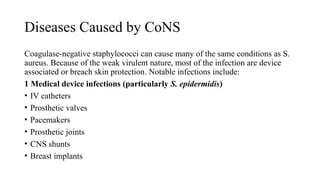
Diseases Caused by CoNS
Coagulase-negative staphylococci can cause many of the same conditions as S.
aureus. Because of the weak virulent nature, most of the infection are device
associated or breach skin protection. Notable infections include:
1 Medical device infections (particularly S. epidermidis)
• IV catheters
• Prosthetic valves
• Pacemakers
• Prosthetic joints
• CNS shunts
• Breast implants
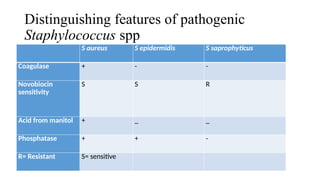
Distinguishing features of pathogenic
Staphylococcus spp
S aureus S epidermidis S saprophyticus
Coagulase + - -
Novobiocin
sensitivity
S S R
Acid from manitol + _ _
Phosphatase + + -
R= Resistant S= sensitive
Antibiotic choices
The agent of choice and duration of treatment for
Staphylococcus infection depends on the body area affected,
the severity of infection, and the antibiotic sensitivity of the
strain.
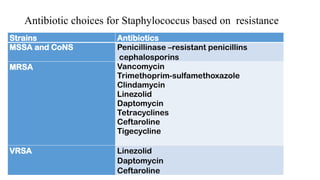
Antibiotic choices for Staphylococcus based on resistance
Strains Antibiotics
MSSA and CoNS Penicillinase –resistant penicillins
cephalosporins
MRSA Vancomycin
Trimethoprim-sulfamethoxazole
Clindamycin
Linezolid
Daptomycin
Tetracyclines
Ceftaroline
Tigecycline
VRSA Linezolid
Daptomycin
Ceftaroline
Prevention of Staphylococcal infection
1 Adequate hand hygiene
2 Adequate aseptic techniques in medical procedures
3 Appropriate use of antimicrobial drugs
4 Proper environmental hygiene including
• Stringent cleaning
• disinfection of equipment and environments
5 isolating patients when appropriate
6 Close monitoring of at-risk patients and populations
Thank you
Quiz Questions
1 A 20 year old med students presented with 3 days history of right
knee swelling and tenderness. Culture of Joint aspirate yielded growth
of GPC, which was catalase positive, coagulase negative. The possible
organism include
• Staphylococcus aureus
• Staphylococcus epidermis
• Streptococcus pneumoniae
• Enterococcus faecalis
Quiz questions
2 About 5 hours after a birthday party where a well garnished fried rice
and salad were served. A friend came to you as the only doctor she
knows with complains of vomiting, abdominal discomfort and 2
episodes of watery stool.
• 1, What is your likely diagnosis
• 2 What organism is likely to be responsible
• 3 What is role of antibiotics in this condition.
• 4 what investigation would you request for

Staphylococcus species for Medical Students

  • 1.
  • 2.
    Introduction Staphylococci are grampositive cocci that occur in groups in cluster. They are ubiquitous and most common cause of localized lesions in human beings. They develop resistance to penicillin and other antibiotics. Staphylococcus is a medically important genera of Gram- positive, aerobic cocci predominantly in clusters .These bacteria form clusters resembling bunch of grapes on Gram stains. Staphylococci are ubiquitous for humans, and many strains compose the normal skin flora.
  • 3.
    Staphylococcus aureus isthe most virulent species; S. epidermidis and S. saprophyticus are less virulent but are also clinically significant. Infection can cause a wide array of disease, including cellulitis, abscesses, endocarditis, osteomyelitis, and medical device infections. Toxins formed by S.aureus can cause gastroenteritis, SSSS, and toxic shock syndrome (TSS). Antibiotic management varies based on the type of infection, severity, and sensitivity data.
  • 4.
    Sir Alexander Oystenestablished the causative role of Staphylococcus in abscesses and other lesions. He named in staphylococcus which means, staphylo – bunches of grapes, kokkos means a berry because of the grape like clusters. Staphylococcae strains from pyogenic lesions produce yellow colonies and white colonies from normal skin.
  • 5.
    General characteristics Staphylococci speciesare gram-positive cocci that grow in a unique characteristic pattern resembling a cluster of grapes. Although organisms in clinical specimens commonly appear as single cells, pairs, short chains or few clusters. Most Staphylococci are large, 0.5 to 1.5 μm in diameter, and they are able to grow in a variety of conditions: aerobic and anaerobic atmosphere, in the presence of a high salt( 10% sodium chloride) and at wide range of temperatures(18° C to 40° C). The genus currently consists of more than 80 species and subspecies, many of which are found on the skin and mucous membranes of humans.
  • 6.
    General characteristics A goodnumber of Staphylococcus species have very unique and defined area of the body colonized S. aureus colonizes the anterior nares S. capitis is found where sebaceous glands are present (e.g., forehead), S. haemolyticus and S. hominis are found in areas in which apocrine glands are present (e.g., axilla). Staphylococci are important pathogens in humans, causing opportunistic infections and a wide spectrum of life-threatening systemic diseases, including infections of the skin, soft tissues, bones, and urinary tract.
  • 7.
    Cell characteristics The cellwall of Staphylococcus like other gram-positive bacterial cell wall is the target of many important antibiotics. So, understating of the key components is very important. One of the most relevant part of the cell wall is the peptidoglycan, this is composed of more than cell half of the cell wall by weight. Its made of layers of glycan chains built with 10 to 12 alternating subunits of N- acetylmuramic acid and N-acetylglucosamine. Oligopeptide side chains are attached to the N-acetylmuramic acid subunits and are then cross-linked with peptide bridges.
  • 8.
    Unlike gram-negative bacteria,the peptidoglycan layer in gram-positive organisms consists of many cross-linked layers, which makes the cell wall more rigid. The enzymes that catalyze construction of the peptidoglycan layer are called penicillin-binding proteins because these are the targets of penicillins and other β-lactam antibiotics
  • 9.
    Cell wall structureand functions The peptidoglycan has endotoxin-like activity, stimulating the production of endogenous pyrogens, activation of complement, production of interleukin (IL)-1 from monocytes, and aggregation of polymorphnuclear leucocytes (PMN) a process responsible for abscess formation. Teichoic acid is another relevant component of Gram positive cell wall, they are anionic polymers found in Gram-positive bacteria cell wall and are made of polyglycerol phosphate units (approximately 20–30 repeats). They are involved, among others, in the regulation of cell morphology as well as in cell division.
  • 10.
    The species mostcommonly associated with human diseases include S. aureus (the most virulent and best known member of the genus), S. epidermidis, S. saprophyticus
  • 11.
    General Characteristics andEpidemiology • Gram-positive cocci • Grow in clusters • Resemble a cluster of grapes • Non-motile • Non-spore-forming • Aerobic and facultative anaerobic • Catalase-positive:An enzyme that cleaves hydrogen peroxide → water and oxygen, a distinguishing feature from streptococci (which are catalase-negative)
  • 12.
    Clinically relevant species Theclinically relevant species can be classified based on the presence (or absence) of coagulase: • Coagulase-positive staphylococci: S. aureus • Coagulase-negative staphylococci (CONS) species (often grouped together): S. epidermidis & S. saprophyticus Infrequent pathogens • S. lugdunensis • S. hominis • S. capitis & S haemolyticus
  • 13.
    Distinguishing features amongthe common pathogenic Staphylococcus species Species Coagulase Blood agar Manitol salt agar Novobiocin sensitivity S aureus positive Beta hemolysis Yellow colonies sensitive S epidermidis negative Non hemolytic Pink or red colonies sensitive S saprophyticus negative Non hemolytic Yellow or red colonies resistant
  • 14.
    Epidemiology • S. aureus Colonizesapproximately 30% of the general population Major cause of community-acquired and nosocomial infections • S. epidermidis: Most commonly identified Staphylococcus species from human skin • S. saprophyticus: common cause of urinary tract infections (UTIs) in sexually active young women
  • 15.
    Pathogenesis Reservoir Staphylococcus species arepart of the normal human flora: • Nasal mucosa • Respiratory tract • Skin • GI tract • Genitourinary tract (S. saprophyticus) Transmission Staphylococcus aureus can be transmitted via aerosols and contact with: • Infected individuals • Bodily fluids • Contaminated objects
  • 16.
    Risk Factor Risk factorsfor severe Staphylococcus infection include: • Hospitalization • Surgery • Outpatient procedures (e.g., dialysis) • Implanted or prosthetic material: • Pacemakers/defibrillators • Intravascular catheters
  • 17.
    •Urethral catheters •Surgical implants •Prostheticvalves •Immunocompromised individuals •Nursing home stays •Injection drug use
  • 18.
    Virulence factors Virulence factorsCommon to most staphylococci include • Deoxyribonuclease (DNase): depolymerizes DNA, a component of neutrophil • Fibrinolysin: lyses fibrin walls used to keep an infection contained → aids in spread  Proteases: degrade proteins of target cells, such as components of the extracellular matrix (ECM) • Biofilm: An extracellular polysaccharide matrix that encases the bacteria after attaching to foreign material. It also acts as protective barrier against antibiotics and the host immune system
  • 19.
    Virulence factors specificto Staphylococcus aureus 1 Hyaluronidase; break down connective tissues, which makes it easier for pathogen invasion into the tissues 2 Lipase: degrade lipids, helps S. aureus infect the skin and subcutaneous tissues 3 Hemolysins and leukocidins: causes target cell death, including red blood cells and immune cells
  • 20.
    4 Clumping factorA: • Binds fibrinogen and other proteins • Causes bacteria clumping in plasma • Particularly important in the pathogenesis of endocarditis and endovascular infections 5 Coagulase • Converts fibrinogen to fibrin to form a wall around the local area of infection (pseudocapsule) • Promotes abscess formation
  • 21.
    6 Super-antigens: • Toxicshock syndrome toxin type-1 (TSST-1) • Enterotoxin B Cause toxic shock syndrome (TSS): • Bind to MHC class II on antigen-presenting cells → cross-links with the β region of the T cell receptor (TCR) • Stimulates T cell activation and an exaggerated cytokine release • Results in an excessive inflammatory response
  • 22.
    Virulence factors specificto CONS 1 Adhesins: aid CoNS adhesion to host cells 2 Urease: Produced by S. saprophyticus • Hydrolyzes urea to produce C02 and ammonia resulting in increased urine pH • Makes it particularly virulent within the urinary tract
  • 23.
    Staphylococcus aureus S. aureusis a facultatively anaerobic, non- motile, non- spore forming, catalase- positive, coagulase- positive, Gram- positive coccus. It is a major human pathogen, and can cause a wide variety of infections, ranging from superficial skin infections to severe life- threatening conditions S. aureus is a skin colonizer and is found in the anterior nares of 10– 40% of people. Chronic carriage is associated with an increased risk of infection, e.g. in haemodialysis patients. Nasal carriage has contributed to the persistence and spread of MRSA
  • 24.
    S. aureus coloniescan have a yellow or gold color as the result of the carotenoid pigments that form during their growth, hence the species name. It is also the most common species in humans that produces the enzyme coagulase
  • 25.
    Catalase test Catalase isa haem containing enzyme whose role is to degrade hydrogen peroxide. Hydrogen peroxide is one of the products of aerobic metabolism. However, this product is highly reactive and a toxic to the pathogens. Organism that are able to produce the enzyme catalase which is decomposes H2O2 -----→ H2O + O2 thrives very well. However, anaerobic bacteria lack catalase, but they decompose H2O2 with the help of enzyme peroxidase.
  • 26.
    Catalase This test demonstratethe presence of catalase, an enzyme that catalyses the release of oxygen from hydrogen peroxide (H2O2). It is used to differentiate those bacteria that produces an enzyme catalase, such as staphylococci, from non-catalase producing bacteria such as streptococci. Principle: Catalase production help protect bacteria from the lethal effect of Hydrogen peroxide which is accumulated as an end product of aerobic carbohydrate metabolism. The enzyme catalase mediates the breakdown of hydrogen peroxide into oxygen and water.
  • 27.
    Procedure of CatalaseTest Purpose of the test; To differentiate morphologically similar Enterococcus or Streptococcus (catalase negative) and Staphylococcus (catalase positive) can be differentiated using the catalase test
  • 28.
    Catalase test Principle: Whencells of bacteria known to produce catalase are exposed to a solution of 3% hydrogen peroxide, the oxygen released following decomposition of H2O2 appears as effervescence or bubbles. Procedure: Catalase test can be done on slide, tube or agar plate. Slide catalase test: a small portion of young bacterial colony is transferred from culture plate to the surface of clean and dry glass slide using a straight wire. A drop of 3% H2O2 is placed on the colony. Production of effervescence (bubbles) in 5-10 seconds is a positive test. No appearance of bubbles or appearance after 30 seconds (due to degradation of H2O2 by other enzymes) is considered negative.
  • 29.
    Tube catalase test:Approximately 2-3 ml of freshly prepared 3% H2O2 is taken in a test tube. A portion of the young bacterial colony is picked up using a sterile glass capillary, plastic or wooden stick and immersed into the tube containing H2O2. Production of effervescence (bubbles) in 5-10 seconds is a positive test.
  • 31.
    Precautions: • Picking coloniesfrom blood agar must be avoided. If RBCs from the medium gets scraped along with the bacteria, they may give false positive reactions. • 3% H2O2 must be freshly prepared and must be held in dark or amber coloured bottles (protected from light). Control • Positive control: Staphylococcus aureus ATCC 33592 • Negative control: Enterococcus fecalis ATCC 29212
  • 32.
    Coagulase test Staphylococcus aureusis known to produce coagulase, which can clot plasma into gel in tube or agglutinate cocci in slide. This test is useful in differentiating S.aureus from other coagulase-negative staphylococci. Most strains of S.aureus produce two types of coagulase, free coagulase and bound coagulase.
  • 33.
    While free coagulaseis an enzyme that is secreted extracellularly, bound coagulase is a cell wall associated protein. Free coagulase is detected in tube coagulase test and bound coagulase is detected in slide coagulase test. Slide coagulase test may be used to screen isolates of S.aureus and tube coagulase may be used for confirmation. While there are seven antigenic types of free coagulase, only one antigenic type of bound coagulase exists. Free coagulase is heat labile while bound coagulase is heat stable.
  • 34.
    SLIDE COAGULASE TEST Principle:The bound coagulase is also known as clumping factor. It cross-links the α and β chain of fibrinogen in plasma to form fibrin clot that deposits on the cell wall. As a result, individual coccus stick to each other and clumping is observed.
  • 35.
    SLIDE COAGULASE TEST Procedure:A dense suspensions of Staphylococci from culture are made on two ends of clean glass slide. One should be labeled as “test” and the other as “control”. The control suspension serves to rule out false positivity due to auto-agglutination. The test suspension is treated with a drop of citrated plasma and mixed well. Agglutination or clumping of cocci within 5-10 seconds is taken as positive. Some strains of S.aureus may not produce bound coagulase, and such strains must be identified by tube coagulase test
  • 36.
    TUBE COAGULASE TEST Principle:The free coagulase secreted by S.aureus reacts with coagulase reacting factor (CRF) in plasma to form a complex, which is thrombin. This converts fibrinogen to fibrin resulting in clotting of plasma.
  • 37.
    Procedure: Three testtubes are taken and labeled “test”, “negative control” and “positive control”. Each tube is filled with 0.5 ml of 1 in 10 diluted rabbit plasma. To the tube labeled test, 0.1 ml of overnight broth culture of test bacteria is added. To the tube labeled positive control, 0.1 ml of overnight broth culture of known S.aureus is added and to the tube labeled negative control, 0.1 ml of sterile broth is added. All the tubes are incubated at 37oC and observed up to four hours..
  • 38.
    Positive result isindicated by gelling of the plasma, which remains in place even after inverting the tube. If the test remains negative until four hours at 37oC, the tube is kept at room temperature for overnight incubation.
  • 39.
    Application: Coagulase testis used to identify and differentiate S.aureus from coagulase negative staphylococci. While slide coagulase test is useful in screening, tube coagulase test is useful in confirmation of coagulase test. Not all S.aureus strains produce coagulase; such rare strains are identified by thermonuclease test. Some coagulase negative staphylococci such as S.lugdensis and S.schleiferi are known to give positive slide coagulase test while S.hyicus and S.intermedius are known to give positive tube coagulase test
  • 41.
    The ability Staphylococcusaureus to cause infection is dependent on its ability to 1 evade immune clearance 2 Produce adherence protein. enhances attachment to host tissue 3 Produce of toxins; for tissue destruction 4 elaborate of hydrolytic enzymes; for tissue destruction
  • 42.
    Diseases Caused byS. aureus Skin and soft tissue infections • Folliculitis • Impetigo • Cellulitis • Necrotizing fasciitis • Surgical wound infection • Abscess
  • 43.
    Bloodstream infection; Itcan both primary infection or infection seeded from other tissues such skin and soft tissue infection. Infective endocarditis (IE) • Leads to cardiac valve vegetations • Can release septic emboli resulting in an embolic complications and/or metastatic infection • IE due to S. aureus is associated with acute, rapidly progressive infection.
  • 44.
    • Pneumonia S.aureus notably causes secondary bacterial pneumonia in individuals with influenza or other upper respiratory tract infections. • Osteomyelitis; Infection of the bone. This can be due to hematogenous spread from distance tissue infection such as Blood stream infection or non-hematogenous spread such as traumatic inoculation • Septic arthritis • Common Complications includes Necrotizing infection resulting in tissue destruction, lung cavitation, Lung abscess, Empyema
  • 45.
    • Medical deviceassociated infections, such as: IV catheters such as catheter associated UTI, central line associated blood stream infection Prosthetic valves; eg infective endocarditis Prosthetic joints Pacemakers
  • 46.
    Toxins S. aureus producesmany toxins some of which include • Cytolytic or membrane-damaging toxins (alpha, beta, delta, gamma, and P-V leukocidin) • Exfoliative toxins (A and B) • The staphylococcal Super antigens; include the staphylococcal enterotoxins (SEs), the staphylococcal enterotoxin-like (SEls) proteins, and toxic shock syndrome toxin-1 (TSST-1) • While TSST- 1 is associated with TSS, Enterotoxins are associated with food poisoning;
  • 47.
    • Cytolytic toxin;cytotoxic to many cells, including erythrocytes, fibroblasts, leukocytes, macrophages, and platelets examples include; apha, beta, deta,gamma and PV leukocidin • Exfoliative toxins (ETA, ETB) Serine proteases that split the intercellular bridges in the stratum granulosum epidermis • Enterotoxins ; Superantigens (stimulate proliferation of T cells and release of cytokines); stimulate release of inflammatory mediators in mast cells, increasing intestinal peristalsis and fluid loss, as well as nausea and vomiting • Toxic shock syndrome toxin-1
  • 48.
    Enterotoxins Staphylococcal enterotoxins ofvarious types have been identified. Enterotoxin A is most commonly associated with food poisoning. Enterotoxins C and D are found in contaminated milk products while enterotoxin B causes staphylococcal pseudomembranous enterocolitis. The enterotoxins are designed perfectly for causing foodborne disease (stable to heating at 100° C for 30 minutes and resistant to hydrolysis by gastric and jejunal enzymes). Thus once a food product has been contaminated with enterotoxin-producing staphylococci and the toxins have been produced, neither mild reheating of the food nor exposure to gastric acids will be protective..
  • 49.
    These toxins areproduced by 30% to 50% of all S. aureus strains. The precise mechanism of toxin activity is not understood. These toxins are superantigens capable of inducing nonspecific activation of T cells and massive cytokine release
  • 50.
    Staphylococcal Food Poisoning Staphylococcalfood poisoning is one of the most common foodborne illnesses, is an intoxication rather than an infection This condition is caused by toxin present in food rather than from a direct effect of the organisms on the patient. Foods commonly contaminated include Foods that are not cooked after handling, such as • Sandwiches • Processed meats such as ham and salted pork, • Custard-filled pastries. • Potato salad • Ice cream
  • 51.
    Sources and route •Carriers with asymptomatic nasopharyngeal colonization. • Individuals with an obvious staphylococcal skin infection Route of entry into the food is via sneezing and contaminated hands Appropriate environment for toxin released from the organism include food at room temperature or warmer. Subsequent heating of the food will only kill the bacteria but can not Inactivate the heat-stable toxin. NB;The contaminated food will not appear or taste abnormal.
  • 52.
    Clinical features • Theonset of disease is abrupt and rapid following ingestion of contaminated food. Incubation period is usually about 4 hours, consistent with a disease mediated by preformed toxin. • Further toxin is not produced by ingested staphylococci. Reason the disease has a rapid course, with symptoms generally lasting less than 24 hours. • Symptoms include; Severe vomiting, watery diarrhea, and abdominal pain or nausea, but fever is not seen. Complication might include dehydration
  • 53.
    Diagnosis and treatment •Diagnosis is largely based on clinical information-History • Toxin producing organism might be isolated from the contaminated food if the organism is not killed during cooking or reheating. • Treatment is usually symptomatic . Treat the presenting symptoms if necessary • Antibiotics administration is not indicated in the management.
  • 54.
    Staphylococcal scalded skinsyndrome (SSSS) An exfoliating dermatosis encompasses a spectrum of superficial blistering skin disorders caused by the exfoliative toxins of some strains of Staphylococcus aureus in which must of the body surfaces becomes tender and erythematous and the superficial epidermis is stripped off. Children < 6 years and neonates are commonly affected by the generalized form while adult often time with the localized form.
  • 55.
    •Children are moreat risk because of lack of immunity and immature renal clearance capability (exfoliative toxins are renally excreted •Implicating organism including Staphylococcus aureus strain producing exfoliative toxins A and B). This account for about 5% of all Staphylococcus aureus
  • 56.
    Predisposing factors • Inaddition to infection with appropriate toxin Staphylococcus aureus, • renal failure • Malignancy • immunosuppression
  • 57.
    Pathogenesis • ETA &ETB target the cell adhesion proteins desmoglein -1 resulting in the separation of keratinocytes(a cell-to-cell attachment protein found only in the superficial epidermis) just beneath the granular layer in the epidermis(intra-epidermal) • ET spread hematogenously resulting in wide skin involvement in remote areas
  • 58.
    Presentations The initial sourceof infection maybe impetigo of the face, oral or nasal cavities, throat, or umbilicus. A few days later, patient develops fever, irritability and skin tenderness . And then a widespread erythematous eruption follows, which is usually accentuated in the flexures . This will result in rapid progression to superficial skin blister formation. Subsequently, the tender skin becomes gather into folds, and shrinks leaving raw areas which are extremely painful In most cases symptoms resolve within 7-14days
  • 59.
    Diagnosis Gram stain and/orculture from the remote infection site may confirm staphylococcal infection Cultures of bullae are negative in the absence of contamination. Blood culture is usually negative in children (but positive in bullous impetigo) and is usually positive in adults
  • 61.
    SSSS and Bullousimpetigo Although both are blistering skin diseases caused by staphylococcal exfoliative toxin. However, in bullous impetigo, the exfoliative toxins are restricted to the area of infection, and bacteria can be cultured from the blister contents. In staphylococcal scalded skin syndrome, the exfoliative toxins are spread hematogenously from a localized source potentially causing epidermal damage at distant sites. Therefore, cultures of the bullous material are sterile.
  • 62.
    SSSS and severetoxic epidermal necrolysis (TEN) SSSS differs from the more severe toxic epidermal necrolysis (TEN), in that the cleavage site in staphylococcal scalded skin syndrome is intra-epidermal, as opposed to TEN, which involves necrosis of the full epidermal layer.
  • 63.
    TSS was describedin 1927 by Franklin Stevens as staphylococcal scarlet fever and was named “toxic shock syndrome” by Todd and colleagues in 1978 to describe a systemic illness in seven children caused by non- invasive S. aureus
  • 64.
    TSS: Pathogenesis TSS isdue to a Super antigen(SAg)-induced cytokine storm owing to the massive activation of T cells in individuals lacking neutralizing antibodies to the particular SAg. The disease leads to a capillary leak syndrome where patients develop fever, rash, hypotension, multiorgan involvement and convalescent desquamation. S. aureus can cause the menstrual form of TSS, which historically occurred in young women in association with high absorbency tampons, and non-menstrual TSS, which can occur from virtually any S. aureus infection.
  • 65.
    Toxic shock syndrome(TSS) This is a toxin-mediated acute life-threatening condition, usually mediated by infection associated with either Staphylococcus aureus or Streptococcus pyogenes. Clinical features include; high grade fever, rash, hypotension, multi-organ failure (involving at least 3 or more organ systems), and skin desquamation of the skin in area such as the palms and soles, 1-2 weeks after the onset of acute illness. The most commonly implicated toxins include • TSS toxin type-1 (TSST-1) • Staphylococcal enterotoxin B
  • 66.
    •TSS has beenassociation with tampon use by menstruating women. Menstrual TSS is more likely in women •using highly absorbent tampons •using tampons for more days of their cycle •keeping a single tampon in place for a longer period of time. Over the past two decades, the number of cases of menstrual TSS has steadily declined; this is thought to be due to the withdrawal of highly absorbent tampons from the market.
  • 67.
    Up to 50%of cases of TSS are not associated with menstruation. These non-menstrual cases of TSS have been linked to complication of barrier contraceptives, surgical site and postpartum wound infections, burns, osteomyelitis, and arthritis. Although most cases of TSS occur in women, about 25% of non-menstrual cases occur in men.
  • 68.
    Toxin-mediated diseases; Featuresof toxin-mediated diseases caused by S. aureus Disease Exotoxin Clinical presentation Staphylococci scalded skin syndrome(SSSS) Exfoliative toxins A and B Prodromal symptoms Erythematous rash → blisters → desquamation, Skin pain Spares mucosa Toxic shock syndrome ( TSS) Toxic shock syndrome toxin type-1 (TSST-1) Enterotoxin B Fever ,Rash Hypotension, Multiorgan dysfunction Gastroenteritis Enterotoxins Nausea and vomiting Abdominal cramps Diarrhea
  • 69.
    Antibiotics and Resistance Staphylococcusspecies can develop antibiotic resistance to different class of antibiotics, and identification of susceptibility is necessary for adequate treatment. Species are often designated as: • Penicillin resistant staphylococcus aureus • Methicillin-sensitive Staphylococcus aureus (MSSA) • Methicillin-resistant Staphylococcus aureus(MRSA) • Vancomycin intermediate Staphylococcus aureus(VISA) • Vancomycin-resistant Staphylococcus aureus(VRSA)
  • 70.
    Mechanism of resistance MethicillinResistant Staphylococcus aureus(MRSA) MRSA strains are of S aureus resistant to all β- lactams due to alteration in penicillin- binding protein (PBP2) and consequently the structure of the cell wall. MRSA is due to the mecA gene that codes for the low- affinity PBP2. • Despite the mutations, these PBPs are still able to produce a cell wall • Isolates are resistant to all beta lactams including; penicillin ,1st , 2nd ,3rd ,4th generation cephalosporin except the 5th generation.
  • 71.
    Types of MRSA •Healthcare Acquired- MRSA defined as that occurring >48h after exposure to health care admission. • Community- onset HA- MRSA (that occurring within 12 months of exposure to health care, e.g. dialysis, residence in a care home • These strains are also resistant to other class of antibiotics besides the Beta lactams such as erythromycin and ciprofloxacin. • This results in higher mortality, longer hospital stays, and high cost on the health system more than those with Methicillin Resistant Staphylococcus aureus (MSSA) infection
  • 72.
    Community acquired MRSA •Community acquired often sensitive to non- β- lactam antibiotics (e.g. ciprofloxacin) and is Panton– Valentine leucocidin (PVL)—positive, • PVL is a haemolysin (induces a pore in the membrane of host leucocytes) • PVL- producing strains are associated with furunculosis, severe haemorrhagic pneumonia, and clusters of MRSA skin infections; • CA- MRSA are associated with community outbreaks in settings such day- care centres, sports teams prison inmates and guards, and men who have sex with men (MSM)
  • 73.
    Laboratory diagnosis specimen collections Thespecimens to be collected depend on the type of lesion, like pus from suppurative lesions, sputum from respiratory infection. In case of food poisoning, feces and the remains of suspected food should be collected. For detection of carriers, nasal swab is the usual specimen. Swabs from perineum, pieces of hair and umbilical stump are taken.
  • 74.
    Direct microscopy Direct microscopywith Gram stained smears is useful in the case of pus, where cocci in clusters may be seen. Definitive diagnosis is readily made by culture. The specimens are plated on blood agar, MacConkey agar and incubated aerobically at 35-370 C for 16-18hours. This is followed by Gram staining of the bacteria growth (colonies) smear for microscopy. The Gram picture is Gram positive cocci predominantly in clusters(grape-like ) Specimens where staphylococci are expected to be scanty and outnumbered by other bacteria( contaminated sites), selective media like manitol salt agar may be used for inoculation.
  • 75.
    Coagulase test- Slidetest The slide test detecting bound coagulase is much simpler. When there is divergence, the tube test will be the deciding factor. For the slide test, the isolate is emulsified in a drop of saline on a slide. After checking for absence of auto- agglutination, a drop of human or rabbit plasma is added and mixed. Prompt clumping of the cocci indicated a positive test. Positive and negative controls also are set up.
  • 76.
    Tube tests The coagulasetest can be done using two methods, tube and slide. The tube coagulase test detects free coagulase while the slide test detects the bound coagulase. About 0.1ml of a young broth culture or agar culture suspension of the isolate is added to about 0.5ml of human or rabbit plasma in a narrow test tube. The tubes are incubated in water bath at 370 C for 3- 6 hours. If positive, the plasma clots and does not flow when the tube is tilted
  • 77.
    Coagulase Negative Staphylococci Coagulasenegative staphylococci constitute a major component of the normal flora of the human body, whereas some like staph epidermidis, staph haemolyticus and staph saprophyticus cause disease. Staph epidermidis is a normal flora of the skin but may cause disease when the host defences are compromised. It commonly causes stitch abcesses, and may grow on foreign bodies such as artificial heart valves, intravascular catheters and prosthetic appliances causing bacteremia. • Staph saprophyticus is also a normal flora present on normal skin and • Peri-urethral area and can cause urinary tract infection in sexually active young women commonly associated with honeymoon cystitis.
  • 78.
    Diseases Caused byCoNS Coagulase-negative staphylococci can cause many of the same conditions as S. aureus. Because of the weak virulent nature, most of the infection are device associated or breach skin protection. Notable infections include: 1 Medical device infections (particularly S. epidermidis) • IV catheters • Prosthetic valves • Pacemakers • Prosthetic joints • CNS shunts • Breast implants
  • 79.
    Distinguishing features ofpathogenic Staphylococcus spp S aureus S epidermidis S saprophyticus Coagulase + - - Novobiocin sensitivity S S R Acid from manitol + _ _ Phosphatase + + - R= Resistant S= sensitive
  • 80.
    Antibiotic choices The agentof choice and duration of treatment for Staphylococcus infection depends on the body area affected, the severity of infection, and the antibiotic sensitivity of the strain.
  • 81.
    Antibiotic choices forStaphylococcus based on resistance Strains Antibiotics MSSA and CoNS Penicillinase –resistant penicillins cephalosporins MRSA Vancomycin Trimethoprim-sulfamethoxazole Clindamycin Linezolid Daptomycin Tetracyclines Ceftaroline Tigecycline VRSA Linezolid Daptomycin Ceftaroline
  • 82.
    Prevention of Staphylococcalinfection 1 Adequate hand hygiene 2 Adequate aseptic techniques in medical procedures 3 Appropriate use of antimicrobial drugs 4 Proper environmental hygiene including • Stringent cleaning • disinfection of equipment and environments 5 isolating patients when appropriate 6 Close monitoring of at-risk patients and populations
  • 83.
  • 84.
    Quiz Questions 1 A20 year old med students presented with 3 days history of right knee swelling and tenderness. Culture of Joint aspirate yielded growth of GPC, which was catalase positive, coagulase negative. The possible organism include • Staphylococcus aureus • Staphylococcus epidermis • Streptococcus pneumoniae • Enterococcus faecalis
  • 85.
    Quiz questions 2 About5 hours after a birthday party where a well garnished fried rice and salad were served. A friend came to you as the only doctor she knows with complains of vomiting, abdominal discomfort and 2 episodes of watery stool. • 1, What is your likely diagnosis • 2 What organism is likely to be responsible • 3 What is role of antibiotics in this condition. • 4 what investigation would you request for

Editor's Notes

  • #19 . Hyaluronidase breaks down the connective tissue. Staphylokinase helps in initiating and spread of infection.