The HOW and WHY for 
openness in scholarly 
publishing and 
teaching materials 
Timothy Vollmer | Stanford School of Medicine Lane Library | October 22, 2014
What should we talk about? 
• What’s Creative Commons and why is it useful? 
• What are CC licenses and how do they work? 
• Who uses CC? 
• CC and open access publishing 
• CC and open educational resources 
• Connection between OA and OER 
• Q&A
Nonprofit organization 
Free copyright licenses 
Founded in 2001 
Operate worldwide
Creative Commons develops, 
supports, and stewards legal 
and technical infrastructure that 
maximizes digital creativity, 
sharing, and innovation.
The problem: 
traditional copyright 
does not work well for 
sharing and free online 
collaboration.
Features of copyright today 
• Supposed to “promote the Progress of Science and useful 
Arts” 
• Automatic 
• in U.S., lasts for life of author + 70 years 
• “bundle of rights” = reproduce, make derivative works, 
distribute, public performance 
• Have to ask permission 
• Infringement is expensive ($750-$150k) 
• Safety valves (fair use) 
• Public domain = no copyright protection 
• Facts not protected
FAST 
FWD
With the web, 
It’s so damn easy to share
But how to ask 
permission?
How to support those that 
just want to share?
CC’s solution: 
A standardized, legally 
robust way to grant 
copyright permissions to 
creative works.
“Lowers transaction costs”
CC’s legal infrastructure: 
(1) Copyright Licenses 
(2) Public Domain Tools
(1) CC Copyright Licenses
CC licenses build on 
traditional copyright 
• “All Rights Reserved” to “Some Rights Reserved” 
• Gives creators a choice about which freedoms to 
grant and which rights to keep 
• minimizes transaction costs by granting the 
public certain permissions beforehand
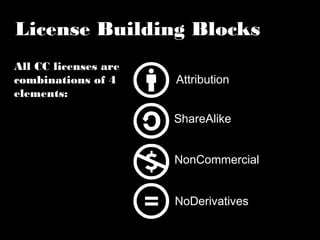
License Building Blocks 
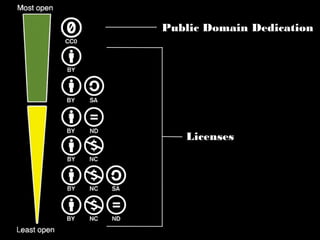
All CC licenses are 
combinations of 4 
elements: 
Attribution 
ShareAlike 
NonCommercial 
NoDerivatives
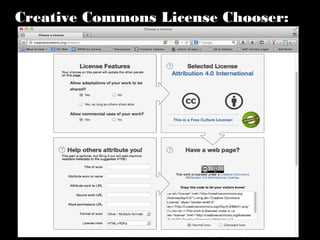
Creative Commons License Chooser: 
http://creativecommons.org/choose/
Public Domain Dedication 
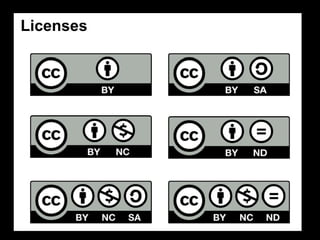
Licenses
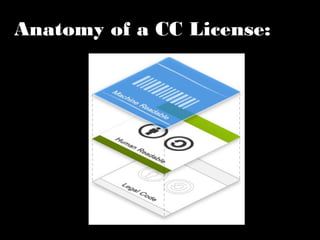
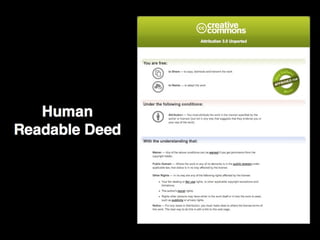
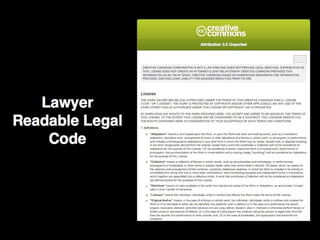
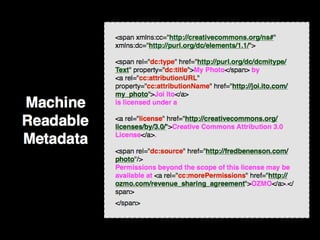
Anatomy of a CC License:
(2) Public Domain Tools
CC0 Public Domain Dedication 
(read “CC Zero”) 
Universal waiver, permanently surrenders 
copyright and related rights, placing the work 
as nearly as possible into the public domain 
worldwide
CC Public Domain Mark 
Not legally operative, but a label to be used by 
those with knowledge of a work already in the 
public domain 
Only intended for use with works in the 
worldwide public domain
75 jurisdictions
500M – 1B works
Who uses 
Creative Commons?
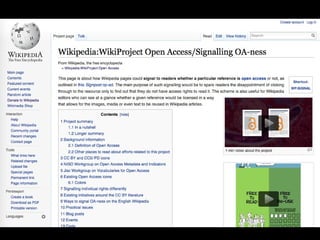
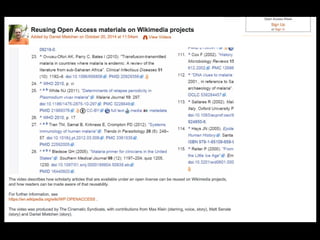
Wikipedia: Over 77,000 contributors 
working on over 22 million articles in 285 
languages; 23 million files on Commons
FOCUS: 
OPEN ACCESS
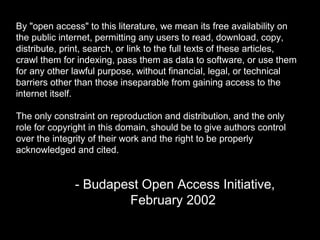
By "open access" to this literature, we mean its free availability on 
the public internet, permitting any users to read, download, copy, 
distribute, print, search, or link to the full texts of these articles, 
crawl them for indexing, pass them as data to software, or use them 
for any other lawful purpose, without financial, legal, or technical 
barriers other than those inseparable from gaining access to the 
internet itself. 
The only constraint on reproduction and distribution, and the only 
role for copyright in this domain, should be to give authors control 
over the integrity of their work and the right to be properly 
acknowledged and cited. 
- Budapest Open Access Initiative, 
February 2002
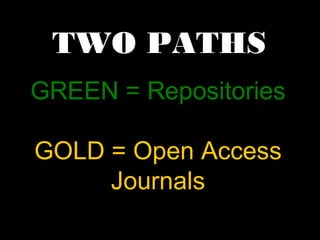
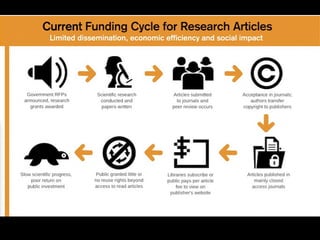
TWO PATHS 
GREEN = Repositories 
GOLD = Open Access 
Journals
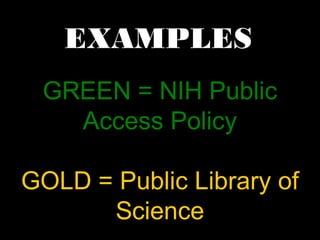
EXAMPLES 
GREEN = NIH Public 
Access Policy 
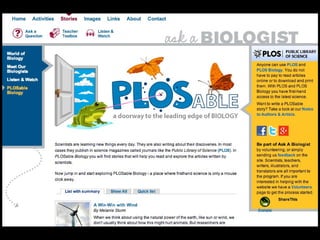
GOLD = Public Library of 
Science
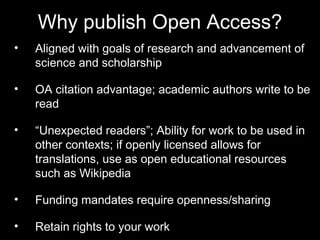
Why publish Open Access? 
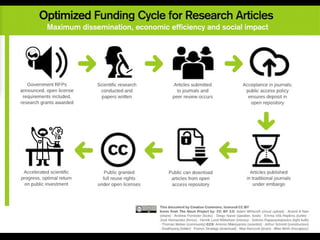
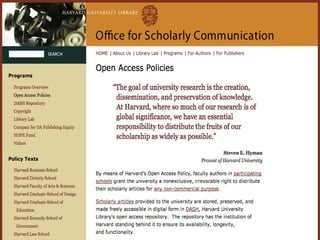
• Aligned with goals of research and 
advancement of science and scholarship 
• OA citation advantage; academic authors write 
to be read 
• “Unexpected readers”; Ability for work to be 
used in other contexts; if openly licensed 
allows for translations, use as open educational 
resources such as Wikipedia 
• Funding mandates require openness/sharing 
• Retain rights to your work
FOCUS: 
OPEN 
EDUCATIONAL 
RESOURCES
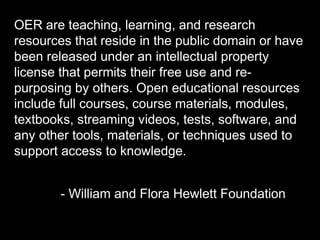
OER are teaching, learning, and research 
resources that reside in the public domain or 
have been released under an intellectual property 
license that permits their free use and re-purposing 
by others. Open educational resources 
include full courses, course materials, modules, 
textbooks, streaming videos, tests, software, and 
any other tools, materials, or techniques used to 
support access to knowledge. 
- William and Flora Hewlett Foundation
4Rs
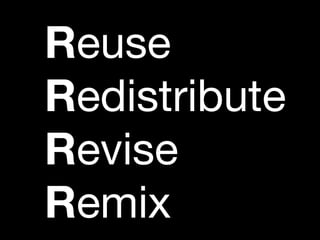
Reuse 
Redistribute 
Revise 
Remix
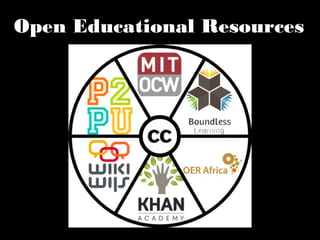
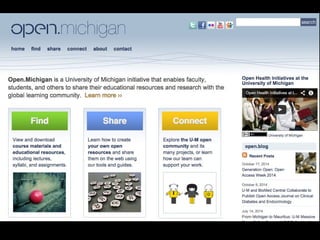
Open Educational Resources
Why publish OERs? 
• Cost saving for students; rough estimate is that 
CC-licensed open textbooks saved $100M 
• Overcome barriers: language (translations 
possible), discovery (Google index of CC-licensed 
content), technical (move content to 
other formats), cultural (re-use of materials in 
other teaching contexts and in other parts of 
world) 
• Increased exposure to teaching/research; 
coordination with other faculty
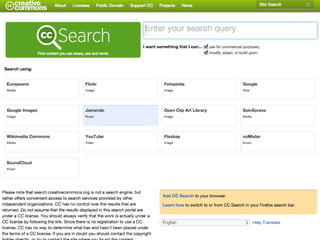
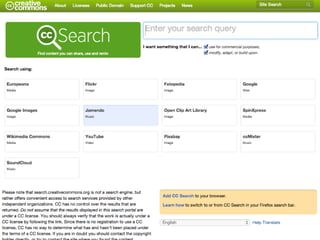
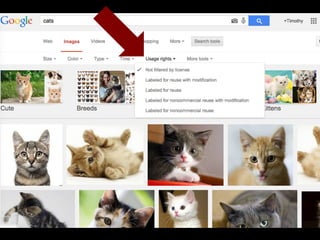
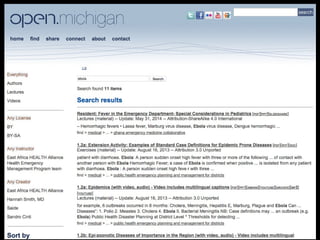
Search
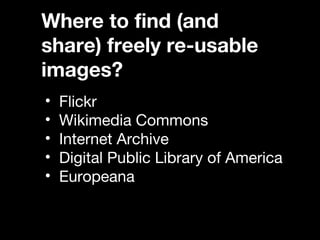
Where to find (and share) 
freely re-usable images? 
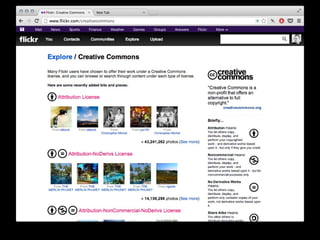
• Flickr 
• Wikimedia Commons 
• Internet Archive 
• Digital Public Library of America 
• Europeana
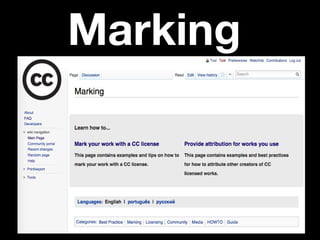
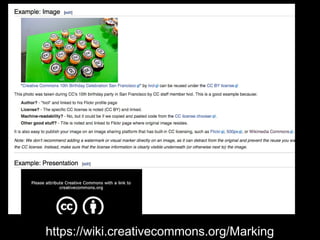
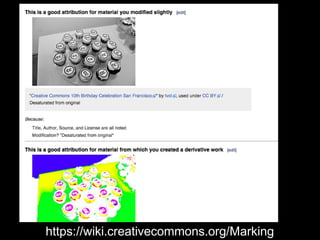
Marking
https://wiki.creativecommons.org/Marking
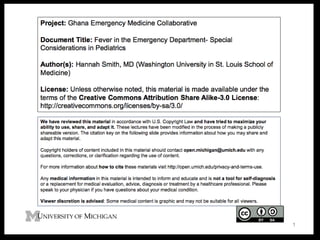
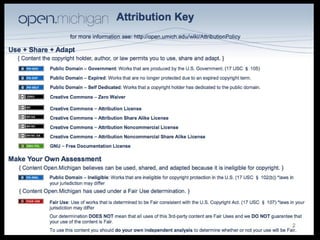
• Attribution: 
• Who’s the rightsholder? 
• Where does it live online? 
• What is the license used? 
• Intended to be flexible 
• With 4.0, “in any reasonable manner based 
on the medium, means, context” 
• For example, put it on a webpage and 
provide a link to that page with the image
OA OER
Questions?
Thank you very much! 
tvol@creativecommons.org

Stanford Open Access Week 2014 presentation

  • 1.
    The HOW andWHY for openness in scholarly publishing and teaching materials Timothy Vollmer | Stanford School of Medicine Lane Library | October 22, 2014
  • 2.
    What should wetalk about? • What’s Creative Commons and why is it useful? • What are CC licenses and how do they work? • Who uses CC? • CC and open access publishing • CC and open educational resources • Connection between OA and OER • Q&A
  • 4.
    Nonprofit organization Freecopyright licenses Founded in 2001 Operate worldwide
  • 5.
    Creative Commons develops, supports, and stewards legal and technical infrastructure that maximizes digital creativity, sharing, and innovation.
  • 6.
    The problem: traditionalcopyright does not work well for sharing and free online collaboration.
  • 7.
    Features of copyrighttoday • Supposed to “promote the Progress of Science and useful Arts” • Automatic • in U.S., lasts for life of author + 70 years • “bundle of rights” = reproduce, make derivative works, distribute, public performance • Have to ask permission • Infringement is expensive ($750-$150k) • Safety valves (fair use) • Public domain = no copyright protection • Facts not protected
  • 8.
  • 9.
    With the web, It’s so damn easy to share
  • 10.
    But how toask permission?
  • 11.
    How to supportthose that just want to share?
  • 12.
    CC’s solution: Astandardized, legally robust way to grant copyright permissions to creative works.
  • 13.
  • 14.
    CC’s legal infrastructure: (1) Copyright Licenses (2) Public Domain Tools
  • 15.
  • 16.
    CC licenses buildon traditional copyright • “All Rights Reserved” to “Some Rights Reserved” • Gives creators a choice about which freedoms to grant and which rights to keep • minimizes transaction costs by granting the public certain permissions beforehand
  • 17.
    License Building Blocks All CC licenses are combinations of 4 elements: Attribution ShareAlike NonCommercial NoDerivatives
  • 18.
    Creative Commons LicenseChooser: http://creativecommons.org/choose/
  • 20.
  • 21.
    Anatomy of aCC License:
  • 26.
  • 27.
    CC0 Public DomainDedication (read “CC Zero”) Universal waiver, permanently surrenders copyright and related rights, placing the work as nearly as possible into the public domain worldwide
  • 28.
    CC Public DomainMark Not legally operative, but a label to be used by those with knowledge of a work already in the public domain Only intended for use with works in the worldwide public domain
  • 29.
  • 30.
  • 31.
  • 32.
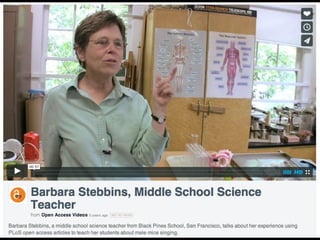
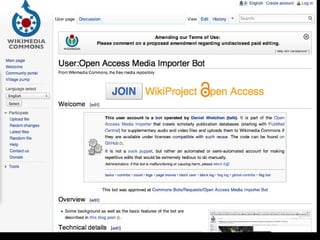
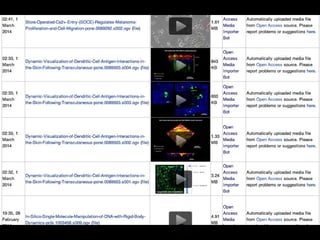
    Wikipedia: Over 77,000contributors working on over 22 million articles in 285 languages; 23 million files on Commons
  • 37.
  • 39.
    By "open access"to this literature, we mean its free availability on the public internet, permitting any users to read, download, copy, distribute, print, search, or link to the full texts of these articles, crawl them for indexing, pass them as data to software, or use them for any other lawful purpose, without financial, legal, or technical barriers other than those inseparable from gaining access to the internet itself. The only constraint on reproduction and distribution, and the only role for copyright in this domain, should be to give authors control over the integrity of their work and the right to be properly acknowledged and cited. - Budapest Open Access Initiative, February 2002
  • 40.
    TWO PATHS GREEN= Repositories GOLD = Open Access Journals
  • 41.
    EXAMPLES GREEN =NIH Public Access Policy GOLD = Public Library of Science
  • 43.
    Why publish OpenAccess? • Aligned with goals of research and advancement of science and scholarship • OA citation advantage; academic authors write to be read • “Unexpected readers”; Ability for work to be used in other contexts; if openly licensed allows for translations, use as open educational resources such as Wikipedia • Funding mandates require openness/sharing • Retain rights to your work
  • 49.
  • 50.
    OER are teaching,learning, and research resources that reside in the public domain or have been released under an intellectual property license that permits their free use and re-purposing by others. Open educational resources include full courses, course materials, modules, textbooks, streaming videos, tests, software, and any other tools, materials, or techniques used to support access to knowledge. - William and Flora Hewlett Foundation
  • 51.
  • 52.
  • 55.
  • 56.
    Why publish OERs? • Cost saving for students; rough estimate is that CC-licensed open textbooks saved $100M • Overcome barriers: language (translations possible), discovery (Google index of CC-licensed content), technical (move content to other formats), cultural (re-use of materials in other teaching contexts and in other parts of world) • Increased exposure to teaching/research; coordination with other faculty
  • 57.
  • 60.
    Where to find(and share) freely re-usable images? • Flickr • Wikimedia Commons • Internet Archive • Digital Public Library of America • Europeana
  • 67.
  • 68.
  • 69.
  • 70.
    • Attribution: •Who’s the rightsholder? • Where does it live online? • What is the license used? • Intended to be flexible • With 4.0, “in any reasonable manner based on the medium, means, context” • For example, put it on a webpage and provide a link to that page with the image
  • 71.
  • 78.
  • 79.
    Thank you verymuch! tvol@creativecommons.org

Editor's Notes

  • #2 So hello everyone! Thanks for having me today. I’m here to talk to you about Creative Commons and the free legal tools that we offer, especially for librarians – and how CC tools can be a librarian’s best friend when it comes to explaining things like copyright, pointing the community, especially educators and students, to free academic and educational resources, and how to use and attribute these resources. First, I’d love a show of hands – maybe in the chat – for how many of your familiar with Creative Commons? Abstract: Creative Commons are a librarian's best friend when it comes to explaining copyright, pointing others to free academic and educational resources, and highlighting reuse and attribution best practices. Learn about Creative Commons -- the organization and its mission; its copyright licenses; its public domain tools, especially CC0 (read CC Zero); how to discover, find and attribute CC-licensed content; and how to license your own content with a CC license. We will also go over a few of the major organizations and institutions who have adopted CC licensing.
  • #25 This is HTML code that has embedded metadata about the work (who it’s authored by, CC license status, etc.). This code is pastable into any web page.
  • #31 we can track more than 500 million cc licensed objects on the internet.
  • #32 we can track more than 500 million cc licensed objects on the internet.
  • #35 we can track more than 500 million cc licensed objects on the internet.
  • #36 we can track more than 500 million cc licensed objects on the internet.
  • #39 we can track more than 500 million cc licensed objects on the internet.