NETS.S Standards for Students February 21 th , 2010 TEED 4007
National Educational Technology Standards and Performance Indicators for  Students
Creativity & Innovation Apply existing knowledge to generate new ideas, products, or processes. Create original works as a means of personal or group expression. Use models and simulations to explore complex systems and issues. Identify trends and forecast possibilities.
Interact, collaborate, and publish with peers, experts, or others employing a variety of digital environments and media. Communicate information and ideas effectively to multiple audiences using a variety of media and formats. Develop cultural understanding and global awareness by engaging with learners of other cultures. Contribute to project teams to produce original works or solve problems.
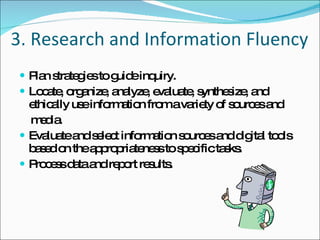
3. Research and Information Fluency Plan strategies to guide inquiry. Locate, organize, analyze, evaluate, synthesize, and ethically use information from a variety of sources and media. Evaluate and select information sources and digital tools based on the appropriateness to specific tasks. Process data and report results.
4.  Critical Thinking, Problem Solving, and Decision Making Identify and define authentic problems and significant questions for investigation. Plan and manage activities to develop a solution or complete a project. Collect and analyze data to identify solutions and/or make informed decisions. Use multiple processes and diverse perspectives to explore alternative solutions.
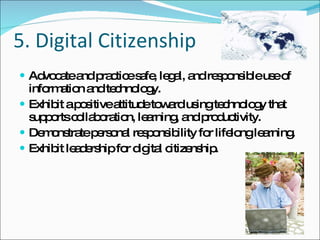
5. Digital Citizenship Advocate and practice safe, legal, and responsible use of information and technology. Exhibit a positive attitude toward using technology that supports collaboration, learning, and productivity. Demonstrate personal responsibility for lifelong learning. Exhibit leadership for digital citizenship.
6. Technology Operations and Concepts  Understand and use technology systems. Select and use applications effectively and productively. Troubleshoot systems and applications. Transfer current knowledge to learning of new technologies.

Standards

  • 1.
    NETS.S Standards forStudents February 21 th , 2010 TEED 4007
  • 2.
    National Educational TechnologyStandards and Performance Indicators for Students
  • 3.
    Creativity & InnovationApply existing knowledge to generate new ideas, products, or processes. Create original works as a means of personal or group expression. Use models and simulations to explore complex systems and issues. Identify trends and forecast possibilities.
  • 4.
    Interact, collaborate, andpublish with peers, experts, or others employing a variety of digital environments and media. Communicate information and ideas effectively to multiple audiences using a variety of media and formats. Develop cultural understanding and global awareness by engaging with learners of other cultures. Contribute to project teams to produce original works or solve problems.
  • 5.
    3. Research andInformation Fluency Plan strategies to guide inquiry. Locate, organize, analyze, evaluate, synthesize, and ethically use information from a variety of sources and media. Evaluate and select information sources and digital tools based on the appropriateness to specific tasks. Process data and report results.
  • 6.
    4. CriticalThinking, Problem Solving, and Decision Making Identify and define authentic problems and significant questions for investigation. Plan and manage activities to develop a solution or complete a project. Collect and analyze data to identify solutions and/or make informed decisions. Use multiple processes and diverse perspectives to explore alternative solutions.
  • 7.
    5. Digital CitizenshipAdvocate and practice safe, legal, and responsible use of information and technology. Exhibit a positive attitude toward using technology that supports collaboration, learning, and productivity. Demonstrate personal responsibility for lifelong learning. Exhibit leadership for digital citizenship.
  • 8.
    6. Technology Operationsand Concepts Understand and use technology systems. Select and use applications effectively and productively. Troubleshoot systems and applications. Transfer current knowledge to learning of new technologies.