The widespread use
of high-stakes
standardized testing
is one of the most
hotly debated topics
in education today.
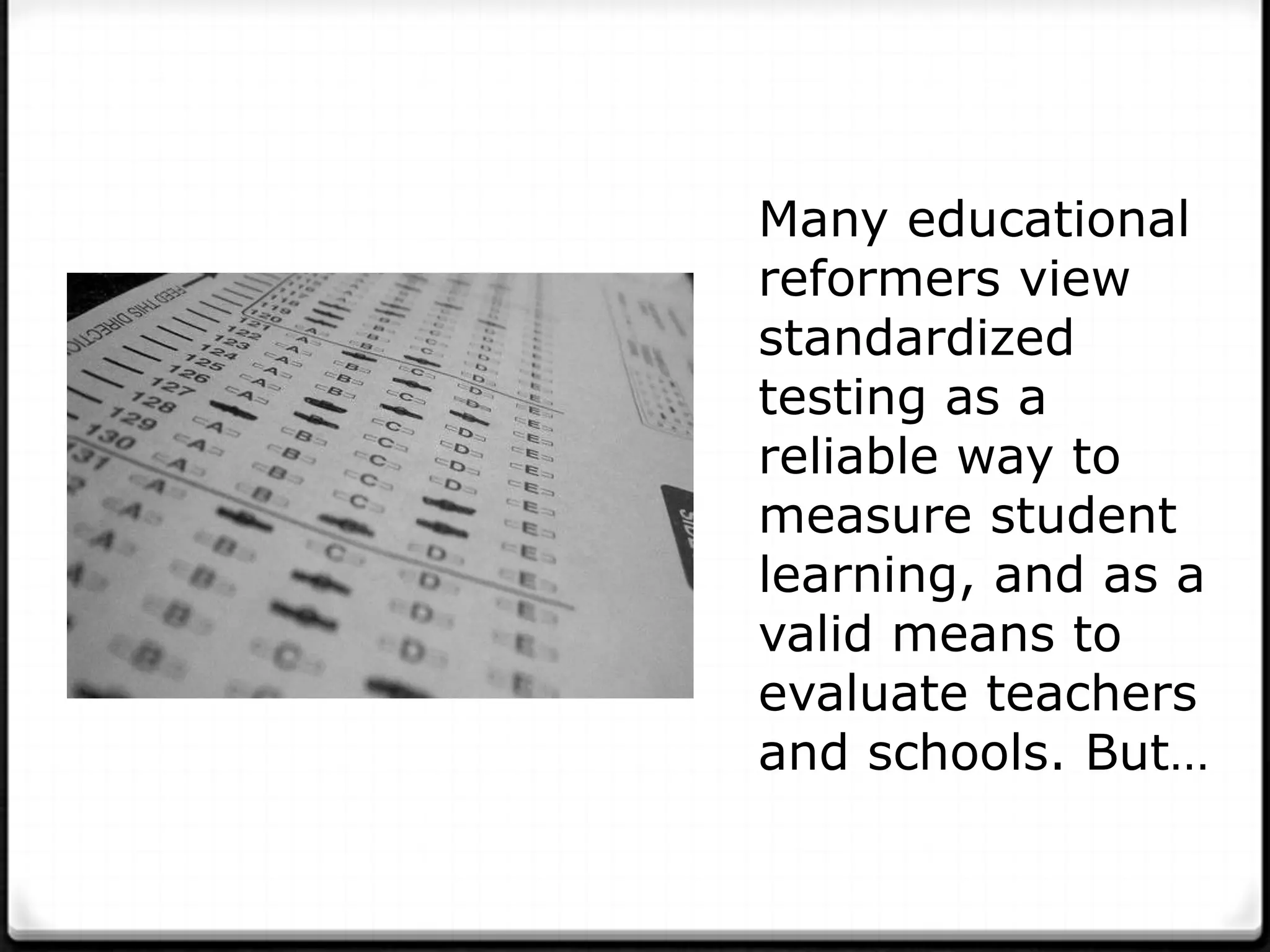
Many educational
reformers view
standardized
testing as a
reliable way to
measure student
learning, and as a
valid means to
evaluate teachers
and schools. But…
…much of the
current research
indicates that
standardized
testing is neither a
valid nor realistic
measurement of
student
achievement,
ability, or
creativity.
The Problems With Standardized
           Testing
Standardized testing narrows school
             curricula
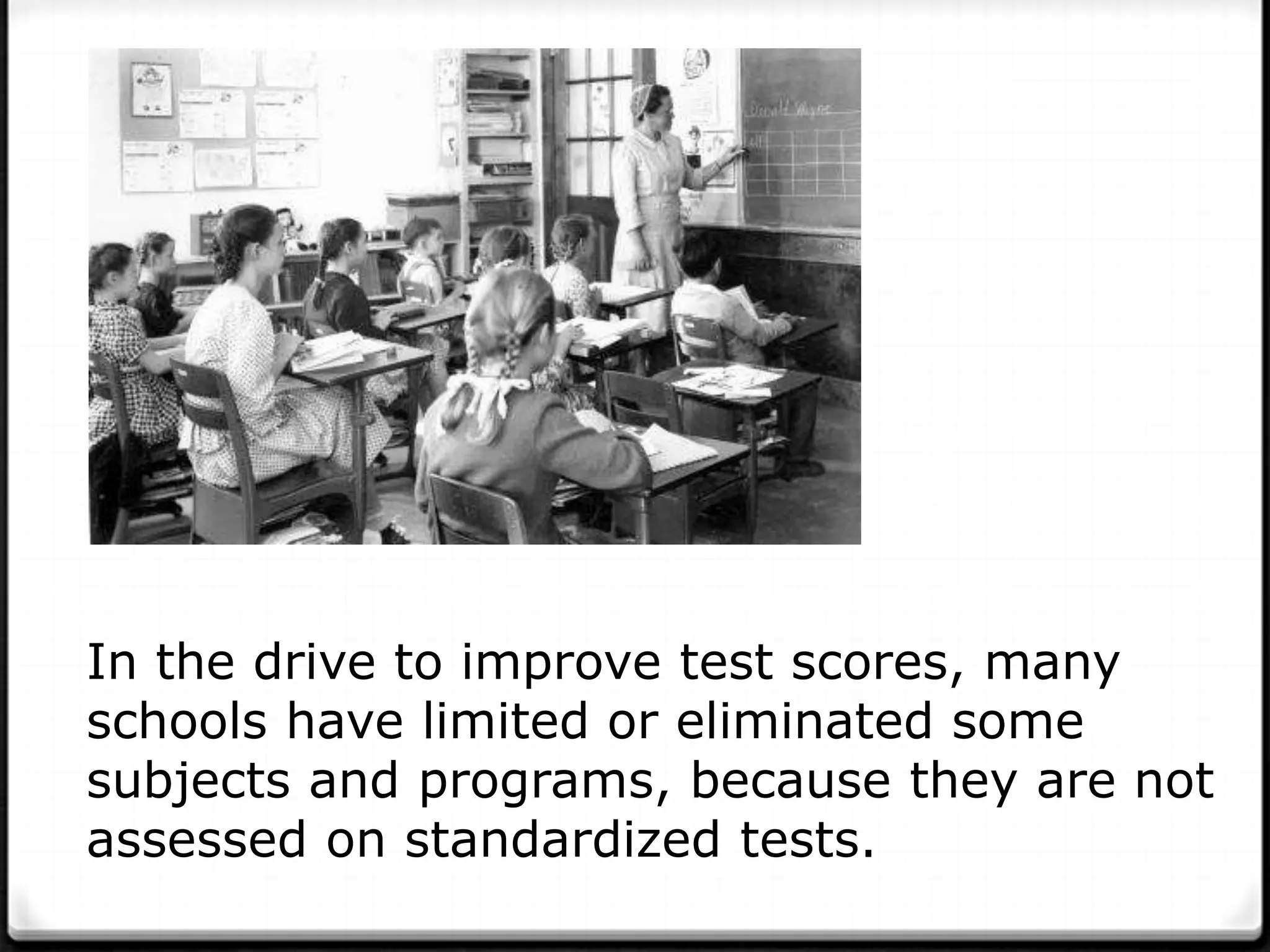
In the drive to improve test scores, many
schools have limited or eliminated some
subjects and programs, because they are not
assessed on standardized tests.
Research shows that since the introduction of
the No Child Left Behind Act of 2001, most
U.S. elementary schools have reduced the
time spent on teaching science, social studies,
the fine and performing arts, and physical
education.
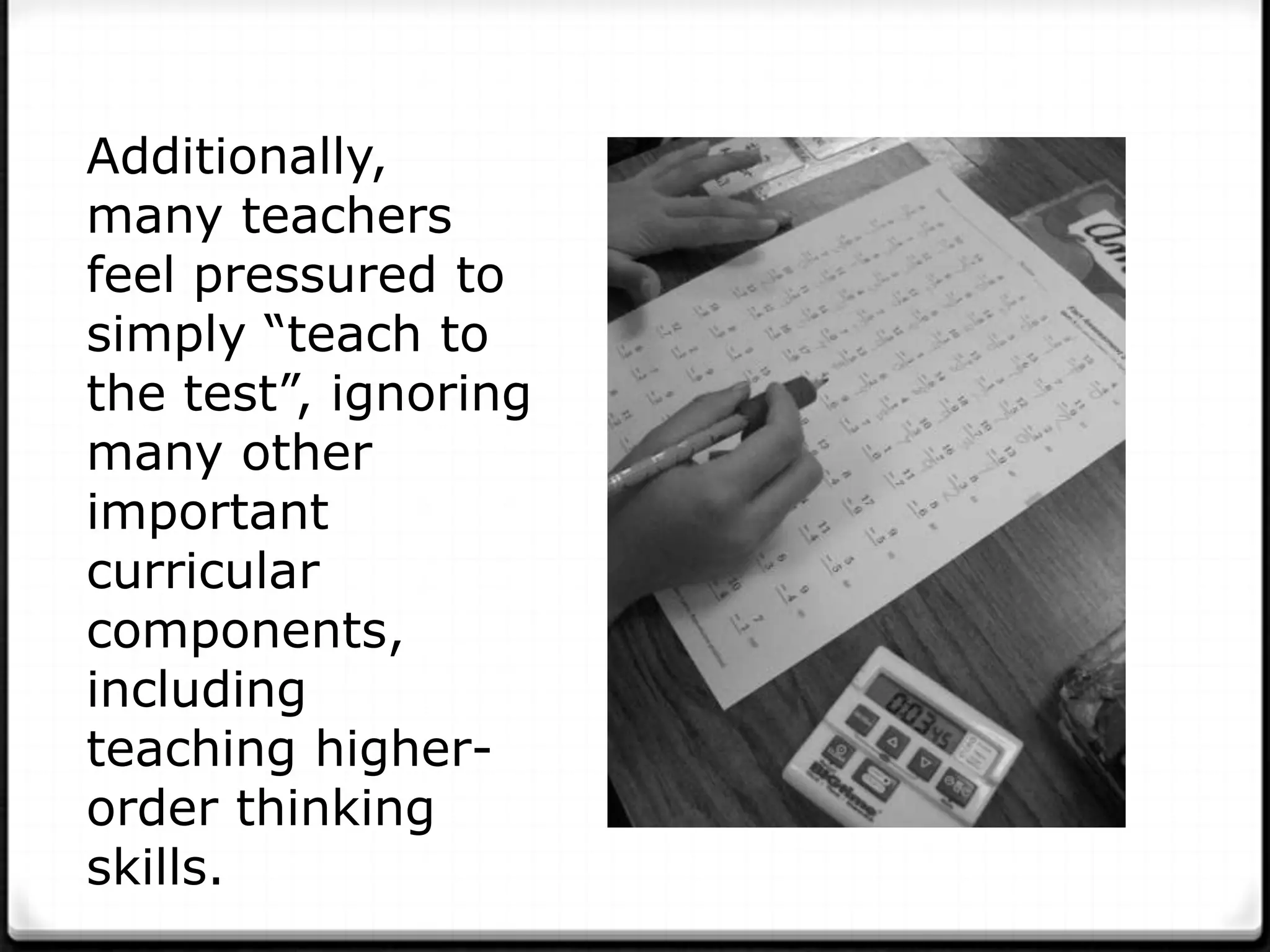
Additionally,
many teachers
feel pressured to
simply “teach to
the test”, ignoring
many other
important
curricular
components,
including
teaching higher-
order thinking
skills.
Rather than
standardized
testing evaluating
how well a school
teaches its own
curriculum, the
tests are now
dictating curricula
to schools. This
seems
counterintuitive
to good
assessment
practice.
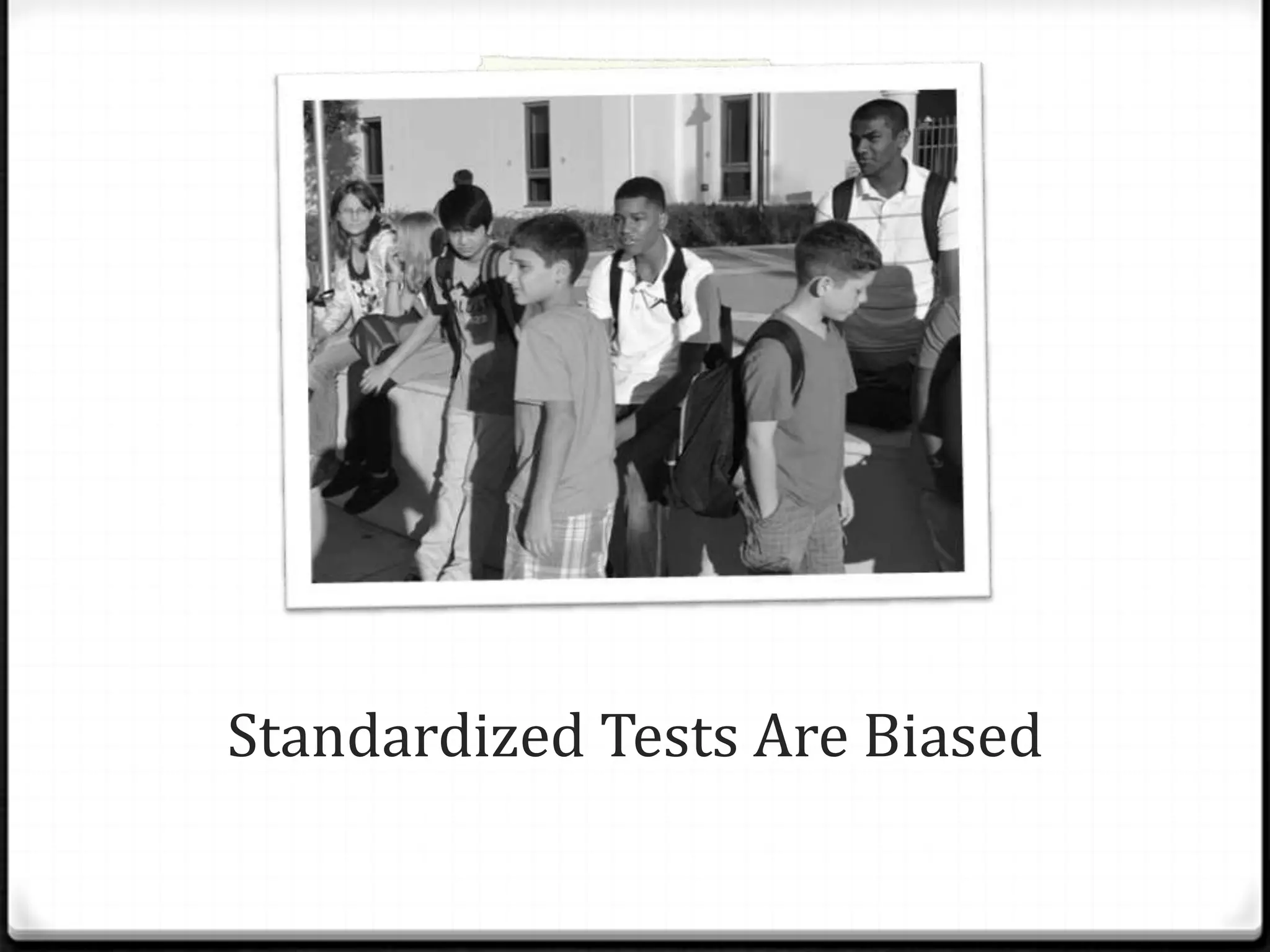
Standardized Tests Are Biased
Social scientists universally agree that test
scores are heavily influenced by
socioeconomic factors.
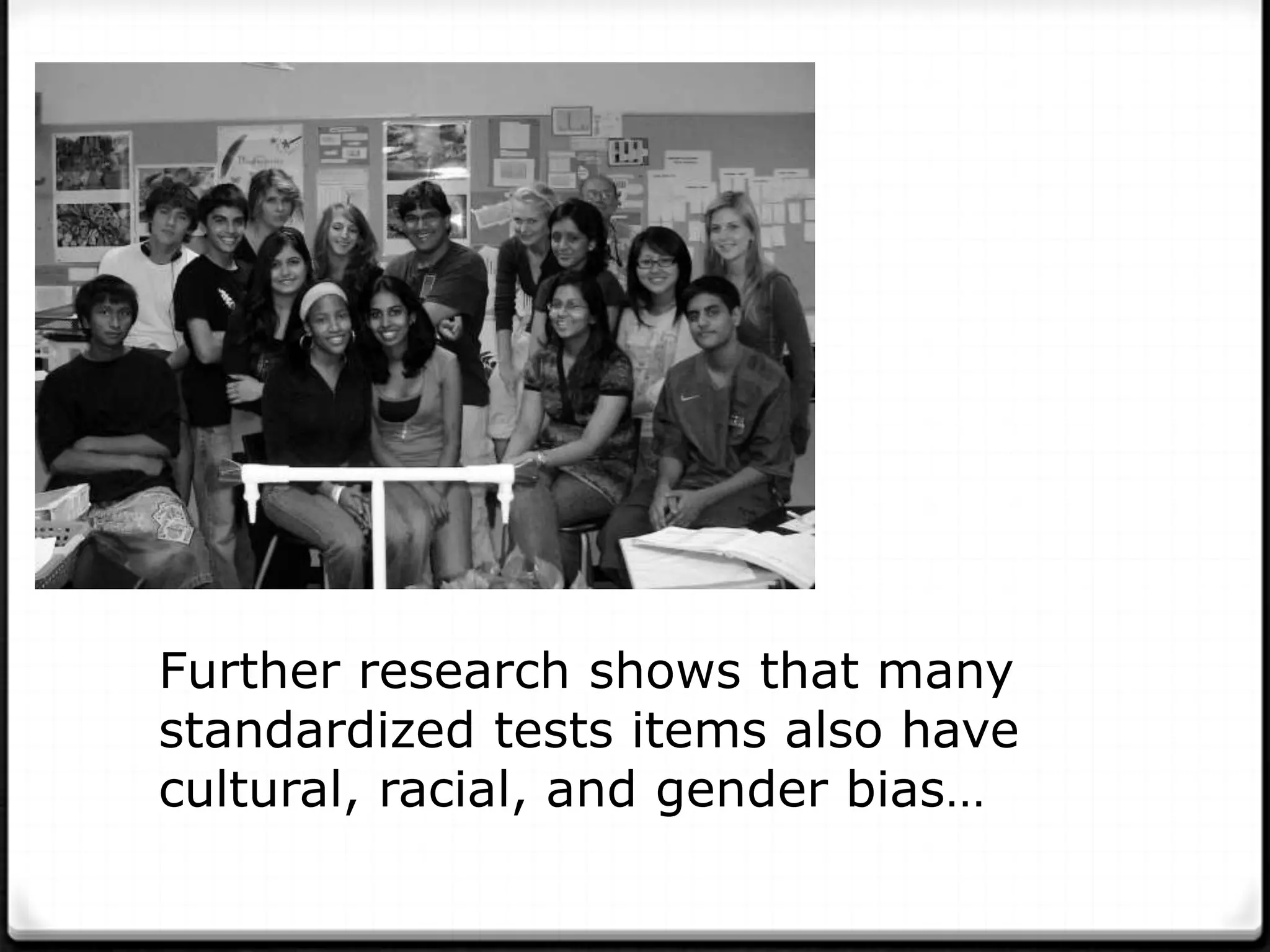
Further research shows that many
standardized tests items also have
cultural, racial, and gender bias…
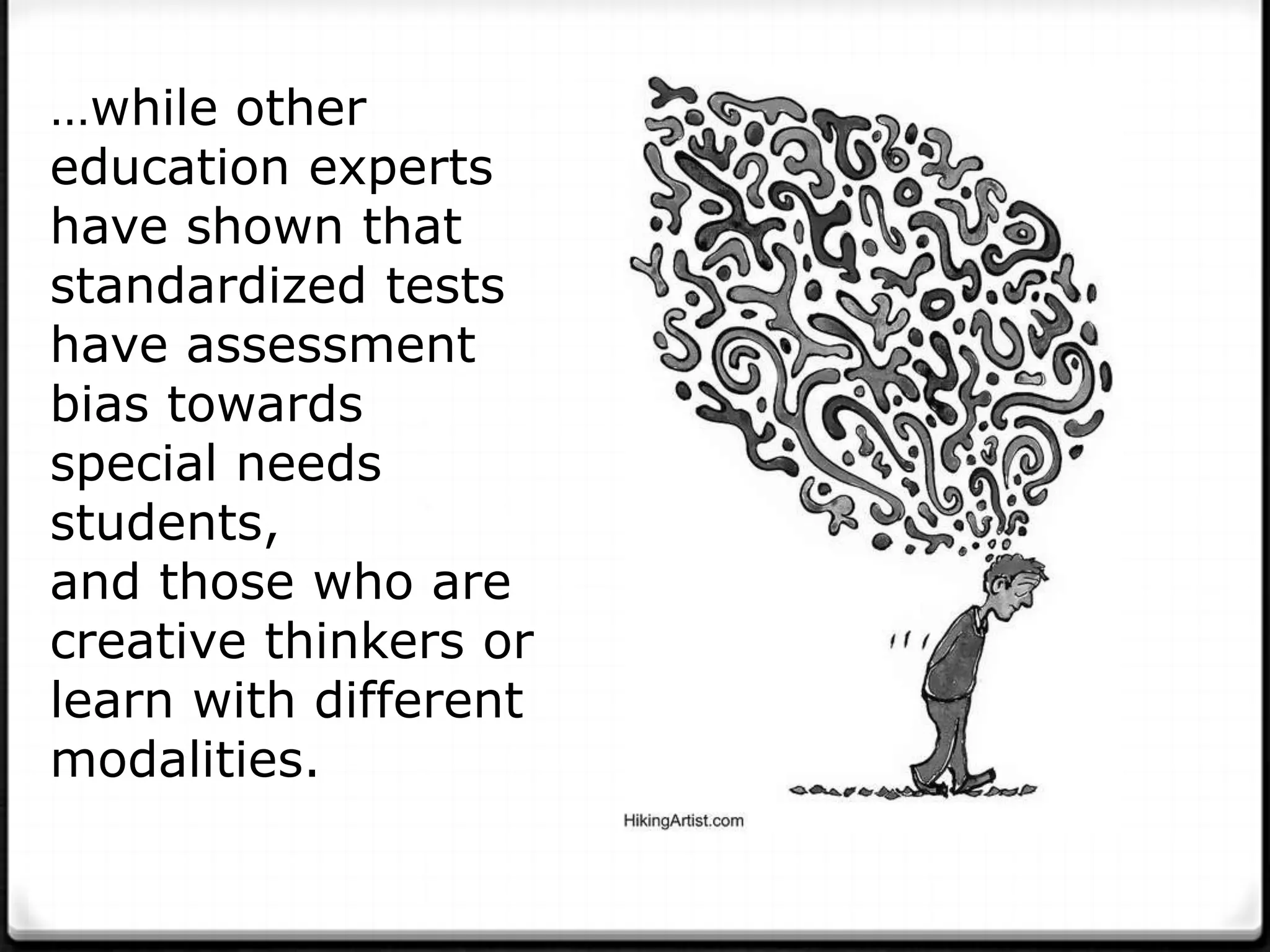
…while other
education experts
have shown that
standardized tests
have assessment
bias towards
special needs
students,
and those who are
creative thinkers or
learn with different
modalities.
Standardized Testing is Unreliable and
     May Produce Invalid Results
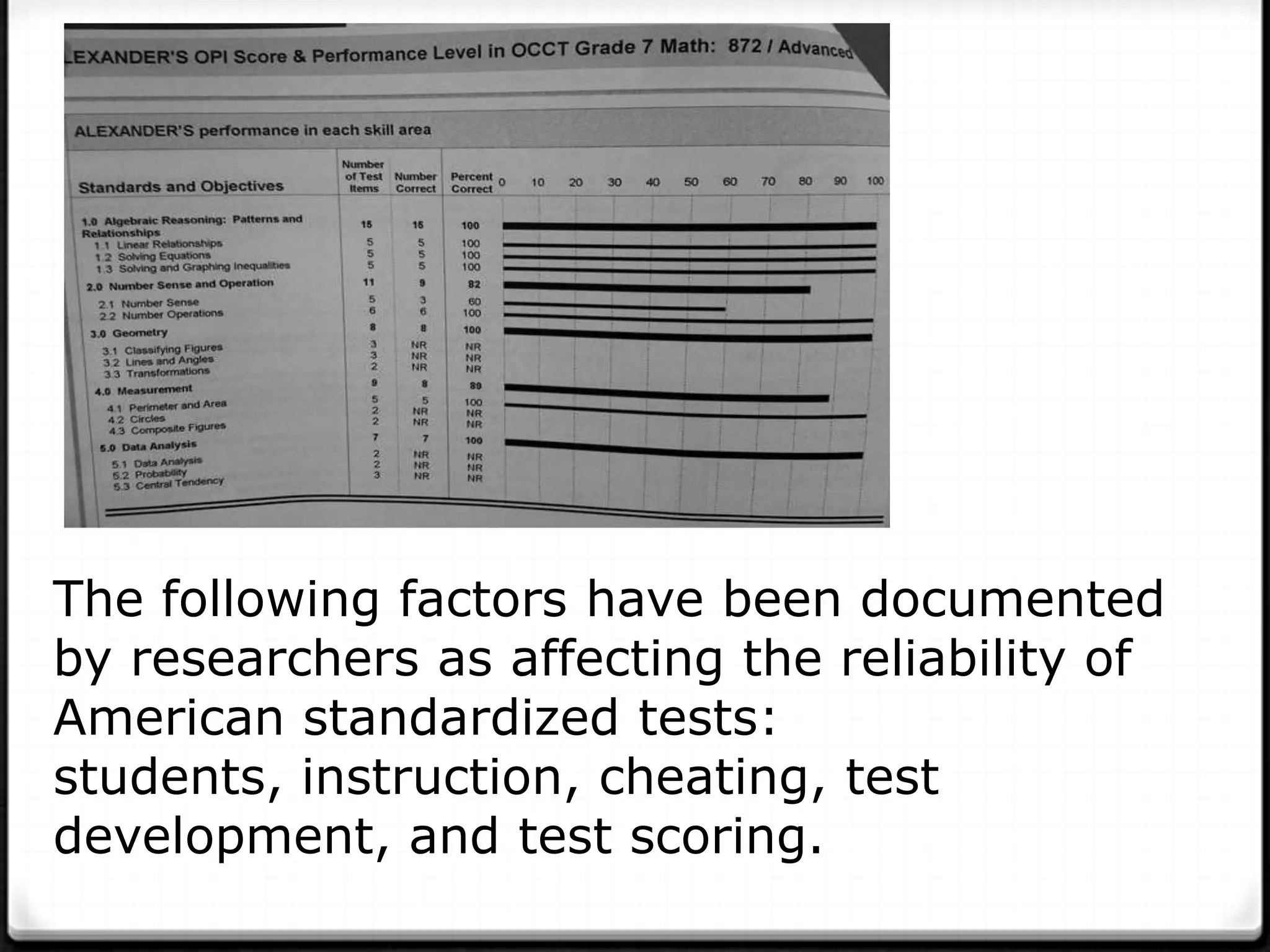
The following factors have been documented
by researchers as affecting the reliability of
American standardized tests:
students, instruction, cheating, test
development, and test scoring.
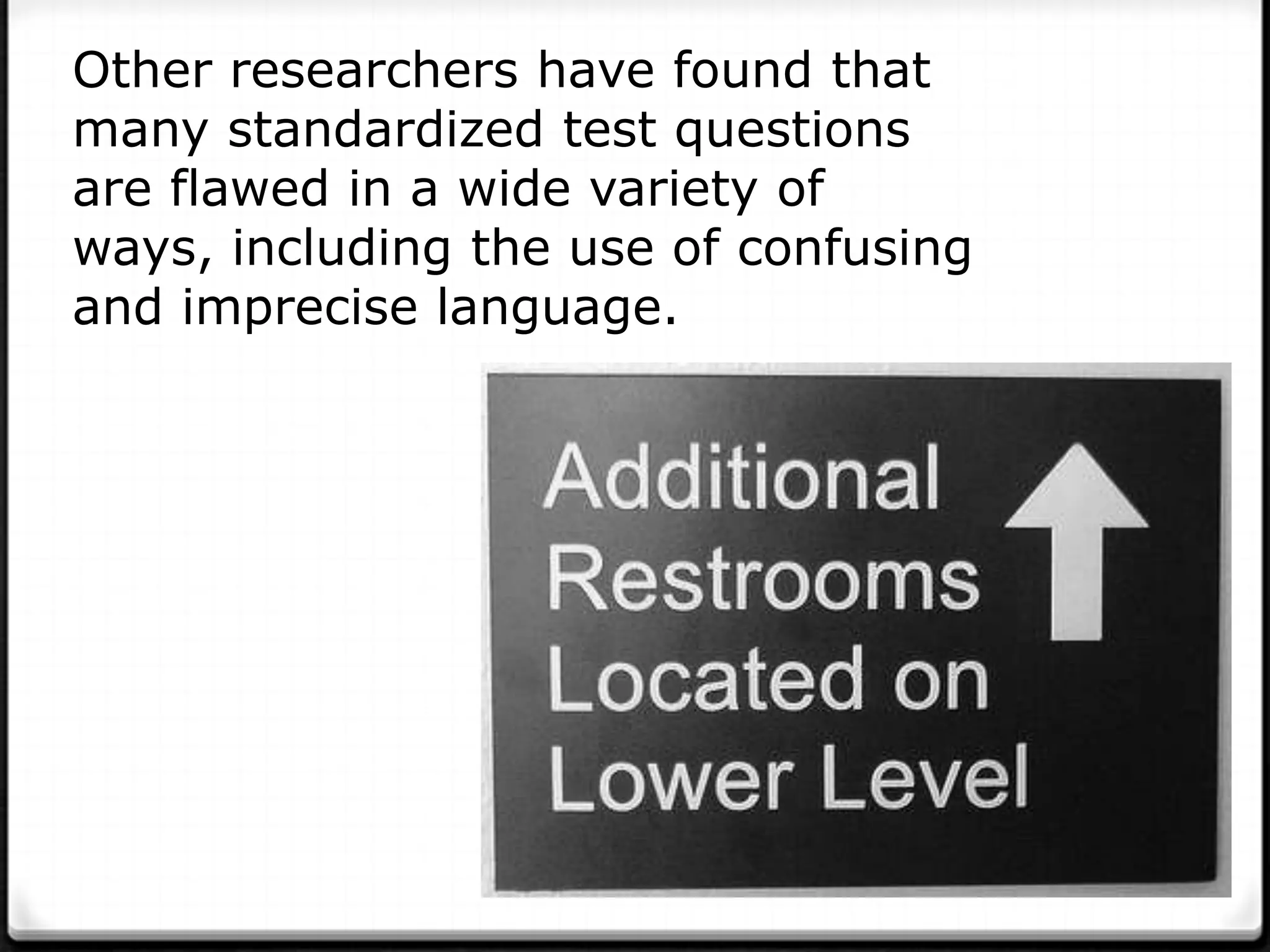
Other researchers have found that
many standardized test questions
are flawed in a wide variety of
ways, including the use of confusing
and imprecise language.
A test scoring center
supervisor, who
worked in the testing
industry for 15
years, wrote that
many of the
“professional”
scorers of student
writing samples
“pretty much had no
idea what they were
doing.”
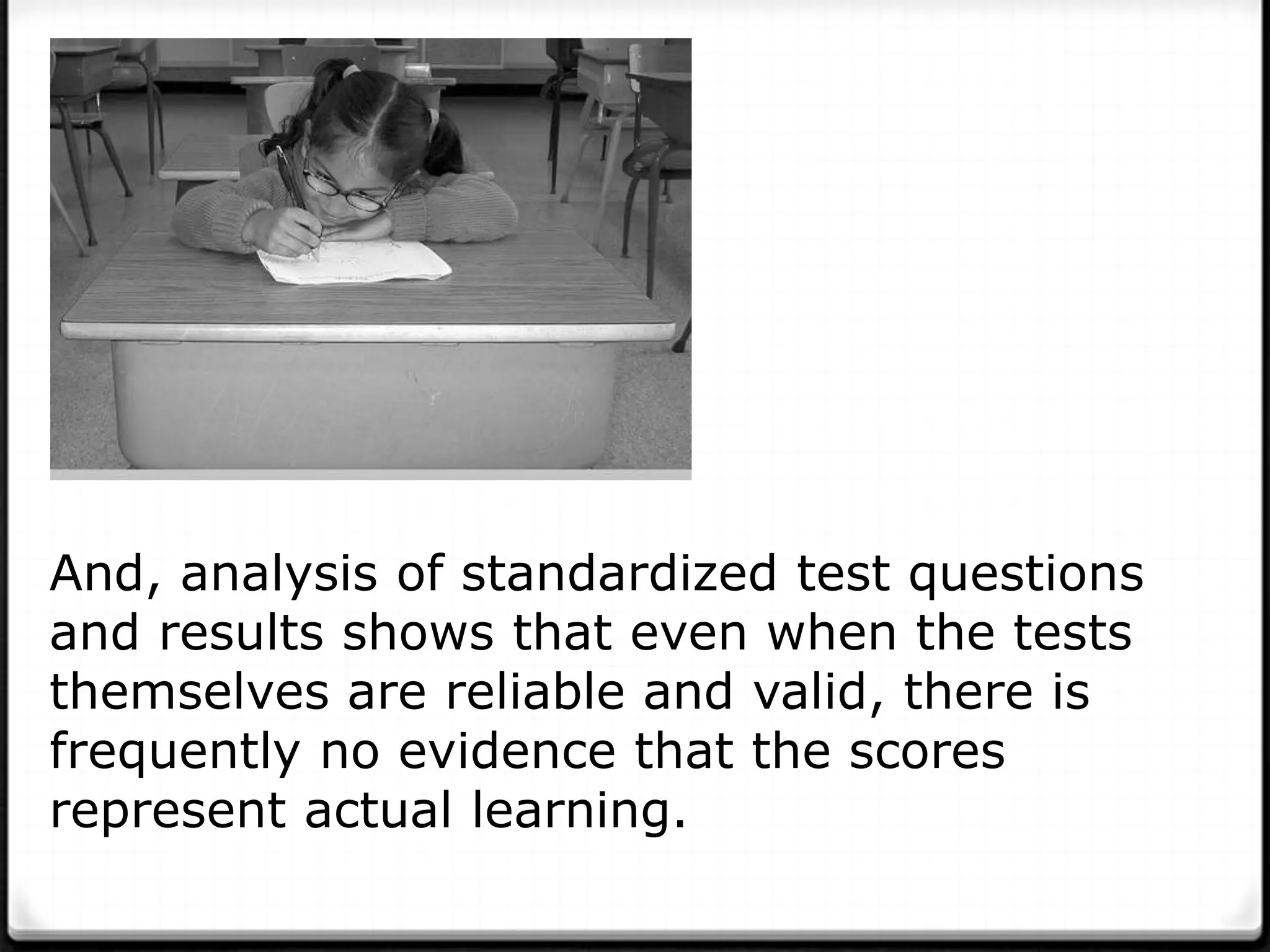
And, analysis of standardized test questions
and results shows that even when the tests
themselves are reliable and valid, there is
frequently no evidence that the scores
represent actual learning.
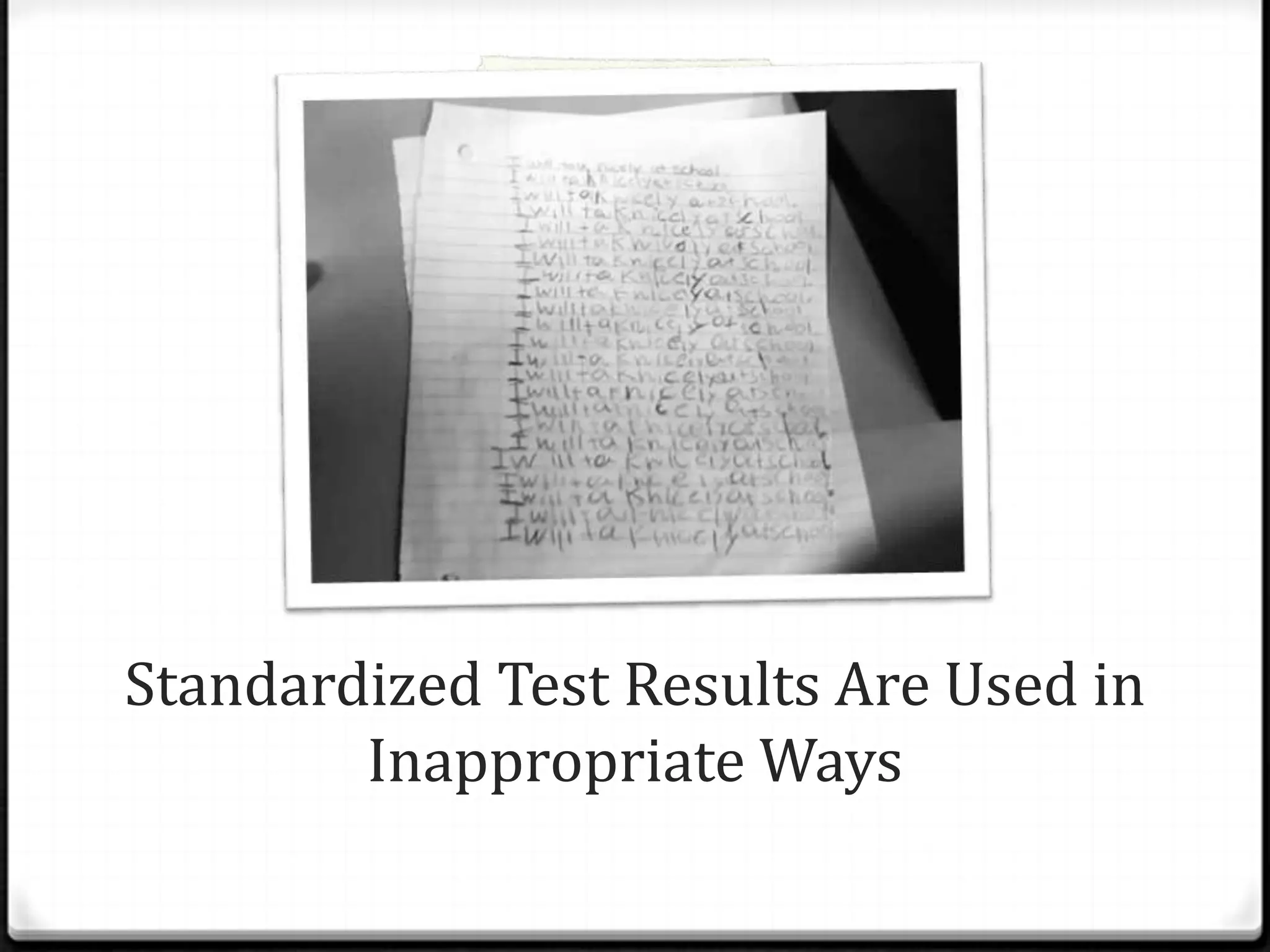
Standardized Test Results Are Used in
        Inappropriate Ways
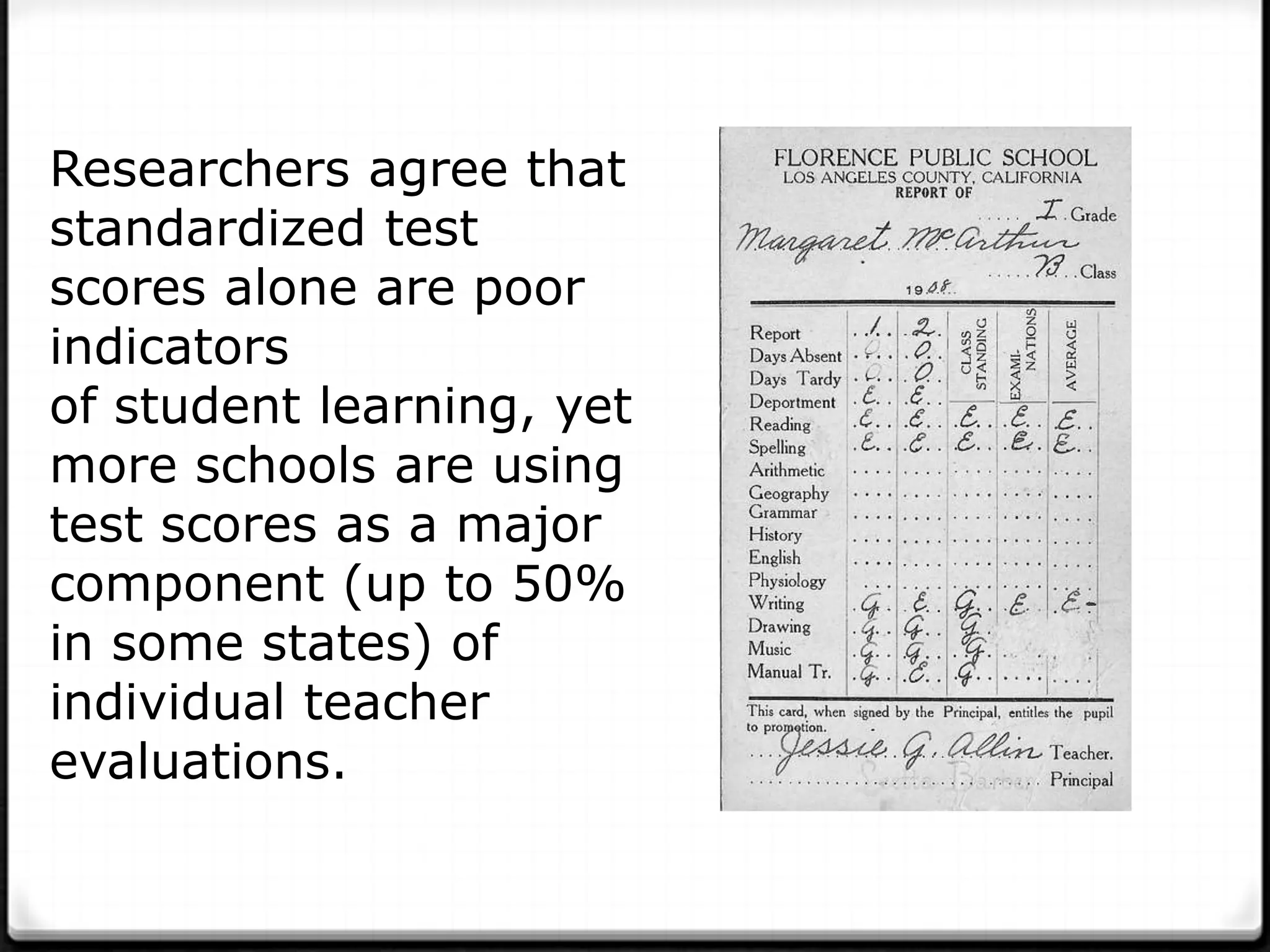
Researchers agree that
standardized test
scores alone are poor
indicators
of student learning, yet
more schools are using
test scores as a major
component (up to 50%
in some states) of
individual teacher
evaluations.
Furthermore, standardized
test results do not measure
many important components
of outstanding schools…
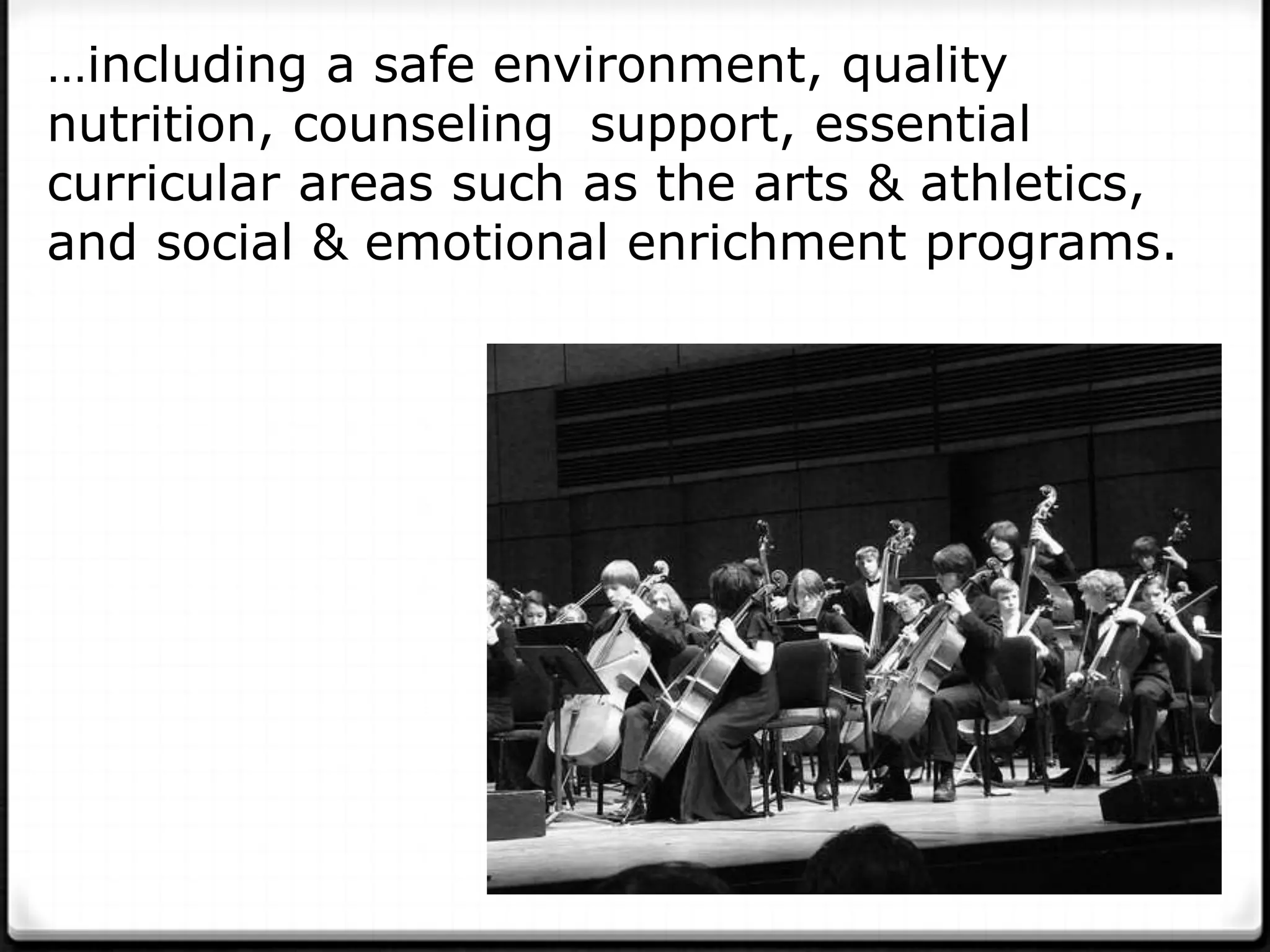
…including a safe environment, quality
nutrition, counseling support, essential
curricular areas such as the arts & athletics,
and social & emotional enrichment programs.
Research indicates
that using test scores
to evaluate, promote,
reward, or punish
teachers is an
ineffective practice,
even when using VAM,
the most
sophisticated method
for this type of
statistical analysis. Yet
this practice is being
increased in many
schools.
Further Issues
Standardized tests are
expensive.

A report from 2006
estimated that
nationally, schools
were spending
approximately $43
billion annually on
testing and related
support materials.
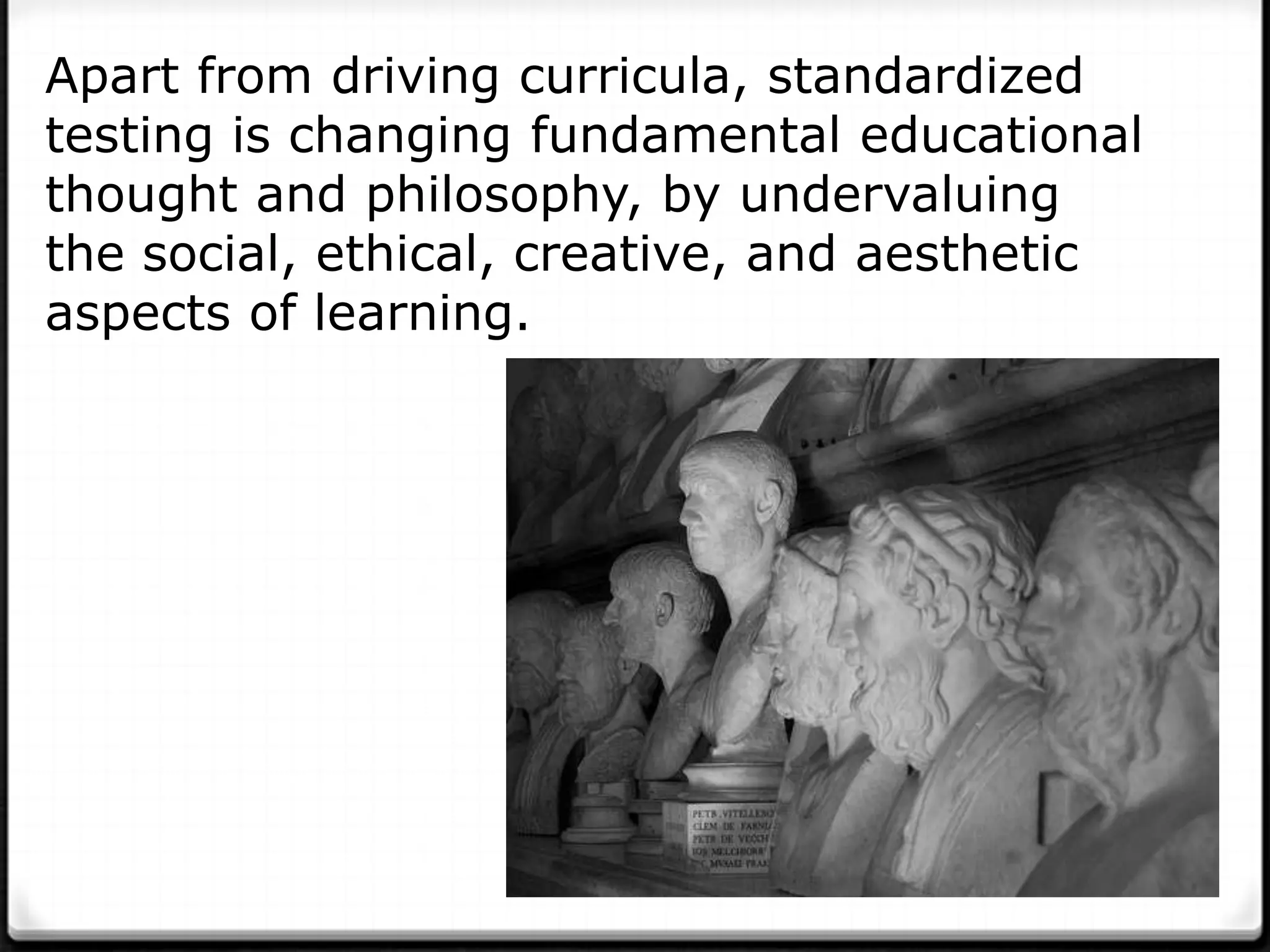
Apart from driving curricula, standardized
testing is changing fundamental educational
thought and philosophy, by undervaluing
the social, ethical, creative, and aesthetic
aspects of learning.
Solutions
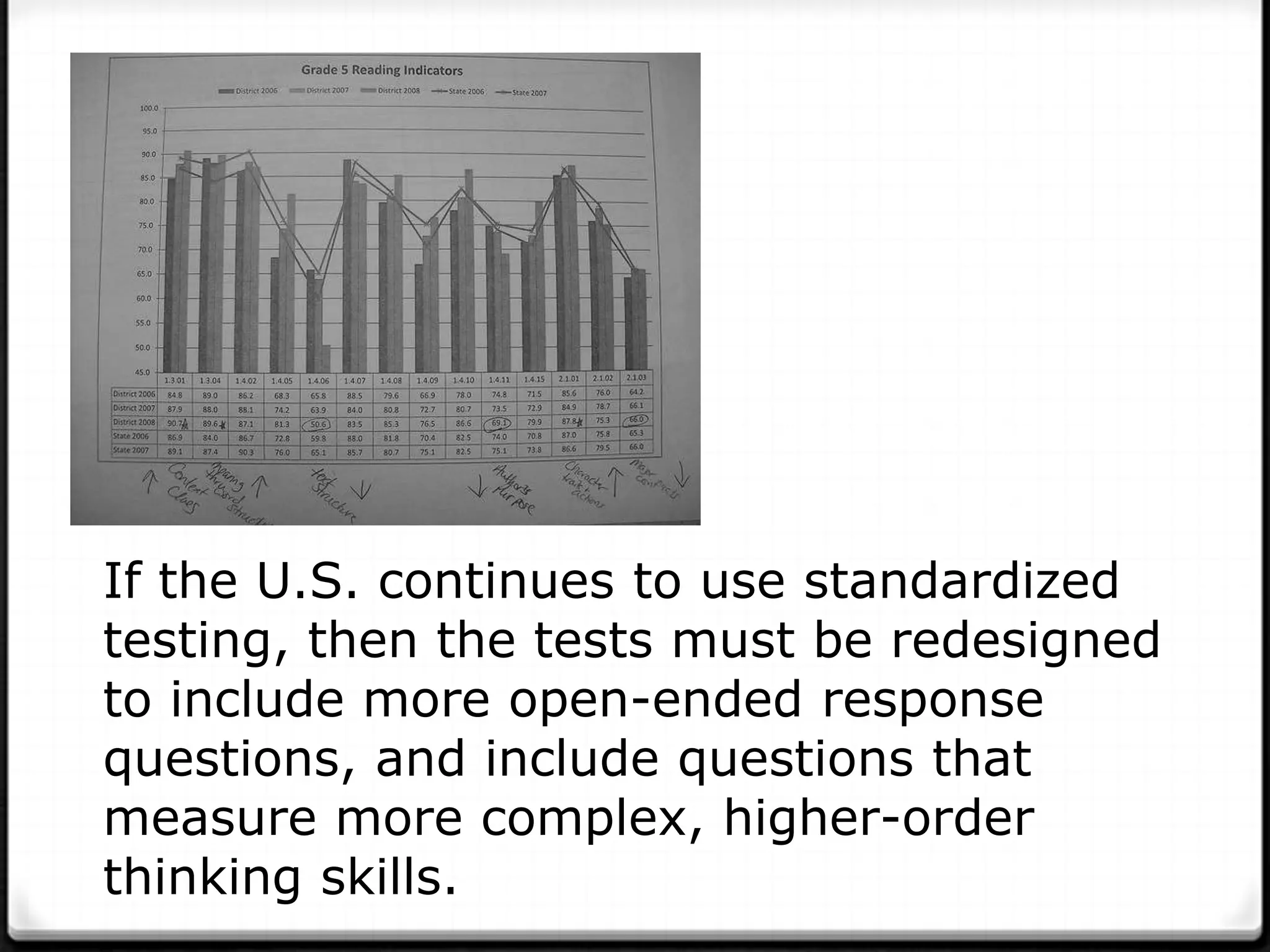
If the U.S. continues to use standardized
testing, then the tests must be redesigned
to include more open-ended response
questions, and include questions that
measure more complex, higher-order
thinking skills.
A renewed effort must be made on the part
of local school districts to provide the time
and resources for more frequent, in-depth,
personal, and individualized teacher
evaluations, performed by qualified education
administrators.
Conclusions
Standardized testing attempts to boil down
the very complex and intricate process of
learning into a set of quantifiable statistics,
and completely ignores many of the most
important aspects of what is considered
best practice in education.

Testing data do have a place in the
comprehensive evaluation of an instructional
program. However, in far too many instances,
standardized testing is being misused in ways
that are causing great harm to schools,
teachers, and ultimately the students.
Image Sources
Image Sources
Image Sources
Image Sources
Sources
Sources
Sources

Standardized Deception: Examining the Debilitating Effects of Standardized Testing in the United States

  • 2.
    The widespread use ofhigh-stakes standardized testing is one of the most hotly debated topics in education today.
  • 3.
    Many educational reformers view standardized testingas a reliable way to measure student learning, and as a valid means to evaluate teachers and schools. But…
  • 4.
    …much of the currentresearch indicates that standardized testing is neither a valid nor realistic measurement of student achievement, ability, or creativity.
  • 5.
    The Problems WithStandardized Testing
  • 6.
  • 7.
    In the driveto improve test scores, many schools have limited or eliminated some subjects and programs, because they are not assessed on standardized tests.
  • 8.
    Research shows thatsince the introduction of the No Child Left Behind Act of 2001, most U.S. elementary schools have reduced the time spent on teaching science, social studies, the fine and performing arts, and physical education.
  • 9.
    Additionally, many teachers feel pressuredto simply “teach to the test”, ignoring many other important curricular components, including teaching higher- order thinking skills.
  • 10.
    Rather than standardized testing evaluating howwell a school teaches its own curriculum, the tests are now dictating curricula to schools. This seems counterintuitive to good assessment practice.
  • 11.
  • 12.
    Social scientists universallyagree that test scores are heavily influenced by socioeconomic factors.
  • 13.
    Further research showsthat many standardized tests items also have cultural, racial, and gender bias…
  • 14.
    …while other education experts haveshown that standardized tests have assessment bias towards special needs students, and those who are creative thinkers or learn with different modalities.
  • 15.
    Standardized Testing isUnreliable and May Produce Invalid Results
  • 16.
    The following factorshave been documented by researchers as affecting the reliability of American standardized tests: students, instruction, cheating, test development, and test scoring.
  • 17.
    Other researchers havefound that many standardized test questions are flawed in a wide variety of ways, including the use of confusing and imprecise language.
  • 18.
    A test scoringcenter supervisor, who worked in the testing industry for 15 years, wrote that many of the “professional” scorers of student writing samples “pretty much had no idea what they were doing.”
  • 19.
    And, analysis ofstandardized test questions and results shows that even when the tests themselves are reliable and valid, there is frequently no evidence that the scores represent actual learning.
  • 20.
    Standardized Test ResultsAre Used in Inappropriate Ways
  • 21.
    Researchers agree that standardizedtest scores alone are poor indicators of student learning, yet more schools are using test scores as a major component (up to 50% in some states) of individual teacher evaluations.
  • 22.
    Furthermore, standardized test resultsdo not measure many important components of outstanding schools…
  • 23.
    …including a safeenvironment, quality nutrition, counseling support, essential curricular areas such as the arts & athletics, and social & emotional enrichment programs.
  • 24.
    Research indicates that usingtest scores to evaluate, promote, reward, or punish teachers is an ineffective practice, even when using VAM, the most sophisticated method for this type of statistical analysis. Yet this practice is being increased in many schools.
  • 25.
  • 26.
    Standardized tests are expensive. Areport from 2006 estimated that nationally, schools were spending approximately $43 billion annually on testing and related support materials.
  • 27.
    Apart from drivingcurricula, standardized testing is changing fundamental educational thought and philosophy, by undervaluing the social, ethical, creative, and aesthetic aspects of learning.
  • 28.
  • 29.
    If the U.S.continues to use standardized testing, then the tests must be redesigned to include more open-ended response questions, and include questions that measure more complex, higher-order thinking skills.
  • 30.
    A renewed effortmust be made on the part of local school districts to provide the time and resources for more frequent, in-depth, personal, and individualized teacher evaluations, performed by qualified education administrators.
  • 31.
  • 32.
    Standardized testing attemptsto boil down the very complex and intricate process of learning into a set of quantifiable statistics, and completely ignores many of the most important aspects of what is considered best practice in education.
  • 33.
    Testing data dohave a place in the comprehensive evaluation of an instructional program. However, in far too many instances, standardized testing is being misused in ways that are causing great harm to schools, teachers, and ultimately the students.
  • 34.
  • 35.
  • 36.
  • 37.
  • 38.
  • 39.
  • 40.