Pre-formal stage
biology of cognitive development
factors effecting it
Introduction
• multi-directionality, plasticity and variability in
cognitive development in adults are
tremendous
• post-formal stage , beyond piaget
• With passage of time some of the cognitive
abilities in enhance and some diminish.
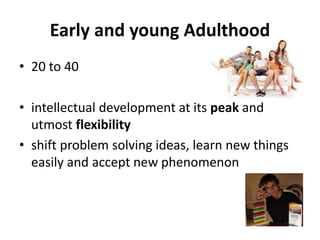
Early and young Adulthood
• 20 to 40
• intellectual development at its peak and
utmost flexibility
• shift problem solving ideas, learn new things
easily and accept new phenomenon
• has a dream, a dream to surpass others and
leave a mark on earth. (Levinson, 1996).
• Secondary education (Gurba, 2005).
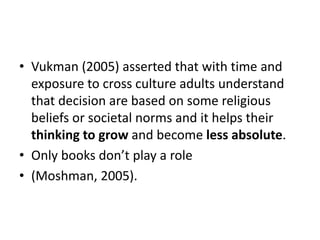
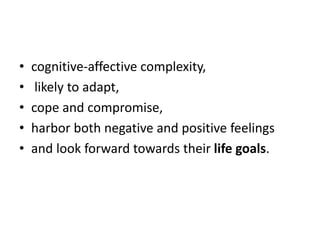
• Perry (1988) proposed idea of shifting from
dualistic to relavistic thinking.
• Ideal to practical view of life
• Vukman (2005) asserted that with time and
exposure to cross culture adults understand
that decision are based on some religious
beliefs or societal norms and it helps their
thinking to grow and become less absolute.
• Only books don’t play a role
• (Moshman, 2005).
Pragmatic thinking
• Labouvie -Vief (2006) noted that narrowing
of possibilities to solve certain issues and
make useable practical choices is what adults
do
• cognitive-affective complexity,
• likely to adapt,
• cope and compromise,
• harbor both negative and positive feelings
• and look forward towards their life goals.
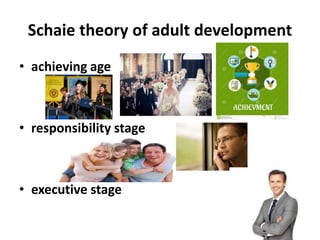
Schaie theory of adult development
• achieving age
• responsibility stage
• executive stage
• Circumstances that enhance cognitions are
good physical health, environmental
conditions that are favorable such as a decent
living and social support i.e. family.
• Remaining intact with knowledge (Schie,
2004).
Middle adulthood
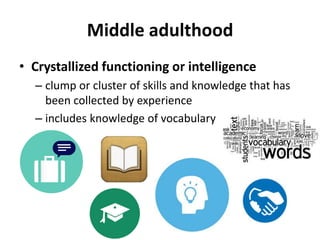
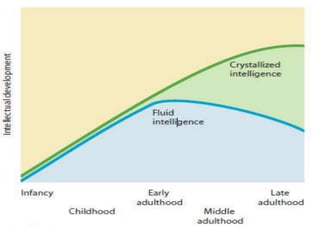
• Crystallized functioning or intelligence
– clump or cluster of skills and knowledge that has
been collected by experience
– includes knowledge of vocabulary
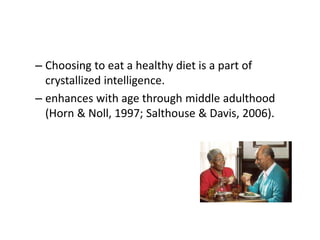
– Choosing to eat a healthy diet is a part of
crystallized intelligence.
– enhances with age through middle adulthood
(Horn & Noll, 1997; Salthouse & Davis, 2006).
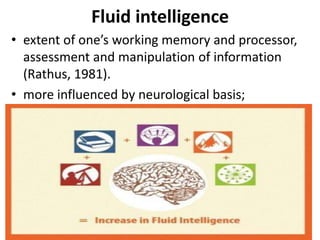
Fluid intelligence
• extent of one’s working memory and processor,
assessment and manipulation of information
(Rathus, 1981).
• more influenced by neurological basis;
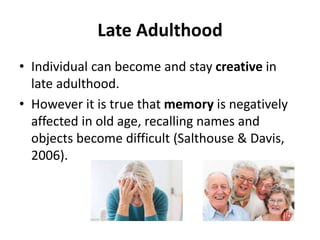
Late Adulthood
• Individual can become and stay creative in
late adulthood.
• However it is true that memory is negatively
affected in old age, recalling names and
objects become difficult (Salthouse & Davis,
2006).
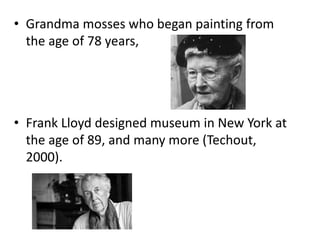
• Grandma mosses who began painting from
the age of 78 years,
• Frank Lloyd designed museum in New York at
the age of 89, and many more (Techout,
2000).
Basic biology of cognitive
development
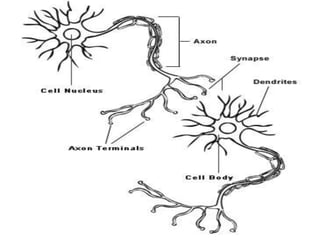
• Cognitive development can be observed in the
brain
• Developmental cognitive neuroscience is a
new field of science that studies the
neurological and psychological basis of
developing organism
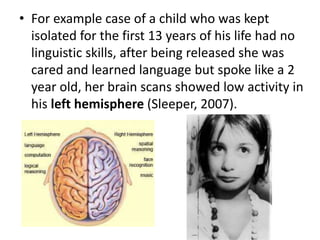
• For example case of a child who was kept
isolated for the first 13 years of his life had no
linguistic skills, after being released she was
cared and learned language but spoke like a 2
year old, her brain scans showed low activity in
his left hemisphere (Sleeper, 2007).
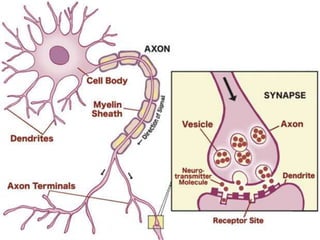
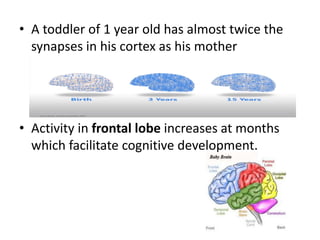
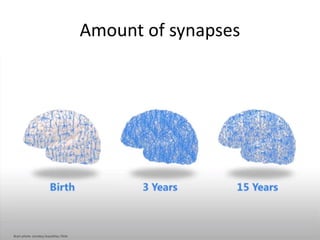
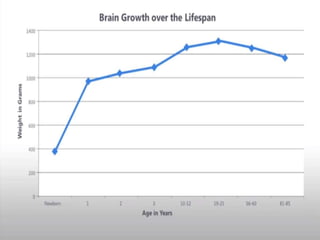
• A toddler of 1 year old has almost twice the
synapses in his cortex as his mother
• Activity in frontal lobe increases at months
which facilitate cognitive development.
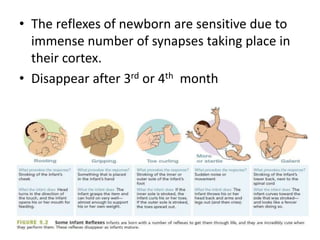
• The reflexes of newborn are sensitive due to
immense number of synapses taking place in
their cortex.
• Disappear after 3rd or 4th month
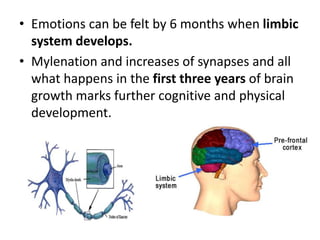
• Emotions can be felt by 6 months when limbic
system develops.
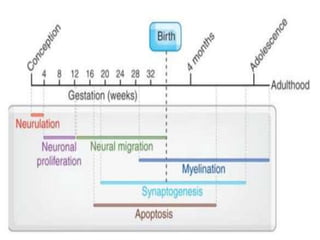
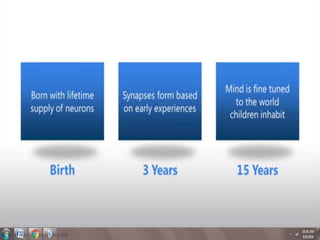
• Mylenation and increases of synapses and all
what happens in the first three years of brain
growth marks further cognitive and physical
development.
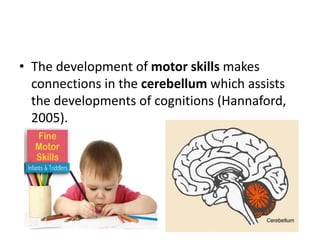
• The development of motor skills makes
connections in the cerebellum which assists
the developments of cognitions (Hannaford,
2005).
Research Studies
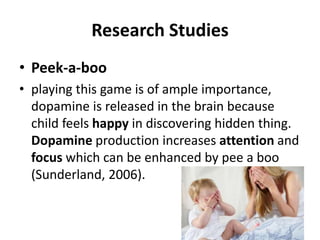
• Peek-a-boo
• playing this game is of ample importance,
dopamine is released in the brain because
child feels happy in discovering hidden thing.
Dopamine production increases attention and
focus which can be enhanced by pee a boo
(Sunderland, 2006).
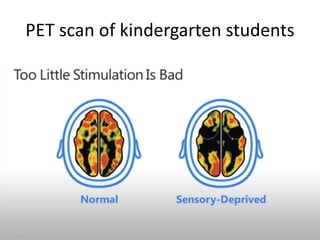
Amount of synapses
PET scan of kindergarten students
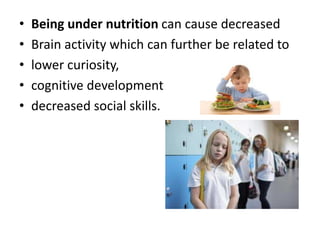
• Being under nutrition can cause decreased
• Brain activity which can further be related to
• lower curiosity,
• cognitive development
• decreased social skills.
Nutrition and cognitive development
• Children that are breast feed have more
chances of better cognitive development/IQ.
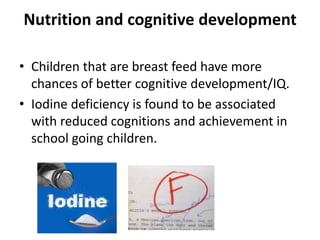
• Iodine deficiency is found to be associated
with reduced cognitions and achievement in
school going children.
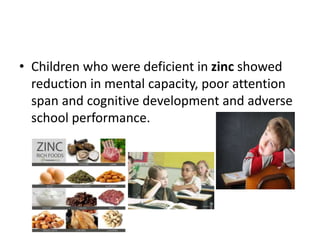
• Children who were deficient in zinc showed
reduction in mental capacity, poor attention
span and cognitive development and adverse
school performance.
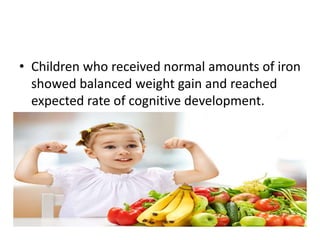
• Children who received normal amounts of iron
showed balanced weight gain and reached
expected rate of cognitive development.
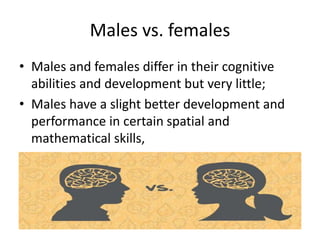
Males vs. females
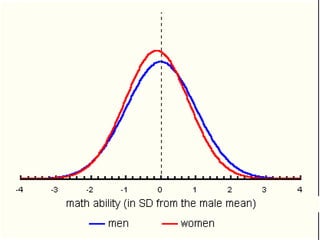
• Males and females differ in their cognitive
abilities and development but very little;
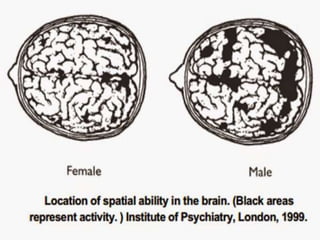
• Males have a slight better development and
performance in certain spatial and
mathematical skills,
• these abilities don’t come on their own until
adolescence.
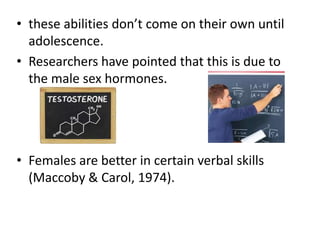
• Researchers have pointed that this is due to
the male sex hormones.
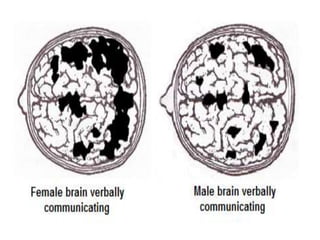
• Females are better in certain verbal skills
(Maccoby & Carol, 1974).

stages of cognitive development

  • 1.
    Pre-formal stage biology ofcognitive development factors effecting it
  • 2.
    Introduction • multi-directionality, plasticityand variability in cognitive development in adults are tremendous • post-formal stage , beyond piaget • With passage of time some of the cognitive abilities in enhance and some diminish.
  • 3.
    Early and youngAdulthood • 20 to 40 • intellectual development at its peak and utmost flexibility • shift problem solving ideas, learn new things easily and accept new phenomenon
  • 4.
    • has adream, a dream to surpass others and leave a mark on earth. (Levinson, 1996). • Secondary education (Gurba, 2005). • Perry (1988) proposed idea of shifting from dualistic to relavistic thinking. • Ideal to practical view of life
  • 5.
    • Vukman (2005)asserted that with time and exposure to cross culture adults understand that decision are based on some religious beliefs or societal norms and it helps their thinking to grow and become less absolute. • Only books don’t play a role • (Moshman, 2005).
  • 6.
    Pragmatic thinking • Labouvie-Vief (2006) noted that narrowing of possibilities to solve certain issues and make useable practical choices is what adults do
  • 7.
    • cognitive-affective complexity, •likely to adapt, • cope and compromise, • harbor both negative and positive feelings • and look forward towards their life goals.
  • 8.
    Schaie theory ofadult development • achieving age • responsibility stage • executive stage
  • 9.
    • Circumstances thatenhance cognitions are good physical health, environmental conditions that are favorable such as a decent living and social support i.e. family. • Remaining intact with knowledge (Schie, 2004).
  • 10.
    Middle adulthood • Crystallizedfunctioning or intelligence – clump or cluster of skills and knowledge that has been collected by experience – includes knowledge of vocabulary
  • 11.
    – Choosing toeat a healthy diet is a part of crystallized intelligence. – enhances with age through middle adulthood (Horn & Noll, 1997; Salthouse & Davis, 2006).
  • 12.
    Fluid intelligence • extentof one’s working memory and processor, assessment and manipulation of information (Rathus, 1981). • more influenced by neurological basis;
  • 14.
    Late Adulthood • Individualcan become and stay creative in late adulthood. • However it is true that memory is negatively affected in old age, recalling names and objects become difficult (Salthouse & Davis, 2006).
  • 15.
    • Grandma mosseswho began painting from the age of 78 years, • Frank Lloyd designed museum in New York at the age of 89, and many more (Techout, 2000).
  • 16.
    Basic biology ofcognitive development • Cognitive development can be observed in the brain • Developmental cognitive neuroscience is a new field of science that studies the neurological and psychological basis of developing organism
  • 17.
    • For examplecase of a child who was kept isolated for the first 13 years of his life had no linguistic skills, after being released she was cared and learned language but spoke like a 2 year old, her brain scans showed low activity in his left hemisphere (Sleeper, 2007).
  • 21.
    • A toddlerof 1 year old has almost twice the synapses in his cortex as his mother • Activity in frontal lobe increases at months which facilitate cognitive development.
  • 22.
    • The reflexesof newborn are sensitive due to immense number of synapses taking place in their cortex. • Disappear after 3rd or 4th month
  • 23.
    • Emotions canbe felt by 6 months when limbic system develops. • Mylenation and increases of synapses and all what happens in the first three years of brain growth marks further cognitive and physical development.
  • 24.
    • The developmentof motor skills makes connections in the cerebellum which assists the developments of cognitions (Hannaford, 2005).
  • 25.
    Research Studies • Peek-a-boo •playing this game is of ample importance, dopamine is released in the brain because child feels happy in discovering hidden thing. Dopamine production increases attention and focus which can be enhanced by pee a boo (Sunderland, 2006).
  • 28.
  • 31.
    PET scan ofkindergarten students
  • 36.
    • Being undernutrition can cause decreased • Brain activity which can further be related to • lower curiosity, • cognitive development • decreased social skills.
  • 37.
    Nutrition and cognitivedevelopment • Children that are breast feed have more chances of better cognitive development/IQ. • Iodine deficiency is found to be associated with reduced cognitions and achievement in school going children.
  • 38.
    • Children whowere deficient in zinc showed reduction in mental capacity, poor attention span and cognitive development and adverse school performance.
  • 39.
    • Children whoreceived normal amounts of iron showed balanced weight gain and reached expected rate of cognitive development.
  • 40.
    Males vs. females •Males and females differ in their cognitive abilities and development but very little; • Males have a slight better development and performance in certain spatial and mathematical skills,
  • 44.
    • these abilitiesdon’t come on their own until adolescence. • Researchers have pointed that this is due to the male sex hormones. • Females are better in certain verbal skills (Maccoby & Carol, 1974).