Functions of Management:
Staffing
 Meaning of Staffing
 Importance of Staffing
 Steps in Staffing Process
 Recruitment & Selection
◦ Recruitment
 Sources
 Advantages
 Disadvantages
◦ Selection Procedure
 Training & Development
◦ Method of Training
◦ Importance
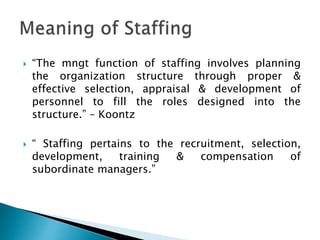
 “The mngt function of staffing involves planning
the organization structure through proper &
effective selection, appraisal & development of
personnel to fill the roles designed into the
structure.” – Koontz
 “ Staffing pertains to the recruitment, selection,
development, training & compensation of
subordinate managers.”
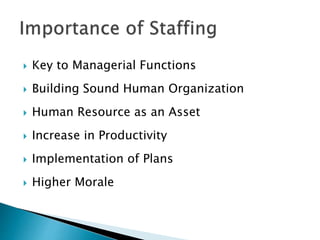
 Key to Managerial Functions
 Building Sound Human Organization
 Human Resource as an Asset
 Increase in Productivity
 Implementation of Plans
 Higher Morale
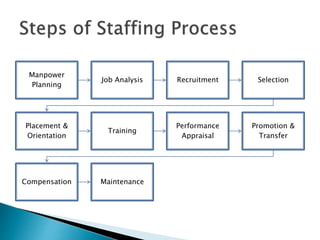
Manpower
Planning
Job Analysis Recruitment Selection
Placement &
Orientation
Training
Performance
Appraisal
Promotion &
Transfer
Compensation Maintenance
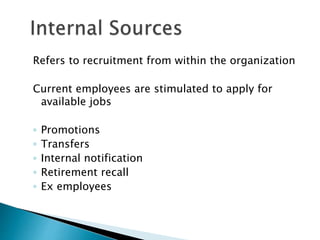
Refers to recruitment from within the organization
Current employees are stimulated to apply for
available jobs
◦ Promotions
◦ Transfers
◦ Internal notification
◦ Retirement recall
◦ Ex employees
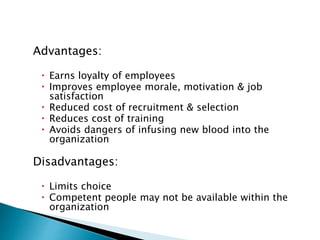
Advantages:
 Earns loyalty of employees
 Improves employee morale, motivation & job
satisfaction
 Reduced cost of recruitment & selection
 Reduces cost of training
 Avoids dangers of infusing new blood into the
organization
Disadvantages:
 Limits choice
 Competent people may not be available within the
organization
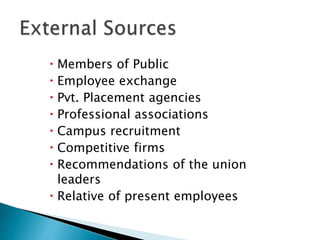
 Members of Public
 Employee exchange
 Pvt. Placement agencies
 Professional associations
 Campus recruitment
 Competitive firms
 Recommendations of the union
leaders
 Relative of present employees
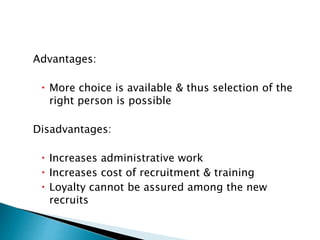
Advantages:
 More choice is available & thus selection of the
right person is possible
Disadvantages:
 Increases administrative work
 Increases cost of recruitment & training
 Loyalty cannot be assured among the new
recruits
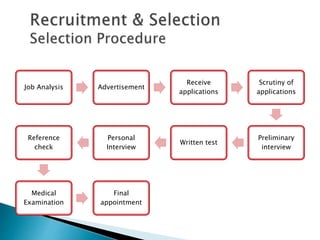
Job Analysis Advertisement
Receive
applications
Scrutiny of
applications
Preliminary
interview
Written test
Personal
Interview
Reference
check
Medical
Examination
Final
appointment
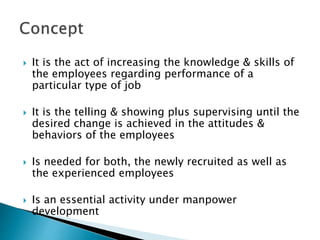
 It is the act of increasing the knowledge & skills of
the employees regarding performance of a
particular type of job
 It is the telling & showing plus supervising until the
desired change is achieved in the attitudes &
behaviors of the employees
 Is needed for both, the newly recruited as well as
the experienced employees
 Is an essential activity under manpower
development
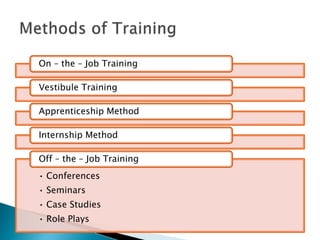
On – the – Job Training
Vestibule Training
Apprenticeship Method
Internship Method
• Conferences
• Seminars
• Case Studies
• Role Plays
Off – the – Job Training
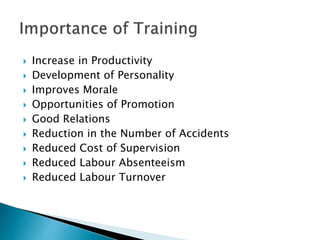
 Increase in Productivity
 Development of Personality
 Improves Morale
 Opportunities of Promotion
 Good Relations
 Reduction in the Number of Accidents
 Reduced Cost of Supervision
 Reduced Labour Absenteeism
 Reduced Labour Turnover

Staffing

  • 1.
  • 2.
     Meaning ofStaffing  Importance of Staffing  Steps in Staffing Process  Recruitment & Selection ◦ Recruitment  Sources  Advantages  Disadvantages ◦ Selection Procedure
  • 3.
     Training &Development ◦ Method of Training ◦ Importance
  • 4.
     “The mngtfunction of staffing involves planning the organization structure through proper & effective selection, appraisal & development of personnel to fill the roles designed into the structure.” – Koontz  “ Staffing pertains to the recruitment, selection, development, training & compensation of subordinate managers.”
  • 5.
     Key toManagerial Functions  Building Sound Human Organization  Human Resource as an Asset  Increase in Productivity  Implementation of Plans  Higher Morale
  • 6.
    Manpower Planning Job Analysis RecruitmentSelection Placement & Orientation Training Performance Appraisal Promotion & Transfer Compensation Maintenance
  • 8.
    Refers to recruitmentfrom within the organization Current employees are stimulated to apply for available jobs ◦ Promotions ◦ Transfers ◦ Internal notification ◦ Retirement recall ◦ Ex employees
  • 9.
    Advantages:  Earns loyaltyof employees  Improves employee morale, motivation & job satisfaction  Reduced cost of recruitment & selection  Reduces cost of training  Avoids dangers of infusing new blood into the organization Disadvantages:  Limits choice  Competent people may not be available within the organization
  • 10.
     Members ofPublic  Employee exchange  Pvt. Placement agencies  Professional associations  Campus recruitment  Competitive firms  Recommendations of the union leaders  Relative of present employees
  • 11.
    Advantages:  More choiceis available & thus selection of the right person is possible Disadvantages:  Increases administrative work  Increases cost of recruitment & training  Loyalty cannot be assured among the new recruits
  • 12.
    Job Analysis Advertisement Receive applications Scrutinyof applications Preliminary interview Written test Personal Interview Reference check Medical Examination Final appointment
  • 14.
     It isthe act of increasing the knowledge & skills of the employees regarding performance of a particular type of job  It is the telling & showing plus supervising until the desired change is achieved in the attitudes & behaviors of the employees  Is needed for both, the newly recruited as well as the experienced employees  Is an essential activity under manpower development
  • 15.
    On – the– Job Training Vestibule Training Apprenticeship Method Internship Method • Conferences • Seminars • Case Studies • Role Plays Off – the – Job Training
  • 16.
     Increase inProductivity  Development of Personality  Improves Morale  Opportunities of Promotion  Good Relations  Reduction in the Number of Accidents  Reduced Cost of Supervision  Reduced Labour Absenteeism  Reduced Labour Turnover