Acute coronary
syndrome
STEMI (ECG SIGNS) 2
60 year old Woman is brought in to the ER 5 hours
after symptom of chest pain
• ECG acquisition is done within 10 minutes
of arrival
 Immediate assessment, given aspirin 162mg
chewable po
 ECG shows a large anterior STEMI
• Antiplatelet therapies: Clopidogrel 600mg PO
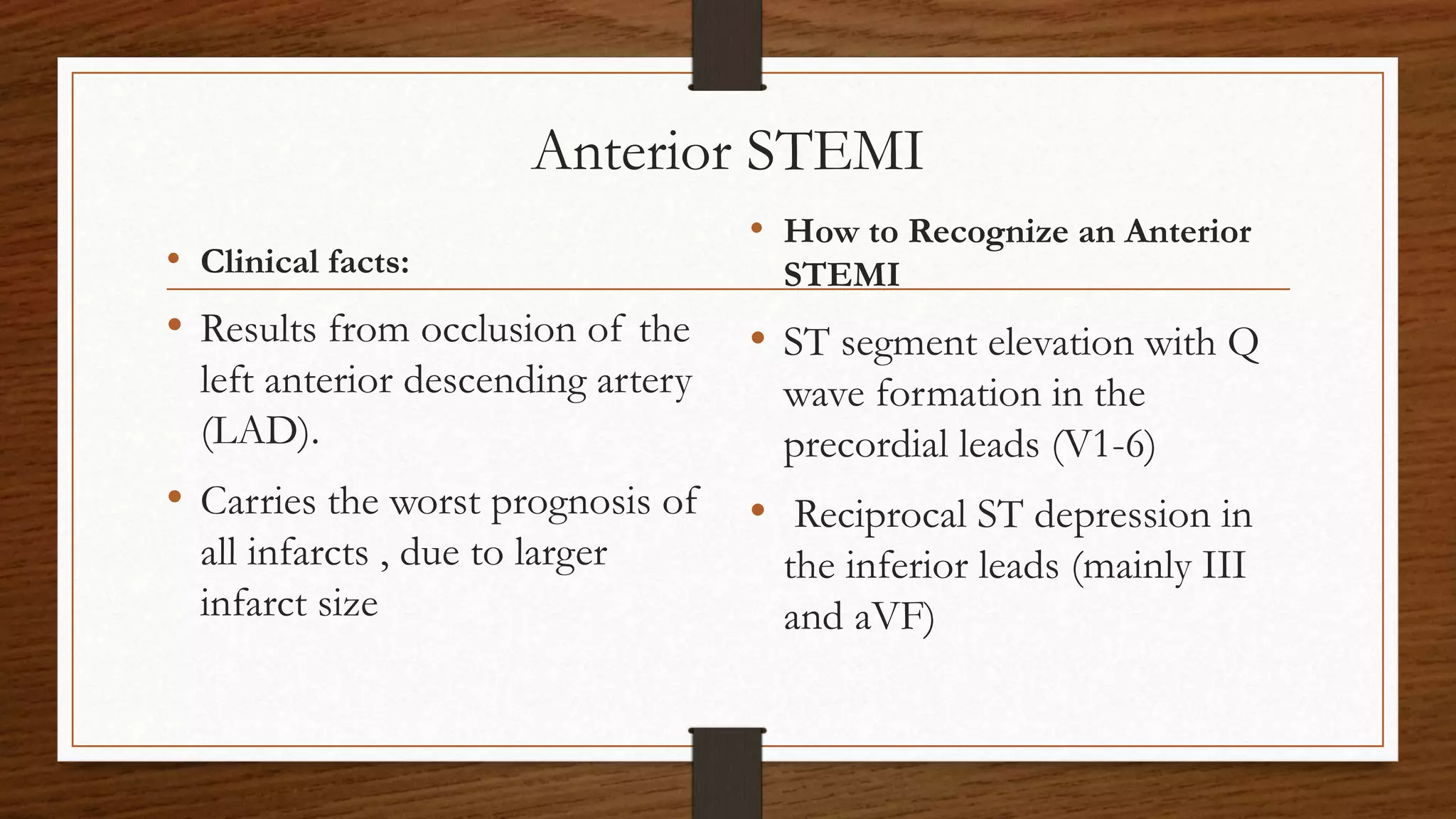
Anterior STEMI
• Clinical facts:
• Results from occlusion of the
left anterior descending artery
(LAD).
• Carries the worst prognosis of
all infarcts , due to larger
infarct size
• How to Recognize an Anterior
STEMI
• ST segment elevation with Q
wave formation in the
precordial leads (V1-6)
• Reciprocal ST depression in
the inferior leads (mainly III
and aVF)
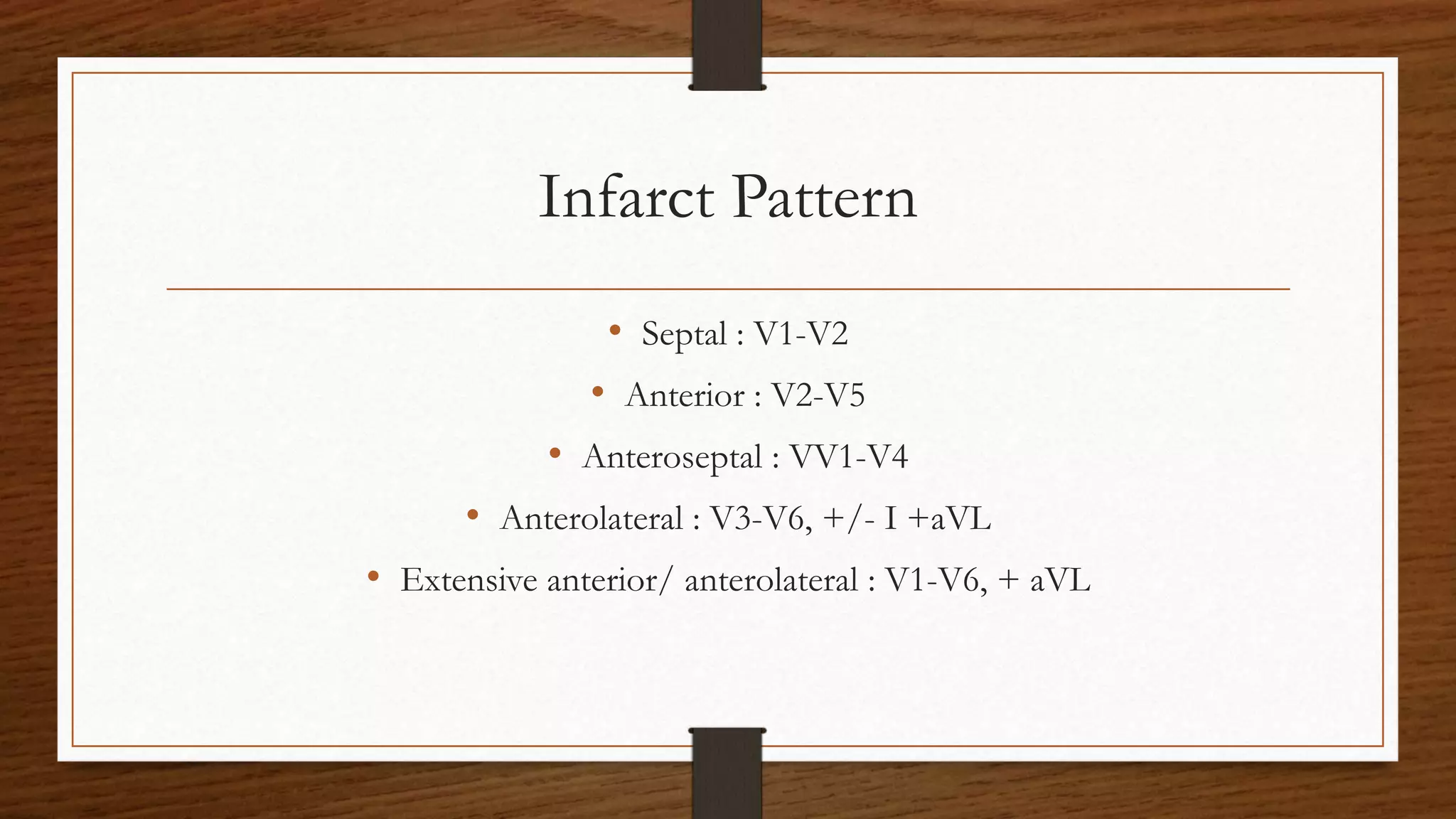
Infarct Pattern
• Septal : V1-V2
• Anterior : V2-V5
• Anteroseptal : VV1-V4
• Anterolateral : V3-V6, +/- I +aVL
• Extensive anterior/ anterolateral : V1-V6, + aVL
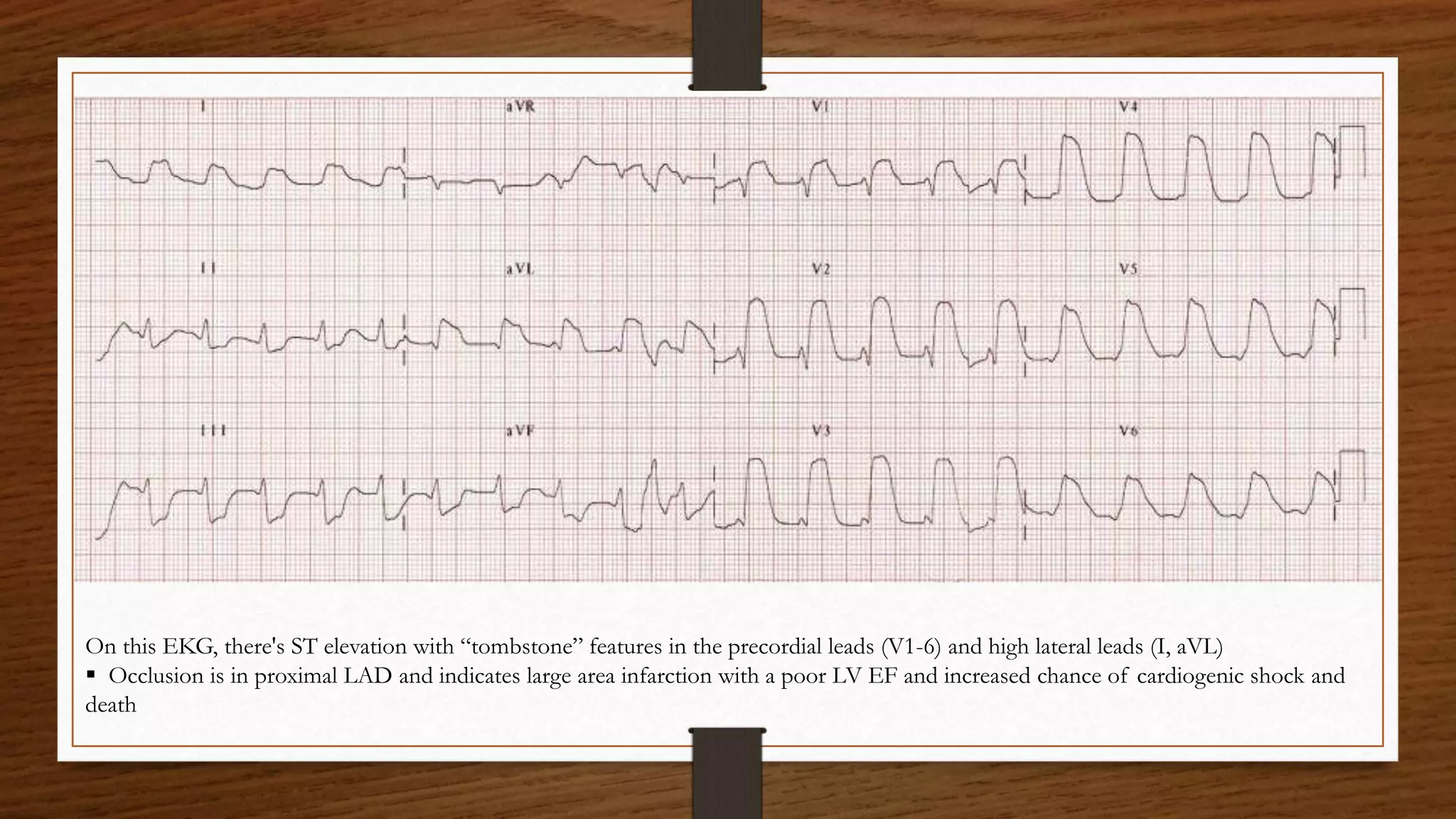
On this EKG, there's ST elevation with “tombstone” features in the precordial leads (V1-6) and high lateral leads (I, aVL)
 Occlusion is in proximal LAD and indicates large area infarction with a poor LV EF and increased chance of cardiogenic shock and
death
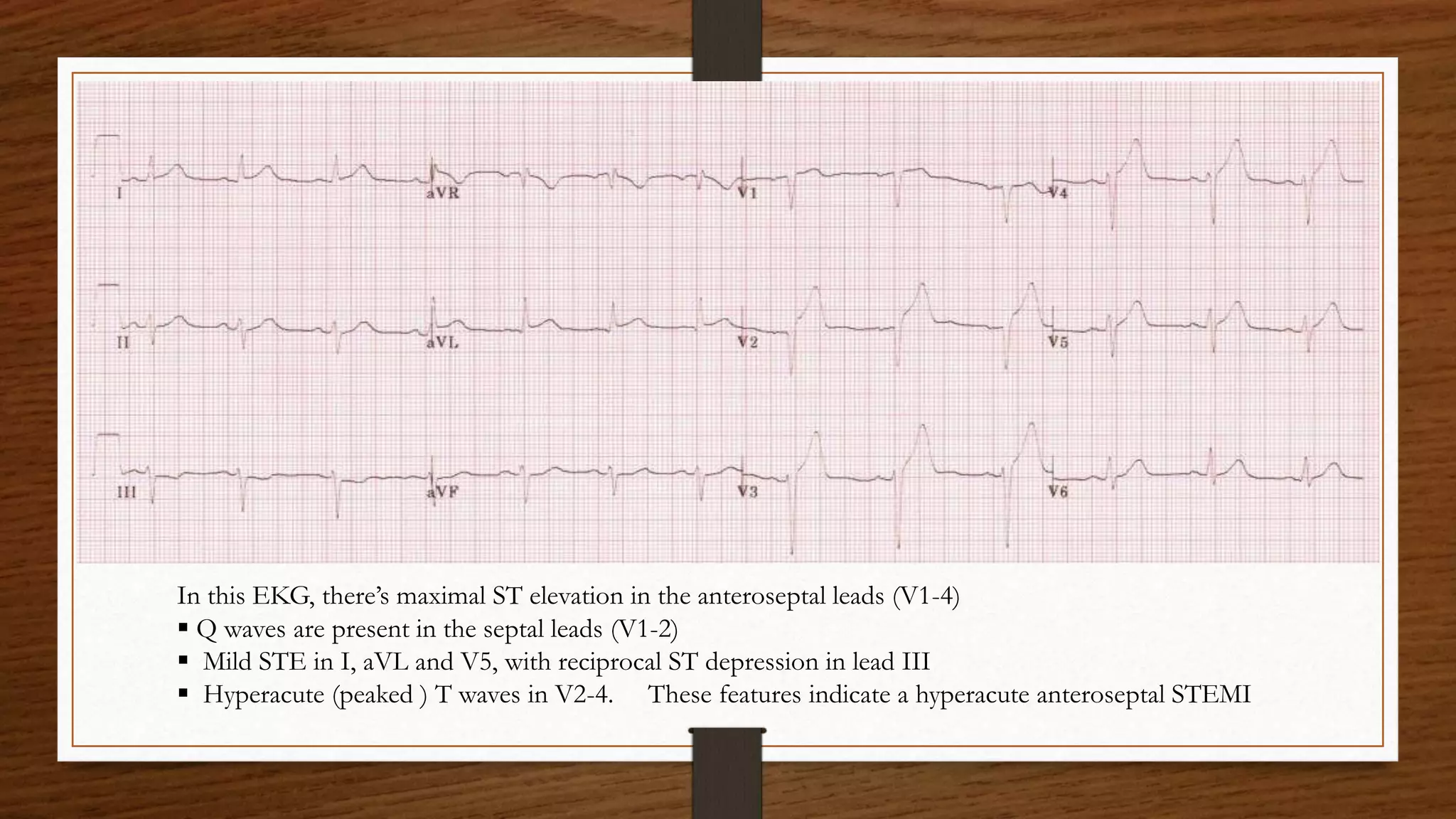
In this EKG, there’s maximal ST elevation in the anteroseptal leads (V1-4)
 Q waves are present in the septal leads (V1-2)
 Mild STE in I, aVL and V5, with reciprocal ST depression in lead III
 Hyperacute (peaked ) T waves in V2-4. These features indicate a hyperacute anteroseptal STEMI
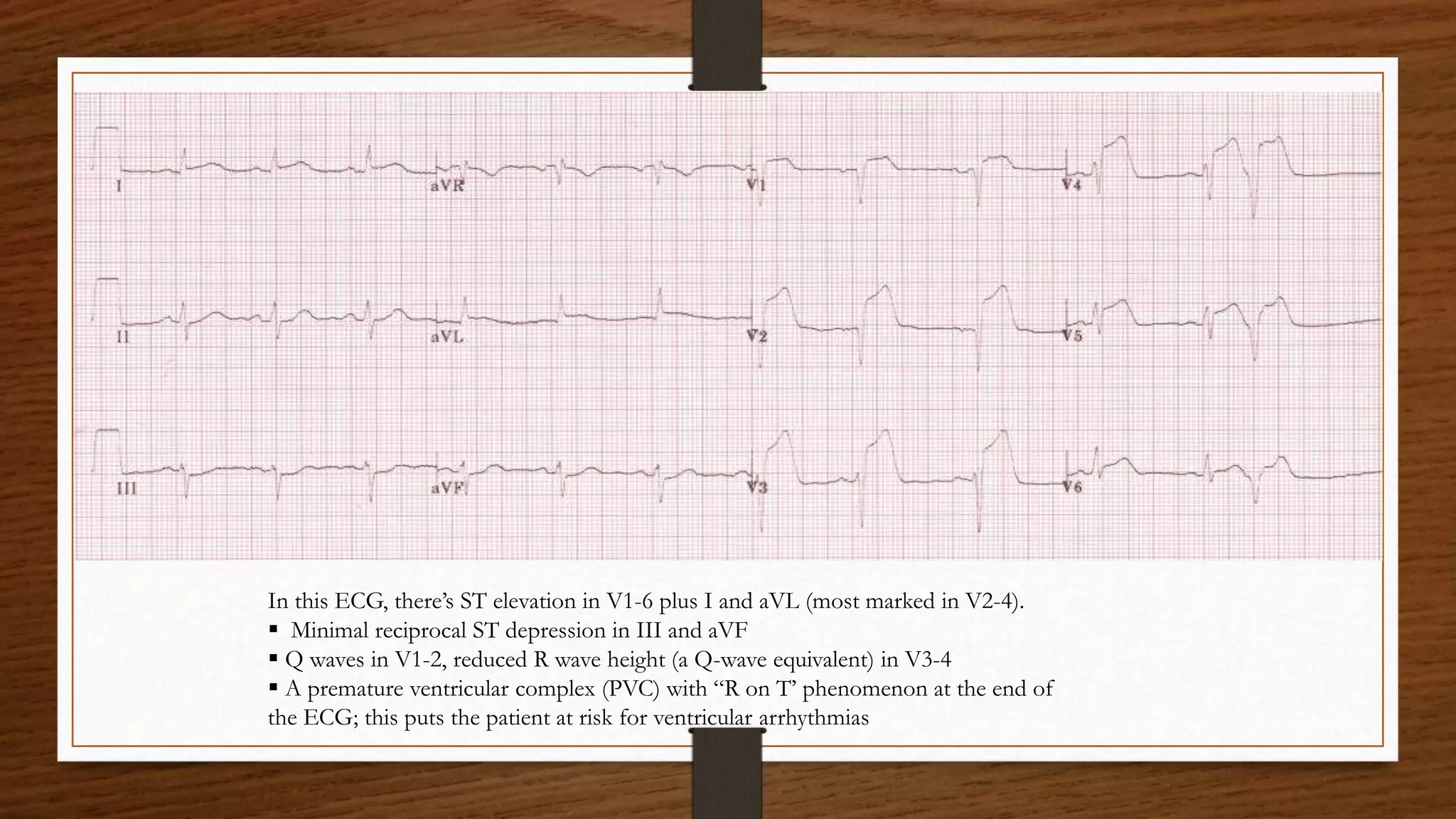
In this ECG, there’s ST elevation in V1-6 plus I and aVL (most marked in V2-4).
 Minimal reciprocal ST depression in III and aVF
 Q waves in V1-2, reduced R wave height (a Q-wave equivalent) in V3-4
 A premature ventricular complex (PVC) with “R on T’ phenomenon at the end of
the ECG; this puts the patient at risk for ventricular arrhythmias
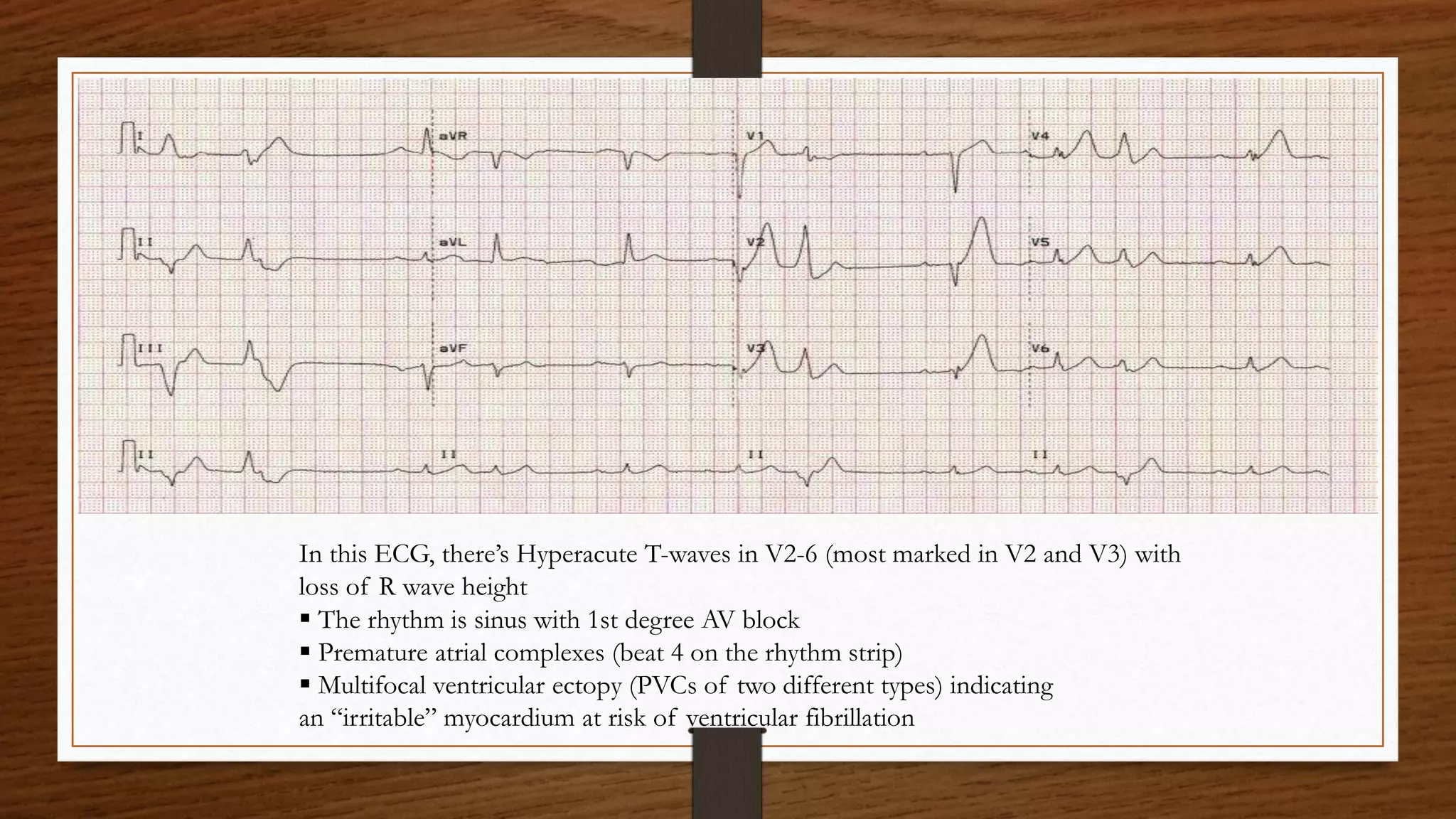
In this ECG, there’s Hyperacute T-waves in V2-6 (most marked in V2 and V3) with
loss of R wave height
 The rhythm is sinus with 1st degree AV block
 Premature atrial complexes (beat 4 on the rhythm strip)
 Multifocal ventricular ectopy (PVCs of two different types) indicating
an “irritable” myocardium at risk of ventricular fibrillation
Thanks for your
attention

ST elevation myocardial infarction ECG signs 2

  • 1.
  • 2.
    60 year oldWoman is brought in to the ER 5 hours after symptom of chest pain • ECG acquisition is done within 10 minutes of arrival  Immediate assessment, given aspirin 162mg chewable po  ECG shows a large anterior STEMI • Antiplatelet therapies: Clopidogrel 600mg PO
  • 3.
    Anterior STEMI • Clinicalfacts: • Results from occlusion of the left anterior descending artery (LAD). • Carries the worst prognosis of all infarcts , due to larger infarct size • How to Recognize an Anterior STEMI • ST segment elevation with Q wave formation in the precordial leads (V1-6) • Reciprocal ST depression in the inferior leads (mainly III and aVF)
  • 4.
    Infarct Pattern • Septal: V1-V2 • Anterior : V2-V5 • Anteroseptal : VV1-V4 • Anterolateral : V3-V6, +/- I +aVL • Extensive anterior/ anterolateral : V1-V6, + aVL
  • 5.
    On this EKG,there's ST elevation with “tombstone” features in the precordial leads (V1-6) and high lateral leads (I, aVL)  Occlusion is in proximal LAD and indicates large area infarction with a poor LV EF and increased chance of cardiogenic shock and death
  • 6.
    In this EKG,there’s maximal ST elevation in the anteroseptal leads (V1-4)  Q waves are present in the septal leads (V1-2)  Mild STE in I, aVL and V5, with reciprocal ST depression in lead III  Hyperacute (peaked ) T waves in V2-4. These features indicate a hyperacute anteroseptal STEMI
  • 7.
    In this ECG,there’s ST elevation in V1-6 plus I and aVL (most marked in V2-4).  Minimal reciprocal ST depression in III and aVF  Q waves in V1-2, reduced R wave height (a Q-wave equivalent) in V3-4  A premature ventricular complex (PVC) with “R on T’ phenomenon at the end of the ECG; this puts the patient at risk for ventricular arrhythmias
  • 8.
    In this ECG,there’s Hyperacute T-waves in V2-6 (most marked in V2 and V3) with loss of R wave height  The rhythm is sinus with 1st degree AV block  Premature atrial complexes (beat 4 on the rhythm strip)  Multifocal ventricular ectopy (PVCs of two different types) indicating an “irritable” myocardium at risk of ventricular fibrillation
  • 9.