DIABETIC KIDNEY DISEASE

Assist Prof. Warangkana Pichaiwong, MD.

Renal Division, Department of Medicine. 

Rajavithi Hospital, Bangkok.

wpichaiw@hotmail.com
!
Prevalence and Scope of DKD

Definition of DKD

Optimal management of DKD
Topics
Evolution
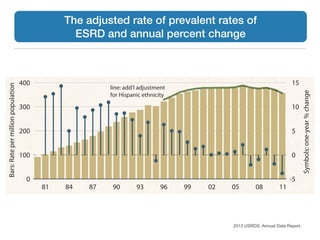
The adjusted rate of prevalent rates of 

ESRD and annual percent change
81 84 87 90 93 96 99 02 05 08 11
Bars:Ratepermillionpopulation
0
100
200
300
400
Symbols:one-year%change
-5
0
5
10
15
line: add’l adjustment
for Hispanic ethnicity
2013 USRDS. Annual Data Report.
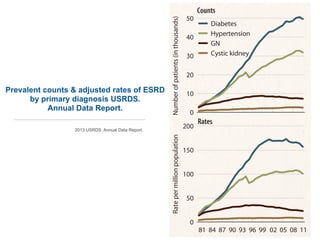
Prevalent counts & adjusted rates of ESRD 

by primary diagnosis USRDS.
Annual Data Report.
2013 USRDS. Annual Data Report.
Numberofpatients(inthousands)
0
10
20
30
40
50
81 84 87 90 93 96 99 02 05 08 11
Ratepermillionpopulation
0
50
100
150
200
Counts
Rates
Diabetes
Hypertension
GN
Cystic kidney
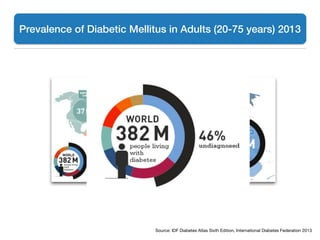
Source: IDF Diabetes Atlas Sixth Edition, International Diabetes Federation 2013
Prevalence of Diabetic Mellitus in Adults (20-75 years) 2013
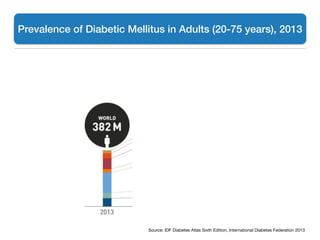
Source: IDF Diabetes Atlas Sixth Edition, International Diabetes Federation 2013
Prevalence of Diabetic Mellitus in Adults (20-75 years), 2013
Diagnosis of Diabetic Mellitus
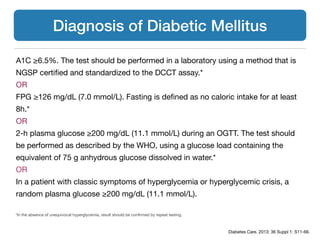
*In the absence of unequivocal hyperglycemia, result should be confirmed by repeat testing.
Diabetes Care. 2013; 36 Suppl 1: S11-66.
A1C ≥6.5%. The test should be performed in a laboratory using a method that is
NGSP certified and standardized to the DCCT assay.*

OR

FPG ≥126 mg/dL (7.0 mmol/L). Fasting is defined as no caloric intake for at least
8h.*

OR

2-h plasma glucose ≥200 mg/dL (11.1 mmol/L) during an OGTT. The test should
be performed as described by the WHO, using a glucose load containing the
equivalent of 75 g anhydrous glucose dissolved in water.*

OR

In a patient with classic symptoms of hyperglycemia or hyperglycemic crisis, a
random plasma glucose ≥200 mg/dL (11.1 mmol/L).
Diabetic Kidney Disease
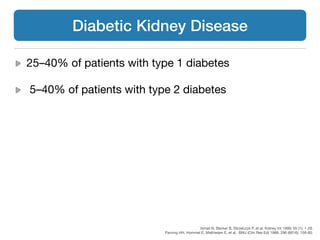
25–40% of patients with type 1 diabetes 

5–40% of patients with type 2 diabetes
Diabetic Kidney Disease
Ismail N, Becker B, Strzelczyk P, et al. Kidney Int 1999; 55 (1): 1-28.

Parving HH, Hommel E, Mathiesen E, et al. BMJ (Clin Res Ed) 1988; 296 (6616): 156-60.
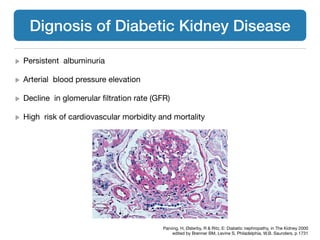
Persistent albuminuria

Arterial blood pressure elevation

Decline in glomerular filtration rate (GFR) 

High risk of cardiovascular morbidity and mortality
Dignosis of Diabetic Kidney Disease
Parving, H, Østerby, R & Ritz, E: Diabetic nephropathy, in The Kidney 2000

edited by Brenner BM, Levine S, Philadelphia, W.B. Saunders, p 1731
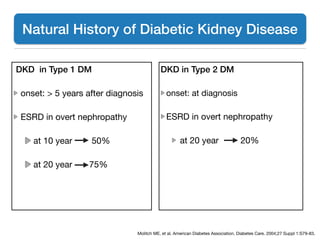
DKD in Type 1 DM
onset: > 5 years after diagnosis 

ESRD in overt nephropathy 

at 10 year 50%

at 20 year 75%
Molitch ME, et al. American Diabetes Association. Diabetes Care. 2004;27 Suppl 1:S79-83.
Natural History of Diabetic Kidney Disease
DKD in Type 2 DM
onset: at diagnosis

ESRD in overt nephropathy 

at 20 year 20%
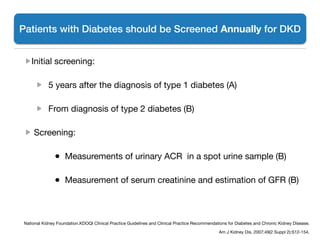
Initial screening:

5 years after the diagnosis of type 1 diabetes (A) 

From diagnosis of type 2 diabetes (B)

Screening:

	 	 ●  Measurements of urinary ACR in a spot urine sample (B) 

	 	 ●  Measurement of serum creatinine and estimation of GFR (B)

Patients with Diabetes should be Screened Annually for DKD
National Kidney Foundation.KDOQI Clinical Practice Guidelines and Clinical Practice Recommendations for Diabetes and Chronic Kidney Disease.

Am J Kidney Dis. 2007;49(2 Suppl 2):S12-154.
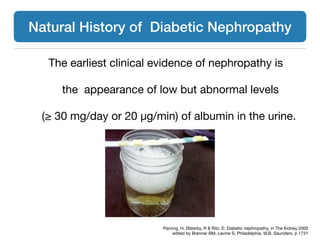
The earliest clinical evidence of nephropathy is
the appearance of low but abnormal levels 

(≥ 30 mg/day or 20 μg/min) of albumin in the urine.
Natural History of Diabetic Nephropathy
Parving, H, Østerby, R & Ritz, E: Diabetic nephropathy, in The Kidney 2000

edited by Brenner BM, Levine S, Philadelphia, W.B. Saunders, p 1731
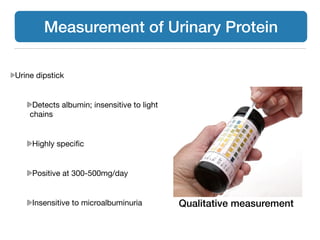
Urine dipstick

!
Detects albumin; insensitive to light
chains

!
Highly specific

!
Positive at 300-500mg/day

!
Insensitive to microalbuminuria
Measurement of Urinary Protein
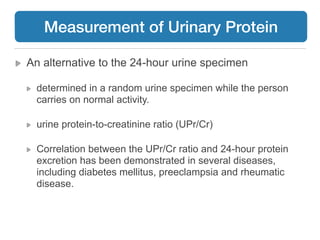
Qualitative measurement
24-hour urine collection

Creatinine is excreted in proportion to muscle mass, and its
concentration remains relatively constant on a daily basis. 

Young and middle-aged men excrete 16 to 26 mg per kg per day 

Women excrete 12 to 24 mg per kg per day. 

In malnourished and elderly persons, creatinine excretion may be less.
Measurement of Urinary Protein
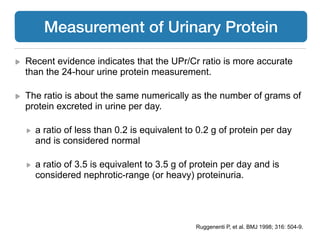
An alternative to the 24-hour urine specimen
determined in a random urine specimen while the person
carries on normal activity.
urine protein-to-creatinine ratio (UPr/Cr)
Correlation between the UPr/Cr ratio and 24-hour protein
excretion has been demonstrated in several diseases,
including diabetes mellitus, preeclampsia and rheumatic
disease.
Measurement of Urinary Protein
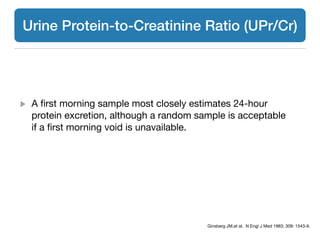
Recent evidence indicates that the UPr/Cr ratio is more accurate
than the 24-hour urine protein measurement.
The ratio is about the same numerically as the number of grams of
protein excreted in urine per day.
a ratio of less than 0.2 is equivalent to 0.2 g of protein per day
and is considered normal
a ratio of 3.5 is equivalent to 3.5 g of protein per day and is
considered nephrotic-range (or heavy) proteinuria.
Ruggenenti P, et al. BMJ 1998; 316: 504-9.
Measurement of Urinary Protein
A first morning sample most closely estimates 24-hour
protein excretion, although a random sample is acceptable
if a first morning void is unavailable.
Ginsberg JM,et al. N Engl J Med 1983; 309: 1543-6.
Urine Protein-to-Creatinine Ratio (UPr/Cr)
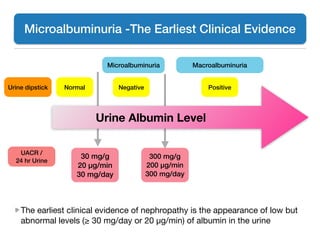
The earliest clinical evidence of nephropathy is the appearance of low but
abnormal levels (≥ 30 mg/day or 20 μg/min) of albumin in the urine
Urine Albumin Level
Urine dipstick Normal Negative Positive
UACR /
24 hr Urine
30 mg/g
20 μg/min
30 mg/day
300 mg/g
200 μg/min
300 mg/day
Microalbuminuria Macroalbuminuria
Microalbuminuria -The Earliest Clinical Evidence
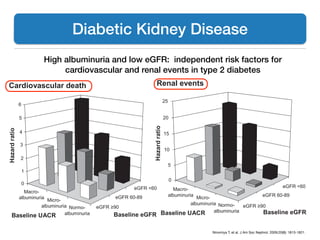
High albuminuria and low eGFR: independent risk factors for
cardiovascular and renal events in type 2 diabetes
Diabetic Kidney Disease
Ninomiya T, et al. J Am Soc Nephrol. 2009;20(8): 1813-1821.
Cardiovascular death
Hazardratio
Normo-
albuminuria
Micro-
albuminuria
Macro-
albuminuria
eGFR ≥90
eGFR 60-89
eGFR <60
Baseline eGFRBaseline UACR
0
1
2
3
4
5
6
<60
FR
Hazardratio
Normo-
albuminuria
Micro-
albuminuria
Macro-
albuminuria
eGFR ≥90
eGFR 60-89
eGFR <60
Baseline eGFRBaseline UACR
Renal events
0
5
10
15
20
25
GFR ≥90 GFR 60-89 GFR <60
Baseline eGFR (ml/min/1.73 m2
)
GFR ≥90 GFR 60-89 GFR <60
Baseline eGFR (ml/min/1.73 m2
)2
) 2
)
rg
Cardiovascular death
Hazardratio
Normo-
albuminuria
Micro-
albuminuria
Macro-
albuminuria
eGFR ≥90
eGFR 60-89
eGFR <60
Baseline eGFRBaseline UACR
0
1
2
3
4
5
6
0
R
Hazardratio
Normo-
albuminuria
Micro-
albuminuria
Macro-
albuminuria
eGFR ≥90
eGFR 60-89
eGFR <60
Baseline eGFRBaseline UACR
Renal events
0
5
10
15
20
25
GFR ≥90 GFR 60-89 GFR <60
Baseline eGFR (ml/min/1.73 m2
)
GFR ≥90 GFR 60-89 GFR <60
Baseline eGFR (ml/min/1.73 m2
)2
) 2
)
g
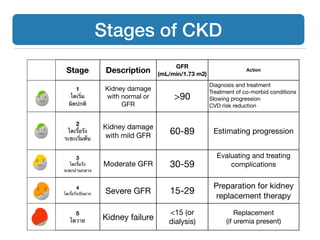
Stage Description
GFR
(mL/min/1.73 m2)
Action
1
ไตเริ่ม

ผิดปกติ
Kidney damage
with normal or
GFR
>90
Diagnosis and treatment

Treatment of co-morbid conditions

Slowing progression 

CVD risk reduction 

2
ไตเรื้อรัง 

ระยะเริ่มต้น
Kidney damage
with mild GFR
60-89 Estimating progression
3
ไตเรื้อรัง

ระยะปานกลาง
Moderate GFR 30-59
Evaluating and treating
complications 

4
ไตเรื้อรังเป็นมาก Severe GFR 15-29
Preparation for kidney
replacement therapy
5
ไตวาย Kidney failure
<15 (or
dialysis)
Replacement
(if uremia present)
Stages of CKD
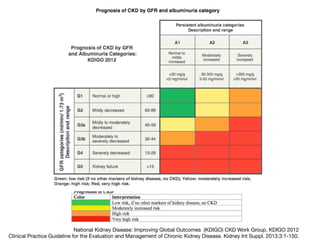
National Kidney Disease: Improving Global Outcomes (KDIGO) CKD Work Group. KDIGO 2012 

Clinical Practice Guideline for the Evaluation and Management of Chronic Kidney Disease. Kidney Int Suppl. 2013;3:1-150.
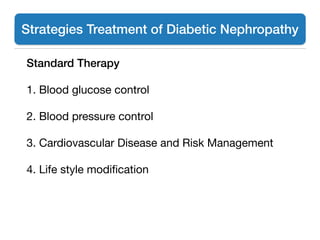
Strategies Treatment of Diabetic Nephropathy
Standard Therapy 

1. Blood glucose control 

2. Blood pressure control 

3. Cardiovascular Disease and Risk Management

4. Life style modification
Strategies Treatment of Diabetic Nephropathy
Blood Glucose Control
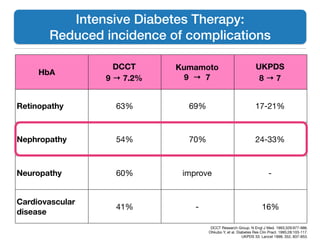
Intensive Diabetes Therapy:
Reduced incidence of complications
HbA
DCCT
9 → 7.2%
Kumamoto
9 → 7
UKPDS
8 → 7
Retinopathy 63% 69% 17-21%
Nephropathy 54% 70% 24-33%
Neuropathy 60% improve -
Cardiovascular
disease
41% - 16%
DCCT Research Group. N Engl J Med. 1993;329:977-986.

Ohkubo Y, et al. Diabetes Res Clin Pract. 1995;28:103-117.

UKPDS 33: Lancet 1998; 352, 837-853.
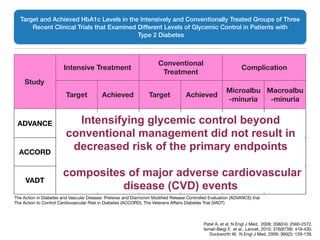
Target and Achieved HbA1c Levels in the Intensively and Conventionally Treated Groups of Three
Recent Clinical Trials that Examined Different Levels of Glycemic Control in Patients with
Type 2 Diabetes
Study
Intensive Treatment
Conventional
Treatment
Complication
Target Achieved Target Achieved
Microalbu
-minuria
Macroalbu
-minuria
ADVANCE <6.5% 6.5% Unspecified 7.3% 9% 30%
ACCORD <6.0% 6.4% 7-9% 7.5% 21% 32%
VADT <6.0% 6.9% 9% 8.4% 32% 37%
The Action in Diabetes and Vascular Disease: Preterax and Diamicron Modified Release Controlled Evaluation (ADVANCE) trial

The Action to Control Cardiovascular Risk in Diabetes (ACCORD). The Veterans Affairs Diabetes Trial (VADT)

Patel A, et al. N Engl J Med. 2008; 358(24): 2560-2572.

Ismail-Beigi F, et al.. Lancet. 2010; 376(9739): 419-430.

Duckworth W, N Engl J Med. 2009; 360(2): 129-139.

Intensifying glycemic control beyond
conventional management did not result in
decreased risk of the primary endpoints
!
composites of major adverse cardiovascular
disease (CVD) events
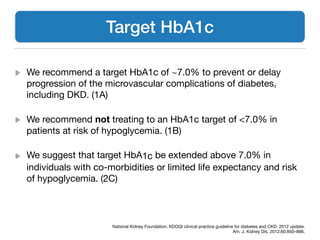
We recommend a target HbA1c of ~7.0% to prevent or delay
progression of the microvascular complications of diabetes,
including DKD. (1A)

We recommend not treating to an HbA1c target of <7.0% in
patients at risk of hypoglycemia. (1B)

We suggest that target HbA1c be extended above 7.0% in
individuals with co-morbidities or limited life expectancy and risk
of hypoglycemia. (2C)
Target HbA1c
National Kidney Foundation. KDOQI clinical practice guideline for diabetes and CKD: 2012 update. 

Am. J. Kidney Dis. 2012;60:850–886.
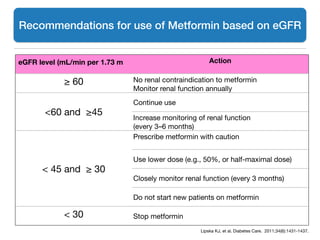
Recommendations for use of Metformin based on eGFR
eGFR level (mL/min per 1.73 m Action
≥ 60
 No renal contraindication to metformin

Monitor renal function annually

<60 and ≥45
Continue use
Increase monitoring of renal function
(every 3–6 months)
< 45 and ≥ 30
Prescribe metformin with caution

Use lower dose (e.g., 50%, or half-maximal dose)
Closely monitor renal function (every 3 months)
Do not start new patients on metformin
< 30
 Stop metformin
Lipska KJ, et al. Diabetes Care. 2011;34(6):1431-1437.
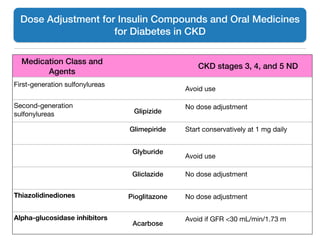
Dose Adjustment for Insulin Compounds and Oral Medicines
for Diabetes in CKD
Medication Class and
Agents
CKD stages 3, 4, and 5 ND
First-generation sulfonylureas

Avoid use
Second-generation
sulfonylureas
 Glipizide
No dose adjustment

Glimepiride Start conservatively at 1 mg daily

Glyburide
Avoid use
Gliclazide No dose adjustment

Thiazolidinediones
 Pioglitazone No dose adjustment

Alpha-glucosidase inhibitors

Acarbose
Avoid if GFR <30 mL/min/1.73 m
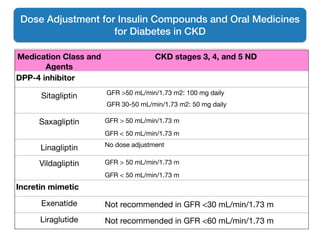
Dose Adjustment for Insulin Compounds and Oral Medicines
for Diabetes in CKD
Medication Class and
Agents

CKD stages 3, 4, and 5 ND

DPP-4 inhibitor

Sitagliptin
 GFR >50 mL/min/1.73 m2: 100 mg daily

GFR 30-50 mL/min/1.73 m2: 50 mg daily 

GFR <30 mL/min/1.73 m2: 25 mg daily

Saxagliptin
 GFR > 50 mL/min/1.73 m
GFR < 50 mL/min/1.73 m
Linagliptin No dose adjustment

Vildagliptin
 GFR > 50 mL/min/1.73 m
GFR < 50 mL/min/1.73 m
Incretin mimetic

Exenatide
 Not recommended in GFR <30 mL/min/1.73 m
Liraglutide
 Not recommended in GFR <60 mL/min/1.73 m
`Blood Pressure Control
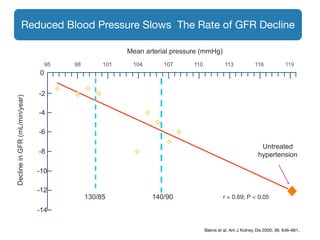
95 98 101 104 107 110 113 116 119
r = 0.69; P < 0.05
Mean arterial pressure (mmHg)
DeclineinGFR(mL/min/year)
130/85 140/90
Untreated
hypertension
0
-2
-4
-6
-8
-10
-12
-14
Bakris et al. Am J Kidney Dis 2000; 36: 646–661.
Reduced Blood Pressure Slows The Rate of GFR Decline
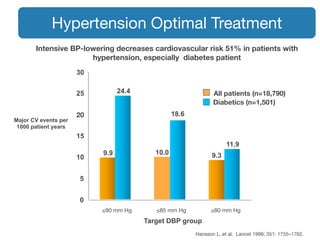
9.9 10.0 9.3
24.4
18.6
11.9
0
5
10
15
20
25
30
≤90 mm Hg ≤85 mm Hg ≤80 mm Hg
Target DBP group
Major CV events per
1000 patient years
All patients (n=18,790)
Diabetics (n=1,501)
Hansson L, et al. Lancet 1998; 351: 1755–1762.
Intensive BP-lowering decreases cardiovascular risk 51% in patients with
hypertension, especially diabetes patient
Hypertension Optimal Treatment
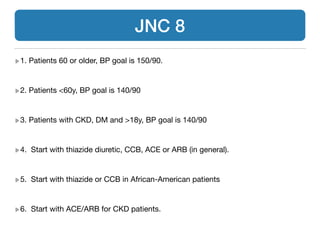
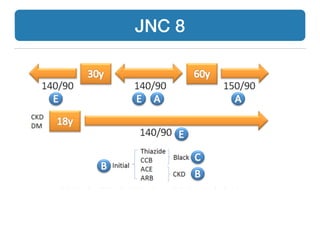
1. Patients 60 or older, BP goal is 150/90.

!
2. Patients <60y, BP goal is 140/90

!
3. Patients with CKD, DM and >18y, BP goal is 140/90

!
4. Start with thiazide diuretic, CCB, ACE or ARB (in general).

!
5. Start with thiazide or CCB in African-American patients

!
6. Start with ACE/ARB for CKD patients.
JNC 8
JNC 8
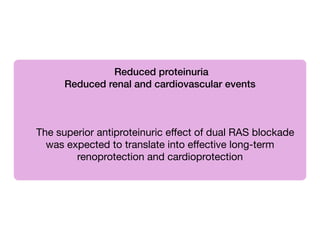
Reduced proteinuria
Reduced renal and cardiovascular events 

!
!
!
!
The superior antiproteinuric effect of dual RAS blockade
was expected to translate into effective long-term
renoprotection and cardioprotection
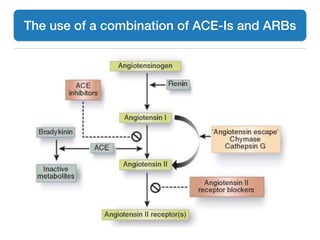
The use of a combination of ACE-Is and ARBs
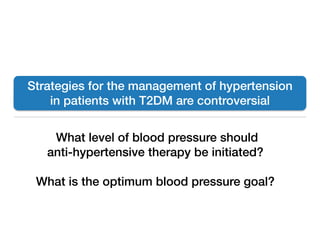
What level of blood pressure should
anti-hypertensive therapy be initiated?
What is the optimum blood pressure goal?
Strategies for the management of hypertension
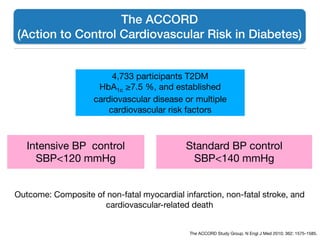
in patients with T2DM are controversial
4,733 participants T2DM

HbA1c ≥7.5 %, and established
cardiovascular disease or multiple
cardiovascular risk factors
Intensive BP control

SBP<120 mmHg
Standard BP control

SBP<140 mmHg
Outcome: Composite of non-fatal myocardial infarction, non-fatal stroke, and
cardiovascular-related death
The ACCORD Study Group. N Engl J Med 2010; 362: 1575-1585.
The ACCORD
(Action to Control Cardiovascular Risk in Diabetes)
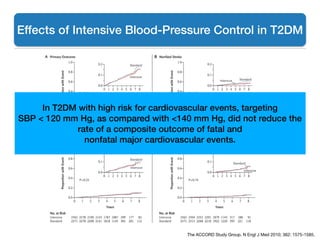
The ACCORD Study Group. N Engl J Med 2010; 362: 1575-1585.
Primary
outcome
Nonfatal
MI
Nonfatal
stroke
In T2DM with high risk for cardiovascular events, targeting
SBP < 120 mm Hg, as compared with <140 mm Hg, did not reduce the
rate of a composite outcome of fatal and
nonfatal major cardiovascular events.
Effects of Intensive Blood-Pressure Control in T2DM

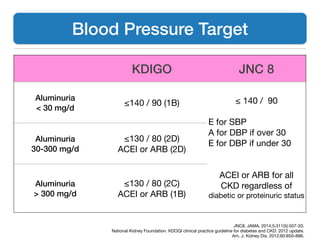
JNC8. JAMA. 2014;5;311(5):507-20.

National Kidney Foundation. KDOQI clinical practice guideline for diabetes and CKD: 2012 update. 

Am. J. Kidney Dis. 2012;60:850–886.

Blood Pressure Target
KDIGO JNC 8
Aluminuria
< 30 mg/d
≤140 / 90 (1B) ≤ 140 / 90

!
E for SBP 

A for DBP if over 30 

E for DBP if under 30

!
!
ACEI or ARB for all
CKD regardless of
diabetic or proteinuric status
Aluminuria
30-300 mg/d
≤130 / 80 (2D)

ACEI or ARB (2D)
Aluminuria
> 300 mg/d
≤130 / 80 (2C)

ACEI or ARB (1B)
Dyslipidemia in DKD
Dyslipidemia in DKD
!
LDL Cholesterol
Risk factor for CVD
Life-table plot of effects of allocation to simvastatin plus ezetimibe versus placebo on major atherosclerotic events

Numbers remaining at risk of a first major atherosclerotic event at the beginning of each year are shown for both treatment groups.
Lowering LDL-C reduces cardiovascular events in
a wide range of patients with diabetes and CKD
Baigent C, et al. Lancet. 2011;377(9784):2181-2192.

for triglyceri
3023 (33%
dialysis at ra
496 [5%] p
cholesterol
dialysis tha
2·9 [SD 0·9
of 6247 patie
creatinine,
Modification
26·6 (SD 13
had Kidney
3 disease (
(43%) stage
and 1221 (20
1·73 m²). Am
dialysis with
creatinine r
30 mg/g, 2
2359 (42%)
The medi
surviving p
period, sligh
ezetimibe d
simvastatin
finding was
*In patients initially allocated to simvastatin, no 1-year sample was collected, while samples scheduled for collection at
2·5 and 4 years were collected at 1·5 and 3 years after rerandomisation.
Table 2: Average use of study simvastatin plus ezetimibe or non-study statin and average change in
plasma LDL cholesterol from baseline, by period of follow-up
Figure 2: Life-table plot of effects of allocation to simvastatin plus ezetimibe versus placebo on major
atherosclerotic events
Numbers remaining at risk of a first major atherosclerotic event at the beginning of each year are shown for both
treatment groups.
543210
4620
4650
4204
4271
3849
3939
3469
3546
2566
2655
1269
1265
Years of follow-up
Number at risk
Placebo
Simvastatin
plus ezetimibe
0
5
10
15
20
25
Peoplesufferingevents(%)
Placebo
Simvastatin plus ezetimibe
Rate reduction 17% (95% CI 6–26%)
Log-rank p=0·0021
Rate Reduction 17%
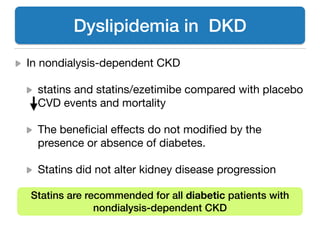
In nondialysis-dependent CKD 

statins and statins/ezetimibe compared with placebo
CVD events and mortality 

The beneficial effects do not modified by the
presence or absence of diabetes. 

Statins did not alter kidney disease progression
Dyslipidemia in DKD
Statins are recommended for all diabetic patients with
nondialysis-dependent CKD
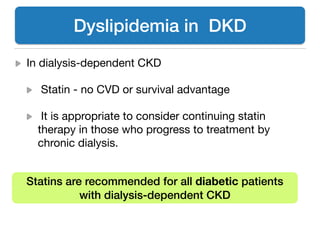
In dialysis-dependent CKD 

Statin - no CVD or survival advantage

It is appropriate to consider continuing statin
therapy in those who progress to treatment by
chronic dialysis.
Dyslipidemia in DKD
Statins are recommended for all diabetic patients
with dialysis-dependent CKD
!
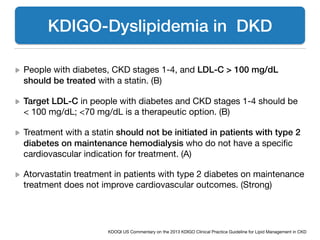
People with diabetes, CKD stages 1-4, and LDL-C > 100 mg/dL
should be treated with a statin. (B) 

Target LDL-C in people with diabetes and CKD stages 1-4 should be
< 100 mg/dL; <70 mg/dL is a therapeutic option. (B) 

Treatment with a statin should not be initiated in patients with type 2
diabetes on maintenance hemodialysis who do not have a specific
cardiovascular indication for treatment. (A) 

Atorvastatin treatment in patients with type 2 diabetes on maintenance
treatment does not improve cardiovascular outcomes. (Strong)
KDIGO-Dyslipidemia in DKD
KDOQI US Commentary on the 2013 KDIGO Clinical Practice Guideline for Lipid Management in CKD
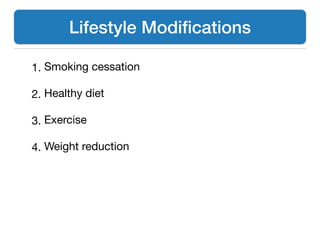
1. Smoking cessation

2. Healthy diet

3. Exercise

4. Weight reduction
Lifestyle Modifications
Weight Reduction
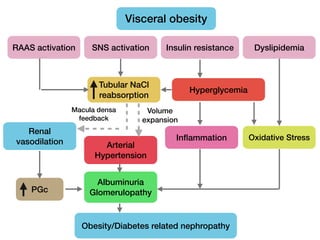
Visceral obesity
RAAS activation SNS activation Insulin resistance Dyslipidemia
Tubular NaCl
reabsorption
Hyperglycemia
Inflammation Oxidative Stress
Renal
vasodilation
PGc
Macula densa
feedback
Volume
expansion
Arterial
Hypertension
Albuminuria
Glomerulopathy
Obesity/Diabetes related nephropathy
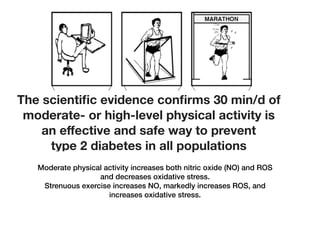
The scientific evidence confirms 30 min/d of
moderate- or high-level physical activity is
an effective and safe way to prevent
type 2 diabetes in all populations
Moderate physical activity increases both nitric oxide (NO) and ROS
and decreases oxidative stress.
Strenuous exercise increases NO, markedly increases ROS, and
increases oxidative stress.
Nutritional Therapy
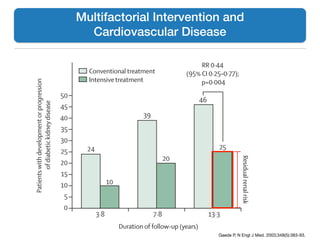
Gaede P, N Engl J Med. 2003;348(5):383-93.
Multifactorial Intervention and
Cardiovascular Disease
veral
k for
The
enal
ntion
ntrol,
and
ents
hese
after
w-up
eutic
with
erse
Patientswithdevelopmentorprogression
ofdiabetickidneydisease
50
40
30
25
20
15
10
5
0
45
35
3·8 7·8 13·3
Duration of follow-up (years)
24
10
39
20
46
25
RR 0·44
(95% CI 0·25–0·77);
p=0·004
Conventional treatment
Intensive treatment
Residualrenalrisk
“It Just Doesn’t Get Any Better . . . or Does It?”
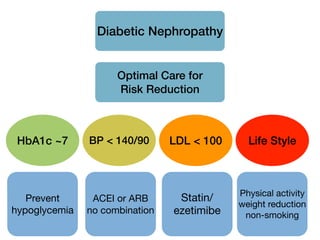
HbA1c ~7 BP < 140/90 LDL < 100 Life Style
Diabetic Nephropathy
Optimal Care for
Risk Reduction
!
Prevent
hypoglycemia

ACEI or ARB 

no combination
Statin/
ezetimibe
Physical activity

weight reduction

non-smoking
!
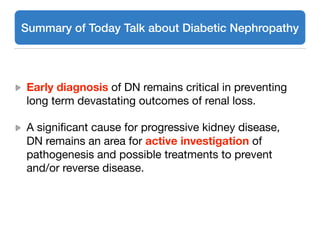
Early diagnosis of DN remains critical in preventing
long term devastating outcomes of renal loss. 

A significant cause for progressive kidney disease,
DN remains an area for active investigation of
pathogenesis and possible treatments to prevent
and/or reverse disease.
Summary of Today Talk about Diabetic Nephropathy
Thank You for Your Attention

ภาวะแทรกซ้อนทางไตในผู้ป่วยเบาหวาน

  • 1.
    DIABETIC KIDNEY DISEASE
 AssistProf. Warangkana Pichaiwong, MD. Renal Division, Department of Medicine. Rajavithi Hospital, Bangkok. wpichaiw@hotmail.com
  • 2.
    ! Prevalence and Scopeof DKD Definition of DKD Optimal management of DKD Topics
  • 3.
  • 4.
    The adjusted rateof prevalent rates of 
 ESRD and annual percent change 81 84 87 90 93 96 99 02 05 08 11 Bars:Ratepermillionpopulation 0 100 200 300 400 Symbols:one-year%change -5 0 5 10 15 line: add’l adjustment for Hispanic ethnicity 2013 USRDS. Annual Data Report.
  • 5.
    Prevalent counts &adjusted rates of ESRD 
 by primary diagnosis USRDS. Annual Data Report. 2013 USRDS. Annual Data Report. Numberofpatients(inthousands) 0 10 20 30 40 50 81 84 87 90 93 96 99 02 05 08 11 Ratepermillionpopulation 0 50 100 150 200 Counts Rates Diabetes Hypertension GN Cystic kidney
  • 6.
    Source: IDF DiabetesAtlas Sixth Edition, International Diabetes Federation 2013 Prevalence of Diabetic Mellitus in Adults (20-75 years) 2013
  • 7.
    Source: IDF DiabetesAtlas Sixth Edition, International Diabetes Federation 2013 Prevalence of Diabetic Mellitus in Adults (20-75 years), 2013
  • 8.
  • 9.
    Diagnosis of DiabeticMellitus *In the absence of unequivocal hyperglycemia, result should be confirmed by repeat testing. Diabetes Care. 2013; 36 Suppl 1: S11-66. A1C ≥6.5%. The test should be performed in a laboratory using a method that is NGSP certified and standardized to the DCCT assay.* OR FPG ≥126 mg/dL (7.0 mmol/L). Fasting is defined as no caloric intake for at least 8h.* OR 2-h plasma glucose ≥200 mg/dL (11.1 mmol/L) during an OGTT. The test should be performed as described by the WHO, using a glucose load containing the equivalent of 75 g anhydrous glucose dissolved in water.* OR In a patient with classic symptoms of hyperglycemia or hyperglycemic crisis, a random plasma glucose ≥200 mg/dL (11.1 mmol/L).
  • 10.
  • 11.
    25–40% of patientswith type 1 diabetes 5–40% of patients with type 2 diabetes Diabetic Kidney Disease Ismail N, Becker B, Strzelczyk P, et al. Kidney Int 1999; 55 (1): 1-28. Parving HH, Hommel E, Mathiesen E, et al. BMJ (Clin Res Ed) 1988; 296 (6616): 156-60.
  • 12.
    Persistent albuminuria Arterial bloodpressure elevation Decline in glomerular filtration rate (GFR) High risk of cardiovascular morbidity and mortality Dignosis of Diabetic Kidney Disease Parving, H, Østerby, R & Ritz, E: Diabetic nephropathy, in The Kidney 2000 edited by Brenner BM, Levine S, Philadelphia, W.B. Saunders, p 1731
  • 13.
    DKD in Type1 DM onset: > 5 years after diagnosis ESRD in overt nephropathy at 10 year 50% at 20 year 75% Molitch ME, et al. American Diabetes Association. Diabetes Care. 2004;27 Suppl 1:S79-83. Natural History of Diabetic Kidney Disease DKD in Type 2 DM onset: at diagnosis ESRD in overt nephropathy at 20 year 20%
  • 14.
    Initial screening: 5 yearsafter the diagnosis of type 1 diabetes (A) From diagnosis of type 2 diabetes (B) Screening: ●  Measurements of urinary ACR in a spot urine sample (B) ●  Measurement of serum creatinine and estimation of GFR (B)
 Patients with Diabetes should be Screened Annually for DKD National Kidney Foundation.KDOQI Clinical Practice Guidelines and Clinical Practice Recommendations for Diabetes and Chronic Kidney Disease. Am J Kidney Dis. 2007;49(2 Suppl 2):S12-154.
  • 15.
    The earliest clinicalevidence of nephropathy is the appearance of low but abnormal levels (≥ 30 mg/day or 20 μg/min) of albumin in the urine. Natural History of Diabetic Nephropathy Parving, H, Østerby, R & Ritz, E: Diabetic nephropathy, in The Kidney 2000 edited by Brenner BM, Levine S, Philadelphia, W.B. Saunders, p 1731
  • 16.
    Urine dipstick ! Detects albumin;insensitive to light chains ! Highly specific ! Positive at 300-500mg/day ! Insensitive to microalbuminuria Measurement of Urinary Protein Qualitative measurement
  • 17.
    24-hour urine collection Creatinineis excreted in proportion to muscle mass, and its concentration remains relatively constant on a daily basis. Young and middle-aged men excrete 16 to 26 mg per kg per day Women excrete 12 to 24 mg per kg per day. In malnourished and elderly persons, creatinine excretion may be less. Measurement of Urinary Protein
  • 18.
    An alternative tothe 24-hour urine specimen determined in a random urine specimen while the person carries on normal activity. urine protein-to-creatinine ratio (UPr/Cr) Correlation between the UPr/Cr ratio and 24-hour protein excretion has been demonstrated in several diseases, including diabetes mellitus, preeclampsia and rheumatic disease. Measurement of Urinary Protein
  • 19.
    Recent evidence indicatesthat the UPr/Cr ratio is more accurate than the 24-hour urine protein measurement. The ratio is about the same numerically as the number of grams of protein excreted in urine per day. a ratio of less than 0.2 is equivalent to 0.2 g of protein per day and is considered normal a ratio of 3.5 is equivalent to 3.5 g of protein per day and is considered nephrotic-range (or heavy) proteinuria. Ruggenenti P, et al. BMJ 1998; 316: 504-9. Measurement of Urinary Protein
  • 20.
    A first morningsample most closely estimates 24-hour protein excretion, although a random sample is acceptable if a first morning void is unavailable. Ginsberg JM,et al. N Engl J Med 1983; 309: 1543-6. Urine Protein-to-Creatinine Ratio (UPr/Cr)
  • 21.
    The earliest clinicalevidence of nephropathy is the appearance of low but abnormal levels (≥ 30 mg/day or 20 μg/min) of albumin in the urine Urine Albumin Level Urine dipstick Normal Negative Positive UACR / 24 hr Urine 30 mg/g 20 μg/min 30 mg/day 300 mg/g 200 μg/min 300 mg/day Microalbuminuria Macroalbuminuria Microalbuminuria -The Earliest Clinical Evidence
  • 22.
    High albuminuria andlow eGFR: independent risk factors for cardiovascular and renal events in type 2 diabetes Diabetic Kidney Disease Ninomiya T, et al. J Am Soc Nephrol. 2009;20(8): 1813-1821. Cardiovascular death Hazardratio Normo- albuminuria Micro- albuminuria Macro- albuminuria eGFR ≥90 eGFR 60-89 eGFR <60 Baseline eGFRBaseline UACR 0 1 2 3 4 5 6 <60 FR Hazardratio Normo- albuminuria Micro- albuminuria Macro- albuminuria eGFR ≥90 eGFR 60-89 eGFR <60 Baseline eGFRBaseline UACR Renal events 0 5 10 15 20 25 GFR ≥90 GFR 60-89 GFR <60 Baseline eGFR (ml/min/1.73 m2 ) GFR ≥90 GFR 60-89 GFR <60 Baseline eGFR (ml/min/1.73 m2 )2 ) 2 ) rg Cardiovascular death Hazardratio Normo- albuminuria Micro- albuminuria Macro- albuminuria eGFR ≥90 eGFR 60-89 eGFR <60 Baseline eGFRBaseline UACR 0 1 2 3 4 5 6 0 R Hazardratio Normo- albuminuria Micro- albuminuria Macro- albuminuria eGFR ≥90 eGFR 60-89 eGFR <60 Baseline eGFRBaseline UACR Renal events 0 5 10 15 20 25 GFR ≥90 GFR 60-89 GFR <60 Baseline eGFR (ml/min/1.73 m2 ) GFR ≥90 GFR 60-89 GFR <60 Baseline eGFR (ml/min/1.73 m2 )2 ) 2 ) g
  • 23.
    Stage Description GFR (mL/min/1.73 m2) Action 1 ไตเริ่ม ผิดปกติ Kidneydamage with normal or GFR >90 Diagnosis and treatment Treatment of co-morbid conditions Slowing progression CVD risk reduction 2 ไตเรื้อรัง ระยะเริ่มต้น Kidney damage with mild GFR 60-89 Estimating progression 3 ไตเรื้อรัง ระยะปานกลาง Moderate GFR 30-59 Evaluating and treating complications 4 ไตเรื้อรังเป็นมาก Severe GFR 15-29 Preparation for kidney replacement therapy 5 ไตวาย Kidney failure <15 (or dialysis) Replacement (if uremia present) Stages of CKD
  • 24.
    National Kidney Disease:Improving Global Outcomes (KDIGO) CKD Work Group. KDIGO 2012 Clinical Practice Guideline for the Evaluation and Management of Chronic Kidney Disease. Kidney Int Suppl. 2013;3:1-150.
  • 25.
    Strategies Treatment ofDiabetic Nephropathy
  • 26.
    Standard Therapy 1.Blood glucose control 2. Blood pressure control 3. Cardiovascular Disease and Risk Management 4. Life style modification Strategies Treatment of Diabetic Nephropathy
  • 27.
  • 28.
    Intensive Diabetes Therapy: Reducedincidence of complications HbA DCCT 9 → 7.2% Kumamoto 9 → 7 UKPDS 8 → 7 Retinopathy 63% 69% 17-21% Nephropathy 54% 70% 24-33% Neuropathy 60% improve - Cardiovascular disease 41% - 16% DCCT Research Group. N Engl J Med. 1993;329:977-986. Ohkubo Y, et al. Diabetes Res Clin Pract. 1995;28:103-117. UKPDS 33: Lancet 1998; 352, 837-853.
  • 29.
    Target and AchievedHbA1c Levels in the Intensively and Conventionally Treated Groups of Three Recent Clinical Trials that Examined Different Levels of Glycemic Control in Patients with Type 2 Diabetes Study Intensive Treatment Conventional Treatment Complication Target Achieved Target Achieved Microalbu -minuria Macroalbu -minuria ADVANCE <6.5% 6.5% Unspecified 7.3% 9% 30% ACCORD <6.0% 6.4% 7-9% 7.5% 21% 32% VADT <6.0% 6.9% 9% 8.4% 32% 37% The Action in Diabetes and Vascular Disease: Preterax and Diamicron Modified Release Controlled Evaluation (ADVANCE) trial The Action to Control Cardiovascular Risk in Diabetes (ACCORD). The Veterans Affairs Diabetes Trial (VADT) Patel A, et al. N Engl J Med. 2008; 358(24): 2560-2572. Ismail-Beigi F, et al.. Lancet. 2010; 376(9739): 419-430. Duckworth W, N Engl J Med. 2009; 360(2): 129-139. Intensifying glycemic control beyond conventional management did not result in decreased risk of the primary endpoints ! composites of major adverse cardiovascular disease (CVD) events
  • 30.
    We recommend atarget HbA1c of ~7.0% to prevent or delay progression of the microvascular complications of diabetes, including DKD. (1A) We recommend not treating to an HbA1c target of <7.0% in patients at risk of hypoglycemia. (1B) We suggest that target HbA1c be extended above 7.0% in individuals with co-morbidities or limited life expectancy and risk of hypoglycemia. (2C) Target HbA1c National Kidney Foundation. KDOQI clinical practice guideline for diabetes and CKD: 2012 update. Am. J. Kidney Dis. 2012;60:850–886.
  • 31.
    Recommendations for useof Metformin based on eGFR eGFR level (mL/min per 1.73 m Action ≥ 60 No renal contraindication to metformin
 Monitor renal function annually <60 and ≥45 Continue use Increase monitoring of renal function (every 3–6 months) < 45 and ≥ 30 Prescribe metformin with caution Use lower dose (e.g., 50%, or half-maximal dose) Closely monitor renal function (every 3 months) Do not start new patients on metformin < 30 Stop metformin Lipska KJ, et al. Diabetes Care. 2011;34(6):1431-1437.
  • 32.
    Dose Adjustment forInsulin Compounds and Oral Medicines for Diabetes in CKD Medication Class and Agents CKD stages 3, 4, and 5 ND First-generation sulfonylureas Avoid use Second-generation sulfonylureas Glipizide No dose adjustment Glimepiride Start conservatively at 1 mg daily Glyburide Avoid use Gliclazide No dose adjustment Thiazolidinediones Pioglitazone No dose adjustment Alpha-glucosidase inhibitors Acarbose Avoid if GFR <30 mL/min/1.73 m
  • 33.
    Dose Adjustment forInsulin Compounds and Oral Medicines for Diabetes in CKD Medication Class and Agents CKD stages 3, 4, and 5 ND DPP-4 inhibitor Sitagliptin GFR >50 mL/min/1.73 m2: 100 mg daily GFR 30-50 mL/min/1.73 m2: 50 mg daily GFR <30 mL/min/1.73 m2: 25 mg daily Saxagliptin GFR > 50 mL/min/1.73 m GFR < 50 mL/min/1.73 m Linagliptin No dose adjustment Vildagliptin GFR > 50 mL/min/1.73 m GFR < 50 mL/min/1.73 m Incretin mimetic Exenatide Not recommended in GFR <30 mL/min/1.73 m Liraglutide Not recommended in GFR <60 mL/min/1.73 m
  • 34.
  • 35.
    95 98 101104 107 110 113 116 119 r = 0.69; P < 0.05 Mean arterial pressure (mmHg) DeclineinGFR(mL/min/year) 130/85 140/90 Untreated hypertension 0 -2 -4 -6 -8 -10 -12 -14 Bakris et al. Am J Kidney Dis 2000; 36: 646–661. Reduced Blood Pressure Slows The Rate of GFR Decline
  • 36.
    9.9 10.0 9.3 24.4 18.6 11.9 0 5 10 15 20 25 30 ≤90mm Hg ≤85 mm Hg ≤80 mm Hg Target DBP group Major CV events per 1000 patient years All patients (n=18,790) Diabetics (n=1,501) Hansson L, et al. Lancet 1998; 351: 1755–1762. Intensive BP-lowering decreases cardiovascular risk 51% in patients with hypertension, especially diabetes patient Hypertension Optimal Treatment
  • 37.
    1. Patients 60or older, BP goal is 150/90. ! 2. Patients <60y, BP goal is 140/90 ! 3. Patients with CKD, DM and >18y, BP goal is 140/90 ! 4. Start with thiazide diuretic, CCB, ACE or ARB (in general). ! 5. Start with thiazide or CCB in African-American patients ! 6. Start with ACE/ARB for CKD patients. JNC 8
  • 38.
  • 39.
    Reduced proteinuria Reduced renaland cardiovascular events ! ! ! ! The superior antiproteinuric effect of dual RAS blockade was expected to translate into effective long-term renoprotection and cardioprotection
  • 40.
    The use ofa combination of ACE-Is and ARBs
  • 41.
    What level ofblood pressure should anti-hypertensive therapy be initiated? What is the optimum blood pressure goal? Strategies for the management of hypertension in patients with T2DM are controversial
  • 42.
    4,733 participants T2DM HbA1c≥7.5 %, and established cardiovascular disease or multiple cardiovascular risk factors Intensive BP control SBP<120 mmHg Standard BP control SBP<140 mmHg Outcome: Composite of non-fatal myocardial infarction, non-fatal stroke, and cardiovascular-related death The ACCORD Study Group. N Engl J Med 2010; 362: 1575-1585. The ACCORD (Action to Control Cardiovascular Risk in Diabetes)
  • 43.
    The ACCORD StudyGroup. N Engl J Med 2010; 362: 1575-1585. Primary outcome Nonfatal MI Nonfatal stroke In T2DM with high risk for cardiovascular events, targeting SBP < 120 mm Hg, as compared with <140 mm Hg, did not reduce the rate of a composite outcome of fatal and nonfatal major cardiovascular events. Effects of Intensive Blood-Pressure Control in T2DM

  • 44.
    JNC8. JAMA. 2014;5;311(5):507-20. NationalKidney Foundation. KDOQI clinical practice guideline for diabetes and CKD: 2012 update. Am. J. Kidney Dis. 2012;60:850–886. Blood Pressure Target KDIGO JNC 8 Aluminuria < 30 mg/d ≤140 / 90 (1B) ≤ 140 / 90 ! E for SBP A for DBP if over 30 E for DBP if under 30 ! ! ACEI or ARB for all CKD regardless of diabetic or proteinuric status Aluminuria 30-300 mg/d ≤130 / 80 (2D) ACEI or ARB (2D) Aluminuria > 300 mg/d ≤130 / 80 (2C) ACEI or ARB (1B)
  • 45.
  • 46.
    Dyslipidemia in DKD ! LDLCholesterol Risk factor for CVD
  • 47.
    Life-table plot ofeffects of allocation to simvastatin plus ezetimibe versus placebo on major atherosclerotic events Numbers remaining at risk of a first major atherosclerotic event at the beginning of each year are shown for both treatment groups. Lowering LDL-C reduces cardiovascular events in a wide range of patients with diabetes and CKD Baigent C, et al. Lancet. 2011;377(9784):2181-2192. for triglyceri 3023 (33% dialysis at ra 496 [5%] p cholesterol dialysis tha 2·9 [SD 0·9 of 6247 patie creatinine, Modification 26·6 (SD 13 had Kidney 3 disease ( (43%) stage and 1221 (20 1·73 m²). Am dialysis with creatinine r 30 mg/g, 2 2359 (42%) The medi surviving p period, sligh ezetimibe d simvastatin finding was *In patients initially allocated to simvastatin, no 1-year sample was collected, while samples scheduled for collection at 2·5 and 4 years were collected at 1·5 and 3 years after rerandomisation. Table 2: Average use of study simvastatin plus ezetimibe or non-study statin and average change in plasma LDL cholesterol from baseline, by period of follow-up Figure 2: Life-table plot of effects of allocation to simvastatin plus ezetimibe versus placebo on major atherosclerotic events Numbers remaining at risk of a first major atherosclerotic event at the beginning of each year are shown for both treatment groups. 543210 4620 4650 4204 4271 3849 3939 3469 3546 2566 2655 1269 1265 Years of follow-up Number at risk Placebo Simvastatin plus ezetimibe 0 5 10 15 20 25 Peoplesufferingevents(%) Placebo Simvastatin plus ezetimibe Rate reduction 17% (95% CI 6–26%) Log-rank p=0·0021 Rate Reduction 17%
  • 48.
    In nondialysis-dependent CKD statins and statins/ezetimibe compared with placebo CVD events and mortality The beneficial effects do not modified by the presence or absence of diabetes. Statins did not alter kidney disease progression Dyslipidemia in DKD Statins are recommended for all diabetic patients with nondialysis-dependent CKD
  • 49.
    In dialysis-dependent CKD Statin - no CVD or survival advantage It is appropriate to consider continuing statin therapy in those who progress to treatment by chronic dialysis. Dyslipidemia in DKD Statins are recommended for all diabetic patients with dialysis-dependent CKD
  • 50.
    ! People with diabetes,CKD stages 1-4, and LDL-C > 100 mg/dL should be treated with a statin. (B) Target LDL-C in people with diabetes and CKD stages 1-4 should be < 100 mg/dL; <70 mg/dL is a therapeutic option. (B) Treatment with a statin should not be initiated in patients with type 2 diabetes on maintenance hemodialysis who do not have a specific cardiovascular indication for treatment. (A) Atorvastatin treatment in patients with type 2 diabetes on maintenance treatment does not improve cardiovascular outcomes. (Strong) KDIGO-Dyslipidemia in DKD KDOQI US Commentary on the 2013 KDIGO Clinical Practice Guideline for Lipid Management in CKD
  • 51.
    1. Smoking cessation 2.Healthy diet 3. Exercise 4. Weight reduction Lifestyle Modifications
  • 52.
  • 53.
    Visceral obesity RAAS activationSNS activation Insulin resistance Dyslipidemia Tubular NaCl reabsorption Hyperglycemia Inflammation Oxidative Stress Renal vasodilation PGc Macula densa feedback Volume expansion Arterial Hypertension Albuminuria Glomerulopathy Obesity/Diabetes related nephropathy
  • 54.
    The scientific evidenceconfirms 30 min/d of moderate- or high-level physical activity is an effective and safe way to prevent type 2 diabetes in all populations Moderate physical activity increases both nitric oxide (NO) and ROS and decreases oxidative stress. Strenuous exercise increases NO, markedly increases ROS, and increases oxidative stress.
  • 55.
  • 56.
    Gaede P, NEngl J Med. 2003;348(5):383-93. Multifactorial Intervention and Cardiovascular Disease veral k for The enal ntion ntrol, and ents hese after w-up eutic with erse Patientswithdevelopmentorprogression ofdiabetickidneydisease 50 40 30 25 20 15 10 5 0 45 35 3·8 7·8 13·3 Duration of follow-up (years) 24 10 39 20 46 25 RR 0·44 (95% CI 0·25–0·77); p=0·004 Conventional treatment Intensive treatment Residualrenalrisk
  • 57.
    “It Just Doesn’tGet Any Better . . . or Does It?”
  • 58.
    HbA1c ~7 BP< 140/90 LDL < 100 Life Style Diabetic Nephropathy Optimal Care for Risk Reduction ! Prevent hypoglycemia ACEI or ARB no combination Statin/ ezetimibe Physical activity weight reduction non-smoking
  • 59.
    ! Early diagnosis ofDN remains critical in preventing long term devastating outcomes of renal loss. A significant cause for progressive kidney disease, DN remains an area for active investigation of pathogenesis and possible treatments to prevent and/or reverse disease. Summary of Today Talk about Diabetic Nephropathy
  • 60.
    Thank You forYour Attention