Compiled By: Ni-Ni Seth Dominique Brittany Keshawn LOGIC
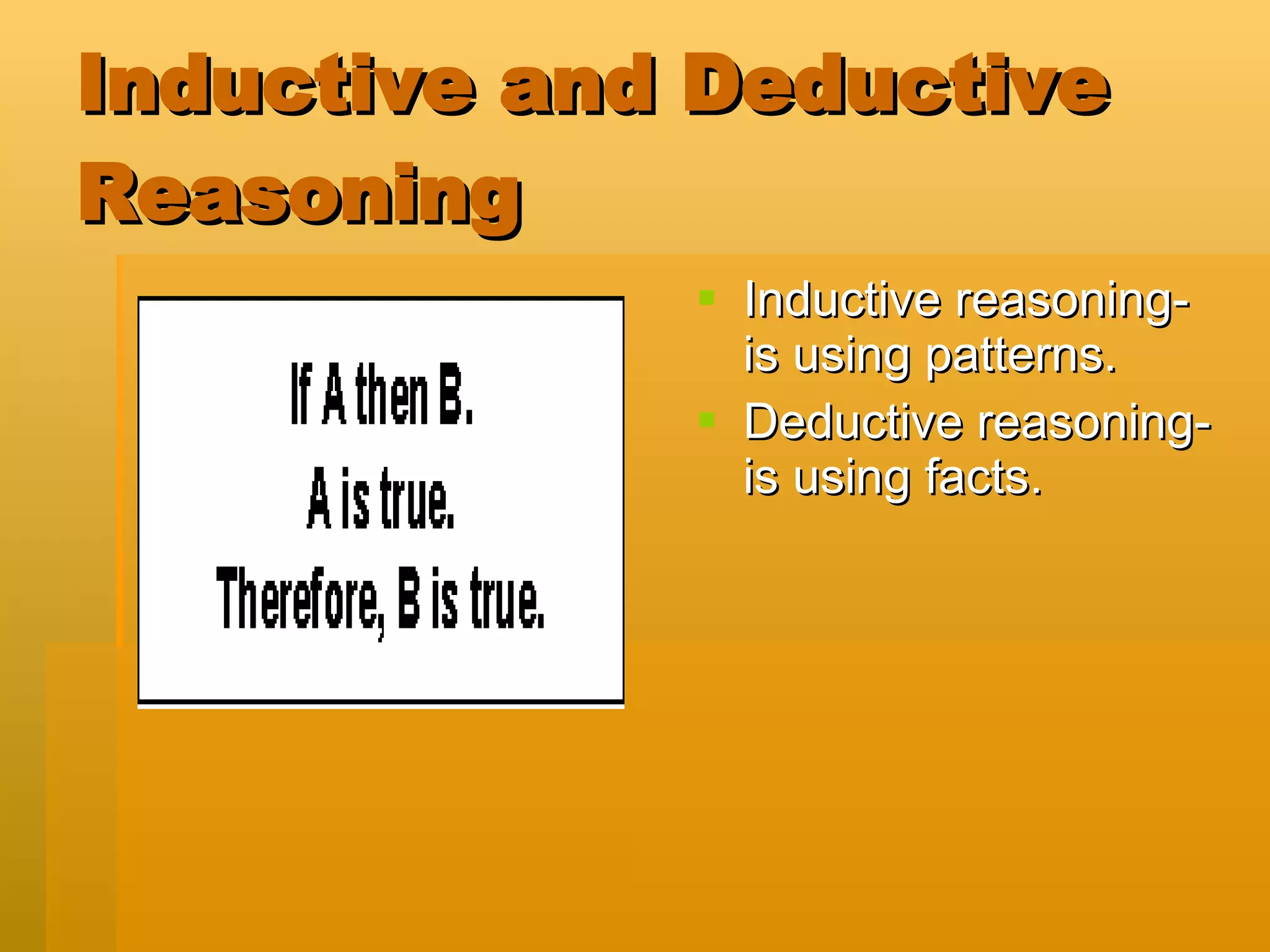
Inductive and Deductive Reasoning Inductive reasoning- is using patterns. Deductive reasoning-is using facts.
Logical sentence that is true or false.  Represent statements w/ lowercase letters. Simple statement- contains 1 ideal Compound statement- contains several ideas. Statements are....
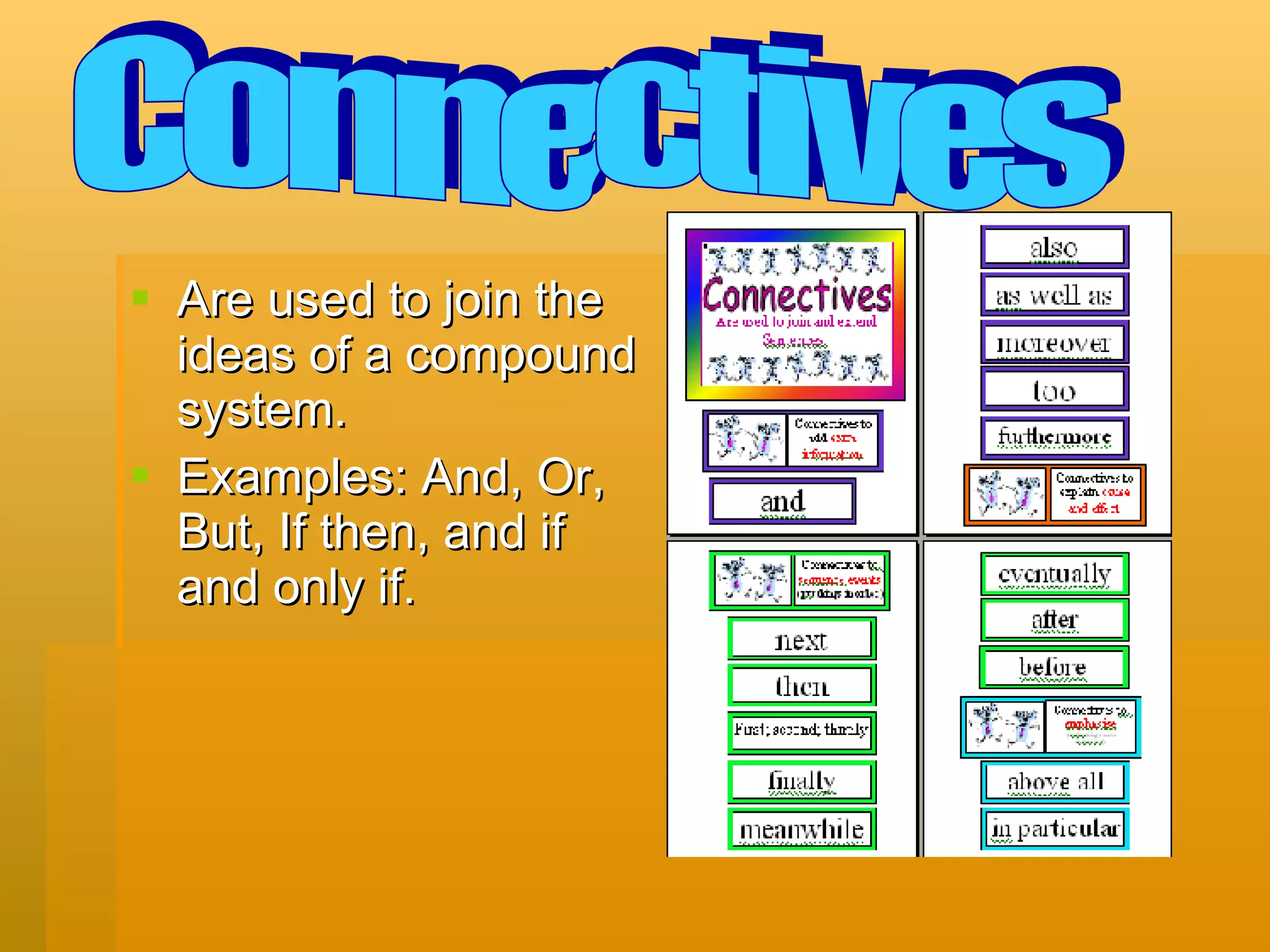
Are used to join the ideas of a compound system. Examples: And, Or, But, If then, and if and only if. Connectives
Negation-express that something is not true. Conjunction-idea of and. Disjunction- idea of Or Conditional- idea of if…then. Biconditional-idea of if and only if. 5 Connectives
Universal-words such as all and every. Existential-words such as some, there exsits, and there is at least one. Quantifiers
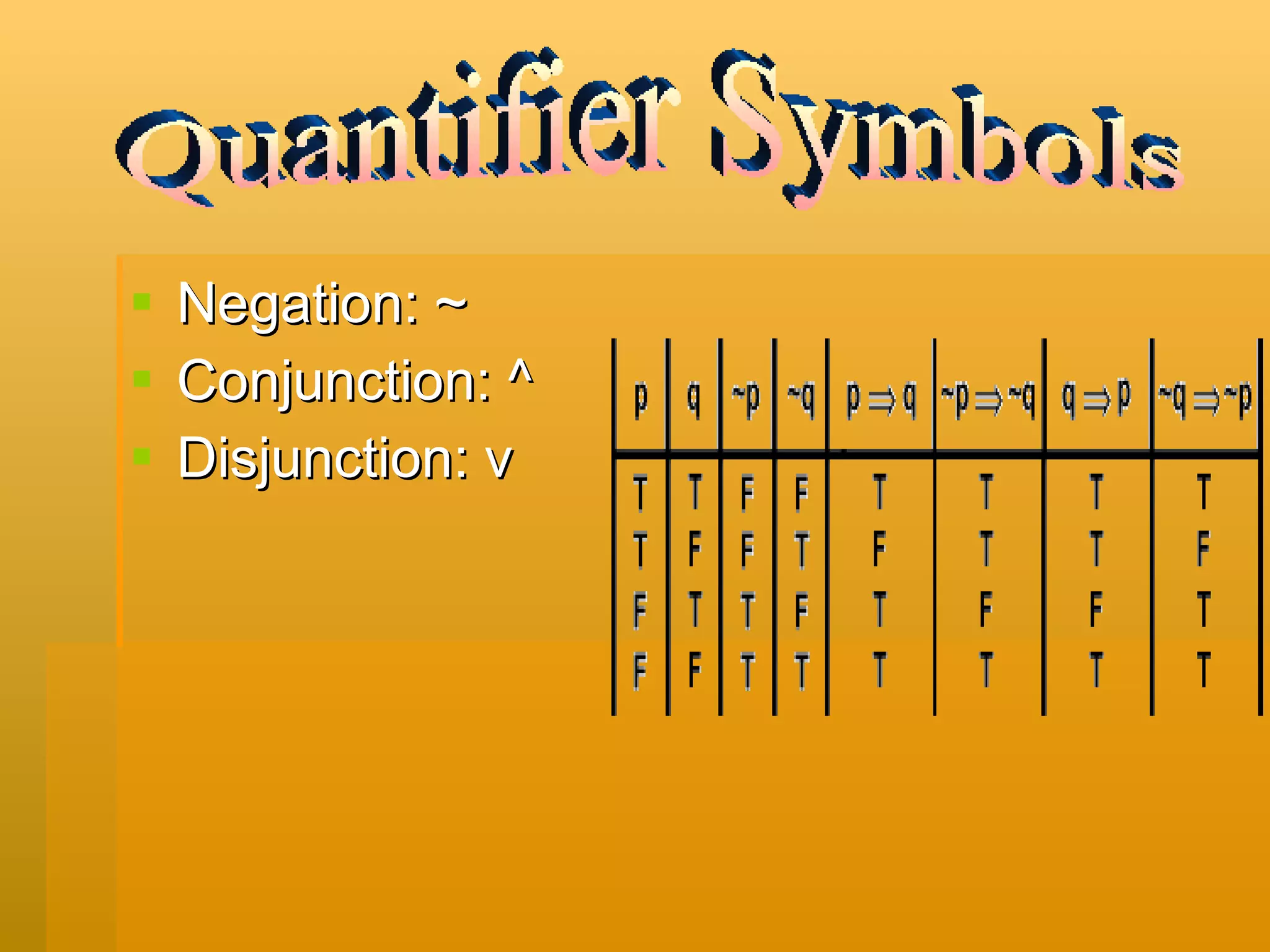
Negation: ~ Conjunction: ^ Disjunction: v Quantifier Symbols
B: The blue whale is the largest living creature. ~B: The blue whale is not the largest living creature. Negating Statements
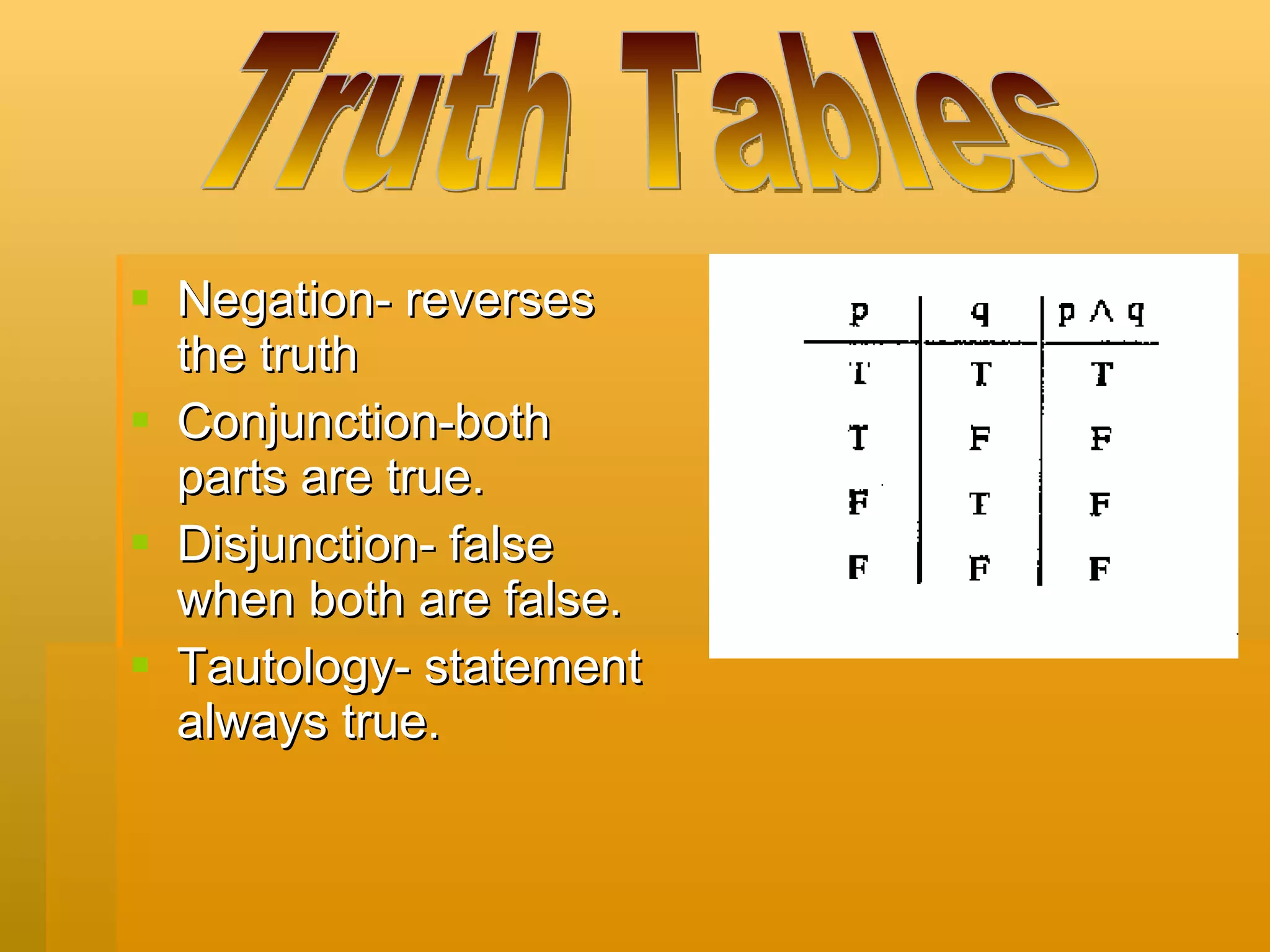
Negation- reverses the truth Conjunction-both parts are true. Disjunction- false when both are false. Tautology- statement always true. Truth Tables
Conjunction a Statement P: the tenant pays utilities D: $150 deposit is required p^d: the tenant does not pay utilities and a $150 deposit it is required ~( p^d): It is not true…
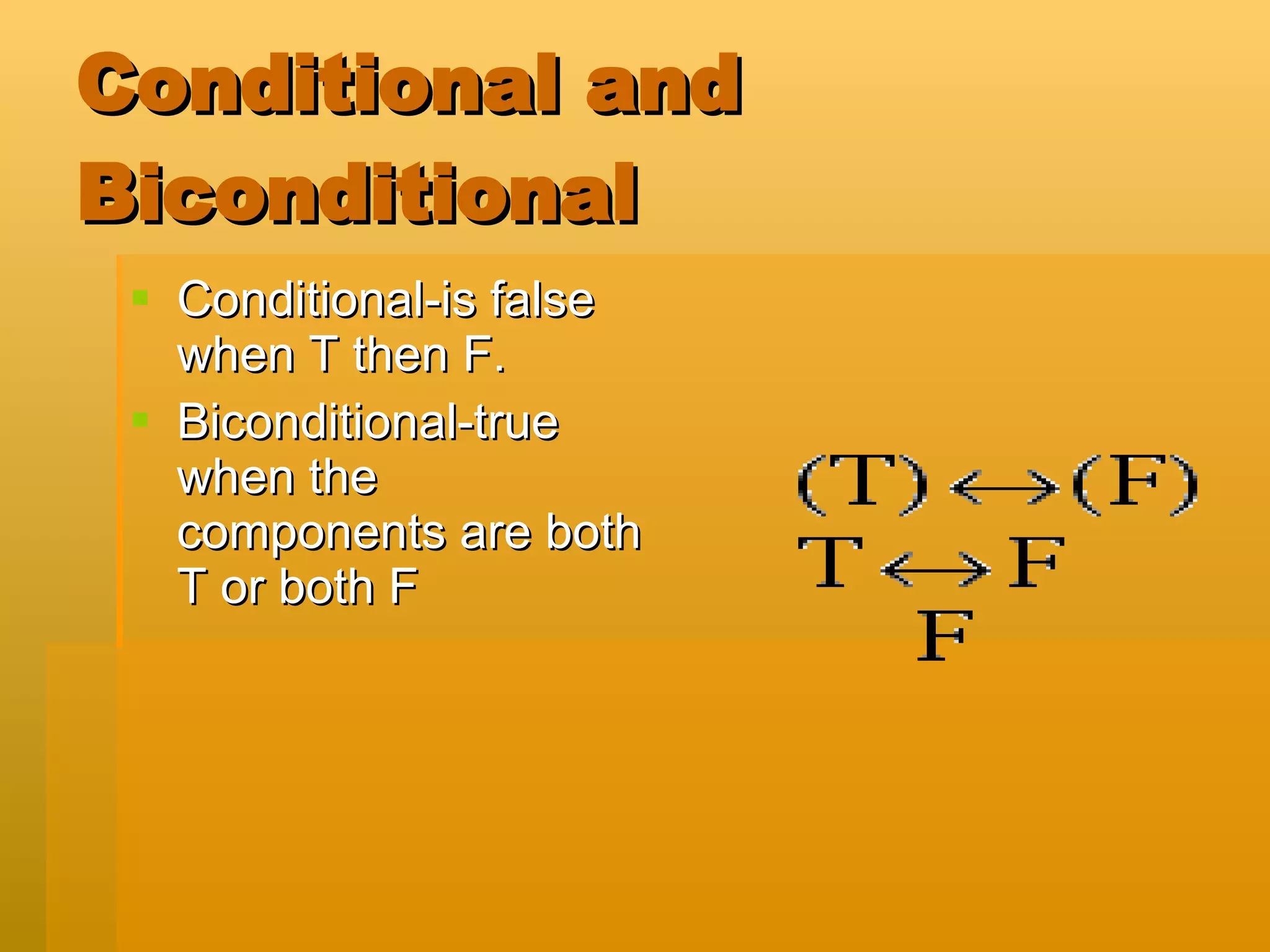
Conditional and Biconditional Conditional-is false when T then F. Biconditional-true when the components are both T or both F
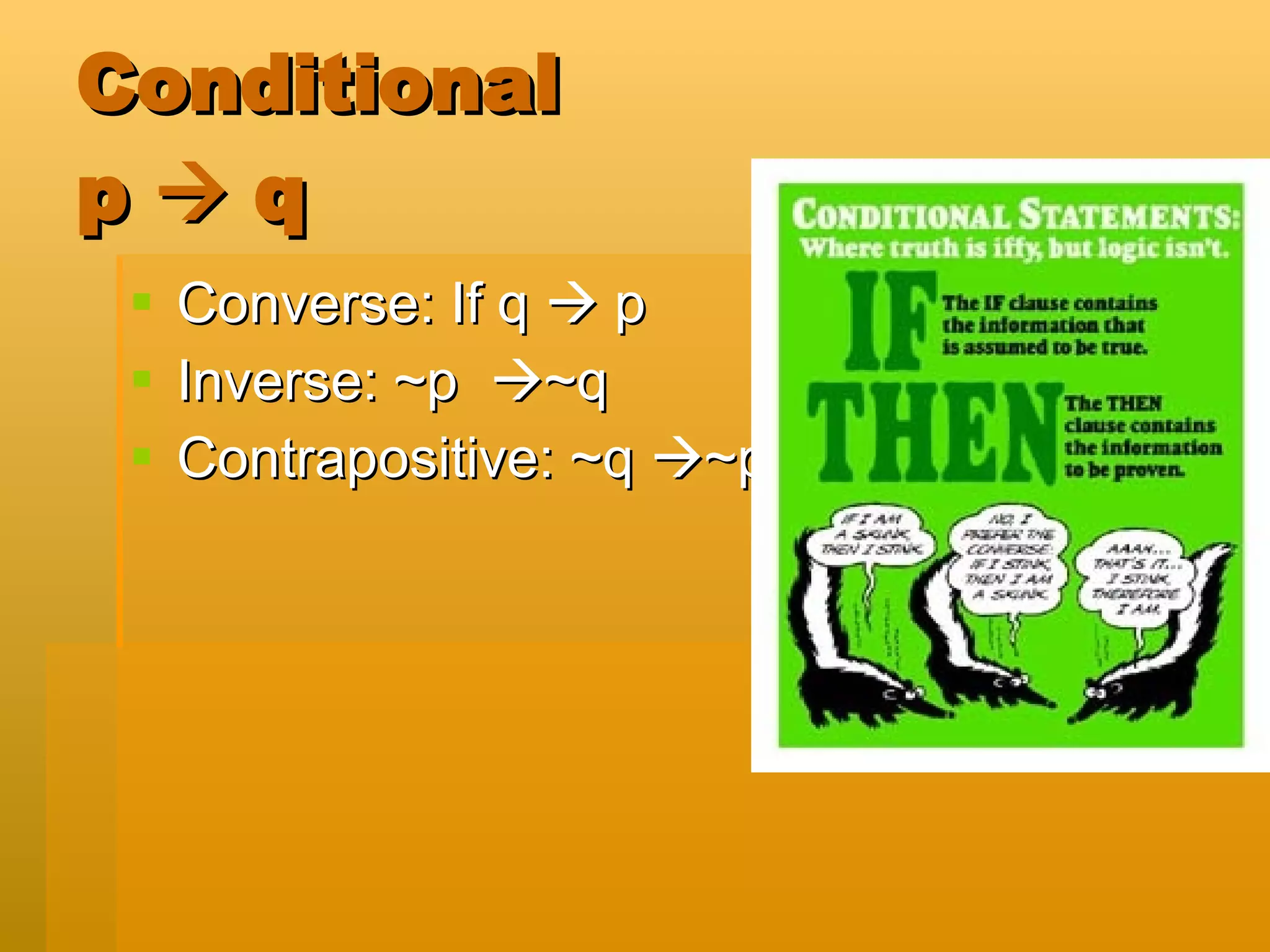
Conditional p    q Converse: If q    p Inverse: ~p   ~q Contrapositive: ~q   ~p
Argument - a series of statements called  Premises  followed by a single statement called a  conclusion. An argument is valid when all premises are true. Verifying Arguments
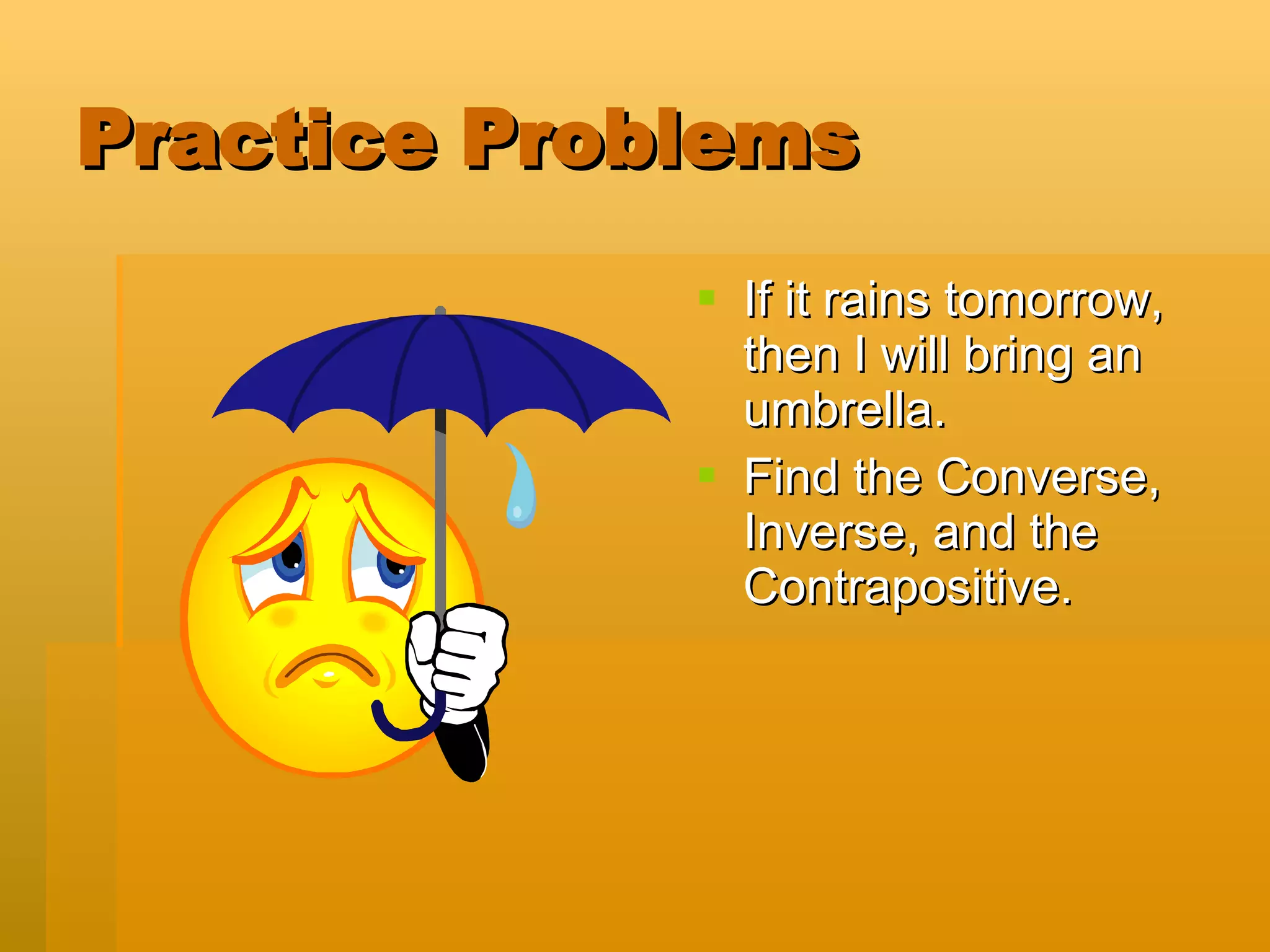
Practice Problems If it rains tomorrow, then I will bring an umbrella. Find the Converse, Inverse, and the Contrapositive.
Practice Problems Cont… R: the playground is wet. S: the playground is cold. Using the statement above make it a  conjunction, disjunction, conditional, and a Biconditional.

burton_discrete_logic

  • 1.
    Compiled By: Ni-NiSeth Dominique Brittany Keshawn LOGIC
  • 2.
    Inductive and DeductiveReasoning Inductive reasoning- is using patterns. Deductive reasoning-is using facts.
  • 3.
    Logical sentence thatis true or false. Represent statements w/ lowercase letters. Simple statement- contains 1 ideal Compound statement- contains several ideas. Statements are....
  • 4.
    Are used tojoin the ideas of a compound system. Examples: And, Or, But, If then, and if and only if. Connectives
  • 5.
    Negation-express that somethingis not true. Conjunction-idea of and. Disjunction- idea of Or Conditional- idea of if…then. Biconditional-idea of if and only if. 5 Connectives
  • 6.
    Universal-words such asall and every. Existential-words such as some, there exsits, and there is at least one. Quantifiers
  • 7.
    Negation: ~ Conjunction:^ Disjunction: v Quantifier Symbols
  • 8.
    B: The bluewhale is the largest living creature. ~B: The blue whale is not the largest living creature. Negating Statements
  • 9.
    Negation- reverses thetruth Conjunction-both parts are true. Disjunction- false when both are false. Tautology- statement always true. Truth Tables
  • 10.
    Conjunction a StatementP: the tenant pays utilities D: $150 deposit is required p^d: the tenant does not pay utilities and a $150 deposit it is required ~( p^d): It is not true…
  • 11.
    Conditional and BiconditionalConditional-is false when T then F. Biconditional-true when the components are both T or both F
  • 12.
    Conditional p  q Converse: If q  p Inverse: ~p  ~q Contrapositive: ~q  ~p
  • 13.
    Argument - aseries of statements called Premises followed by a single statement called a conclusion. An argument is valid when all premises are true. Verifying Arguments
  • 14.
    Practice Problems Ifit rains tomorrow, then I will bring an umbrella. Find the Converse, Inverse, and the Contrapositive.
  • 15.
    Practice Problems Cont…R: the playground is wet. S: the playground is cold. Using the statement above make it a conjunction, disjunction, conditional, and a Biconditional.