Metadata, Harvesting, and Federation Building the infrastructure of the  global education commons Ahrash N Bissell
Ahrash N Bissell Metadata, Harvesting, and Federation Building the infrastructure of the  global education commons
Why build sharable repositories of educational content? What barriers do we face? Legal Technical Social Discussion… Overview
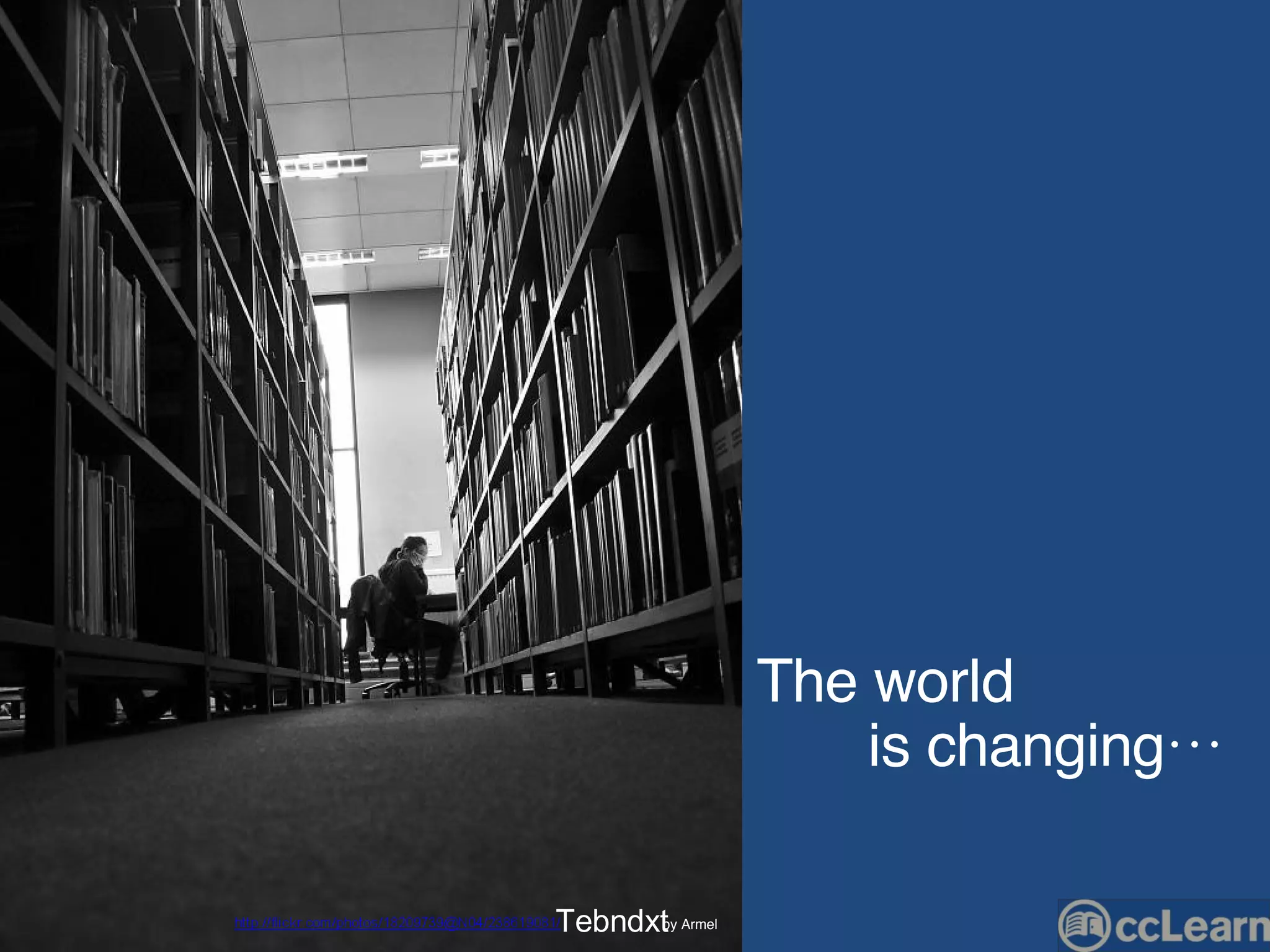
The world  is changing… Tebndxt by Armel
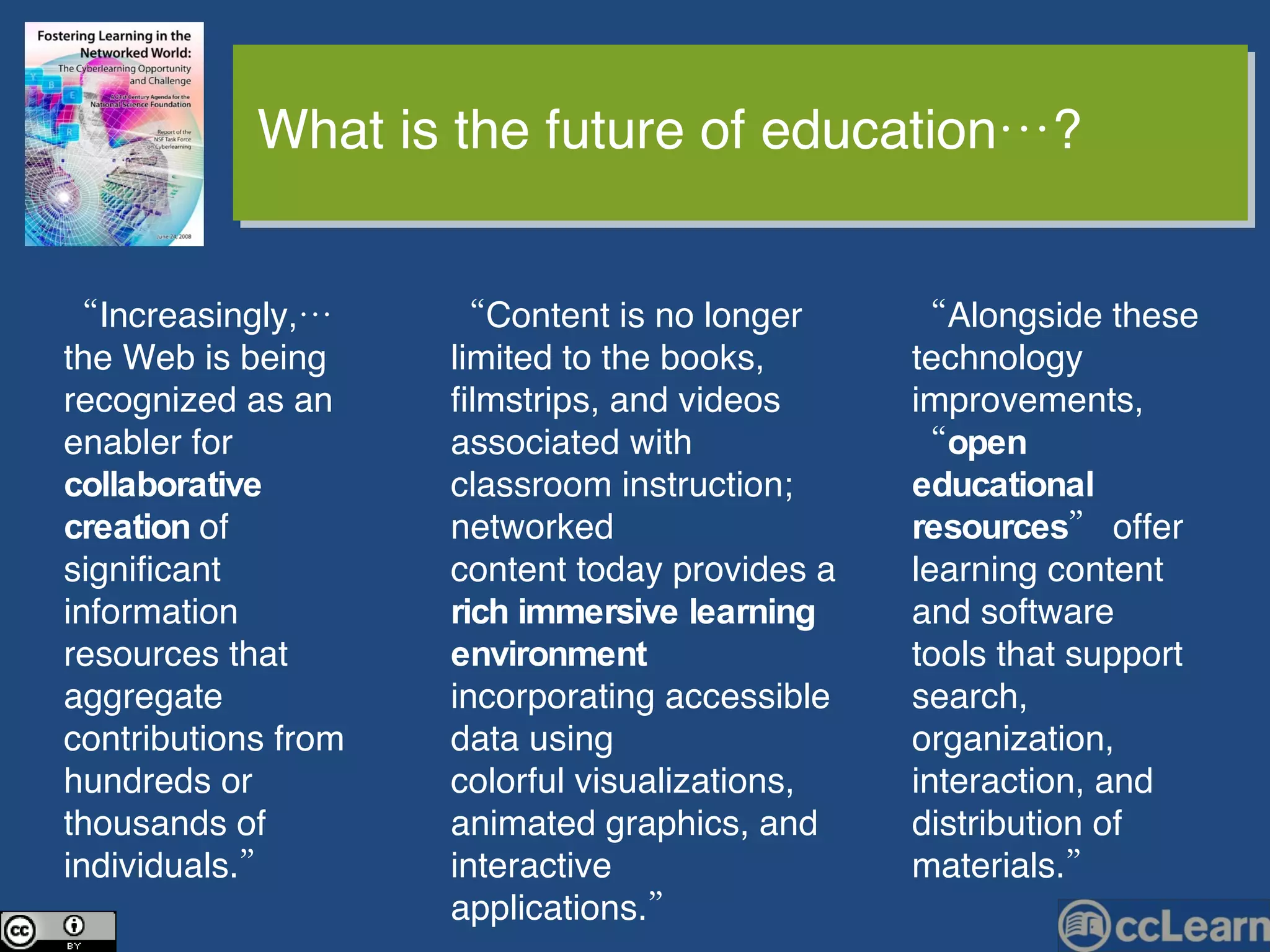
“ Content is no longer limited to the books, filmstrips, and videos associated with classroom instruction; networked content today provides a  rich immersive learning environment  incorporating accessible data using colorful visualizations, animated graphics, and interactive applications.”  “ Alongside these technology improvements, “ open educational resources ” offer learning content and software tools that support search, organization, interaction, and distribution of materials.” “ Increasingly,… the Web is being recognized as an enabler for  collaborative creation  of significant information resources that aggregate contributions from hundreds or thousands of individuals.” What is the future of education…?
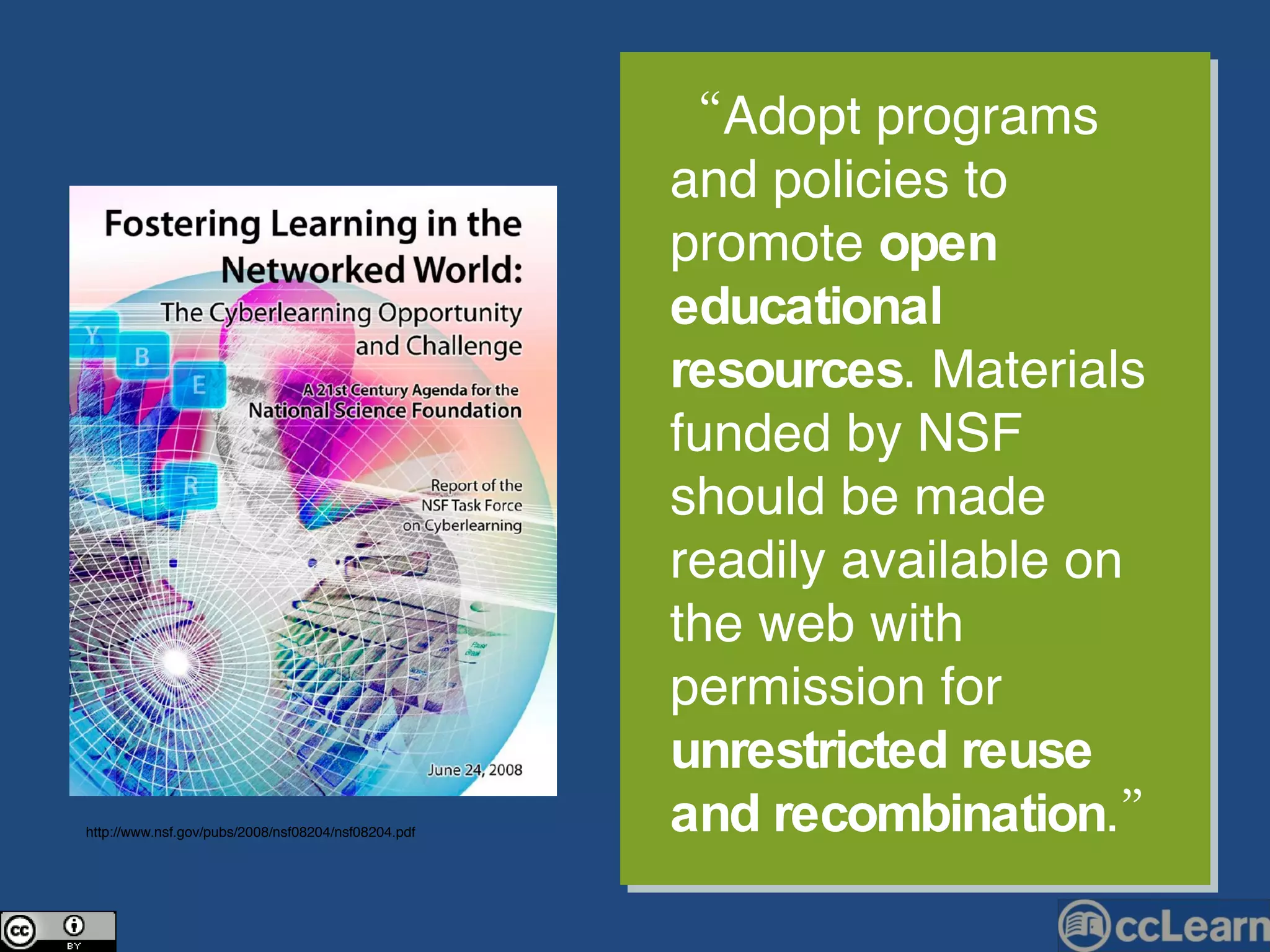
“ Adopt programs and policies to promote  open educational resources . Materials funded by NSF should be made readily available on the web with permission for  unrestricted reuse and recombination .” http://www.nsf.gov/pubs/2008/nsf08204/nsf08204.pdf
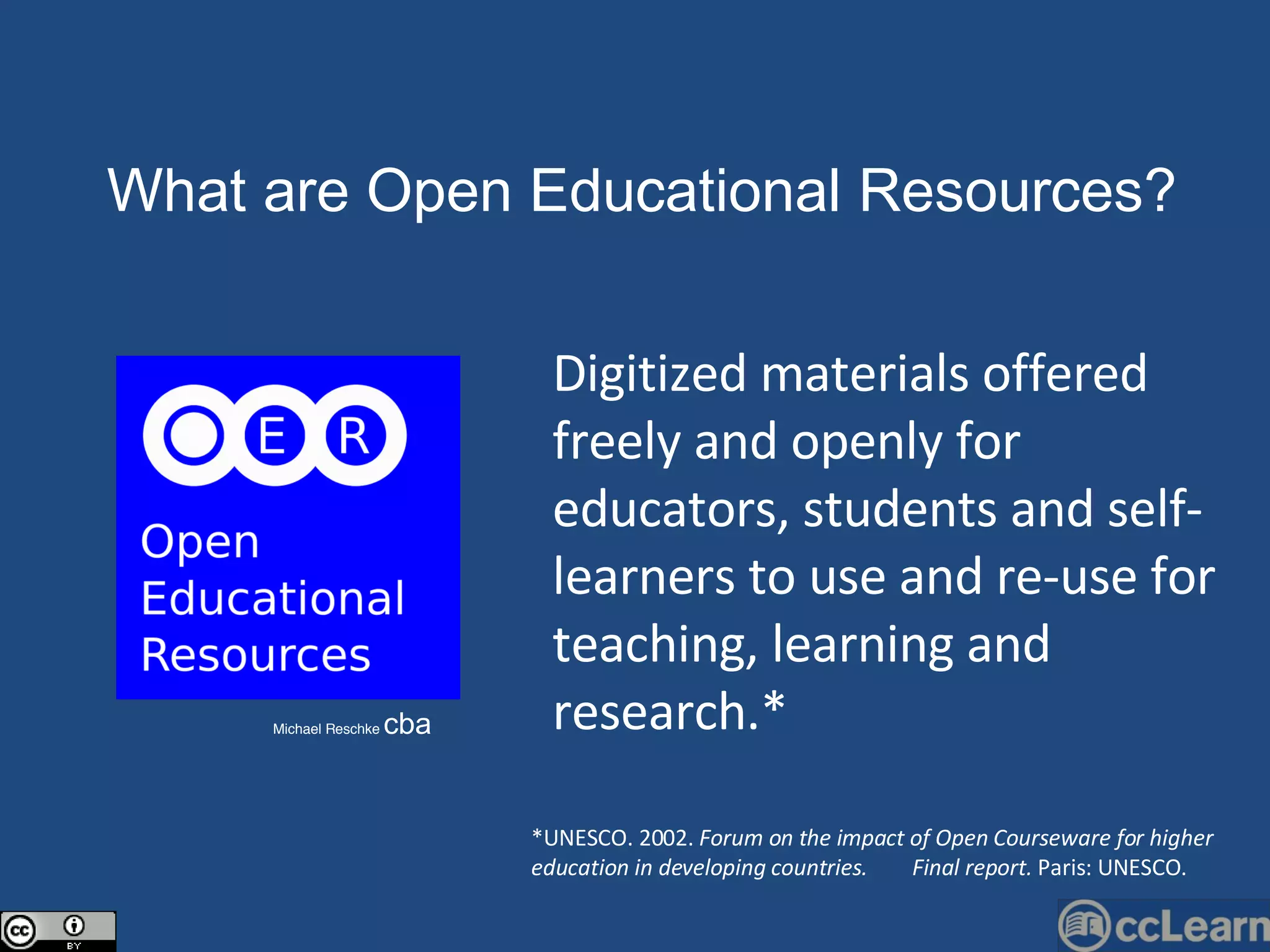
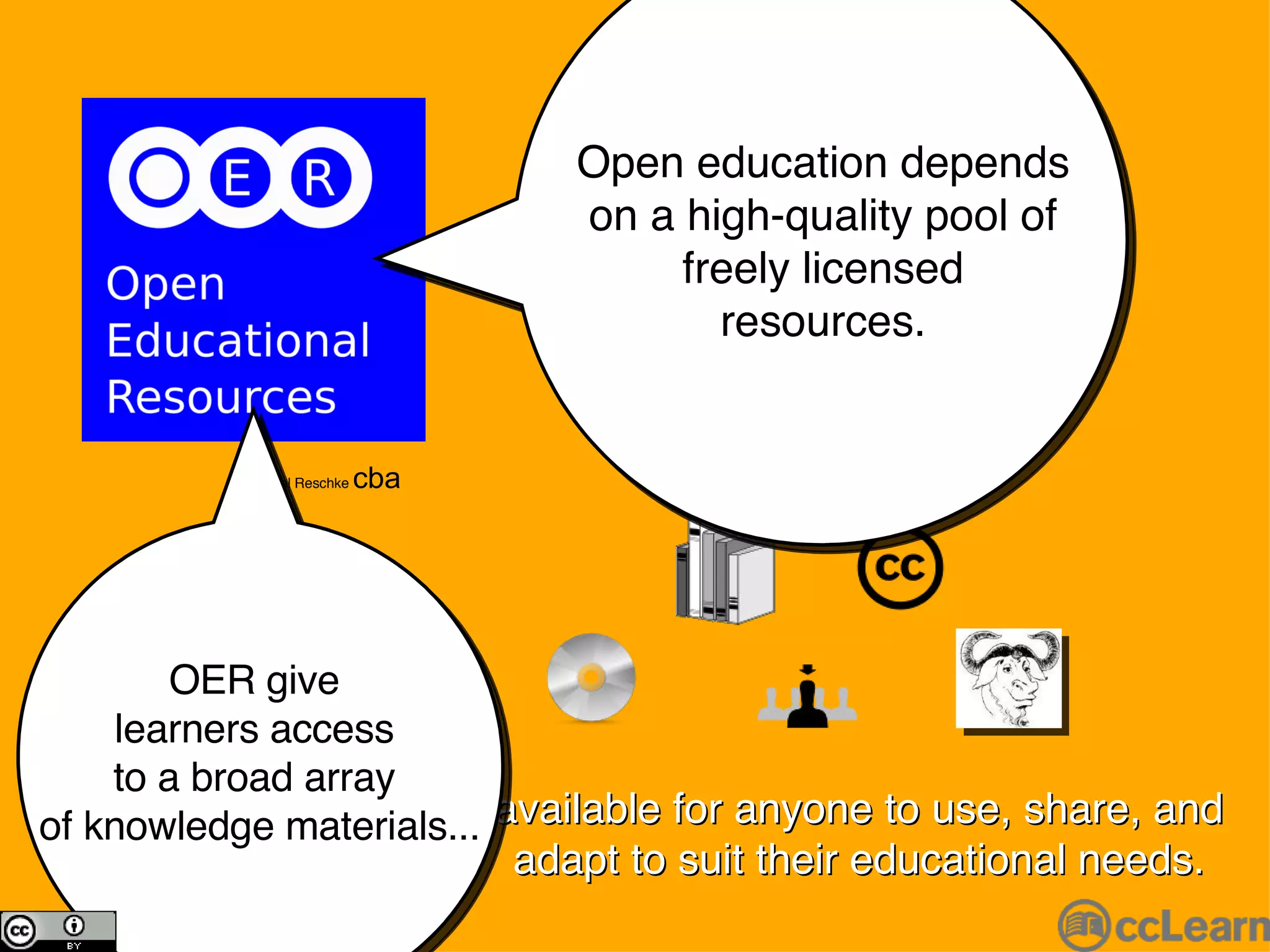
Text What are Open Edu c ational Resour c es?  Michael Reschke  cba Digitized materials offered freely and openly for educators, students and self-learners to use and re-use for teaching, learning and research.*  *UNESCO. 2002.  Forum on the impact of Open Courseware for higher education in developing countries.  Final report.  Paris: UNESCO.
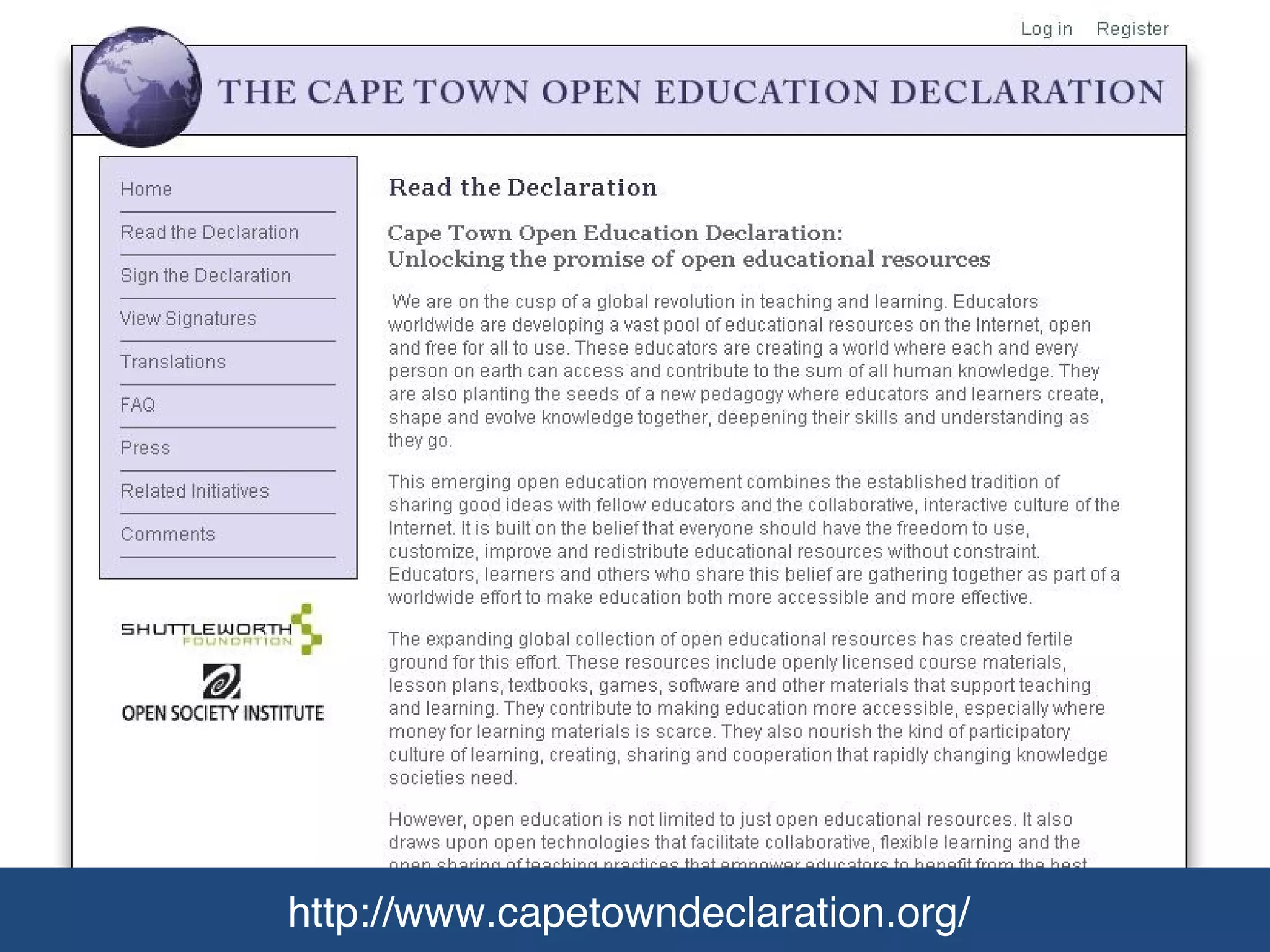
http://www.capetowndeclaration.org/
available for anyone to use, share, and adapt to suit their educational needs. Michael Reschke  cba Open education depends on a high-quality pool of freely licensed resources. OER give  learners access  to a broad array  of knowledge materials...
What is different about OER? Most digital media = “stuff you can see online for free”   fair-use and educational exceptions OER = “stuff you can adapt and then share for others to build on”   license to innovate
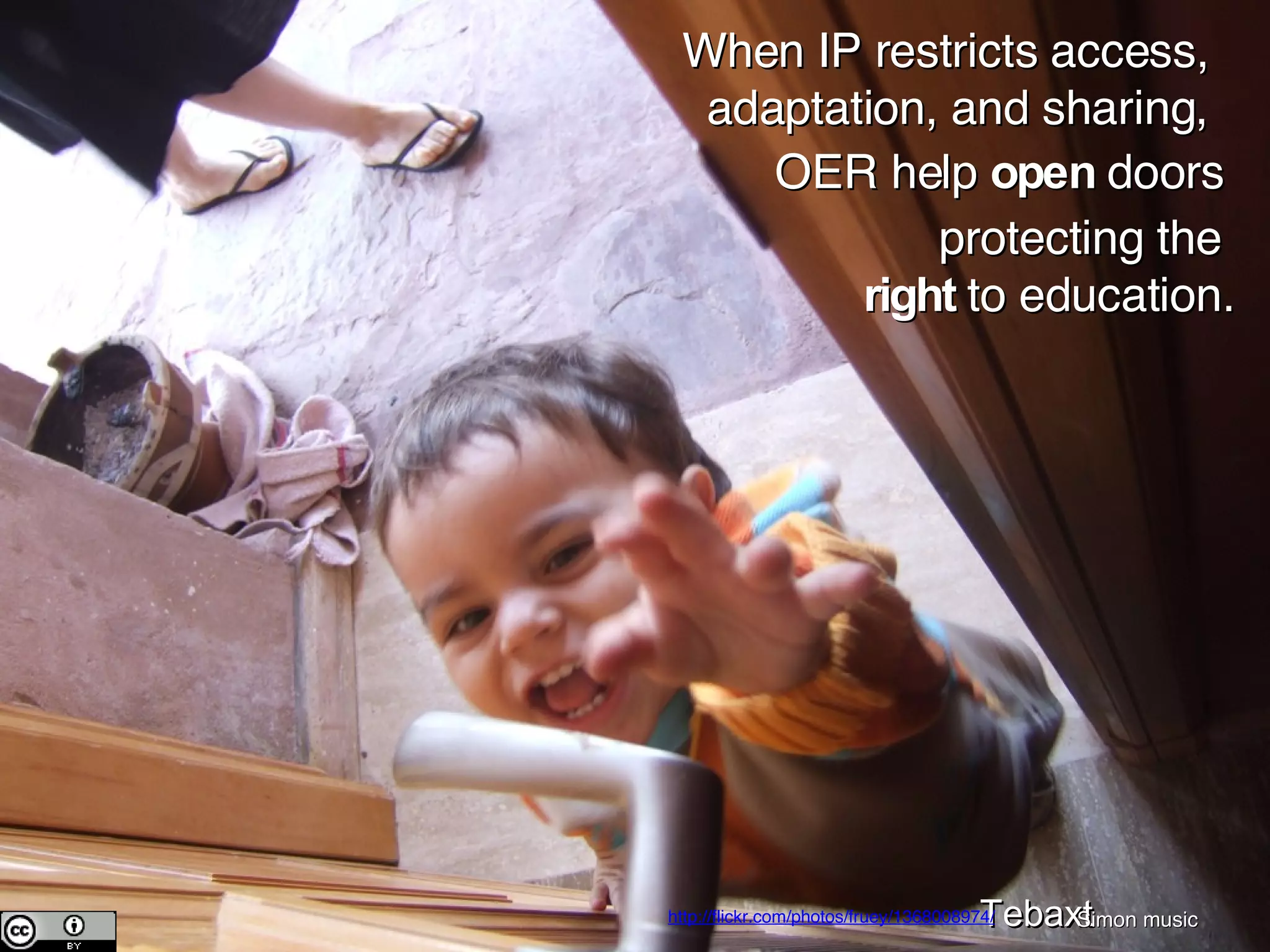
When IP restricts access, adaptation, and sharing, Tebaxt Simon music http://flickr.com/photos/fruey/1368008974/ protecting the  right  to education. OER help  open  doors
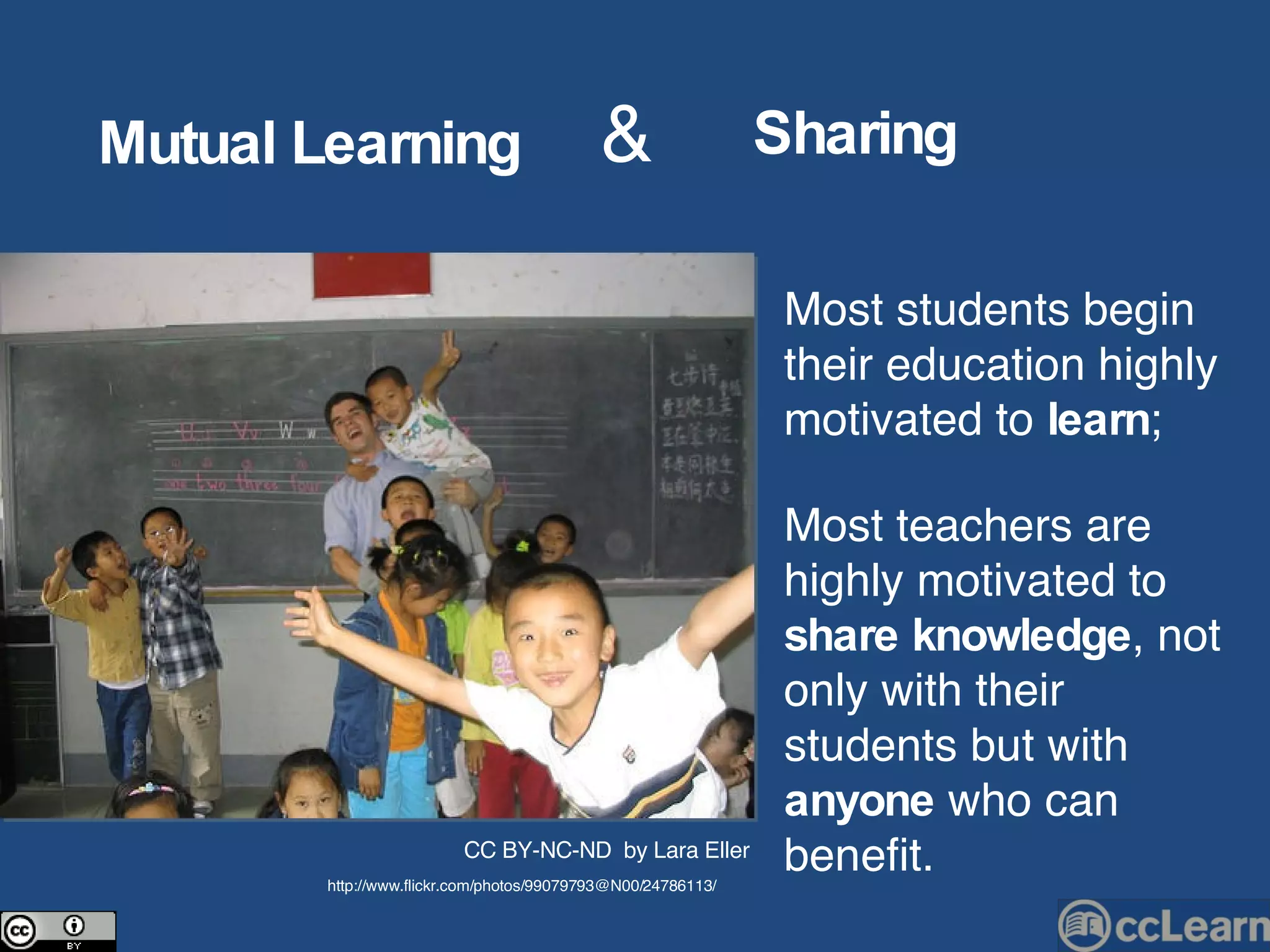
Mutual   Learning Sharing & Most students begin their education highly motivated to  learn ; Most teachers are highly motivated to  share knowledge , not only with their students but with  anyone  who can benefit. CC BY-NC-ND  by Lara Eller http://www.flickr.com/photos/99079793@N00/24786113/
 
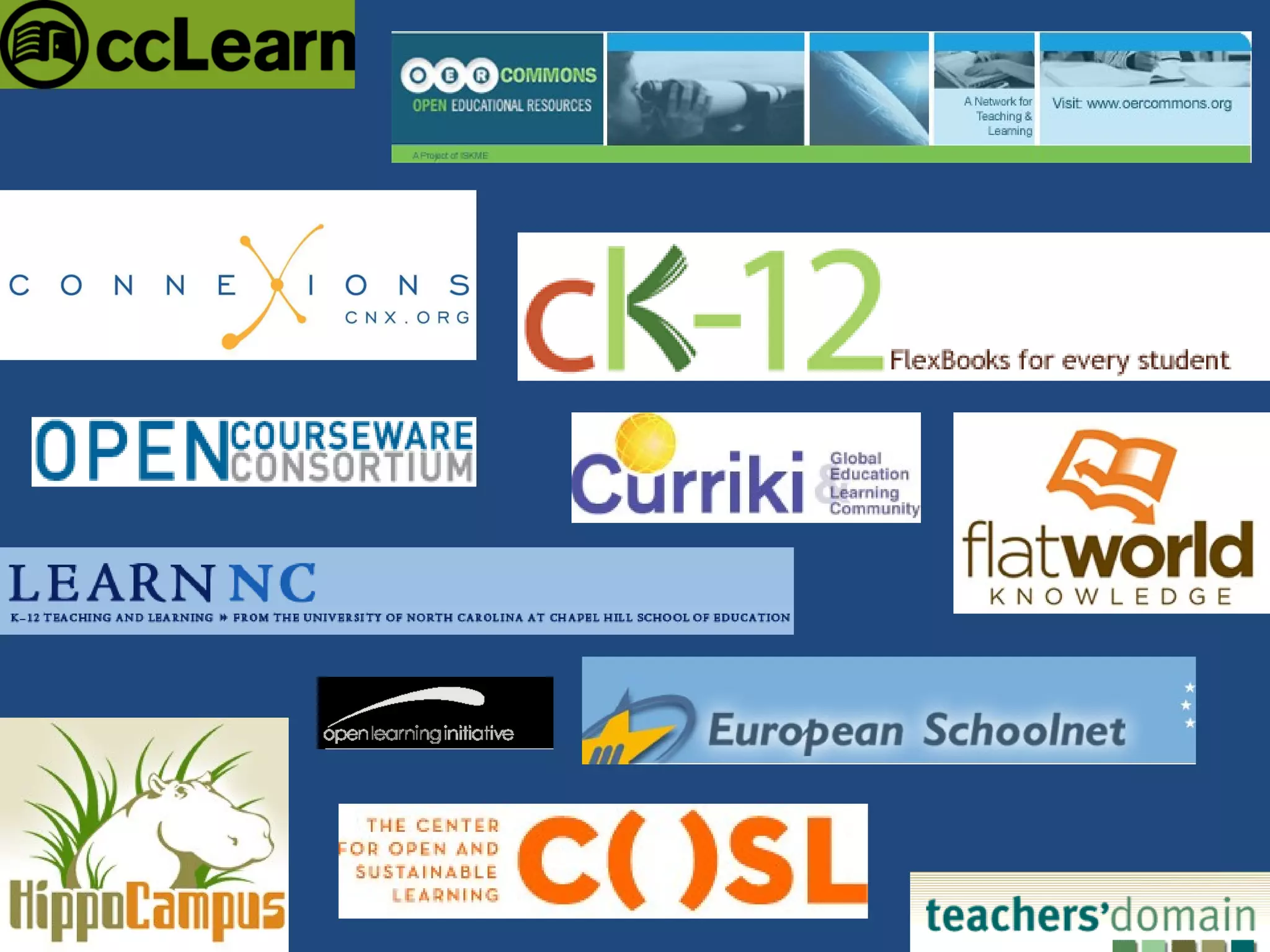
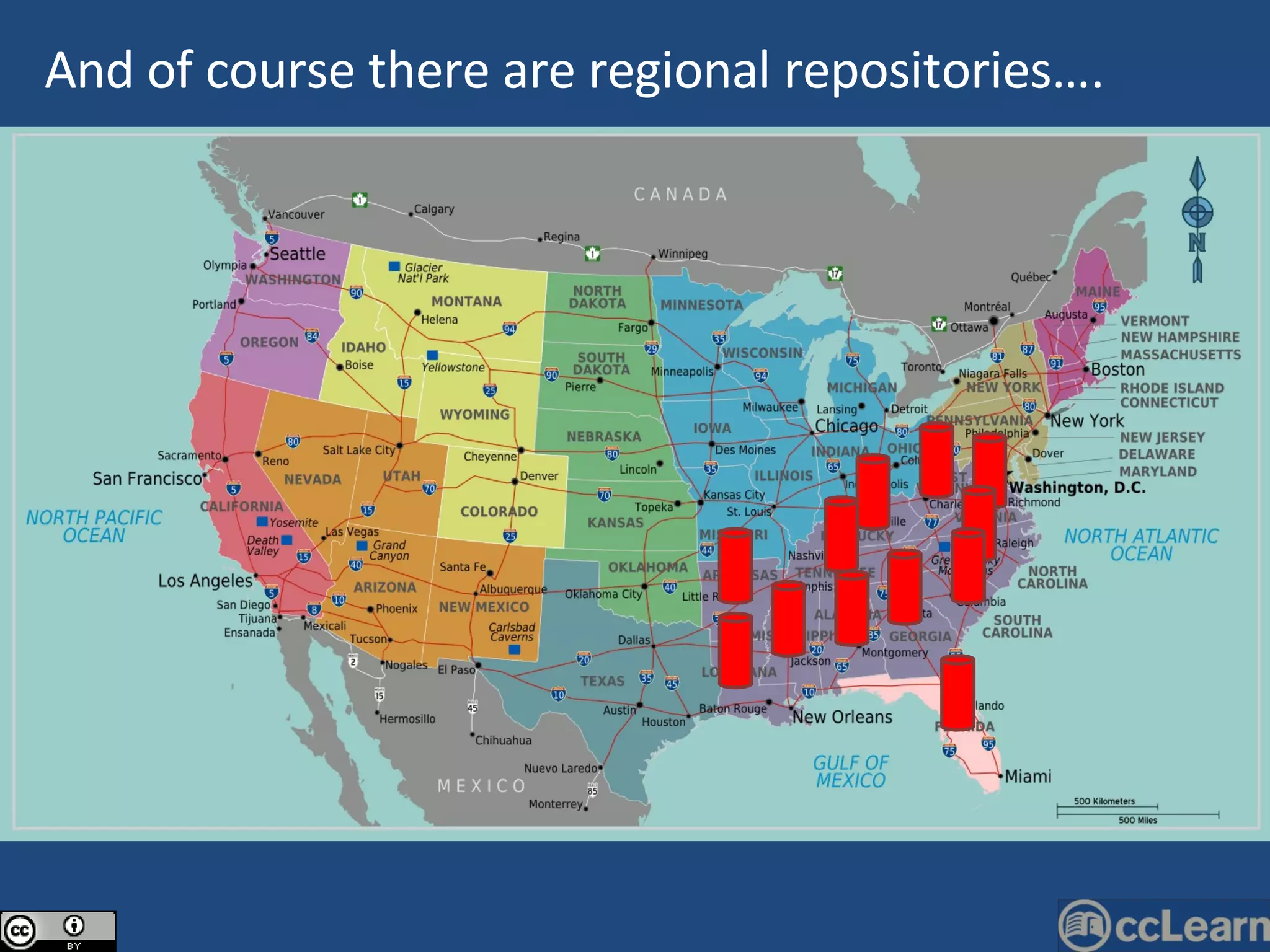
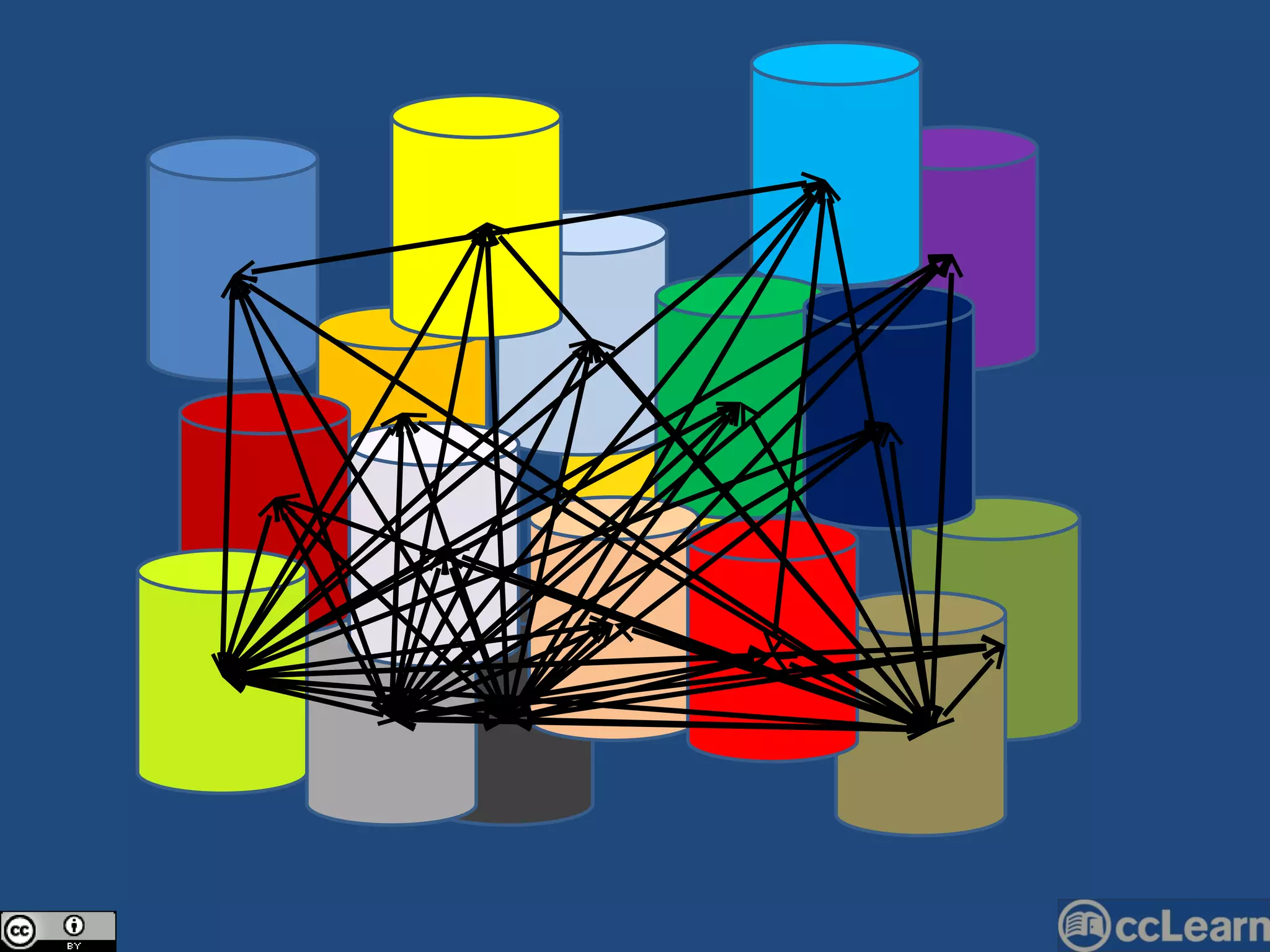
And of course there are regional repositories….


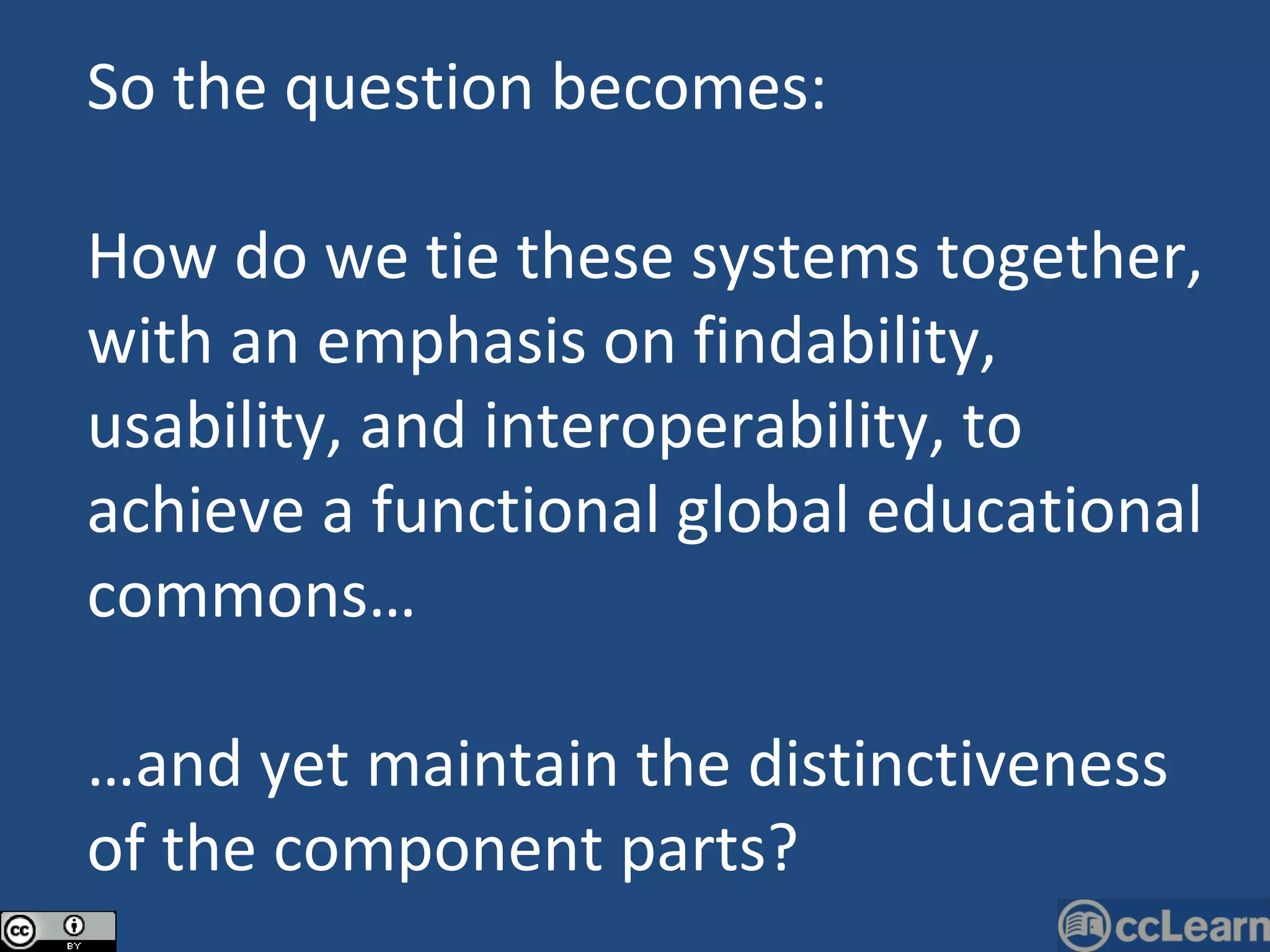
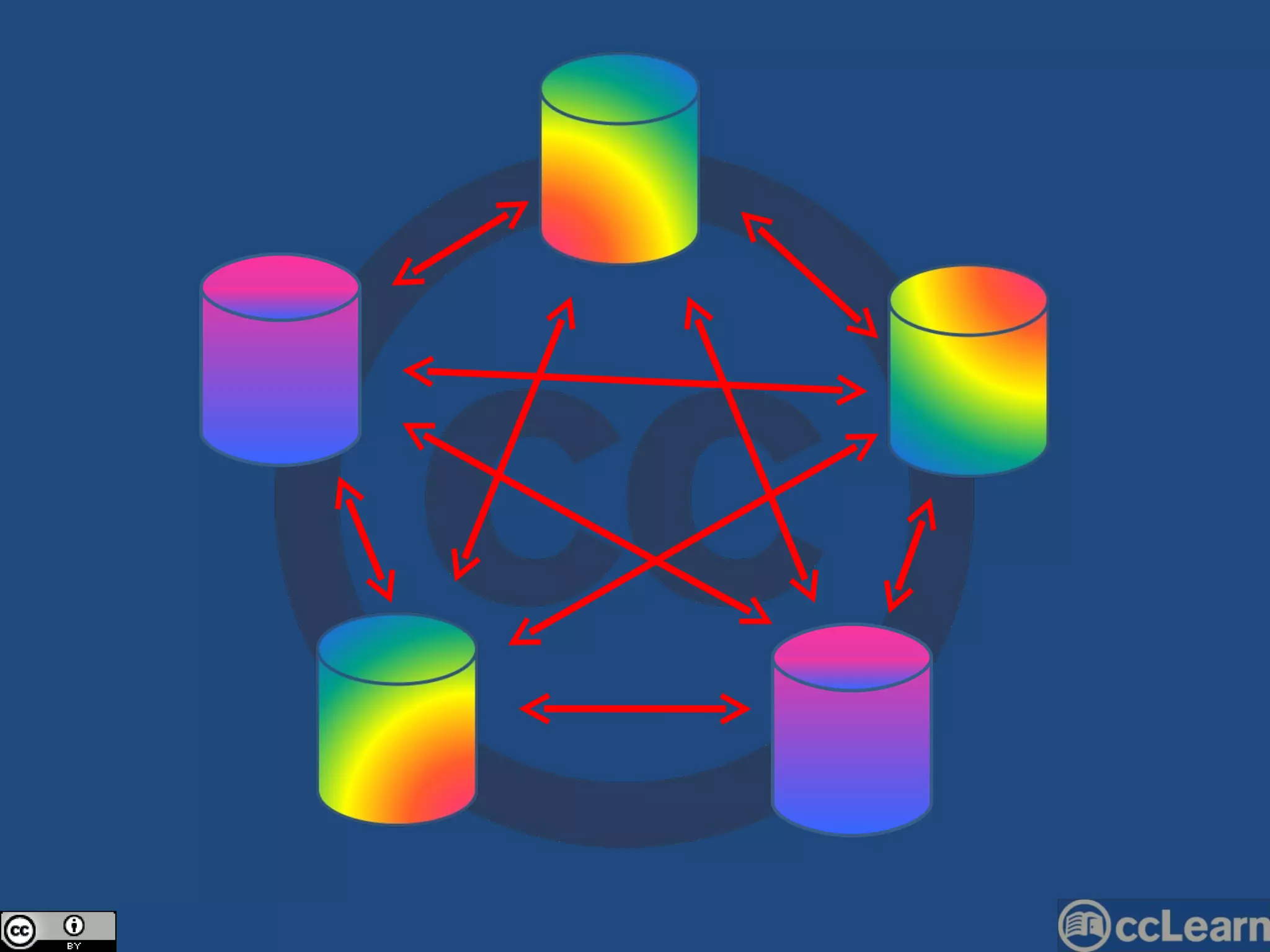
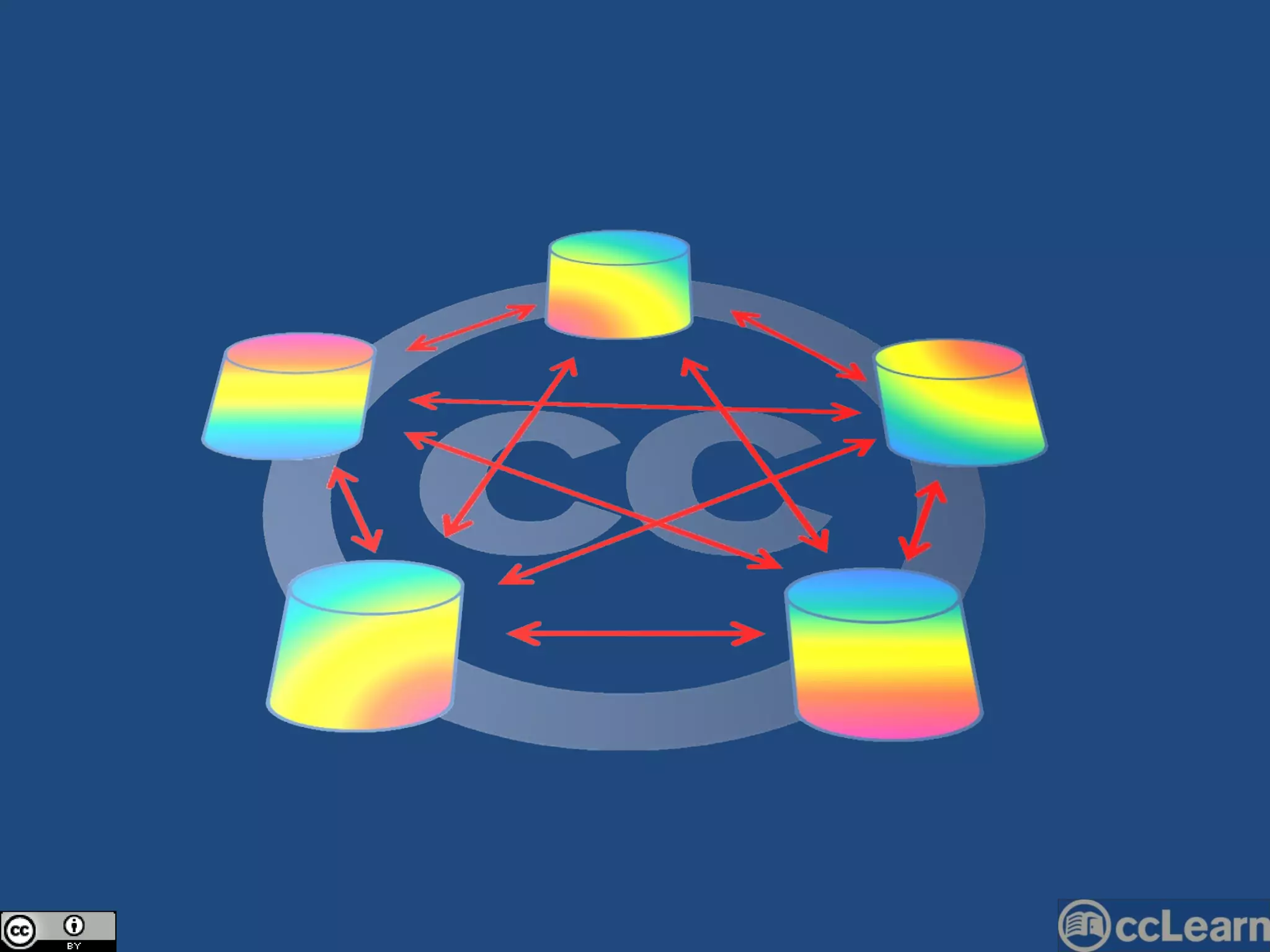
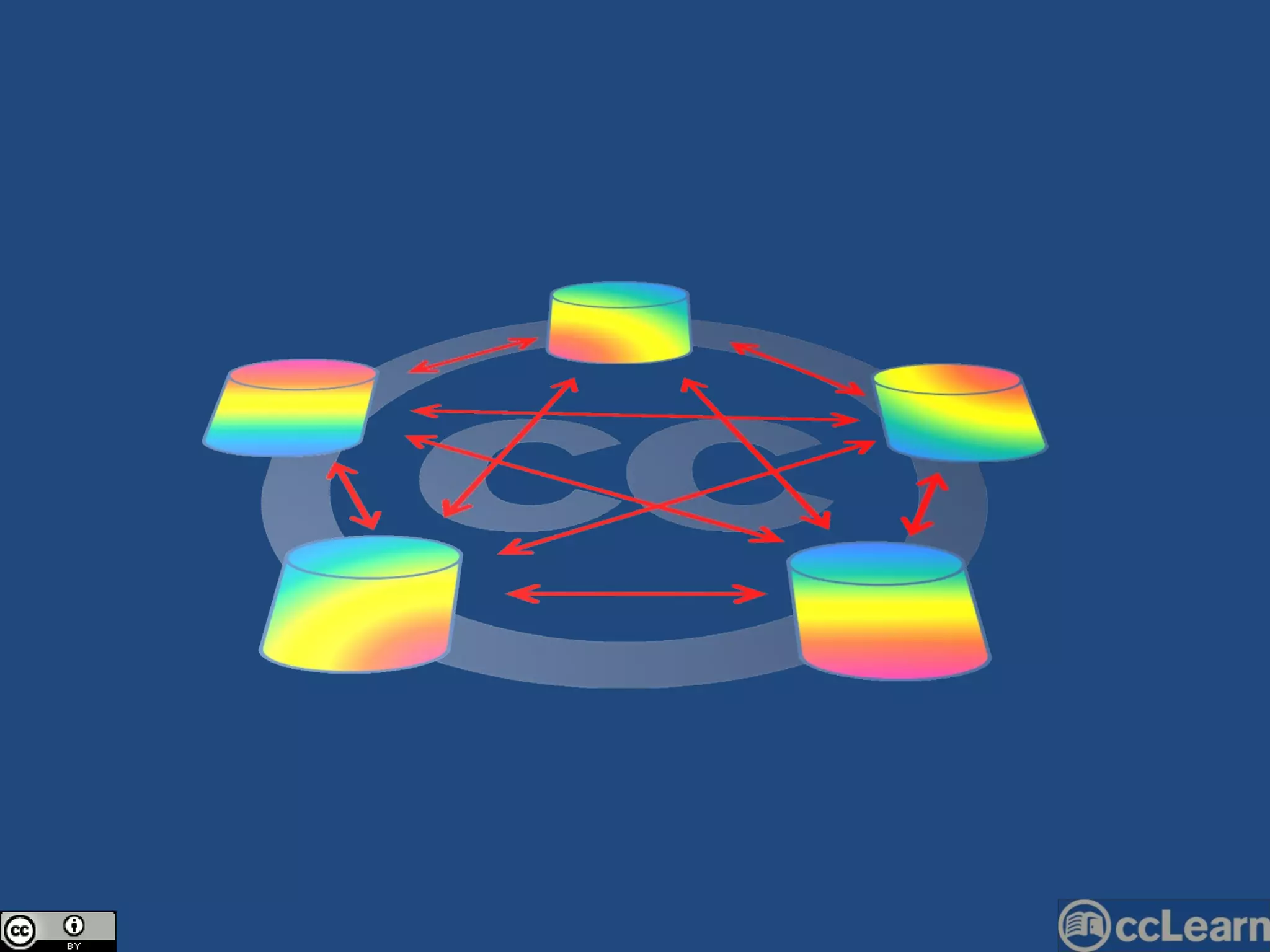
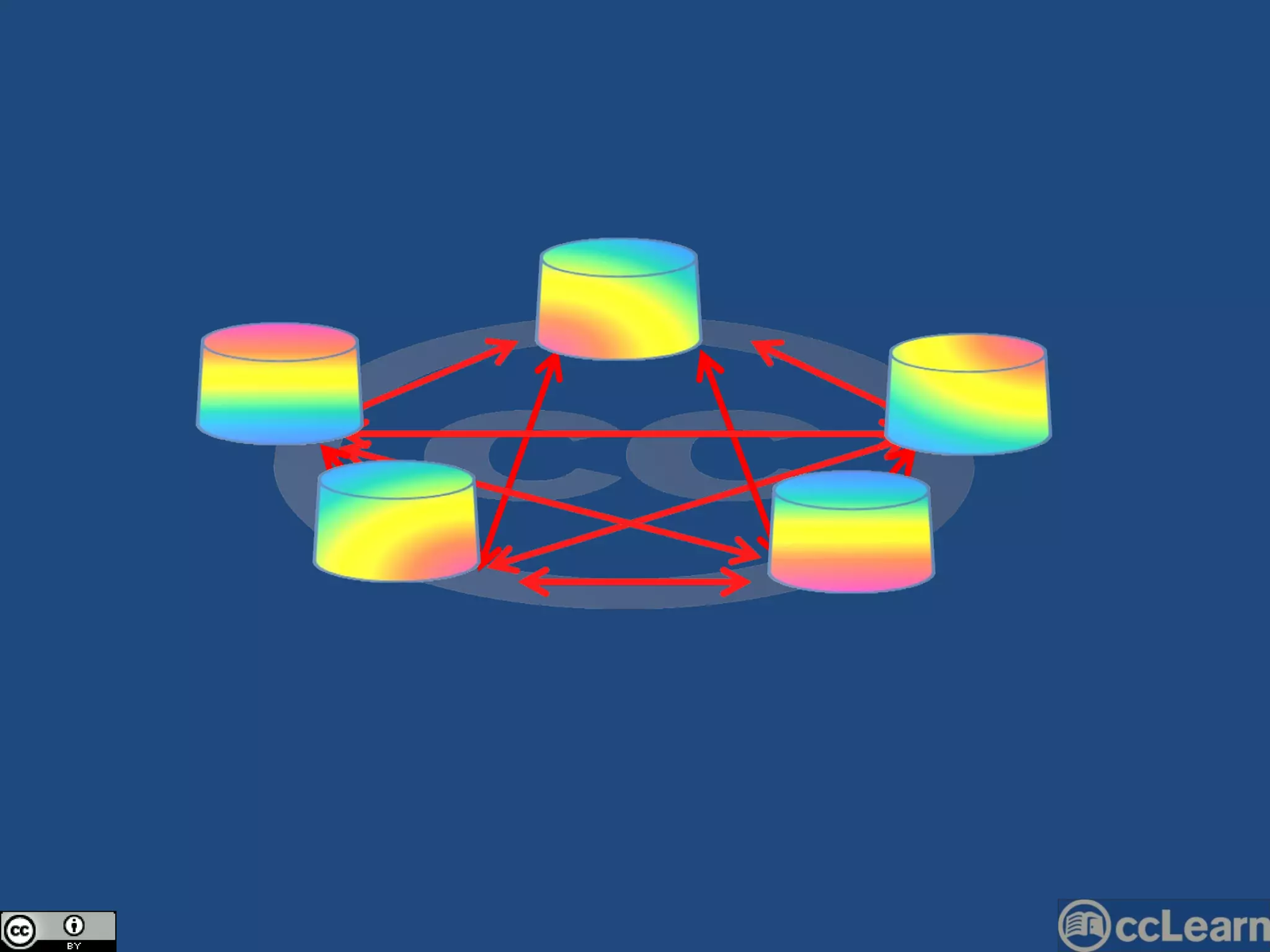
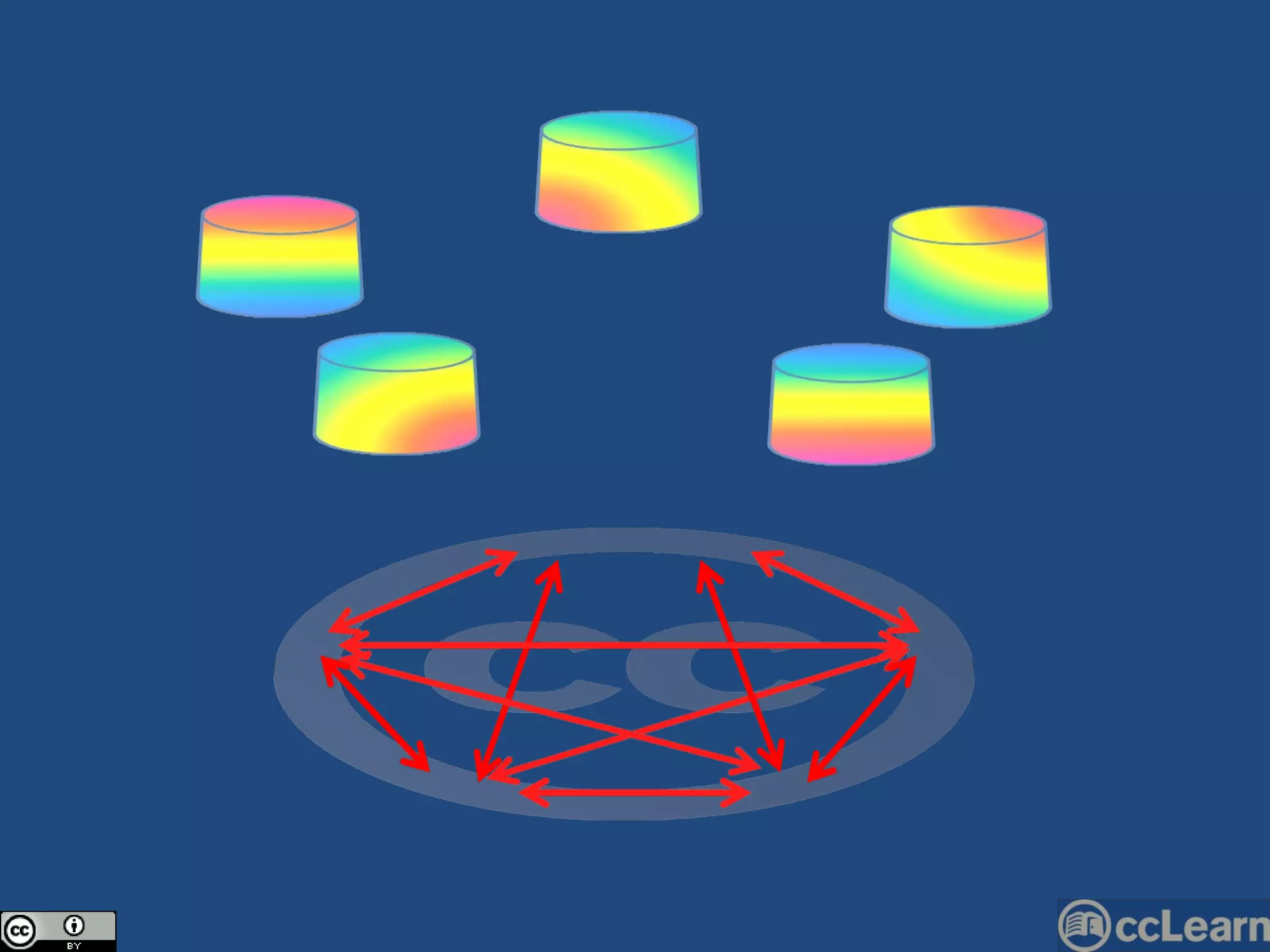
Note that there are significant advantages to building an OER landscape with distinct silos of content…. Authorship and quality control Dedicated focus on core users More robust “ecosystem” Easier to manage and sustain
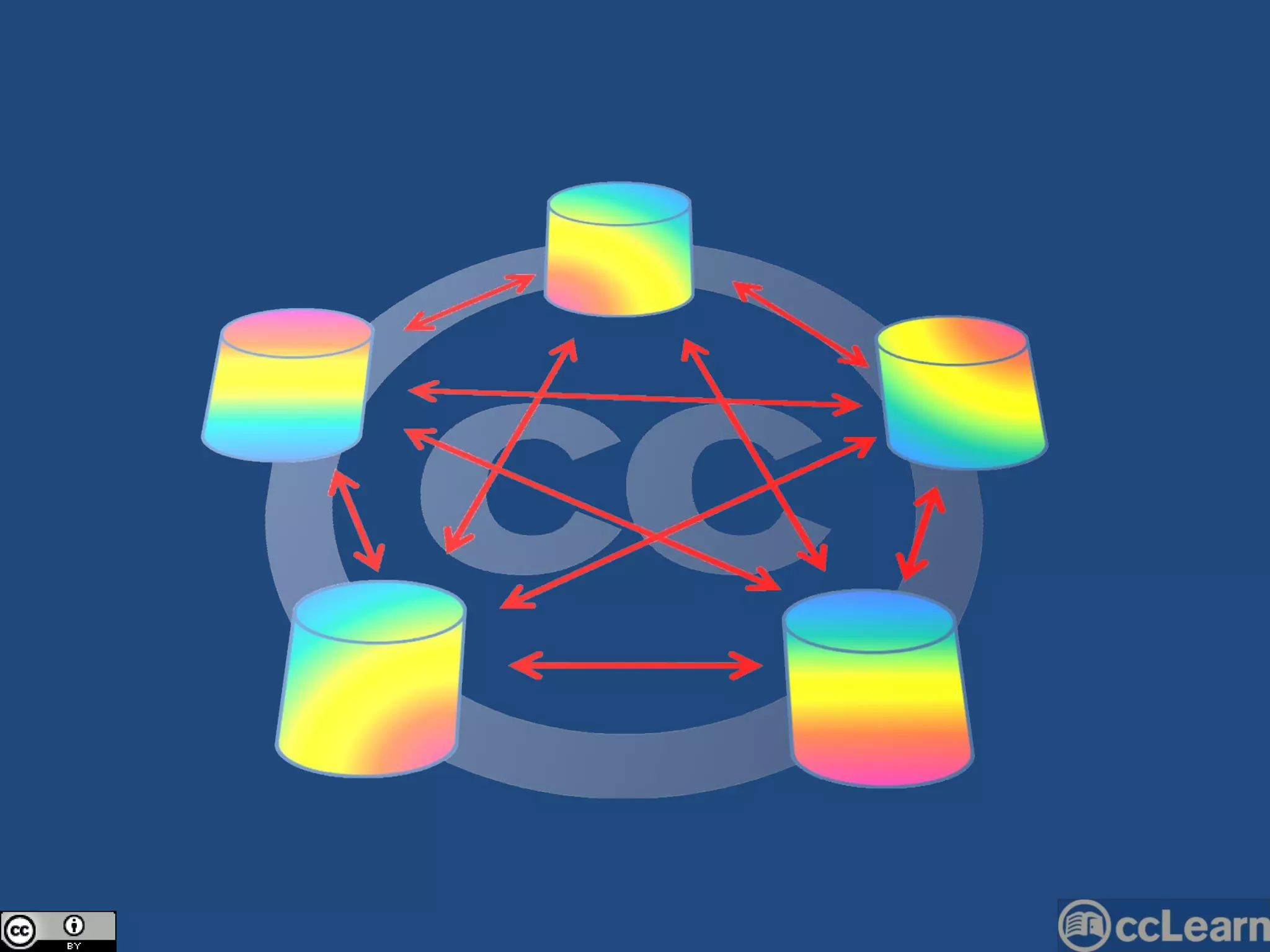
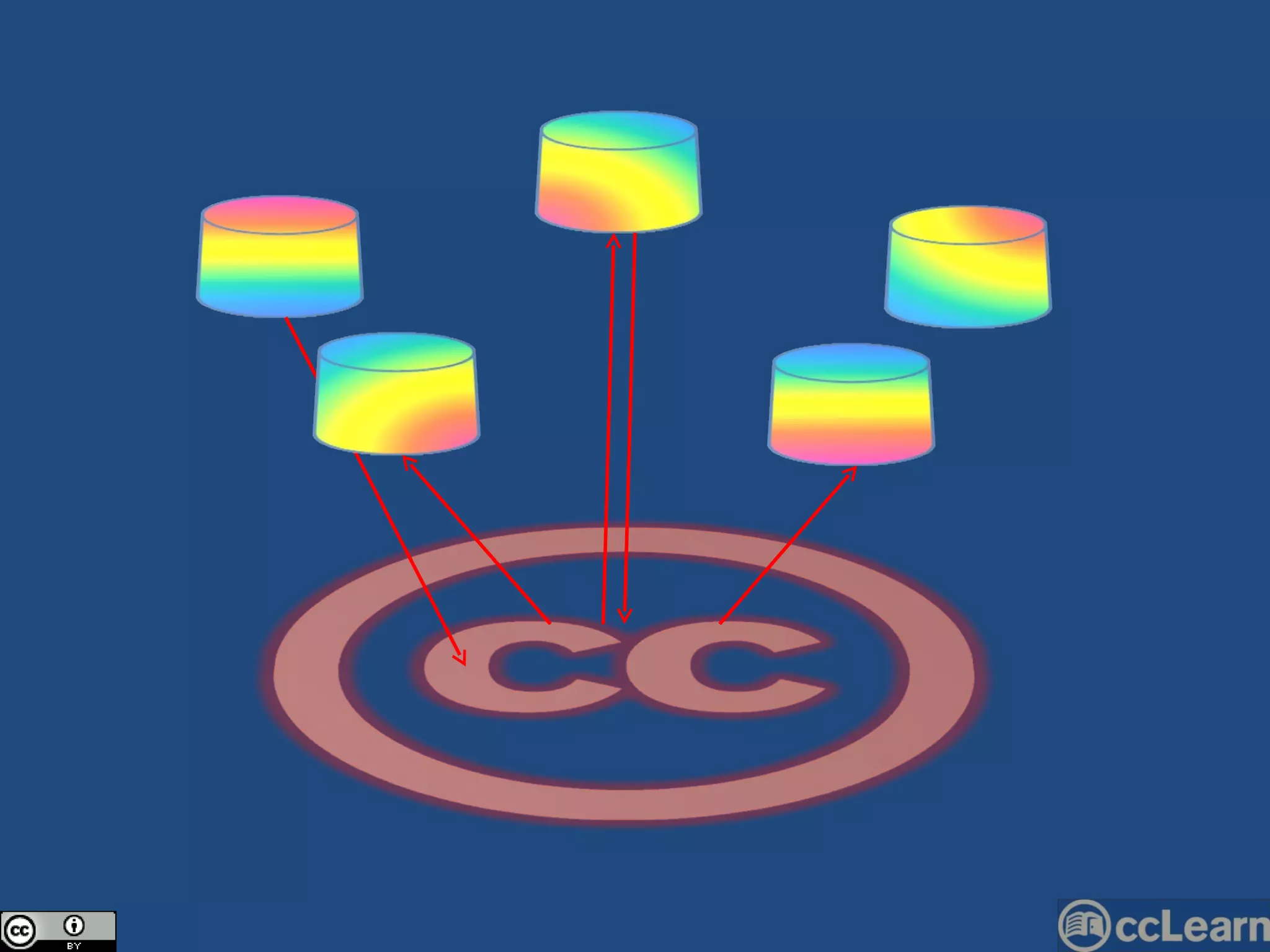
So the question becomes: How do we tie these systems together, with an emphasis on findability, usability, and interoperability, to achieve a functional global educational commons… … and yet maintain the distinctiveness of the component parts?
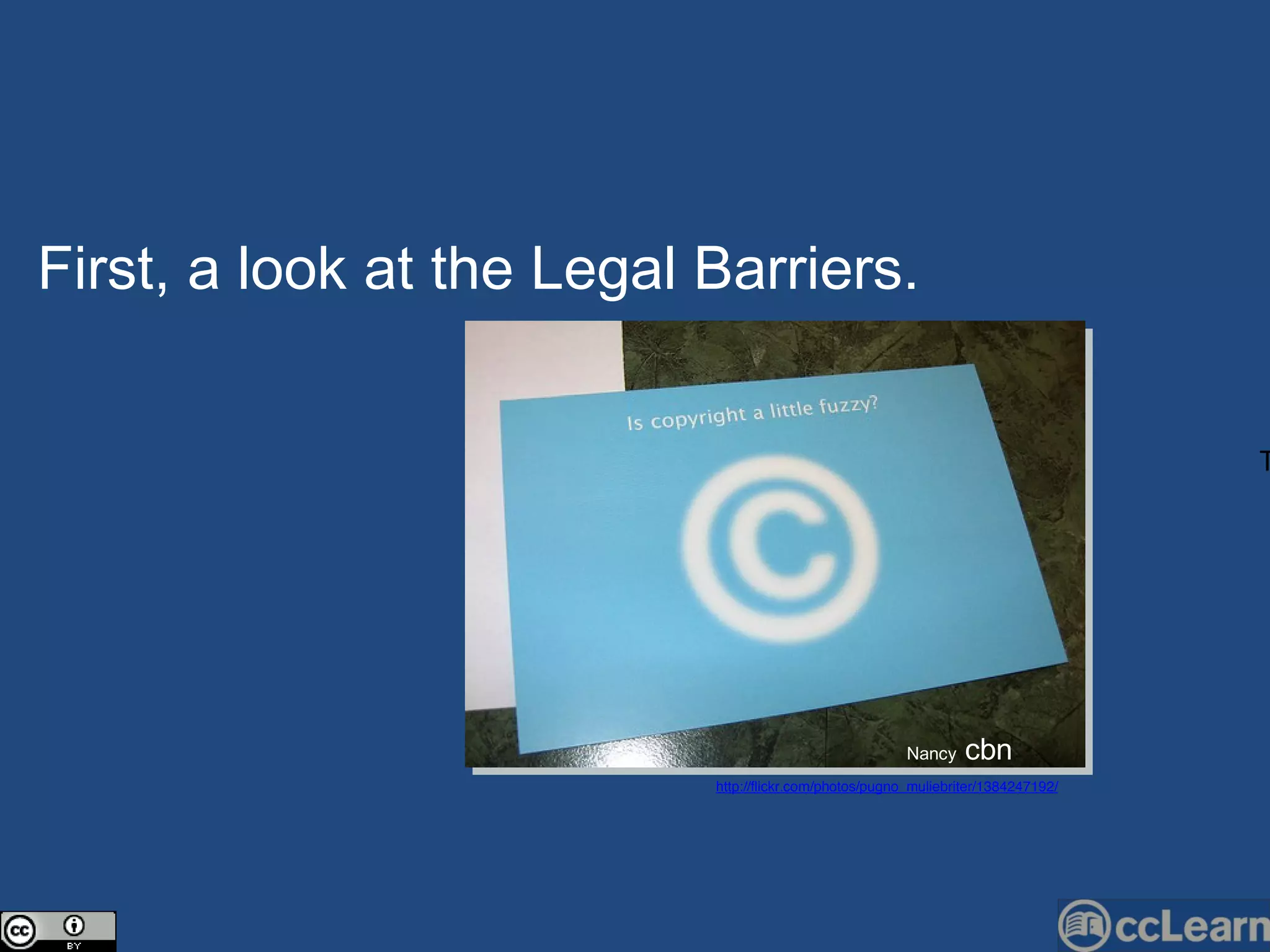
Text First, a look at the Legal Barriers.  Nan c y  cbn http://flickr.com/photos/pugno_muliebriter/1384247192/
CC  offers an easy way to share materials, versus the murky interpretations of fair use in  c opyright law.  openDemo c ra c y  cba http://flickr.com/photos/opendemocracy/542303769/
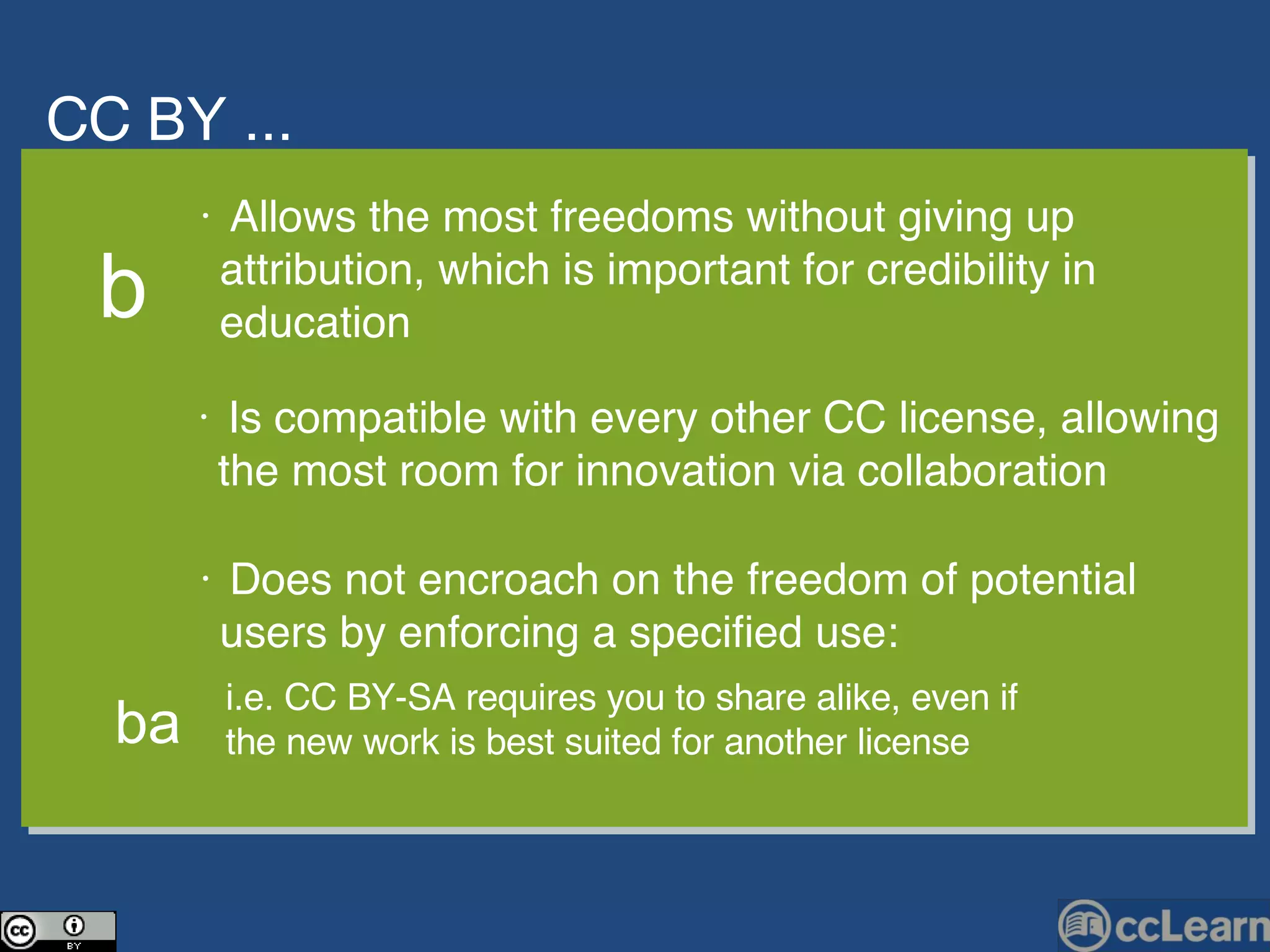
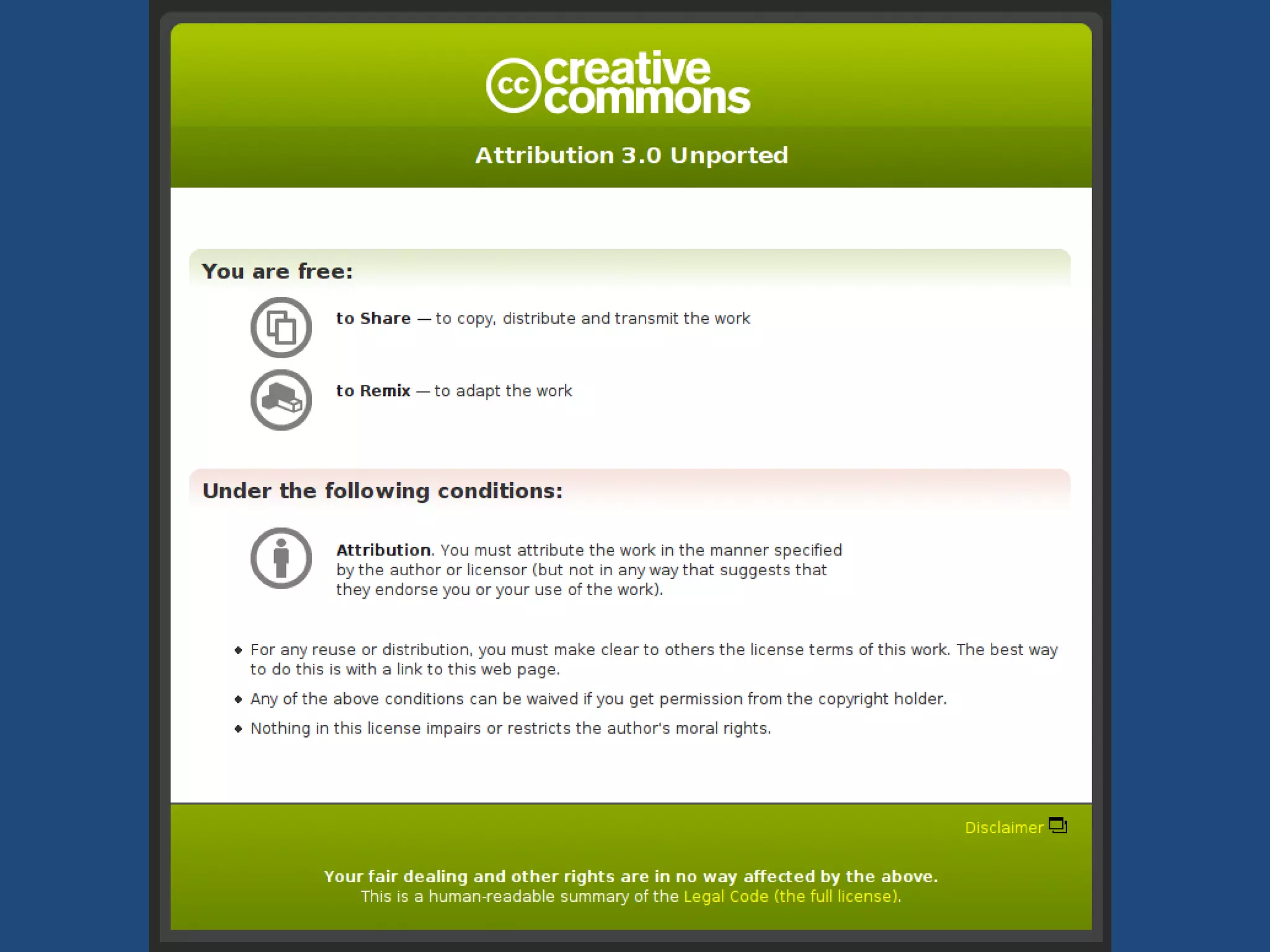
CC  BY ... Text •  Allows the most freedoms without giving up  attribution, which is important for credibility in  education •  Is compatible with every other CC license, allowing  the most room for innovation via collaboration b •  Does not encroach on the freedom of potential  users by enforcing a specified use: i.e. CC BY-SA requires you to share alike, even if  the new work is best suited for another license ba
Text But what about Te c hni c al Barriers?  http://flickr.com/photos/tantek/85610375/ Tantek Çelik  cbn
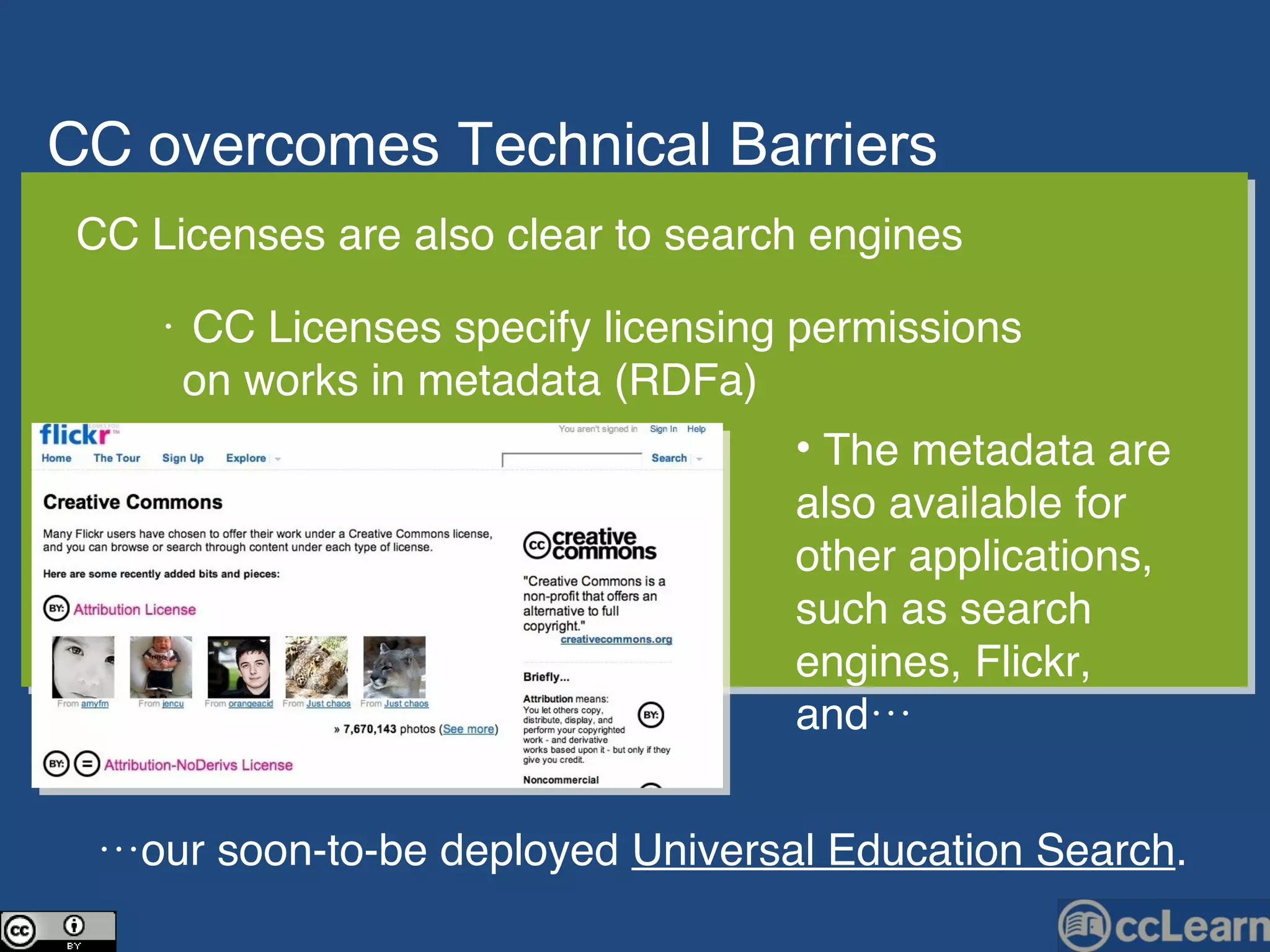
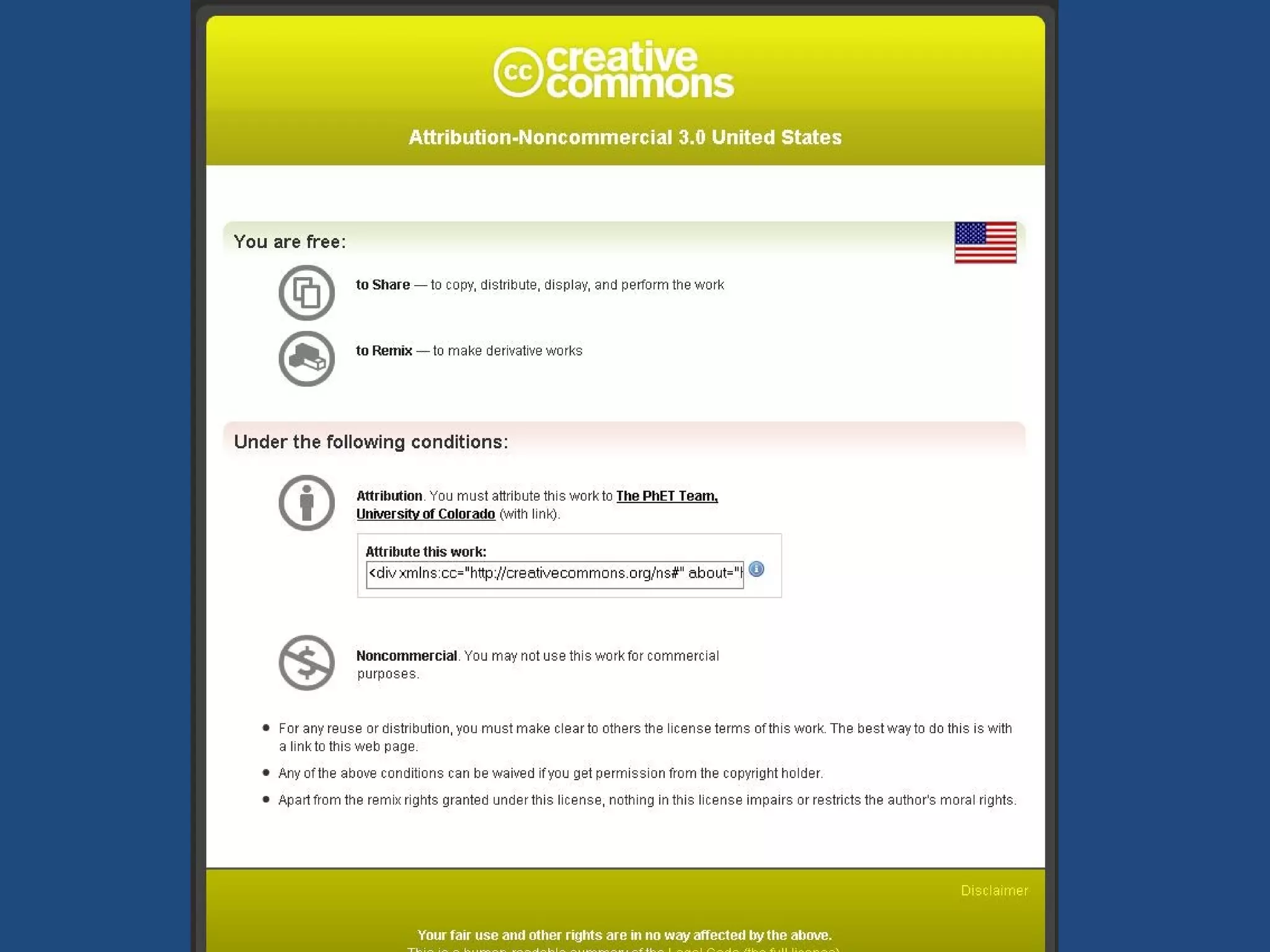
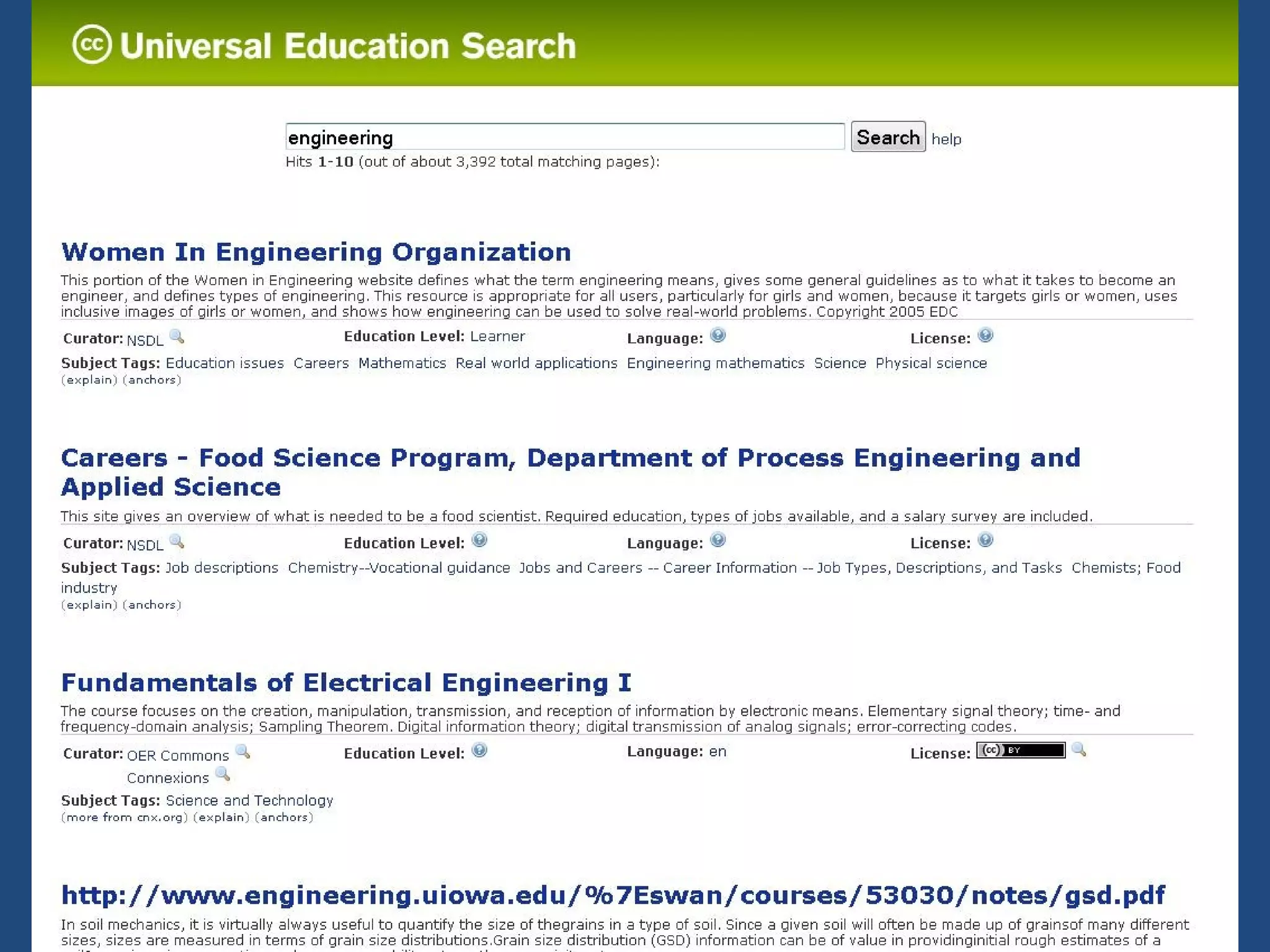
CC  over c omes Te c hni c al Barriers  Text CC Licenses are also clear to search engines •  CC Licenses specify licensing permissions  on works in metadata (RDFa) The metadata are also available for other applications, such as search engines, Flickr, and… … our soon-to-be deployed  Universal Education Search .
Principles for Publishing ccREL (RDFa) in HTML Visual Correspondence Don't Repeat Yourself (DRY) Remix Friendliness Extensibility & Modularity
There is a significant gap between what computers “see” and what humans see. This is one of the fundamental barriers to the infrastructure of the semantic web, but is also easily solved.
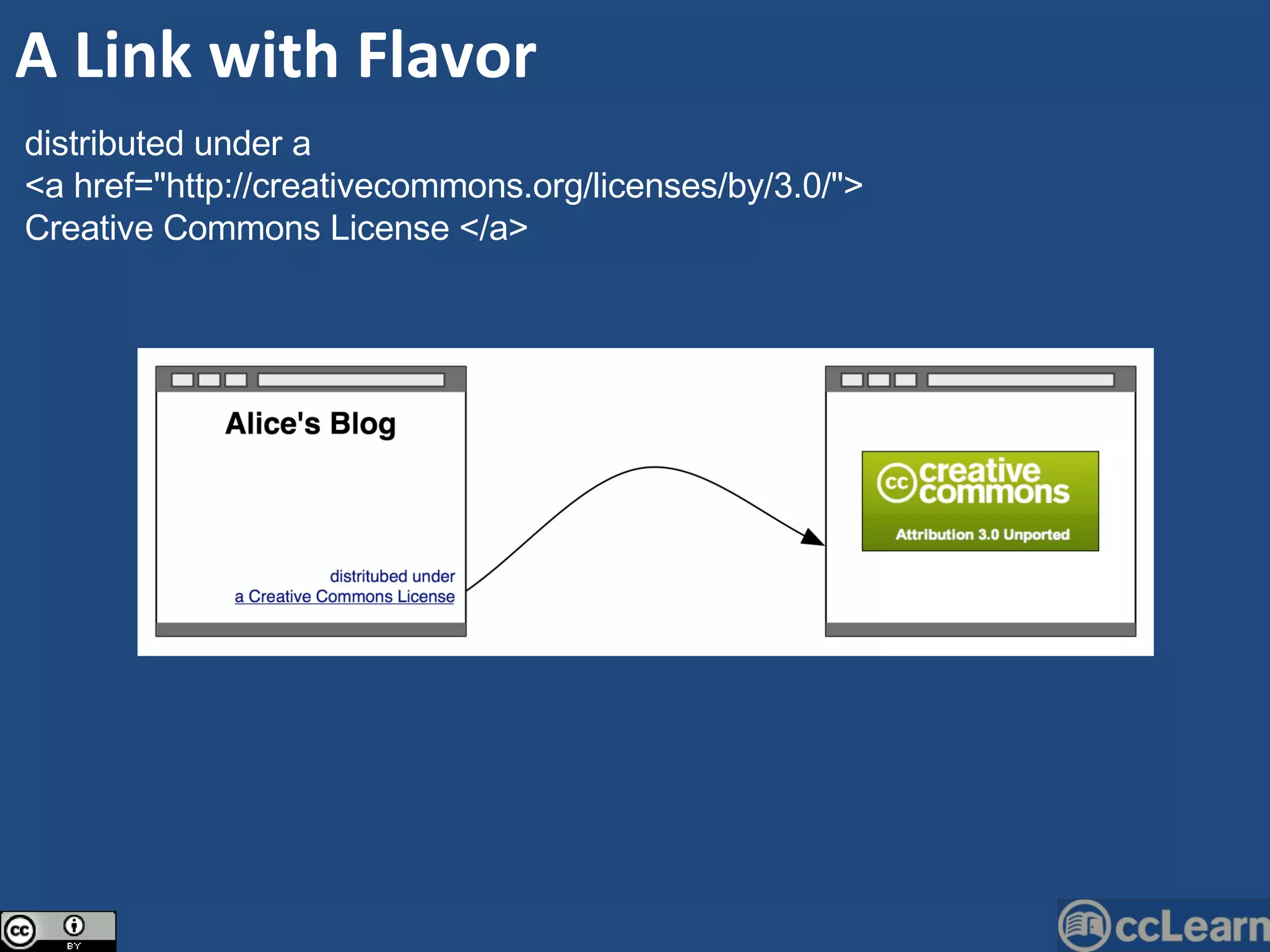
distributed under a  <a href=&quot;http://creativecommons.org/licenses/by/3.0/&quot;>  Creative Commons License </a>  A Link with Flavor
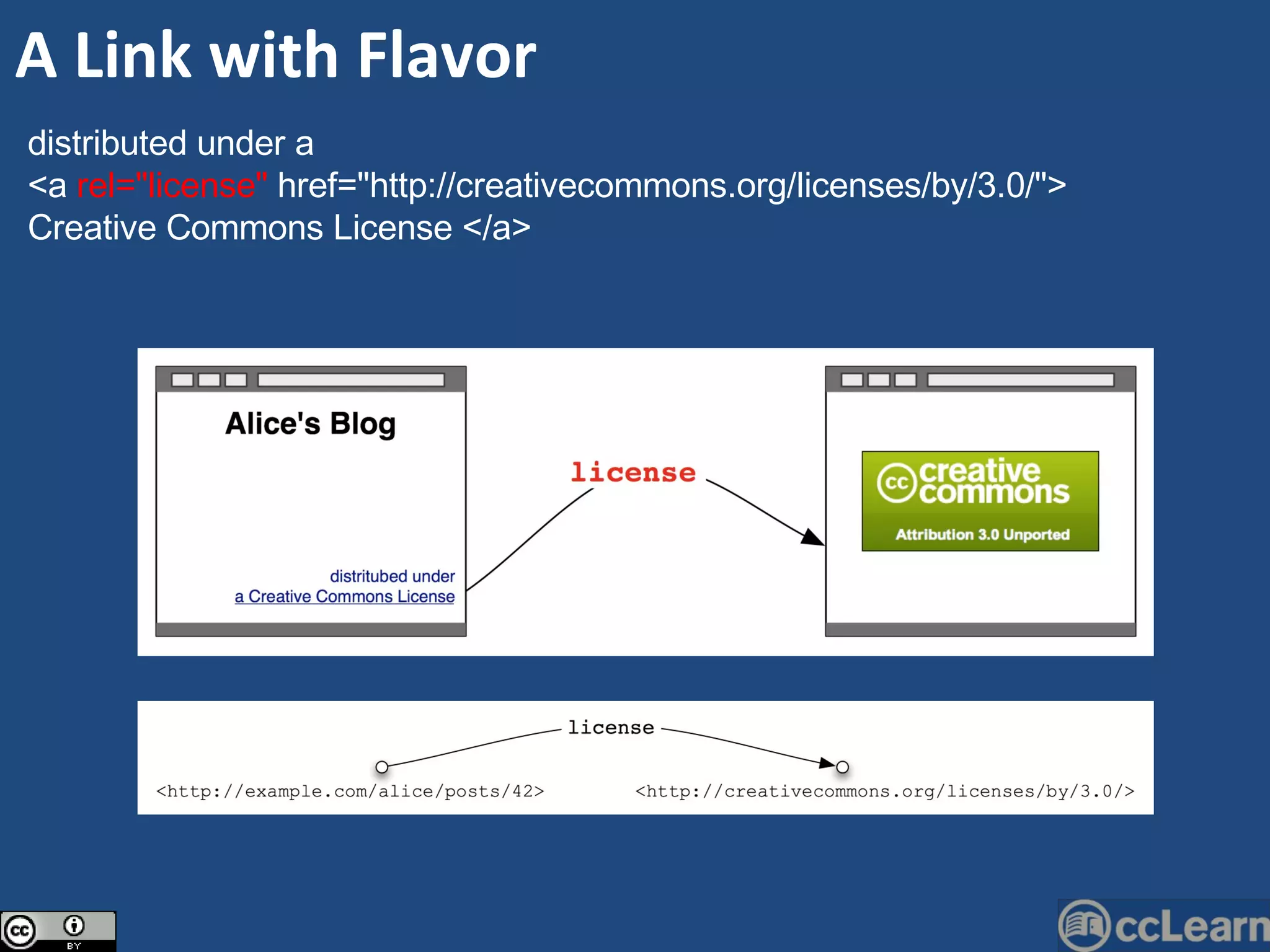
distributed under a  <a  rel=&quot;license&quot;  href=&quot;http://creativecommons.org/licenses/by/3.0/&quot;>  Creative Commons License </a>  A Link with Flavor
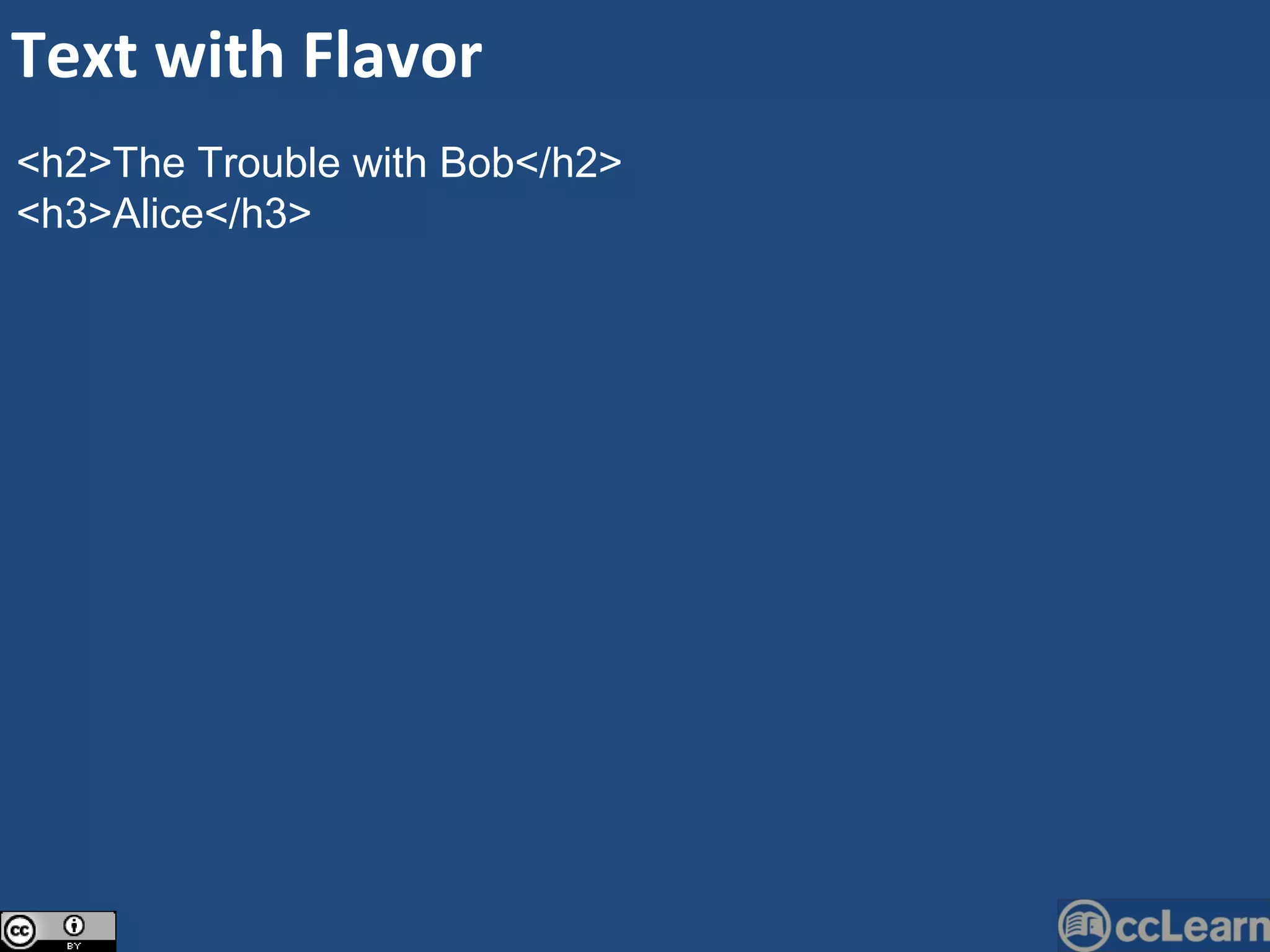
<h2>The Trouble with Bob</h2>  <h3>Alice</h3>  Text with Flavor
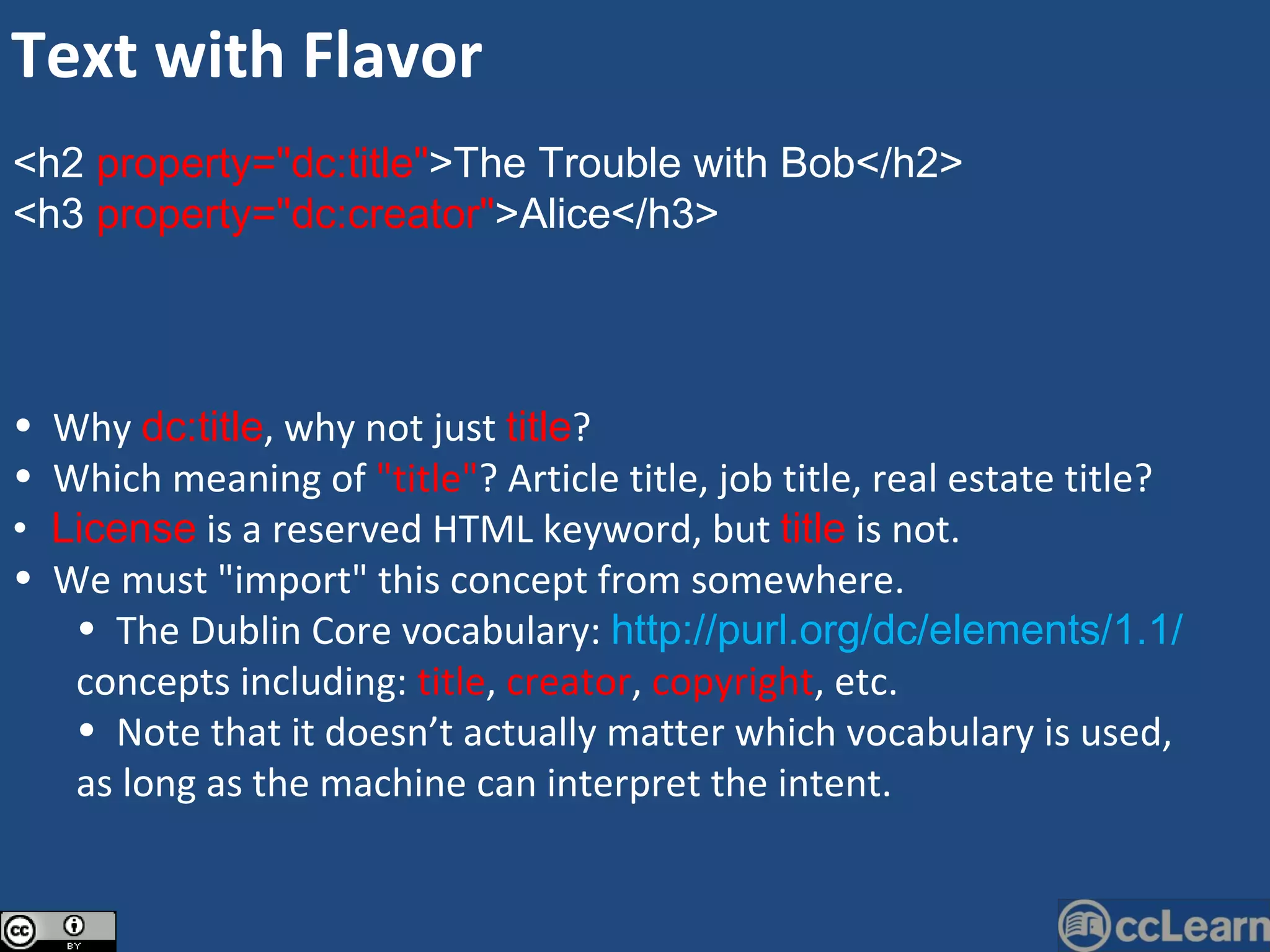
<h2  property=&quot;dc:title&quot; >The Trouble with Bob</h2>  <h3  property=&quot;dc:creator&quot; >Alice</h3>  Why  dc:title , why not just  title ?  Which meaning of  &quot;title&quot; ? Article title, job title, real estate title?  License  is a reserved HTML keyword, but  title  is not.  We must &quot;import&quot; this concept from somewhere.  The Dublin Core vocabulary:  http://purl.org/dc/elements/1.1/ concepts including:  title ,  creator ,  copyright , etc. Note that it doesn’t actually matter which vocabulary is used, as long as the machine can interpret the intent. Text with Flavor
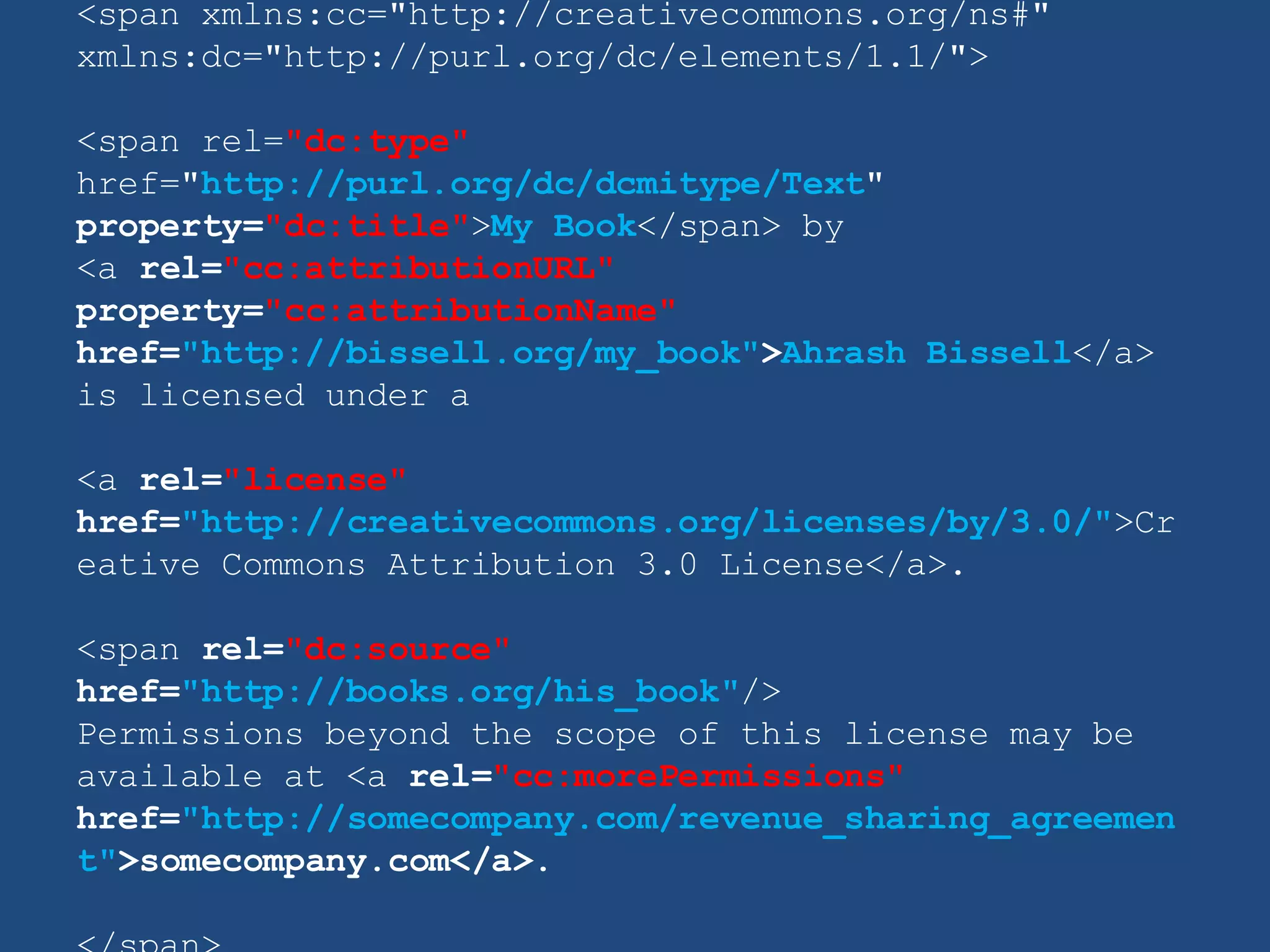
<span xmlns:cc=&quot;http://creativecommons.org/ns#&quot; xmlns:dc=&quot;http://purl.org/dc/elements/1.1/&quot;> <span rel= &quot; dc:type &quot;   href=&quot; http://purl.org/dc/dcmitype/Text &quot;  property= &quot;dc:title&quot; > My Book </span> by  <a  rel= &quot;cc:attributionURL&quot;   property= &quot;cc:attributionName&quot;   href= &quot;http://bissell.org/my_book&quot; > Ahrash Bissell </a>  is licensed under a  <a  rel= &quot;license&quot;   href= &quot;http://creativecommons.org/licenses/by/3.0/&quot; >Creative Commons Attribution 3.0 License</a>.  <span  rel= &quot;dc:source&quot;   href= &quot;http://books.org/his_book&quot; /> Permissions beyond the scope of this license may be available at <a  rel= &quot;cc:morePermissions&quot;   href= &quot;http://somecompany.com/revenue_sharing_agreement&quot; >somecompany.com</a>. </span>


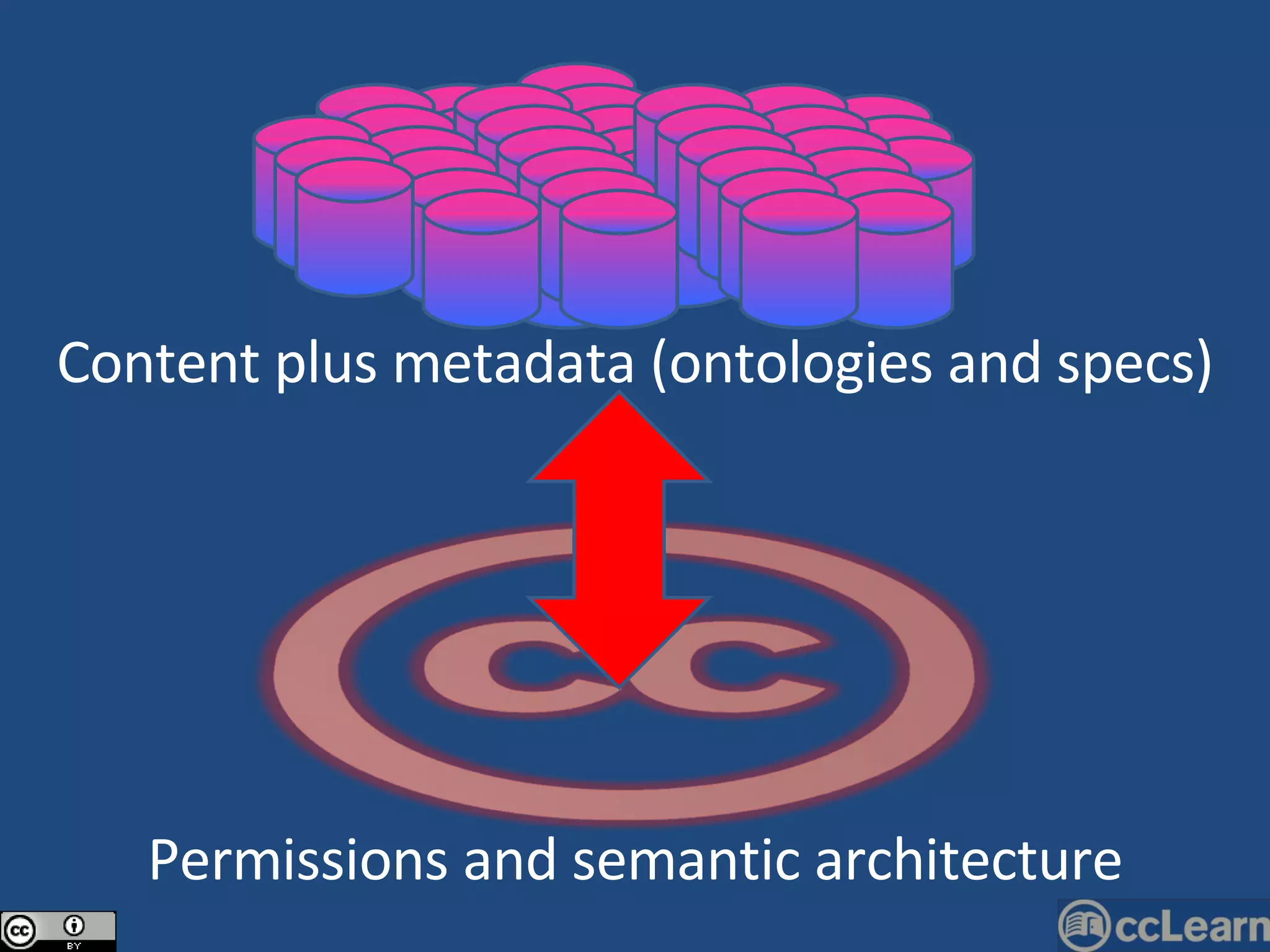
Content plus metadata (ontologies and specs) Permissions and semantic architecture
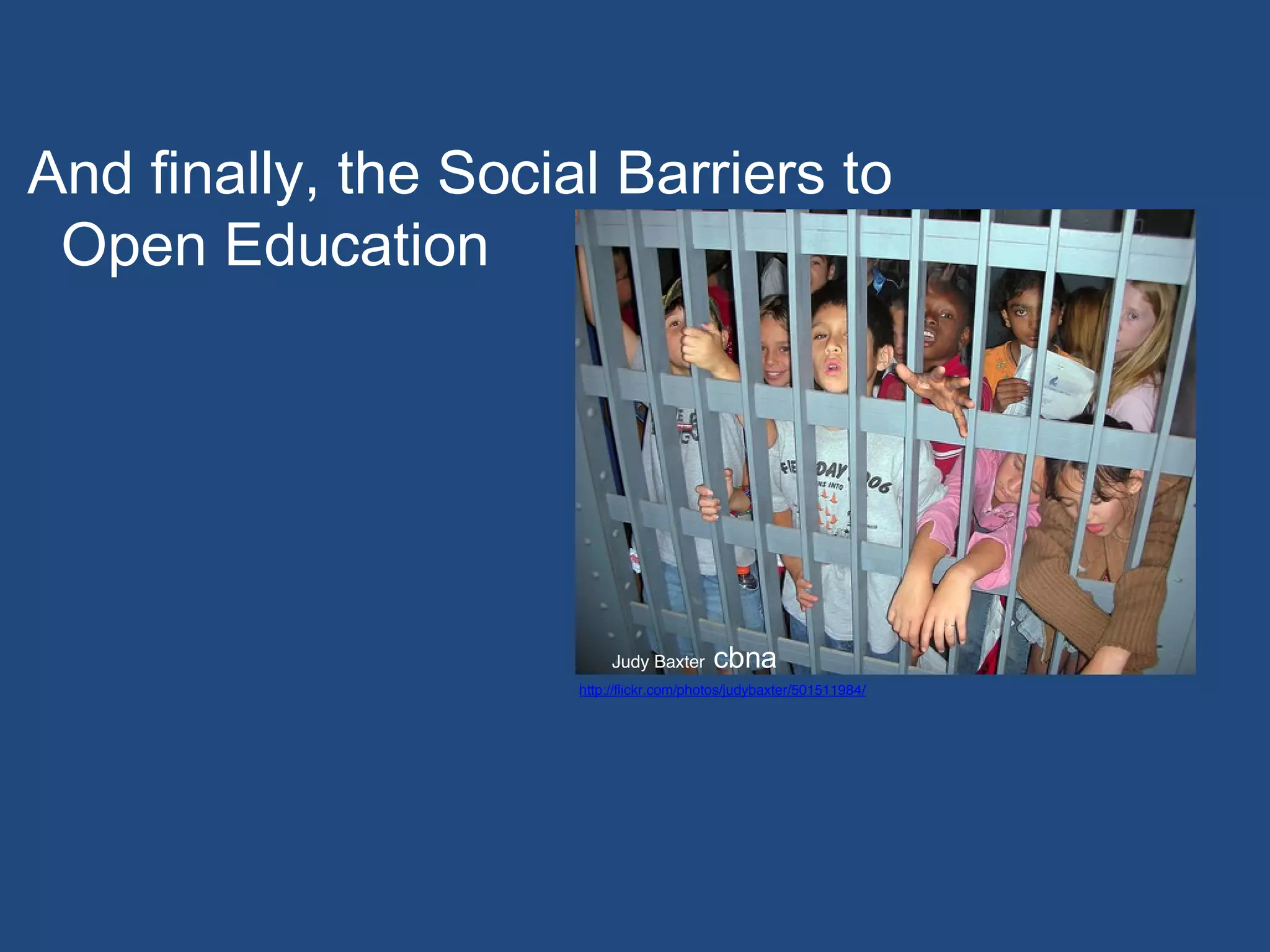
And finally, the So c ial Barriers to  Open Edu c ation Judy Baxter  cbna http://flickr.com/photos/judybaxter/501511984/
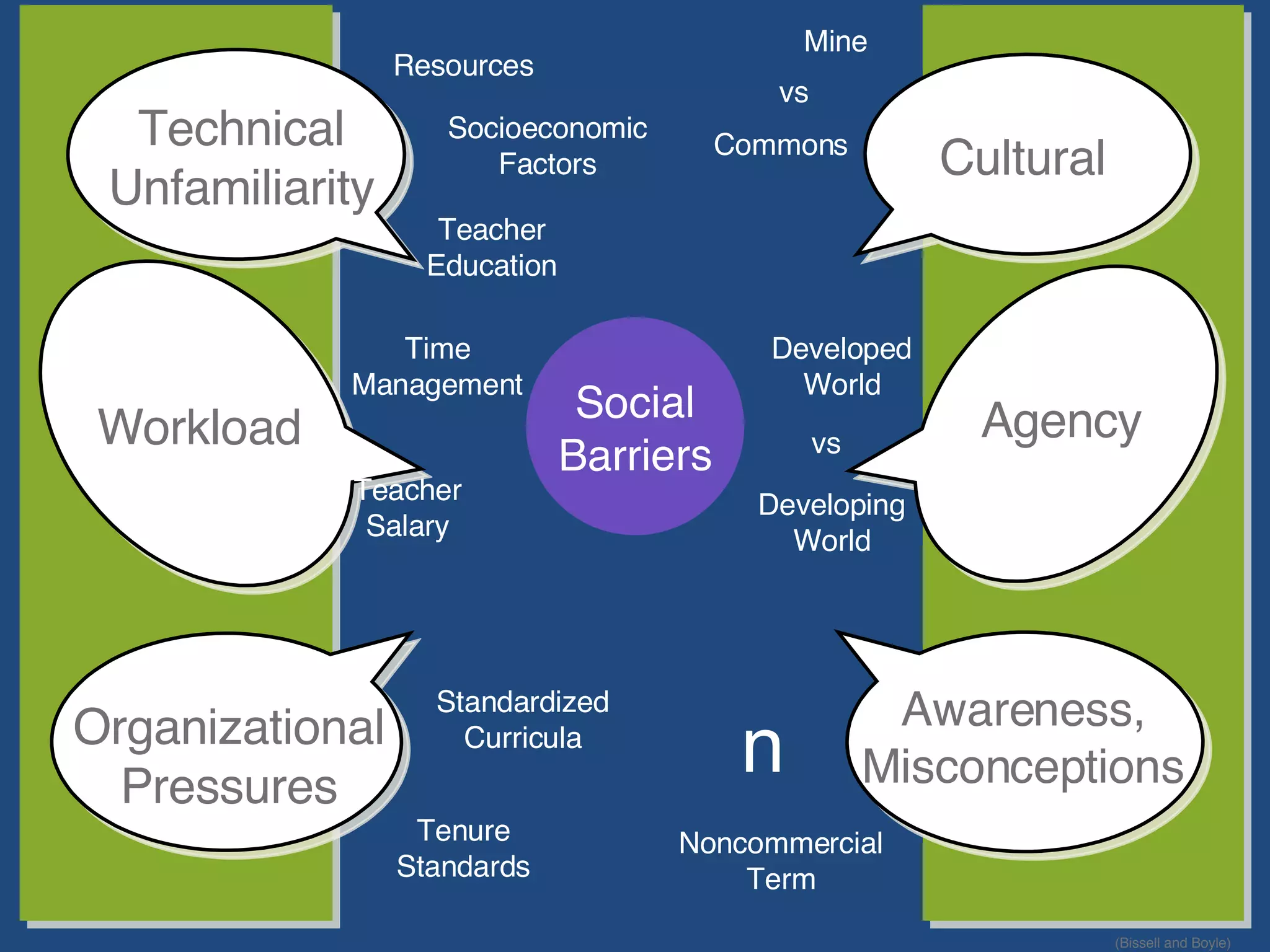
Text Social Barriers Standardized Curricula Tenure Standards n Developed World Developing World Mine vs Commons vs Noncommercial Term Resources Teacher Education Socioeconomic Factors Time Management Teacher Salary (Bissell and Boyle) Technical Unfamiliarity Workload Organizational Pressures Agency Cultural Awareness, Misconceptions
learn.creativecommons.org Send comments to: ahrash@creativecommons.org

SREB - Metadata Harvesting Federation of Open Educational Resources

  • 1.
    Metadata, Harvesting, andFederation Building the infrastructure of the global education commons Ahrash N Bissell
  • 2.
    Ahrash N BissellMetadata, Harvesting, and Federation Building the infrastructure of the global education commons
  • 3.
    Why build sharablerepositories of educational content? What barriers do we face? Legal Technical Social Discussion… Overview
  • 4.
    The world is changing… Tebndxt by Armel
  • 5.
    “ Content isno longer limited to the books, filmstrips, and videos associated with classroom instruction; networked content today provides a rich immersive learning environment incorporating accessible data using colorful visualizations, animated graphics, and interactive applications.” “ Alongside these technology improvements, “ open educational resources ” offer learning content and software tools that support search, organization, interaction, and distribution of materials.” “ Increasingly,… the Web is being recognized as an enabler for collaborative creation of significant information resources that aggregate contributions from hundreds or thousands of individuals.” What is the future of education…?
  • 6.
    “ Adopt programsand policies to promote open educational resources . Materials funded by NSF should be made readily available on the web with permission for unrestricted reuse and recombination .” http://www.nsf.gov/pubs/2008/nsf08204/nsf08204.pdf
  • 7.
    Text What areOpen Edu c ational Resour c es? Michael Reschke cba Digitized materials offered freely and openly for educators, students and self-learners to use and re-use for teaching, learning and research.* *UNESCO. 2002. Forum on the impact of Open Courseware for higher education in developing countries. Final report. Paris: UNESCO.
  • 8.
  • 9.
    available for anyoneto use, share, and adapt to suit their educational needs. Michael Reschke cba Open education depends on a high-quality pool of freely licensed resources. OER give learners access to a broad array of knowledge materials...
  • 10.
    What is differentabout OER? Most digital media = “stuff you can see online for free” fair-use and educational exceptions OER = “stuff you can adapt and then share for others to build on” license to innovate
  • 11.
    When IP restrictsaccess, adaptation, and sharing, Tebaxt Simon music http://flickr.com/photos/fruey/1368008974/ protecting the right to education. OER help open doors
  • 12.
    Mutual Learning Sharing & Most students begin their education highly motivated to learn ; Most teachers are highly motivated to share knowledge , not only with their students but with anyone who can benefit. CC BY-NC-ND by Lara Eller http://www.flickr.com/photos/99079793@N00/24786113/
  • 13.
  • 14.
    And of coursethere are regional repositories….
  • 15.
  • 16.
  • 17.
  • 18.
    Note that thereare significant advantages to building an OER landscape with distinct silos of content…. Authorship and quality control Dedicated focus on core users More robust “ecosystem” Easier to manage and sustain
  • 19.
    So the questionbecomes: How do we tie these systems together, with an emphasis on findability, usability, and interoperability, to achieve a functional global educational commons… … and yet maintain the distinctiveness of the component parts?
  • 20.
    Text First, alook at the Legal Barriers. Nan c y cbn http://flickr.com/photos/pugno_muliebriter/1384247192/
  • 21.
    CC offersan easy way to share materials, versus the murky interpretations of fair use in c opyright law. openDemo c ra c y cba http://flickr.com/photos/opendemocracy/542303769/
  • 22.
    CC BY... Text • Allows the most freedoms without giving up attribution, which is important for credibility in education • Is compatible with every other CC license, allowing the most room for innovation via collaboration b • Does not encroach on the freedom of potential users by enforcing a specified use: i.e. CC BY-SA requires you to share alike, even if the new work is best suited for another license ba
  • 23.
    Text But whatabout Te c hni c al Barriers? http://flickr.com/photos/tantek/85610375/ Tantek Çelik cbn
  • 24.
    CC overc omes Te c hni c al Barriers Text CC Licenses are also clear to search engines • CC Licenses specify licensing permissions on works in metadata (RDFa) The metadata are also available for other applications, such as search engines, Flickr, and… … our soon-to-be deployed Universal Education Search .
  • 25.
    Principles for PublishingccREL (RDFa) in HTML Visual Correspondence Don't Repeat Yourself (DRY) Remix Friendliness Extensibility & Modularity
  • 26.
    There is asignificant gap between what computers “see” and what humans see. This is one of the fundamental barriers to the infrastructure of the semantic web, but is also easily solved.
  • 27.
    distributed under a <a href=&quot;http://creativecommons.org/licenses/by/3.0/&quot;> Creative Commons License </a> A Link with Flavor
  • 28.
    distributed under a <a rel=&quot;license&quot; href=&quot;http://creativecommons.org/licenses/by/3.0/&quot;> Creative Commons License </a> A Link with Flavor
  • 29.
    <h2>The Trouble withBob</h2> <h3>Alice</h3> Text with Flavor
  • 30.
    <h2 property=&quot;dc:title&quot;>The Trouble with Bob</h2> <h3 property=&quot;dc:creator&quot; >Alice</h3> Why dc:title , why not just title ? Which meaning of &quot;title&quot; ? Article title, job title, real estate title? License is a reserved HTML keyword, but title is not. We must &quot;import&quot; this concept from somewhere. The Dublin Core vocabulary: http://purl.org/dc/elements/1.1/ concepts including: title , creator , copyright , etc. Note that it doesn’t actually matter which vocabulary is used, as long as the machine can interpret the intent. Text with Flavor
  • 31.
    <span xmlns:cc=&quot;http://creativecommons.org/ns#&quot; xmlns:dc=&quot;http://purl.org/dc/elements/1.1/&quot;><span rel= &quot; dc:type &quot; href=&quot; http://purl.org/dc/dcmitype/Text &quot; property= &quot;dc:title&quot; > My Book </span> by <a rel= &quot;cc:attributionURL&quot; property= &quot;cc:attributionName&quot; href= &quot;http://bissell.org/my_book&quot; > Ahrash Bissell </a> is licensed under a <a rel= &quot;license&quot; href= &quot;http://creativecommons.org/licenses/by/3.0/&quot; >Creative Commons Attribution 3.0 License</a>. <span rel= &quot;dc:source&quot; href= &quot;http://books.org/his_book&quot; /> Permissions beyond the scope of this license may be available at <a rel= &quot;cc:morePermissions&quot; href= &quot;http://somecompany.com/revenue_sharing_agreement&quot; >somecompany.com</a>. </span>
  • 32.
  • 33.
  • 34.
  • 35.
  • 36.
  • 37.
  • 38.
  • 39.
  • 40.
  • 41.
  • 42.
  • 43.
    Content plus metadata(ontologies and specs) Permissions and semantic architecture
  • 44.
    And finally, theSo c ial Barriers to Open Edu c ation Judy Baxter cbna http://flickr.com/photos/judybaxter/501511984/
  • 45.
    Text Social BarriersStandardized Curricula Tenure Standards n Developed World Developing World Mine vs Commons vs Noncommercial Term Resources Teacher Education Socioeconomic Factors Time Management Teacher Salary (Bissell and Boyle) Technical Unfamiliarity Workload Organizational Pressures Agency Cultural Awareness, Misconceptions
  • 46.
    learn.creativecommons.org Send commentsto: ahrash@creativecommons.org