Plans, obligations and moodsEpisodio 7IR A
TENER QUE
TENER GANAS DEIR + AExpressing plans (what you or someone else is going to do)
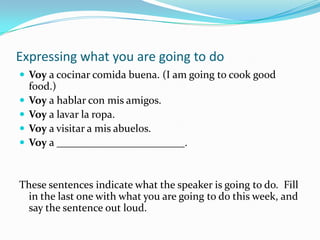
Expressing what you are going to doVoy a cocinar comida buena. (I am going to cook good food.)Voy a hablar con mis amigos.Voy a lavar la ropa.Voy a visitar a misabuelos.Voy a ________________________.These sentences indicate what the speaker is going to do.  Fill in the last one with what you are going to do this week, and say the sentence out loud.
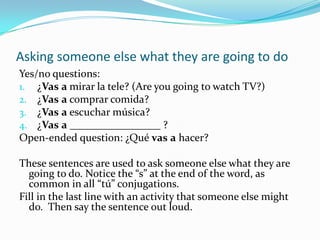
Asking someone else what they are going to doYes/no questions:¿Vasa mirar la tele? (Are you going to watch TV?)¿Vasa comprar comida?¿Vasa escucharmúsica?¿Vasa _________________ ?Open-ended question: ¿Quévasahacer?These sentences are used to ask someone else what they are going to do. Notice the “s” at the end of the word, as common in all “tú” conjugations.Fill in the last line with an activity that someone else might do.  Then say the sentence out loud.
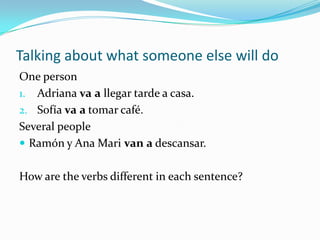
Talking about what someone else will doOne personAdriana vaallegartarde a casa.Sofíavaa tomar café.Several peopleRamón y Ana Mari vana descansar.How are the verbs different in each sentence?
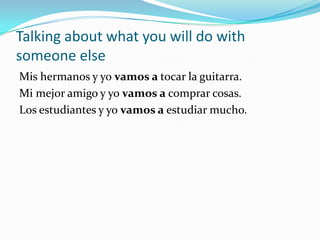
Talking about what you will do with someone elseMishermanos y yovamos a tocar la guitarra.Mi mejor amigo y yovamos a comprarcosas.Los estudiantes y yovamos a estudiar mucho.
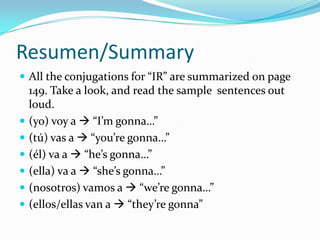
Resumen/SummaryAll the conjugations for “IR” are summarized on page 149. Take a look, and read the sample  sentences out loud.(yo) voy a  “I’m gonna…”(tú) vas a  “you’re gonna…”(él) va a  “he’sgonna…”(ella) va a  “she’sgonna…”(nosotros) vamosa  “we’regonna…”(ellos/ellas van a  “they’re gonna”
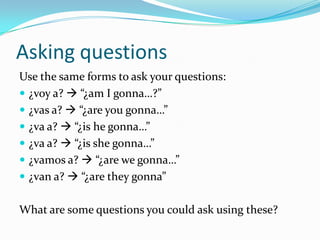
Asking questionsUse the same forms to ask your questions:¿voy a?  “¿am I gonna…?”¿vas a?  “¿are you gonna…”¿va a?  “¿is hegonna…”¿va a?  “¿is she gonna…”¿vamos a?  “¿are wegonna…”¿van a?  “¿are they gonna”What are some questions you could ask using these?
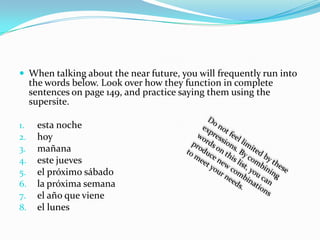
When talking about the near future, you will frequently run into the words below. Look over how they function in complete sentences on page 149, and practice saying them using the supersite.estanochehoymañanaestejuevesel próximosábadola próximasemanael añoquevieneel lunesDo not feel limited by these expressions. By combining words on this list, you can produce new combinations to meet your needs.
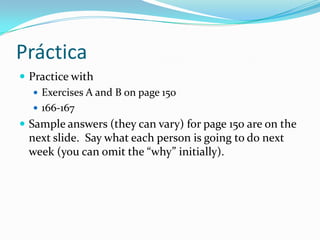
PrácticaPractice with Exercises A and B on page 150166-167Sample answers (they can vary) for page 150 are on the next slide.  Say what each person is going to do next week (you can omit the “why” initially).
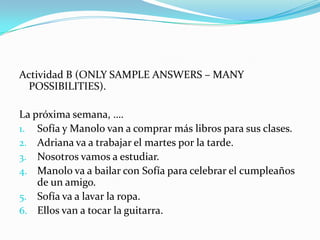
Actividad B (ONLY SAMPLE ANSWERS – MANY POSSIBILITIES). La próximasemana, ….Sofía y Manolo van a comprarmáslibrosparasusclases.Adriana va a trabajar el martespor la tarde.Nosotrosvamos a estudiar.Manolova a bailar con Sofíaparacelebrar el cumpleaños de un amigo.Sofíava a lavar la ropa.Ellos van a tocar la guitarra.
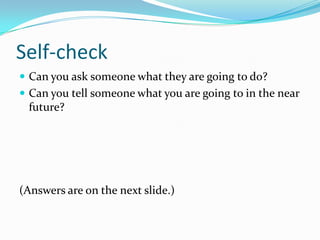
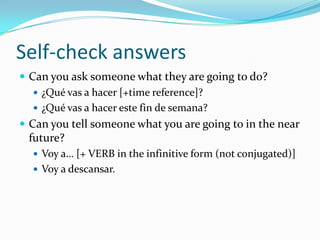
Self-checkCan you ask someone what they are going to do?Can you tell someone what you are going to in the near future?(Answers are on the next slide.)
Self-check answersCan you ask someone what they are going to do?¿Qué vas a hacer [+time reference]?¿Qué vas a hacereste fin de semana?Can you tell someone what you are going to in the near future?Voy a… [+ VERB in the infinitive form (not conjugated)]Voy a descansar.
TENER QUEExpressing what you have to doTENER GANAS DEExpressing what you feel or don’t feel like doing
RewindFirst, remember how “tener” means “to have”. What did we previously use “tener” to express? Go back to page 80 of your book and read the sentences with “tener”.
RewindFirst, remember how “tener” means “to have”. What did we previously use “tener” to express? ageGo back to page 80 of your book and read the sentences with “tener”.
RewindFirst, remember how “tener” means “to have”. What did we previously use “tener” to express? possession ageGo back to page 80 of your book and read the sentences with “tener”.
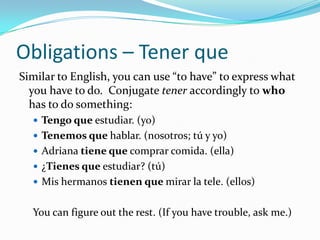
Obligations – TenerqueSimilar to English, you can use “to have” to express what you have to do.  Conjugate tener accordingly to who has to do something:Tengoqueestudiar. (yo)Tenemosquehablar. (nosotros; tú y yo)Adriana tienequecomprar comida. (ella)¿Tienesqueestudiar? (tú)Mishermanostienenquemirar la tele. (ellos)You can figure out the rest. (If you have trouble, ask me.)
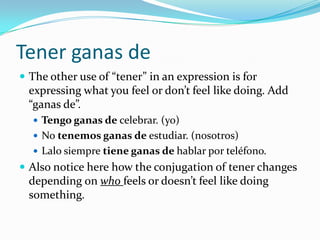
Tenerganas deThe other use of “tener” in an expression is for expressing what you feel or don’t feel like doing. Add “ganas de”.  Tengoganas de celebrar. (yo)No tenemosganas de estudiar. (nosotros)Lalosiempretieneganas de hablarporteléfono.Also notice here how the conjugation of tener changes depending on who feels or doesn’t feel like doing something.

SPN.111.B1.WI.11 - Semana 8 Lecture Notes

  • 1.
    Plans, obligations andmoodsEpisodio 7IR A
  • 2.
  • 3.
    TENER GANAS DEIR+ AExpressing plans (what you or someone else is going to do)
  • 4.
    Expressing what youare going to doVoy a cocinar comida buena. (I am going to cook good food.)Voy a hablar con mis amigos.Voy a lavar la ropa.Voy a visitar a misabuelos.Voy a ________________________.These sentences indicate what the speaker is going to do. Fill in the last one with what you are going to do this week, and say the sentence out loud.
  • 5.
    Asking someone elsewhat they are going to doYes/no questions:¿Vasa mirar la tele? (Are you going to watch TV?)¿Vasa comprar comida?¿Vasa escucharmúsica?¿Vasa _________________ ?Open-ended question: ¿Quévasahacer?These sentences are used to ask someone else what they are going to do. Notice the “s” at the end of the word, as common in all “tú” conjugations.Fill in the last line with an activity that someone else might do. Then say the sentence out loud.
  • 6.
    Talking about whatsomeone else will doOne personAdriana vaallegartarde a casa.Sofíavaa tomar café.Several peopleRamón y Ana Mari vana descansar.How are the verbs different in each sentence?
  • 7.
    Talking about whatyou will do with someone elseMishermanos y yovamos a tocar la guitarra.Mi mejor amigo y yovamos a comprarcosas.Los estudiantes y yovamos a estudiar mucho.
  • 8.
    Resumen/SummaryAll the conjugationsfor “IR” are summarized on page 149. Take a look, and read the sample sentences out loud.(yo) voy a  “I’m gonna…”(tú) vas a  “you’re gonna…”(él) va a  “he’sgonna…”(ella) va a  “she’sgonna…”(nosotros) vamosa  “we’regonna…”(ellos/ellas van a  “they’re gonna”
  • 9.
    Asking questionsUse thesame forms to ask your questions:¿voy a?  “¿am I gonna…?”¿vas a?  “¿are you gonna…”¿va a?  “¿is hegonna…”¿va a?  “¿is she gonna…”¿vamos a?  “¿are wegonna…”¿van a?  “¿are they gonna”What are some questions you could ask using these?
  • 10.
    When talking aboutthe near future, you will frequently run into the words below. Look over how they function in complete sentences on page 149, and practice saying them using the supersite.estanochehoymañanaestejuevesel próximosábadola próximasemanael añoquevieneel lunesDo not feel limited by these expressions. By combining words on this list, you can produce new combinations to meet your needs.
  • 11.
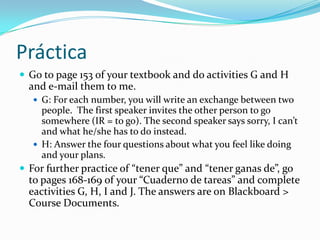
    PrácticaPractice with ExercisesA and B on page 150166-167Sample answers (they can vary) for page 150 are on the next slide. Say what each person is going to do next week (you can omit the “why” initially).
  • 12.
    Actividad B (ONLYSAMPLE ANSWERS – MANY POSSIBILITIES). La próximasemana, ….Sofía y Manolo van a comprarmáslibrosparasusclases.Adriana va a trabajar el martespor la tarde.Nosotrosvamos a estudiar.Manolova a bailar con Sofíaparacelebrar el cumpleaños de un amigo.Sofíava a lavar la ropa.Ellos van a tocar la guitarra.
  • 13.
    Self-checkCan you asksomeone what they are going to do?Can you tell someone what you are going to in the near future?(Answers are on the next slide.)
  • 14.
    Self-check answersCan youask someone what they are going to do?¿Qué vas a hacer [+time reference]?¿Qué vas a hacereste fin de semana?Can you tell someone what you are going to in the near future?Voy a… [+ VERB in the infinitive form (not conjugated)]Voy a descansar.
  • 15.
    TENER QUEExpressing whatyou have to doTENER GANAS DEExpressing what you feel or don’t feel like doing
  • 16.
    RewindFirst, remember how“tener” means “to have”. What did we previously use “tener” to express? Go back to page 80 of your book and read the sentences with “tener”.
  • 17.
    RewindFirst, remember how“tener” means “to have”. What did we previously use “tener” to express? ageGo back to page 80 of your book and read the sentences with “tener”.
  • 18.
    RewindFirst, remember how“tener” means “to have”. What did we previously use “tener” to express? possession ageGo back to page 80 of your book and read the sentences with “tener”.
  • 19.
    Obligations – TenerqueSimilarto English, you can use “to have” to express what you have to do. Conjugate tener accordingly to who has to do something:Tengoqueestudiar. (yo)Tenemosquehablar. (nosotros; tú y yo)Adriana tienequecomprar comida. (ella)¿Tienesqueestudiar? (tú)Mishermanostienenquemirar la tele. (ellos)You can figure out the rest. (If you have trouble, ask me.)
  • 20.
    Tenerganas deThe otheruse of “tener” in an expression is for expressing what you feel or don’t feel like doing. Add “ganas de”. Tengoganas de celebrar. (yo)No tenemosganas de estudiar. (nosotros)Lalosiempretieneganas de hablarporteléfono.Also notice here how the conjugation of tener changes depending on who feels or doesn’t feel like doing something.