SIMPLE PRESENT
He, she, it
Interrogative form
he, she, it
 Esta presentación está dedicada al presente simple en su forma interrogativa,
recuerda que la palabra do como verbo significa hacer; sin embargo, como
auxiliar no se traduce por ninguna palabra, únicamente aclara el tiempo en el
que estamos hablando (presente simple).
 En el caso de las terceras personas no se usa do, sino does.
 Recuerda que en la pregunta se invierte la posición del pronombre con el auxiliar
y el verbo se usa en forma simple:
 Ej.: Does she play?
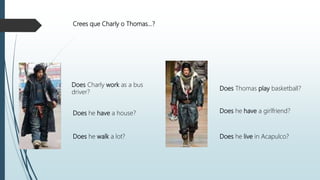
Crees que Charly o Thomas…?
Does Charly work as a bus
driver?
Does he have a house?
Does he walk a lot?
Does Thomas play basketball?
Does he have a girlfriend?
Does he live in Acapulco?
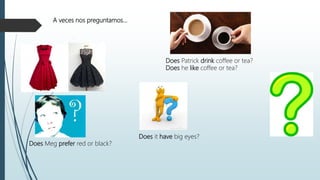
Does Meg prefer red or black?
Does Patrick drink coffee or tea?
Does he like coffee or tea?
Does it have big eyes?
A veces nos preguntamos…
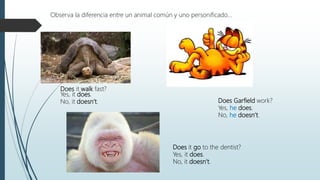
Does it walk fast?
Yes, it does.
No, it doesn’t.
Does it go to the dentist?
Yes, it does.
No, it doesn’t.
Does Garfield work?
Yes, he does.
No, he doesn’t.
Observa la diferencia entre un animal común y uno personificado…
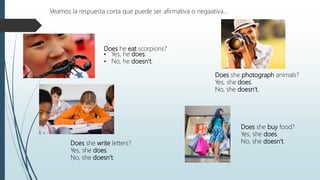
Does he eat scorpions?
• Yes, he does.
• No, he doesn’t.
Veamos la respuesta corta que puede ser afirmativa o negaativa…
Does she photograph animals?
Yes, she does.
No, she doesn’t.
Does she buy food?
Yes, she does.
No, she doesn’t.Does she write letters?
Yes, she does.
No, she doesn’t.
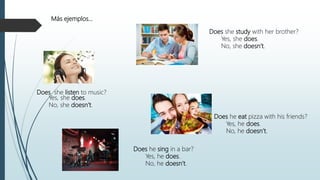
Does she listen to music?
Yes, she does.
No, she doesn’t.
Does he sing in a bar?
Yes, he does.
No, he doesn’t.
Does she study with her brother?
Yes, she does.
No, she doesn’t.
Does he eat pizza with his friends?
Yes, he does.
No, he doesn’t.
Más ejemplos…
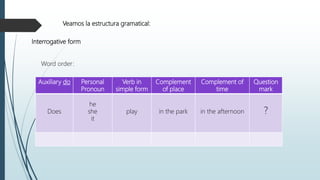
Auxiliary do Personal
Pronoun
Verb in
simple form
Complement
of place
Complement of
time
Question
mark
Does
he
she
it
play in the park in the afternoon ?
Interrogative form
Veamos la estructura gramatical:
Word order:
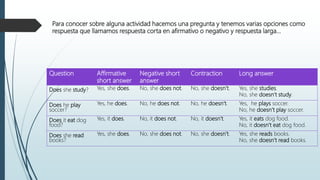
Para conocer sobre alguna actividad hacemos una pregunta y tenemos varias opciones como
respuesta que llamamos respuesta corta en afirmativo o negativo y respuesta larga…
Question Affirmative
short answer
Negative short
answer
Contraction Long answer
Does she study? Yes, she does. No, she does not. No, she doesn’t. Yes, she studies.
No, she doesn’t study.
Does he play
soccer?
Yes, he does. No, he does not. No, he doesn’t. Yes, he plays soccer.
No, he doesn’t play soccer.
Does it eat dog
food?
Yes, it does. No, it does not. No, it doesn’t. Yes, it eats dog food.
No, it doesn’t eat dog food.
Does she read
books?
Yes, she does. No, she does not. No, she doesn’t. Yes, she reads books.
No, she doesn’t read books.
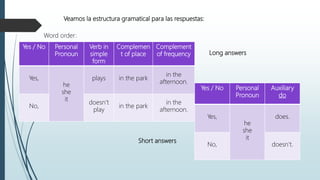
Yes / No Personal
Pronoun
Verb in
simple
form
Complemen
t of place
Complement
of frequency
Yes,
he
she
it
plays in the park
in the
afternoon.
No,
doesn’t
play
in the park
in the
afternoon.
Short answers
Long answers
Yes / No Personal
Pronoun
Auxiliary
do
Yes,
he
she
it
does.
No, doesn’t.
Veamos la estructura gramatical para las respuestas:
Word order:

Simple present he, she, it int

  • 1.
    SIMPLE PRESENT He, she,it Interrogative form
  • 2.
    he, she, it Esta presentación está dedicada al presente simple en su forma interrogativa, recuerda que la palabra do como verbo significa hacer; sin embargo, como auxiliar no se traduce por ninguna palabra, únicamente aclara el tiempo en el que estamos hablando (presente simple).  En el caso de las terceras personas no se usa do, sino does.  Recuerda que en la pregunta se invierte la posición del pronombre con el auxiliar y el verbo se usa en forma simple:  Ej.: Does she play?
  • 3.
    Crees que Charlyo Thomas…? Does Charly work as a bus driver? Does he have a house? Does he walk a lot? Does Thomas play basketball? Does he have a girlfriend? Does he live in Acapulco?
  • 4.
    Does Meg preferred or black? Does Patrick drink coffee or tea? Does he like coffee or tea? Does it have big eyes? A veces nos preguntamos…
  • 5.
    Does it walkfast? Yes, it does. No, it doesn’t. Does it go to the dentist? Yes, it does. No, it doesn’t. Does Garfield work? Yes, he does. No, he doesn’t. Observa la diferencia entre un animal común y uno personificado…
  • 6.
    Does he eatscorpions? • Yes, he does. • No, he doesn’t. Veamos la respuesta corta que puede ser afirmativa o negaativa… Does she photograph animals? Yes, she does. No, she doesn’t. Does she buy food? Yes, she does. No, she doesn’t.Does she write letters? Yes, she does. No, she doesn’t.
  • 7.
    Does she listento music? Yes, she does. No, she doesn’t. Does he sing in a bar? Yes, he does. No, he doesn’t. Does she study with her brother? Yes, she does. No, she doesn’t. Does he eat pizza with his friends? Yes, he does. No, he doesn’t. Más ejemplos…
  • 8.
    Auxiliary do Personal Pronoun Verbin simple form Complement of place Complement of time Question mark Does he she it play in the park in the afternoon ? Interrogative form Veamos la estructura gramatical: Word order:
  • 9.
    Para conocer sobrealguna actividad hacemos una pregunta y tenemos varias opciones como respuesta que llamamos respuesta corta en afirmativo o negativo y respuesta larga… Question Affirmative short answer Negative short answer Contraction Long answer Does she study? Yes, she does. No, she does not. No, she doesn’t. Yes, she studies. No, she doesn’t study. Does he play soccer? Yes, he does. No, he does not. No, he doesn’t. Yes, he plays soccer. No, he doesn’t play soccer. Does it eat dog food? Yes, it does. No, it does not. No, it doesn’t. Yes, it eats dog food. No, it doesn’t eat dog food. Does she read books? Yes, she does. No, she does not. No, she doesn’t. Yes, she reads books. No, she doesn’t read books.
  • 10.
    Yes / NoPersonal Pronoun Verb in simple form Complemen t of place Complement of frequency Yes, he she it plays in the park in the afternoon. No, doesn’t play in the park in the afternoon. Short answers Long answers Yes / No Personal Pronoun Auxiliary do Yes, he she it does. No, doesn’t. Veamos la estructura gramatical para las respuestas: Word order: