


HOW TO WRITE A
BANKABLE BUSINESS
PLAN
Paul Alaje
Definitions and Relationships
 What is a Business Plan?
 A business plan is a formal statement of business goals, reasons
they are attainable, and plans for reaching them. It may also contain
background information about the organization or team attempting to
reach those goals.
 What is A Business Proposal?
 A business proposal is a written document sent to a prospective
client in order to obtain a specific job. Proposals may be solicited or
unsolicited. A client may simply request a proposal on a project in the
course of a sales call by saying: "You know, that sounds interesting.
 What is A Business Model?
 a plan for the successful operation of a business, identifying sources
of revenue, the intended customer base, products, and details of
financing.
WHY A BUSINESS PLAN?
 Strategic Guide
 Lenders
 Investors
STRATEGIC GUIDE
 Where Do You Want To Go?
 How Are You Going to Get
There?
 What Market Niches?
 How Much is it Going to
Cost?
 Greatest Profit Opportunity?
LENDER EXPECTATIONS
 Good Business Track Record
 Ability to Repay
 Staying Power
 Collateral
INVESTOR EXPECTATIONS
 Competitive Advantage
 Huge Market
 Strong Management Team
 Strong Marketing and Sales Plan
 Some Skin in the Game
 Exit Strategy
ENTREPRENEURS START
BUSINESSES:
 To Capitalize on an
Invention
 To Pursue a Passion
 To Be Their Own Boss
 To Get Rich
 To Impact Others
---All Need an Exit Strategy
EXIT STRATEGIES
 Selling the Business
 Transferring the Business to a Family
Member
 Taking the Company Public
 Being Acquired by a Larger Company
FUNDING SOURCES:
 Savings
 Friends and Family and fools
 Financial Institutions / Banks
 Angel Investors
 Venture Capital
BUSINESS PLAN CONTENT
 Executive Summary
 Company Description
 Product/Services Description
 Industry Overview
 Market Analysis
 Competitors
BUSINESS PLAN CONTENT
 Customers
 Marketing and Sales Plans
 Development
 Operations
 Management
BUSINESS PLAN CONTENT
 Personnel
 Financial Summary
 Financials
 Offering
 Appendices
EXECUTIVE SUMMARY
 A mini-business plan in four or ten pages
 Highlights the most important points of
your business plan
 It is NOT an introduction to the plan
 It must grab your reader, and entice
him/her to read further
EXECUTIVE SUMMARY
 Identify the company, its background,
structure and location
 Describe what the company does, and the
market it serves
 Describe the market potential for the
company’s products and services, market
trends, etc.
EXECUTIVE SUMMARY
 Outline the backgrounds and experience
of the top management team
 Describe the funding required, the
purposes for which it will be used, the
collateral available (if for a lender), and
the expected outcomes
COMPANY OVERVIEW
 Brief Company Introduction
 Mission statement
 Location, size, history
 Market and products
 Overview of company capabilities
 Objectives
PRODUCTS/SERVICES
 Products / Services
 What does it do?
 Uniqueness
 Competitive Advantage
 Technology
 Brief description
 Applications
 Commercialization Status
 Brief overview
INDUSTRY OVERVIEW
 Set The Stage
 Industry Definition and
Description
 Major players within the industry
 Factors driving dynamics
 New products and developments
 Legislation and Policies Driving
the Industry
 Historical and Future Trends
MARKET ANALYSIS
 Market Definition
 Primary Market
 Secondary Markets
 Market Size and Trends
 Current total revenues
 Predicted annual growth rate
COMPETITORS
 Direct Competitors
 Who are they?
 Size and product breadth
 Revenues and profitability
 Strengths and weaknesses
 Market shares
 Indirect Competitors
CUSTOMERS
 Customer Characteristics
 Who are they?
 Why do they buy?
 Need satisfied by the product/service
 How is the need currently filled?
 What are the alternatives?
 Who makes the decision to buy?
 How frequently do they purchase?
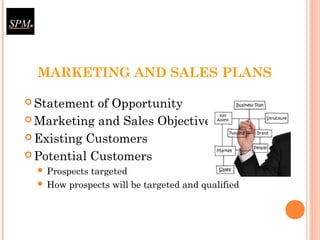
MARKETING AND SALES PLANS
 Statement of Opportunity
 Marketing and Sales Objectives
 Existing Customers
 Potential Customers
 Prospects targeted
 How prospects will be targeted and qualified
MARKETING STRATEGIES
 Product/Service Strategy
 Pricing Strategy
 Distribution Strategy
 Advertising and Promotion
Strategy
 Sales Strategy
 Marketing and Sales Forecasts
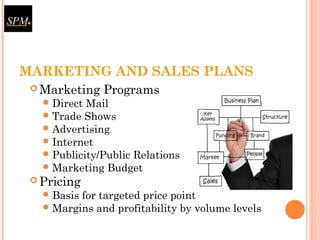
MARKETING AND SALES PLANS
 Marketing Programs
Direct Mail
Trade Shows
Advertising
Internet
Publicity/Public Relations
Marketing Budget
 Pricing
Basis for targeted price point
Margins and profitability by volume levels
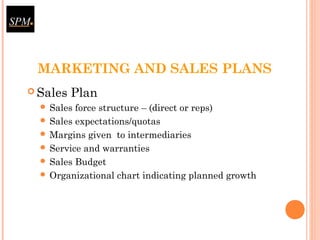
MARKETING AND SALES PLANS
 Sales Plan
 Sales force structure – (direct or reps)
 Sales expectations/quotas
 Margins given to intermediaries
 Service and warranties
 Sales Budget
 Organizational chart indicating planned growth
DEVELOPMENT
 R & D Plan
 Objectives
 Milestones and current status
 Difficulties and risks
 Staffing
 R & D Budget and assumptions
OPERATIONS
 Manufacturing/Production Plan
 Objectives
 Facilities
 Staffing
 Subcontractors
 Quality Control
 Budget / Operating Expenses
MANAGEMENT
 Company Organization
 Management Team
 Administrative Expenses
MANAGEMENT TEAM
 President
 VP Finance
 VP Sales
 VP Marketing
 VP Manufacturing
 Board of Advisors
PERSONNEL
 Human Resource Plan
 Staffing Objectives
 Organizational Structure
 3-5 year growth plan
 Budget
SUMMARY OF FINANCIALS
 Financial Objectives
 Time to Cash Flow Positive
 Time to profitability
 Financial Assumptions
 Capital Requirements
 Exit Scenario
FINANCIALS
 Pro-forma Cash Flow Projections
 Pro-forma Profit & Loss Statements
 Pro-forma Balance Sheet
OFFERING
 Investment Requirements
 Pro-forma Valuation of Business
 Offer
APPENDICES
 Resumes of Key Management
 Patent Information
 Customer List
 Testimonials
 Supplemental Financial Spreadsheets
 References
INVESTMENT CLIMATE
QUESTIONS?
?
Spm buisness plan presentation

Spm buisness plan presentation

  • 1.
    HOW TO WRITEA BANKABLE BUSINESS PLAN Paul Alaje
  • 2.
    Definitions and Relationships What is a Business Plan?  A business plan is a formal statement of business goals, reasons they are attainable, and plans for reaching them. It may also contain background information about the organization or team attempting to reach those goals.  What is A Business Proposal?  A business proposal is a written document sent to a prospective client in order to obtain a specific job. Proposals may be solicited or unsolicited. A client may simply request a proposal on a project in the course of a sales call by saying: "You know, that sounds interesting.  What is A Business Model?  a plan for the successful operation of a business, identifying sources of revenue, the intended customer base, products, and details of financing.
  • 3.
    WHY A BUSINESSPLAN?  Strategic Guide  Lenders  Investors
  • 4.
    STRATEGIC GUIDE  WhereDo You Want To Go?  How Are You Going to Get There?  What Market Niches?  How Much is it Going to Cost?  Greatest Profit Opportunity?
  • 5.
    LENDER EXPECTATIONS  GoodBusiness Track Record  Ability to Repay  Staying Power  Collateral
  • 6.
    INVESTOR EXPECTATIONS  CompetitiveAdvantage  Huge Market  Strong Management Team  Strong Marketing and Sales Plan  Some Skin in the Game  Exit Strategy
  • 7.
    ENTREPRENEURS START BUSINESSES:  ToCapitalize on an Invention  To Pursue a Passion  To Be Their Own Boss  To Get Rich  To Impact Others ---All Need an Exit Strategy
  • 8.
    EXIT STRATEGIES  Sellingthe Business  Transferring the Business to a Family Member  Taking the Company Public  Being Acquired by a Larger Company
  • 9.
    FUNDING SOURCES:  Savings Friends and Family and fools  Financial Institutions / Banks  Angel Investors  Venture Capital
  • 10.
    BUSINESS PLAN CONTENT Executive Summary  Company Description  Product/Services Description  Industry Overview  Market Analysis  Competitors
  • 11.
    BUSINESS PLAN CONTENT Customers  Marketing and Sales Plans  Development  Operations  Management
  • 12.
    BUSINESS PLAN CONTENT Personnel  Financial Summary  Financials  Offering  Appendices
  • 13.
    EXECUTIVE SUMMARY  Amini-business plan in four or ten pages  Highlights the most important points of your business plan  It is NOT an introduction to the plan  It must grab your reader, and entice him/her to read further
  • 14.
    EXECUTIVE SUMMARY  Identifythe company, its background, structure and location  Describe what the company does, and the market it serves  Describe the market potential for the company’s products and services, market trends, etc.
  • 15.
    EXECUTIVE SUMMARY  Outlinethe backgrounds and experience of the top management team  Describe the funding required, the purposes for which it will be used, the collateral available (if for a lender), and the expected outcomes
  • 16.
    COMPANY OVERVIEW  BriefCompany Introduction  Mission statement  Location, size, history  Market and products  Overview of company capabilities  Objectives
  • 17.
    PRODUCTS/SERVICES  Products /Services  What does it do?  Uniqueness  Competitive Advantage  Technology  Brief description  Applications  Commercialization Status  Brief overview
  • 18.
    INDUSTRY OVERVIEW  SetThe Stage  Industry Definition and Description  Major players within the industry  Factors driving dynamics  New products and developments  Legislation and Policies Driving the Industry  Historical and Future Trends
  • 19.
    MARKET ANALYSIS  MarketDefinition  Primary Market  Secondary Markets  Market Size and Trends  Current total revenues  Predicted annual growth rate
  • 20.
    COMPETITORS  Direct Competitors Who are they?  Size and product breadth  Revenues and profitability  Strengths and weaknesses  Market shares  Indirect Competitors
  • 21.
    CUSTOMERS  Customer Characteristics Who are they?  Why do they buy?  Need satisfied by the product/service  How is the need currently filled?  What are the alternatives?  Who makes the decision to buy?  How frequently do they purchase?
  • 22.
    MARKETING AND SALESPLANS  Statement of Opportunity  Marketing and Sales Objectives  Existing Customers  Potential Customers  Prospects targeted  How prospects will be targeted and qualified
  • 23.
    MARKETING STRATEGIES  Product/ServiceStrategy  Pricing Strategy  Distribution Strategy  Advertising and Promotion Strategy  Sales Strategy  Marketing and Sales Forecasts
  • 24.
    MARKETING AND SALESPLANS  Marketing Programs Direct Mail Trade Shows Advertising Internet Publicity/Public Relations Marketing Budget  Pricing Basis for targeted price point Margins and profitability by volume levels
  • 25.
    MARKETING AND SALESPLANS  Sales Plan  Sales force structure – (direct or reps)  Sales expectations/quotas  Margins given to intermediaries  Service and warranties  Sales Budget  Organizational chart indicating planned growth
  • 26.
    DEVELOPMENT  R &D Plan  Objectives  Milestones and current status  Difficulties and risks  Staffing  R & D Budget and assumptions
  • 27.
    OPERATIONS  Manufacturing/Production Plan Objectives  Facilities  Staffing  Subcontractors  Quality Control  Budget / Operating Expenses
  • 28.
    MANAGEMENT  Company Organization Management Team  Administrative Expenses
  • 29.
    MANAGEMENT TEAM  President VP Finance  VP Sales  VP Marketing  VP Manufacturing  Board of Advisors
  • 30.
    PERSONNEL  Human ResourcePlan  Staffing Objectives  Organizational Structure  3-5 year growth plan  Budget
  • 31.
    SUMMARY OF FINANCIALS Financial Objectives  Time to Cash Flow Positive  Time to profitability  Financial Assumptions  Capital Requirements  Exit Scenario
  • 32.
    FINANCIALS  Pro-forma CashFlow Projections  Pro-forma Profit & Loss Statements  Pro-forma Balance Sheet
  • 33.
    OFFERING  Investment Requirements Pro-forma Valuation of Business  Offer
  • 34.
    APPENDICES  Resumes ofKey Management  Patent Information  Customer List  Testimonials  Supplemental Financial Spreadsheets  References
  • 35.
  • 36.