J E S S I C A E S T E P
L I S A B U R D U E
C A R L Y A M A T I S T O
Spina Bifida
What is Spina Bifida
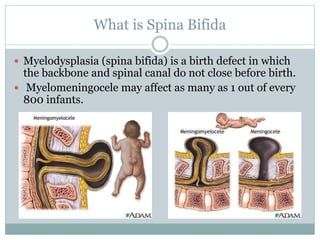
 Myelodysplasia (spina bifida) is a birth defect in which
the backbone and spinal canal do not close before birth.
 Myelomeningocele may affect as many as 1 out of every
800 infants.
Types of Spina Bifida
Spina Bifida cases include :
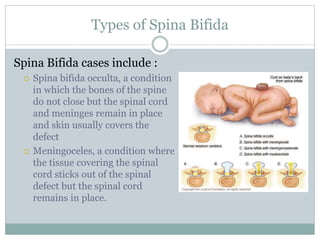
 Spina bifida occulta, a condition
in which the bones of the spine
do not close but the spinal cord
and meninges remain in place
and skin usually covers the
defect
 Meningoceles, a condition where
the tissue covering the spinal
cord sticks out of the spinal
defect but the spinal cord
remains in place.
A Closer Look
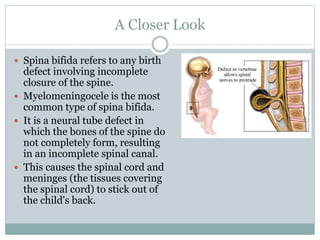
 Spina bifida refers to any birth
defect involving incomplete
closure of the spine.
 Myelomeningocele is the most
common type of spina bifida.
 It is a neural tube defect in
which the bones of the spine do
not completely form, resulting
in an incomplete spinal canal.
 This causes the spinal cord and
meninges (the tissues covering
the spinal cord) to stick out of
the child's back.
Symptoms
A newborn may have a sac sticking out of the mid to lower back.
The doctor cannot see through the sac when shining a light
behind it. Symptoms include:
 Loss of bladder or bowel control
 Partial or complete lack of sensation
 Partial or complete paralysis of the legs
 Weakness of the hips, legs, or feet of a newborn
 Other symptoms may include:
 Abnormal feet or legs, such as clubfoot
 Build up of fluid inside the skull (hydrocephalus)
 Hair at the back part of the pelvis called the sacral area
 Dimpling of the sacral area
 Possible medications
E X P L A I N S H Y D R O C E P H A L U S
Dr. Puppet
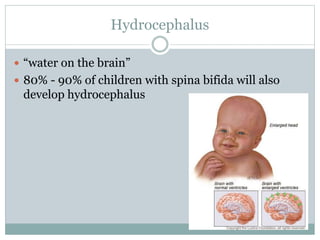
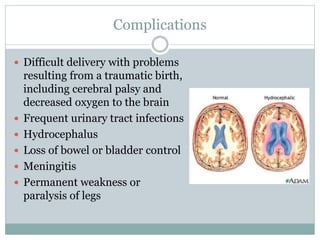
Hydrocephalus
 “water on the brain”
 80% - 90% of children with spina bifida will also
develop hydrocephalus
What is Hydrocephalus?
 Excess cerebral spinal fluid (CSF) in the brain which
causes the brain tissue to swell
 As the brain swells it presses against the skull, and
causes pressure on the brain tissue
 If untreated, this can cause seizures, vomiting,
irritability, sleepiness and brain damage
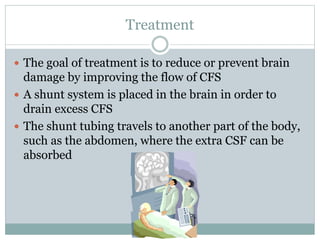
Treatment
 The goal of treatment is to reduce or prevent brain
damage by improving the flow of CFS
 A shunt system is placed in the brain in order to
drain excess CFS
 The shunt tubing travels to another part of the body,
such as the abdomen, where the extra CSF can be
absorbed
And Now… I Shall Demonstrate
 Any volunteers?
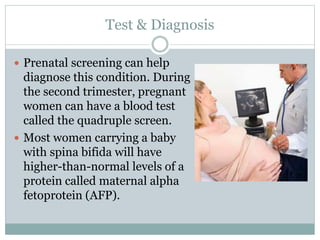
Test & Diagnosis
 Prenatal screening can help
diagnose this condition. During
the second trimester, pregnant
women can have a blood test
called the quadruple screen.
 Most women carrying a baby
with spina bifida will have
higher-than-normal levels of a
protein called maternal alpha
fetoprotein (AFP).
Prognosis
 Myelomeningocele can usually be surgically corrected.
With treatment, length of life is not severely affected.
Neurological damage is often irreversible.
 Many individuals with spina bifida primarily use a
wheelchair.
Life long issues include:
 more loss of function as well as orthopedic problems
such as scoliosis
 foot or ankle deformities
 dislocated hips
 joint tightness or contractures
 Infections within the shunt system
Prevention
 Folic acid supplements may help reduce the risk of
neural tube defects such as myelomeningocele. It is
recommended that any woman considering
becoming pregnant take 0.4 mg of folic acid a day.
Pregnant women need 1 mg per day.
 It is important to remember that folic acid
deficiencies must be corrected before becoming
pregnant as the defects develop very early.
 Prospective mothers may be screened to determine
the amount of folic acid in their blood.
Complications
 Difficult delivery with problems
resulting from a traumatic birth,
including cerebral palsy and
decreased oxygen to the brain
 Frequent urinary tract infections
 Hydrocephalus
 Loss of bowel or bladder control
 Meningitis
 Permanent weakness or
paralysis of legs
Treatment
 Genetic counseling may be recommended.
 Surgery to repair the defect is usually recommended
at an early age.
 Children who also have hydrocephalus may need a
ventricular peritoneal shunt placed. This will help
drain the extra fluid.
Treatments Continued
Most children will require lifelong treatment for
problems that result from damage to the spinal cord
and spinal nerves. This includes:
 Catheters
 Braces
 High fiber diet
 Antibiotics may be used to treat or prevent infections
such as meningitis or urinary tract infections.
Implications for Recreation
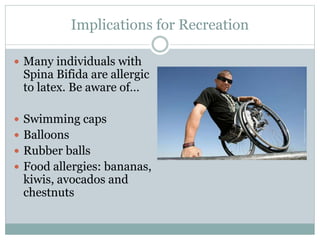
 Many individuals with
Spina Bifida are allergic
to latex. Be aware of…
 Swimming caps
 Balloons
 Rubber balls
 Food allergies: bananas,
kiwis, avocados and
chestnuts
Recreation Ideas
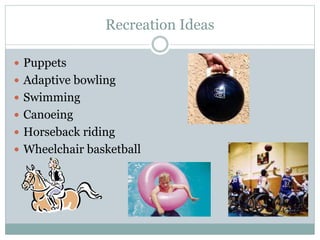
 Puppets
 Adaptive bowling
 Swimming
 Canoeing
 Horseback riding
 Wheelchair basketball
Support Groups
 http://www.waisman.wisc.edu/~Rowley/sb-
kids/index.html A resource for families and
providers
 Spina Bifida Association- Regional and National
 http://spina-bifida-bibliography.blogspot.com
 http://www.shrinershq.org/Hospitals/Main/:
Shriners Children Hospital
References
 https://health.google.com/health/ref/Myelomening
ocele
 http://www.medicinenet.com/spina_bifida_and_an
encephaly/index.htm
 http://www.waisman.wisc.edu/~Rowley/sb-
kids/index.html

Spinabifida1 100428132439-phpapp02

  • 1.
    J E SS I C A E S T E P L I S A B U R D U E C A R L Y A M A T I S T O Spina Bifida
  • 2.
    What is SpinaBifida  Myelodysplasia (spina bifida) is a birth defect in which the backbone and spinal canal do not close before birth.  Myelomeningocele may affect as many as 1 out of every 800 infants.
  • 3.
    Types of SpinaBifida Spina Bifida cases include :  Spina bifida occulta, a condition in which the bones of the spine do not close but the spinal cord and meninges remain in place and skin usually covers the defect  Meningoceles, a condition where the tissue covering the spinal cord sticks out of the spinal defect but the spinal cord remains in place.
  • 4.
    A Closer Look Spina bifida refers to any birth defect involving incomplete closure of the spine.  Myelomeningocele is the most common type of spina bifida.  It is a neural tube defect in which the bones of the spine do not completely form, resulting in an incomplete spinal canal.  This causes the spinal cord and meninges (the tissues covering the spinal cord) to stick out of the child's back.
  • 5.
    Symptoms A newborn mayhave a sac sticking out of the mid to lower back. The doctor cannot see through the sac when shining a light behind it. Symptoms include:  Loss of bladder or bowel control  Partial or complete lack of sensation  Partial or complete paralysis of the legs  Weakness of the hips, legs, or feet of a newborn  Other symptoms may include:  Abnormal feet or legs, such as clubfoot  Build up of fluid inside the skull (hydrocephalus)  Hair at the back part of the pelvis called the sacral area  Dimpling of the sacral area  Possible medications
  • 6.
    E X PL A I N S H Y D R O C E P H A L U S Dr. Puppet
  • 7.
    Hydrocephalus  “water onthe brain”  80% - 90% of children with spina bifida will also develop hydrocephalus
  • 8.
    What is Hydrocephalus? Excess cerebral spinal fluid (CSF) in the brain which causes the brain tissue to swell  As the brain swells it presses against the skull, and causes pressure on the brain tissue  If untreated, this can cause seizures, vomiting, irritability, sleepiness and brain damage
  • 9.
    Treatment  The goalof treatment is to reduce or prevent brain damage by improving the flow of CFS  A shunt system is placed in the brain in order to drain excess CFS  The shunt tubing travels to another part of the body, such as the abdomen, where the extra CSF can be absorbed
  • 10.
    And Now… IShall Demonstrate  Any volunteers?
  • 11.
    Test & Diagnosis Prenatal screening can help diagnose this condition. During the second trimester, pregnant women can have a blood test called the quadruple screen.  Most women carrying a baby with spina bifida will have higher-than-normal levels of a protein called maternal alpha fetoprotein (AFP).
  • 12.
    Prognosis  Myelomeningocele canusually be surgically corrected. With treatment, length of life is not severely affected. Neurological damage is often irreversible.  Many individuals with spina bifida primarily use a wheelchair. Life long issues include:  more loss of function as well as orthopedic problems such as scoliosis  foot or ankle deformities  dislocated hips  joint tightness or contractures  Infections within the shunt system
  • 13.
    Prevention  Folic acidsupplements may help reduce the risk of neural tube defects such as myelomeningocele. It is recommended that any woman considering becoming pregnant take 0.4 mg of folic acid a day. Pregnant women need 1 mg per day.  It is important to remember that folic acid deficiencies must be corrected before becoming pregnant as the defects develop very early.  Prospective mothers may be screened to determine the amount of folic acid in their blood.
  • 14.
    Complications  Difficult deliverywith problems resulting from a traumatic birth, including cerebral palsy and decreased oxygen to the brain  Frequent urinary tract infections  Hydrocephalus  Loss of bowel or bladder control  Meningitis  Permanent weakness or paralysis of legs
  • 15.
    Treatment  Genetic counselingmay be recommended.  Surgery to repair the defect is usually recommended at an early age.  Children who also have hydrocephalus may need a ventricular peritoneal shunt placed. This will help drain the extra fluid.
  • 16.
    Treatments Continued Most childrenwill require lifelong treatment for problems that result from damage to the spinal cord and spinal nerves. This includes:  Catheters  Braces  High fiber diet  Antibiotics may be used to treat or prevent infections such as meningitis or urinary tract infections.
  • 17.
    Implications for Recreation Many individuals with Spina Bifida are allergic to latex. Be aware of…  Swimming caps  Balloons  Rubber balls  Food allergies: bananas, kiwis, avocados and chestnuts
  • 18.
    Recreation Ideas  Puppets Adaptive bowling  Swimming  Canoeing  Horseback riding  Wheelchair basketball
  • 19.
    Support Groups  http://www.waisman.wisc.edu/~Rowley/sb- kids/index.htmlA resource for families and providers  Spina Bifida Association- Regional and National  http://spina-bifida-bibliography.blogspot.com  http://www.shrinershq.org/Hospitals/Main/: Shriners Children Hospital
  • 20.