Geological formations
of the Southwest
Mountain
 A large natural

elevation of the
Earth’s surface
rising abruptly
from the
surrounding level
 Created by
geological uplift or
volcanic activity

Mt Humphreys
Arizona’s highest peak
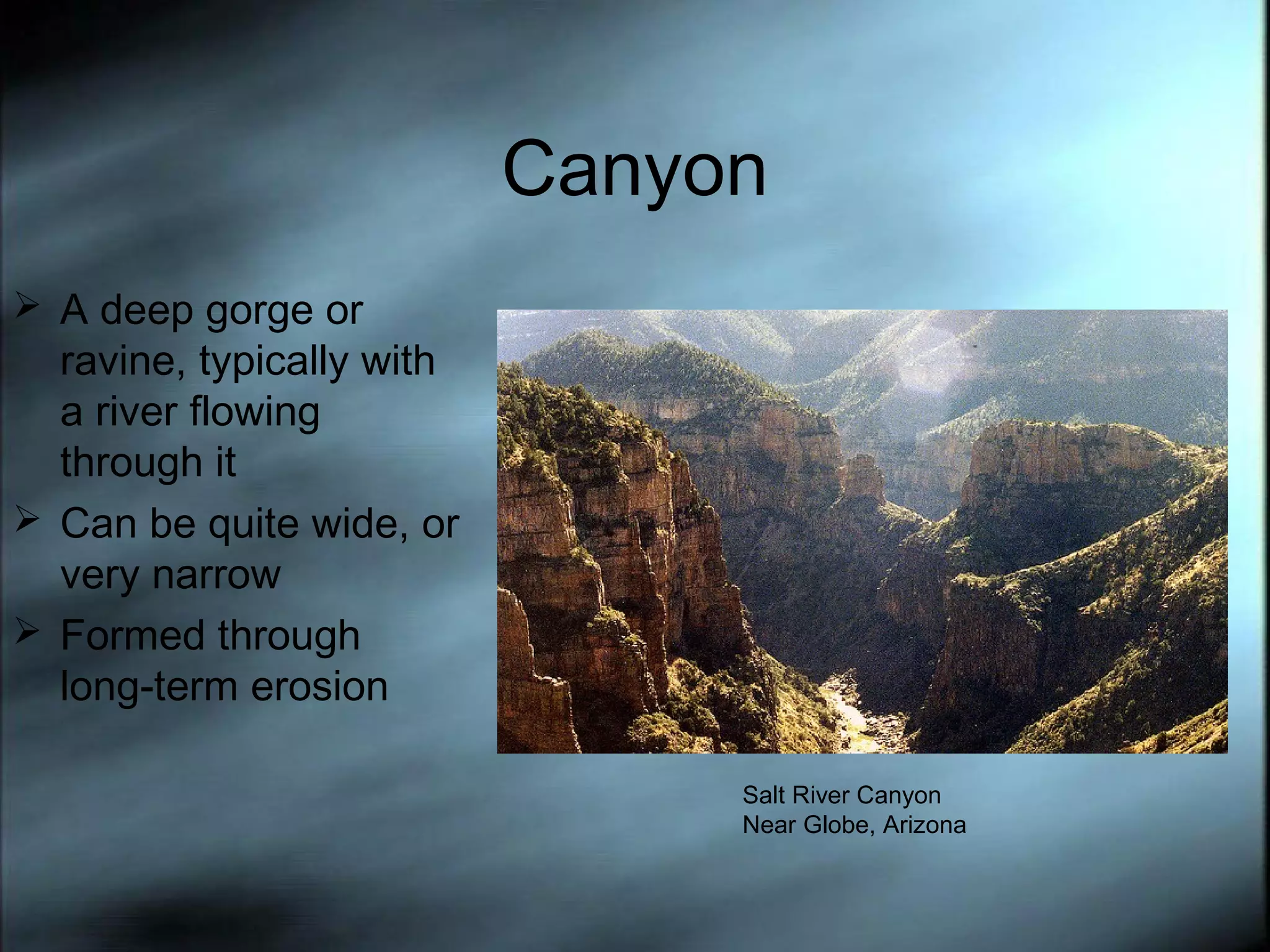
Canyon
 A deep gorge or

ravine, typically with
a river flowing
through it
 Can be quite wide, or
very narrow
 Formed through
long-term erosion
Salt River Canyon
Near Globe, Arizona
Slot Canyon
 A slot canyon is a

Antelope Canyon
Arizona

narrow canyon
formed by the wear
of water rushing
through rock
 Significantly deeper
than it is wide
 More dangerous for
hikers and adventure
seekers because of
the possibility of flash
floods in rainy
weather
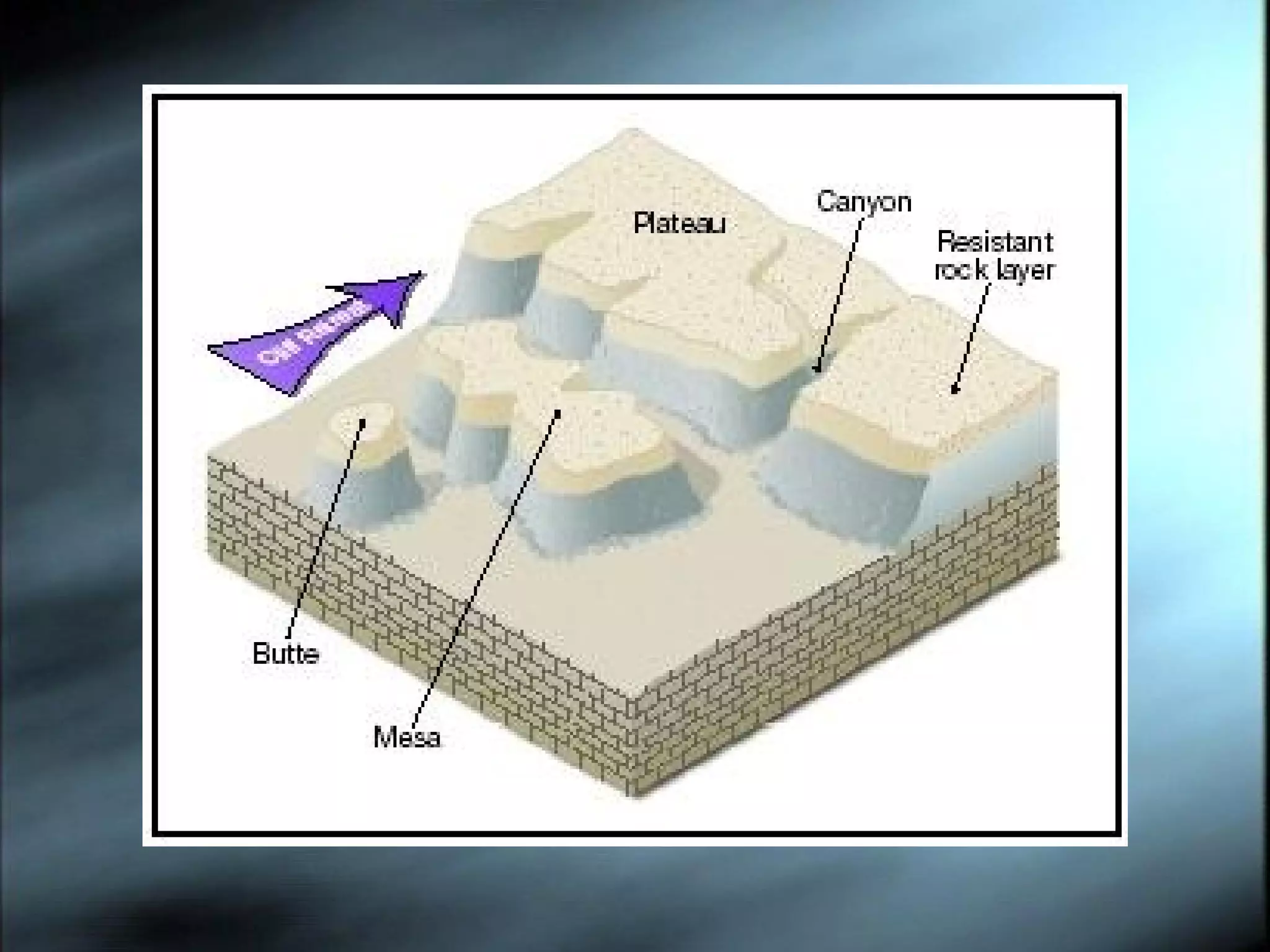
Plateau
 A large flat area

of land that is
higher than
other areas of
land that
surround it
 Often cut deep
by canyons
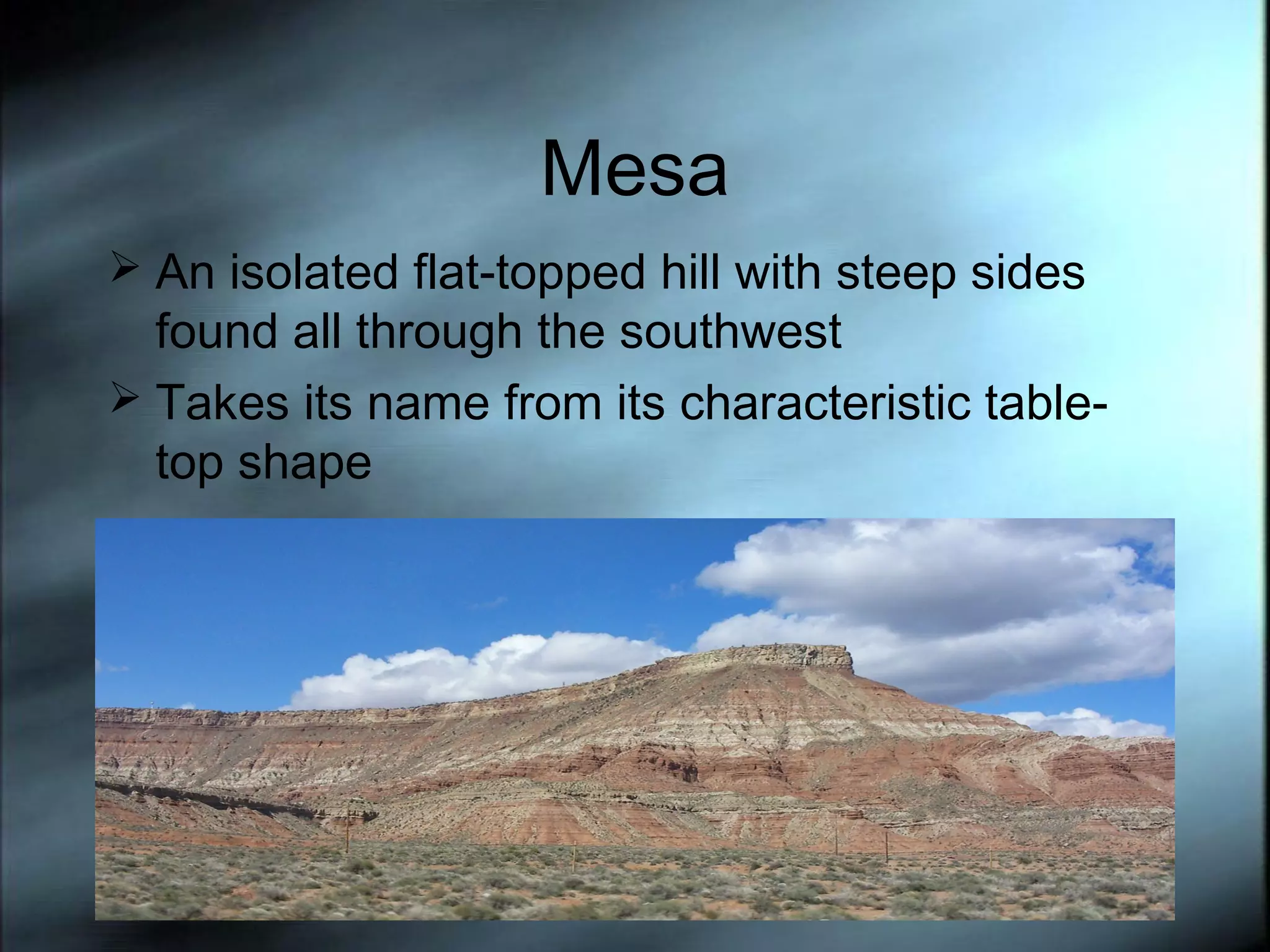
Mesa
 An isolated flat-topped hill with steep sides

found all through the southwest
 Takes its name from its characteristic tabletop shape
Butte
 Similar to a mesa

but narrower
 A butte
(pronounced
beaut) is an
isolated hill with
steep sides and
a small, relatively
flat top
Zion Park
Utah
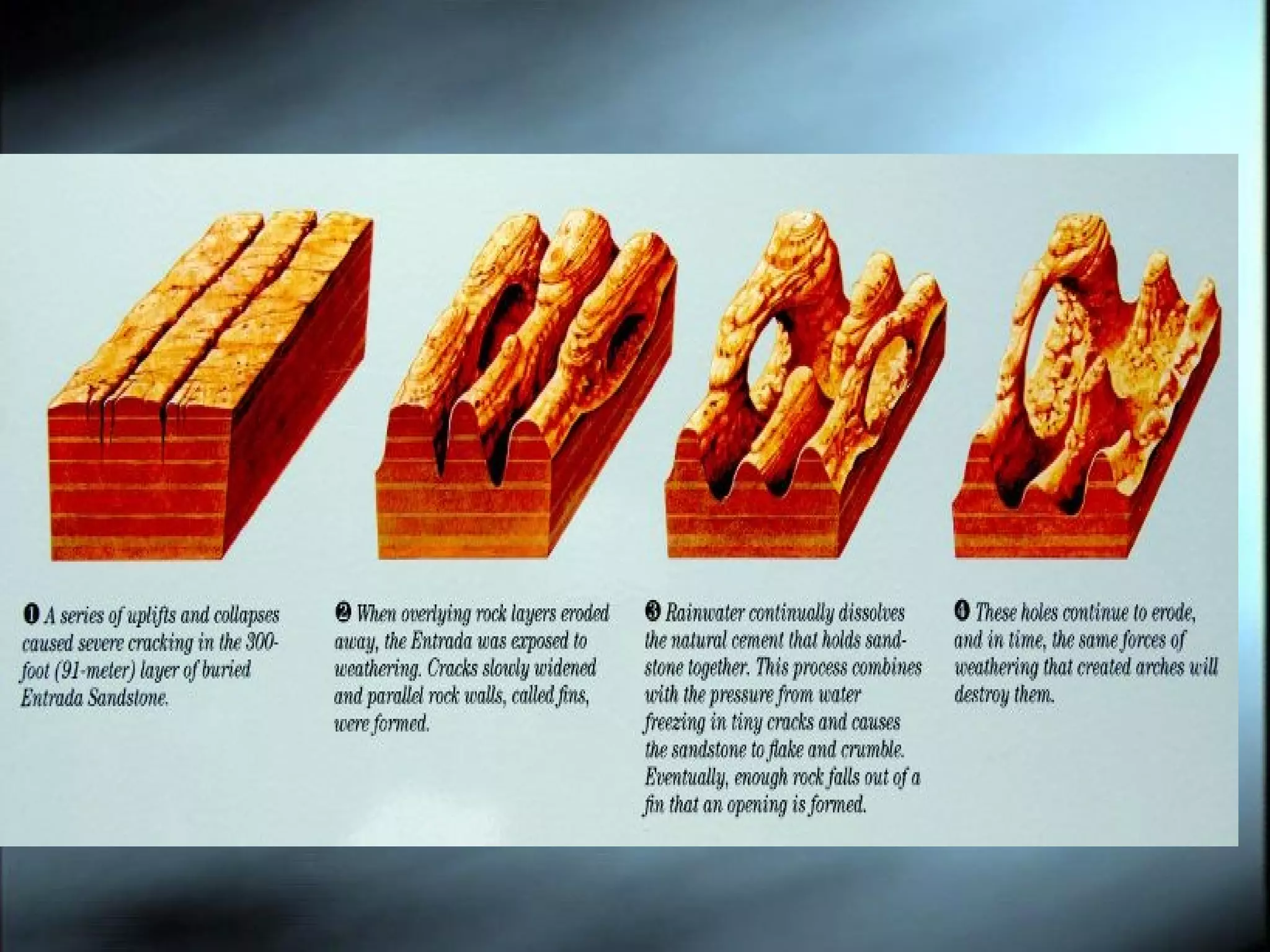
Arch
 A natural arch is a

Arches Park
Utah

rock formation with
an opening
underneath
 Formed by leftover
salt deposits
making deep
vertical cracks in
the rocks
 Erosion wears
away sections
forming fins which
are narrow walls of
sandstone
Gooseneck

 Sometimes the path of the water meanders

and winds back upon itself creating a
gooseneck shape
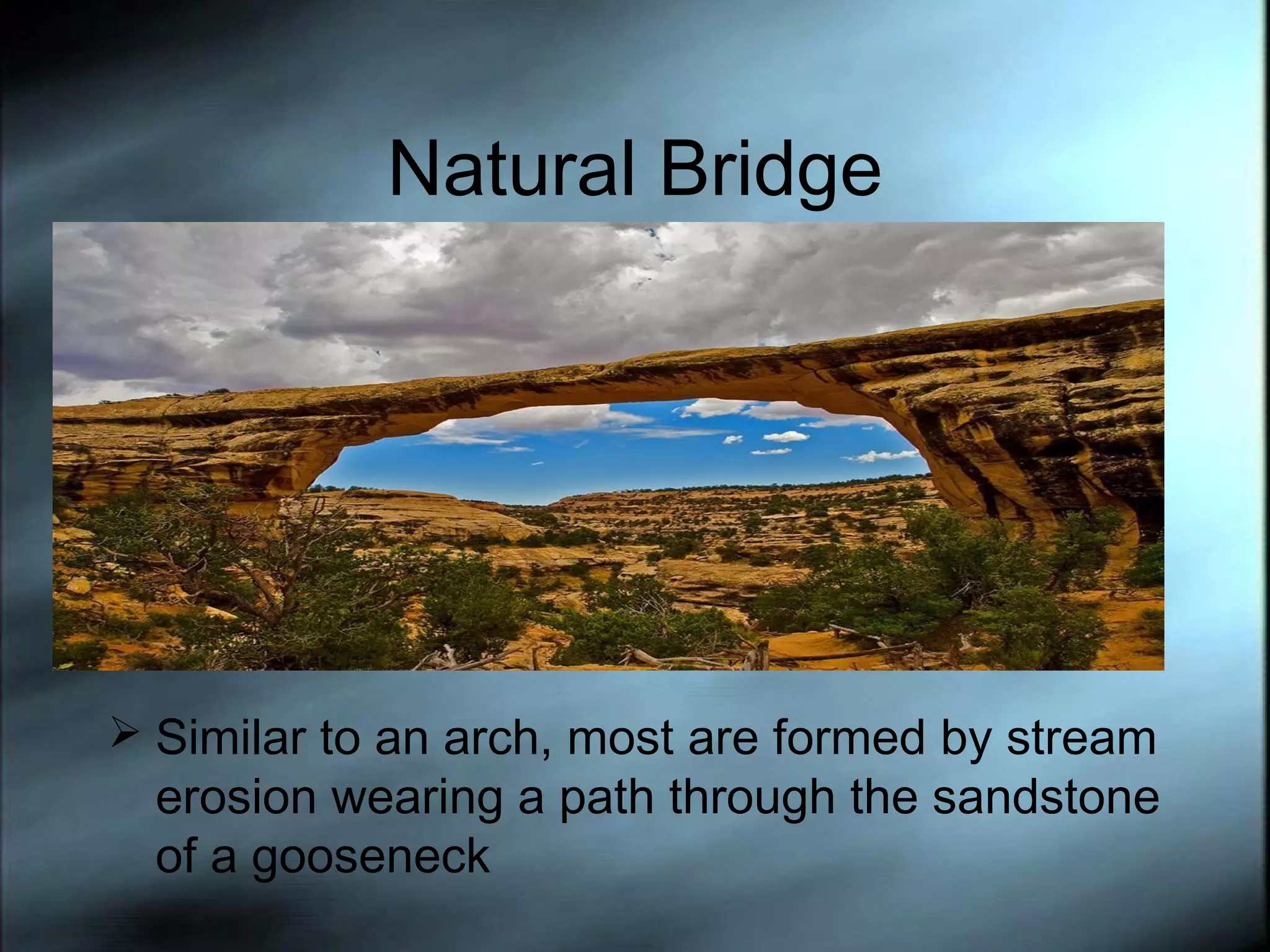
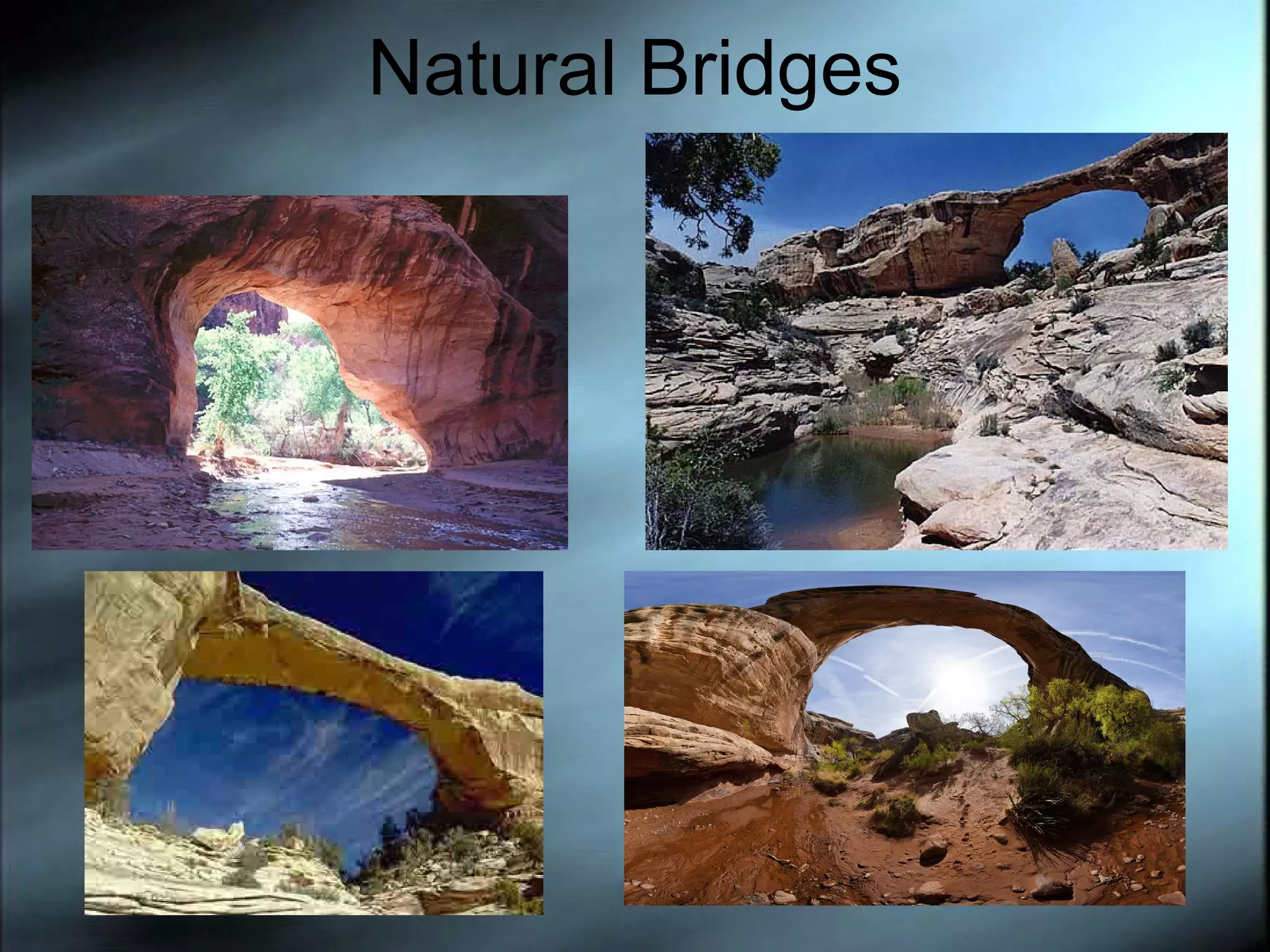
Natural Bridge

 Similar to an arch, most are formed by stream

erosion wearing a path through the sandstone
of a gooseneck
Goosenecks and Natural Bridges
Hoodoo

Bryce Canyon
Utah

 Rock pillars and spires formed by erosion of tiny

streams along the rim of a plateau
 Water moved over the steep slopes and carved out
gullies, which widened over time leaving thin blades
of rock
 Continued erosion of the rock walls left behind
vertical columns, called hoodoos
 Starts out with a sandstone plateau
 A Fin forms which is a thin vertical rock

formation
 A window forms, similar to an arch but in the
side of a rock
 Erosion cause the hoodoo to form
 The hoodoo will continue to erode, and
eventually disappear altogether
Hoodoos

Bryce Canyon
Utah

Northern Arizona

Southern Utah
Natural Bridges
Arches
Mesas

Northern Arizona

&

Buttes

Grand Canyon
Arizona

Zion park
Utah

Southwest formations

  • 1.
  • 2.
    Mountain  A largenatural elevation of the Earth’s surface rising abruptly from the surrounding level  Created by geological uplift or volcanic activity Mt Humphreys Arizona’s highest peak
  • 3.
    Canyon  A deepgorge or ravine, typically with a river flowing through it  Can be quite wide, or very narrow  Formed through long-term erosion Salt River Canyon Near Globe, Arizona
  • 4.
    Slot Canyon  Aslot canyon is a Antelope Canyon Arizona narrow canyon formed by the wear of water rushing through rock  Significantly deeper than it is wide  More dangerous for hikers and adventure seekers because of the possibility of flash floods in rainy weather
  • 5.
    Plateau  A largeflat area of land that is higher than other areas of land that surround it  Often cut deep by canyons
  • 6.
    Mesa  An isolatedflat-topped hill with steep sides found all through the southwest  Takes its name from its characteristic tabletop shape
  • 7.
    Butte  Similar toa mesa but narrower  A butte (pronounced beaut) is an isolated hill with steep sides and a small, relatively flat top Zion Park Utah
  • 10.
    Arch  A naturalarch is a Arches Park Utah rock formation with an opening underneath  Formed by leftover salt deposits making deep vertical cracks in the rocks  Erosion wears away sections forming fins which are narrow walls of sandstone
  • 12.
    Gooseneck  Sometimes thepath of the water meanders and winds back upon itself creating a gooseneck shape
  • 13.
    Natural Bridge  Similarto an arch, most are formed by stream erosion wearing a path through the sandstone of a gooseneck
  • 14.
  • 15.
    Hoodoo Bryce Canyon Utah  Rockpillars and spires formed by erosion of tiny streams along the rim of a plateau  Water moved over the steep slopes and carved out gullies, which widened over time leaving thin blades of rock  Continued erosion of the rock walls left behind vertical columns, called hoodoos
  • 16.
     Starts outwith a sandstone plateau  A Fin forms which is a thin vertical rock formation  A window forms, similar to an arch but in the side of a rock  Erosion cause the hoodoo to form  The hoodoo will continue to erode, and eventually disappear altogether
  • 17.
  • 18.
  • 19.
  • 20.