M E A N I N G
S o l i d s u r f a c e i s a m a n - m a d e m a t e r i a l u s u a l l y
c o m p o s e d o f a c o m b i n a t i o n o f m a r b l e d u s t ,
b a u x i t e , a c r y l i c , e p o x y o r p o l y e s t e r r e s i n s a n d
p i g m e n t s .
I t i s m o s t f r e q u e n t l y u s e d f o r s e a m l e s s
c o u n t e r t o p i n s t a l l a t i o n s .
S o l i d s u r f a c e w a s f i r s t i n t r o d u c e d b y d u p o n t
i n 1 9 6 7 u n d e r t h e n a m e o f c o r i a n . S i n c e t h e
e x p i r a t i o n o f t h e i r p a t e n t , o t h e r m a n u f a c t u r e r s
h a v e a l s o i n t r o d u c e d t h e i r b r a n d s a s w e l l .
CONTENTS
1 Performance characteristics
2 Availability
3 Manufacture
4 Fabrication
4.1 Materials
4.2 Tools
5 Applications
6 Advantages and disadvantages
7 Finishes
8 Texture
1. PERFORMANCE CHARACTERISTICS
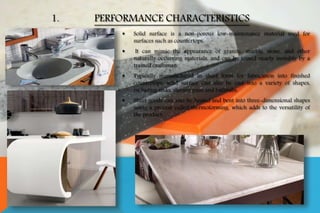
 Solid surface is a non-porous low-maintenance material used for
surfaces such as countertops.
 It can mimic the appearance of granite, marble, stone, and other
naturally occurring materials, and can be joined nearly invisibly by a
trained craftsman.
 Typically manufactured in sheet form for fabrication into finished
countertops, solid surface can also be cast into a variety of shapes,
including sinks, shower pans and bathtubs.
 Sheet goods can also be heated and bent into three-dimensional shapes
using a process called thermoforming, which adds to the versatility of
the product.
 In a residential setting, solid surface can be used as
kitchen countertops,
 bathroom vanity tops, and shower and tub surrounds.
 Countertop fabricators typically join solid surface sheets
into desired shapes using a two-part adhesive, after
which the cured joint is machined flat.
 The same method is used to build up edge thickness,
which can be profiled using tools and techniques similar
to those used to work hardwoods.
 Solid surface is available in hundreds of colors and visual
textures, ranging from solid colors to sparkling,
marbleized, or granite effect.
 Cultured marble, cultured granite, and cultured onyx
describe solid surfaces colored to resemble natural stone.
 Dozens of multinational companies manufacture solid
surface sheet goods and sinks for the world market; and
hundreds of smaller, regional manufacturers produce for
local markets
2. AVAILABILITY
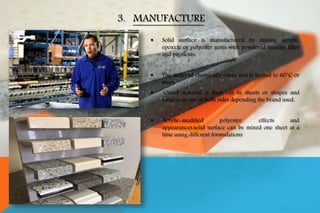
 Solid surface is manufactured by mixing acrylic,
epoxide or polyester resin with powdered bauxite filler
and pigments.
 The material chemically cures and is heated to 60°C or
more.
 Cured material is then cut in sheets or shapes and
sanded on one or both sides depending the brand used.
 Acrylic-modified polyester, effects and
appearances.solid surface can be mixed one sheet at a
time using different formulations
3. MANUFACTURE
 Acrylic-modified polyester solid surface can be injected
into molds to produce various solid decorative design
figures.
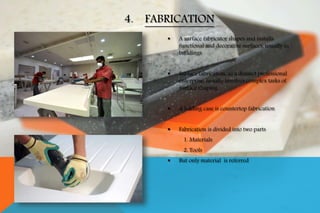
 A surface fabricator shapes and installs
functional and decorative surfaces, usually in
buildings.
 Surface fabrication, as a distinct professional
enterprise, usually involves complex tasks of
surface shaping.
 A leading case is countertop fabrication
 Fabrication is divided into two parts
1. Materials
2. Tools
 But only material is referred
4. FABRICATION
 For interior spaces, surfaces include solid
coverings or decking for floors or walls, and
countertops for kitchens, bathrooms, and
workspaces.
 Natural surfaces are composed of naturally
occurring materials like wood, stone, mineral,
clay, gum and resin.
 Synthetic surfaces contain, in addition to any
natural materials, man-made substances such as
metal alloys or polymers.
 Solid surfaces are synthetic surfaces
manufactured from polymeric materials.
4.1 FABRICATION (MATERIALS)
 Kitchen/Bathroom: kitchen worktops with
integrated sink, vanity countertop, bath tub
etc.
 Hospitality/Catering: bars, tables, reception
desks etc.
 Shop Fitting: displays, counters, wall cladding
etc.[3]
 Airports: check-in counters
 Public buildings: displays in museums,
facades, meeting tables etc.
 Hospitals: laboratory countertops,
decontamination sinks etc.
5. APPLICATIONS
Advantages:
 It is a solid durable material
 There are a wide range of colours textures and patterns
 It cleans easily with soap and water
 Resists most stains
 Inexpensive
Disadvantages:
 Seams may be visible
 Seams susceptible to prolonged water exposure
 It can chip or scratch. Some finishes are more resistant than others.
 It cannot be used as a chopping surface, but really no other counter should be either.
 It is not resistant to heat. The glue that binds the laminate to the substrate can release.
6. ADVANTAGES AND DISADVANTAGES
When selecting a surface finish, keep in mind the traction needed and the
intended users.
 Polished : This surface is very smooth. Polished crystals bring out the
brilliant colors and grains of natural stone. The shine comes from the
natural reflection of the stones crystals. (Minimum traction)
 Honed : Provides a flat, smooth low sheen and is commonly used for
high traffic areas. (Medium traction)
 Antiqued : Has low sheen with a semi-smooth textured surface that
can appear and feel similar to leather. (Medium traction)
 Sand Blasted : This rough surface is the results of a pressurized flow
of sand that provides a textured finish, commonly referred to as
etched. (Maximum traction)
 Flamed : This is a very rough surface that is developed during
fabrication. The stone is wet and heated to cause only the surface
crystals to pop loose from stone
7. FINISHES
Everything has a texture or a surface.
 Texture can be;
 Rough
 Slick
 Smooth
 Scratchy
 Silky
 Soft
 Prickly
 Multiple color
 …… T he list is endless
8. TEXTURES
Solid surface ppt

Solid surface ppt

  • 1.
    M E AN I N G S o l i d s u r f a c e i s a m a n - m a d e m a t e r i a l u s u a l l y c o m p o s e d o f a c o m b i n a t i o n o f m a r b l e d u s t , b a u x i t e , a c r y l i c , e p o x y o r p o l y e s t e r r e s i n s a n d p i g m e n t s . I t i s m o s t f r e q u e n t l y u s e d f o r s e a m l e s s c o u n t e r t o p i n s t a l l a t i o n s . S o l i d s u r f a c e w a s f i r s t i n t r o d u c e d b y d u p o n t i n 1 9 6 7 u n d e r t h e n a m e o f c o r i a n . S i n c e t h e e x p i r a t i o n o f t h e i r p a t e n t , o t h e r m a n u f a c t u r e r s h a v e a l s o i n t r o d u c e d t h e i r b r a n d s a s w e l l .
  • 2.
    CONTENTS 1 Performance characteristics 2Availability 3 Manufacture 4 Fabrication 4.1 Materials 4.2 Tools 5 Applications 6 Advantages and disadvantages 7 Finishes 8 Texture
  • 3.
    1. PERFORMANCE CHARACTERISTICS Solid surface is a non-porous low-maintenance material used for surfaces such as countertops.  It can mimic the appearance of granite, marble, stone, and other naturally occurring materials, and can be joined nearly invisibly by a trained craftsman.  Typically manufactured in sheet form for fabrication into finished countertops, solid surface can also be cast into a variety of shapes, including sinks, shower pans and bathtubs.  Sheet goods can also be heated and bent into three-dimensional shapes using a process called thermoforming, which adds to the versatility of the product.
  • 4.
     In aresidential setting, solid surface can be used as kitchen countertops,  bathroom vanity tops, and shower and tub surrounds.  Countertop fabricators typically join solid surface sheets into desired shapes using a two-part adhesive, after which the cured joint is machined flat.  The same method is used to build up edge thickness, which can be profiled using tools and techniques similar to those used to work hardwoods.
  • 5.
     Solid surfaceis available in hundreds of colors and visual textures, ranging from solid colors to sparkling, marbleized, or granite effect.  Cultured marble, cultured granite, and cultured onyx describe solid surfaces colored to resemble natural stone.  Dozens of multinational companies manufacture solid surface sheet goods and sinks for the world market; and hundreds of smaller, regional manufacturers produce for local markets 2. AVAILABILITY
  • 6.
     Solid surfaceis manufactured by mixing acrylic, epoxide or polyester resin with powdered bauxite filler and pigments.  The material chemically cures and is heated to 60°C or more.  Cured material is then cut in sheets or shapes and sanded on one or both sides depending the brand used.  Acrylic-modified polyester, effects and appearances.solid surface can be mixed one sheet at a time using different formulations 3. MANUFACTURE
  • 7.
     Acrylic-modified polyestersolid surface can be injected into molds to produce various solid decorative design figures.
  • 8.
     A surfacefabricator shapes and installs functional and decorative surfaces, usually in buildings.  Surface fabrication, as a distinct professional enterprise, usually involves complex tasks of surface shaping.  A leading case is countertop fabrication  Fabrication is divided into two parts 1. Materials 2. Tools  But only material is referred 4. FABRICATION
  • 9.
     For interiorspaces, surfaces include solid coverings or decking for floors or walls, and countertops for kitchens, bathrooms, and workspaces.  Natural surfaces are composed of naturally occurring materials like wood, stone, mineral, clay, gum and resin.  Synthetic surfaces contain, in addition to any natural materials, man-made substances such as metal alloys or polymers.  Solid surfaces are synthetic surfaces manufactured from polymeric materials. 4.1 FABRICATION (MATERIALS)
  • 10.
     Kitchen/Bathroom: kitchenworktops with integrated sink, vanity countertop, bath tub etc.  Hospitality/Catering: bars, tables, reception desks etc.  Shop Fitting: displays, counters, wall cladding etc.[3]  Airports: check-in counters  Public buildings: displays in museums, facades, meeting tables etc.  Hospitals: laboratory countertops, decontamination sinks etc. 5. APPLICATIONS
  • 12.
    Advantages:  It isa solid durable material  There are a wide range of colours textures and patterns  It cleans easily with soap and water  Resists most stains  Inexpensive Disadvantages:  Seams may be visible  Seams susceptible to prolonged water exposure  It can chip or scratch. Some finishes are more resistant than others.  It cannot be used as a chopping surface, but really no other counter should be either.  It is not resistant to heat. The glue that binds the laminate to the substrate can release. 6. ADVANTAGES AND DISADVANTAGES
  • 13.
    When selecting asurface finish, keep in mind the traction needed and the intended users.  Polished : This surface is very smooth. Polished crystals bring out the brilliant colors and grains of natural stone. The shine comes from the natural reflection of the stones crystals. (Minimum traction)  Honed : Provides a flat, smooth low sheen and is commonly used for high traffic areas. (Medium traction)  Antiqued : Has low sheen with a semi-smooth textured surface that can appear and feel similar to leather. (Medium traction)  Sand Blasted : This rough surface is the results of a pressurized flow of sand that provides a textured finish, commonly referred to as etched. (Maximum traction)  Flamed : This is a very rough surface that is developed during fabrication. The stone is wet and heated to cause only the surface crystals to pop loose from stone 7. FINISHES
  • 14.
    Everything has atexture or a surface.  Texture can be;  Rough  Slick  Smooth  Scratchy  Silky  Soft  Prickly  Multiple color  …… T he list is endless 8. TEXTURES