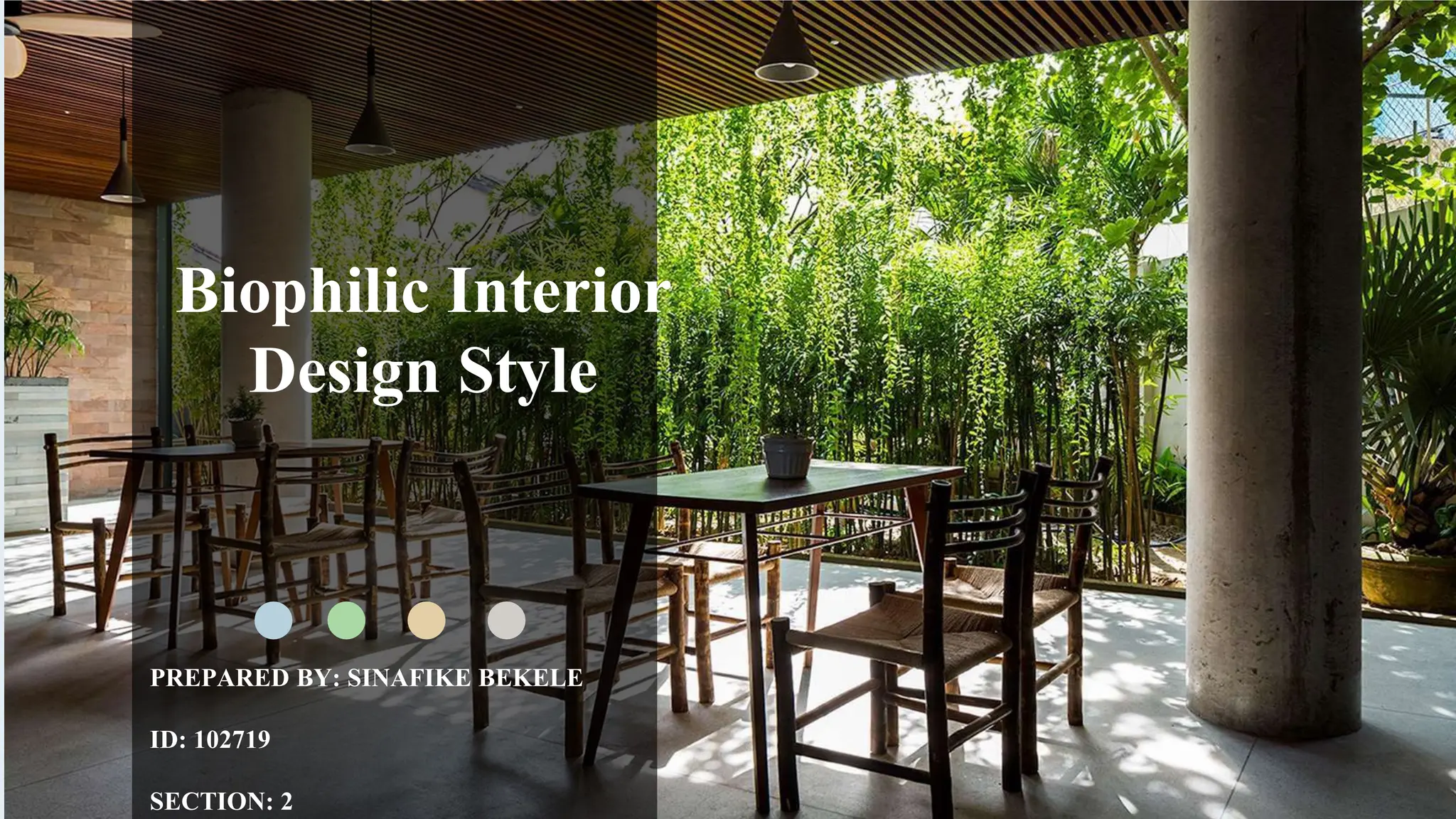
Biophilic Interior
Design Style
PREPARED BY: SINAFIKE BEKELE
ID: 102719
SECTION: 2
Design Theories in Biophilic Design Interior Design
Biophilic Design
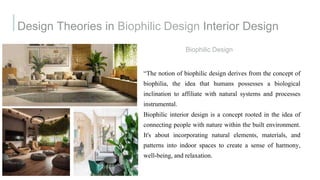
“The notion of biophilic design derives from the concept of
biophilia, the idea that humans possesses a biological
inclination to affiliate with natural systems and processes
instrumental.
Biophilic interior design is a concept rooted in the idea of
connecting people with nature within the built environment.
It's about incorporating natural elements, materials, and
patterns into indoor spaces to create a sense of harmony,
well-being, and relaxation.
Cont....
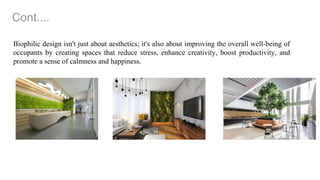
Biophilic design isn't just about aesthetics; it's also about improving the overall well-being of
occupants by creating spaces that reduce stress, enhance creativity, boost productivity, and
promote a sense of calmness and happiness.
Uniqueness of Biophilic interior Design style from other interior
design styles
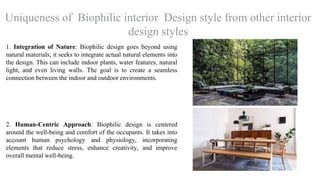
1. Integration of Nature: Biophilic design goes beyond using
natural materials; it seeks to integrate actual natural elements into
the design. This can include indoor plants, water features, natural
light, and even living walls. The goal is to create a seamless
connection between the indoor and outdoor environments.
2. Human-Centric Approach: Biophilic design is centered
around the well-being and comfort of the occupants. It takes into
account human psychology and physiology, incorporating
elements that reduce stress, enhance creativity, and improve
overall mental well-being.
Cont...
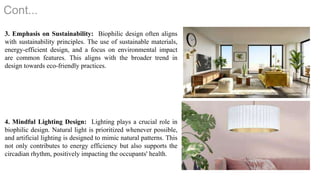
3. Emphasis on Sustainability: Biophilic design often aligns
with sustainability principles. The use of sustainable materials,
energy-efficient design, and a focus on environmental impact
are common features. This aligns with the broader trend in
design towards eco-friendly practices.
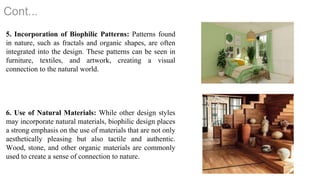
4. Mindful Lighting Design: Lighting plays a crucial role in
biophilic design. Natural light is prioritized whenever possible,
and artificial lighting is designed to mimic natural patterns. This
not only contributes to energy efficiency but also supports the
circadian rhythm, positively impacting the occupants' health.
Cont...
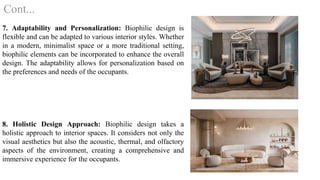
5. Incorporation of Biophilic Patterns: Patterns found
in nature, such as fractals and organic shapes, are often
integrated into the design. These patterns can be seen in
furniture, textiles, and artwork, creating a visual
connection to the natural world.
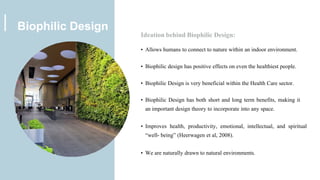
6. Use of Natural Materials: While other design styles
may incorporate natural materials, biophilic design places
a strong emphasis on the use of materials that are not only
aesthetically pleasing but also tactile and authentic.
Wood, stone, and other organic materials are commonly
used to create a sense of connection to nature.
Cont...
7. Adaptability and Personalization: Biophilic design is
flexible and can be adapted to various interior styles. Whether
in a modern, minimalist space or a more traditional setting,
biophilic elements can be incorporated to enhance the overall
design. The adaptability allows for personalization based on
the preferences and needs of the occupants.
8. Holistic Design Approach: Biophilic design takes a
holistic approach to interior spaces. It considers not only the
visual aesthetics but also the acoustic, thermal, and olfactory
aspects of the environment, creating a comprehensive and
immersive experience for the occupants.
Ideation behind Biophilic Design:
• Allows humans to connect to nature within an indoor environment.
• Biophilic design has positive effects on even the healthiest people.
• Biophilic Design is very beneficial within the Health Care sector.
• Biophilic Design has both short and long term benefits, making it
an important design theory to incorporate into any space.
• Improves health, productivity, emotional, intellectual, and spiritual
“well- being” (Heerwagen et al, 2008).
• We are naturally drawn to natural environments.
Biophilic Design
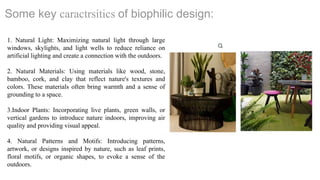
Some key caractrsitics of biophilic design:
1. Natural Light: Maximizing natural light through large
windows, skylights, and light wells to reduce reliance on
artificial lighting and create a connection with the outdoors.
2. Natural Materials: Using materials like wood, stone,
bamboo, cork, and clay that reflect nature's textures and
colors. These materials often bring warmth and a sense of
grounding to a space.
3.Indoor Plants: Incorporating live plants, green walls, or
vertical gardens to introduce nature indoors, improving air
quality and providing visual appeal.
4. Natural Patterns and Motifs: Introducing patterns,
artwork, or designs inspired by nature, such as leaf prints,
floral motifs, or organic shapes, to evoke a sense of the
outdoors.
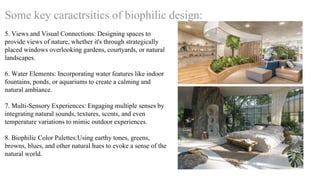
Some key caractrsitics of biophilic design:
5. Views and Visual Connections: Designing spaces to
provide views of nature, whether it's through strategically
placed windows overlooking gardens, courtyards, or natural
landscapes.
6. Water Elements: Incorporating water features like indoor
fountains, ponds, or aquariums to create a calming and
natural ambiance.
7. Multi-Sensory Experiences: Engaging multiple senses by
integrating natural sounds, textures, scents, and even
temperature variations to mimic outdoor experiences.
8. Biophilic Color Palettes:Using earthy tones, greens,
browns, blues, and other natural hues to evoke a sense of the
natural world.
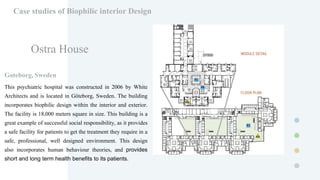
Goteborg, Sweden
This psychiatric hospital was constructed in 2006 by White
Architects and is located in Göteborg, Sweden. The building
incorporates biophilic design within the interior and exterior.
The facility is 18,000 meters square in size. This building is a
great example of successful social responsibility, as it provides
a safe facility for patients to get the treatment they require in a
safe, professional, well designed environment. This design
also incorporates human behaviour theories, and provides
short and long term health benefits to its patients.
Ostra House
Case studies of Biophilic interior Design
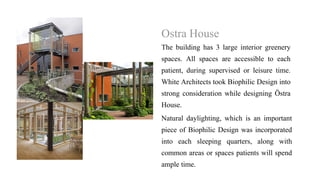
Ostra House
The building has 3 large interior greenery
spaces. All spaces are accessible to each
patient, during supervised or leisure time.
White Architects took Biophilic Design into
strong consideration while designing Östra
House.
Natural daylighting, which is an important
piece of Biophilic Design was incorporated
into each sleeping quarters, along with
common areas or spaces patients will spend
ample time.
Figure 7
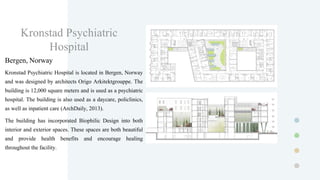
Kronstad Psychiatric
Hospital
Bergen, Norway
Kronstad Psychiatric Hospital is located in Bergen, Norway
and was designed by architects Origo Arkitektgrouppe. The
building is 12,000 square meters and is used as a psychiatric
hospital. The building is also used as a daycare, policlinics,
as well as inpatient care (ArchDaily, 2013).
The building has incorporated Biophilic Design into both
interior and exterior spaces. These spaces are both beautiful
and provide health benefits and encourage healing
throughout the facility.
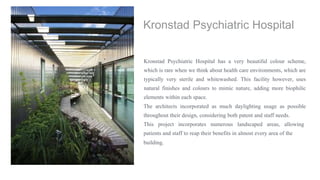
Kronstad Psychiatric Hospital has a very beautiful colour scheme,
which is rare when we think about health care environments, which are
typically very sterile and whitewashed. This facility however, uses
natural finishes and colours to mimic nature, adding more biophilic
elements within each space.
The architects incorporated as much daylighting usage as possible
throughout their design, considering both patent and staff needs.
This project incorporates numerous landscaped areas, allowing
patients and staff to reap their benefits in almost every area of the
building.
Kronstad Psychiatric Hospital
References:
Mindel, L. (2013). Alvar Aalto’s Paimio Sanatorium in Finland. Retrieved from
https://www.architecturaldigest.com/story/paimio-sanatorium-alvar-aalto-architecture-visit-finland-blog.
Muscato, C. (2018). Functionalist Atchitecture: Definition & Characteristics. Retrieved from
https://study.com/academy/lesson/functionalist-architecture-definition-characteristics.html.
Vaija, M. (2018). Alvar Aalto and the colors of the Paimio Sanatorium. Retrieved from
https://www.finnishdesignshop.com/architecture/alvar-aalto-and-the-colors-of-the-paimio-sanatorium.
Wikiarquitectura. (n.d.). Paimio Sanatorium. Retrieved from
https://en.wikiarquitectura.com/building/paimio- sanatorium/.
World Architecture News. (2010). Shaking things up. Retrieved from
http://www.worldarchitecturenews.com/project/2010/15161/zerodegree-architecture/shaken-office-in-
groningen.html.
Zumstein, K. (2010). Yushi Uehara’s Shaken Office. Retrieved from
https://www.onofficemagazine.com/architecture/item/957-yushi-uehara-s-shaken-office.

BIOPHILIC INTERIOR DESIGN STYLE .pptx

  • 1.
    Biophilic Interior Design Style PREPAREDBY: SINAFIKE BEKELE ID: 102719 SECTION: 2
  • 2.
    Design Theories inBiophilic Design Interior Design Biophilic Design “The notion of biophilic design derives from the concept of biophilia, the idea that humans possesses a biological inclination to affiliate with natural systems and processes instrumental. Biophilic interior design is a concept rooted in the idea of connecting people with nature within the built environment. It's about incorporating natural elements, materials, and patterns into indoor spaces to create a sense of harmony, well-being, and relaxation.
  • 3.
    Cont.... Biophilic design isn'tjust about aesthetics; it's also about improving the overall well-being of occupants by creating spaces that reduce stress, enhance creativity, boost productivity, and promote a sense of calmness and happiness.
  • 4.
    Uniqueness of Biophilicinterior Design style from other interior design styles 1. Integration of Nature: Biophilic design goes beyond using natural materials; it seeks to integrate actual natural elements into the design. This can include indoor plants, water features, natural light, and even living walls. The goal is to create a seamless connection between the indoor and outdoor environments. 2. Human-Centric Approach: Biophilic design is centered around the well-being and comfort of the occupants. It takes into account human psychology and physiology, incorporating elements that reduce stress, enhance creativity, and improve overall mental well-being.
  • 5.
    Cont... 3. Emphasis onSustainability: Biophilic design often aligns with sustainability principles. The use of sustainable materials, energy-efficient design, and a focus on environmental impact are common features. This aligns with the broader trend in design towards eco-friendly practices. 4. Mindful Lighting Design: Lighting plays a crucial role in biophilic design. Natural light is prioritized whenever possible, and artificial lighting is designed to mimic natural patterns. This not only contributes to energy efficiency but also supports the circadian rhythm, positively impacting the occupants' health.
  • 6.
    Cont... 5. Incorporation ofBiophilic Patterns: Patterns found in nature, such as fractals and organic shapes, are often integrated into the design. These patterns can be seen in furniture, textiles, and artwork, creating a visual connection to the natural world. 6. Use of Natural Materials: While other design styles may incorporate natural materials, biophilic design places a strong emphasis on the use of materials that are not only aesthetically pleasing but also tactile and authentic. Wood, stone, and other organic materials are commonly used to create a sense of connection to nature.
  • 7.
    Cont... 7. Adaptability andPersonalization: Biophilic design is flexible and can be adapted to various interior styles. Whether in a modern, minimalist space or a more traditional setting, biophilic elements can be incorporated to enhance the overall design. The adaptability allows for personalization based on the preferences and needs of the occupants. 8. Holistic Design Approach: Biophilic design takes a holistic approach to interior spaces. It considers not only the visual aesthetics but also the acoustic, thermal, and olfactory aspects of the environment, creating a comprehensive and immersive experience for the occupants.
  • 8.
    Ideation behind BiophilicDesign: • Allows humans to connect to nature within an indoor environment. • Biophilic design has positive effects on even the healthiest people. • Biophilic Design is very beneficial within the Health Care sector. • Biophilic Design has both short and long term benefits, making it an important design theory to incorporate into any space. • Improves health, productivity, emotional, intellectual, and spiritual “well- being” (Heerwagen et al, 2008). • We are naturally drawn to natural environments. Biophilic Design
  • 9.
    Some key caractrsiticsof biophilic design: 1. Natural Light: Maximizing natural light through large windows, skylights, and light wells to reduce reliance on artificial lighting and create a connection with the outdoors. 2. Natural Materials: Using materials like wood, stone, bamboo, cork, and clay that reflect nature's textures and colors. These materials often bring warmth and a sense of grounding to a space. 3.Indoor Plants: Incorporating live plants, green walls, or vertical gardens to introduce nature indoors, improving air quality and providing visual appeal. 4. Natural Patterns and Motifs: Introducing patterns, artwork, or designs inspired by nature, such as leaf prints, floral motifs, or organic shapes, to evoke a sense of the outdoors.
  • 10.
    Some key caractrsiticsof biophilic design: 5. Views and Visual Connections: Designing spaces to provide views of nature, whether it's through strategically placed windows overlooking gardens, courtyards, or natural landscapes. 6. Water Elements: Incorporating water features like indoor fountains, ponds, or aquariums to create a calming and natural ambiance. 7. Multi-Sensory Experiences: Engaging multiple senses by integrating natural sounds, textures, scents, and even temperature variations to mimic outdoor experiences. 8. Biophilic Color Palettes:Using earthy tones, greens, browns, blues, and other natural hues to evoke a sense of the natural world.
  • 11.
    Goteborg, Sweden This psychiatrichospital was constructed in 2006 by White Architects and is located in Göteborg, Sweden. The building incorporates biophilic design within the interior and exterior. The facility is 18,000 meters square in size. This building is a great example of successful social responsibility, as it provides a safe facility for patients to get the treatment they require in a safe, professional, well designed environment. This design also incorporates human behaviour theories, and provides short and long term health benefits to its patients. Ostra House Case studies of Biophilic interior Design
  • 12.
    Ostra House The buildinghas 3 large interior greenery spaces. All spaces are accessible to each patient, during supervised or leisure time. White Architects took Biophilic Design into strong consideration while designing Östra House. Natural daylighting, which is an important piece of Biophilic Design was incorporated into each sleeping quarters, along with common areas or spaces patients will spend ample time. Figure 7
  • 13.
    Kronstad Psychiatric Hospital Bergen, Norway KronstadPsychiatric Hospital is located in Bergen, Norway and was designed by architects Origo Arkitektgrouppe. The building is 12,000 square meters and is used as a psychiatric hospital. The building is also used as a daycare, policlinics, as well as inpatient care (ArchDaily, 2013). The building has incorporated Biophilic Design into both interior and exterior spaces. These spaces are both beautiful and provide health benefits and encourage healing throughout the facility.
  • 14.
    Kronstad Psychiatric Hospitalhas a very beautiful colour scheme, which is rare when we think about health care environments, which are typically very sterile and whitewashed. This facility however, uses natural finishes and colours to mimic nature, adding more biophilic elements within each space. The architects incorporated as much daylighting usage as possible throughout their design, considering both patent and staff needs. This project incorporates numerous landscaped areas, allowing patients and staff to reap their benefits in almost every area of the building. Kronstad Psychiatric Hospital
  • 15.
    References: Mindel, L. (2013).Alvar Aalto’s Paimio Sanatorium in Finland. Retrieved from https://www.architecturaldigest.com/story/paimio-sanatorium-alvar-aalto-architecture-visit-finland-blog. Muscato, C. (2018). Functionalist Atchitecture: Definition & Characteristics. Retrieved from https://study.com/academy/lesson/functionalist-architecture-definition-characteristics.html. Vaija, M. (2018). Alvar Aalto and the colors of the Paimio Sanatorium. Retrieved from https://www.finnishdesignshop.com/architecture/alvar-aalto-and-the-colors-of-the-paimio-sanatorium. Wikiarquitectura. (n.d.). Paimio Sanatorium. Retrieved from https://en.wikiarquitectura.com/building/paimio- sanatorium/. World Architecture News. (2010). Shaking things up. Retrieved from http://www.worldarchitecturenews.com/project/2010/15161/zerodegree-architecture/shaken-office-in- groningen.html. Zumstein, K. (2010). Yushi Uehara’s Shaken Office. Retrieved from https://www.onofficemagazine.com/architecture/item/957-yushi-uehara-s-shaken-office.