Solar Energy 
Solar energy: is simply, energy provided by the sun. 
This energy is in the form of solar radiation, which 
makes the production of solar electricity possible. 
A simple example of the power of the sun can be 
seen by using a magnifying glass to focus the suns 
rays on a piece of paper. Before long the paper 
ignites into flames.
Renewable Energy 
Renewable energy is energy generated from natural 
resources such as sunlight, wind, water and biomass 
heat etc. 
Renewable energy is also called "clean energy" or 
"green power" because it doesn't pollute the air or 
the water.
Like the propeller blades of an airplane, wind turbine 
blades use the moving air to power an electric 
generator that supplies an electric current. 
Have you ever used a magnifying glass to make 
something melt or burn? If yes, than you were using 
solar power!
Hydro means "water" in Greek - so "hydro power" is 
energy made from water. 
Have you ever seen pictures of a volcano or a 
geyser? If so, then you've seen geothermal energy in 
action!
Solar cell 
Solar cells are devices that convert light energy directly 
into electrical energy. 
A solar cell (or a "photovoltaic" cell) is a device that 
converts photons from the sun (solar light) into 
electricity 
Light travels in packets of energy called photons 
Solar cells are typically 100 cm2 to 225 cm2 in size. 
The usable voltage from silicon solar cells is 
approximately 0.5 V to 0.6 V.
Construction of “PV Cell” 
Photovoltaic cells are made of at least two layers 
of semiconducting material. 
The first layer has a positive charge the next layer has a 
negative charge. 
When sunlight strikes the cell, the semiconducting 
material absorbs photons from the light. This process 
frees electrons from the negative layer, which move to 
the positive layer.
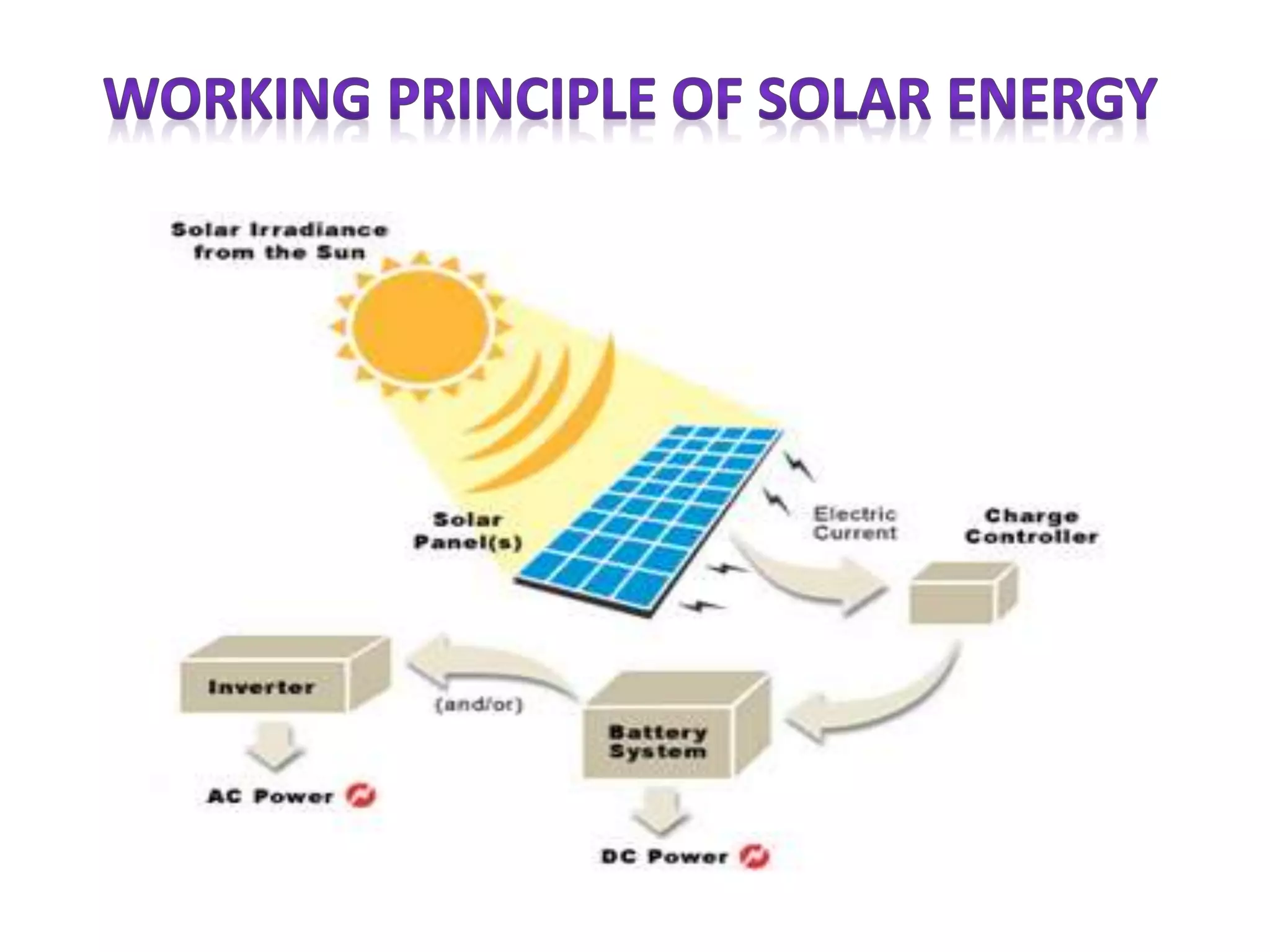
This flow of electrons constitutes an electric current, 
which can be captured in a circuit connecting the two 
layers. 
The electricity generated by a PV cell can be used 
directly, stored in batteries the electricity produced 
called (DC) for the conversation of DC to AC a device 
is used called inverter. 
High-efficiency solar cells are made from purified 
silicon. Constructing these devices requires specialized 
equipment and extensive resources.
Photovoltaic Effect 
“photovoltaic effect” when sunshine hits the PV 
cell, the photons of light excite the electrons in 
the cell and cause them to flow, generating 
electricity.
Module 
A number of solar cells electrically connected to each 
other and mounted in a support structure or frame is 
called a photovoltaic module. 
Modules are designed to supply electricity at a certain 
voltage, such as a common 12 volts system. The 
current produced is directly dependent on how much 
light strikes the module.
Array 
Multiple modules can be wired together to form an array 
In general, the larger the area of a module or array, the 
more electricity that will be produced. 
Photovoltaic modules and arrays produce direct current 
(dc) electricity. They can be connected in both series 
and parallel electrical arrangements to produce any 
required voltage and current combination.
Soler energy
Soler energy

Soler energy

  • 2.
    Solar Energy Solarenergy: is simply, energy provided by the sun. This energy is in the form of solar radiation, which makes the production of solar electricity possible. A simple example of the power of the sun can be seen by using a magnifying glass to focus the suns rays on a piece of paper. Before long the paper ignites into flames.
  • 3.
    Renewable Energy Renewableenergy is energy generated from natural resources such as sunlight, wind, water and biomass heat etc. Renewable energy is also called "clean energy" or "green power" because it doesn't pollute the air or the water.
  • 4.
    Like the propellerblades of an airplane, wind turbine blades use the moving air to power an electric generator that supplies an electric current. Have you ever used a magnifying glass to make something melt or burn? If yes, than you were using solar power!
  • 5.
    Hydro means "water"in Greek - so "hydro power" is energy made from water. Have you ever seen pictures of a volcano or a geyser? If so, then you've seen geothermal energy in action!
  • 6.
    Solar cell Solarcells are devices that convert light energy directly into electrical energy. A solar cell (or a "photovoltaic" cell) is a device that converts photons from the sun (solar light) into electricity Light travels in packets of energy called photons Solar cells are typically 100 cm2 to 225 cm2 in size. The usable voltage from silicon solar cells is approximately 0.5 V to 0.6 V.
  • 7.
    Construction of “PVCell” Photovoltaic cells are made of at least two layers of semiconducting material. The first layer has a positive charge the next layer has a negative charge. When sunlight strikes the cell, the semiconducting material absorbs photons from the light. This process frees electrons from the negative layer, which move to the positive layer.
  • 8.
    This flow ofelectrons constitutes an electric current, which can be captured in a circuit connecting the two layers. The electricity generated by a PV cell can be used directly, stored in batteries the electricity produced called (DC) for the conversation of DC to AC a device is used called inverter. High-efficiency solar cells are made from purified silicon. Constructing these devices requires specialized equipment and extensive resources.
  • 9.
    Photovoltaic Effect “photovoltaiceffect” when sunshine hits the PV cell, the photons of light excite the electrons in the cell and cause them to flow, generating electricity.
  • 11.
    Module A numberof solar cells electrically connected to each other and mounted in a support structure or frame is called a photovoltaic module. Modules are designed to supply electricity at a certain voltage, such as a common 12 volts system. The current produced is directly dependent on how much light strikes the module.
  • 13.
    Array Multiple modulescan be wired together to form an array In general, the larger the area of a module or array, the more electricity that will be produced. Photovoltaic modules and arrays produce direct current (dc) electricity. They can be connected in both series and parallel electrical arrangements to produce any required voltage and current combination.