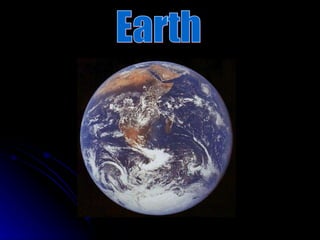
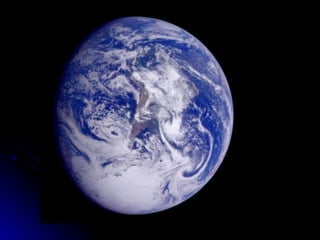
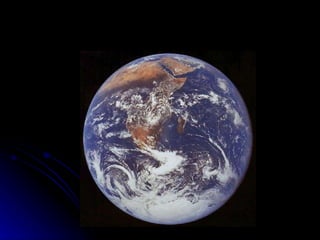
Earth
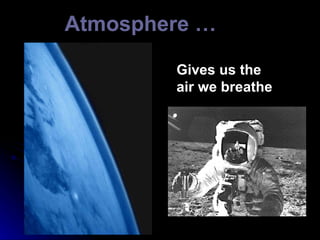
Atmosphere … Gives us the air we breathe
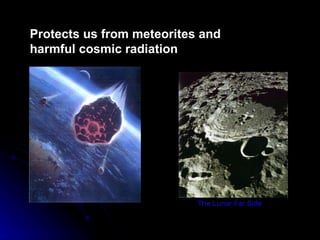
Protects us from meteorites and harmful cosmic radiation
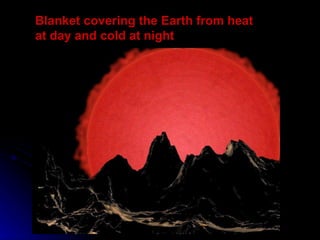
Blanket covering the Earth from heat at day and cold at night
 
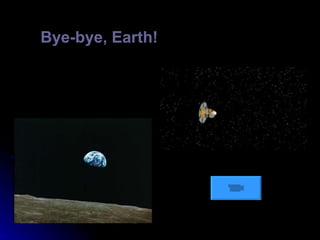
Bye-bye, Earth!
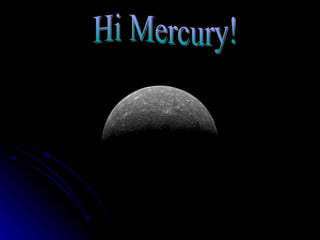
Hi Mercury!
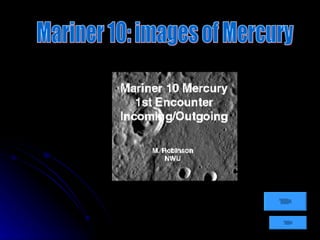
Mariner 10: images of Mercury
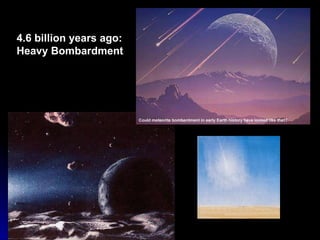
4.6 billion years ago: Heavy Bombardment
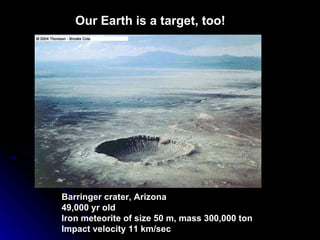
Barringer crater, Arizona 49,000 yr old Iron meteorite of size 50 m, mass 300,000 ton Impact velocity 11 km/sec Our Earth is a target, too!
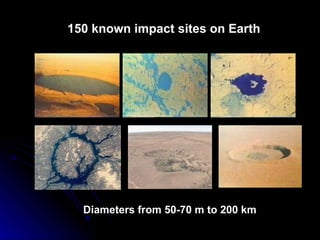
150 known impact sites on Earth Diameters from 50-70 m to 200 km
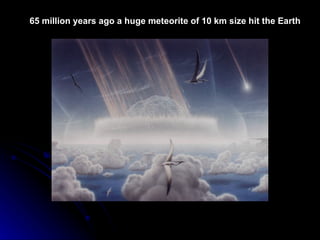
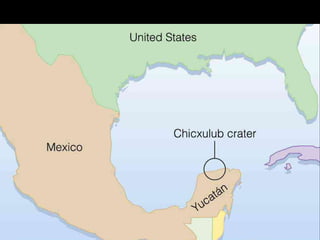
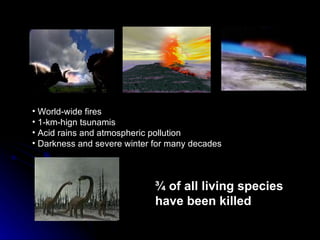
65 million years ago a huge meteorite of 10 km size hit the Earth
 
World-wide fires 1-km-hign tsunamis Acid rains and atmospheric pollution Darkness and severe winter for many decades  ¾ of all living species have been killed
 
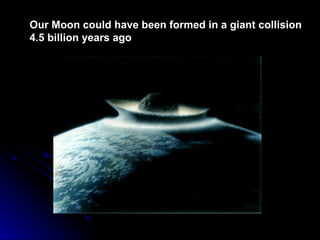
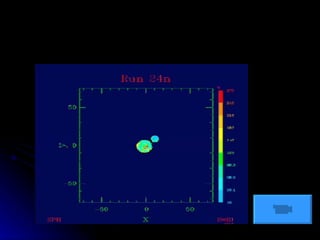
Our Moon could have been formed in a giant collision 4.5 billion years ago
 
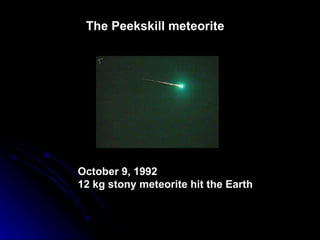
The Peekskill meteorite October 9, 1992 12 kg stony meteorite hit the Earth
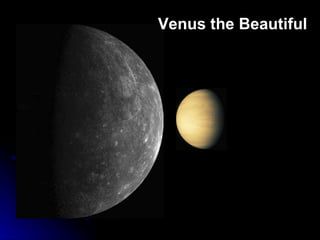
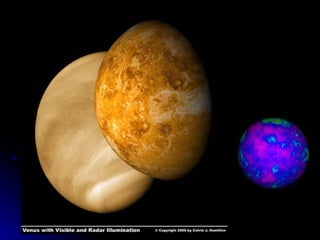
Venus the Beautiful
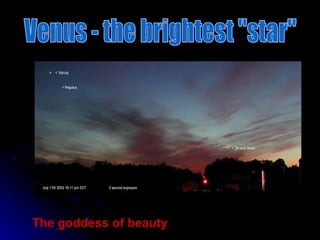
Venus - the brightest "star" The goddess of beauty
 
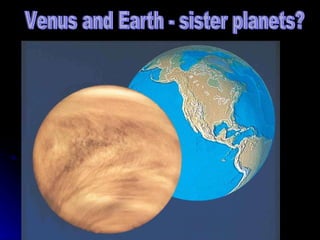
Venus and Earth - sister planets?
 
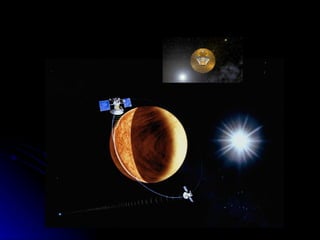
Flight over Venus
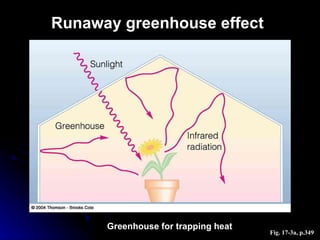
Fig. 17-3a, p.349 Greenhouse for trapping heat Runaway greenhouse effect
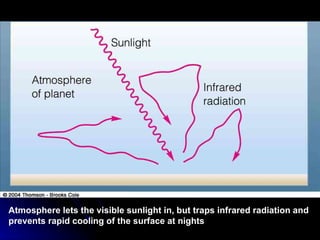
Atmosphere lets the visible sunlight in, but traps infrared radiation and prevents rapid cooling of the surface at nights
 
 
"It will be possible to see cities on Mars, to detect navies in [its] harbors, and the smoke of great manufacturing cities and towns... Is Mars inhabited? There can be little doubt of it ... conditions are all favorable for life, and life, too, of a high order. Is it possible to know this of a certainty? Certainly."   Samuel Leland 1895 Seasons on Mars? Channels for irrigation ???
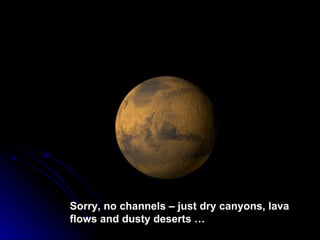
Sorry, no channels – just dry canyons, lava flows and dusty deserts …
 
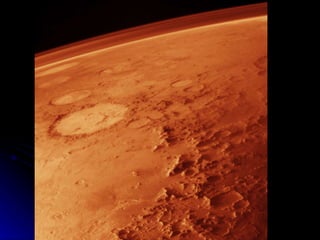
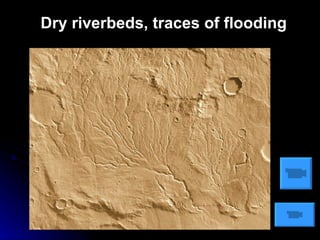
Dry riverbeds, traces of flooding
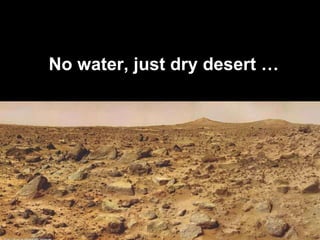
No water, just dry desert …
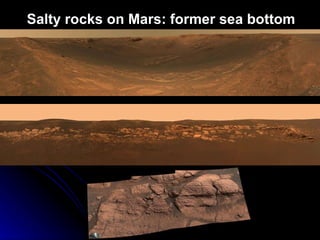
Salty rocks on Mars: former sea bottom
 
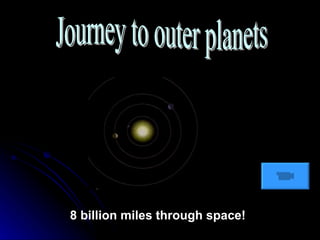
Journey to outer planets 8 billion miles through space!
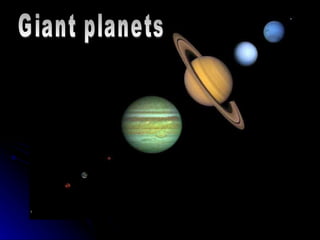
Giant planets
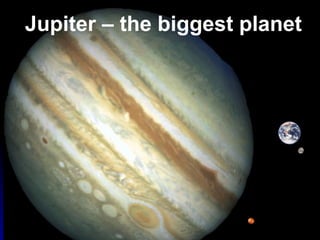
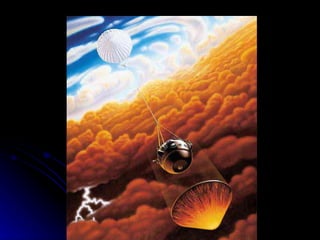
Jupiter – the biggest planet
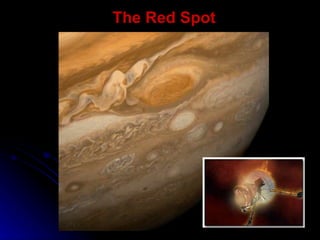
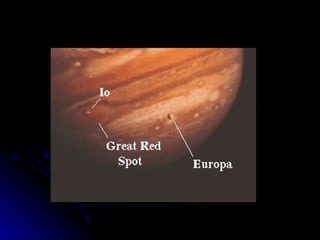
The Red Spot
 
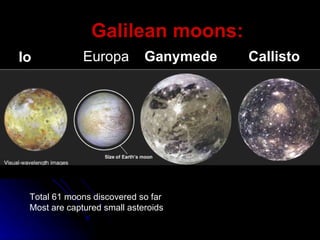
Io Europa Ganymede Callisto Total 61 moons discovered so far Most are captured small asteroids Galilean moons:
 
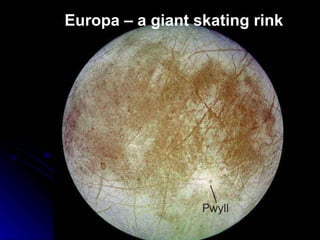
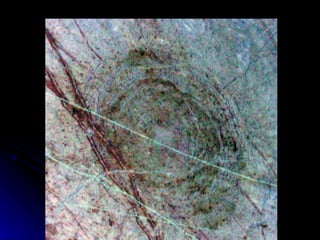
Europa – a giant skating rink
 
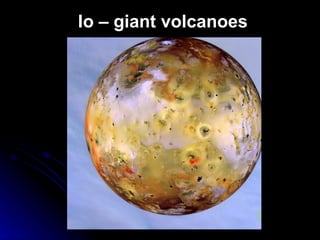
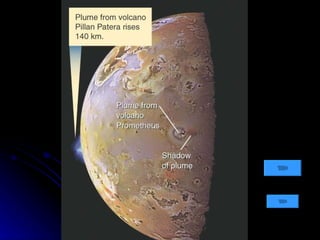
Io – giant volcanoes
 
 
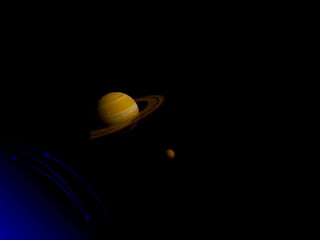
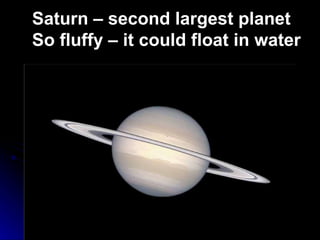
Saturn – second largest planet So fluffy – it could float in water
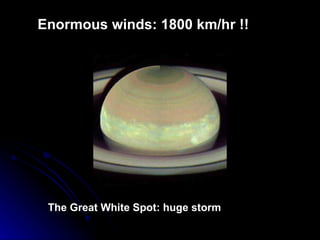
Enormous winds: 1800 km/hr !! The Great White Spot: huge storm
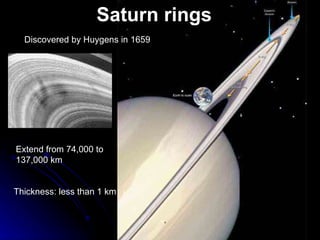
Thickness: less than 1 km Extend from 74,000 to 137,000 km Discovered by Huygens in 1659 Saturn rings
 
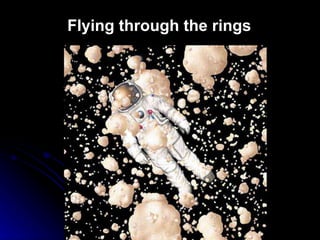
Flying through the rings
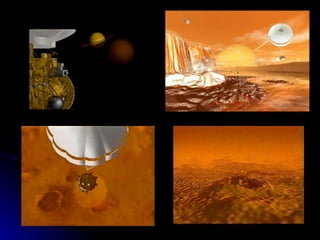
Titan, the mysterious moon of Saturn
 
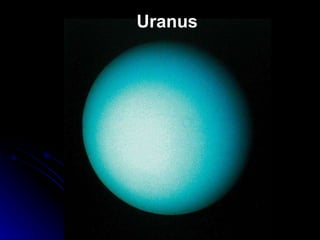
Uranus
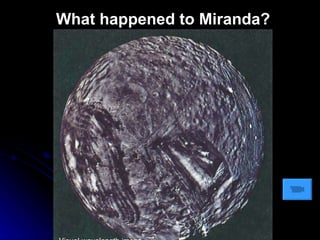
What happened to Miranda?
Neptune
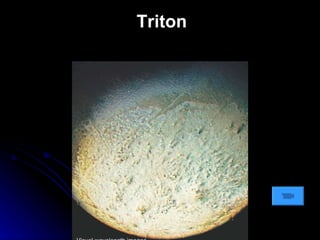
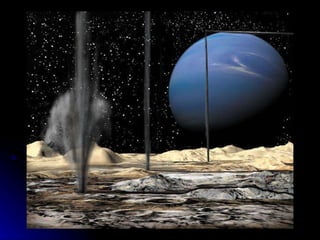
Triton
 
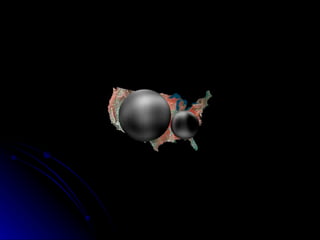
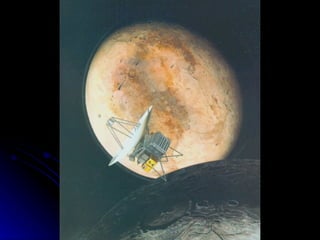
Pluto and Charon
 
 
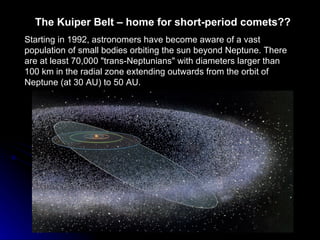
The Kuiper Belt – home for short-period comets??  Starting in 1992, astronomers have become aware of a vast population of small bodies orbiting the sun beyond Neptune. There are at least 70,000 "trans-Neptunians" with diameters larger than 100 km in the radial zone extending outwards from the orbit of Neptune (at 30 AU) to 50 AU.


Solar systems

Editor's Notes

  • #4 Huge rocky ball 8000 miles across. It is so nice and cozy!
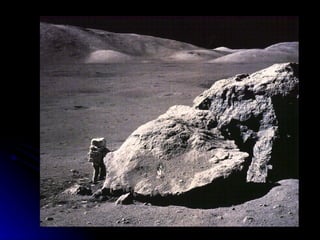
  • #7 Remove atmosphere – scorching heat during the day (300 F) and deadly cold at night (-200 F). Oceans evaporate into space. Earth will be a lifeless desert.
  • #13 Figure 19.12: (b) Like all larger-impact features, the Barringer Meteorite Crater has a raised rim and scattered ejecta. (USGS)
  • #28 Figure 17.3: The greenhouse effect. (a) Short-wavelength light can enter a greenhouse and heat its contents, but the longer-wavelength infrared radiated by the warm interior cannot get out.
  • #29 Figure 17.3: The greenhouse effect. (b) The same process can heat a planet’s surface if its atmosphere contains CO 2 .
  • #44 Figure 18.7: The Galilean moons of Jupiter from left to right are Io, Europa, Ganymede, and Callisto. The circle shows the size of Earth’s moon. (NASA)