Data Networking Year 2 Procedure for rolling out new/upgraded software Colm Bennett
Introduction Potential issues with new/upgraded software Doesn't work! Not compatible Other systems Hardware (old clients, printers etc.) Performance issues Significantly different UI/Process Not all new features obvious Possible security issues (Internet access required, update schedules etc.)
Rollout Plan – Key Areas Sandbox / Staging Performance Testing Pilot Training Deployment Support
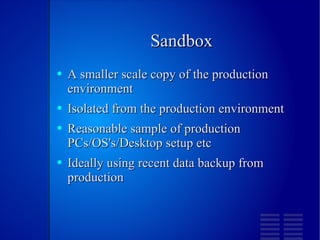
Sandbox A smaller scale copy of the production environment Isolated from the production environment Reasonable sample of production PCs/OS's/Desktop setup etc Ideally using recent data backup from production
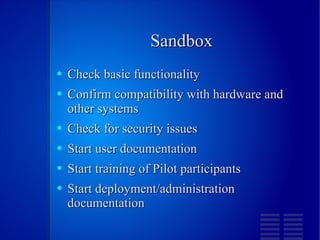
Sandbox Check basic functionality Confirm compatibility with hardware and other systems Check for security issues Start user documentation  Start training of Pilot participants Start deployment/administration documentation
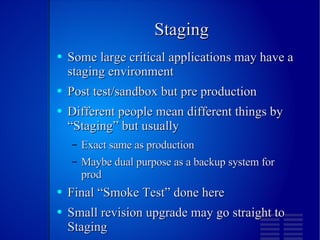
Staging Some large critical applications may have a staging environment Post test/sandbox but pre production Different people mean different things by “Staging” but usually  Exact same as production Maybe dual purpose as a backup system for prod Final “Smoke Test” done here Small revision upgrade may go straight to Staging
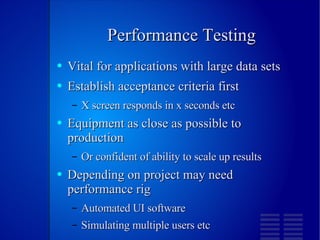
Performance Testing Vital for applications with large data sets Establish acceptance criteria first X screen responds in x seconds etc Equipment as close as possible to production Or confident of ability to scale up results Depending on project may need performance rig Automated UI software Simulating multiple users etc
Pilot Pilot is a roll out to a small subset of users Aims to root out production problems in a controlled way Smaller impact of any major issues IT resources able to focus on small group Helps refine training materials Ideally a cohesive unit – sub office, one country, one department etc. Review security, documentation, compatibility etc
Training Materials started in sandbox, refined in pilot Make sure IT staff trained if required Ideally training materials will be process based and form the basis for user documentation i.e. “Enter order from phone customer” As “Just In Time” as possible For upgrades, existing materials should be reviewed, new features added Consider a “new features only” course
Deployment Create technical deployment plan Large organisations will probably use network deploy Or terminal services type deploy (Citrix etc) May do a staged deployment By country/geo etc. Make sure users can't self update before you are ready to rollout out to everyone
Support Usually done by rollout team for pilot Train support staff Clear guidelines as to when support transitions from rollout team to support Monitored closely in initial period to enable quick fixes, workarounds, FAQs to be communicated to users

Software Rollout

  • 1.
    Data Networking Year2 Procedure for rolling out new/upgraded software Colm Bennett
  • 2.
    Introduction Potential issueswith new/upgraded software Doesn't work! Not compatible Other systems Hardware (old clients, printers etc.) Performance issues Significantly different UI/Process Not all new features obvious Possible security issues (Internet access required, update schedules etc.)
  • 3.
    Rollout Plan –Key Areas Sandbox / Staging Performance Testing Pilot Training Deployment Support
  • 4.
    Sandbox A smallerscale copy of the production environment Isolated from the production environment Reasonable sample of production PCs/OS's/Desktop setup etc Ideally using recent data backup from production
  • 5.
    Sandbox Check basicfunctionality Confirm compatibility with hardware and other systems Check for security issues Start user documentation Start training of Pilot participants Start deployment/administration documentation
  • 6.
    Staging Some largecritical applications may have a staging environment Post test/sandbox but pre production Different people mean different things by “Staging” but usually Exact same as production Maybe dual purpose as a backup system for prod Final “Smoke Test” done here Small revision upgrade may go straight to Staging
  • 7.
    Performance Testing Vitalfor applications with large data sets Establish acceptance criteria first X screen responds in x seconds etc Equipment as close as possible to production Or confident of ability to scale up results Depending on project may need performance rig Automated UI software Simulating multiple users etc
  • 8.
    Pilot Pilot isa roll out to a small subset of users Aims to root out production problems in a controlled way Smaller impact of any major issues IT resources able to focus on small group Helps refine training materials Ideally a cohesive unit – sub office, one country, one department etc. Review security, documentation, compatibility etc
  • 9.
    Training Materials startedin sandbox, refined in pilot Make sure IT staff trained if required Ideally training materials will be process based and form the basis for user documentation i.e. “Enter order from phone customer” As “Just In Time” as possible For upgrades, existing materials should be reviewed, new features added Consider a “new features only” course
  • 10.
    Deployment Create technicaldeployment plan Large organisations will probably use network deploy Or terminal services type deploy (Citrix etc) May do a staged deployment By country/geo etc. Make sure users can't self update before you are ready to rollout out to everyone
  • 11.
    Support Usually doneby rollout team for pilot Train support staff Clear guidelines as to when support transitions from rollout team to support Monitored closely in initial period to enable quick fixes, workarounds, FAQs to be communicated to users