OPENING PRAYER
OBJECTIVES:
•EXPLAIN THE DIFFERENT TYPES OF SOCIETIES
•ANALYZE HOW SOCIETIES EVOLVE THROUGH TIME
•HIGHLIGHTS THE SIGNIFICANT SOCIAL DEVELOPMENTS THAT
HAPPEN AS SOCIETIES AND THEIR CULTURE EVOLVE
•PRODUCE A TIME LINE THROUGH A “PAINT ME A PICTURE
ACTIVITY” THAT CLEARLY SHOWS THE MAJOR DEVELOPMENTS AND
CHANGES THAT HAPPENED TO HUMAN SOCIETY FROM HUNTING
AND GATHERING STAGE TO THE POST-INDUSTRIAL STAGE.
•HOW DID YOU FEEL
ABOUT THE VIDEO
THAT YOU HAVE
WATCH?
•WHAT DID YOU
REALIZE FROM THE
VIDEO?
Sustainable Development
Common good
SOCIO-CULTURAL
AND
POLITICAL
EVOLUTION
THE DEVELOPMENT OF SOCIETIES FROM THE
HUNTING AND GATHERING TO THE AGRICULTURAL,
GERHARD LENSKI
HUMAN SOCIETY UNDERGOES TRANSFORMATION
AND EVOLUTION
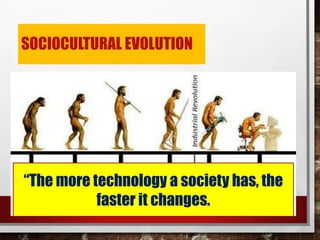
SOCIOCULTURAL EVOLUTION
“The more technology a society has, the
faster it changes.
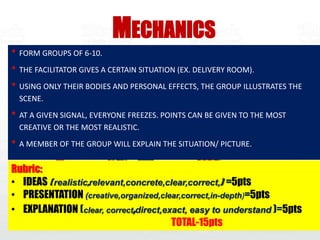
• FORM GROUPS OF 6-10.
• THE FACILITATOR GIVES A CERTAIN SITUATION (EX. DELIVERY ROOM).
• USING ONLY THEIR BODIES AND PERSONAL EFFECTS, THE GROUP ILLUSTRATES THE
SCENE.
• AT A GIVEN SIGNAL, EVERYONE FREEZES. POINTS CAN BE GIVEN TO THE MOST
CREATIVE OR THE MOST REALISTIC.
• A MEMBER OF THE GROUP WILL EXPLAIN THE SITUATION/ PICTURE.
MECHANICS
Rubric:
• IDEAS ( realistic,relevant,concrete,clear,correct,) =5pts
• PRESENTATION (creative,organized,clear,correct,in-depth)=5pts
• EXPLANATION (clear, correct,direct,exact, easy to understand )=5pts
TOTAL-15pts
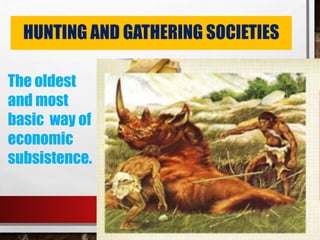
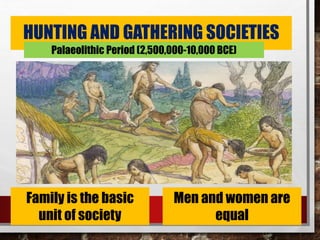
HUNTING AND GATHERING SOCIETIES
The oldest
and most
basic way of
economic
subsistence.
HUNTING AND GATHERING SOCIETIES
Palaeolithic Period (2,500,000-10,000 BCE)
Men and women are
equal
Family is the basic
unit of society
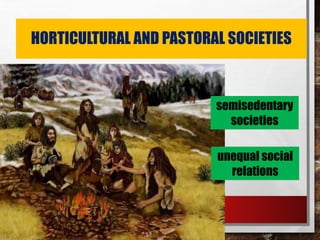
HORTICULTURAL AND PASTORAL SOCIETIES
•
semisedentary
societies
unequal social
relations
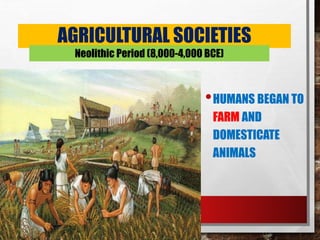
AGRICULTURAL SOCIETIES
•HUMANS BEGAN TO
FARM AND
DOMESTICATE
ANIMALS
Neolithic Period (8,000-4,000 BCE)
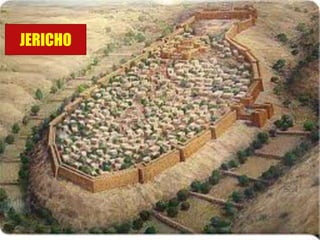
JERICHO
AGRICULTURAL SOCIETIES
Neolithic Revolution
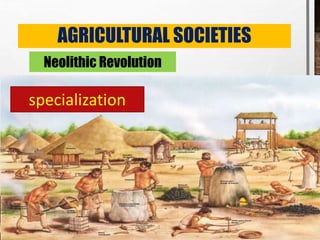
specialization
AGRICULTURAL SOCIETIES
Neolithic Revolution
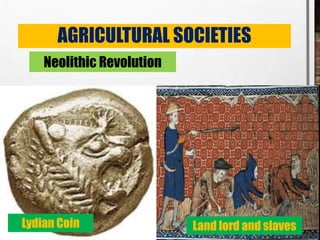
Lydian Coin Land lord and slaves
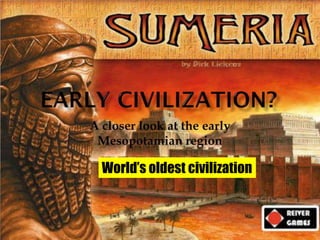
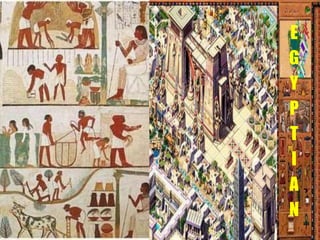
World’s oldest civilization
E
G
Y
P
T
I
A
N
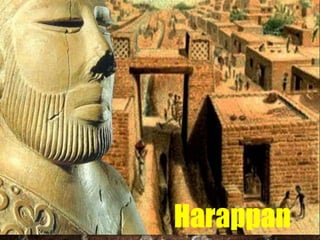
Harappan
CIVILIZATI
ON
CHARACTERISTICS
1. DEVELOPED AND HIGHLY
ADVANCED CITIES
2. WELL-DEFINED CITY CENTERS
3. COMPLEX AND SYSTEMATIC
INSTITUTIONS
4. ORGANIZED AND CENTRALIZED
SYSTEM OF GOVERNMENT
5. FORMALIZED AND COMPLEX FORM
OF RELIGION
CIVILIZATION
•CHARACTERISTICS
6. JOB SPECIALIZATION
7. DEVELOPMENT OF SOCIAL CLASSES
8. IMPLEMENTATION OF LARGE-SCALE
PUBLIC WORKS AND INFRASTRACTURE LIKE
DEFENSE WALLS, MONUMENTS, TEMPLES,
MAUSOLEUMS, GOVERNMENT EDIFICES,
TRADING CENTERS AND MARKETS
9. SOPHISTICATED AND DETAILED FORMS OF
ARTS AND ARCHITECTURE
10.ADVANCED TECHNOLOGY
11. SYSTEM OF WRITING AND RECORDING
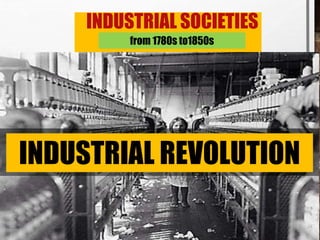
INDUSTRIAL SOCIETIES
INDUSTRIAL REVOLUTION
from 1780s to1850s
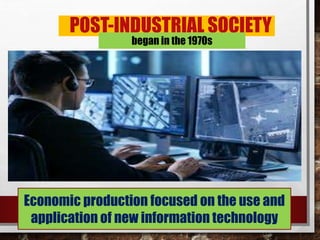
POST-INDUSTRIAL SOCIETY
Economic production focused on the use and
application of new information technology
began in the 1970s
POST-INDUSTRIAL SOCIETY
1. TRANSFER OF LABOR
WORKFORCE FROM
MANUFACTURING TO
SERVICE
2. A SIGNIFICANT INCREASE
IN THE NUMBER OF
PROFESSIONAL AND
TECHNICAL
EMPLOYMENT AND A
DECLINE IN THE NUMBER
OF SKILLED AND
SEMISKILLED WORKERS.
POST-INDUSTRIAL SOCIETY
3. EDUCATION AS THE BASIS OF
SOCIAL MOBILITY
4. HUMAN CAPITAL AS AN
ESSENTIAL ASPECT OF
UNDERSTANDING THE STRENGTH
OF SOCIETY
5. APPLICATION OF INTELLECTUAL
TECHNOLOGY WHICH IS BASED
ON THE APPLICATION OF
MATHEMATICS AND LINGUISTICS
AND THE USE OF ALGORITHMS
AND SOFTWARE PROGRAMMING
POST-INDUSTRIAL SOCIETY
6. FOCUS ON
COMMUNICATION
INFRASTRUCTURE
7. KNOWLEDGE AS SOURCE
OF INVENTION AND
INNOVATION
SYNTHESIS
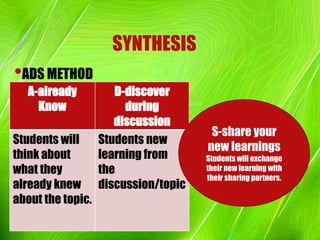
•ADS METHOD
A-already
Know
D-discover
during
discussion
Students will
think about
what they
already knew
about the topic.
Students new
learning from
the
discussion/topic
S-share your
new learnings
Students will exchange
their new learning with
their sharing partners.
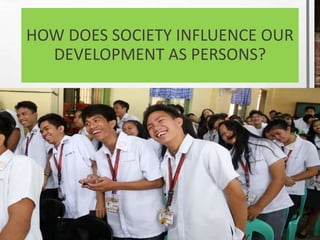
HOW DOES SOCIETY INFLUENCE OUR
DEVELOPMENT AS PERSONS?
ASSIGNMENT
BE READY FOR A
QUIZ
WHAT IS
CONFORMITY
AND DEVIANCE?

sociocultural evolution.pptx

Editor's Notes

  • #13 An American Sociologist argued that human society undergoes Transformation and Evolution And in the process develops technological advancement
  • #14 society as something of a process of change involving a society's level of innovation, transmissions and technological advances. He describes this process of changing as
  • #18 -nomadic societies -lives in caves and pit -spent most of their time hunting animal and collecting edible crops and vegetables -shaman or priest acts as the leader of the group -they believe that spirits live in the world.
  • #19 -describe the relationship between men and women as being equal -family is the basic unit of their society
  • #20 Human began small scale farming and animal domestication Use hoes and digging sticks to bore holes in the ground for seed planting Artifacts Middles East and Southeast Asia Surplus of food Engage in making crafts and small-scale trading
  • #21 Major sociocultural and economic development Cultivate wheat, barley, peas, rice, and millet
  • #22 Located in Jordan River Valley  is one of the earliest settlements dating back to 9000 BCE. It also has the oldest known protective wall in the world
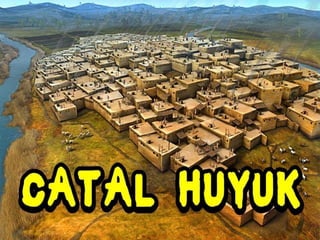
  • #23 Located in Turkey  is one of the largest and best-preserved Neolithic settlements  Catal Huyuk was abandoned about 5,000 BC. Nobody knows why but it may have been due to climate change was rediscovered by James Mellaart in 1958. He began excavating Catal Huyuk in 1961. emphasis on females and femaleness, points toward a matriarchal society 'forked mound' and refers to the site's east and west mounds, which formed as centuries of townspeople tore down and rebuilt the settlement's mud-brick houses. No one knows what the townspeople called their home 9,000 years ago.
  • #24 Population increased into millions Settled permanently and improved technology in farming
  • #25 Money became a form of exchange replacing the barter system The first coins were made of electrum, an alloy of silver and gold. It appears that many early Lydian coins were minted by merchants as tokens to be used in trade transactions. The Lydian state also minted coins, most of the coins mentioning king Alyattes of Lydia (Turkey) Lion “royalty” Led to an increase of social inequality
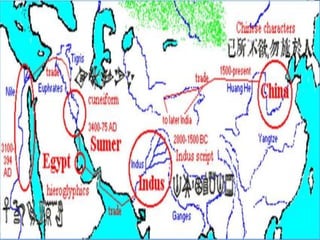
  • #26 A civilization is generally defined as an advanced state of human society containing highly developed forms of government, culture, industry, and common social norms. between Tigris and Euphrates rivers and lies between Asian Minor and the Persian Gulf. The region is known for its fertile agricultural land.  gave birth to written literature and several other inventions such as art and culture and trade. The timeline of the ancient Mesopotamia is estimated to be around 3300 BC to 750 BC with the Babylonians, Sumerians, and Assyrians playing key roles in the civilization
  • #27 civilization took place between 3100 BC and 2686 BC. It is the most famous and admired culture in the world. The culture was developed along the banks of River Nile. resulted from the unification of Upper and Lower Egypt by the first Pharaoh. Apart from the pyramids, the civilization gave birth to embalming of dead bodies into mummies, solar calendars, and so much more.
  • #28 The Indus Valley civilization, also known as Harappan civilization, began 5,300 years ago. presently extend from Afghanistan to Pakistan and India. I is one of the three early civilizations of the Old World along the Egyptian and Mesopotamia civilizations. The people of the Indus Valley settled around the Indus River basin. The civilization lasted from 2600 BC to 1900 BC and was characterized by a technologically advanced urban culture. The people were skilled mathematicians, developing accurate means of measuring length, mass, and time. They were also gifted in weaponry and pottery work as evident in their culture which was rich in arts and crafts.
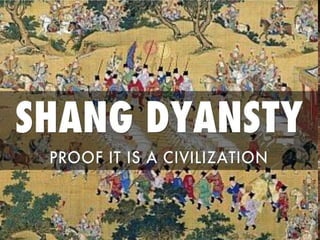
  • #29 the first recorded Chinese dynasty for which there is both documentary and archaeological evidence. The Shang dynasty was the reputed successor to the quasi-legendary first dynasty, the Xia (c. 2070–c. 1600 BCE).
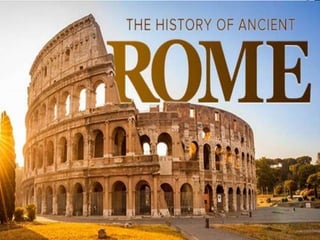
  • #31 dates back to the 6th Century BC. Although the foundation of ancient Rome is surrounded by myths and legends, it became so powerful that it took control over the land surrounding the present-day Mediterranean Sea. The early Romans were ruled by kings but after seven kings, they took over power and turned into a republic
  • #33 develops because of a society’s highly advanced level of culture, social organization, political developments, judicial system, arts and other forms of culture at a particular time. Show political evolution of society Political system is highly centralized and well organized form of government whose leaders are powerful enough to order the building of massive infrastructure and implement new policies for citizens Had clear hierarchy of officials with specific functions and responsibilities. Codified laws and rules that were obeyed and followed by the people Organized, stable and effective government to ensure the safety of people and supervise the production and distribution of the food supply
  • #35 New sources of energy were harnessed, advanced forms of technology were applied and machineries were invented Led to industrialization or the transformation of an agricultural society into a production and manufacturing-based one. Used of advanced sources of energy that operated factory machineries Created centralized workplaces, economic interdependence, formal education and complex social systems People left their farm lands and transferred to the urban areas to work in factories
  • #36  relatively unproblematic characterization of the shift from an economy dominated by extractive and manufacturing industries to one in which services, and increasingly symbolic goods, made a more prominent contribution  John J. Macionis is a professor of sociology and Prentice Hall Distinguished Scholar. His areas of interest include social stratification, social change, social problems, politics, policy, deviance and conformity and urban sociology.
  • #41 What makes us Filipino? Being born in the Philippines is not our choice but as we grow up in Philippine society, we began to adopt the traits, tradition and characteristics the distinguish Filipino culture. We learn to speak our mother languages through our interaction with family members and other members of society. It is also through our interactions with other individuals and institutions that we learn how to behave appropriately, what beliefs and traditions to practice, and what ideas and perspectives to consider acceptable. All these come together to define our identity not only as persons, but as member of Philippine society.