LGBTBY:
MARY TRISIL P.M & PATHROSE K.RAJU
WHAT IS LGBT?
LGBT stands for lesbian, gay, bisexual and
transgender and along with heterosexual they
describe people’s sexual orientation or gender
identity.
These terms are explained in more detail here:
Lesbian
A lesbian woman is one who is romantically, sexually and/or emotionally attracted to women.
Many lesbians prefer to be called lesbian rather than gay.
Gay
A gay man is one who is romantically, sexually and/or emotionally attracted to men. The word
gay can be used to refer generally to lesbian, gay and bisexual people but many women prefer to
be called lesbian. Most gay people don’t like to be referred to as homosexual because of the
negative historical associations with the word and because the word gay better reflects their
identity.
Bisexual
A bisexual person is someone who is romantically, sexually and/or emotionally attracted to
people of both sexes.
Transgender or Trans
Is an umbrella term used to describe people whose gender identity (internal feeling of being
male, female or transgender) and/or gender expression, differs from that usually associated
with their birth sex. Not everyone whose appearance or behaviour is gender-atypical will
identify as a transgender person. Many transgender people live part-time or full-time in another
gender. Transgender people can identify as transsexual, transvestite or another gender identity.
Gender Identity
One’s gender identity refers to whether one feels male, female
or transgender (regardless of one’s biological sex). Gender
expression refers to outwardly expressing one’s gender identity.
Transsexual people live or wish to live full time as members of
the gender other than that assigned at birth. Transsexual people
can seek medical interventions, such as hormones and surgery,
to make their bodies fit as much as possible with their preferred
gender.
The process of transitioning from one gender to another is called
gender reassignment.
• Biological females who wish to live and be recognised as
men are called female-to-male (FTM) transsexuals or trans
men.
• Biological males who wish to live and be recognised as
women are called male-to-female (MTF) transsexuals or
trans women.
Gender Reassignment
Gender Reassignment also called transitioning, is the process of
changing the way someone’s gender is lived publicly and can be
a complex process.
People who wish to transition often start by expressing their
gender identity in situations where they feel safe. They typically
work up to living full-time in a different gender, by making
gradual changes to their gender expression.
Connecting with other transgender people through peer support
groups and transgender community organisations is also very
helpful for people when they are going through the transition
process.
Transitioning typically involves changes in clothing and
grooming, a name change, change of gender on identity
documents, hormonal treatment, and surgery.
Sexual Orientation
Sexual Orientation refers to an enduring pattern of emotional,
romantic, and/or sexual attractions to men, women, or both sexes.
Sexual orientation also refers to a person’s sense of identity based
on those attractions, related behaviours, and membership in a
community of others who share those attractions.
Three sexual orientation are commonly recognised:
• Heterosexual
• Homosexual (gay and lesbian) and
• Bisexual
Coming Out
Coming Out is the term used by lesbian, gay, bisexual and
transgender (LGBT) people to describe their experience of
discovery, self-acceptance, openness and honesty about their LGBT
identity and their decision to disclose, i.e. to share this with others
when and how they choose.
Homophobia
Homophobia refers to fear of or prejudice and discrimination
against lesbian, gay and bisexual people.
It is also the dislike of same-sex attraction and love or the hatred of
people who have those feelings.
The term was first used in the 1970s and is more associated with
ignorance, prejudice and stereotyping than with the physiological
reactions usually attributed to a ‘phobia’.
While homophobic comments or attitudes are often unintentional,
they can cause hurt and offence to lesbian, gay and bisexual
people.
Transphobia
Transphobia refers to fear of or prejudice and discrimination
against people who are transgender or who are perceived to
transgress norms of gender, gender identity or gender expression.
While transphobic comments or attitudes are often unintentional,
they can cause hurt and offence to transgender people.
LGBT Rights
LGBT rights laws include, but are not limited to, the following:
• Immigration equality laws
• Allowing of LGBT adoption
• Equal age of consent laws
• Recognition of LGBT parenting
• Equal access to assisted reproductive technology
• Anti-discrimination laws for employment and housing
• Laws related to sexual orientation and military service
• Allowing of men who have sex with men to donate blood
• Legal recognition and accommodation of reassigned gender
• Access to sex reassignment surgery and hormone replacement
therapy
• Government recognition of same-sex relationships (such as via
same-sex marriage or similar unions)
• Anti-bullying legislation and student non-discrimination laws to
protect LGBT children and/or students
• Hate crime laws providing enhanced criminal penalties for
prejudice-motivated violence against LGBT people.
Symbols
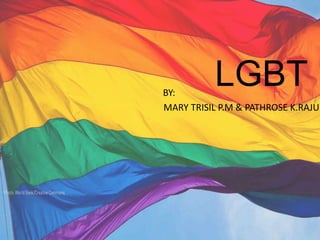
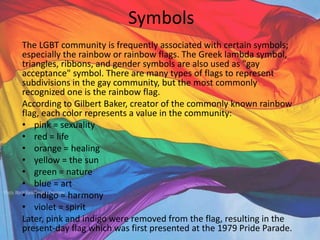
The LGBT community is frequently associated with certain symbols;
especially the rainbow or rainbow flags. The Greek lambda symbol,
triangles, ribbons, and gender symbols are also used as "gay
acceptance" symbol. There are many types of flags to represent
subdivisions in the gay community, but the most commonly
recognized one is the rainbow flag.
According to Gilbert Baker, creator of the commonly known rainbow
flag, each color represents a value in the community:
• pink = sexuality
• red = life
• orange = healing
• yellow = the sun
• green = nature
• blue = art
• indigo = harmony
• violet = spirit
Later, pink and indigo were removed from the flag, resulting in the
present-day flag which was first presented at the 1979 Pride Parade.

social work with LGBT

  • 1.
    LGBTBY: MARY TRISIL P.M& PATHROSE K.RAJU
  • 2.
    WHAT IS LGBT? LGBTstands for lesbian, gay, bisexual and transgender and along with heterosexual they describe people’s sexual orientation or gender identity. These terms are explained in more detail here:
  • 3.
    Lesbian A lesbian womanis one who is romantically, sexually and/or emotionally attracted to women. Many lesbians prefer to be called lesbian rather than gay. Gay A gay man is one who is romantically, sexually and/or emotionally attracted to men. The word gay can be used to refer generally to lesbian, gay and bisexual people but many women prefer to be called lesbian. Most gay people don’t like to be referred to as homosexual because of the negative historical associations with the word and because the word gay better reflects their identity. Bisexual A bisexual person is someone who is romantically, sexually and/or emotionally attracted to people of both sexes. Transgender or Trans Is an umbrella term used to describe people whose gender identity (internal feeling of being male, female or transgender) and/or gender expression, differs from that usually associated with their birth sex. Not everyone whose appearance or behaviour is gender-atypical will identify as a transgender person. Many transgender people live part-time or full-time in another gender. Transgender people can identify as transsexual, transvestite or another gender identity.
  • 4.
    Gender Identity One’s genderidentity refers to whether one feels male, female or transgender (regardless of one’s biological sex). Gender expression refers to outwardly expressing one’s gender identity. Transsexual people live or wish to live full time as members of the gender other than that assigned at birth. Transsexual people can seek medical interventions, such as hormones and surgery, to make their bodies fit as much as possible with their preferred gender. The process of transitioning from one gender to another is called gender reassignment. • Biological females who wish to live and be recognised as men are called female-to-male (FTM) transsexuals or trans men. • Biological males who wish to live and be recognised as women are called male-to-female (MTF) transsexuals or trans women.
  • 5.
    Gender Reassignment Gender Reassignmentalso called transitioning, is the process of changing the way someone’s gender is lived publicly and can be a complex process. People who wish to transition often start by expressing their gender identity in situations where they feel safe. They typically work up to living full-time in a different gender, by making gradual changes to their gender expression. Connecting with other transgender people through peer support groups and transgender community organisations is also very helpful for people when they are going through the transition process. Transitioning typically involves changes in clothing and grooming, a name change, change of gender on identity documents, hormonal treatment, and surgery.
  • 6.
    Sexual Orientation Sexual Orientationrefers to an enduring pattern of emotional, romantic, and/or sexual attractions to men, women, or both sexes. Sexual orientation also refers to a person’s sense of identity based on those attractions, related behaviours, and membership in a community of others who share those attractions. Three sexual orientation are commonly recognised: • Heterosexual • Homosexual (gay and lesbian) and • Bisexual Coming Out Coming Out is the term used by lesbian, gay, bisexual and transgender (LGBT) people to describe their experience of discovery, self-acceptance, openness and honesty about their LGBT identity and their decision to disclose, i.e. to share this with others when and how they choose.
  • 7.
    Homophobia Homophobia refers tofear of or prejudice and discrimination against lesbian, gay and bisexual people. It is also the dislike of same-sex attraction and love or the hatred of people who have those feelings. The term was first used in the 1970s and is more associated with ignorance, prejudice and stereotyping than with the physiological reactions usually attributed to a ‘phobia’. While homophobic comments or attitudes are often unintentional, they can cause hurt and offence to lesbian, gay and bisexual people. Transphobia Transphobia refers to fear of or prejudice and discrimination against people who are transgender or who are perceived to transgress norms of gender, gender identity or gender expression. While transphobic comments or attitudes are often unintentional, they can cause hurt and offence to transgender people.
  • 8.
    LGBT Rights LGBT rightslaws include, but are not limited to, the following: • Immigration equality laws • Allowing of LGBT adoption • Equal age of consent laws • Recognition of LGBT parenting • Equal access to assisted reproductive technology • Anti-discrimination laws for employment and housing • Laws related to sexual orientation and military service • Allowing of men who have sex with men to donate blood • Legal recognition and accommodation of reassigned gender • Access to sex reassignment surgery and hormone replacement therapy • Government recognition of same-sex relationships (such as via same-sex marriage or similar unions) • Anti-bullying legislation and student non-discrimination laws to protect LGBT children and/or students • Hate crime laws providing enhanced criminal penalties for prejudice-motivated violence against LGBT people.
  • 9.
    Symbols The LGBT communityis frequently associated with certain symbols; especially the rainbow or rainbow flags. The Greek lambda symbol, triangles, ribbons, and gender symbols are also used as "gay acceptance" symbol. There are many types of flags to represent subdivisions in the gay community, but the most commonly recognized one is the rainbow flag. According to Gilbert Baker, creator of the commonly known rainbow flag, each color represents a value in the community: • pink = sexuality • red = life • orange = healing • yellow = the sun • green = nature • blue = art • indigo = harmony • violet = spirit Later, pink and indigo were removed from the flag, resulting in the present-day flag which was first presented at the 1979 Pride Parade.