Gender
Identity/Sexual
Orientation
By:
Kara Lesniak
Sex Vs. Gender
 Sexis based on a person’s biological
 features

 Gender    is used in different ways:
    Gender roles – behavioral characteristics
     considered “masculine” or “feminine”
    Gender identity – internal sense of ourselves
     as man, woman, or transgender
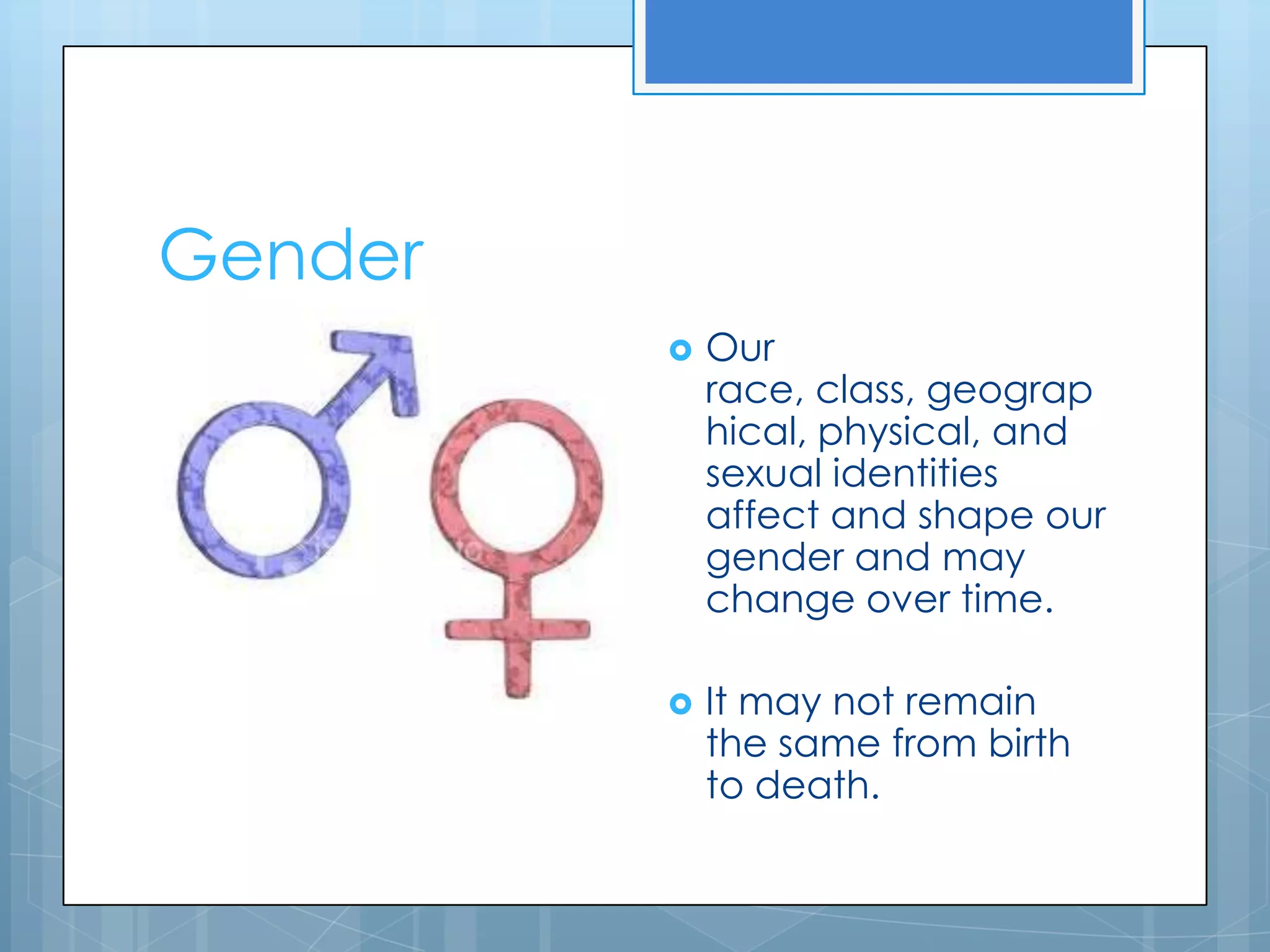
Gender
            Our
             race, class, geograp
             hical, physical, and
             sexual identities
             affect and shape our
             gender and may
             change over time.

            It may not remain
             the same from birth
             to death.
Gender Identity
   There are new terms that fall outside the two
    gender categories our society has traditionally
    recognized: man and woman

   Transgender – a person who identifies with or
    expresses a gender identity that differs from the
    one which corresponds to the person's sex at
    birth

   Transsexual - a person who strongly identifies with
    the opposite sex and may seek to live as a
    member of this sex especially by undergoing
    surgery and hormone therapy to obtain the
    necessary physical appearance
Sexual Orientation
Sexual Orientation
 Our gender is about who we are; our
 sexual orientation is about whom we
 find attractive.

 Howwe identify our gender influences
 how we name our sexuality, and
 whom we are attracted to may
 change throughout our lives.
Types of Orientation
   Straight/ Heterosexual – women who are sexually
    attracted to men and men who are sexually
    attracted to women
   Gay/ Homosexual – women who are sexually
    attracted to women and men who are sexually
    attracted to men
   Lesbian – woman who is sexually attracted to women
   Bisexual – people who are sexually attracted to men
    and women
   Asexual – someone who is not experiencing or acting
    on sexual attraction at a give time
   Pansexual – someone who is attracted to people
    across the range of genders
Don’t confuse
sexual orientation
with gender
identity!
Confusion Corrected
   Sometimes gender
    identity and sexual
    orientation are
    confused and
    stereotypes are
    formed

   Being lesbian or
    bisexual does not
    mean our gender
    looks or feels a
    certain way
Coming out is the process of accepting
and affirming our sexual orientation or
gender identity and deciding how open
we will be about it.
Coming Out
 Letting other people know that we
  identify as lesbian, bisexual, queer, or
  transgender can be one of the most
  challenging and life-changing decisions
  we face.

 Itmay cause several problems
  concerning losing friends, jobs, and
  family, but it can also be a liberating
  experience.
Homophobia,
Heterosexism, and
Transphobia
Homophobia
                Homophobia – the fear
                 and hatred of
                 homosexuality or
                 gay, lesbian, or
                 bisexual people

                It puts people at risk for
                 discrimination, harassm
                 ent, rejection, or
                 violence in everyday
                 interactions with others
                 and can affect one’s
                 own acceptance of
                 who they are.
Heterosexism
 Heterosexism  – the assumption that
  heterosexuality is the only normal orientation

 Itdenies legal, religious, and social privileges
  to others

 It
   can occur on an interpersonal level in
  which family and friends may accept you
  but may not accept others
Transphobia
 Transphobia – the fear and hatred of
  transgender or transsexual people.

 Itinvolves more than just a slanderous
  terms uttered. It has to do with those who
  do not fit the norm of man or woman
  having trouble going out in public.
My Opinions!
             Liked                    Did not like
   That it is difficult for
    people to come out          I dislike the idea of
    to others                    heterosexism,
   Sex and gender are           transphobia, and
    often confused…I
    had not known they           homophobia. I
    were different!              think that it is
   I found it interesting       wrong to
    to know that there           discriminate others
    was a difference
    between                      based on gender
    transgender and              or sexual
    transsexual                  orientation.
What do you think?
 Why does society find it difficult to accept
 genders other than male or female? Why
 do some people not accept other
 genders?
The End

Gender identity

  • 1.
  • 2.
    Sex Vs. Gender Sexis based on a person’s biological features  Gender is used in different ways:  Gender roles – behavioral characteristics considered “masculine” or “feminine”  Gender identity – internal sense of ourselves as man, woman, or transgender
  • 3.
    Gender  Our race, class, geograp hical, physical, and sexual identities affect and shape our gender and may change over time.  It may not remain the same from birth to death.
  • 4.
    Gender Identity  There are new terms that fall outside the two gender categories our society has traditionally recognized: man and woman  Transgender – a person who identifies with or expresses a gender identity that differs from the one which corresponds to the person's sex at birth  Transsexual - a person who strongly identifies with the opposite sex and may seek to live as a member of this sex especially by undergoing surgery and hormone therapy to obtain the necessary physical appearance
  • 5.
  • 6.
    Sexual Orientation  Ourgender is about who we are; our sexual orientation is about whom we find attractive.  Howwe identify our gender influences how we name our sexuality, and whom we are attracted to may change throughout our lives.
  • 8.
    Types of Orientation  Straight/ Heterosexual – women who are sexually attracted to men and men who are sexually attracted to women  Gay/ Homosexual – women who are sexually attracted to women and men who are sexually attracted to men  Lesbian – woman who is sexually attracted to women  Bisexual – people who are sexually attracted to men and women  Asexual – someone who is not experiencing or acting on sexual attraction at a give time  Pansexual – someone who is attracted to people across the range of genders
  • 9.
  • 10.
    Confusion Corrected  Sometimes gender identity and sexual orientation are confused and stereotypes are formed  Being lesbian or bisexual does not mean our gender looks or feels a certain way
  • 11.
    Coming out isthe process of accepting and affirming our sexual orientation or gender identity and deciding how open we will be about it.
  • 12.
    Coming Out  Lettingother people know that we identify as lesbian, bisexual, queer, or transgender can be one of the most challenging and life-changing decisions we face.  Itmay cause several problems concerning losing friends, jobs, and family, but it can also be a liberating experience.
  • 13.
  • 14.
    Homophobia  Homophobia – the fear and hatred of homosexuality or gay, lesbian, or bisexual people  It puts people at risk for discrimination, harassm ent, rejection, or violence in everyday interactions with others and can affect one’s own acceptance of who they are.
  • 15.
    Heterosexism  Heterosexism – the assumption that heterosexuality is the only normal orientation  Itdenies legal, religious, and social privileges to others  It can occur on an interpersonal level in which family and friends may accept you but may not accept others
  • 16.
    Transphobia  Transphobia –the fear and hatred of transgender or transsexual people.  Itinvolves more than just a slanderous terms uttered. It has to do with those who do not fit the norm of man or woman having trouble going out in public.
  • 17.
    My Opinions! Liked Did not like  That it is difficult for people to come out  I dislike the idea of to others heterosexism,  Sex and gender are transphobia, and often confused…I had not known they homophobia. I were different! think that it is  I found it interesting wrong to to know that there discriminate others was a difference between based on gender transgender and or sexual transsexual orientation.
  • 18.
    What do youthink?  Why does society find it difficult to accept genders other than male or female? Why do some people not accept other genders?
  • 19.