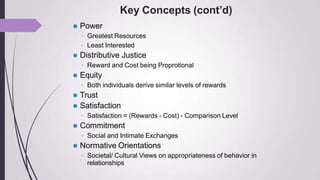
Social exchange theory proposes that human relationships are formed by a subjective cost-benefit analysis where people compare rewards to costs. The theory was developed in 1958 by George Homans who said people are more likely to repeat actions that were previously rewarded. It explains why people choose certain relationships by evaluating what they gain from things like acceptance, loyalty, and companionship versus the costs of time, effort, and adjustments. Critics argue it assumes humans always act rationally in relationships and reduces interactions to economic exchanges.