



Social Change
Communication Design
LimeRed Studio
agenda
•
•
•
•
•
•
•
•

Introductions
What is Social Change Communication Design?
Communication Theory & Design
Perceptions & Brand Identity
Assumptions & Story-based Strategy and Analysis
Environment, Context and User Experience
State of being & Design
Technology and Channels
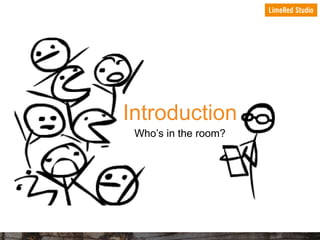
Introduction
Who’s in the room?
What are some elements
of your current
communications?
Communication Design
It is not just communication strategy and it’s not just visual communication.
Communication Design is a systems based approach to analyzing, creating
and distributing information with purpose.
Communication design is intentional and seeks to align all the elements of
our communication system so that we build and strengthen relationships,
listen and influence our audiences, move them to action and change the
world.
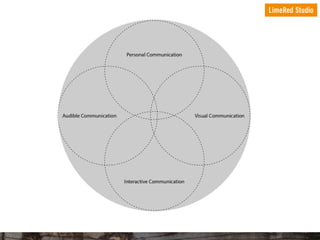
It encompasses multiple disciplines including visual, interactive, semantic
and marketing communication by incorporating them into an overall process
to accomplish human needs.
Social Change and
Innovation
Communication Design also provides the opportunity for organizations to
analyze and understand issues and challenges to development and growth,
and approach them through design methodology to create innovative
solutions for change.
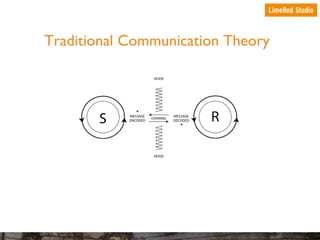
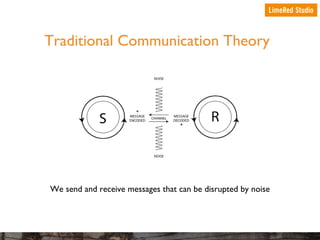
Traditional Communication Theory

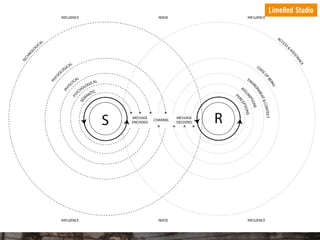
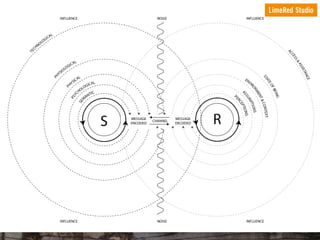
We send and receive messages that can be disrupted by noise
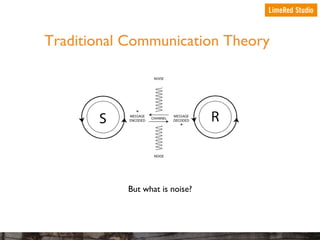
Traditional Communication Theory

But what is noise?
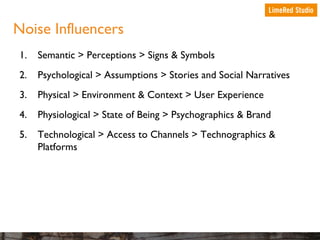
Noise Influencers
1.

Semantic > Perceptions > Signs & Symbols

2.

Psychological > Assumptions > Stories and Social Narratives

3.

Physical > Environment & Context > User Experience

4.

Physiological > State of Being > Psychographics & Brand

5.

Technological > Access to Channels > Technographics &
Platforms
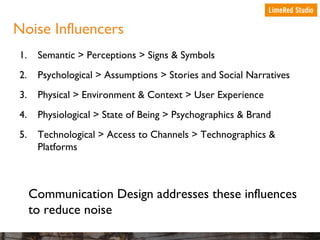
Noise Influencers
1.

Semantic > Perceptions > Signs & Symbols

2.

Psychological > Assumptions > Stories and Social Narratives

3.

Physical > Environment & Context > User Experience

4.

Physiological > State of Being > Psychographics & Brand

5.

Technological > Access to Channels > Technographics &
Platforms

Communication Design addresses these influences
to reduce noise
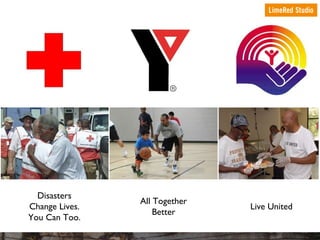
Disasters
Change Lives.
You Can Too.

All Together
Better

Live United
Approach in Course
1.

Day One

• Branding & Identity
• Story-based Strategy & Analysis
• Messaging
2.

Day Two

• Audience Mapping
• Design Direction
3.

Day Three

• Interrelationship of Communication Channels
What will this do?
1.

Identify systems

2.

Improve the encoding and design of messages

3.

Reduce noise and increase relevancy and meaning for audiences

4.

Establish a unique Identity

5.

Set innovation for growth
Register for our
Three Day Course
Thursdays, April 10, 17 & 24
http://www.limeredstudio.com/what-we-do/full-day-training/

Social Change Communication Design

  • 1.
  • 2.
    agenda • • • • • • • • Introductions What is SocialChange Communication Design? Communication Theory & Design Perceptions & Brand Identity Assumptions & Story-based Strategy and Analysis Environment, Context and User Experience State of being & Design Technology and Channels
  • 3.
  • 6.
    What are someelements of your current communications?
  • 7.
    Communication Design It isnot just communication strategy and it’s not just visual communication. Communication Design is a systems based approach to analyzing, creating and distributing information with purpose. Communication design is intentional and seeks to align all the elements of our communication system so that we build and strengthen relationships, listen and influence our audiences, move them to action and change the world. It encompasses multiple disciplines including visual, interactive, semantic and marketing communication by incorporating them into an overall process to accomplish human needs.
  • 9.
    Social Change and Innovation CommunicationDesign also provides the opportunity for organizations to analyze and understand issues and challenges to development and growth, and approach them through design methodology to create innovative solutions for change.
  • 10.
  • 11.
    Traditional Communication Theory Wesend and receive messages that can be disrupted by noise
  • 12.
  • 15.
    Noise Influencers 1. Semantic >Perceptions > Signs & Symbols 2. Psychological > Assumptions > Stories and Social Narratives 3. Physical > Environment & Context > User Experience 4. Physiological > State of Being > Psychographics & Brand 5. Technological > Access to Channels > Technographics & Platforms
  • 16.
    Noise Influencers 1. Semantic >Perceptions > Signs & Symbols 2. Psychological > Assumptions > Stories and Social Narratives 3. Physical > Environment & Context > User Experience 4. Physiological > State of Being > Psychographics & Brand 5. Technological > Access to Channels > Technographics & Platforms Communication Design addresses these influences to reduce noise
  • 19.
    Disasters Change Lives. You CanToo. All Together Better Live United
  • 20.
    Approach in Course 1. DayOne • Branding & Identity • Story-based Strategy & Analysis • Messaging 2. Day Two • Audience Mapping • Design Direction 3. Day Three • Interrelationship of Communication Channels
  • 21.
    What will thisdo? 1. Identify systems 2. Improve the encoding and design of messages 3. Reduce noise and increase relevancy and meaning for audiences 4. Establish a unique Identity 5. Set innovation for growth
  • 24.
    Register for our ThreeDay Course Thursdays, April 10, 17 & 24 http://www.limeredstudio.com/what-we-do/full-day-training/