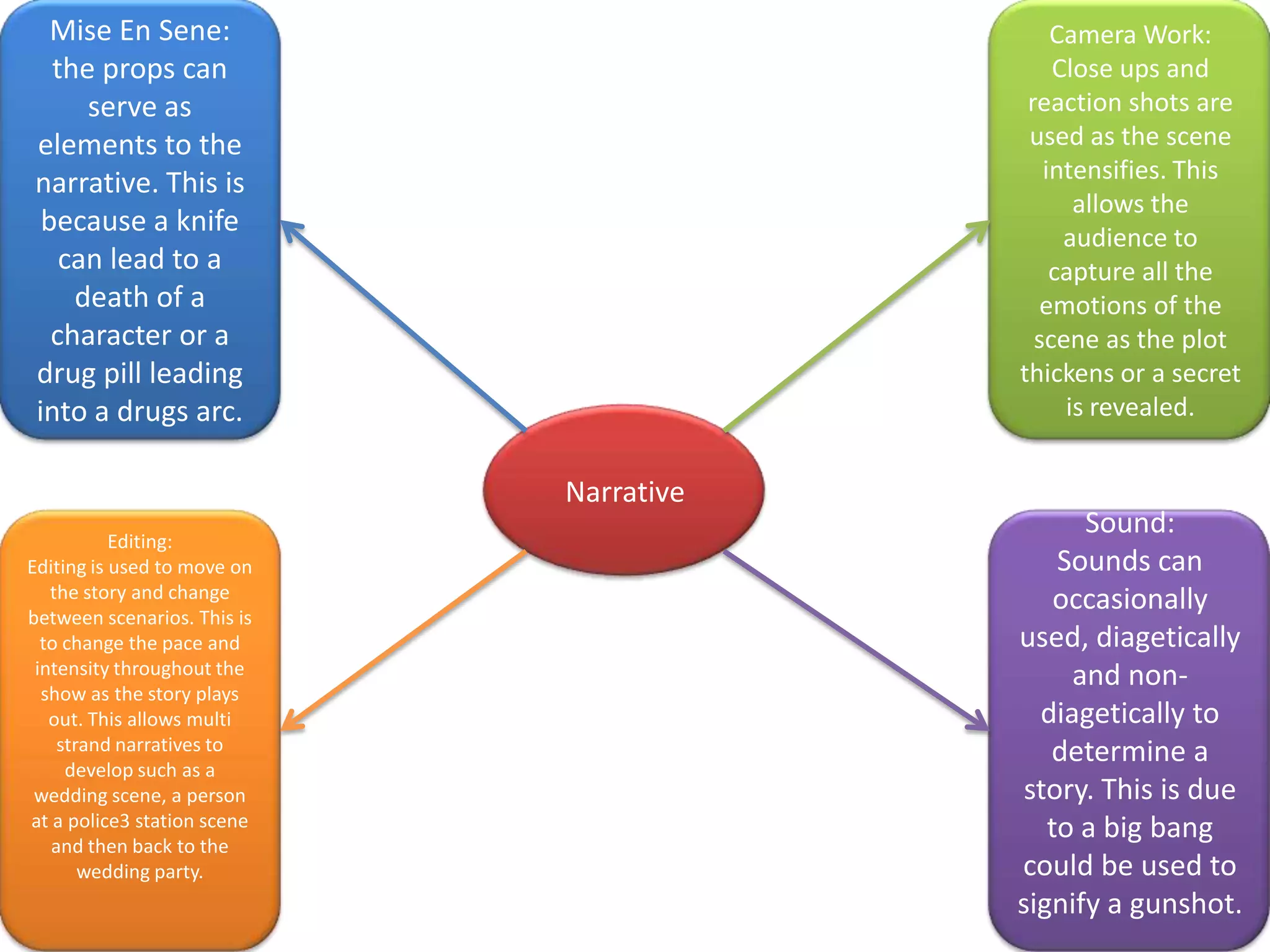
Mise En Sene:
the props can
serve as
elements to the
narrative. This is
because a knife
can lead to a
death of a
character or a
drug pill leading
into a drugs arc.

Camera Work:
Close ups and
reaction shots are
used as the scene
intensifies. This
allows the
audience to
capture all the
emotions of the
scene as the plot
thickens or a secret
is revealed.

Narrative
Editing:
Editing is used to move on
the story and change
between scenarios. This is
to change the pace and
intensity throughout the
show as the story plays
out. This allows multi
strand narratives to
develop such as a
wedding scene, a person
at a police3 station scene
and then back to the
wedding party.

Sound:
Sounds can
occasionally
used, diagetically
and nondiagetically to
determine a
story. This is due
to a big bang
could be used to
signify a gunshot.
Camera Work:
The camera work
allows the
audience to see
what characters are
talking to each
other. This is done
via a
180⁰/two/reverse/o
ver the shoulder/
reaction shots
depending on the
scenario.

Mise En Sene:
The props and
home of the
character reflects
their personalities.
They help build up
their backstory and
allow audiences to
know instantly
their way of life.

Character
Editing:
Editing is used to
cut between
characters in a
conversation and
depending on the
intensity of the
scene, the pace of
transition will be
more frequent.

Sound:
Diagetic dialogue is
obviously used to
allow characters to
talk and is the
primary way for
moving the
narrative along and
allow the audience
to connect with
certain characters.
Mise En Scene: The mise en
scene makes up everything in
a setting, from the houses
that characters live in to the
props that make up their
personality. Their houses
would be styled to fit each
individual character or family
to give the audience a direct
link to what character they
are watching. This helps
distinguish if their is a
“Guest” or “Enemy” in the
house. Usually a club or pub is
used as a meeting up point
where all characters can
mingle through their neutral
love of alcohol.

Camera Work:
Camera work is expertly
used to help define a
setting. Long pans and
establishing shots allow a
sense of scale to be
constructed where as
close ups give a
claustrophobic feel that
connotes the setting is in
a basement or shed. Or
somewhere similarly
small.

Settings
Editing:
Editing is used
to, depending on
the scenario, to
allow more areas of
a setting to be
explored, cutting to
stairs and corridors
if a character runs
upstairs or
something similar.

Sound:
Sound is used to help
establish a setting for
example the sound of
traffic and horns
signify that it is a busy
industrial area with
lots of cars where as a
quiet scene such as a
beach might have the
sound of wind and
seagulls.

Soap

  • 1.
    Mise En Sene: theprops can serve as elements to the narrative. This is because a knife can lead to a death of a character or a drug pill leading into a drugs arc. Camera Work: Close ups and reaction shots are used as the scene intensifies. This allows the audience to capture all the emotions of the scene as the plot thickens or a secret is revealed. Narrative Editing: Editing is used to move on the story and change between scenarios. This is to change the pace and intensity throughout the show as the story plays out. This allows multi strand narratives to develop such as a wedding scene, a person at a police3 station scene and then back to the wedding party. Sound: Sounds can occasionally used, diagetically and nondiagetically to determine a story. This is due to a big bang could be used to signify a gunshot.
  • 2.
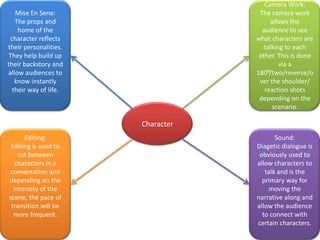
    Camera Work: The camerawork allows the audience to see what characters are talking to each other. This is done via a 180⁰/two/reverse/o ver the shoulder/ reaction shots depending on the scenario. Mise En Sene: The props and home of the character reflects their personalities. They help build up their backstory and allow audiences to know instantly their way of life. Character Editing: Editing is used to cut between characters in a conversation and depending on the intensity of the scene, the pace of transition will be more frequent. Sound: Diagetic dialogue is obviously used to allow characters to talk and is the primary way for moving the narrative along and allow the audience to connect with certain characters.
  • 3.
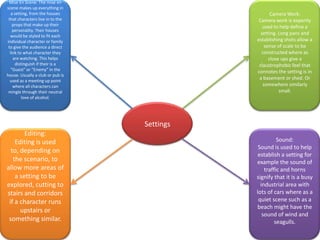
    Mise En Scene:The mise en scene makes up everything in a setting, from the houses that characters live in to the props that make up their personality. Their houses would be styled to fit each individual character or family to give the audience a direct link to what character they are watching. This helps distinguish if their is a “Guest” or “Enemy” in the house. Usually a club or pub is used as a meeting up point where all characters can mingle through their neutral love of alcohol. Camera Work: Camera work is expertly used to help define a setting. Long pans and establishing shots allow a sense of scale to be constructed where as close ups give a claustrophobic feel that connotes the setting is in a basement or shed. Or somewhere similarly small. Settings Editing: Editing is used to, depending on the scenario, to allow more areas of a setting to be explored, cutting to stairs and corridors if a character runs upstairs or something similar. Sound: Sound is used to help establish a setting for example the sound of traffic and horns signify that it is a busy industrial area with lots of cars where as a quiet scene such as a beach might have the sound of wind and seagulls.